Weird Sh*t [David’s blog on DR Thursday]

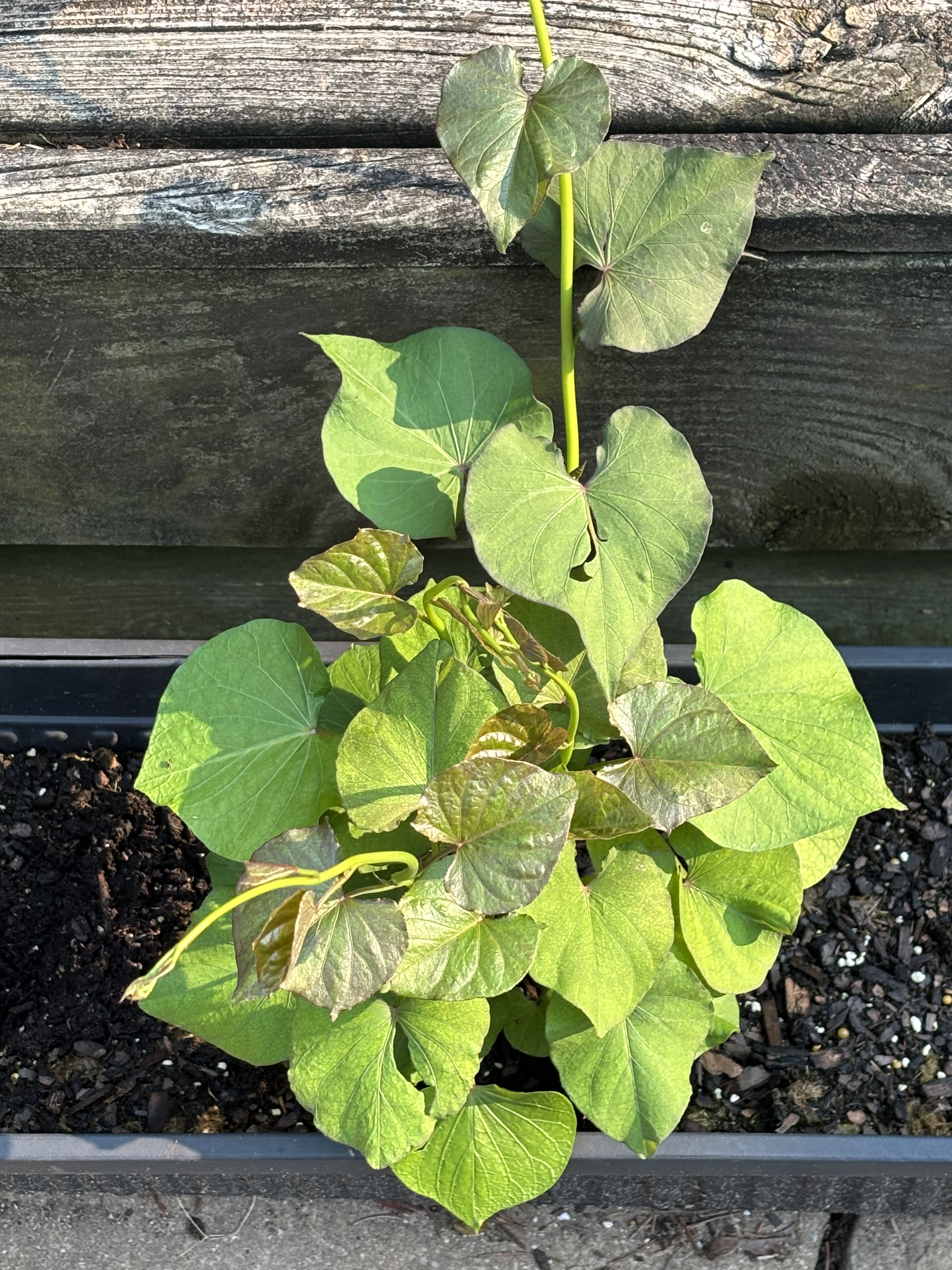
Two weeks ago we popped a sweet potato into some soil. Today its vines reach nearly halfway across the deck. The message is clear: don’t sit still next to the sweet potato plant if you value your freedom. We don’t think it is a carnivore but neither of us is willing to test the theory.

Over the years we’ve developed a shorthand phrase, a catchall for the unexplainable stuff of life. Our phrase is a leveler, a way of making the edges less edgy. For instance, after a particularly harrowing medical emergency, Kerri looked at me, knowing I was scared, and said, “Weird sh*t.” I laughed. My blood pressure dropped several floors. Suddenly, the unknown, the terrifying, the mind-run-amok-with-fear had a solid anchor. A simple explanation. Nothing to worry about, it’s just more weird sh*t.

It’s a phrase that comes in handy with the news of the day, the family zoo, the unexpected stuff of life, and the sweet potato plant that is rapidly entwining the house. “What do you think of that?” I ask, amazed at the plant reaching for my feet.

“Weird sh*t,” Kerri says, stepping back.

And with that pronouncement, the unexplainable is explained. Sense is temporarily restored and we allow ourselves to believe that all is right with the world.
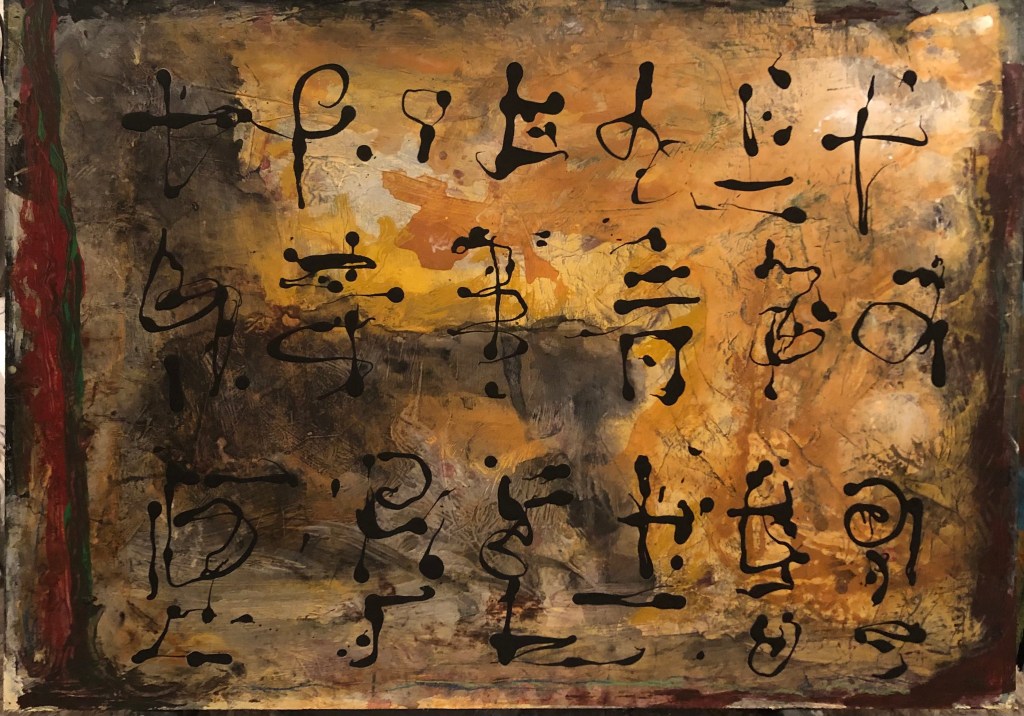
from the Logos series, 23″x32″ acrylic on hardboard

read Kerri’s blogpost about SWEET POTATO VINE

likesharecommentsupportthankyou!
Look Out [on Two Artists Tuesday]

Perhaps the most useful and profound lesson I’ve learned happened under the water. I was doing my first night dive. I was scared. I was not yet a confident diver. As we descended the world became inky black. All I could see was where I pointed my light.

It was that simple. I can see where I point my light. That’s it. And, more to the point, I choose where I point my light. I have the capacity to choose what I see. I can…and have…chosen to focus on hardship and lack. I can…and have…chosen to focus on what I love. On any given day my focus bounces full spectrum between complaint and appreciation. And then I remember: it’s my light, where do I want to aim it?

There’s a second aspect of the lesson. My focus is a beam. My light is not all encompassing. Each of us looks at life through a soda straw. None of us has the big picture. That’s why the commons is so important. In order to know what to do, we need to bring our many perspectives together to approximate something close to a full picture. Rather than fight about disparate points of view – who is right – it’s more useful to try and assemble all of those differing views, like the pieces of a jigsaw puzzle, into a bigger picture. No one wins when the pieces refuse to interlink.

With two broken wrists the cello became impossible to play. It has sat in her studio, the case unopened, since her fall over two years ago. I remember the day we bought it. We were early in our relationship, not yet married. I knew she was having cello dreams. We went to the music store for some other purpose, I can’t remember. The cello was sitting in the corner. She sat. She began to play. It was a perfect fit. And, although we could not afford it, we also could not leave it behind. It was a perfect fit.

Our lives these past two years have been a descent into dark water. We’ve worked hard to shine our light at our good fortune in a dark and inky landscape. As we make our way back to the surface, we are cleaning out. Taking stock. “The cello needs to be played,” she said, deciding to sell it. “I’ll never be able to play it, now.” She took photographs of her cello. Sent out a message through the network.

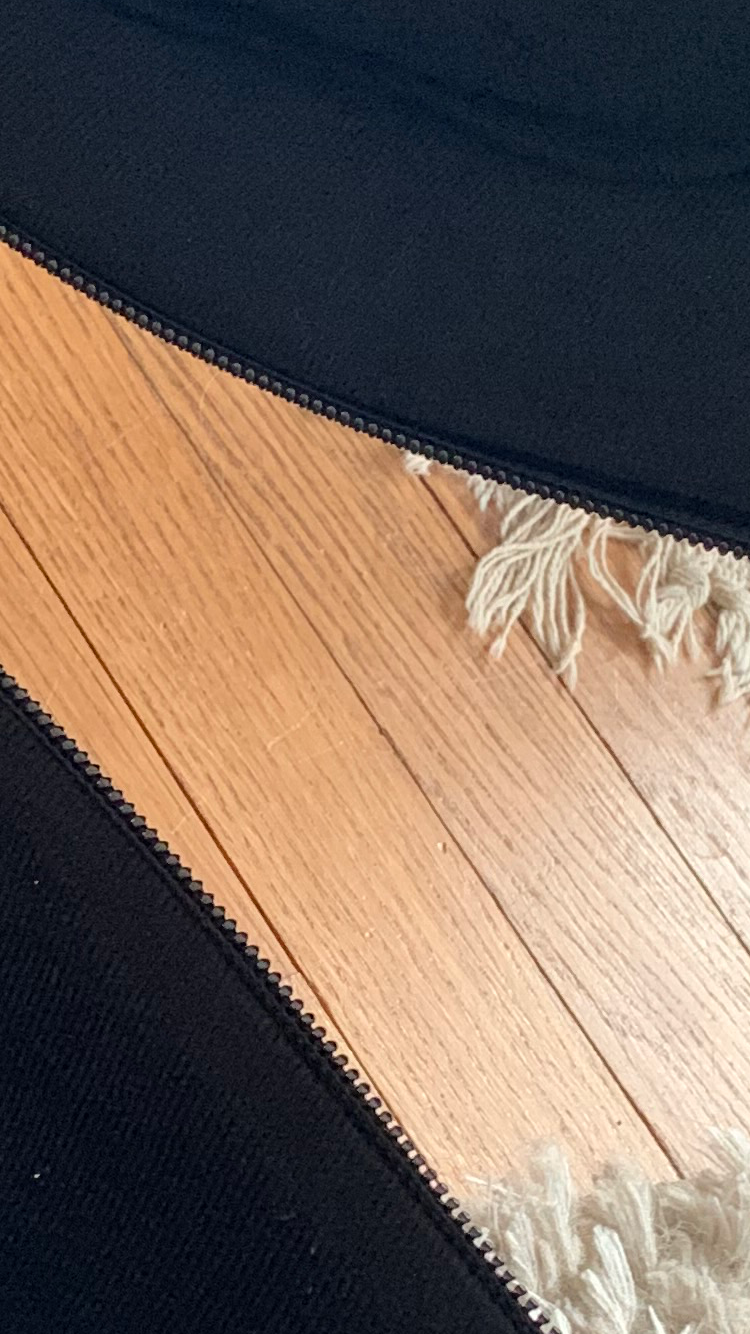
At the end of the day she showed me the photo. Edges. The view from inside the empty cello case, looking out. A slice of the world visible outside the case.

What’s “out there” is rarely clear. We see a small slice. It tickles our curiosity. The cello dream moves on making space for…? Who knows? We can’t see that far. In the meantime, we keep our eyes and hearts uplifted as we slowly kick our way back to the surface.

read Kerri’s blogpost about EDGES