Look Around [David’s blog on Merely A Thought Monday]

Strolling on the path through the park, we followed the shoreline. Just at the spot where the path meets the marina, we found an appeal chalked on the walkway: be good people. As Kerri snapped a photo, I wondered who wrote it. Who felt compelled to bring their chalk to the park and petition goodness from passers-by? I wondered if they’d had their fill of bad examples of humanity, snapped-up their chalk, and headed to the original location of social media, the public square.

Or, perhaps it was not a plea but was their wish for us. “My wish for you is to be good people.” Why, on this day, did they feel compelled to make their wish visible?

There are many ideas, definitions and word associations of goodness yet they are bound together by a single notion-thread: consider first the needs of others. Brothers/Sisters keeper. “Good people” reach their hand to assist others.

I gathered a few words used to characterize “good people”: Empathy. Consideration. Accountability. Compassion. Kindness. Each word, each characteristic, is other-people-focused. “How can I help?” Share, because there is plenty-enough for all.

As Kerri took a picture of the message I jumped into a memory, a time of desperation. Some thought-angel dinged my noggin and sent me out into the city to witness acts of kindness. As I have previously written, I saw generosity everywhere I looked. People being good in small ways and large. Opening doors. Paying for a stranger’s cup of coffee. Holding up traffic so a senior could safely cross the street. Asking the bus driver to “Wait a second!” – someone was racing to catch the bus. A second made all the difference for someone.

Those good people, everyday people doing everyday things, buoyed me, filled me with hope and light. If I’d had chalk in my pocket on that day I might have scribbled on the sidewalk, “Good people are everywhere! Look around!” I saw them because I decided to look for them.

If I’d had chalk in my pocket, after Kerri was finished with her photograph, I’d have written a message for the “Be good people” writer: “Thanks for the reminder. See good people”.

They are everywhere.

read Kerri’s blogpost about BE GOOD PEOPLE

like. support. share. subscribe. comment…thank you.

Straw Into Gold [David’s blog on KS Friday]

“I urge you to please notice when you are happy, and exclaim or murmur or think at some point, ‘If this isn’t nice, I don’t know what is.'” ~ Kurt Vonnegut, If This Isn’t Nice, What Is?

At this moment the heat index is 107 degrees. Dogga is in the coolest spot in the house, sleeping between the window air conditioner and the fan. Our strategy for keeping cool includes frequent bites of cold watermelon.

I recently heard someone say that surviving is about getting through the day while thriving is about being fully alive within the day. With two forks and a large bowl of cut-up watermelon between us, I can safely say that we are thriving. “This is delicious,” I coo. She nods, savoring her bite.

As artists we have of necessity developed a healthy frugality. Our thriftiness is not tight-fisted or in any way austere. The opposite is true. We revel in the simple things. We appreciate small moments. We delight in tiny triumphs. We are not trying to survive the heat, we are making an adventure, moving slowly, mindfully, deliciously within our day. Our cold watermelon a feast-to-be-savored.

Last night we had dinner with 20. We make dinner for each other twice a week. It’s something we’ve done for years, something that began as a way to save money. It’s become the single ritual that gives shape to our otherwise fluid days. Sitting around the table, laughing, we acknowledge that “life doesn’t get any better than this.”

We spin our straw into gold. Out of frugality, deep abiding appreciation.

Good Moments on the album This Part of the Journey © 1997/2000 Kerri Sherwood

Kerri’s albums are available on iTunes and streaming on Pandora

read Kerri’s blogpost about WATERMELON

like. share. comment. subscribe. support…thank you.

Weather Beautifully [David’s blog on Merely A Thought Monday]

“…happiness, when pushed to an extreme, becomes calamity. Beauty, when overdone, becomes ugliness.” ~ Thomas Merton, The Way of Chuang Tzu

I am early in my slow-read of The Way of Chuang Tzu. I already love it. This morning I read these words by Thomas Merton slowly, again and again, tasting them like poetry: “…a system constructed on a theoretical and abstract principle of love ignores certain fundamental and mysterious realities, of which we cannot be fully conscious, and the price we pay for this inattention is that our ‘love’ in fact becomes hate.”

The abstract ideal contorts us. The “what is” always loses in a comparison to the “should be”. Thus, a world of nature’s beauty swirls down the drain.

Marketing ideals and mirrors reflect theoretical and abstract principles. Constructed systems. They readily twist our natural love of self into a hatred of our bodies and faces. Is beauty really the exclusive province of the young? Jessica Tandy and Hume Cronyn grew more and more beautiful, more and more brilliant with age. Aging is among the “fundamental and mysterious realities” of which Thomas Merton wrote. There is profound beauty in aging, a mysterious reality that is not accessible to the young.

On Saturday we published a Smack-Dab cartoon about aging. We poked fun at my discovery of new wrinkles when looking in the mirror. Poking fun at ourselves is a good strategy for embracing the “fundamental and mysterious reality” of this beautiful life. There’s so much pressure to do otherwise, to resist, to deny, to pretend. Laughter is a great eye-cleanser.

We live in a society slathered with memes and messages of self-love while, at the same moment, we drown in messages to be other-than-what-we-are. Is it any wonder we are conflicted and seem incapable of sorting out what is real and what is not?

I know with certainty, like every other human that walked before me, I will disappear into time. Why spend another moment of my precious limited time on this earth resisting the gorgeous life that I enjoy? Why try to hide my age to match a manufactured ideal?

There is a reason the clothes I wore a decade ago no longer fit. There is a reason my beard is grey and the light in my eyes is less fierce than it was twenty years ago. I am different now. No more or less beautiful.

I said, squeezing her hand, “Let’s become apple-dolls together.” Her eyes welled with tears. What could possibly be more beautiful?

read Kerri’s blogpost about WEATHERED BEAUTY

like. share. support. comment. subscribe…thank you.

A Different Understanding [David’s blog on Not So Flawed Wednesday]

Sometimes color stops me in my tracks. The color of a sunset. The color of a canyon. The color of a flower. This hot coral coneflower stopped all engines.

David Hockney is a colorist. Henri Matisse. Judy Chicago. Piet Mondrian. Sonia Delaunay. There are so many painters whose use of bold color, like the coneflower, stops me in my tracks. Ellsworth Kelly. Mark Rothko.

With my love of color you’d think I’d be a colorist painter. Although I’ve had my moments, mostly I sort to earth tones. The neutrals. Once, a viewer of my painting, Unfettered, asked “Were you going for stone?” I wrinkled my nose and let the question hang unanswered.

Many years ago I mimicked David Hockney’s colors. I pushed myself to live in vibrancy. I loved the exploration but was rarely comfortable living in so much visual enthusiasm. I am too much the introvert to comfortably scream from my canvases.

I just washed over my latest painting, County Rainy Day. Kerri was appalled but I’d veered off course and hit color saturation too soon. I needed to reset. I generally work things out in process – instead of doing studies – so wiping off or washing over a canvas is not unusual. Like Kerri, John K used to chastise me, too, saying “Do versions or variations!” Versions and variations are expensive and I’ve rarely had abundant resources in my life. Every action has a history.

Recently Andrew Wyeth has once again caught my fancy. I’d never suggest that he is not a master of color – he is – but his paintings tend toward the neutrals. He captures something deeper, his visual language is as much that of a poet as a painter. A different understanding of color.

I imagine that, like me, on his daily walk, the color of a coneflower or the shape of a leaf stopped him in his tracks. And, one way or another, that startling moment of appreciation found its way into his heart and onto his canvases.

reset: County Rainy Day (detail)

read Kerri’s blogpost about SALMON CONEFLOWER

like. share. subscribe. comment. support…thank you.

Arrive Again [David’s blog on DR Thursday]

Deadheading the day lilies, the afternoon sun pouring through the branches, I realized that I’ve walked a circle and arrived again at the starting point. After fourteen years, I’ve returned to the origin-thought of this blog.

I started writing the direction-of-intention after a conversation I co-facilitated. It was a day exploring and discussing diversity, equity, and inclusion. The group’s conversation veered into questions about power. That day I realized that I had an overabundance of thoughts and questions that I needed to study. My very first post was almost a thesis statement; it was an attempt to capture the essence of what I shared with the group: power-over others is not power at all. It is control. Power, real power, is something that is created with others. Control over. Power with.

I did not return to the beginning without help. The current political reality has drawn me like a moth to a flame back to the topic of power. Our two parties live on opposite sides of the line. The red hats are a case study in Control-Over. The Democrats operate on the principle of Power-With.

Control-Over is distinct in the necessity to blame. It is a victim’s game. It is an abdication of responsibility. It demands lock-step adherence and fears counter-point-perspectives. It evades giant swatches of its history. It pretends to hold all the answers and doesn’t tolerate questions.

Power-With is distinct in the necessity to choose. It seeks responsibility and participation. It thrives on counter-point-perspectives and demands collaboration and compromise. It needs to consider and reconcile with its full history, the good and the bad. It asks many questions and eschews the notion of a single answer.

Control-Over is essentially hierarchical. Caste. Fixed. Rule by one.

Power-With is essentially egalitarian. Relational. Fluid. Rule by the many.

It turns out there’s never been a better time to return to the root of my original inspiration. It is, I’ve learned the original root of our nation’s nearly 250 year conversation. The essence of the democratic ideal.

Today we stand squarely at the crossroads:

One choice continues to follow the complex path of power-with.

The other is a hard right onto the powerless path of control-over, not a step back in time as it pretends.

It’s our choice. It is our direction-of-intention.

read Kerri’s blogpost about SUN THROUGH TREES

like. share. subscribe. comment. support…thank you.

Accept The Invitation [David’s blog on Merely A Thought Monday]

Master Marsh once asked me why I was compelled to run and jump off every edge I found. His question was rhetorical which was a good thing since I had no answer. I wasn’t really aware of the compulsion he was asking me to consider. I knew I was a restless soul. Most of my life I felt as if I was a suffocating man in a desperate search for air to breath. His question served to slap some consciousness into my wandering nature. His question introduced the idea that I might actually catch my breath if, instead of moving, moving, moving…, I sat down and took a breather.

Edges are invitations into the unknown.

Paintings, writing plays or this blog- any creative process – is an invitation into the unknown. To see what is as yet unseen. To open to something beyond. I’ve come to understand that opening-to-the-unknown is the essential practice of an artist. It is air-to-breathe. And the opportunity presents itself every single day, on the move or sitting still.

I thought of Master Marsh and his question the moment we stepped beyond the caution sign into the water. After so much rain the river spilled out of its banks and onto the floodplain, it overwhelmed portions of the trail. We could have turned around and returned to the car. We could have kept our feet dry. We’d walked this trail many times and could see that the water crossings were not dangerous. Calf deep with a smidge of current. And so we looked at each other, smiled a “why not” smile, and stepped.

I thought of Master Marsh and his question because this trail was known to us and, on this day, was completely unknown. We saw it again for the first time. Master Marsh is a great steward and studier of nature. His drawing of plants and trees and rivers and birds and…are first class. They’d make John Muir proud. For many years he cared for a stretch of the Calaveras River. Each day there was something new. Something previously unknown discovered.

The water crossings, I counted six of them, made us feel remote. Distant from civilization. We saw fish swim across the trail, heard sounds we’d never before encountered. The meadows exploded with color. A lone deer watched us and then disappeared like Merlin.

Edges come in many forms. On this day, it looked like water spilling over the trail. It was a welcome bonus to step beyond the sign, to spend some time in an unknown-known and have a quiet memory-walk with one of my favorite people.

read Kerri’s blogpsot about WATER ON THE TRAIL

like. share. comment. subscribe. support…thank you.

Don The Hazmat [David’s blog on DR Thursday]

Last night while Kerri, 20 and I were playing a game of Rummikub, Rob texted. He asked, tongue firmly planted in his cheek, “Wow! You’re so close to the (RNC) convention, are you going to swing by?” I responded without thinking, “Only if I had a hazmat suit.”

Protection from toxic waste.

Before dinner and before playing the game, 20 told me that earlier in the day, while he was driving, he caught himself pondering what he would do to survive if the red tide sweeps in, stains the White House, and reconfigures Social Security and privatizes Medicare as is promised by their conservative blueprint for authoritarian rule, Project 2025. I asked, “Did you ever imagine in your lifetime that you’d be worried about the overthrow of democracy by a populist dictator?” His dad was a WWII veteran, as was Kerri’s father. My mom was a little girl living in Pearl Harbor on the day it was attacked because my grandfather provided services for the navy. In a single generation, the very threat our elders, our “greatest generation,” fought to eliminate, has overtaken the minds and hearts of the Grand Old Party. They’re currently holding a convention in Milwaukee to forward an agenda that would appall Abraham Lincoln but Adolph Hitler would applaud. “Did you ever think…?”

It’s too late for hazmat suits. The toxin is already racing through our system.

In this past week we’ve repeatedly heard the phrase, “We need to tone down the rhetoric on both sides.” It’s not the rhetoric we need to tone down, it’s the reality we need to face. We’re pretending that this an election like any other election, that it is “systems usual.” It is not. Our two party system is now a one party system attempting to fortify our young democracy against a dictatorial leader and his followers who are filled with fascist dreams. The dialed-up rhetoric of Democrats is akin to sounding an alarm warning of a system-annihilating storm. The rhetoric of the reds is the storm.

Unlike the ideal outlined by our founders, this is not a party of conservative values debating with a party of progressive values to find a compromise path forward: a system designed to achieve balance from opposing points of view. This is an ultranationalist aggression attempting to dismantle our system of governance and replace it with one that forcibly suppresses – and eliminates – any form of opposition.

The body dies when the toxin is ignored and allowed to attack the internal organs.

We play Rummikub with 20 to unplug from the worries of the day. Last night while we played, a terrific storm roared through the region, shaking the house with wind and buckets of rain. Dogga paced as lightning flashed. It was hard to concentrate on the game. I couldn’t help seeing the storm as a metaphor (of course…). With so much toxic waste spewing just up the road, and potentially washing away democracy’s foundation, it is no longer possible to unplug. It’s no longer wise to unplug. Not if we want our good house to survive the red storm.

an image from the archives: House On Fire, watercolor

visit my gallery site

read Kerri’s blogpost about THE GAME

like. share. support. subscribe. comment…thank you.

Their Zeal [David’s blog on Not So Flawed Wednesday]

This is a song of quiet astonishment, of the wonder that avails itself for a moment to those who know the full story, the origin tale of our day lilies.

To the casual observer, the everyday passer-by, the vibrant orange explosion in our yard might catch their eye. It’s hard to miss. They might experience a moment or two of fleeting appreciation as they wander on their way.

To us, the spirited line of wild marmalade blooms popping in front of our house represents the abundance that shows up in lean times. They are colorful symbols of generosity and friendship. They remind us of perseverance. They are the blossom of a memory that always makes us smile.

In the early phase of our relationship, we rolled our wheelbarrow to Sally’s house several blocks away. “If you want them, come get them!” she smiled. Her day lily and fern garden had to go away. She knew we were pinching pennies. She knew of our desire to someday have a thriving garden.

We made several trips that humid cloudy day, digging up plants, stacking them high and to the great delight of passing motorists, rolling them down the many streets to our home. Back and forth. Giggling. Covered in mud.

“Who else would do this?” we laughed.

“Where on earth are we going to put all of them?” I asked as we wheeled our barrow up the driveway for the final time. A bevy of uprooted plants stared at us, eager for an assignment, soil and water.

“Someplace,” was all she said. We had no plan beyond the wheelbarrow transport. And so, we started digging.

That was then.

A decade later our ferns and day lilies abound. They line a portion of driveway. They populate the backyard. They are the enthusiastic greeting committee in the front. I eagerly anticipate their return each spring. I am in awe of their zeal.

And…for me, they are living symbols. It is impossible for me to enjoy them without whispering a quiet thanks to Sally, to remember how it felt at the end of a humid day, covered in mud, holding hands, admiring all that we’d just planted, feeling like we’d struck gold.

read Kerri’s blogpost about DAY LILIES

like. share. support. comment. subscribe…thank you.

All But One [David’s blog on Two Artists Tuesday]

Is it about the subject, the seagull feather, or the overall composition? It’s a more relevant question than you might imagine.

Of note: another word for ‘composition’ is ‘constitution’. Framework. Anatomy.

Begin here: the Supreme Court just ruled on a question of presidential immunity. Was their ruling about the subject (presidential immunity) or the constitution (the framework that fundamentally defines our national identity)?

Hint: In school we learned to speak The Pledge of Allegiance. “…with liberty and justice for all.” With this ruling, with hands over hearts, the words spoken daily by children and adults alike must now be, “…with liberty and justice for all, but one.

In taking up the question of presidential immunity -a puzzling choice on their part at the outset since the answer to the question of immunity is already deeply imbedded in something sacred that every American school child recites by rote at the beginning of each school day – the Supremes altered the composition of our picture. The very constitution of our democracy. All, but one.

In his weekly newsletter, artist Nicholas Wilton writes that we must see our work as telling our story. With this ruling, the work of the Supremes, on our behalf, set course for a much different story. A fundamentally different composition.

When was the last time that you read and considered the power and import of the Preamble to The Constitution? “We the People of the United States, in Order to form a more perfect Union, establish Justice, insure domestic Tranquility, provide for the common defence, promote the general Welfare, and secure the Blessings of Liberty to ourselves and our Posterity, do ordain and establish this Constitution for the United States of America.”

We the People (the composition). All, but one (the subject). The Supremes reversed the subject and the composition: All but one is now the composition. Where does that leave we the people? It’s a more relevant question than you might imagine.

Hold your nose and say it with me: I pledge allegiance to the Flag of the United States of America, and to the Republic for which it stands, one Nation under God, indivisible, with liberty and justice for all but one?

read Kerri’s blog on Two Artists Tuesday

like. support. share. subscribe. comment…thank you.

Stroll With Alexander [David’s blog on DR Thursday]

20 knew we needed a get-away. He suggested a stroll through Milwaukee’s Third Ward. Knowing it was our favorite, he offered to treat us to a bowl of gumbo and a glass of wine at The Public Market. It was a successful temptation. We chose a beautiful day and drove into the city.

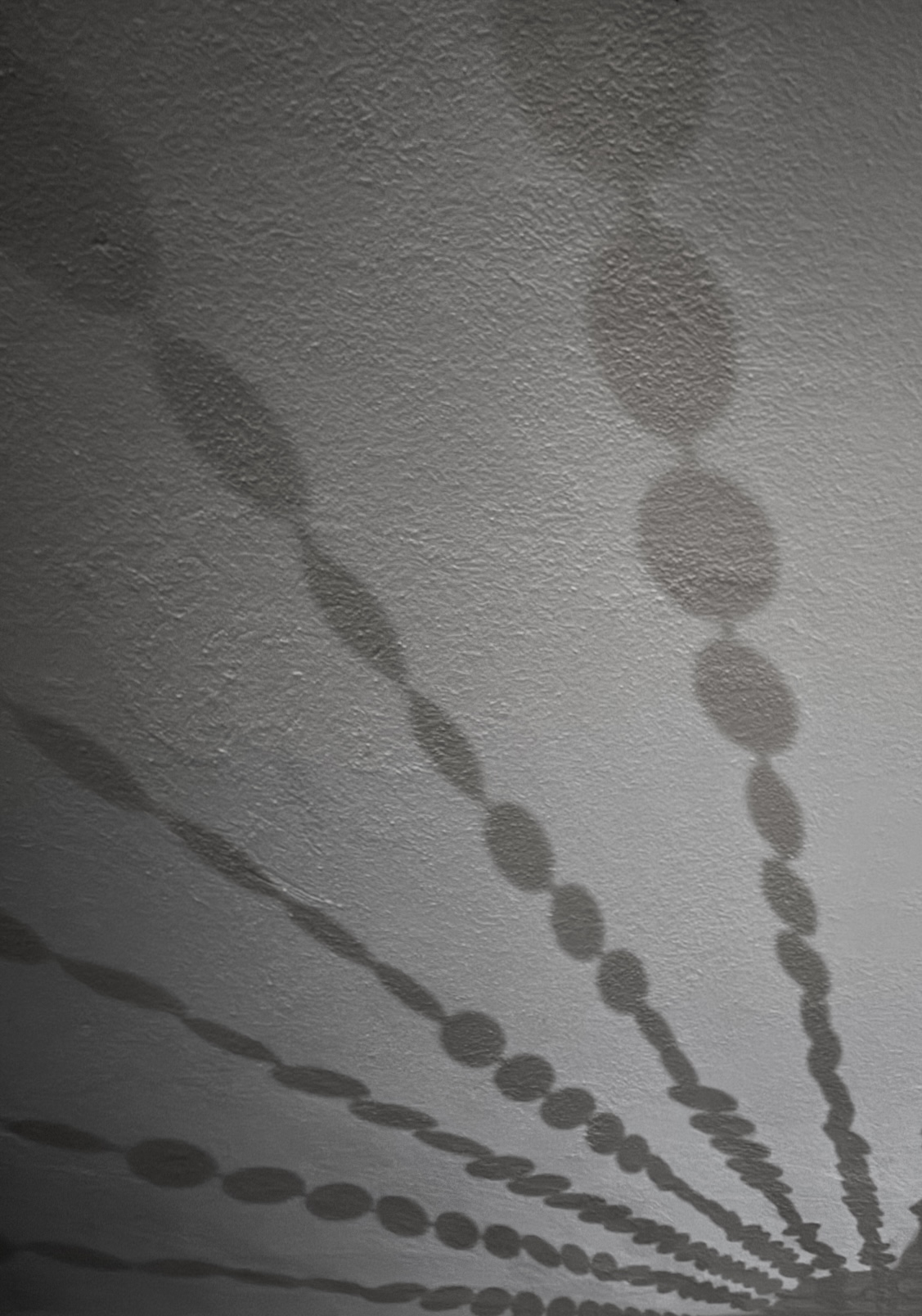
Among the many gifts that day as we strolled in and out of shops was the very present spirit of Alexander Calder. Almost every shop we entered featured a mobile or some variation of sculpture suspended from the ceiling. Paper planes, vibrant lemons in tidy lines like a Sunny-Roman-legion on parade, colorful shapes and orbs delicately balanced and dancing in the air, casting shadows. All paying homage to the art work of Calder. My bet is that few of the shopkeepers knew the origin, the ancestry of their twirling displays.

Calder’s mobiles were radical when he made them. He changed our understanding of sculpture and opened a new world of possibilities. Nearly 50 years after his death, his innovation is commonplace. Incorporation into the norm is the hallmark of profound innovation. Computers are ubiquitous but when they first hit the scene they were revolutionary. Electric light, the telephone, automobiles, televisions, cameras, elevators, air conditioning…They change us. They change our expectation.

So, too, the work of artists. The Impressionists shocked and appalled their contemporaries when they initially showed their paintings. They did not know that they were Impressionists. They were reacting to the latest innovation-of-their-day known as the camera – a device that could easily record reality, important events, make portraits of royals… the job of painters – so they either had to explore new avenues of painting or become irrelevant. To our eyes, 150 years later, their work is anything but progressive or shocking. It is everywhere.

Artist not only change what we see, they change how we see. They challenge us to see what we do not yet see.

A-I is currently stirring our dust and is already being incorporated into the daily grind. The pace of change compresses the distance between the moment of profundity and incorporation into the everyday. The realities of the pace-of-change are, like the camera, changing the nature of what it means to make art.

It’s good to remind ourselves that it hasn’t always been this way. What’s twirling over my head is clever and is the ripple of a revolution. It’s why I loved my stroll with Alexander Calder through the Third Ward. 20 didn’t know it, but he gave me so much more than a getaway, a bowl of gumbo and a glass of wine.

a page from an old sketchbook

visit my gallery site

read Kerri’s blog about MOBILES

support. like. share. subscribe. comment…thank you.