Look At The Display [on Flawed Wednesday]

Del and Dorothy’s house sat on the side of a mountain. It was small. The kitchen table accommodated two and was placed close – very close – to the front door. Dorothy cooked on a wood burning stove. The house listed to the downhill side. It had a small yard that seemed carved out of the mountain. Del’s WW II jeep sat close to the edge. Dorothy populated the yard with blue glass and hummingbird feeders. It was a quiet home. A peaceful place.

Artifacts of a time gone by. Del fought in the second world war. He kept a corner display cabinet with things he’d brought home from the war. A Luger. Nazi insignia. A flag. Patches and medals. Booty from the enemy. It seemed out of place, especially in a home dedicated to simplicity and peace. The display was a curiosity for me. Why enshrine in your home objects from an enemy-of-the-past? I wanted to ask Del about it but he was not a talker. In fact, while, 50 years later, I would recognize Dorothy’s voice if I heard it today, I have no recall of the sound of Del’s voice. I can’t remember him uttering a word. I never broached the subject of the artifacts.

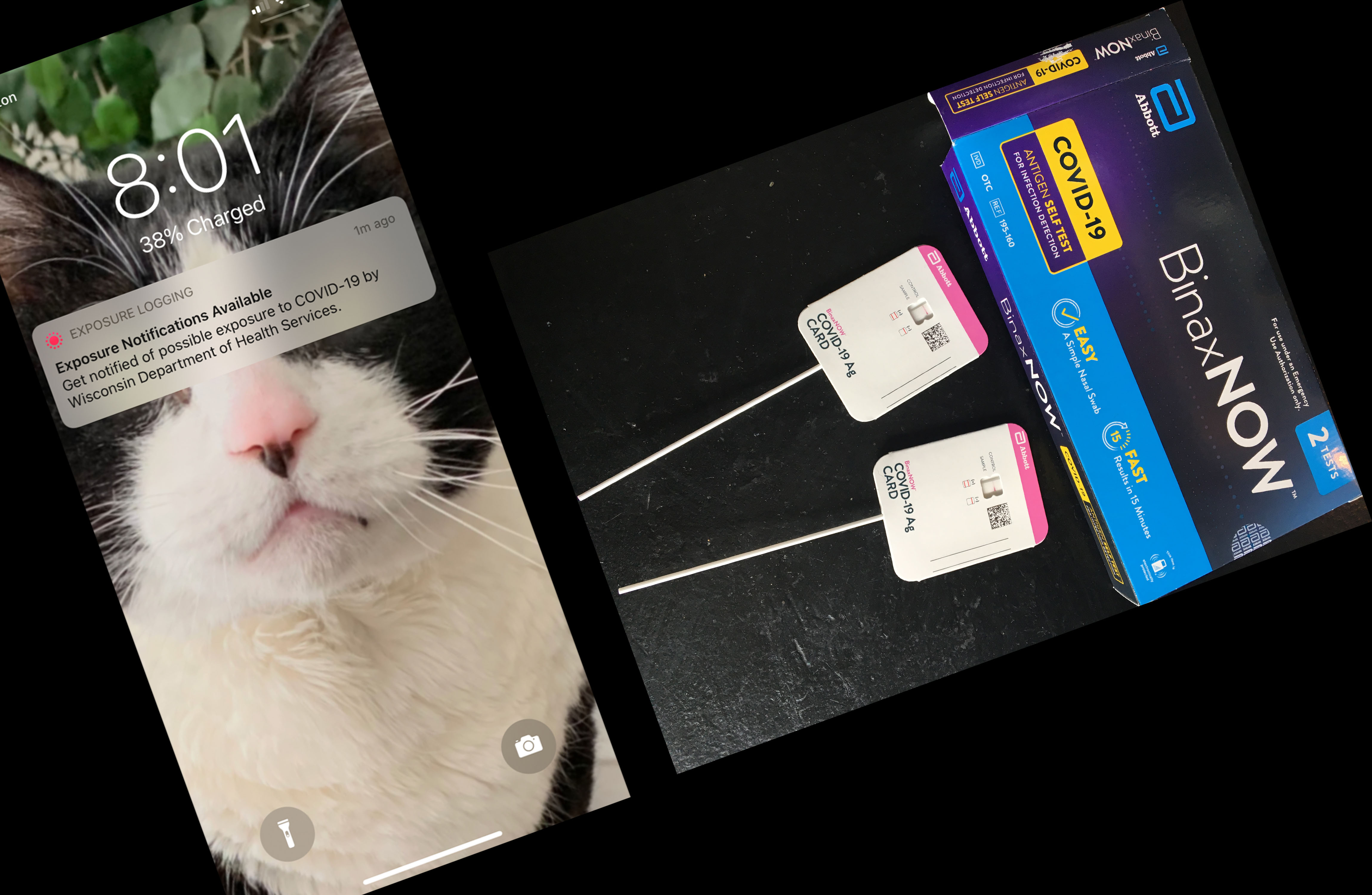
Each day we receive an alert on our phone. Exposure Notification Available. Recently, when Kerri officiated a wedding, we both took two Covid tests to make certain, while also vaccinated, that we were negative. Dangling from a clip on the side of our refrigerator are masks. Many, many masks. We put in our special box the flag they gave us on the day we were vaccinated. Wave the flag if you have a question or need help. The artifacts in a time of pandemic, now so normal that we barely see them.

This weekend, with all of the observances of 9/11, I watched a tour of the 9/11 museum. A crushed firetruck. A shoe. Xerox pages with faces and the word, “Missing.” Del whispered into my ear, “Pay attention. This is why I kept my display.” The tour guide said, “So we never forget.” The Luger. The Nazi flag and insignia. The medals and ribbons. The reason Del and Dorothy retreated to the mountainside, the reason they simplified and built a life of quiet and peace, the reason he kept his glass-cabinet-display. So they wouldn’t forget. The horrors that people enact upon each other in the name of…righteousness, control. Superiority. The madness people embrace when they are angry or scared. The lies so easily told and so hungrily gobbled.

People are capable of great things. We know because those things are meant to draw us together. They unite us. Great art.

People are capable of appalling acts. We know because those actions are born of and meant to divide. They rend us apart.

Del lived through the full savagery of what people are capable of doing, one to another. He came home and with Dorothy lived an intentional life of quiet, on the mountain, out of the main. I’ve noted of late that Kerri and I talk often, dream, of a mountain retreat. We are witness of what people are capable of doing, one to another. We are also witness of and generators of the beauty meant to draw people together. Her music. My paintings. The things people are capable of doing, one for another. We are surrounded by artists and art. Both/and.

History repeats itself. The story is told – again and again – through the art and artifacts we display, the symbols we keep. The memories we carry forward. Guernica. Empty shoes. A simple mask.

read Kerri’s blog post about ARTIFACTS

Stand In The Narrow Place [on Merely A Thought Monday]

“Western civilization has been a 2,000 year long exercise in robbing people of the present. People are now learning the joys that hide in the narrow place of the hour glass, the eternal moment.” ~ George Leonard, Mastery

The observation has become something of a yearly ritual. Every 9/11, I hear or participate in this conversation: one day, people got out of bed, drank their coffee, brushed their teeth and went to work or boarded an airplane. And then, they never came home.

We are fairly smothered in sentiments about appreciating life, seizing-the-day, living in the present moment, take nothing for granted… “You never know.”

Quinn gave me his copy of Mastery. As was his practice, he underlined significant passages in red pen – and the book was a festival of underlined passages. For years I kept the book on my desk or beside my bed. I’d flip it open and read the red sections. They served as a daily meditation. They gave my busy mind something generative and hopeful to occupy.

George Leonard called presence, “the plateau.” Eckhart Tolle calls it “the now.” In one of the gospels NOT included in the bible, Jesus is reported to have said, “The kingdom of heaven is on earth but men do not see it.” The Way of the Buddha leads to the present moment.

What do we see if we stop thinking long enough to experience the present moment?

2996 people died in the terrorist attacks on 9/11. These people could do nothing about what happened to them on that day. They brushed their teeth. They left for work or got on an airplane.

“You never know.”

This year, there was a new river-of-thought that ran through the annual ritual observation: the daily COVID death toll last week in these un-united states was above 1,000 a day. On January 7th, 2021, 4,147 people died of COVID. In the divided-united states, more than 660,000 people have died of COVID. World-wide 4,550,000 people have perished.

It’s impossible not to look at the numbers and wonder why-and-how we became our own terrorists.

In the past year, with the availability of a vaccine, with the proven effectiveness of masking and social distancing, these people, had they united with the help of their friends and neighbors, had choices. They – we – could have done everything to save their lives. We did not. We divided. 1000 yesterday. 1000 today. 1000 tomorrow. And growing.

Sometimes we know.

Appreciating life is – and always will be, at the narrow place of the hour glass – a community affair. In presence, on the plateau, the line between me and you blurs. It is the reason why all of those firefighters and first-responders ran into the towers that day. My life cannot be precious if I cannot see that yours is also precious. Why – on earth – on any given day – would I not do everything possible – anything possible – to protect your life? Why would you not do the same for me?

read Kerri’s blog post about BLESSINGS ABOVE GROUND

Offer The Chair [on Flawed Wednesday]

“Indeed, the effect of the forum is all the more powerful if it is made clear to the audience that if they don’t change the world, no one will change it for them.” ~ Augusto Boal, Games For Actors And Non-Actors

Many of my pals in the theatre turned their noses up at me when I began doing work in corporations. They thought I was yet another theatre artist doing improvisation-games with the terminally neck-tied. I was not. My work was more in the tradition of Augusto Boal than Keith Johnstone. Some of the best plays I’ve ever facilitated, some of the most profound pieces of theatre I’ve directed and witnessed, happened in board rooms, classrooms or conference spaces. Here’s how I know: the actors and audience were one-and-the-same. Their play was personal. When they left “the theatre” they did not leave the nice story behind and end the evening with a cocktail. They were disrupted. They had seen something that could no longer be ignored or deflected. The hard work was about to begin.

People yearn. People entrench. People plant their flags and claim the most ridiculous territory. I’ve seen teachers come to blows over an overhead projector. I’ve seen lawyers undermine colleagues to gain dominion over a swiveling chair. And, the chair or the projector are never really the issue. The issue is usually an abstraction. Pecking order. Boundaries. Alliances. People have killed each other over a pair of shoes. It’s not the shoes but the status the shoes represent. Abstraction and illusion.

People are generally unconscious about the reasons beneath their passions. I’ve met a score of dedicated meditation practitioners who meditate to control their thoughts rather than realize them. Once I led a group of teachers through the ritual they enact each morning before the arrival of their students. The question was, “What are you preparing to do in your day?” Their answer was unnerving and revolutionary: they were preparing to control the kids. Teaching and learning were secondary.

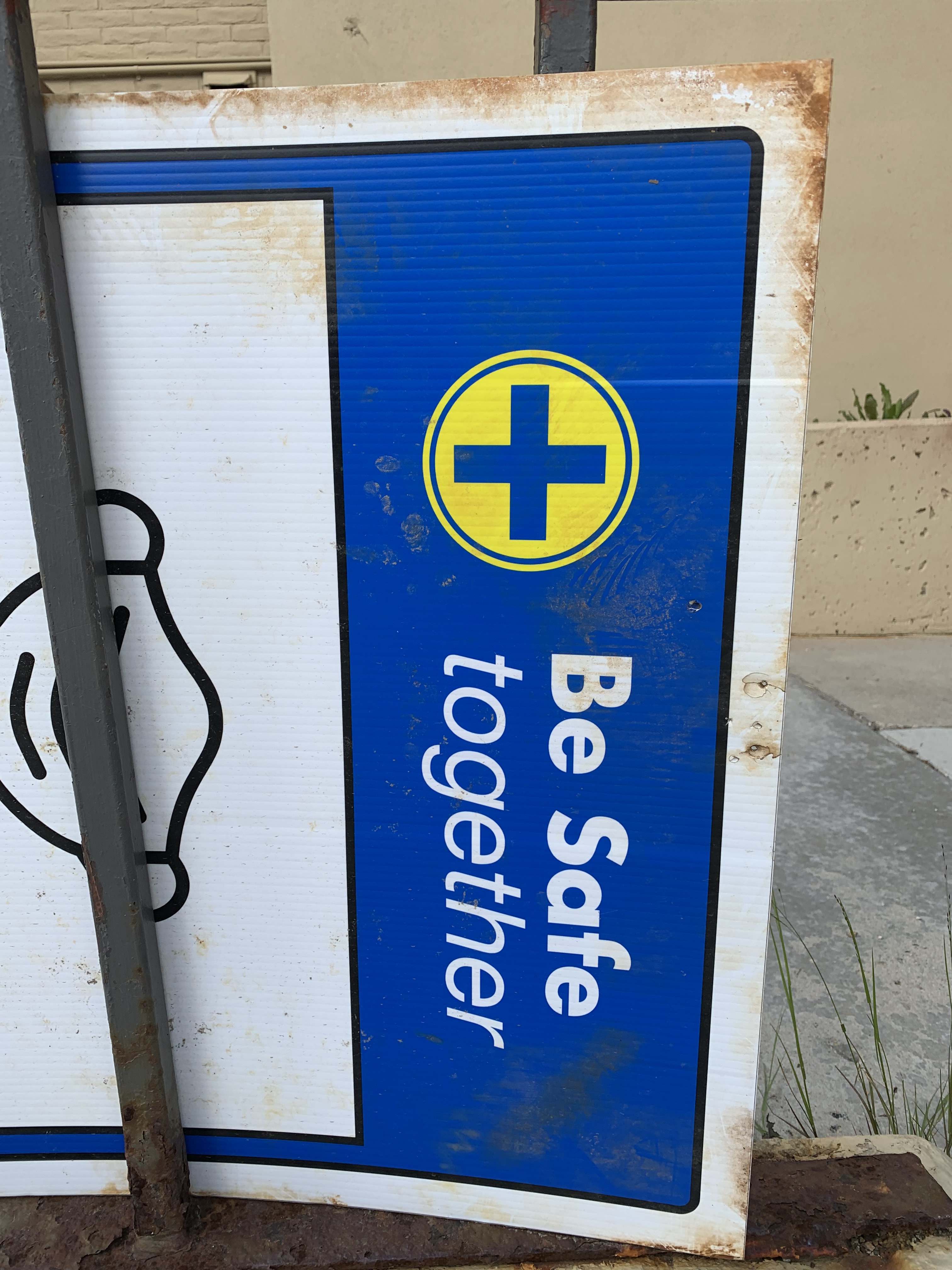
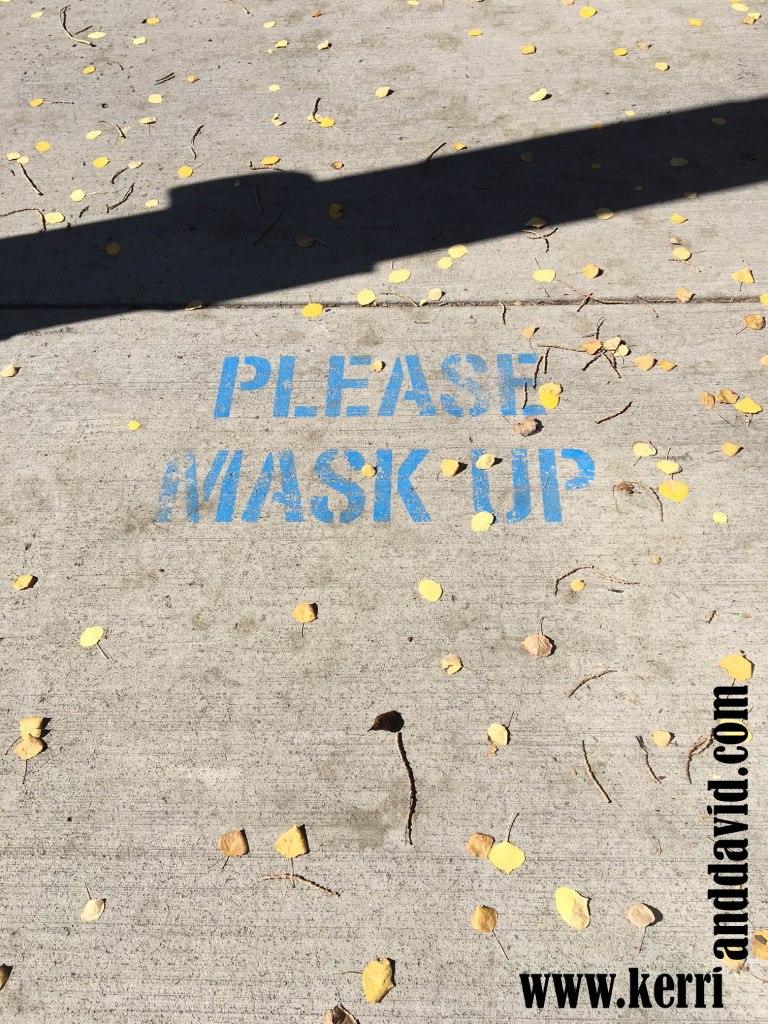
We are witness to a country-wide communal piece of theatre, an unconscious play. The issue is not the mask. The issue has never been the mask. The issue is, I suppose, people feeling out of control, imposed upon. Fearful. They are, with their bare faces, making a stand. Drawing a line in the sand. That “no one can tell me what to do” might as well be “I am losing control over my life.”

And, as is always the case, as with the office chair and the overhead projector, refusing to don the mask does not really address the real issue, it merely deflects it. The energy and action is focused on non-sense. And when non-sense rules the day, the action taken actually brings about the thing-most-feared. Loss of control. The pandemic continues, the children are being taken, the economy suffers, the community fractures. It’s a lengthy list.

The lesson in the office chair wars and the overhead projector games is always the same. No one wins. Everyone loses in a toxic tug-of-war. The chair might be yours today but it will be theirs tomorrow. The game only ends when one of the players offers the chair to the other or the projector becomes a reason to share. The same will be true of the mask wars. People will die, the pandemic will continue until the mask becomes a generosity. Then, low-and-behold, the virus will abate and real control over our destiny will be within our grasp.

I hope that, like the lawyers or teachers who were brave enough to walk into the real story, to stand face-to-face with a dysfunction, that we meet our story and ask, “Why would so many sacrifice so much over a little piece of cloth?” An overhead projector. A pair of shoes. A chair that swivels…

read Kerri’s blog post about MASKS

Read The Walk [on Two Artists Tuesday]

Between the morning rehearsal and the evening wedding, we had several hours without commitments so we did the thing we most like to do. We walked. It was a gorgeous September day. We were in Milwaukee’s Third Ward, a miracle of reclaimed and converted warehouses, shops and condos that line the waterway. We followed the Riverwalk, Kerri snapping photographs, ambling our way to Lake Michigan.

It’s odd in this age of pandemic, to be in a city on a beautiful weekend day. The rules of engagement are different. The rules of enjoyment are different. Be out in the day but avoid the crowds. There was an art fair, a crush of people, so, as artists, normally pulled toward art gatherings, we walked the other way. In years past we would have waded in to the fray, talked to the artists, enjoyed people enjoying art.

Instead, we found a bounty of art on our walk. The shadows playing on the walls. The flowers. The finials. The sculpture. Everywhere we looked we found riches of intentional design. People dedicated to creating beautiful spaces had a field day re-imagining what had once been an industrial wasteland on the water.

Chiseled into the the boards upon which we walked was a narrative history of the city. We stepped on top of important dates of the Civil War. We walked across innovations, breweries arising in a city of beer, World Wars and the changes they wrought. Sports victories. We walked across the story of a previous pandemic, a hundred years ago. A few thin boards, markers of a tragic toll.

For a moment I stood and watched the kayaks paddling, the pontoon boats cruising the channel, the diners seated beneath umbrellas, the strollers, like us enjoying the day with no destination calling. Full moments in lifetimes that someday might be told in a few thin boards of narrative highlights.

I wondered how many people, how much dedicated action, it took to make this moment beautiful and possible. The architects. The artists. The artisans. The craftsmen and women. The laborers. The florists, The gardeners. The shopkeepers. The waiters. The chefs. The suppliers. The mail carriers,…Dreamers all, stretching back through time. Interconnected and interdependent in ways that only few recognize.

That’s the challenge, isn’t it? Were I to chisel the story of our pandemic in a boardwalk, or create a sculpture meant to capture our moment in narrative time, my theme would be interconnection and interdependence unnoticed. Unmasked. A myopic madness, a messy delusion of every-man-for-himself, a sure-fire way to perpetuate a pandemic or warm a globe.

There is, of course, no evidence for life thriving in a vacuum. On the other hand, there’s plenty of evidence, apparent on a stroll in a city on a beautiful sunny September day, killing some time before a wedding, that it takes all of us, every last life, to thrive. An artist needs an audience. A developer needs a supplier. A doctor needs a patient who wants to be healthy. Who wants to do more than survive. Thriving is, after all, a group sport. A careful reading of the boards tells a very specific tale: no one does this walk alone.

read Kerri’s blog post about OUR WALK

Meet The Saw [on Merely A Thought Monday]

As the magician saws the woman in half, he tells her that, “Magic is not an exact science.” It is among my favorite Flawed Cartoons.

“There’s nothing sadder than a forty year old production assistant,” she said, sipping her drink, looking across the room at a man she clearly thought was a loser. I was living in Los Angeles and was at a party with movers-and-shakers. The gathering also included a few of the people who carried the cables, loaded the trucks, moved the electrics – the lowest rung on the ladder. The runners. I swallowed hard. At the moment she said it, I was thinking the exact opposite. There is nothing more interesting than a forty year old production assistant. I wanted to be standing with the very man she considered a loser. He’d have stories to tell. Experiences to share. The movers-and-shakers bored me. Dulled by their dedication to security, thoroughly protected from the unknown or surprising experiences, they sneered at the people who’d actually lived. I found my way across the room and spent the rest of the evening sitting in the kitchen talking with a man who traveled the world.

Were I at the party today, she would look across the room at me and whisper, “Sad.”

Life is like magic. It is not an exact science. Ideals collapse. Dreams implode. Yet, the luckiest people I know are the few who have stepped out of their seats and volunteered to climb on to the stage. They’ve taken chances. Built wood buses or put their lifeblood into starting a theatre company or went boarding instead of dying in a cubicle. They’ve stepped beyond traditions and expectation. They’ve been cut in half, opened, challenged, surprised, disappointed, scared, triumphant, awed. They’ve learned. They’ve questioned their beliefs and perceptions. They’ve made titanic mistakes. They’ve stared down their demons. They’ve opted for curiosity rather than being right. They stepped off the edge. They followed, “What if…”

There’s no shortage of people who watch life from the safety of their seats. As Tom used to say, “They paint with a limited palette.” There are those lucky few who, if you see them at the party, most likely the people serving drinks, who’ve been cut in two and know from scary experience that there’s nothing more numbing or illusory than certainty. Follow them into the kitchen and ask about their lives. You’ll be amazed at the full spectrum of colors you find in them.

read Kerri’s blog post about SAWED IN HALF

flawed cartoon ©️ 2016 david robinson

Consider It [on Not So Flawed Wednesday]

“Innumerable confusions and a feeling of despair invariably emerge in periods of great technological and cultural transition.” ~ Marshall McLuhan

At the first theatre company I artistic directed, we cut silk screens and pulled ink to make our posters. They were crude but we didn’t know it at the time because that was the most advanced process available. At the time they looked cool and we were proud of them. They took some effort.

I remember the day a student came into my office and showed me how we could design our posters on the computer. His designs were gorgeous, easily adjusted, took almost no time, and came back from the printer quicker than I could cut a good screen. We felt like our status bumped up a notch. We looked professional, and, what we’d been so proud of only a year before, now looked primitive.

My first website cost an extraordinary amount of money. It took weeks of working with a designer. Changes were costly so were made rarely. Now, Kerri and I design, redesign and make changes to our site every week. A few years ago we set up a site for a theatre company, complete with ticket service, database and newsletter capacity all in one easy-to-use app. It cost them almost nothing and any fool could adjust and make changes to it.

People who only a few short years ago considered themselves voiceless can now say any old thing they want to an audience no less than world-wide. Patti once asked a conference attendee, “If you had a voice, what would you say?” If I could go back in time I’d beg her to retract that question.

We live in a time of high anxiety. There are few substantial anchors to moor our reality. I’m about to make the ultimate old guy statement: I remember when…a few limited news channels actually attempted to broadcast the news. They had a limited window of time to tell the news so they made their information count. We now have hundreds of information and misinformation sources that can rattle at us 24/7 and from multiple devices. The challenge is not editing-down-to what-matters, it is filling too much time with loads of spin that mostly has limited substance.

Information spreading – for me, too – has become easy-peasy. I can lob an opinion as easily and as readily as the next person. But, as Marshall McLuhan said – and I whole-heartily concur, “I don’t necessarily agree with everything I say.” In other words, (don’t tell Kerri) I am sometime reactive. Sometimes, I think I know more than I do. Sometimes, I make mistakes. Slowing down seems to be the only cure. Thinking things through. Researching before spouting. Breathe and breathe again. Consider what matters. Really matters.

I’ve walked a complete circle in my life. Now, in all it’s shiny capacity, within the amazing miracles of technology, I find much of what people say and do and assert with this glorious ability – to be crude. Without thought. It’s too easy so it doesn’t much matter. The stream will quickly carry away even the most offensive opinions and endlessly wash in some more. I wonder how considerate people might become if their easy voices were less easily shared? If saying something actually took some time and effort – let’s say, as much time as it took to design, transfer and cut a silkscreen – what might they say? If it was less easy to “like” or “dislike.” If one slip would send the thought back to the arduous start? Maybe we’d be more considerate because we’d take the time to consider what we were expressing – to think about what we were saying and why we were saying it.

I suspect most of our “whys” would get our knuckles rapped by grandmothers who held decorum and polite communication as a high virtue. Saying stuff so-as-to-belong-or-pile-on…or to hear ourselves talk, certainly wouldn’t spare the rod.

That whole thought stream came from taking a walk, looking down, and finding a rock smiling back at me. Someone took some time. Chose a rock. They chose what to paint and had a grandma-approved-reason-why. And, they did a good job of it. “Ahhhhh,” Kerri said, smiling back at the rock. “How considerate,” I added to her awe.

read Kerri’s blog post about ROCKS THAT SMILE


Be Indeterminate [on Two Artists Tuesday]

Through the good graces of our tomato plants, I’ve learned a few new concepts this summer. Determinate and indeterminate. Bush and vine. Determinate tomato plants (bushes) are bred to stop growing. Indeterminate tomato plants (vines) will grow indefinitely or until the weather conditions “are no longer favorable.”

Our plants are indeterminate. Each morning, Kerri visits our planting bench and checks her tomatoes. 20 taught her a few simple tending-rules and now, each morning, there are more and more little indeterminate miracles moving backward along the color spectrum, finally arriving at a brilliant red.

Life is indeterminate.

My new tomato-terms come just in time. My current project has me revisiting my past life as a teacher and facilitator. If I apply my new terminology to people I can’t help but think it is the lucky few who survive so much dedicated energy to stop the learning-mind in the name of education. The natural output of a system designed on manufacturing principles is to truncate the questioning mind by patterning the notion that there is a predetermined answer. It becomes a game of finding the answer that teacher wants – a closed loop – instead of an incitement of curiosity. Children are excellent game players and translate the gaming pattern into their now-dulled-adulthood.

There is a cycle apparent in all genuine learning processes. It begins with discontent. Curiosity is a movement born from some form of discontent. It leads to questioning. Questioning always leads to disturbance (the interruption of the known). And, just like that, out of the disturbance something new is seen, call it a breakthrough, call it an insight, call it new learning…Many classrooms – certainly the systems – are designed and organized to keep disturbances to a minimum. The mantra is ‘control’ rather than ‘inspire curiosity.’ Business has the same dedication.

We’re taught that disturbance is the sign of something wrong rather than the crusty earth breaking to reveal new verdant life.

Discontent leads to questioning, leads to disturbance, which leads to breakthrough. And, an insight will always lead to discontent. It’s a story cycle, where yearning meets obstacle. Learning is by definition uncomfortable and at its best when it is uncontrollable.

Last week I attended a meeting. My two companions and I brought our homework back to the team. One was content. The other two of us were filled with discontent. The leader of the session, at first, was angry. He did not get the result he’d anticipated from his exercise. “So, you two are telling me this process was worthless!” he raged. We’d spent our week questioning instead of answering. Discontent. Questioning.

“No! It was great!” we chimed in chorus. “Look at all the good information we uncovered!” It was a mess. Big disturbance. We cycled through our misalignment a few times, wrangling over perception and usefulness. More rage. And then…an insight. The breakthrough. All of the rage, all of the appeasing, began to flow in a single direction. A possibility took shape. A target materialized that was much better than the prescribed pursuit. Energy filled our zoom-osphere. Laughter. Excitement.

Learning. Indeterminate. Open questions. Hot pursuits.

I am drawn to and surrounded by the dedicated indeterminates; those who refuse to stop learning: David, Mike, Horatio, MM, Bruce, 20, Judy, and yes, Kerri…I am a very fortunate man to be surrounded by so many tomatoes moving their way backward along the color spectrum, not afraid to walk through their discontent toward bigger and bigger questions.

read Kerri’s blog post about TOMATOES

Recognize The Greater [on DR Thursday]

strange sky

“Can a shallow mind appreciate beauty?…When the mind is merely concerned with itself and its own activities, it is not beautiful; whatever it does, it remains ugly, limited, therefore it is incapable of knowing what beauty is.” ~Krishnamurti, Think On These Things

What accounts for the strange color of the sky? Smoke from the fires? A coming storm?

The quote above is only half of the thought. It is the set up for the real point to be made. A shallow mind is concerned only for itself. And, while consumed with the lesser, it misses the greater. It is the unintentional theme that emerged for me this week: losing the greater for the lesser. The baby goes out with the bathwater.

It is a matter of perception, of focus placement.

Yesterday I wrote about the judge questioning the potential juror about his capacity to experience hardship in order to keep the system going and growing. The juror entered the exchange with a self-focus and exited, admonished, with perhaps the possibility of seeing something beyond his own agenda. Perhaps.

I read that Rome fell when the luxuries became more important than the essentials. Societies fall when they can no longer discern between what is important and what is not, when the lesser is protected at the expense of the greater.

Years ago, during a facilitation, a young woman pulled herself from and exercise. She sat on the sidelines and brooded. After the exercise, during the debrief, she claimed that she was discriminated against because her team did not listen to her ideas. Initially, her team scrambled to apologize – one does not want to be accused of discrimination. We asked the team to explore the situation a bit further. Because the young woman’s idea was rejected, was she truly a victim of discrimination? It was an illuminating conversation. The problem – the real problem – arises when we can no longer discern between what is discrimination and what is not? There is terrible discrimination in our world and needs to be addressed. It can’t be seriously confronted if we are incapable of distinguishing between the rejection of an idea and laws that prevent citizens of color from voting.

In a pandemic, a mask is not a breach of personal freedom. It is not the state ripping away control of your body. It is a minor inconvenience to ensure the mitigation of a virus that is killing scores of fellow citizens. Despite the rhetoric otherwise, the fearmongering and tribe-building, wearing a mask is something done for the health of the whole. It is not unlike jury duty.

It is a matter of perception. Of focus placement. Self or other? Lesser or greater?

The rest of the quote: “Whereas, a mind that is not concerned with itself, that is free of ambition, a mind that is not caught up in its own desires or driven by pursuit of its own success – such a mind is not shallow, and it flowers in goodness. Do you understand? It is this inward goodness that gives beauty, even to a so-called ugly face.”

Pay attention to the verb. Beauty is given. Concern for the well-being of the other is a sentiment expressed and championed in every corner of the world, by all the figures we quote, elevate, and sometimes emulate. Martin Luther King, Ghandi, Abraham Lincoln, Mother Teresa,…it’s a very, very long list.

Communities thrive when they are capable of enduring hardship for each other, for the benefit of the whole. They also thrive when they hold boundaries and protect the rights of the individuals. Those two seemingly different actions are, in fact, one and the same.

Societies fall when shallow minds prevail, when they can no longer discern between essentials and luxuries, privileges and responsibilities. When personal comfort takes precedence over enduring ideals.

It’s a matter of perception. Of focus placement, and make no mistake, focus is easily led. Just like a package of pastrami mistaken for a strange colored sky.

read Kerri’s blog post about PASTRAMI SKY

shared fatherhood ©️ 2017 david robinson

Let’s Get On With It [on Not So Flawed Wednesday]

It was a national campaign of the US Department of Homeland Security. If you see something, say something. The enemy is here. It is us. We pulled it from an episode of Grace & Frankie. Old folks have hair that grows in places it ought naught. Frankie plucks a hair from Grace’s chin. “How long has that been there?” Grace exclaims. “Frankie, if you see something, say something!”

Yesterday, I had a collision of experiences at the courthouse during my jury pool swim. First, I read an article in The Atlantic, by Tom Nichols, Afghanistan Is Your Fault. He wrote, “The soldiers who served overseas in those first years of major operations soon felt forgotten. ‘“America’s not at war” was a common refrain among the troops. “We’re at war. America’s at the mall.”’

He continued, “A serious people—the kind of people we once were—would have made serious choices, long before this current debacle was upon them. They would today be trying to learn something from nearly 2,500 dead service members and many more wounded. They would be grimly assessing risk and preparing both overseas and at home for the reality of a terrorist nation making its way back onto the international map.

Instead, we’re bickering about masks. We’re holding super-spreader events. We’re complaining and finger-pointing about who ruined our fall plans.”

Next, I was among the many chosen for voir dire (the jury selection process). I was in the last group selected so the odds of my serving on the jury were slim. I sat in the courtroom and watched an amazing moment unfold. The judge said something that all Americans should hear. It aligned perfectly with Tom Nichols’ thoughts. A potential juror, a young man, claimed serving on a one-day trial would create hardship. He’d miss a day of work. The judge questioned him to get more context and then sat back, considered for a moment, and said this:

“Democracy is hard work. When I was young, there were three things that we had to do: pay taxes, honor the draft if called, and serve on a jury if called. All of those things create hardship. Taxes aren’t easy. The draft changed the lives of thousands of young people. Serving on a jury interrupts life. It creates hardship. Giving of yourself to the common good means serving something greater than yourself. It is an interruption. Today, there are only two of those things because there is no draft. My point is, giving of yourself to make this gorgeous system work is not easy. It is hard work. It creates hardship to ensure that our system, the oldest democracy in the world, thrives and survives for the next generation.”

America is at the mall. Meanwhile, democracy is hard work.

For a serious people, there is a center to our commons and, keeping it alive, takes a bit of self-reflection and sacrifice. Giving of yourself to the common good means serving something greater than yourself.

Divided we fall. It is a cliche’ but could not be more relevant.

The enemy is here. It is us. Bickering about the lesser while the greater slips from our fingers. “If you see something, say something” is predicated on an assumption: we are in service to something greater than ourselves. We are on the same team with a common, shared interest.

The judge sat back in his chair after his lecture and asked the young man, “Are you less capable of handling hardship than anyone else in this room?”

“No, sir,” the young man sat back in his chair, resigned.

“Good!” the judge exclaimed. “Now, let’s get on with it.”

read Kerri’s blog post about SEE SOMETHING, SAY SOMETHING

Ask The Simple Question [on Merely A Thought Monday]

“Simplicities are enormously complex. Consider the sentence “I love you”.” ~Richard O. Moore, Writing The Silences

I’ve been told again and again that, at the heart of every complexity, there is a simplicity. And, of course, at the heart of every simplicity, there is a complexity. So, either way you go, there you are.

I find that I am yearning for greater and greater simplicity. I appreciate quiet. I avoid crowds, not “like the plague” but because of it. I’d rather be in my studio or on a trail than almost anywhere else. I wish I could go sit in a museum all by myself, in the quiet for an hour or two, with a Chagall or Picasso. Intentional beauty. I feel like the world is so full of extraneous noise and dedicated bloviating that I’m having trouble hearing the simple essentials.

And, perhaps because my desire is for simplicity, I find that I am, like Frankie, projecting simple solutions on to everything. Yes, 9 million dollars in my bank account would solve everything!

Almost.

Do you remember Rodney King? I was in Los Angeles when he was beaten, when the city was aflame after the acquittal of the officers who beat him. Do you remember what he asked? It was the ultimate simplicity: “Why can’t we all just get along?”

I think it would take something more than 9 million dollars to solve the complexity to which Rodney King spoke. There probably isn’t enough money in the world. But, here in my dedicated simplicity, I think the opposite should be true. Rather than cost anything, getting along would probably save all of us a lot of money, and time, and heart ache. Getting along would profit all of us.

It costs nothing to open a door for someone. Put a price on gratitude. I can’t. How much does it cost to tell the truth? What about making sure everyone is safe and well fed, that everyone can walk safely down the street, that people are paid fairly, that the rules apply equally to all, that, if you’re injured or become sick, you will be treated and not lose your house in the process?

It doesn’t seem like that should be so far out of reach.

There I go again. At the heart of every simplicity…

read Kerri’s blog post about 9 MILLION DOLLARS