Give It Perspective [on Not So Flawed Wednesday]

“Awe” is one of those complex words that contains its opposite. Wonder and dread. Astonishment and fear. Respect for the power of nature. Reverence. It’s a full-spectrum word.

Awe is what you feel standing at the ocean shore, knowing the waves will rush in long after you are gone. Water pulling at your ankles. Toes in the sand. Staring into eternity.

Awe is a perspective-giving word. It makes us both tiny-in-the-universe and fortunate-beyond-words, all in the same moment.

Once, I stood on a mountaintop in the bitter cold of dawn. The sun broke over the horizon and washed over me with a wave of warmth. Life-giving. Literally. I stopped shivering when the sun touched my bones. Filled with awe, I started to laugh and cry. Beautiful, magnificent and painful.

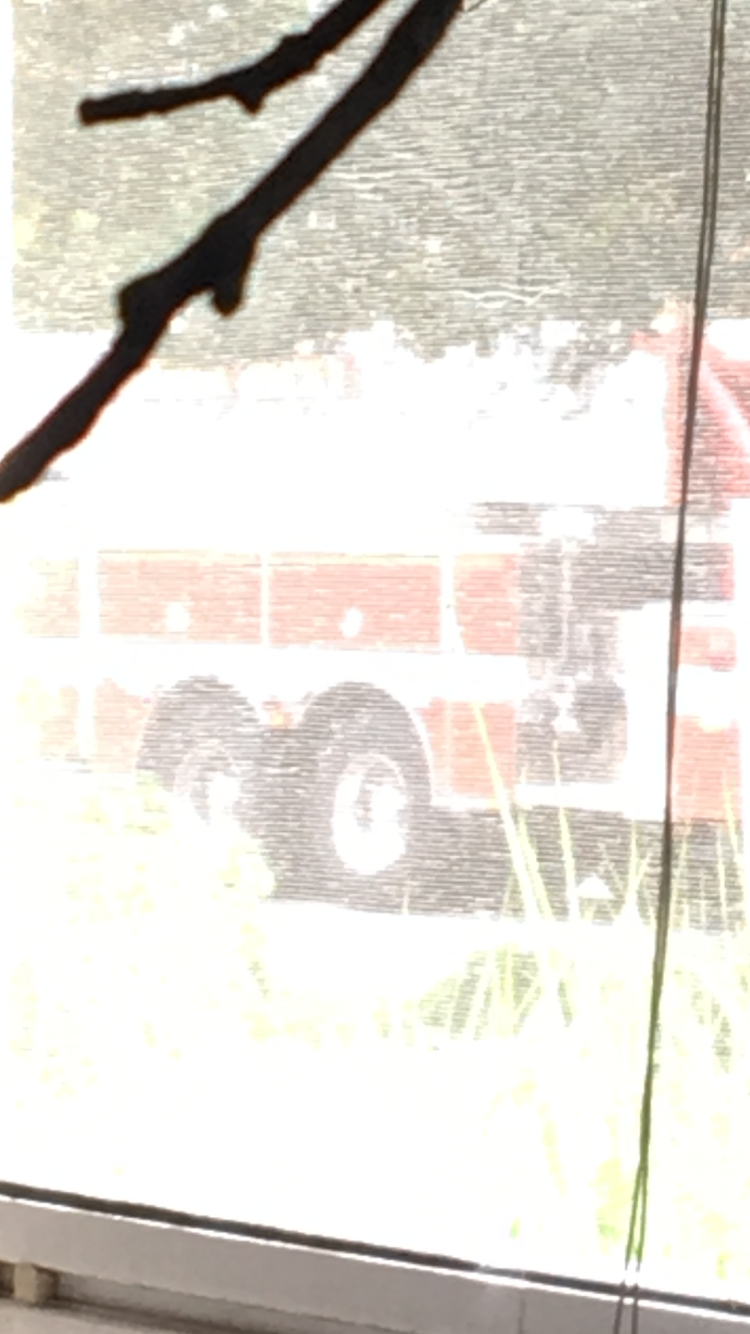
We stood on the deck and watched the cloud tower above us. Threatening and astonishing. She showed me the photo. “The wire makes it,” she said holding the screen so I could see it, “It gives it perspective.”

Perspective. Correct regard for the truly awesome power of nature.

read Kerri’s blogpost about TOWERING CLOUD

Welcome The Symbol [on Not So Flawed Wednesday]

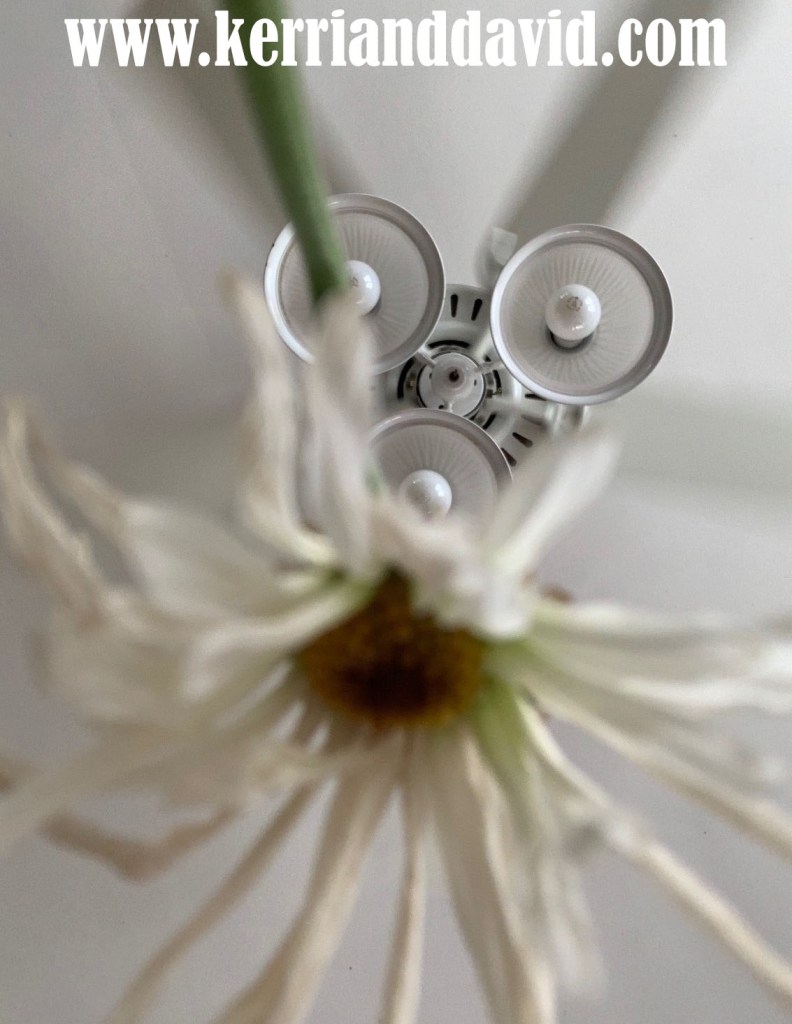
The daisy plays a central role in our story. And, not surprisingly, daisies represent, among other things, new beginnings and rebirth. When I first met Kerri, a friend, a wise older woman, told me that the universe was offering me a second chance.

At our first meeting, she waited for me in the concourse holding a daisy. Three weeks later I flew back for a second visit. She awaited me in the concourse holding a bushel of daisies. An abundance of renewal. At our wedding, daisies ringed the altar. Daisy cupcakes, instead of a wedding cake, were made special by our miracle-baker Susan.

Daisies are also symbolic of love, cheerfulness, hope, and affection. All are present in our second chance.

Unlike other people, Kerri doesn’t toss the daisies when they wither. She considers them beautiful and carriers of story. One of the daisies from our wedding sat atop the shelf by our bed and only recently passed beyond brittle into daisy dust. The dust made its way into the back yard, sprinkled with appreciation like a magic love potion.

During the pandemic-job-loss-broken-wrist epoch, there was a distinct absence of daisies in our house. Hunkering down and isolating brought a daisy void. A few weeks ago, I came down the stairs from my office to find a row of chipper daisies adorning the dining room table.

“I thought we needed some daisies,” Kerri said and smiled.

Yes. A thousand times, yes.

New beginnings. Rebirth.

If I could, I’d dose this sad discordant world with a hundred million daisies but, for now, it’s a great start welcoming home our special symbol of hope, beauty, cheerfulness, regeneration.

read Kerri’s blogpsot about DAISIES

Go It Together [on Flawed Wednesday]

“The problem is that this fluidity is not a choice we are free to make. Despite the unifying patriotic rhetoric that permeates the United States, on some level Americans are not really fooled: at bottom, each person knows he or she must continually “reinvent themselves,” which is to say, go it alone. America is the ultimate anticommunity.” ~ Morris Berman, Dark Ages America: The Final Phase of Empire

I laughed aloud when I read this quote. It reduced to a simple phrase what I believe is the collective experience of being an American (U.S.) in the 21st century. Together, we go it alone.

“Going it alone” is, of course a delusion shared by cowboys, republicans, and guys that put big tires on their trucks. After all, someone had to make the tires. And the truck. And pave the road. Using tax dollars since the roads are public and maintained by the collective. All of the chest-thumping expressions of individuality are, after all, firmly rooted in the lives and labors of others.

It only takes a minute to tease apart the loose fibers of the go-it-alone mythos. The problem is that one must want to think it through and, in our current spiral into stupidity, thought is shunned. So is history. At the core of anti-community is the absence of critical thought and a bucket of denial.

[Sidebar: this reminds me of a favorite phrase that, one day, popped out of Jim’s mouth: because you think it, does not make it so. Because you believe it, does not make it so.]

In my current state of residence, the governor, a democrat, asked the legislature, a randy band of republicans, to meet for a special session to discuss the ills that currently plague our community. The randy band gaveled open the session and then, as is its custom, immediately gaveled it closed. Legislators that refuse to discuss issues or policy. Sitting in the people’s house, obstruction is the only card in their deck. Not a single idea or impulse to serve the public in the randy band and their lock-step rugged individualism.

It is the sign of our times. Going it alone together is an ugly race to the supremacist bottom.

The cure for what ails us lives in the space between the gavels. Genuine discussion of the real challenges that face the community. An acknowledgement that driving the big cowboy truck adorned with big cowboy tires is only possible on the public road made viable by the shared effort of hundreds of fellow citizens. All of the Fox-driven drivel and religious right propaganda is never going to change the fact that we are all in this together. We can choose to be a failed state in a dedicated anti-community or we can thrive in the post colonial-era by bringing all ideas, all points-of-view, all people, to the common table for a wee-bit of collaboration, compromise, and long-needed-real-live-bona-fide-communal-reinvention.

read Kerri’s blogpost about MASKS OPTIONAL

Sing The Song Of Simple Lessons [on Not So Flawed Wednesday]

This is a song about the simple lessons. The amusing and eye-opening answer to “because we’ve always done it this way.”

As a budding young artist I was frustrated because my charcoal lines were not as alive or fluid as the masters I so admired. I wrestled and strained and struggled to achieve “alive” lines, doubling down on my technique, my personal bridge to nowhere, as if doing more of the same, rife with inner turmoil and tension, might achieve my aim of ease.

Watching me struggle, amused by my absolute dedication to doing the same old thing in the same old way, as if I might accidentally squeeze out a new result, my art teacher, a wisened older woman full to the brim with laughter and humility, came to me, took the charcoal from my hand, and showed me how to hold it, not like a pencil, but like a flower. My lines were instantly alive. My teacher laughed at my amazement.

New ways – better ways – are rarely discovered on a tension path. Why is it that we look in the same drawer multiple times when we’ve lost our keys?

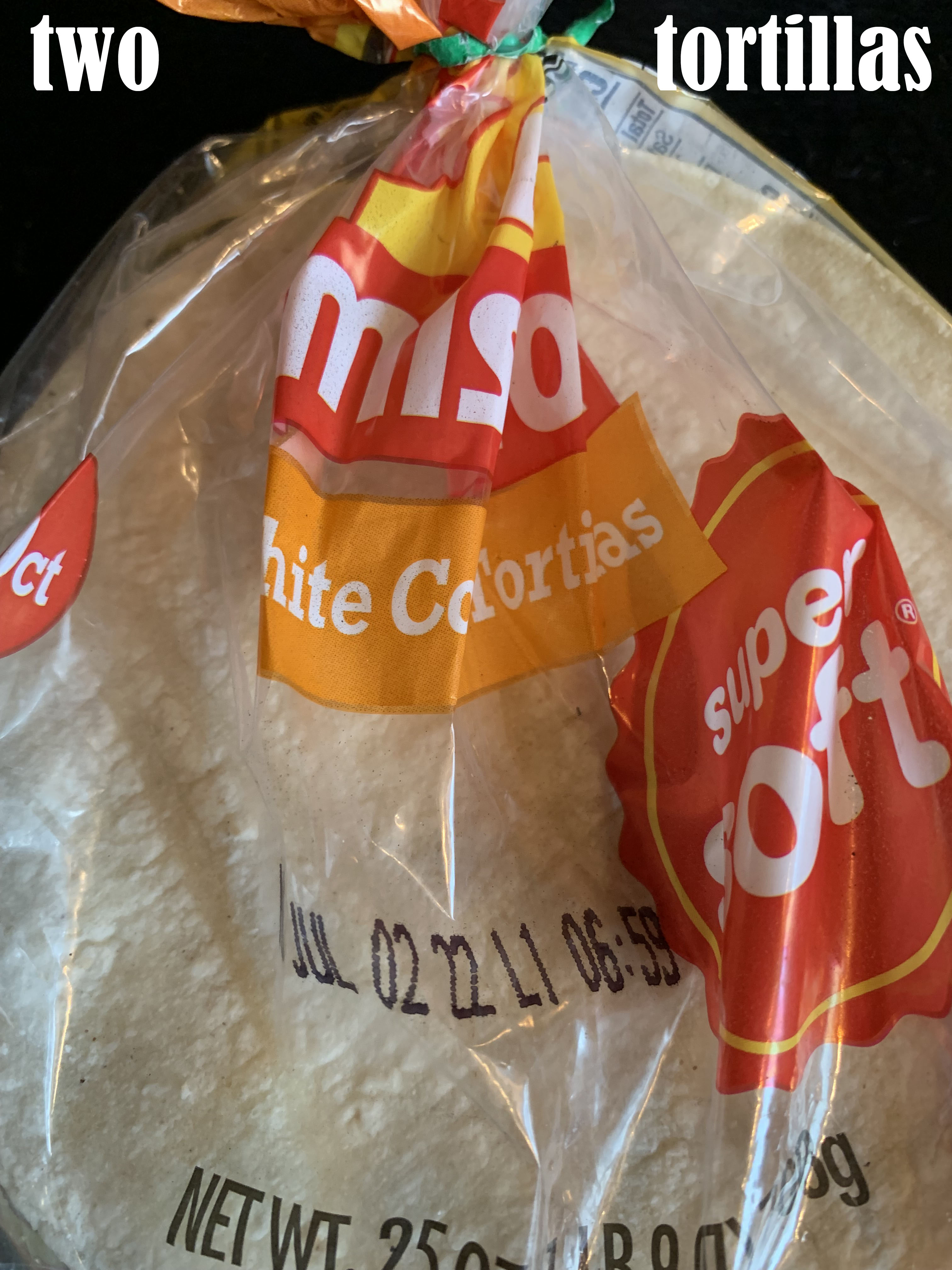
We have, for years, made lunches from yummy food wrapped in a corn tortilla. More often than not, our food falls to our shirt, our plates, the floor, because the tortilla splits. “We have to do something different,” Kerri says each day as her tortilla disintegrates. Dogga delights in the mess and recovers the spoils that hit the floor. Day after day, year after year, the tortilla struggle has been a part of our lives.

During a recent visit, Kirsten, watching our struggles, shook her head, sighed and asked, “Why don’t you use two tortillas?” It was a revelation. A simple change that never occurred to us, babies of depression era parents.

“Two tortillas!” Kerri exclaimed. “Yes!”

I nodded with satisfaction. A better life, a cleaner meal, was in reach! Less mess in our future!

Two tortillas. Hold the charcoal like a flower. Revelations born of ease and the obvious answer.

Someday we will learn (or not): No stress necessary. Relax. Insight sings the song of simple lessons.

read Kerri’s blog post about Two Tortillas

Open The Story [on Not So Flawed Wednesday]

Put on your swimmies for a dive into the esoteric.

It was hot last night so I lay awake thinking and that’s never a good thing for the people – like you – who pay attention to the random things I write or say. This is what I thought in the heat of the night: Saul always instructed me to look beyond my opponent and place my focus in the field of possibilities. “Look a hundred feet beyond your opponent,” he said.

It’s universally true that a mind needs something on which to focus. And, left untended, most minds will focus on complaints or problems. During my tilt-at-windmills-consulting phase I’d tease my clients with the notion that, rather than eliminate challenges, people create them. We need them. We call them hobbies. Or play. Or problems. After all, stories are driven by conflict and we are, at the base, storytelling animals. It’s worth noting that a great collaboration is not the absence of conflicting opinions but the capacity to use the heat of creative tension to find/discover a third way.

What does this have to do with Saul and the field of possibilities? A focus, to be useful, needs to be specific. What exactly does the field of possibilities look like?

The reason our untended minds sort to the negative is that the negative is usually concrete, an easy fixation. Fear is a clear picture – even when imaginary. Obstacles are easy to spot. Possibilities are rolling and amorphous. Changeable. It is the nature of a good possibility to shape-shift.

The masters of meditation mostly tell us to soften our focus. Or to let the thoughts roll through the brainpan like clouds; do not attach to what we think. Do not take ourselves so seriously. Practice flow instead of the hard fixing of thought.

And, therein is the source of my late night esoteria: the mind needs something to focus on. Or does it?

If I soften my gaze, if I look beyond the problem-of-the-moment to a vast field of floating possibility, am I tossing myself into a feedback loop? I lay awake wondering what the field of possibility might look like if it was graspable. Some people make vision boards for just this reason. Quinn used to hum and fill his mind with lyrics.

Tjakorda Rai laughed at me and told me I needed to “open my story.” At the time I thought he meant to take responsibility for my story. Now, I know exactly what he meant: let it flow. Get out of the way. The demons and monsters and fears and problems and challenges are…passing things. Story fodder, nothing more. So look beyond them. Flow. Focus on the flow. Open the story.

read Kerri’s blogpost about THE FOUNTAIN

See The Glue [on Not So Flawed Wednesday]

It’s a new phrase to me but I liked it immediately. I liked it because I have known some amazing people, those rare birds who keep the runaway-egos focused on the project, who naturally and seemingly without effort coalesce disparate talents into a cohesive creative team. The ‘glue people’ is a perfect description.

Glue people intuitively understand power as something that is created between people, not something wielded over people. I suspect that is the epicenter of their glue-gift: they see beyond the parts to the sweeping possibility of the whole. They know that “every man/woman for themself” is a recipe for disaster.

Despite our dedicated cowboy mythos, innovation is never the province of a single person. There may be a single visionary but the vision is never accomplished in a vacuum. Inventions, like organizations or nations, come to fruition through the efforts and skills of the many-working-as-one. Glue people generate “the-working-as-one.”

Stage managers, production managers, executive assistants, contractors…those highly overlooked people at the center of the information, who quietly make sure the work of creation happens without collision while also making certain all the parts and pieces know how much they are valued.

Meaning makers. Making value explicit. Glue people. Just try to get an idea off the runway without them.

read Kerri’s blogpost about GLUE PEOPLE

See Down The Pike [on Flawed Wednesday]

“Age and stage,” 20 says, to explain the behavior of people. Age and stage.

I pulled up Shakespeare’s Seven Ages of Man soliloquy. Jaques from As You Like It. “All the world’s a stage…” We perform the role of ourselves in this drama of life. In a funny coincidence, I’m spending some time inside Pirandello’s play, Six Characters In Search of An Author. David is updating the script and preparing for a production. I’m fortunate enough to play witness to his journey. ‘All the world’s a stage’ meets ‘who will tell our story?’

In the final lap of his career, Tom was an assistant superintendent at a school district. He’d shake is head and say, “Parents forget that they were once children and expect their kids to do things that they themselves could not do as children.” Each age grows blind to the previous stage. We forget the great learning-power of making a mistake.

My favorite of Tiago Forte’s 10 Principles of a Second Brain is to make it easier for your future self. It’s a great idea and I wish the bevy of my past selves had been kind enough to consider me at this age and stage. When I turn and look at the rough wake of my passage I know that, with some better choices, I might have scribed a more direct path. Or not. My past selves caution me to fully appreciate the messes and the mistakes that they made. My life is better today because of the rampant foolishness of those former-me’s.

The Balinese believe that we come back every seventh generation. They are an ancestor returned. As such, they are less likely to foul their nest believing they will themselves be the future inhabitants of the nest. Looking down the long-road, they see themselves dealing with the world they currently create. And so cooperation, sustainability, and peace are much higher on their priority list than guns and every-man-for-himself. To care for another is to care for their future self. They find a society like ours, that allows anyone in the community to be homeless, to be broken. Diseased. Or simply adolescent.

I can’t help but think they are mature while we are mewling toddlers. Considering the impact of your actions seven generations into the future is surely a sign of maturity. Thinking of others, understanding betterment as a shared responsibility, is an adult perspective. Currently, we allow our children to be slaughtered and protect the gun that killed them. Surely there’s some growing-up to be done.

I wish I had a penny for every recent conversation I’ve heard that began with the phrase, “I don’t understand what’s going on in this nation.” 20’s voice pops into my head, “Age and stage,” he says in my mind. “Age and stage.” Let us hope that there’s some maturity coming down the pike, that we survive this stick-your-finger-in-the-socket stage.

Perhaps we will someday look back and appreciate the mess, the rampant foolishness, the mishmash we are making.

read Kerri’s blogpost about AGE AND STAGE

Embrace Wabi-Sabi [on Not So Flawed Wednesday]

“I love this photo,” she said, “because the flower isn’t perfect.” Wabi-sabi. Appreciation and acceptance of impermanence and the absence of perfection. The full embrace of ‘what is’ rather than some imagined belief or ideal.

I read that the church leaders refused to look through Galileo’s telescope because their book already explained to them how the universe worked. I don’t know if this account is true or not but I’m given to believe it. I see the same story playing out in all shapes and sizes of blind-belief systems today. The wily Fox has millions refusing to look through the telescope in favor of an abstract and angry conviction.

Imperfection. Appreciation of nature and its forces. Look up. Open eyes. Open mind. Open heart. Direct experience that has the power to challenge the staunch and rigidly held opinions. Modesty.

Wabi-sabi. I love this photo.

read Kerri’s blog post about THE WHITE BLOSSOM

Attend [on Not So Flawed Wednesday]

“Love is our true destiny. We do not find the meaning of life by ourselves alone – we find it with another.” ~Thomas Merton, Love and Living

I had an odd-thought-revelation as we drove into the parking lot of the Hospice Alliance. We were there to make a donation. In cleaning out the house, Kerri found several throw-blankets. She washed and freshened them, preparing them for donation. In a past life she was a volunteer at the Alliance and wanted the blankets to go where they would be the most useful, provide the most comfort.

My mom tells me that my dad’s last days were lovingly tended by amazing hospice caregivers. His passage was eased by their guidance and attention. In some small way, the blanket donation felt like a thank-you-note. I was not present in his final weeks and it brought me comfort knowing he was in the care of such extraordinary people.

And that was the seed of my odd-thought-revelation. As we pulled into the parking lot, on the first bright sunny day in weeks, I stepped out of the car and turned my face to the sun.

In the warmth I understood that we are all in hospice care. Our time is limited. Every single moment is precious. Every single moment is shared. We’d do better if we realized it. We’d do better if we attended to each other, to relieve pain and suffering, to pay attention to the quality of each and every life in our passing moment. In our tender and oh-so-temporary lives.

read Kerri’s blogpost about BLANKETS

Break The Rules [on Not So Flawed Wednesday]

When the tornado sirens sound, we have to carry Dogga to the basement. He doesn’t do stairs. It confuses him since he is hard-wired to take care of us. That we snatch him up and hurry into the basement leaves him discombobulated. In the basement, the essential borders to protect become unclear. He paces. The behavior of his humans signals a wolf is approaching but where’s the necessary line of defense? The rules are different in the basement.

Brad and Jen have a new puppy. They are diligent in their training. We confessed that during the pandemic, we’ve “ruined” Dogga. We never allowed him to beg or fed him scraps from the table. During the long dark days of isolation, we tossed all the rules. We breached every training boundary. He’s a smart boy so he knows the difference between snack time and dinner. Dinner remains off limits (mostly) but snack time is open season for begging. And, who am I kidding, he doesn’t need to beg. He sits between us at the table and waits for a steady stream of cracker bits to find his open muzzle. The metaphoric tornado came, we retreated to our safe place. Different rules.

This pandemic tornado is in no hurry to leave. And, haven’t we all been changed by it? Whether we acknowledge it or not, we are in the basement now. New rules apply. New realities are in play. The essential boundaries are unclear.

Just as was true before the tornado arrived, Dogga gives world-class eye contact. He reads our eyes to suss-out where we are going or how we are feeling. Sometimes I think he knows how I am feeling before I do. And, although we are in a hunkered-down world of new rules, the most important relationships remain the same. If he wants out, he establishes eye contact; the intensity of his stare and his nod-hint-to-the-door educates his too-slow-humans that the squirrels have breached the boundary. Action is required! I am captivated by those amber eyes and comply with his wishes every time. In-out-in-out. Kerri is made of stronger metal and responds with authority to his intense stare, “You can wait,” she says. The intensity drains from his face and he retreats to the comfort of his bone. I count to twenty and ask, “Do you want to go out?” Kerri shakes her head. Some old stories transcend the new basement reality and are, and have always been, about the complete absence of boundaries. A boy and his dog.

read Kerri’s blogpost about DOGGA EYES