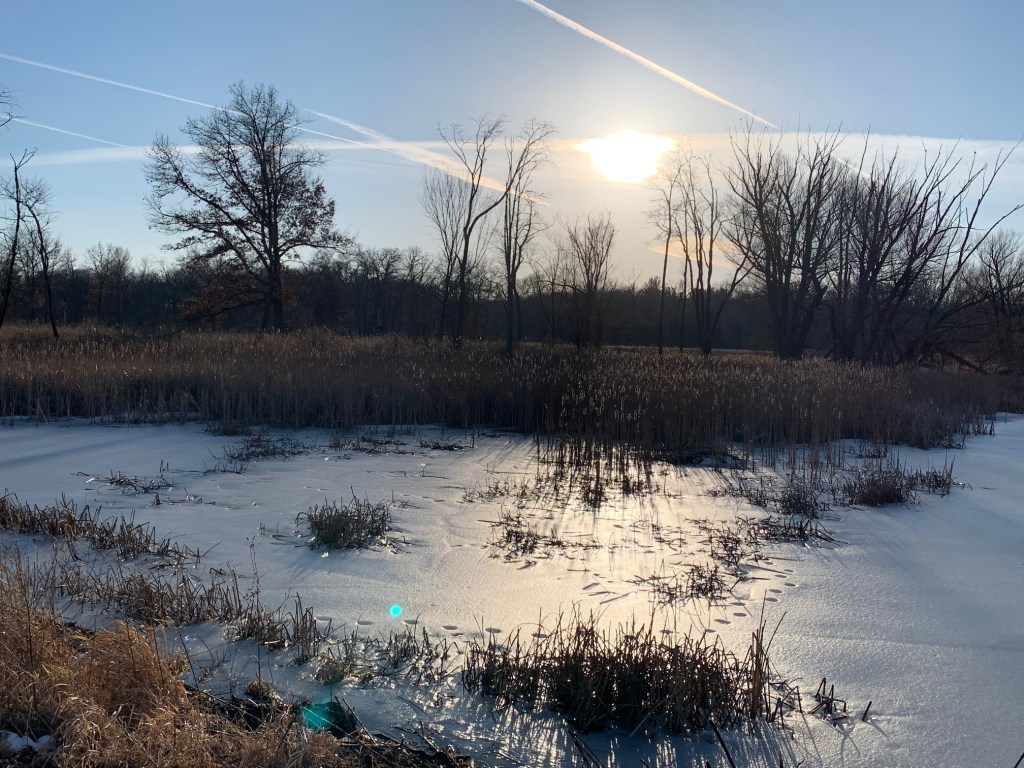
Sense The Air [on DR Thursday]

In the summer, it is a place of frogs and turtles perched on rocks, drinking in the sun. We stop and watch until the wary turtles slip into the murky water, the frogs halt their croak-symphony. Respectfully, we move on. Behind us, the symphony resumes.

In winter, it is a different scene. Sienna and ochre rather than a million shades of green. Silent, the musicians are on hiatus. The turtles sleep, having disappeared beneath the earth some months ago. They will return in several weeks without fanfare. Without formal announcement we will spy them on a log. Kerri always marks the first sighting in her calendar. “Turtles!” Some winter days we cross the long bridge and look into the river at their usual spot. We know it is too soon but such is the way with hope.

I’m getting a taste of the life my grandfather lived. One place. He lived in one town his whole life. My dad’s dad. I was with him one bright sunny day in the park when he stopped, sensed the air, and said, “We’d better get in. A storm is coming.” I thought he’d lost his mind. There wasn’t a cloud in the sky.

The clouds rolled in. Thirty minutes later, safe inside, we watched the heavens open and dump buckets of rain. Somedays on this trail we love, I sense the air. I know what’s coming. Having lived so many places, until now, I never understood the power of place, the relationship with the reeds, yearning for the symphony, knowing in my bones that the sun is not quite right for the turtle’s return.

read Kerri’s blogpost about THE MARSH
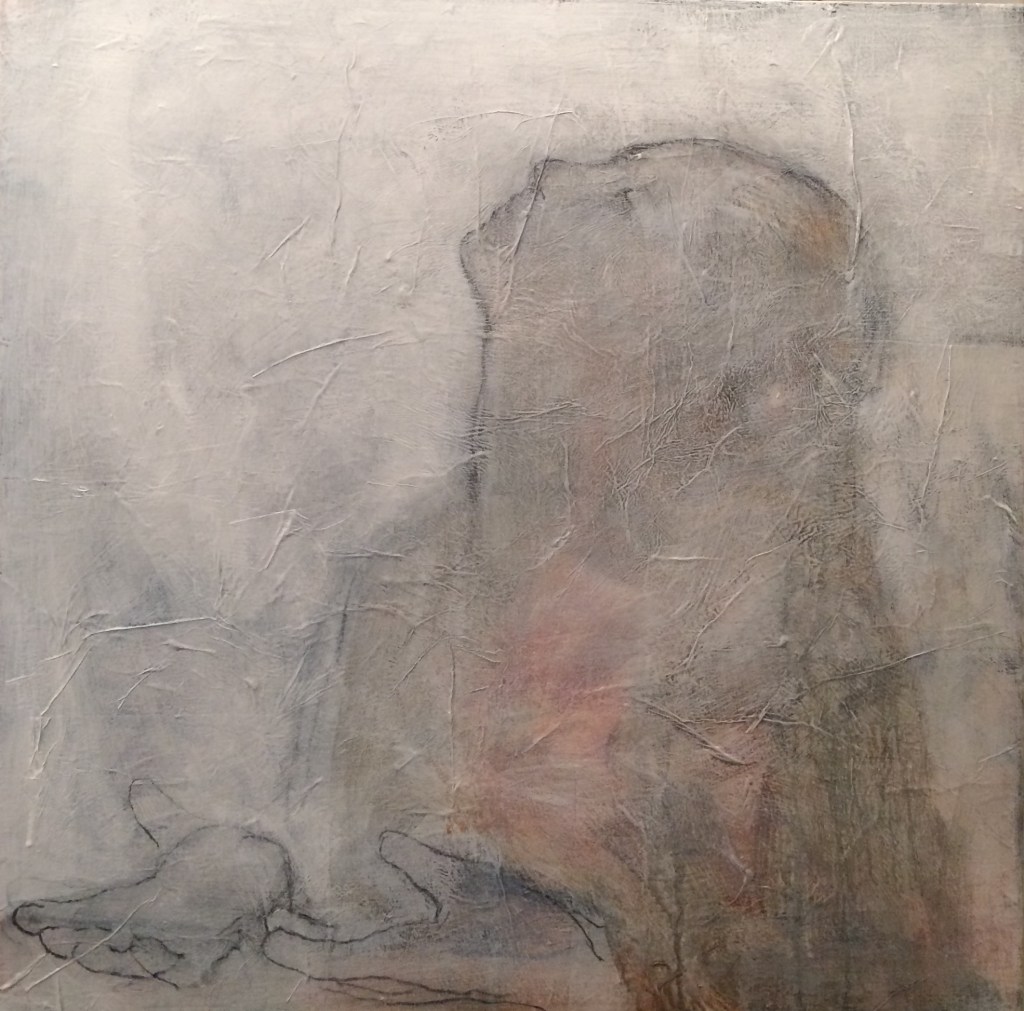
Feel The Rain, 24x24IN, mixed media

feel the rain © 2020 david robinson

Study The Studier [on DR Thursday]

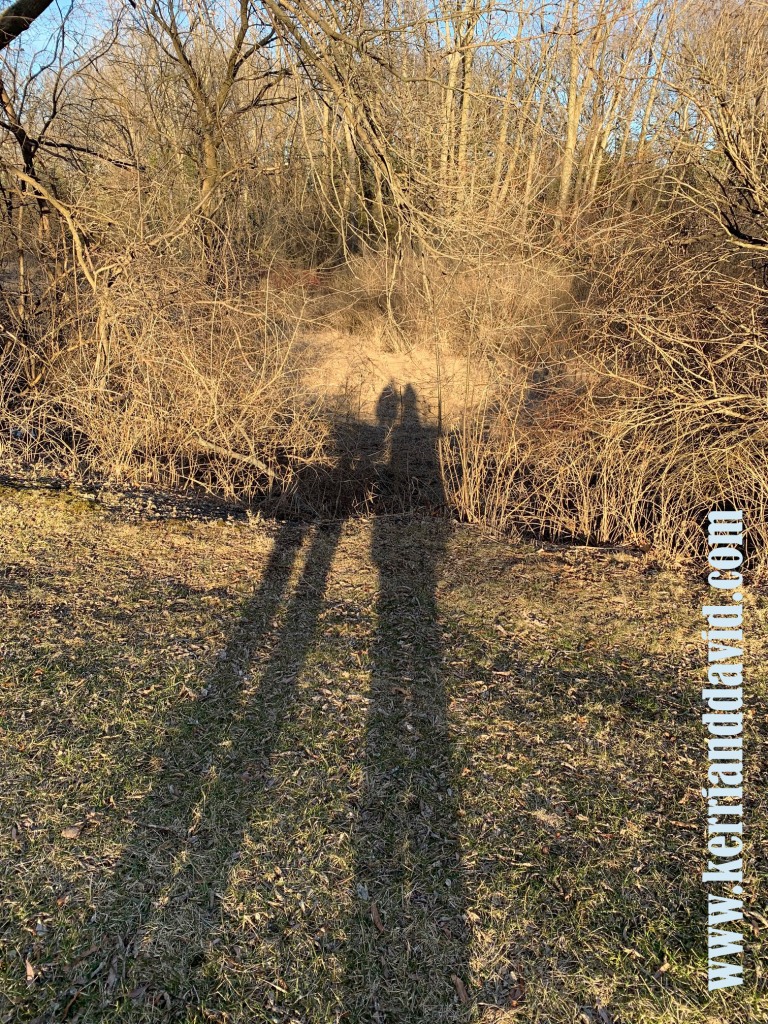
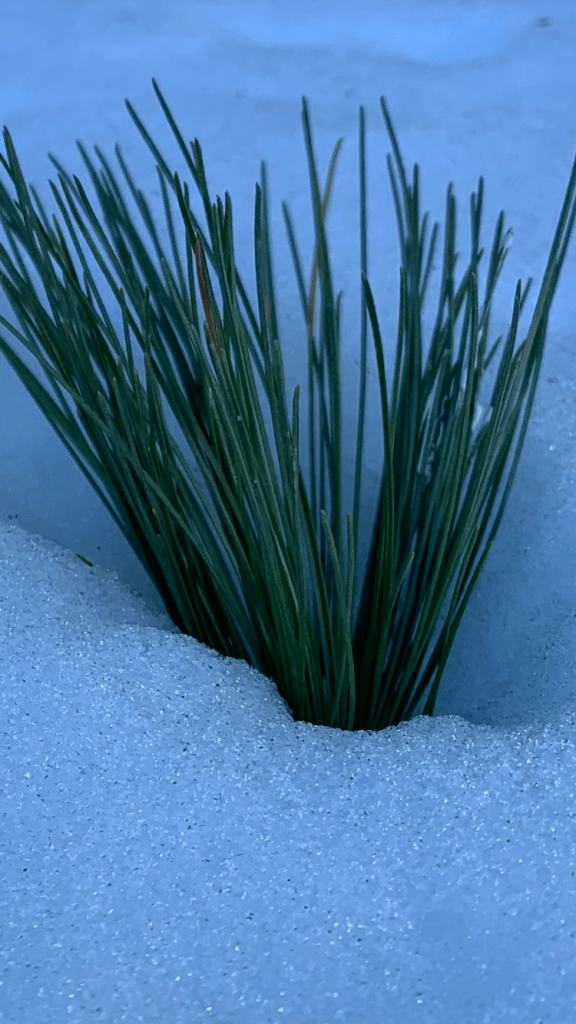
I study the studier. She kneels, excited to capture the winter face of plants along the trail. It’s as if they call to her.

Where does it start? An idea. Broad and generic. Spontaneous. Studied.

For months I watched her take photos of the train through the trees. “Here it comes!” she’d laugh and pull her phone from her pocket, running to get the best spot on the trail. Each time as excited as the first. I took photos of her taking photos of the train snaking just beyond the trees.

Mostly she shoots close-up photographs. Spontaneous. She has an eye for detail. She helps me see what I overlook. I have an eye for the big picture, the metaphoric. I study. Pie-in-the-sky.

I think she would have been great pals with Georgia O’Keeffe. They’d have compared notes on the magic world of minutia. The dried flowers, the pattern in the petal. The amazing textures and vibrant winter colors. Some people see only brown. Kerri sees subtle changes, ochre, cream and an array of umber. A universe full of color. Just like Georgia.

This is where my studied painting started:

underpainting: train through trees.

Originally I intended to use a long canvas. The composition-in-my-mind was different, more spatially accommodating of the train. I was going to paint over something I didn’t like but she flung herself between me and the doomed painting, like the angel rescuing Isaac from Abraham’s knife. Needless to say, I shifted my composition. I had another canvas. Large and almost square.

It had been awhile since I attempted a larger painting so I made one rule: I had to have fun. Master Miller sent some cool tools for me to try. They are like large rubber scrappers and brushes. After a hiatus I have a tendency to go to detail too soon so I used his gifts to keep my strokes broad and light hearted.

Okay, I made two rules: I painted in 45 minute sessions. I generally have a 3 hour necessity but the realities of our circumstance make that dedication of time difficult. I start Dan Fogelberg’s album, Captured Angel, and when the last note is sung, I stop. I clean my brushes. It was a great way to stir my process-pot. It was frustrating and liberating at the same time.

This is where it may end. This painting has traveled a long way. Soon, I’ll turn it to the wall. I need to forget about it and will someday see it with fresh eyes. Right now, in a festival of irony, all I can see is the detail so I asked Kerri to come into the studio. Blinded by minutia I needed her wise eyes to tell me what she sees. Globally. The studier becomes the study. A perfect circle.

Train Through Trees, 48x49IN, mixed media

I’m slow-stepping into my new site. The construction continues…

read Kerri’s blogpost about DETAIL

train through trees © 2023 david robinson

Ask A Simple Question [on DR Thursday]

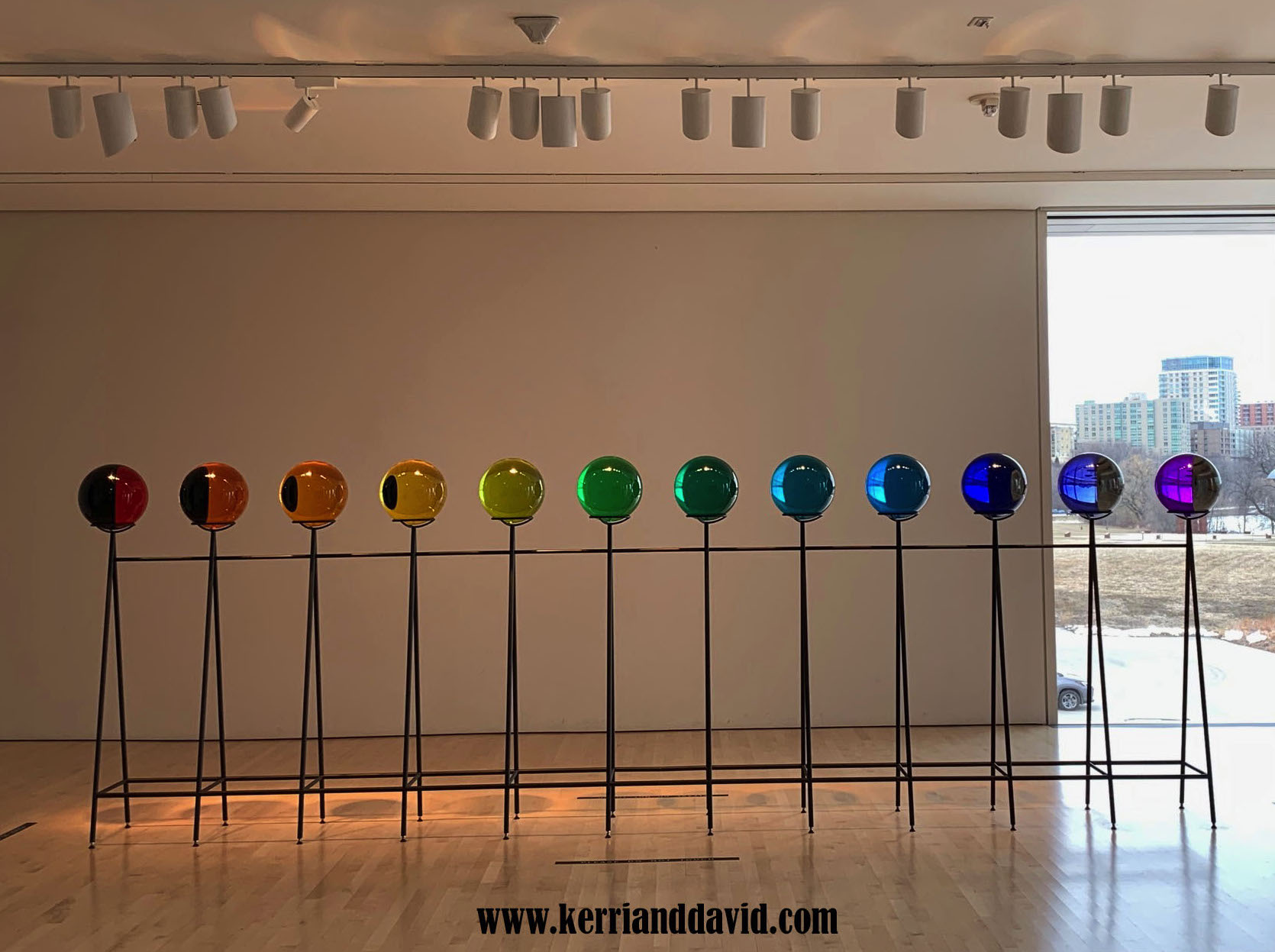
It’s existential. What you see changes depending upon where you stand. That’s true when engaging any piece of sculpture. It’s true when engaging anything in life. Point-of-view is fluid and relational. This sculptural reminder is Olafur Eliasson’s Rainbow Bridge.

In another era of my life facilitating diversity and inclusion workshops, the same surprisingly simple concept was usually a revelation to people. What you call “normal” is merely a point-of-view. Most importantly, it’s not everyone’s point-of-view. Your “normal” is unique to you, not universal. Most hopeful: it’s not fixed in stone. It’s changeable. Relational. Capable of growth. A mature point-of-view recognizes that it need not, it cannot, be the center of the universe. A mature point-of-view necessarily asks an all important question: “What do you see?”

It’s not only possible to look at the same sculpture and see a myriad of differences, it’s necessary. It’s human. Sharing what we see is how we, together, create community. A common center is created by a circle of differing points of view. A common experience is borne of sharing disparate points-of-view of the same event. A common center is made functional when everyone in the circle is capable of asking with sincerity a simple question: What do you see? It is made vibrant when everyone in the circle expects the answers to be different than their answer.

Art is one way of responding to the simple question.

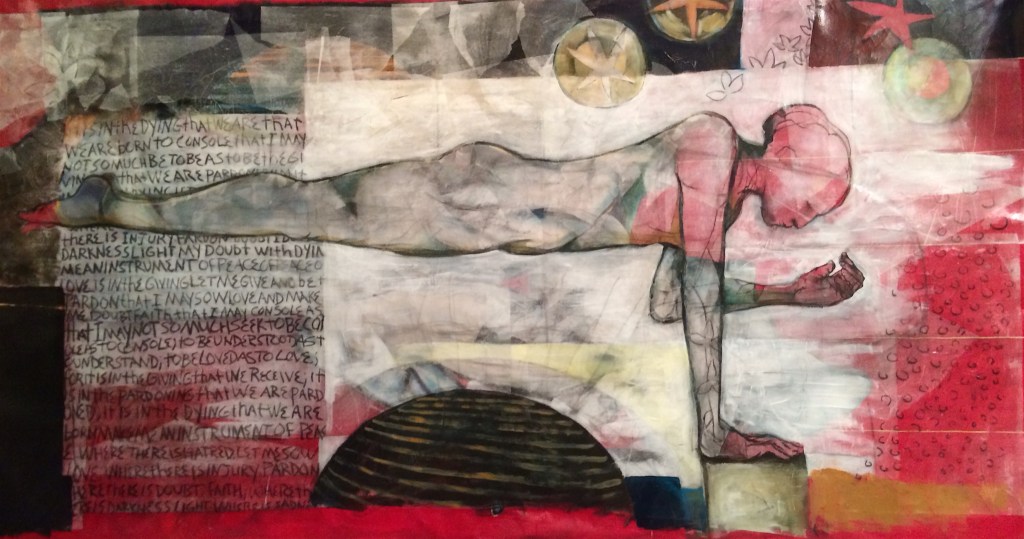
Instrument of Peace, 48x91IN, mixed media

read Kerri’s blogpost about RAINBOW BRIDGE

instrument of peace © 2017 david robinson

See The Frame [on DR Thursday]

The lake was angry. Had you dropped me in from outer space I’d have sworn I was standing on a beach of the stormy Atlantic Ocean. “I just can’t capture it,” she said, after snapping several photographs. The roiling waves hit the shore with thunderous power and intensity. I felt it in my chest. Distilling the energy within the frame of a photo sublimated the dramatic waves to an everyday image. The frame successfully abolished the fear and eliminated the awe.

On the trail this past Sunday, he quipped that the world as we knew it began its decline when CNN invented the 24 hour news cycle. It’s a lot of time to fill and, to keep people hooked (ratings), the importance has to be exaggerated. When everything becomes ‘Breaking News,’ the really important stories are lost amidst the manufactured dross. Scrolling through our news app this morning I felt as I once did while waiting in line at the grocery store check-out surrounded by the screaming headlines from The National Enquirer. Sorting to the grotesque. Manufactured awe has successfully amped up our fear. A very strange frame, indeed.

The real power of a frame-of-reference is that it is mostly invisible yet it determines the potency of the composition. Focus is largely a function of frame. I’m in the habit of taking “snippet” shots of my paintings. Altering the frame of what I see helps me…see. It promotes inquiry.

A fluid frame is like an open question. It facilitates engagement. A fixed frame does the opposite. It closes the question options: yes or no. A 24 hour news cycle necessarily defaults to a fixed frame. It pretends to be inquiry while promoting dogma. If you wonder why we are at each other’s throats, why we’ve reduced ourselves so severely to a community defined by two primary colors instead of the full palette available in our color-full nation, do an experiment: pay attention to the story-frame you are being fed.

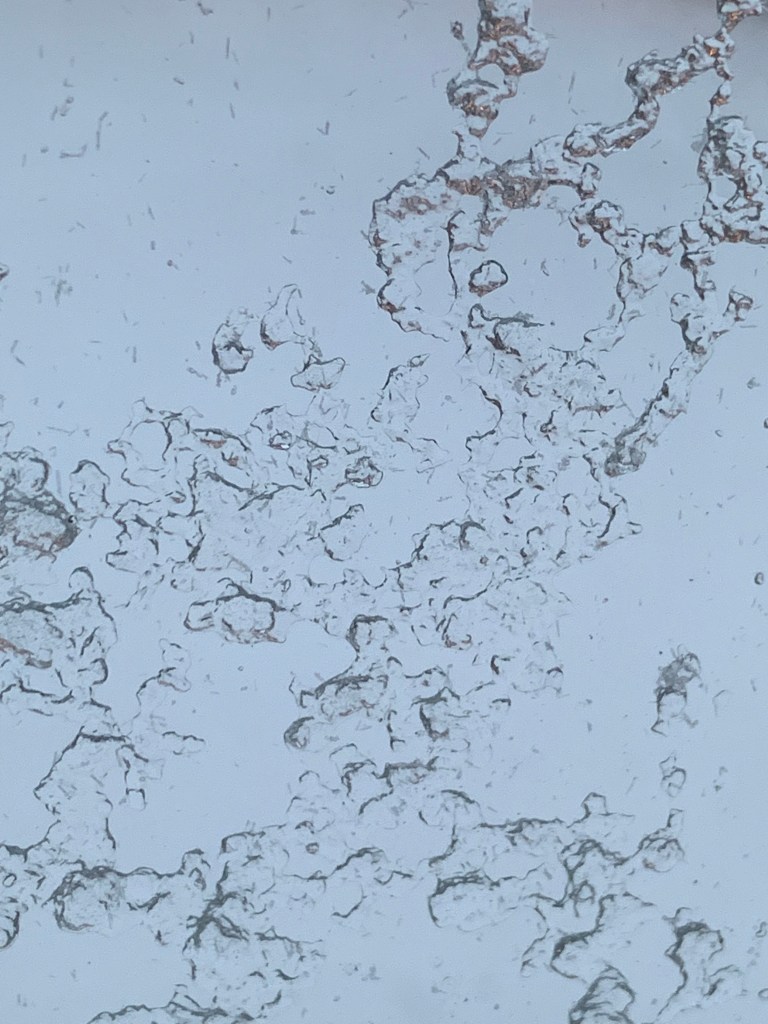
Ice crystals formed on our kitchen window during the latest storm. Kerri rarely takes a single close-up. She takes many shots of the same subject. In a digital age, she is also able to pull a single photo into several different focuses and takes screenshots of the possibilities. A fluid focus. She composes. She questions. She asks. It’s a pure artist’s action. Turning to me she never asks, “Which is better?” Instead, knowing the power of a frame and with full respect for the difference that I might perceive, she asks, “Which do you like and why?”

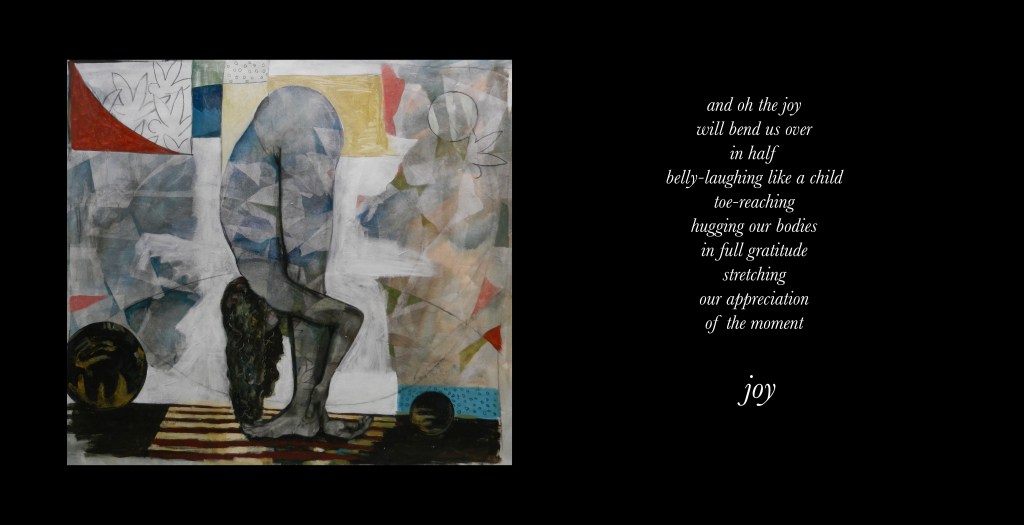
joy. 50x56IN mixed media

Two frames. Can you see them? [the new site is like a good wine…taking its time to mature]

read Kerri’s blogpost about ICE

joy © 2014 david robinson

Protect The Seed [on DR Thursday]

Lately I’ve been applying for many jobs so I’m configuring and reconfiguring resumes and writing cover letters. They essentially serve as a surface-layer life review. This is who I am. This is what I’ve done. Of course, for me, that means I am thinking about art and artistry.

When I write the words “art” and “artistry”, I am aware that they mean something to me that I will never be able to convey through language. They are not “things” that I do or have done, they are not welcome career paths or positive attributes that potential employers desire to see on a resume. I wish I could count the times someone has said to me, “Yes, but what are you really going to do?”

“No, no, no!” I think. “You don’t get it! It’s not something I do.” I’ve learned over time to keep that thought to myself. There’s no point debating the worth of a way-of-life in a world that measures value in dollars and cents. Against this calculus, artistry makes no sense.

What am I really going to do? Paint. Write. Perform. And bring my artist’s sensibility to an organization. The people who hire me will fully realize the benefit of someone who sees through my eyes, someone whose artistry permeates everything they do. At this stage in my life, I’ve run companies, I’ve saved companies, I’ve held people’s hands and led them into and through impossible conversations, I’ve stood in organizational fires and, sometimes, taken Tom’s advice and let the place close-down. “Make space for something new to enter.”

As I write my resumes, I am daily reminded that we are embroiled in a culture war. We are standing in a historical teachable moment: we will either tell our full story and grow or we will do what we’ve done in the past and ignore our addiction to fantasy and opt for history-censorship. There’s never been a better or more necessary time to be an artist. Artists hold, express, and reflect the identity of their community. Nihilism has brought us here and that empty “anti-woke” sun is setting.

What we say matters. That’s an artist’s thought. How we say what we say matters. That, too, is an artist’s thought. Mattering is a word of relationship. Consideration of others is the province of mattering. That, too, is an artist’s thought. It’s an artist’s imperative: tell all sides of the story.

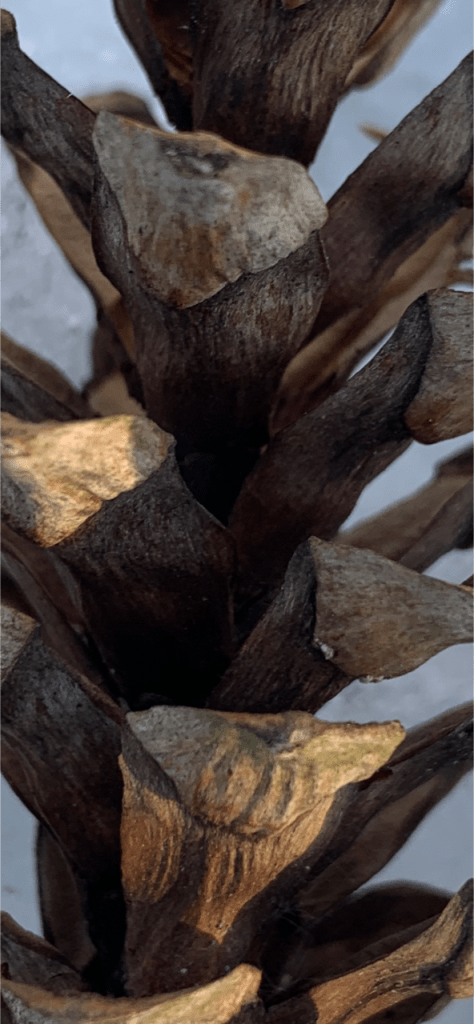
Kerri and I walk the trails to clear our minds and our walks have provided me with a perfect metaphor; artists are pine cones. The pine cone holds the seeds. It’s a protective, nurturing organism . It’s “…the female reproductive structure of the tree.” It’s the keeper of the essence and promise of the next generation.

From the deep archive. A painting from another century. From the estate of Marian Jacobs

read Kerri’s blogpost about PINE CONES

painting from another century (I can’t recall the title) © 1990, 2023 david robinson

Step Off The Path [on DR Thursday]

At first we were horrified. The forest filled with machinery. Trees down and the underbrush annihilated. Our beloved trail decimated. We read that the seeming destruction was part of a woody invasive species clearing project. The clearing would allow the native species to rejuvenate.

Later, after the machinery was removed and the air cleared of diesel fumes, we returned to walk the obliterated forest trail. And, on our walk, I learned – or re-learned – a very valuable lesson. The change pulled us from our well-worn path and invited us to explore. Because we could now see all the way to the river, we left the trail. We stepped into the unknown. What had been comforting and known now beckoned us to see anew. To wake up.

We walked in places where previously we could not because the brush was too dense. We followed an animal trail through the snow into a part of the forest we’d never been. It was a place we’d never before considered investigating. We deviated and hiked all the way to the train tracks. We took photos. We felt the thrill of stepping into new territory. Our eyes wide open, our ears attuned to every nuance of sound, we took nothing for granted. Everything was pristine and unknown.

Change is like that. It makes you pay attention.

Returning to the trail so we could make our way back to the car, enlivened by our off-trail adventure, we wondered aloud about the wildlife. We worried for the deer. And, just as the words left our mouths, Kerri stopped and motioned to the forest’s edge. A deer was watching us. And then there were two. Three. Five. After determining that we were not a threat, they nibbled on branches. We stood very still; quiet appreciation.

It felt like a reward for taking the step off the beaten path. It felt like reassurance that the devastation was akin to a forest fire; necessary for renewal.

From a cue invisible to us, the deer leapt in unison, white tails flashing, and disappeared into the forest. It broke the spell. We returned to the car, eyes scanning the forest in case the deer returned. Our senses keen, I felt fully alive.

Change is like that. A clearing project, disrupting comfortable complacency, nothing can be taken for granted, making way for new seeing and discovery. Anything becomes possible.

a work in progress: train through trees, 48x48IN

read Kerri’s blogpost about RIVER BEND

train through trees (in progress) © 2023 david robinson

Scribble With Purpose [on DR Thursday]

Henri Matisse said, “Creativity takes courage.” I suppose that is true when considering the enormous pressures to conform to a style or standard. To create what is acceptable or expected. To suss-out what will be rewarded with approval and/or profit. In this context, it takes enormous courage to deviate. To explore. To surprise yourself by breaking form and risking ridicule and rejection and poverty. In this context, it takes courage to show up. It takes courage to punch through.

On the other hand, creativity is the most natural thing in the world. Ask any child. On second thought, please don’t ask any child since it will only confuse them. They have no idea that creativity – to an adult – is a separate thing. What’s scary and vulnerable to the tall people is commonplace to the little critters. There’s help for the older folks: allow the child-inside to scribble with abandon. Recognize that the story of, “I’m not creative,” is a creative act. The story of “It’s scary to create,” is also a creative act. It’s a story.

Creativity runs like wild horses through every day of our lives. Our perceptions and interpretations and fears are pure storytelling. The real challenge is not the absence of creativity but the conscious appreciation of our rampant creativity. The squeeze to conform serves as a heavy curtain obscuring our vibrant expressiveness.

The courage that Henri Matisse references is borne of the tension between the desire to be appreciated (to fit in, to succeed) and the yearning to break new trail or sail into undiscovered lands. To risk. To intentionally and publicly scribble outside the lines. To say aloud what needs saying.

Creativity is the most natural thing in the world. As it turns out, so is conformity. We are, after all, like wolves: animals that run in a pack. Humans die in isolation so serving the will of the group is a high priority. The wrestling match between creativity and conformity is necessary.

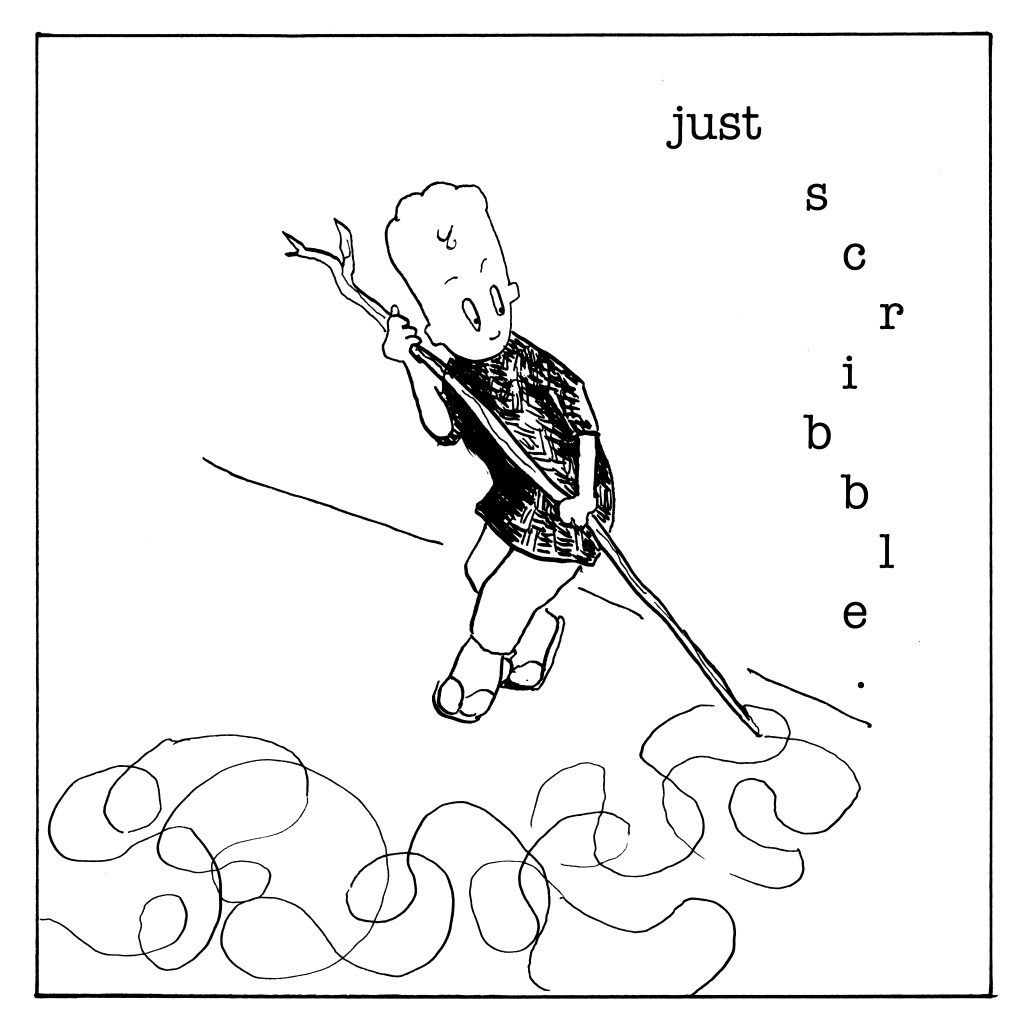
The progressive impulse. The conservative impulse. A bowstring drawn taut between these two poles provides the necessary tension to send the arrow of our ideas and dreams sailing toward the distant target. Children scribble with abandon. Grown up children, those telling themselves the story of “I’m a creator,” learn to scribble with purpose.

read Kerri’s blogpost about PUNCHING THROUGH

shared fatherhood, 25.5X40.5IN, mixed media on panel

shared fatherhood 2 © 2017 david robinson

chicken marsala/just scribble © 2016 kerri sherwood & david robinson

Buckle Up [on DR Thursday]

“Life is 10 percent what you make it and 90 percent how you take it.” ~ Irving Berlin

There’s nothing like flying in a plane to shake-up and challenge your perceptions. Board a plane on a snowy overcast day and, after a few minutes of lift, punching through to brilliant sun and the curvature of the earth. What was true on the ground is not true in the sky. And vice-versa.

The first time I flew I was 18 years old. I remember thinking that, of all the people who’d walked the earth throughout time, very few had seen the clouds from above. Most looked to the sky and wondered what it felt like to fly like a bird. During our recent flight, looking down at the clouds, I was taken by the fact that the population of humans-on-earth has doubled since the 18-year-old-me first looked out the window of an airplane. Something that has never happened in the span of a single lifetime. If I live an average lifespan, it will triple. The challenges we face, from the migration of people to the warming globe to the crisis of resources, can be traced back to this simple statistic. The stress levers get lost in the rhetoric-shuffle.

From the sky, it’s easy to see that we are one team, occupying one planet. From up there, the wrangling over red or blue, the movement of the fickle markets, the fist-pumping red-faced divisions, all disappear. It’s easy to punch through the dense fog and see a bigger picture. A more perfect union.

I chuckled after I wrote that last metaphor because my inner cynic rolled his eyes and muttered, “Yeah, but first you have to WANT to get on the plane.”

My inner optimist, not to be outdone, replied, “Exactly. It’s human nature to want to see what’s over the next hill or above the fog. Everyone wants to get on the plane.”

Well, there you have it. Scintillating perspectives from the cynic on the ground and the optimist in the sky. Creative tension at its finest. While my cynic and optimist work this one out, I think I’ll fasten my seatbelt and prepare myself for a smooth landing. As the saying goes: What goes up must come down.

read Kerri’s blogpost about CLOUDS

A Prayer of Opposites, 48×48, acrylic

a prayer of opposites © david robinson

Listen To The Snow [on DR Thursday]

It’s snowing and it’s making me feel like wrapping in a blanket. Cozy and reassuring.

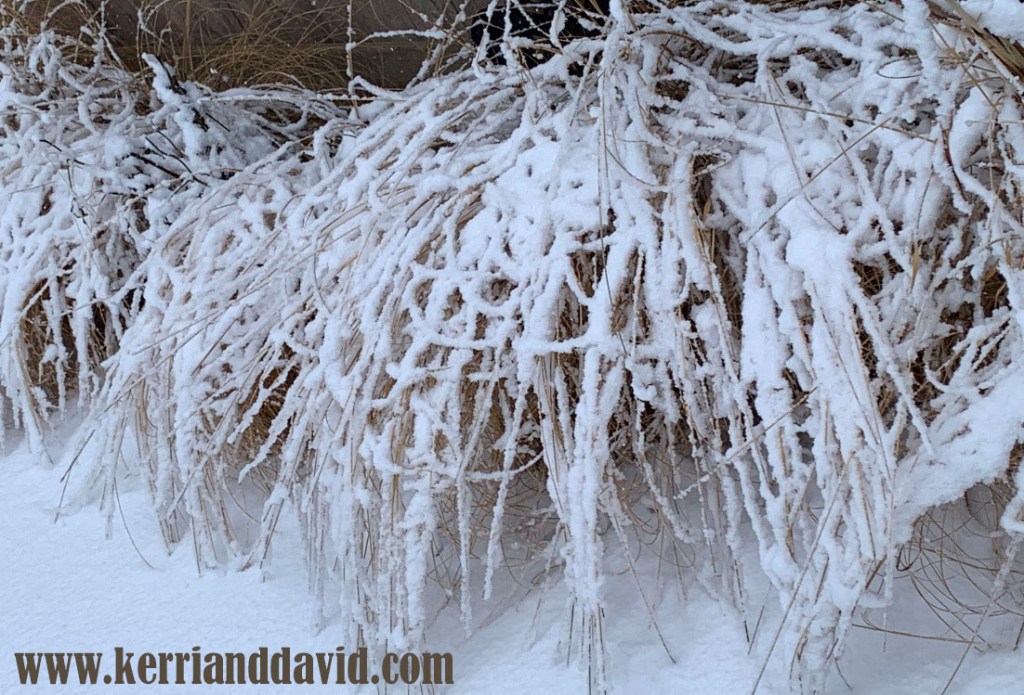
The tall grasses are bowing with the weight of the snow. It’s beautiful. It’s quiet. The kind of quiet that only happens in a snowfall, like the world stands still and listens. We stood with our coffee and looked out the kitchen window at the enormous flakes falling. Quiet outside, quiet inside.

Yesterday we were in Florida. Bill called it paradise. I disagree. For me, paradise has seasons, an open window at night, the cold air driving me deeper beneath the quilts. Paradise calls me outside to walk. Paradise includes the infinite space that opens with the hush of the snow, when world rests and takes note. It makes the green shoots of spring that much more magical. Difference hones appreciation.

It’s good to be home. The snow serves as a welcoming committee. “Welcome back,” it whispers, reminding us of life’s rhythms, “It’s time to recharge.”

I look at my list of things to do and decide that I will listen to the snow. Today is a day to rejuvenate. To stand at the window and listen.

read Kerri’s blogpost about SNOW

In Serenity, 46×30, mixed media [my site is down and under construction]

in serenity © david robinson