Sit On The Curb [on DR Thursday]

As much as our wily-ole brains would like us to believe otherwise, we can be nowhere else but in the present. Everything else is imagination.

Years ago I belonged to a support group of independent consultants. We met once a month to discuss our business challenges, insights, and to give and receive some advice. One of the members of the group was a Byron Cady coach. I have no memory of the discussion that prompted her to offer this Byron-thought-metaphor: “If your house burns down, rather than race around in panic, the best thing you can do is sit on the curb and appreciate the moment.”

To the consumer-mind, wisdom often sounds like bad advice. That you are alive, that you have this moment, means that no real possession was lost. The question is, in the face of calamity, what will you make of the moment?

Brother Joseph told the story of holding a woman wearing expensive furs, each finger was diamond encrusted, as she died on the street. He was, in the moment, overwhelmed by the worthlessness of her stuff. The illusion of value once life has gone.

Life. This moment. Calamity is certain to come. Sit on the curb and see what is there, beyond what you think is there.

We’ve had our share of adversity these past few years. I would like to report that we laughed heartily in the face of lost jobs and broken wrists and pandemic madness and civil unrest. We did not. We shook our fists at the sky. We made up words and ran loops like Chicken Little. We invested in all manner of fear-of-the-future and ran from monsters-of-the-past. None of our racing around or fist-shaking brought comfort or change.

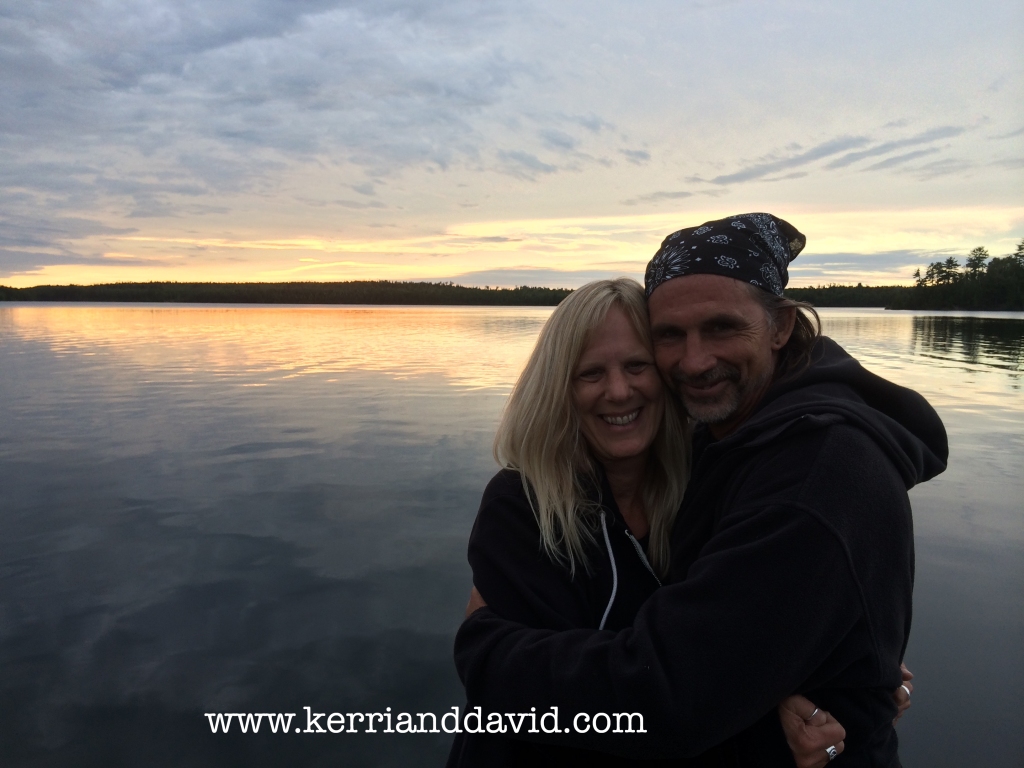
But, the moments that we took a breath, walked a trail or sat on the back deck and listened to the cardinals and crows, sipped hot coffee on cold mornings, held hands – sat on the curb and appreciated the undeniable truth of our moment: we have everything. We have this moment – the only moment of life that we’ll ever inhabit. We have each other. The rest, the fear of future, demons of the past, are pure imagination. In those moments, wrapped in a circumstance of calamity, we laughed at the beauty of it all.

read Kerri’s blog post about LAUGH IN THE FACE OF CALAMITY

Expect Surprise [on Not So Flawed Wednesday]

Walking through the Lake District in a driving rain, cold and soaked to the skin. Roger had a high fever and was near delirious. The hostel closed. We had to leave. It was miles to the next village. This day was not going according to plan. The trip was not going according to plan. It was the darkest moment in a series of dark moments. “What else could go wrong?” I asked. There was nothing to do but shiver and take another step. And then, unheard of at the time, an RV rounded the bend. The door popped open and a cheery voice asked, “Do you need a ride?”

I often think of that ride. That unlikely RV. Suddenly there were towels to dry ourselves. Aspirin for Roger. The mother of the clan took over and attended to my sick friend. Mugs of hot tea. We were delivered safely to the next village. They did not leave until they knew we had a warm place to stay until the rains passed. Something went right. It was breathtaking.

It was a life lesson for the younger version of me. My very own Aesop’s Fable. What looks like tragedy is often an opportunity, and vice versa. When it appears that things cannot get worse, they often do get worse en route to something better. The real lesson was to be in it, rain or shine. Joyful participation. I didn’t get the lesson right away. It took a few laps before it stuck.

That trip was decades ago and, to me, seemed ill-fated from the outset. But, when I think back on it, I remember the kind family in the RV, the man standing in line behind me who secured a ticket for me when I didn’t have enough money. The kindnesses too many to count. The utter shock of serendipity. What we needed always appeared somehow, in unexpected ways.

Quinn used to say, “Cultivate your serendipity.” Open yourself to chance, to the unexpected. Expect surprise.

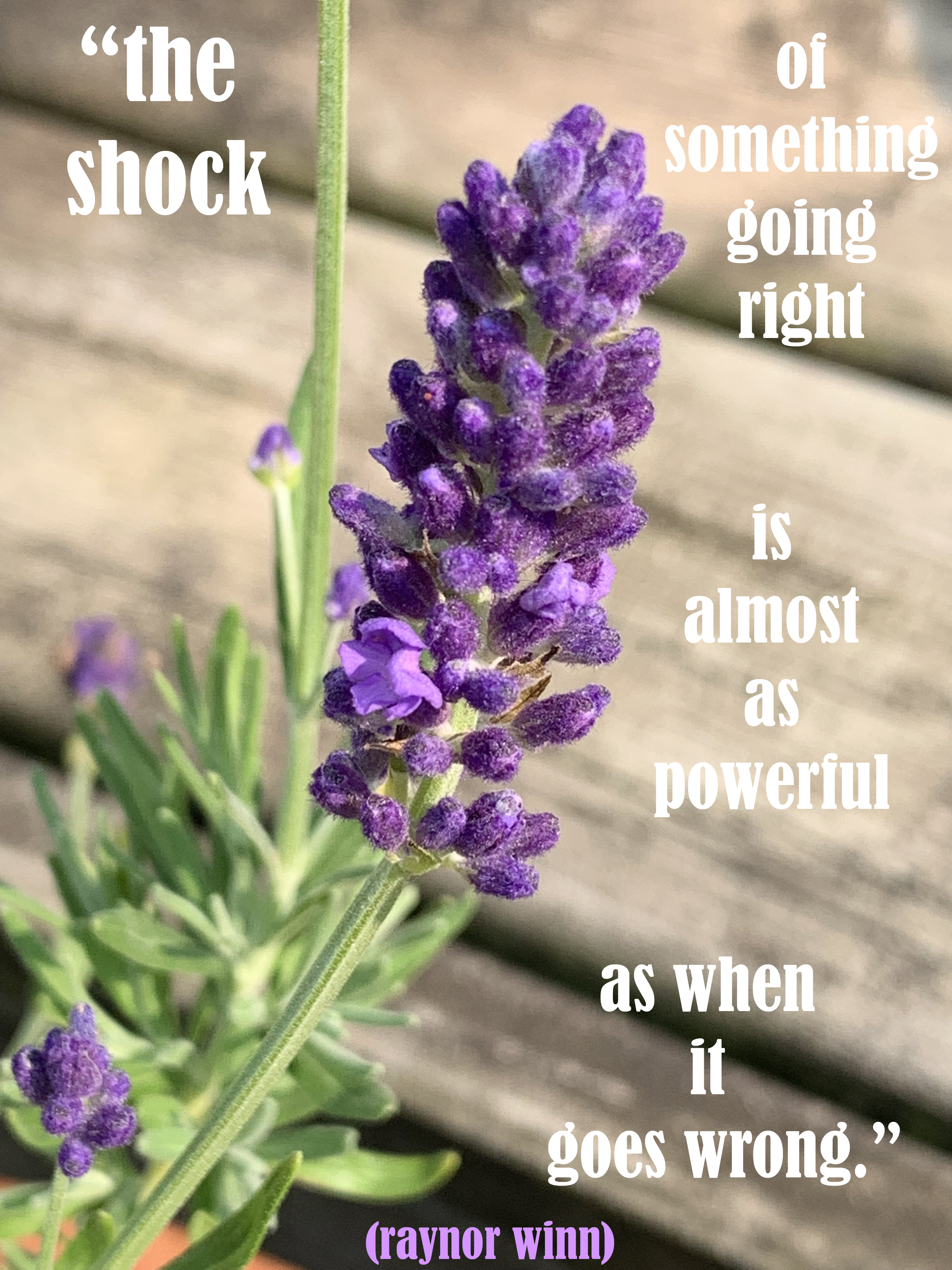
read Kerri’s blog post about THINGS GOING RIGHT

Choose [on Two Artists Tuesday]

“It’s a serious thing just to be alive on this fresh morning in this broken world.” ~ Mary Oliver

Were I to have been born in an earlier century I would not be alive today. Twice on my life-path doctors have declared that, “You are now a miracle of modern medicine.” Leeches and blood-letting would not have cured what ailed me.

This thing called ‘science’ is what gave me more days of life. It is the same science that developed vaccines for a pandemic but also made possible the technology that makes mass-media-misinformation possible. Here is the medicine. Here is the disease. It is exactly as Sophocles wrote: Nothing vast enters the life of mortals without a curse.

One morning, deeply tired, I arose to go do a job that I did not like. It was a means to an end and I dreaded the day ahead of me. Stepping out the door, the cold morning air stopped me in my tracks. It slapped me awake. The air was crisp and clean, the neighborhood was quiet. The light in the sky was brilliant. I drank it in. I vowed never again to dread a day of my life. In truth, I had no idea what the day held for me. Why then, would I story my day with a frame of dread? Why tell myself a tale of just-getting-through-it? Why not open to the possibilities of surprise and miracle? Why not embrace the already-stated-obvious-thing: I had no idea what the day held. That simple fact would be true every single day of my life. Dread was a choice, not an inevitability.

To be alive on this fresh morning. It is a serious thing. In this world, broken by the little story of us-and-them, the tiny tale of power-over. Choices. The miracle of the new day is present whether it is seen or not. We can cloak it in dread or gratitude, in support or division. It doesn’t care either way. The miracle of the new day, the gift of being alive on this fresh morning in a world that is broken or healed, whole or fragmented – it all depends upon the story-frame we wrap around it. The story we tell is a choice, not an inevitability.

read Kerri’s blog post about JUST TO BE ALIVE

Come To The Table [on DR Thursday]

Duke and Eileen sat at this table for many years. And, because St. Vincent de Paul wouldn’t take it for second hand sale because the top had dings in it, it rode around in the back of Big Red for many months. We forgot it was there.

When Covid roared in and the world shut down, we wanted to put a table in our sun room. That way, we could sit and look out at the day. We thought it would help buoy our spirits while in isolation. In the middle of wondering-out-loud where we could possibly get a table in a world-shut-down, we remembered that Duke and Eileen’s table was camping out in the back of Big Red. It was a perfect fit.

It began the transformation of a room that has become our favorite place in the house to sit and hang out. We’ve populated our former work table with plants. Duke and Eileen’s table is also home to many succulents and a Bonsai Gardenia sent as a birthday present from Kirsten and Chris. We resurrected an old fountain so the sound of peace is the sound of gurgling water. There are candles. Special rocks from special places. Water, earth, fire, and air; lots of air. We’ve created a sanctuary.

Watching Kerri and 20, Duke and Eileen’s son, sit at the table filling out paperwork for Eileen, I was struck by the circle coming back around, the story that this table might tell. 20, sitting at his mom and dad’s table, now center to our sanctuary, doing the work of a son to care for his mom.

It also occurred to me, standing outside, looking in at these two siblings-from-different-mothers sit at the table filling out forms (Kerri and 20 are truly brother and sister), that in the midst of “living in interesting times,” our response to the pandemic, to civil unrest, to our town literally being on fire, amid job losses and wrists breaking, has been to create a place of peace. A center of quiet around which the chaos spins.

“Make all the world your studio” was once – and still is – a mantra for me. And, now at the center of my spinning-world-studio is an intentional space, a bright and happy room bringing together all of the elements, built around the long history of comfort etched in the top of Duke and Eileen’s table.

read Kerri’s blog post about THE TABLE

meditation, 48x48IN, mixed media, 2012

meditation ©️ 2012 david robinson

Pack The Cheese [on Not So Flawed Wednesday]

Let me state from the get-go that Bota Box wine should sponsor Joey Coconato. More than once in his back country hiking videos, to the delight of his hiking companions, he pulls a box from his back pack. There is general merriment all around, not to mention amazement: every ounce counts when you are carrying it on your back and a Bota Box is more than a few ounces. For a dedicated wine drinker like me, it is heroic. “I want to hike with Joey!” I exclaim, knowing that I don’t have the metal to hoof in a box of wine on top of everything else I’d be hauling.

In one of my favorite Joey moments, the Norwegian Xplorer and Joey are comparing the food that they’ve packed into the back country. The Norwegian Xplorer has space-like silver pouches of freeze-dried meals neatly displayed and organized for the camera. They look easy to carry. Easy to pack. Joey, on the other hand, shows us a dozen raw eggs in a collapsing carton, avocados, a bottle of sriracha sauce, a pack of brats, flour tortillas and the item that made me howl with appreciation: a full can of Parmesan cheese. “I was cleaning out my cooler,” Joey narrates as the camera pans his supplies. Huy Fong Sriracha and Kraft should consider sponsoring Joey, too. It takes some serious dedication to hump those luxuries into the land of grizzly bears and moose.

I think it is why we’ve become dedicated Joey followers. On every level – even to his food – he’s not doing life as he “should” do it. He’s doing life as he wants to do it. Comfort is not high on his list of organizing principles. Being fully alive is. How many people do you know who can claim that?

The rules on the margins are different than they are in the main. It is the hallmark of someone truly free.

His pants are ripped, his equipment is collapsing, his tent is on loan, he regularly breaks his cameras or loses lens caps, and yet he finds a way. What most of us would see as an obstacle, he simply rolls with. I mean, why shouldn’t you pack your backpack with a carton of raw eggs, a can of Parmesan cheese, and a Bota Box of wine? Joey tells those of us watching from comfort-land that, after the wine is gone, the box makes a good fire starter.

There are two things to note: he is generally surrounded by friends and supporters. When his equipment breaks, someone sends him a replacement for which he is always grateful. Not a little grateful, Not pretend grateful. Grateful. Second, no matter the condition of his clothes or equipment, no matter the weight in his pack, he never ceases to notice how gorgeous is the world, how breathtaking is this earth. Appreciation. He knows it is his privilege, for a time, to walk on it.

Gratitude. Appreciation.

And, at days end, sprinkle some cheese on it and wash it down with wine. No one living in a penthouse has the view that Joey has. The ridge is brilliant in the last rays of the day. No one lounging in a tower or afloat in their yacht is as carefree or as willing to walk away.

Open your pack and I’ll wager that there are more than a few “should-do’s” or “should-be’s.” Open Joey’s and you’ll find only what he needs to fully live another day. Maybe. But, if it’s not there, no problem. Something nourishing will certainly be found along the way.

read Kerri’s blog post about PARMESAN CHEESE

Step Beyond Words [on Two Artists Tuesday]

“Truth is a pathless land.” ~ Jiddu Krishnamurti

I have done my share of seeking and, also, my share of not finding.

I believe that I began painting because, while doing it, while lost in the discovery of an image, I experienced truth – or something close to it. Always in quiet studios. Always beyond the place of mind chatter. Something “bigger” washed through. Something beyond words.

That must be why I associate truth with silence.

All around I hear people proclaiming transparency. No hidden agendas. Everything up-front! As Quinn used to say, “If they have to tell you that they are being transparent, it’s a good bet that they are not.” Words, words, words.

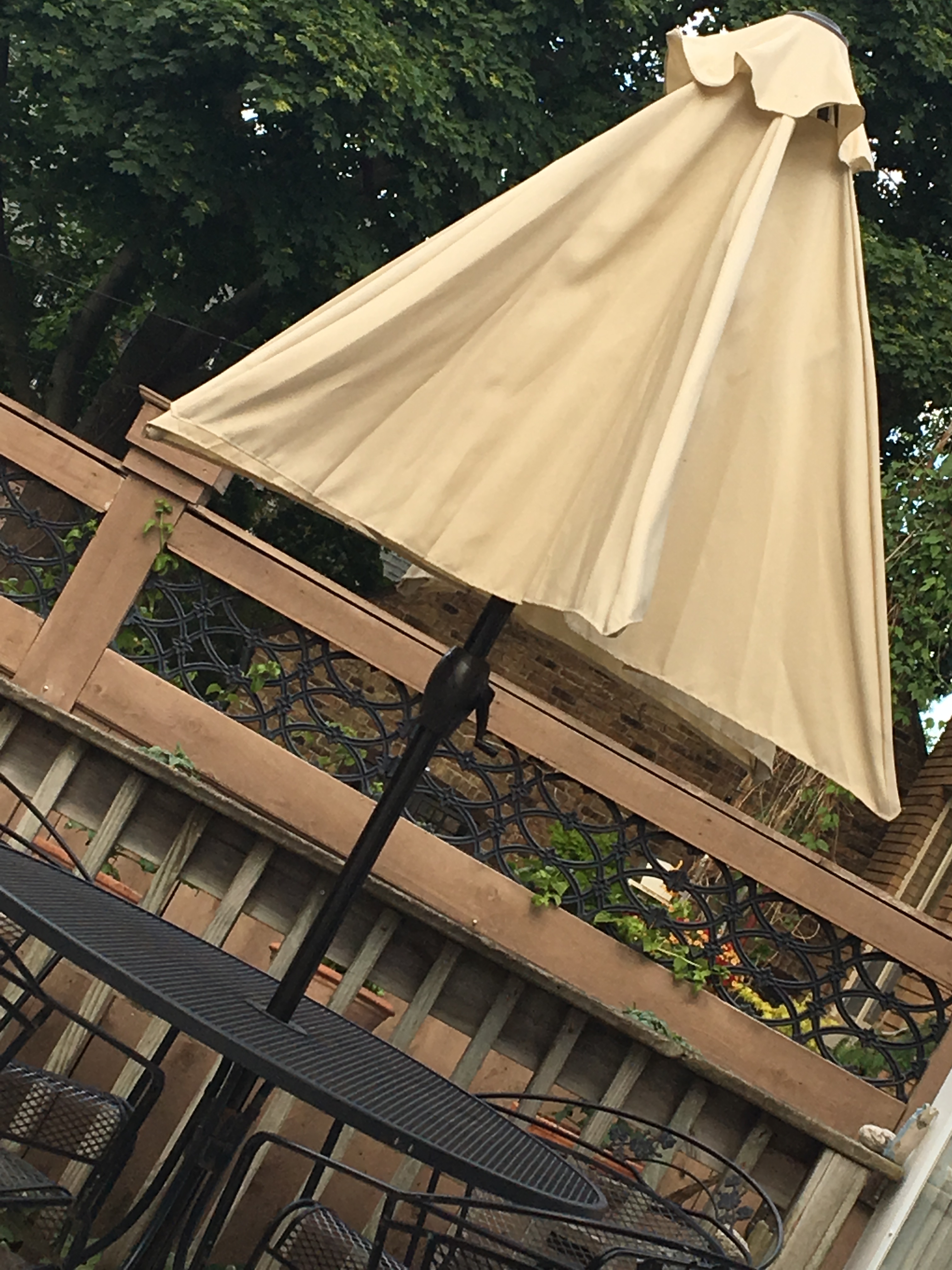
Many evenings we sit on our back deck. The umbrella shields us from the heat. We watch Dogga run circles, dig holes, and bark at squirrels. The birds perch at the feeder or drink from the pond. A chipmunk dashes across Barney’s keys. The crows call from the treetops. The sun drops behind the trees. The mosquitoes come out; our cue to go in.

So much life! And not a single word required though, clearly, it is more than tempting to try and describe it. Try is the best I can do.

I often remind myself that I have never lived this day and will never again live this day. No trail to follow even when I think I know what will happen next. I don’t. That’s the truth.

read Kerri’s blog post about THE UMBRELLA

Look With Honest Eyes [on Not So Flawed Wednesday]

We were sharing pandemic survival stories, the worlds that we explored in our isolation that we otherwise might never have entered. We told Keith of Joey Coconato and how his back country backpacking trips were a nightly fascination. I’m particularly drawn to his hikes through the canyon lands. Keith became animated, saying, “You have to check out the Millennial Farmer!”

I know nothing about farming. Once, sitting on the back porch of a farmhouse Air-B-N-B in Iowa with my dad, I listened intently to his stories from childhood working on the various farms in the community. Had he been able to script his life differently, I think he might have written a farmer’s story. He loved the outdoors. He loved growing things. He always kept a garden and tended flowers. He knew what he was doing! Somehow, I gleaned nothing from his green-thumb-knowledge. I am a plant killer.

In the first short installment of The Millennial Farmer, Zach Johnson tells his audience that he’s making his videos because people know so little about farming and what farmers actually do. He’s a fifth generation farmer in Minnesota. I was, as he predicted, completely gobsmacked watching The First Day Of Planting 2016. I pushed play expecting dirt clods and the rumpled pages of the Farmer’s Almanac and, instead, entered the space age. His tractor was akin to the deck of the Starship Enterprise. His nuanced explanation of the monitors in his cab was enlightening. He’s driving a computer (actually, it mostly drives itself).

My stereotype was completely shattered. I had no idea. And, isn’t that the point of taking a peek into the lives of others? Recognizing that we have no idea about the realities of others lives? Isn’t that the opportunity?

This morning I pondered aloud about how we’ve changed in the months since COVID began. “I don’t know anyone who hasn’t changed.” One of the most profoundly sad awakenings for me during this time of division and dedicated ignorance is how resistant we are – and I believe always have been – of taking a peek into the lives of others in our nation. We simply don’t want to know, so great is the fear of what we will find there.

John Lewis famously said, “We are one people, we are one family, we are one house. And we must keep this house together.” By “keep” he meant to tend. We might become one family when we are willing and able to look with honest eyes into the lives of those who share this house. Our stereotypes, our almanac ideas, keep us fragmented.

Joey and Zach. Both live lives immersed in nature but from diametrically opposed intentions. Both have popped open my eyes to new experiences and bodies of wisdom that I might otherwise never have encountered. Both are following their personal star and sharing what they find on their paths.

As part of our summer planting and backyard oasis, we bought two tomato plants and some basil. Our Boomer farm is not extensive but it is well loved. “Do you think, if we tagged The Millennial Farmer, our tomatoes would stand a better chance?” I asked.

Kerri considered it for a moment, her hands busily potting the basil plants. “It couldn’t hurt.”

read Kerri’s blog post about BOOMER FARMERS

Read A Tiny Note [on Two Artists Tuesday]

I was still in shock. It was late, beyond midnight. The roosters were watching for the sunrise. The ritual I’d witnessed that night blew the metaphoric wheels off my car. Wave after wave of knife-wielding priests ran at the Rangda, a priest chosen for the evening to wear the mask, to enter the trance and become the demon. The priests stabbed the Rangda but to no avail. The blades bent. They were repelled. Eventually, all entered the trance and turned the knives on themselves, taking the energy, the protection of the Rangda, into their bodies. Into the community. No one was injured. Peace was made with the Rangda. Balance was affirmed.

I held one of the knives after the ritual was complete. It was not a stage prop. I could not have bent the blade on my chest without doing injury to myself.

Budi explained it all to me. I had so many questions. In his culture, the dark forces are not to be resisted or banished. There is no hell separate from heaven. Evil and good are not compartmentalized. There are energies, some dark and some light. There is no need to make peace with the light. The necessity is to face and make peace with the dark. Balance is created, an intentional relationship with a dynamic whole. It’s a dance of responsibility, a balance of dark and light. The middle way.

Balance.

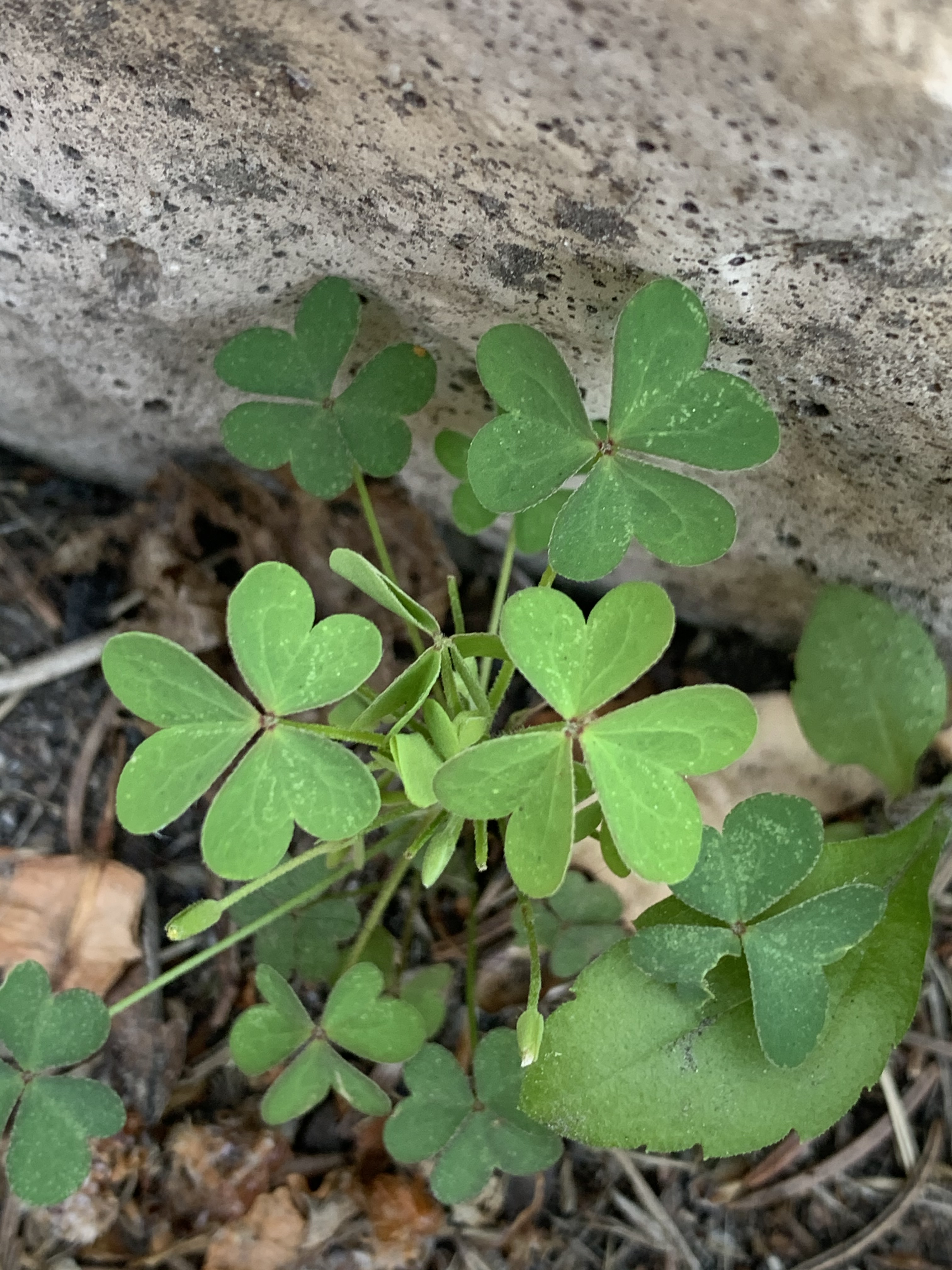
I loved this photo when Kerri showed it to me. Clover. You can’t tell but it is tiny. It is bursting from beneath the stone that serves as the step onto our deck. It made we wonder if the fairy people were close at hand. They serve, in the western tradition, a similar role to the Rangda in Bali. Nature spirits. It was most important to keep in the good graces with the Fairies. Honor their places. Respect and maintain the balance. According to tradition, they went into hiding, they left because we assaulted their spaces; we came to value the path of resources, mining, deforestation, fracking, damming…over the path of balance.

This tiny breath of clover. I sat on the stone last night. The air was cool after a humid and hot day. DogDog was doing his rounds. I had not thought of the Rangda in years. A tiny community on a tiny island. The “mayor” of the town introduced the ritual to us as their art. “We have so little to offer you,” he said in his broken English, “but we bring you our most prized offering, our art.”

Art. A prized offering. The dance of energies, an intentional relationship with the dynamic whole. An ongoing ritual of balance. It was the first time I witnessed a community that had yet to exorcise its art from the sacred. It bent knives. It restored balance. It belonged and gave deep meaning to every member of the community.

Tiny. Like the Fairies or the community on the island. A simple respect for what is good for the whole. Balance is expressed in the tiny things, the choices of where to walk, what to say. What helps in the long run. What does not. What gives meaning and cohesion to a community. What does not.

Budi would caution us with COVID and guns and a globe that is weirding and warming, “Rangda is ignored,” he’d say.

“Yes,” I’d reply, “the fairies have gone into hiding.”

But, all is not lost. They left a tiny note at our back door. Balance, it reads, is a relationship, an intentional act. It is an ongoing ritual, a tiny sacred thing.

read Kerri’s blog post about CLOVER

Sing It Into Existence [on Two Artists Tuesday]

Lately I am awake for the sunrise. I know it is coming because, very slowly, the birds begin to sing. At first there is one voice, then a few more and then more. By the time the light through the window glows soft purple and gray, the full bird chorus is in session. They sing the sun into rising.

Although I didn’t recognize it at the time, these lawn-art-birds would come to represent to me threshold guardians. Harbingers of the test that my move to Wisconsin would bring. In story terms, threshold guardians are not friendly; they serve as the test of readiness: are you willing and able to greet the challenges that come with change. Or will you run away? Sometimes they are monsters. Sometimes they require the answer to a riddle or solving a puzzle. The new world will open after the obstacle is met. In facing and overcoming the challenge, the guardians often become allies. In truth, they are allies all along. They help you find your self by testing every idea that you have of your self.

Driving the Budget truck on my move from Seattle, filled with the artifacts of my life, Kerri and I stopped in a little village, Stockholm, just as we crossed the Mississippi River into Wisconsin. We wandered down the street and into a gallery. We were drawn to these simple bird-sculptures. They are the first thing we bought together. They represented our step into relationship. Us. They would stand together in our yard.

My first few years in Kenosha were akin to being lost in the woods. My livelihood disappeared. My networks disappeared. Art opportunities vanished. Many of my friendships faded. Every project I tried to pitch or create stalled, every path I attempted to plow broke the plow. I felt stripped. Of little or no value. Even in arenas where I was once appreciated, I was invisible. I’ve done extraordinary consulting work in organizations but learned in my new life that my experience and observations were not welcome. So, silent as well as invisible.

More than once I went out back and sat with the sculptures. They remained silent when I asked of them my questions. Who am I now that I have no useful purpose? What do I do now? In the absence of an answer, the sculptures and I listened to the birdsong.

Often the test brought by the threshold guardians is one of letting go. You cannot become a butterfly if you insist on remaining a caterpillar. The armor must fall. The known shape must go to mush. The what-the-hell-is-happening-to-me necessarily falls unanswered into the void. What’s happening is not complex: you are changing. The old stuff isn’t working because it is too small for the new shape. Let go.

It is not complex but it is uncomfortable. Dark night is cold when you’ve shed your skin. The sun will rise. The birds will sing it into existence. Warmth will return in the moments beyond the soft purples and greys.

We recently moved the bird sculptures from their spot by the pond to a new home by the fence. I hadn’t realized how invisible they were when standing over the pond. By they fence, they are glorious! They are also a metaphor, standing tall, made more vibrant and dynamic by their incorporated shadows. They are transformed. They are present, standing together in the yard. They are signaling the path to the new world, singing into existence the new day.

read Kerri’s blog post about THE BIRDS

Look Closer [on Two Artists Tuesday]

Arnie recently sent me a book, Connection by Kristine Klussman. As is my practice these days, I’m reading it slowly, a few pages at a time. I recognize much of what she’s writing about: focus placement, meaning making, cutting through the ‘should’s’…all in the process of re-connecting to what is really important in this life. The book offers specific exercises and process steps to help readers take a closer look at their lives. To identify the gaps between espoused and lived values in order to make different choices and close the gap. Alignment.

In art school, the most valuable lesson (for me) was to learn to see beyond what I ‘think.’ I’ve written about the professor who asked us to look at our yellow #2 pencils and tell him what color were the pencils. A riot of eye rolling ensued but, in the end, he helped us to see that the simple yellow pencil was alive with green and purple and red. Our minds generalize. It requires a bit of slowing down and, dare I write, a bit of presence, to see and experience how rich and alive even the simplest things, a yellow pencil, really are. The dictum applies to each and every day of life, especially the days we generalize into boredom or “same-old-same-old.” Slow down. Look again. There’s more to the yellow pencil than you think.

When Kerri and I arrived home from our trip to move my mother into an independent living community, we poured a glass of wine and opened the box my parents had kept with the artifacts of my life. Old newspaper clippings of play reviews, playbills, gallery opening announcements, elementary school report cards, photographs that reached back through proms and school portraits to blurry black and white infant prints with “David, 4 months” scribbled on the back. It was a poignant exercise of pulling the life-camera in for a closer view. Life-fragments in a box are like the yellow pencil. They require a closer look.

I’ve always appreciated Kerri’s tendency to pull the camera in closer. She is forever taking photographs and then pulling the image this way and that, like so much taffy, looking for the most interesting slice, the most dynamic composition. In her photographic-push-me-pull-you, there is often a discovery. “Look at this color!” she’ll exclaim. Or, “Did you see this! Look at the spines on this plant!” She cultivates surprise. She understands that a closer look will always reveal tiny not-yet-seen-miracles.

Expecting surprise. Taking the time to look beyond yellow-pencil-expectations. Closing the gap between lived and espoused values. Slowing down just enough to realize that there is no such thing as “same-old-same-old.” These are age-old sage suggestions for living a rich and meaningful life. All of it, born of a tender, quiet suggestion to take a deep breath and have a closer look.

read Kerri’s blog post about A CLOSER LOOK