Full Stop [David’s blog on Not So Flawed Wednesday]

“All colors are friends of their neighbors and lovers of their opposites.” ~ Marc Chagall

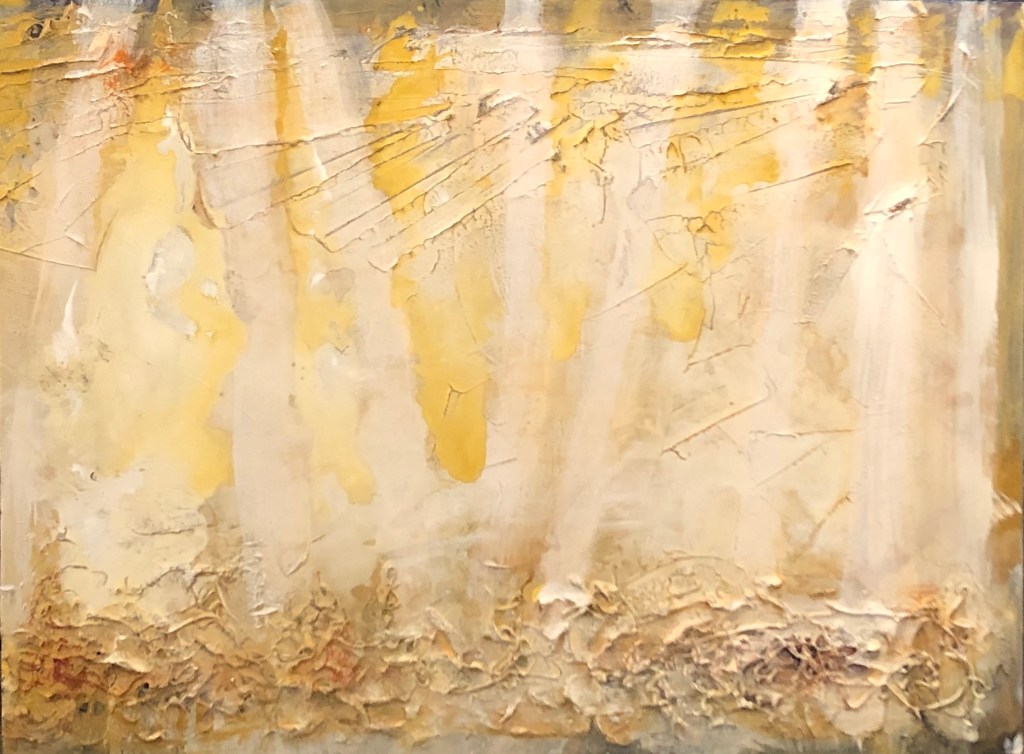
I was awake last night. As I stared at the ceiling I wondered if, after a lifetime of painting, I knew the first thing about color. Or brushes. Or surfaces. I wondered if I am shedding knowledge or never really gained it in the first place. I supposed that it probably does not matter either way as long as my eyes are open and I appreciate what I see.

Whether or not any knowledge sticks misses the point. Staring into the dark I managed to parse the difference between curiosity and information-gathering. I am and always have been a teflon-studier, a miserable retainer of detail. I like to roll up my sleeves and “see what happens”. I suppose I’ve made it a practice to regularly challenge what I think I know…

Staring into the dark I managed to laugh at the river of dross that regularly runs through my mind. It’s a wonder I can sleep at all.

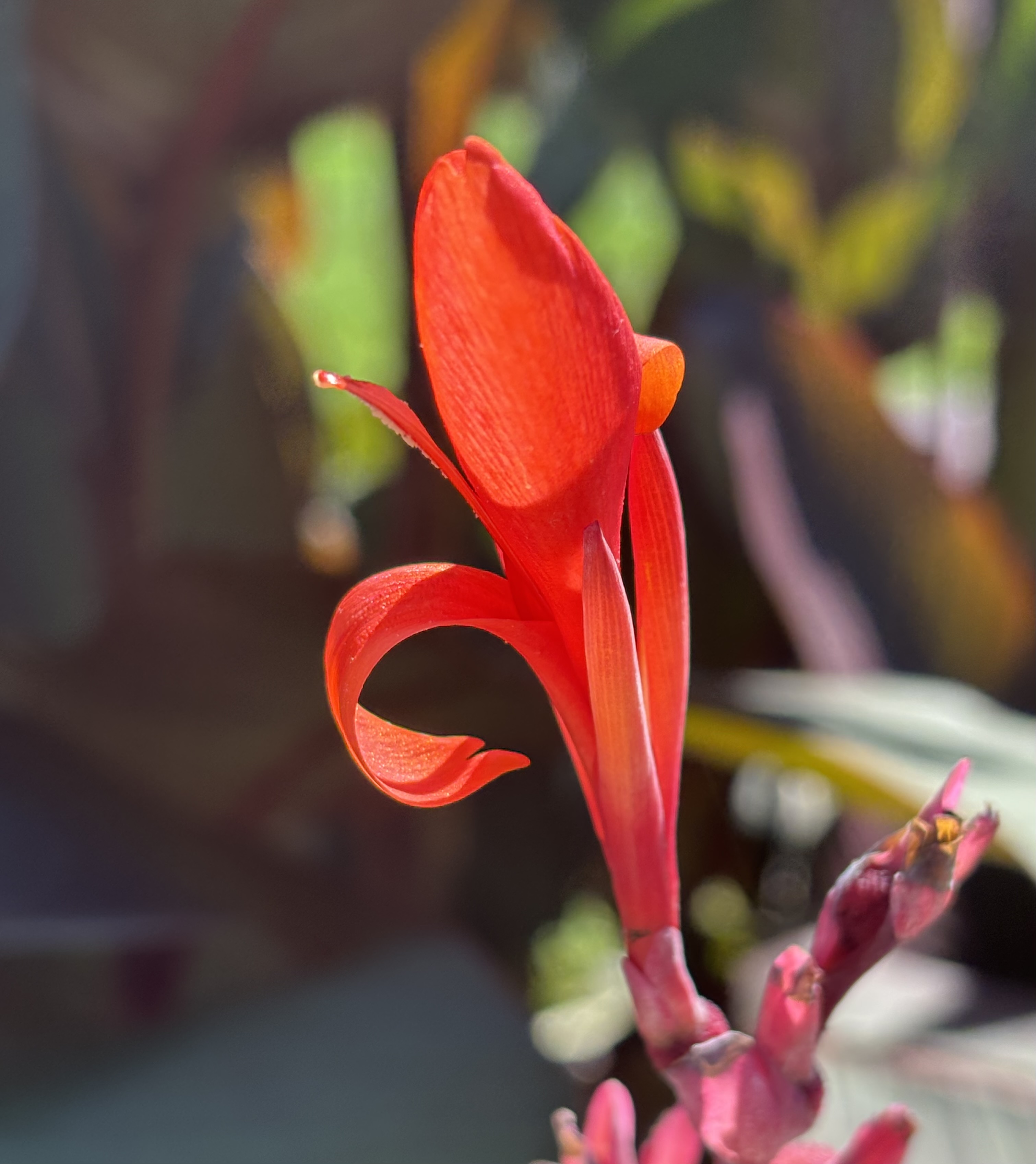
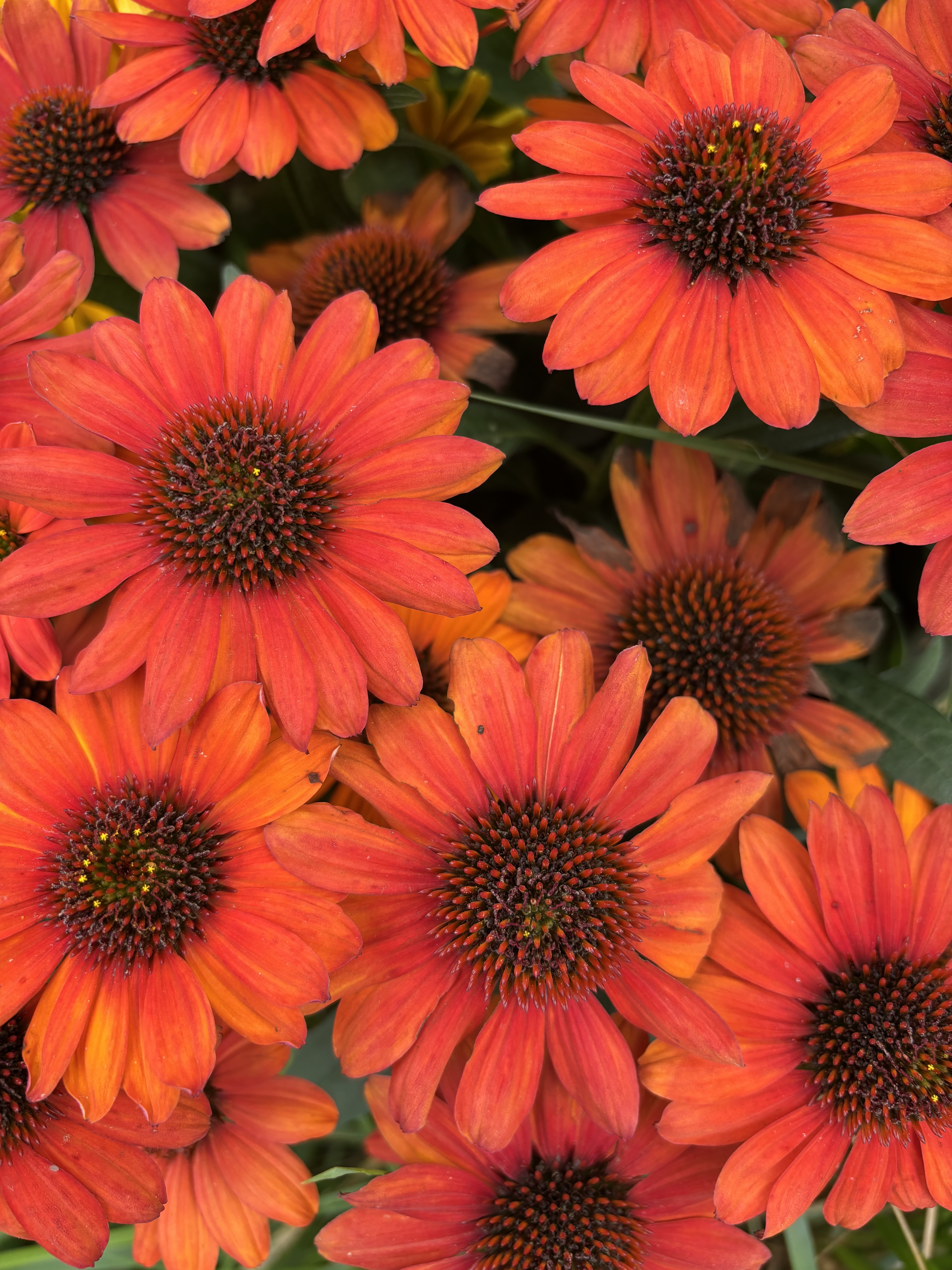
The coneflowers nearly knocked me over. The orange with red against the green was so vibrant I almost had to look away. I like going to the garden center. Flowers are great teachers of color. So are walks in the woods. The garden center is a festival of color saturation while the woods are more of a quiet prayer.

I keep close at hand a National Geographic article about the color of human skin. We do ourselves a disservice to reduce each other to black-and-white. We are a full spectrum of color, glorious in the range of tint-to-shade. We could learn much from Marc Chagall’s observation of the color wheel. Rather than use our skin color to divide-and-conquer, to caste ourselves, to foment blather like eugenics and supremacy, we might open our eyes and see: “All colors are friends of their neighbors and lovers of their opposites.”

Together we are glorious. Separate we are without reference; flat and bland.

Full stop.

read Kerri’s blogpost about CONEFLOWERS

likesharesupportcommentthankyou!

A Shape In Nature [David’s blog on DR Thursday]

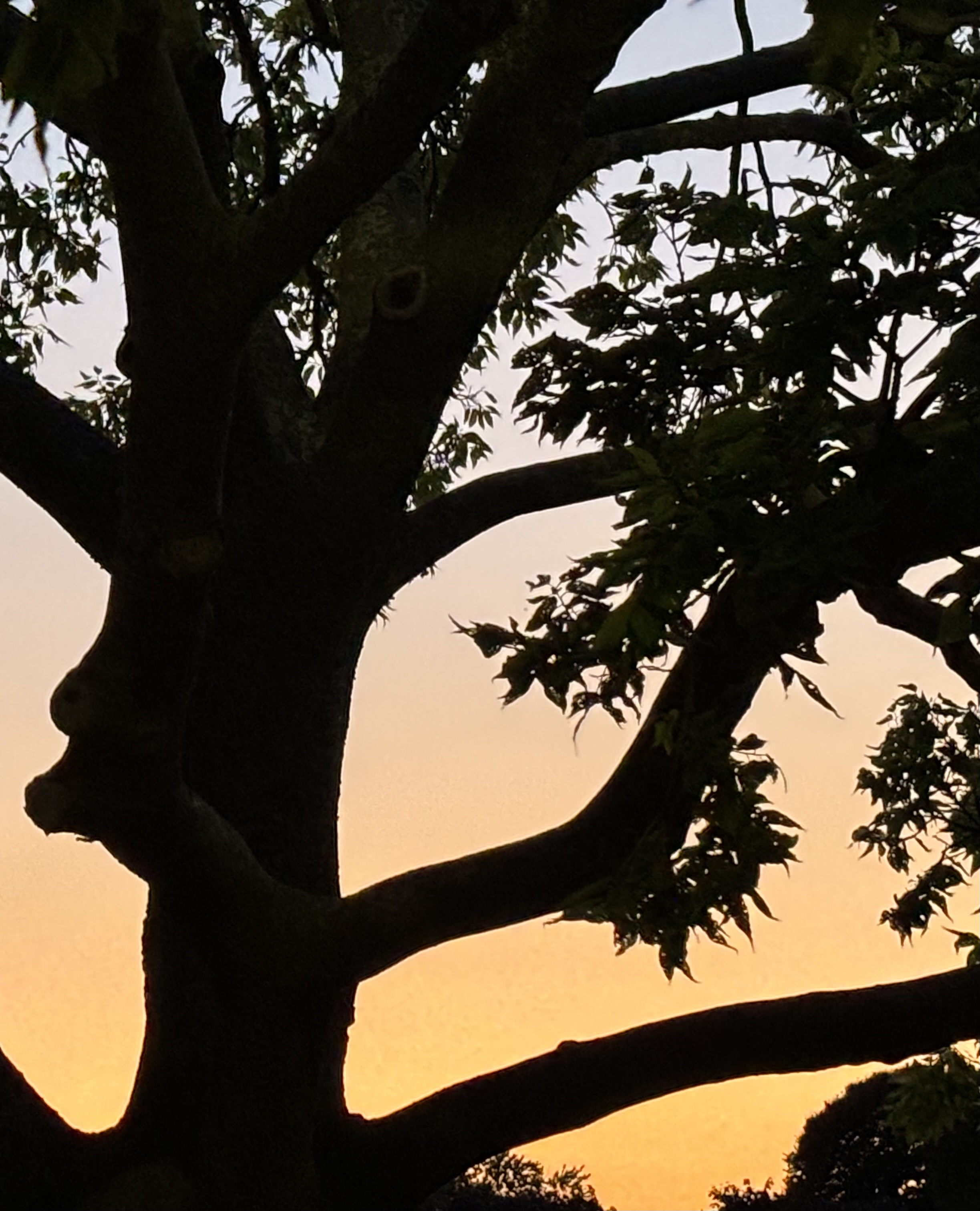
Staring at the tree in silhouette against the sunset I was struck how much of our written language is pulled from shapes in nature. the runes and glyphs en route to alphabets. A sound associated with a mark on paper. Black ink on white fiber.

For some reason this silhouette brought me to ensō, the Japanese art of ink circles. An open or incomplete circle symbolizes impermanence, the beauty of imperfection. Wabi-sabi. The beauty found in life as it is, not as we want it to be.

Impermanence is a theme of our conversations this week. We walk through the park at sunset and talk about the transitory in ever widening circles of experience, beginning with our own lives, moving out to the government and reaching further to the climate. Nothing is fixed.

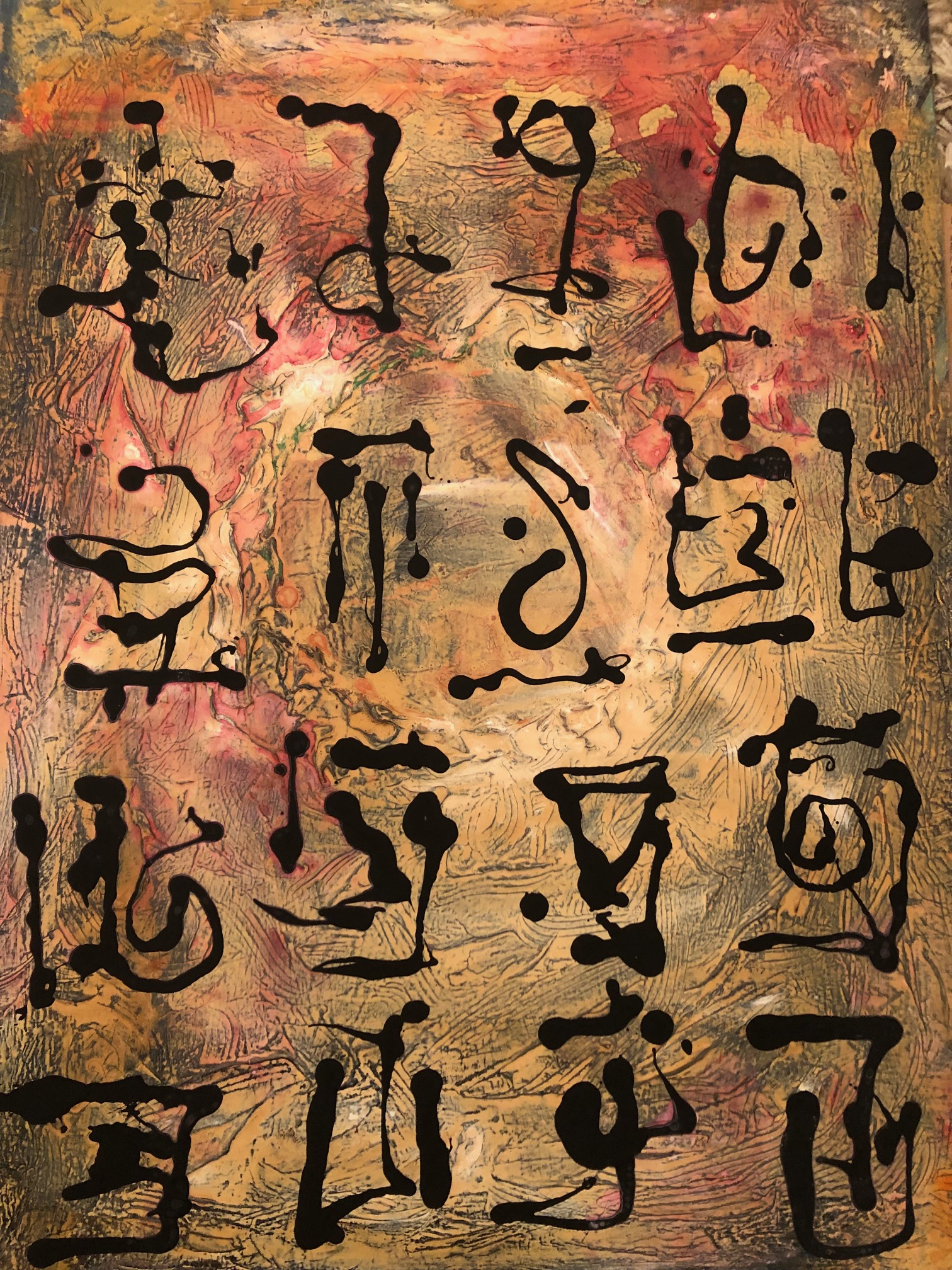
I have been playing with shape/symbol as if it was en route to becoming an alphabet or perhaps a long lost written language newly discovered. Like all language symbols, I am making it up. These symbols hold no deeper meaning other than I find them beautiful and making them is mind-freeing and fun.

Sometimes I “write” from left to right and sometimes the other way around. Sometimes I do not pay attention to the direction and break the line. It is easy to paint my “runes” from left to right because I’ve had a lifetime of patterning to read and write in that direction. It seems natural even though I know it has nothing to do with nature and everything to do with acculturation. I’m trying to forget all the rules and, rather than create something, I hope to discover a new promised land: an open mind.

In pursuit of my open mind I’ve made new rules to break the old rules. No brushes allowed (except to wet a surface). Try something new every day, scrapers or sandpaper or rags. Use more paint (I have a poverty mindset where paint is concerned. It’s expensive so I have developed a lifelong dedication/necessity to-make-the-paint-last rather than working freely. To help bust my poverty I’ve purchased cheap-cheap-cheap craft paint in bottles and am using up old house paint).

The most useful new rule is Don’t Think About It. Let it be beautiful as it is, not as I want it to be. Ensō. Wabi-sabi. The beauty of imperfection, a mark on paper or board, maybe or maybe not associated with a sound but certainly inspired by a silhouette or some other shape in nature.

read Kerri’s blogpost about THE TREE SILHOUETTE

likesharecommentsupportthankyou!

Try It And See [David’s blog on Not So Flawed Wednesday]

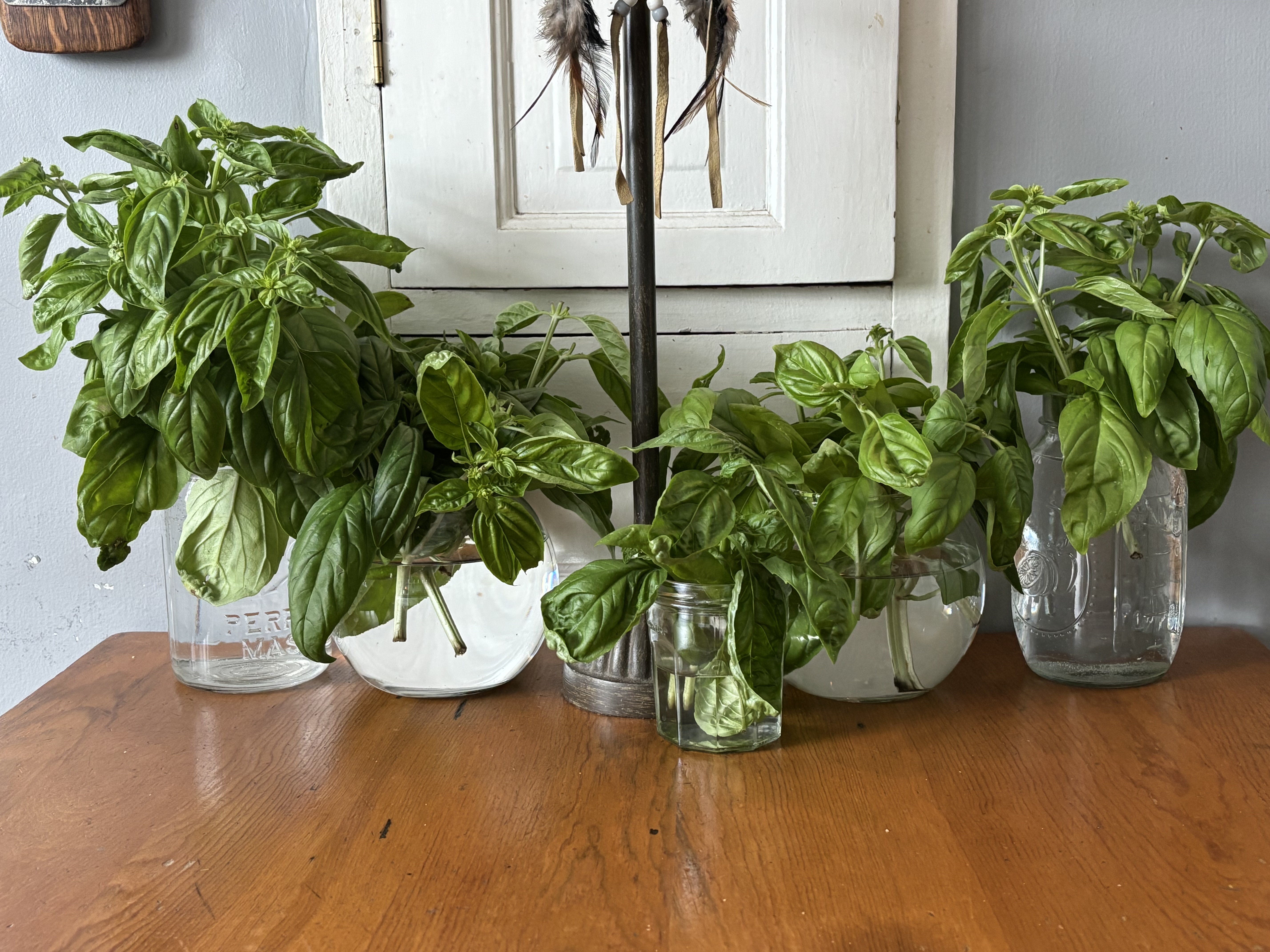
If, like me, your were born without a green thumb and are adept at withering even the hardiest of plants, I offer this handy solution: grow basil and mint. Basil and mint are intrepid and prolific. They will grow beyond their borders even in the bumbling care of the below-average gardener. They will make any thumb feel green, green, green!

There are rippling benefits to the illusion of green-thumb-success brought about by basil and mint. They incite belief that I, too, might someday be a better gardener than I previously understood. Basil and mint help assail the idea that green plants are a mystery never to be solved. If I can grow basil, maybe I can grow tomatoes, too! Or jalapeno peppers! And, if I am successful with a vegetable or two, maybe I will green-thumb my way into flowers! I might bring forth some color and beauty into the world!

What if this is not a one way street? What if, as I tend basil, mint, peppers and tomatoes, they tend me, too?! (Let’s face it, some questions deserve double punctuation even if Ms. Hardesty would have circled my double-punctuation and drawn a frowny-face next to it.) Maybe basil and mint are like the kindergarten teachers of the garden. Maybe their whole job is to instill the thought, “Yes I can!” – in every thumb. “You can do it!” chirp my basil and my mint.

“Maybe I can do this,” I think as we harvest the basil and tomatoes for our pizza, the mint for our sun tea.

It occurs to me, as I rub a basil leaf and savor the scent, that all of those years directing young actors new to the stage, that my job in life might have been the same as basil and mint. How many times did I say, “You can do it.” How many times did I watch the vibrant blooming of a “Yes I can!”

“It’s all a laboratory,” I used to say. “Try it and see what happens.”

And isn’t it lovely that this wise old universe tossed me into a garden and suggested I take my own advice? Isn’t it profound that, as a first step to address my dedicated-disbelief-in-my-capability, some wise soul suggested that I start this life-experiment with basil and mint?

*****

(a note about the current state of the nation and the world: today I simply do not know what to say. There is fire. The ocean’s are heating. River’s are drying. Crops are dying. And, “Shell reported a massive surge in profits, posting second-quarter 2026 adjusted earnings of $9.84 billion, more than double the amount from the same period last year.” What is there to say about people setting fire to their neighborhood and then finding pleasure in profiting from it?)

read Kerri’s blogpost about BASIL

likesharecommentsupportthankyou!

What Do You See? [David’s blog on Two Artists Tuesday]

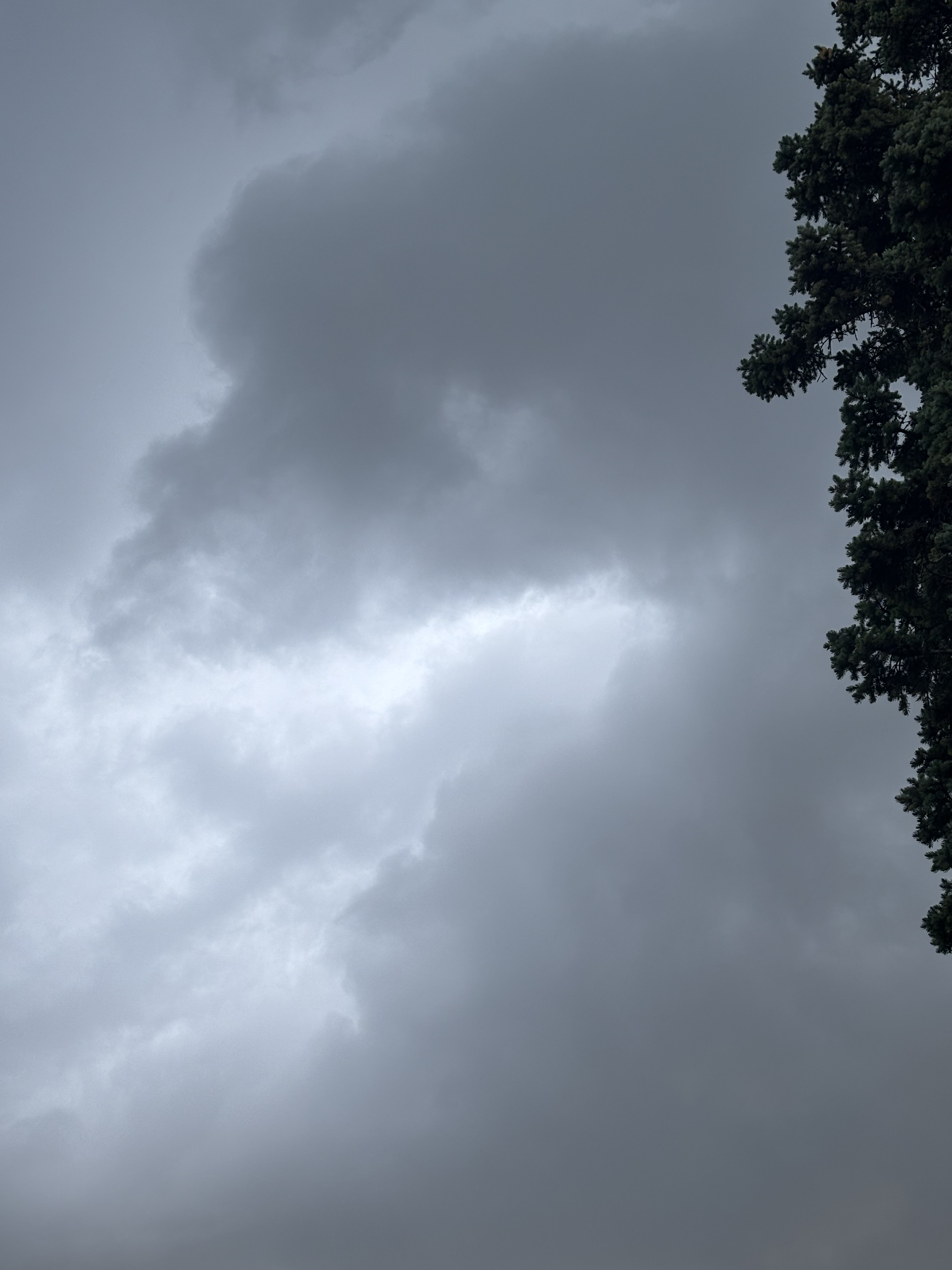
In this cloud Kerri sees a dragon. What do you see?

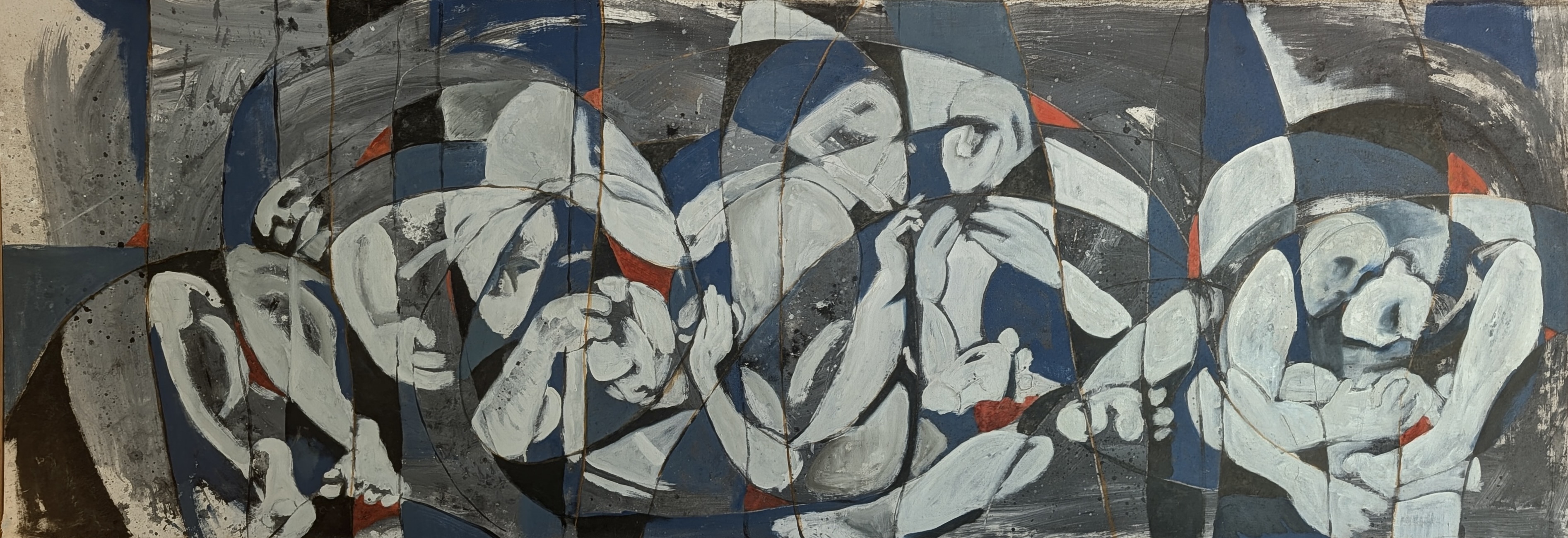
34 years ago Dave bought one of my paintings. It was so new that I’d neglected to sign it. In fact, I’d hung it on my living room wall because I wasn’t certain that it was finished. I was studying it. It was at best a happy accident that he even saw the painting. He loved it and bought it. I boxed it up and shipped it. I didn’t even have a proper photograph of it. Recently, out of the blue, he contacted me to ask if I might issue a certificate of authenticity. I was delighted to whip up a certificate for him but even more delighted to finally have a photo of the painting.

During our email exchange he asked me a question that is commonly asked of artists: “Maybe you could help me with a conversation I have had countless times with my wife and friends over the years.What is going on in the painting?” I smiled, knowing that he was going to hate my answer.

The first rule of artistry, as it was pounded into me, is to never answer the question, “What’s going on in the painting?” Or the song. Or the dance. The reason has nothing to do with keeping it a secret or whipping up a mystery. The reason is that “the art” happens in the moment of direct engagement, the moment when someone (not the artist) sees something in the painting, something personal. Something they bring to it or pull from it. They re-create the painting as theirs. That moment is a moment of creation. It’s the reason I get cranky at curators who feel the need to tell an audience what a painting means or what is going on in the composition; the curator steps between the viewer and their direct experience. They interrupt the creation. It’s like a priest inserting himself between a worshipper and their direct personal communion with their higher power. Some things need no interpretation.

Art is meant to open people to personal insight, to evoke questions or a deeply personal response to what they perceive. To spark conversation and lively debate.

When an artists tells someone what they intended, they are closing down the possibilities, stopping the moment of re-creation.

Dave wrote, “I have had people say it’s a panoramic of a hectic bar scene complete with a dog. Others say it’s showing an individual struggling with themselves, or a metaphysical exercise with multiple persons showing multiple emotions. Any light you can shine on the subject of the painting would be very helpful.” I adored every interpretation he shared.

Many years ago, at my very first art show, during the opening, I followed two old guys around the gallery. They did not know that I was the artist. I followed them so I could eavesdrop on their very lively conversation. They speculated about the meaning of each piece. I was amazed at what they saw. They had fun debating the sanity of the artist. They finally concluded that I must be insane BUT wrapped in their conclusion was the single best compliment I have ever received. After determining that I was insane, one of the gents leaned into his friend and said, “All of the good ones are, you know.”

Imagine how disappointed they’d have been if I had tagged along and told them what each piece meant to me. Trust me, their interpretations were infinitely more interesting than my intention just as, for Dave and his friends, a hectic bar scene with a dog or an internal struggle or a metaphysical exercise…are wildly more satisfying than any light I might shine on the painting. My light would kill the fun and the power of their re-creation.

What do you see? Kerri sees a dragon in the clouds…

Untitled, circa 1992, approx. 36″ x 112″, acrylic, house paint, animation cell paint on canvas

read Kerri’s blogpost about DRAGON IN THE CLOUDS

likesharecommentsupportthankyou!

Just That [David’s blog on DR Thursday]

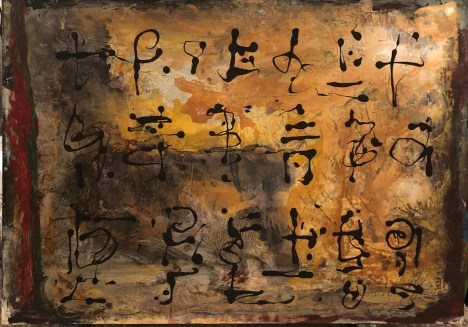
My favorite email of the week comes from Horatio. In last week’s post I included a new painting, an experiment. Horatio wrote, “Wow! Keep digging into that.” Later he added, “Dive in, amigo. That is the earth and the sun and moon all talking to you.” My painting is resonate of runes. Joking, Horatio asked, “Can’t you read runic code?”

“What a great idea!” I exclaimed to myself. I Googled runic code and found several runic translators. For kicks, I typed into the translator, “To be or not to be, that is the question.” This is what Shakespeare looks like in runic symbol:

ᛏᛟ ᛒᛖ ᛟᚱ ᚾᛟᛏ ᛏᛟ ᛒᛖ, ᛏᚺᚨᛏ ᛁᛋ ᛏᚺᛖ ᛩᚢᛖᛋᛏᛁᛟᚾ

Every written language is sound translated into line so we might translate the line back into sound. Musical notes also represent sound in a visual symbol. It is so fundamental, so ubiquitous, that we forget the miracle of it all. We scratch lines on paper to capture ideas, to remember dreams, to record symphonies. We’ve created a code, an alphabet, a limited yet specific number of symbols, developed a set of rules that make our scratches uniform, common and understandable. We created a “dictionary” so the sequencing of the symbols would not be individualized but uniform, shared.

In our nation we insist that we are divided, irreconcilable in our differences, but need a shared language, the most common of common grounds, to do so.

And now we text. The symbols newly created and used, emojis, are pictorial abbreviations, short cuts in a medium servicing the reduction of the message. I❤️U. WTF! 😂 Pictographs and phonetics. In the name of progress we revisit the ancients and now write like Egyptians. We communicate in hieroglyphs.

In these times, difference of language, difference of alphabet, is less of a barrier than difference of opinion. Language translators populate our devices. They are not perfect since culture is non-translatable, but we at least approach the ballpark of understanding. Yet, we are learning, even when our language is shared, that no amount of translating can build a bridge of understanding between maga and the rest of us. A shared language is most useful when facts are also shared.

I am a fan of Wade Davis, an ethnobotanist, a studier of culture and language. He tells a story of indigenous people in the Amazon rainforest, mixing rare plants, grown in different regions, for medicines. He asked them, “How do you know what plants to use?” Incredulous at his question, they laughed and replied, “The plants tell us.”

The plants tell us. “There are more things in heaven and earth, Horatio, Than are dreamt of in your philosophy.” – Hamlet (1.5.167-8)

The lines we draw that carry the sounds that give shape to words are ultimately all drawn from our conversation with nature. Where else? The earth and the sun and moon all talk to us. When we engage with lines meant to carry meaning, like a runic code, we ask, “What does it mean?” When you look at my painting of lines that seems to carry a message, it is natural to ask, “What does it say?” And that – just that impulse – to know, to understand; it is the hope of humanity, the thing we all share, the desire that brings us together, the yearning to understand IS the desire, the most basic of desires, to join, to reach, to connect.

Untitled, acrylic on board

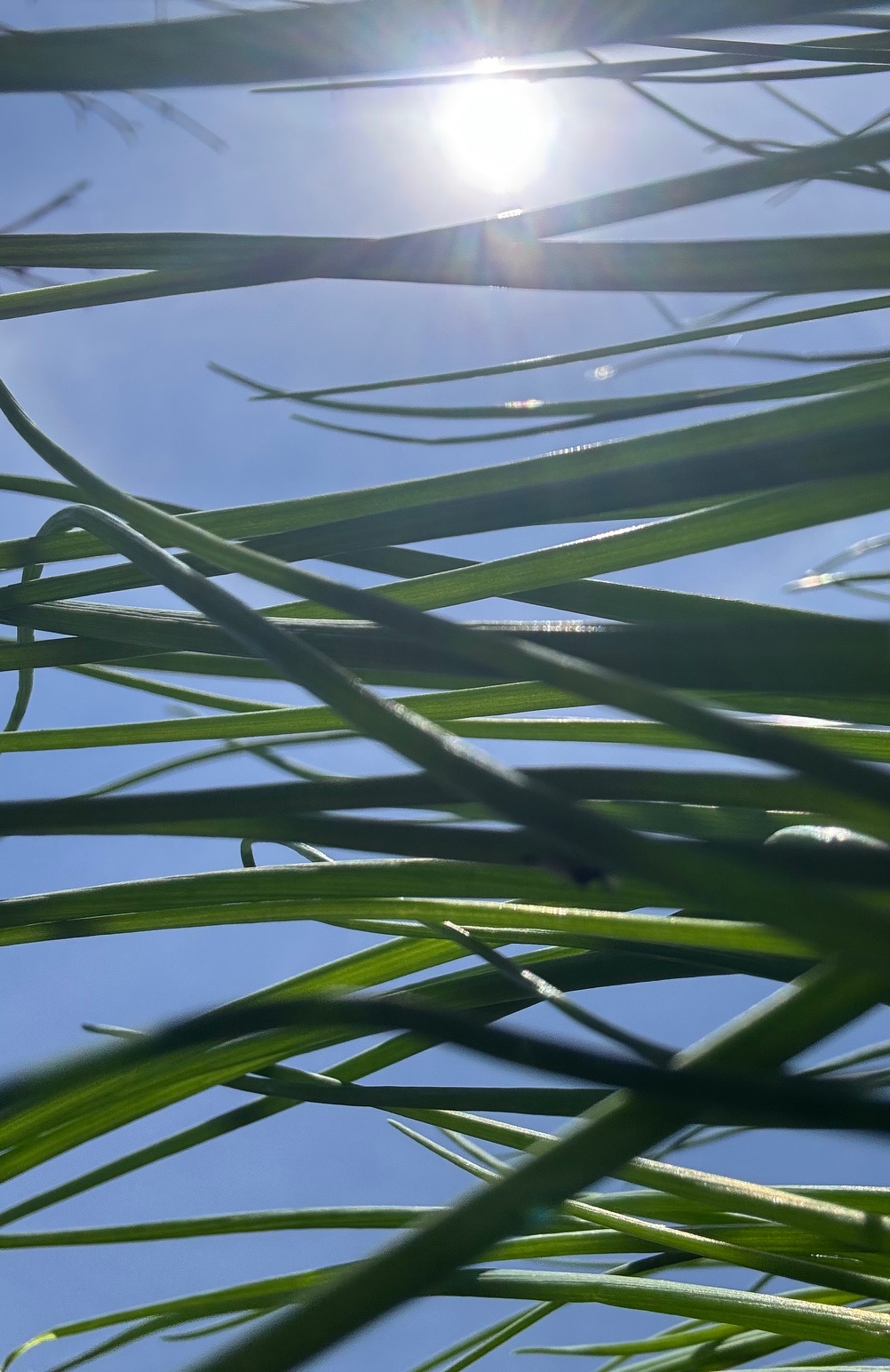
read Kerri’s blogpost about CHIVES AND SUN

likesharecommentsupportthankyou!

Hand It To Chance [David’s blog on Not So Flawed Wednesday]

“Mark the mark on purpose, hand it to chance, and see what comes back.” ~ Nicholas Wilton

Quinn always said, “Cultivate your serendipity.” Allow luck to greet your ability. Or, as I am learning again (and again and again…), to grow, ability needs to let go of control.

The final lesson learned by a performer, perhaps the hardest lesson of all, is to let go of the work. All of the rehearsal, all of the study, all of the repetition, the preparation, the quest for perfection…needs one final action to fulfill itself: the performer has to get out of the way. Hand the good work to chance. Let it go.

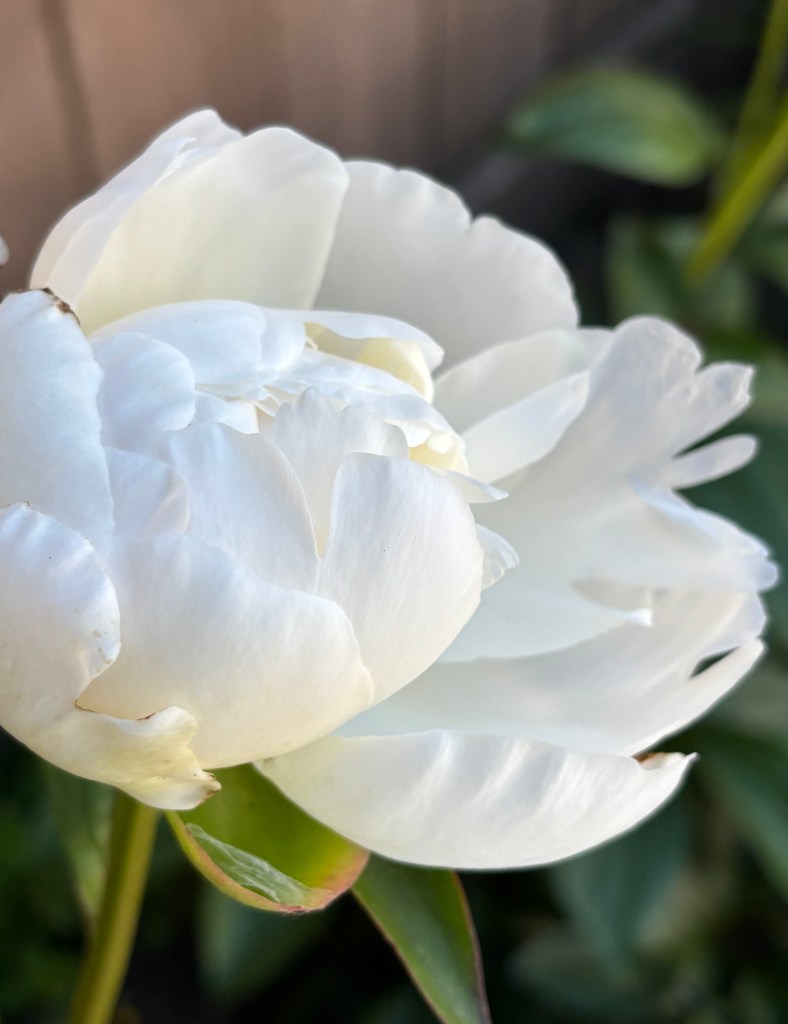
After weeks and weeks of research, she chose the peony that she wanted to plant. The root arrived with specific instructions. She chose the best spot in the garden and the right day in the right season and planted the root at the right depth facing the right direction. And then she waited for spring. She fretted the prescribed amount, no more, no less.

The little green stem broke through the earth and seemed to stall. She studied appropriate amounts of water, she studied angles of the sun and questioned her planting placement. We put up a tiny fence to protect the tender shoot from critters and our Dogga who digs. I believe, although I do not know this for a fact, I believe she offered daily prayers to the peony-powers-of-the-universe. Her little stem, like the little engine that could, struggled and produced one tiny blossom.

She studied when and how much to cut back her peony, what to do over the winter months – namely, nothing – but sometimes arriving at nothing requires copious amounts of study. At some point, feeling as if there was nothing left to be done, nothing left to investigate, somewhere between the dark of winter and the return of the light, she surrendered. She gave over. The little peony was on its own.

Ability met luck. A wet spring with warmer than usual days had peonies a-poppin’! The little stem returned with some serious chutzpah, producing not one but many vibrant beautiful blossoms. It now stands in our canon as the single most photographed peony plant in our entire peony history. “I can’t stop taking photographs,” she said, “It’s so amazing!”

And, so it is. A performer’s lesson as played in the garden. And just look what came back!

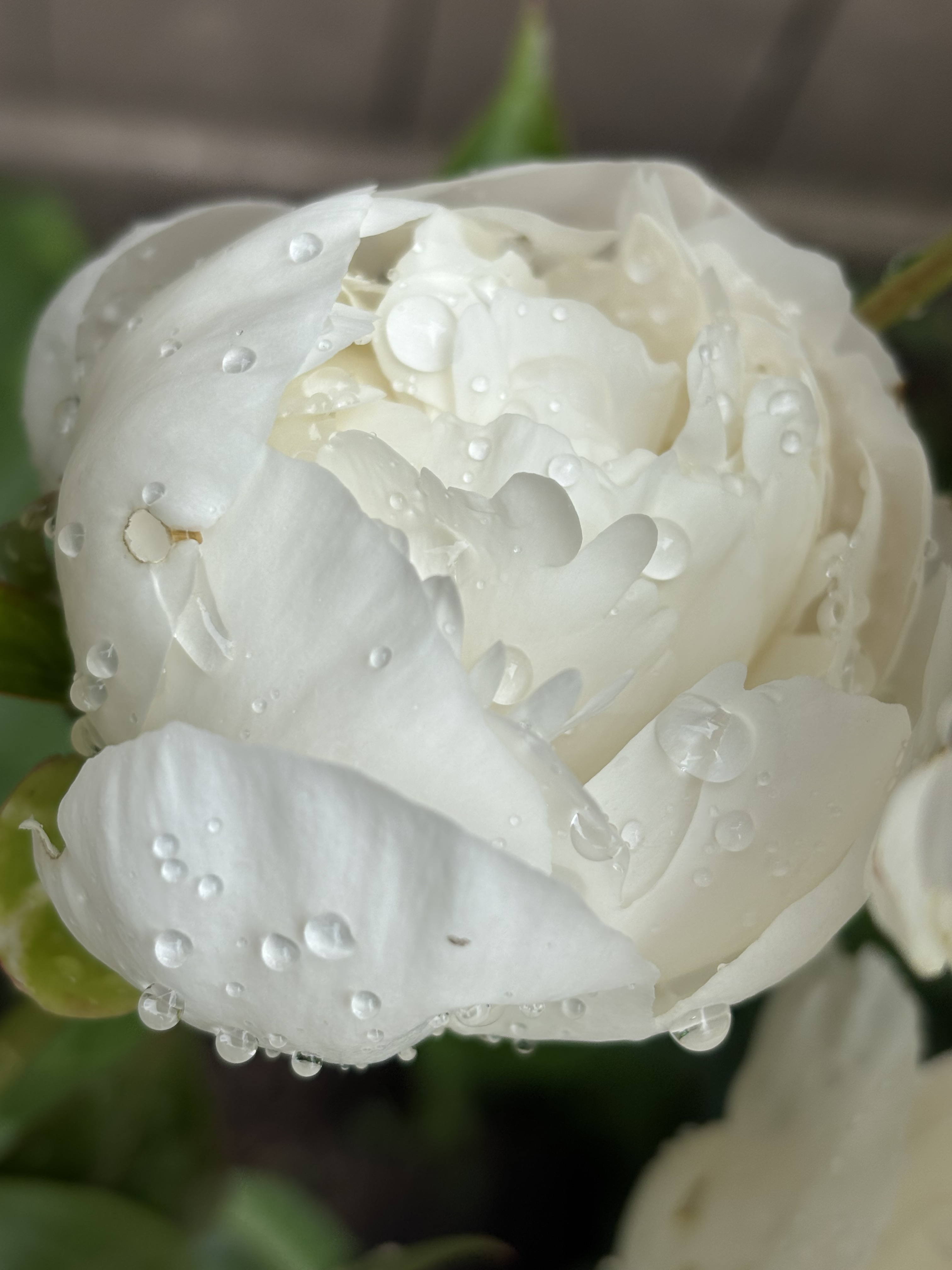
read Kerri’s blogpost about THE PEONY

likesharecommentsubscribethankyou!

Play And Walk Away [David’s blog on DR Thursday]

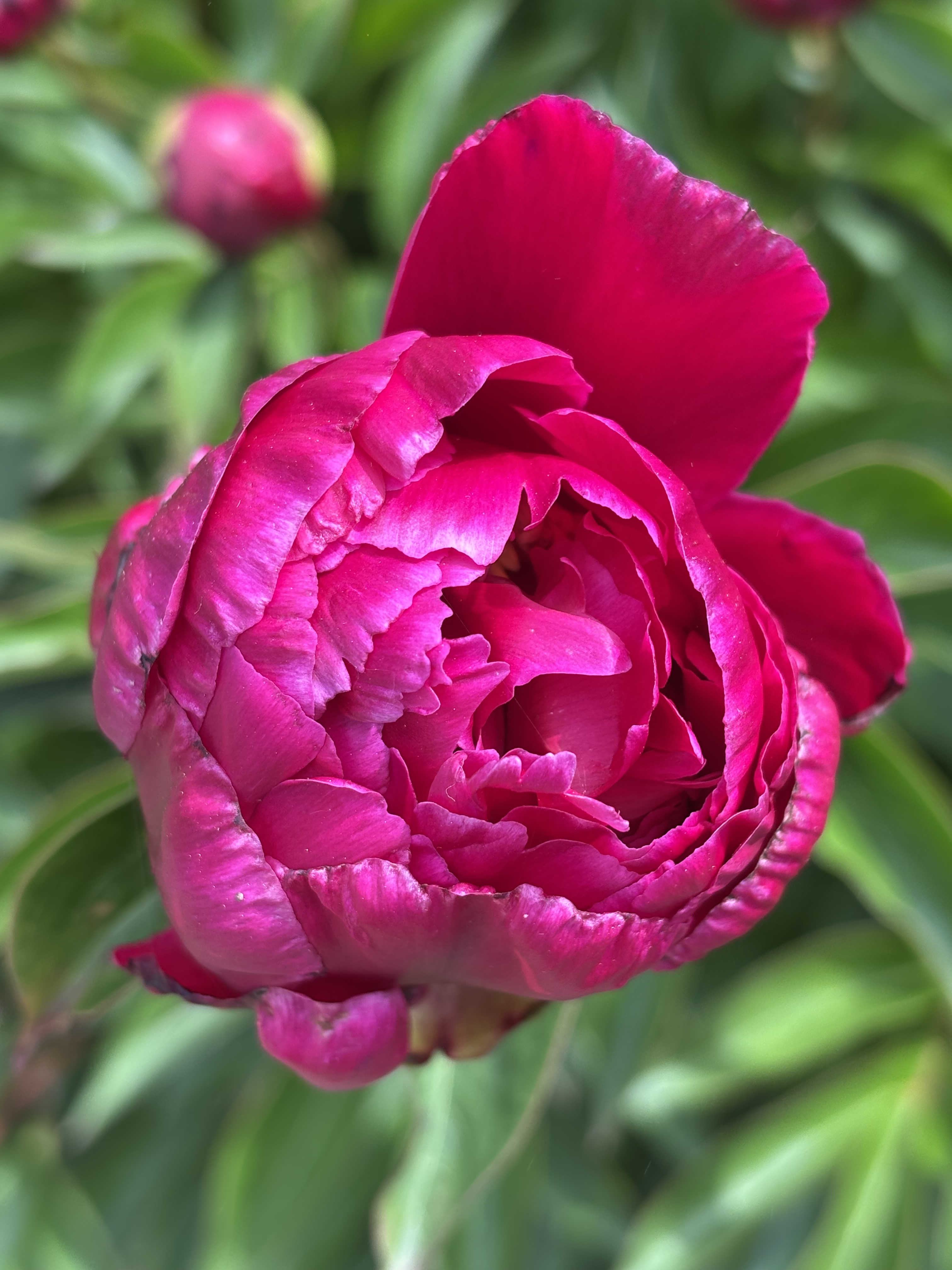
This is the season of vibrant color. The muted tones of winter have traveled through the pastels of early spring and stepped boldly into full saturation. The greens are not holding back. The magenta of the peony is unabashedly electric. The purple and blue blossoms on the trail demand an audience. Nature’s color wheel abandons the monochrome of the cold months and proudly and loudly performs in full contrast.

Breck-the-aspen-tree grows a few inches every day. “I wonder if we stared at Breck would we see her growing?” she asked.

We are on peony watch. It was only a few days ago that the tiny buds appeared and then like old-fashioned Jiffy pop they visibly swelled and are now bursting open. The peony flowers have a very short life-span so we give them our undivided attention and appreciate every eye-popping minute that they give us.

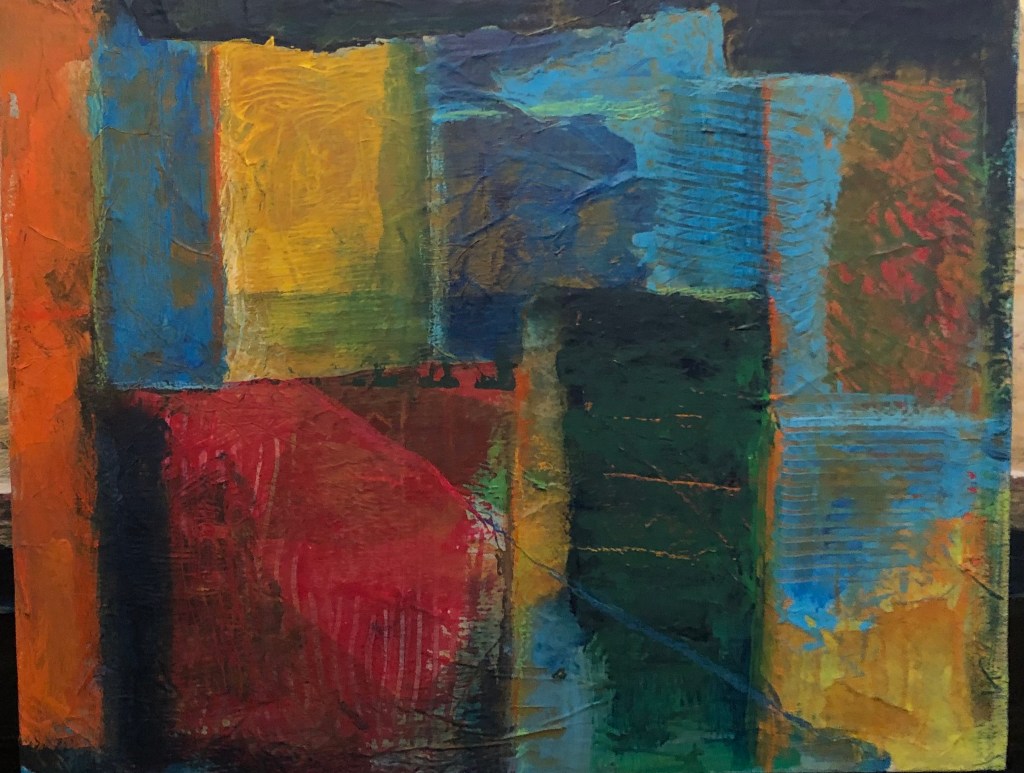
I bought a full color spectrum of cheap craft paint. I am in the mood to play and don’t want the expense of the paint to be a barrier. I don’t want taking-myself-too-seriously to be an obstacle. I have several small canvases and some panel pieces just waiting to be splashed. Master Miller sent me some cool painting tools so I’ve made a single rule that no brushes are allowed until the final washes – and the only brush allowed is a cheap 3″ house painting brush. Only the cool tools, scrapers, wipers, palette knives, crayons, my hands…and anything found on the shop floor. No thinking is permitted, just playing, impulse and intuition. Play and walk away. There will be plenty of time for serious study in the fall.

I want to take full advantage of the fearless energy of spring.

Kerri calls this little ditty “Primary.”

read Kerri’s blogpost about COLOR

likesharecommentsupportthankyou!

Done! [David’s blog on DR Thursday]

I am losing the recall of words and names. It happens. I threatened to take a brain booster and the notion sent us into gales of laughter because, we concluded, I am a more likable person with a less-sharp brain. I will do better in the world now that the edges are rounding. It is best to walk into the future without the booster and a few less facts-at-my-fingertips.

I confess that with my diminished capacity I have experienced greater contentment. Knowledge was armor and with less access to weaponry I’m having to exercise a different set of skills: keeping my mouth closed, listening, not-knowing…the things I’ve pursued my entire life but am now able to achieve because I have to practice them. Life is funny.

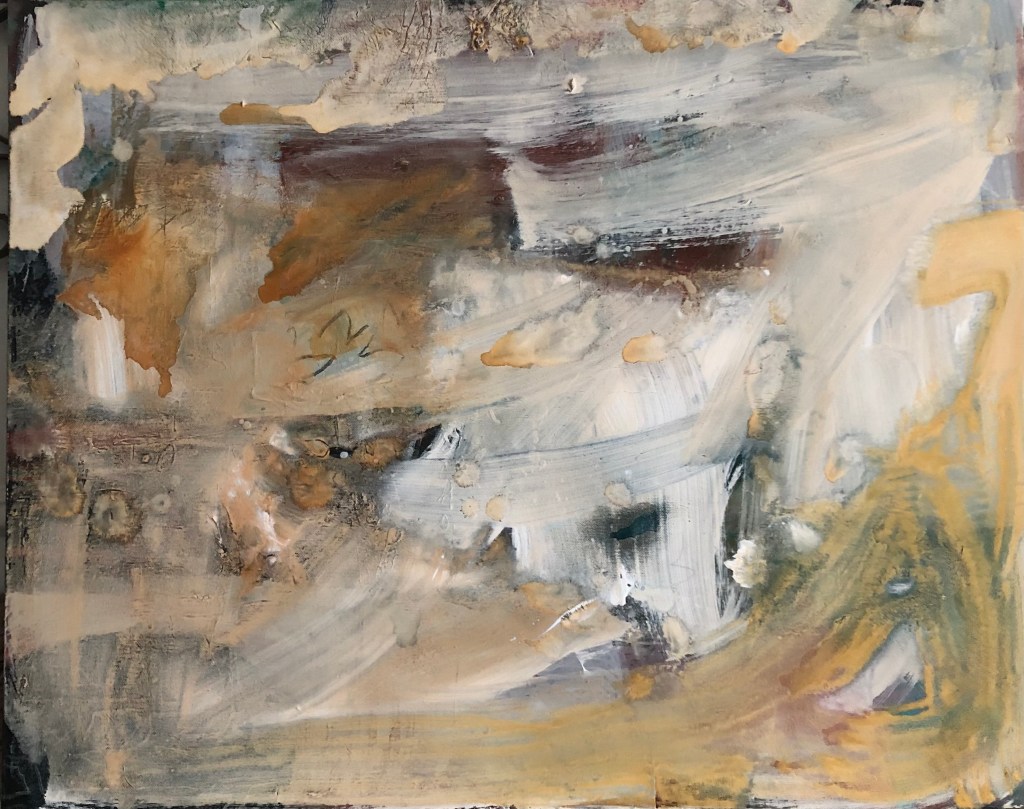
I’m splashing paint. I have a plethora of old canvas and odd shaped boards. Simultaneous to my new less-than-sharp brain, when in the studio, I’m experiencing the deep desire not to think about anything. To paint with no other purpose than to see what happens. Experiment. Art as life in the laboratory. Twice in the last week Kerri has come into the studio to see what I’m working on and said, “I like this one.” When I ask her what she sees, she squints her eyes, approaches the easel, and flips the painting over. Up is down and down is up. It is my clue that the painting is nearly complete.

“What would you call this?” It is always my second question: Without hesitation she gives it a name. I marvel at what she identifies in the splashes. I call the painting, “Done!”

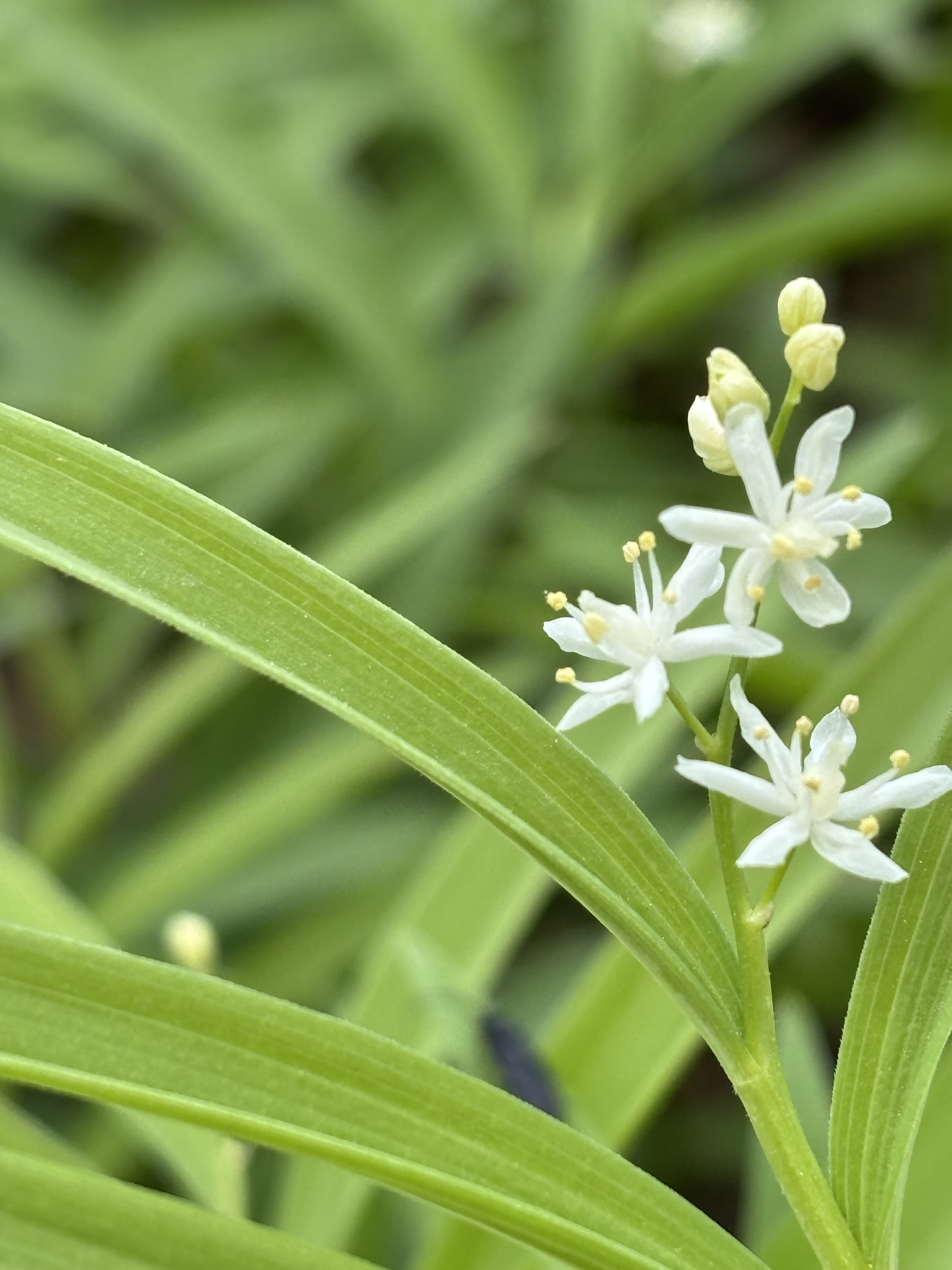
Inevitably on the trail, she “Ooooohs” and kneels to capture the tiniest of blossoms. It is the time of year that nature gives her too much to photograph. We stop every few feet. And, although she has told me several times the names of each flower, the names never stick. That is not new. When I was auditioning actors I asked them to wear the same clothes during callbacks since I’d better remember their work by what they wore, not by their names. Visual memory. For me, the tiny blossoms are like actors. I recognize them without their names getting in the way of my appreciation.

Perhaps my recent word-recall-struggles are merely a matter of me becoming more of who I have always been? I’d pose the question to Kerri but she’d squint her eyes, flip me on my head and tell me that I was “Done!” Make no mistake, I’d be very careful NOT to ask her my second question! I do not want to know what title she’d affix to me, especially flipped over, with all the blood finding its way back to my brain.

After The Storm

read Kerri’s blogpost about TINY FLOWERS

likesharecommentsupportthankyou

The Necessity Of Texture [David’s blog on DR Thursday]

“I like the flower against the wood,” she said. A statement of texture. Variance is infinitely more visually interesting than uniformity. Innovation is more about deviance than it is about conformity. Ingenuity is the blossom of wild imagination and not the child of practicality.

In every aspect of life, the pursuit of a question is far more important than the regurgitation of an answer. Learning is never about the answer. Life is never about having an answer. It is never about the hard-held-belief; it is about the capacity to challenge every scary assumption. It is about stepping beyond judgement into the unknown. That is known as expansion. It requires an open-mind.

The maga-man looked mockingly at the interviewer and said, “I don’t care what (the wannabe-dicator) does as long as he owns the libs.” What does that mean, to own the libs? The interviewer asked a maga-woman what she meant when she used the term “woke”? Like the maga-man, she has a particular hatred for folks who are “woke.” She admitted that she didn’t know what it meant but she’d heard it plenty of times and she knew she didn’t like it, whatever it is.

No ability to question or challenge. Regurgitation. This is known as a closed-mind.

To be educated – inquisitive – one need not pull a single right answer from a hat. It is far more essential to stoke curiosity and find a path of many answers en route to greater and greater questions. A single answer, unquestioned belief, though safe and perhaps temporarily gratifying, rarely provides life with texture and vitality.

It is not a mystery what will happen if this administration manages to scrub all the color from the nation, to eliminate the texture, the voices of dissent, to actually achieve dull conformity, the bland uniformity that they think will make America great. No variance. No diversity. No deviance. No ingenuity. No innovation. No imagination. No capacity to reach across difference.

A few questions, a recognition of the necessity of texture, might save this ailing nation a world of hurt and decades of self-inflicted pain.

Day Is Done (work in progress). Nothing but questions and texture.

read Kerri’s blogpost about WOOD ANEMONE

likesharecommentsupportthankyou

Ode To Happy Accidents [David’s blog on DR Thursday]

The famous blue-green tint of the Ball jar is the result of a happy accident. In search of cheaper resources the brothers Ball moved their company from Buffalo, NY to Muncie, IN. The minerals found in the sand in Indiana differed from the minerals in the sand in Buffalo and voila! The glass it produced was blue-green.

The story of penicillin is also the story of a happy accident.

The history of abstract art is the story of visual happy accidents. There is a term for happy-accident-painters that I especially appreciate: intuitive painting. It is the art of self-discovery, the art of process over product. As Quinn would say, it is to cultivate serendipity. Jackson Pollock was an intuitive painter. Helen Frankenthaler was an intuitive painter. Hilma of Klint was an intuitive painter. The late work of Henri Matisse was intuitive.

Happy accidents are trial-without-error because each trial carries a discovery. In this definition, all of science is a happy accident; the accumulated knowledge derived from a mountain of experiments. The same is true in the history of art. “Try it and see what happens” leads to some surprising insights.

What happy-accident-insights can be gleaned from the life-long-experiment asking, “Who am I?” It is never a direct path. It is a circular route with a guide named Intuition who may encourage you to splash paint as a means of self-discovery or might load your bottom line with so much discontent that you move your glass company to Muncie in search of cheaper sand – only to find yourself renowned for a unique shade of blue-green.

The Stuff of Dreams, 24″x 24″, mixed media on a slab of acrylic

read Kerri’s blogpost about BALL JARS

likesharecommentsupportthankyou