

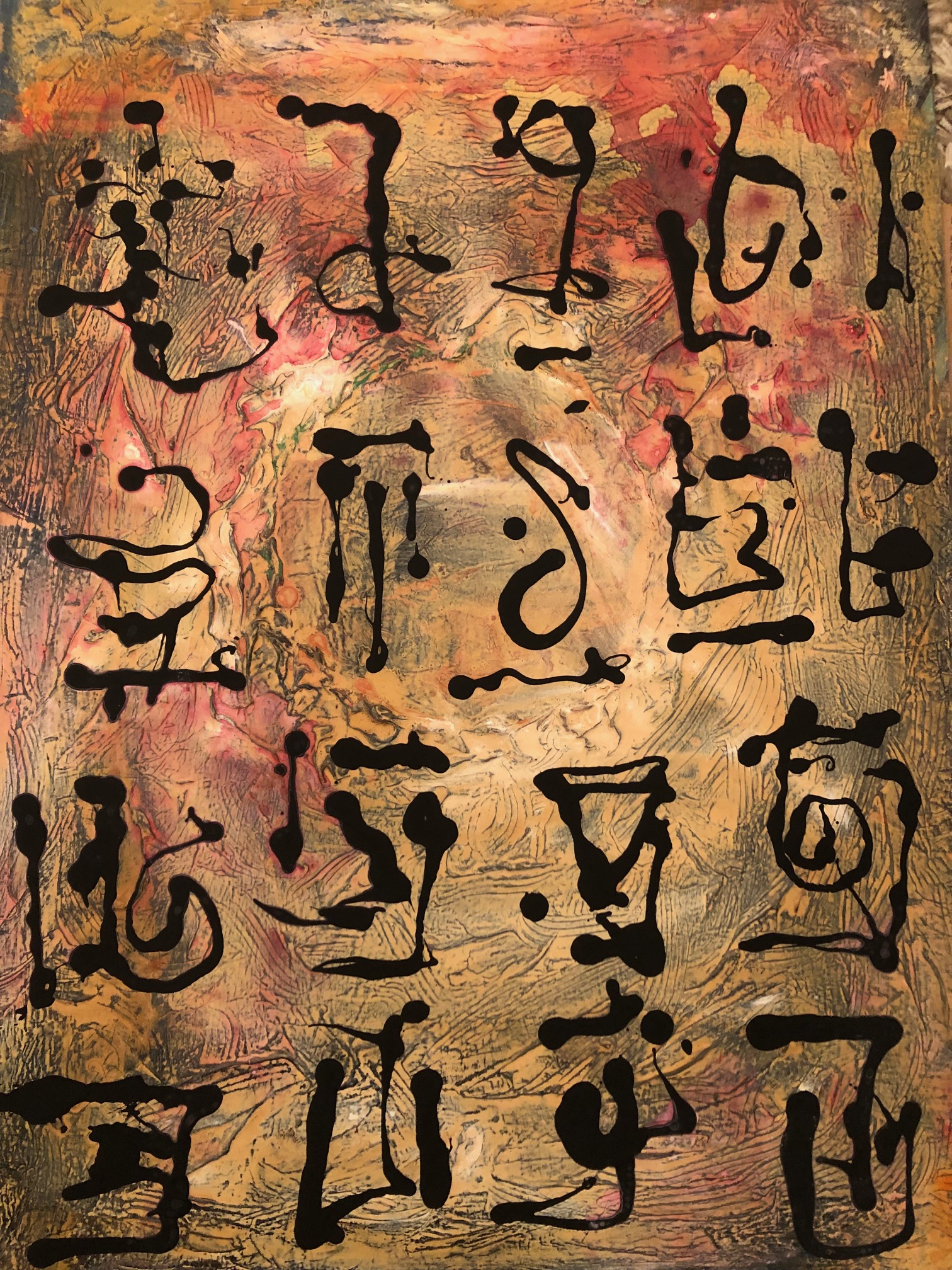
My favorite email of the week comes from Horatio. In last week’s post I included a new painting, an experiment. Horatio wrote, “Wow! Keep digging into that.” Later he added, “Dive in, amigo. That is the earth and the sun and moon all talking to you.” My painting is resonate of runes. Joking, Horatio asked, “Can’t you read runic code?”
“What a great idea!” I exclaimed to myself. I Googled runic code and found several runic translators. For kicks, I typed into the translator, “To be or not to be, that is the question.” This is what Shakespeare looks like in runic symbol:
ᛏᛟ ᛒᛖ ᛟᚱ ᚾᛟᛏ ᛏᛟ ᛒᛖ, ᛏᚺᚨᛏ ᛁᛋ ᛏᚺᛖ ᛩᚢᛖᛋᛏᛁᛟᚾ
Every written language is sound translated into line so we might translate the line back into sound. Musical notes also represent sound in a visual symbol. It is so fundamental, so ubiquitous, that we forget the miracle of it all. We scratch lines on paper to capture ideas, to remember dreams, to record symphonies. We’ve created a code, an alphabet, a limited yet specific number of symbols, developed a set of rules that make our scratches uniform, common and understandable. We created a “dictionary” so the sequencing of the symbols would not be individualized but uniform, shared.
In our nation we insist that we are divided, irreconcilable in our differences, but need a shared language, the most common of common grounds, to do so.
And now we text. The symbols newly created and used, emojis, are pictorial abbreviations, short cuts in a medium servicing the reduction of the message. I❤️U. WTF! 😂 Pictographs and phonetics. In the name of progress we revisit the ancients and now write like Egyptians. We communicate in hieroglyphs.
In these times, difference of language, difference of alphabet, is less of a barrier than difference of opinion. Language translators populate our devices. They are not perfect since culture is non-translatable, but we at least approach the ballpark of understanding. Yet, we are learning, even when our language is shared, that no amount of translating can build a bridge of understanding between maga and the rest of us. A shared language is most useful when facts are also shared.
I am a fan of Wade Davis, an ethnobotanist, a studier of culture and language. He tells a story of indigenous people in the Amazon rainforest, mixing rare plants, grown in different regions, for medicines. He asked them, “How do you know what plants to use?” Incredulous at his question, they laughed and replied, “The plants tell us.”
The plants tell us. “There are more things in heaven and earth, Horatio, Than are dreamt of in your philosophy.” – Hamlet (1.5.167-8)
The lines we draw that carry the sounds that give shape to words are ultimately all drawn from our conversation with nature. Where else? The earth and the sun and moon all talk to us. When we engage with lines meant to carry meaning, like a runic code, we ask, “What does it mean?” When you look at my painting of lines that seems to carry a message, it is natural to ask, “What does it say?” And that – just that impulse – to know, to understand; it is the hope of humanity, the thing we all share, the desire that brings us together, the yearning to understand IS the desire, the most basic of desires, to join, to reach, to connect.
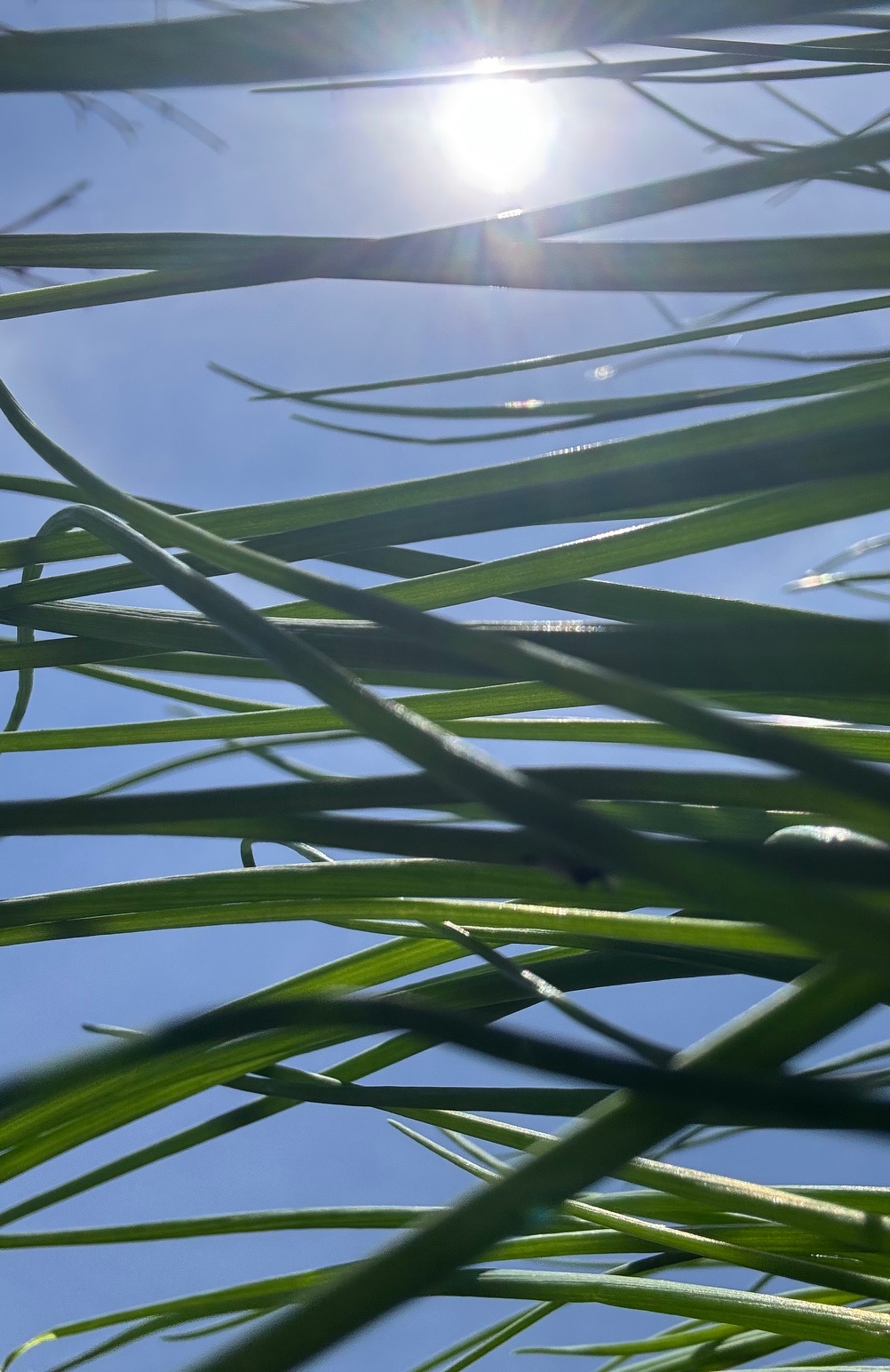
read Kerri’s blogpost about CHIVES AND SUN

likesharecommentsupportthankyou!
Filed under: Creativity, DR Thursday, Emergence, Uncategorized | Tagged: alphabet, artistry, common ground, connect, david robinson, davidrobinsoncreative.com, desire, Kerri Sherwood, kerri sherwood itunes, kerrianddavid.com, kerrisherwood.com, language, meaning, meaning making, runes, story, studio melange, the melange, understanding, yearning | 1 Comment »





