Start Walking

photoTell Me. How can I be a learner?

My mind went absolutely blank, and I heard myself saying, Its simple. To be a learner youve got to be willing to be a fool. ~George Leonard, Mastery

I used to do a lot of work in education. My career in the theatre took a sharp left-hand turn when I started consulting with schools. The puzzles that plagued educators seemed to me easy to address. To be human is to be curious. Tickle the curiosity, begin the story and get out of the way.

Tom once told me that teaching is about relationship (not control). He also told me that the best teaching/learning needed to be directly applicable; it had to be immediate. It had to be real. It had to matter – to both the teacher and the learner. The trick is to extend the mattering into greater and deeper levels of abstraction.

An emphasis on testing is an emphasis on knowing. Great learning places the emphasis on not-knowing. It reinforces the pursuit and dispels the notion that knowledge is something achievable. Worthy questions always open more worthy questions. To be human is to be curious. To be alive is to wonder what is on the other side of the hill and then take a step toward it.

The fool George Leonard references isn’t “ the unthinking person,” it is “the carefree fool in the tarot deck who bears the awesome number zero, signifying the fertile void from which all creation springs, the state of emptiness that allows new things to come into being.”

Emptiness. Not knowing. Relationship. Mattering.

Step Into Unknown with SigThe question, “How do we/I do it?” is a great step-stopper. It is the leading edge of every personal and organizational stagnation excuse. We don’t know how. I’ve come to believe that it isn’t a natural question but is learned behavior. It is an emergency brake installed by a system that values right answers over great questions.

My wife and I have a short-hand phrase, Beaky’s Wheelchair, to remind us when we stall, that “how?” is something that can only be known after the fact. No one knows “How?” at the beginning. Beaky needed an electric wheelchair to be mobile and the world of insurance/medicare was standing still. After months of waiting, with no clue which direction to begin, we started making calls. We met every “no” with a “why not?.” We asked a multitude of foolish questions. We learned. And learned some more. Within a matter of weeks, Beaky had her wheelchair.

How do you play the guitar? Paint a picture? Bridge a conflict? Transcend a limit? Know one knows. Tickle the curiosity, let go of any notion that you need to know how, and start walking.

text from Krishnamurti as it appears in my painting

the text from Krishnamurti as it appears in my painting


Save

Save

Save

Save

Cut A New Path

ComfortNow

The latest in my Held In Grace series. This is Comfort Now

It seems to me that most of our days on this earth are spent moving through patterns, conscious or unconscious. These patterns are the rituals of our lives. Some of the rituals are easy to see. For instance, what is the sequence of actions you perform before going to bed each night? What about your ritual of rising each day? The care and feeding of Tripper Dog-Dog-Dog and Babycat are central to my rising and retreating rituals each day. We move through the same actions every morning and evening and I delight in the warmth of the ritual.

Some of the rituals are not so easy to see. Researchers tell us that most of the thoughts we think every day are the same thoughts we had yesterday. We mostly think in patterns (it makes sense once you recognize that language is constructed of category and pattern). We talk to ourselves, cutting paths through the forest of our minds and, once we’ve established a trail, we like to stay on it. Easy is often unconscious. There’s nothing wrong with staying on the easy trail if the path you’ve cut, your repetitious thought-ritual, is self-loving. The rub: ritual paths of self-loathing and self-limitation are also easy, well-worn paths and that makes them both unconscious and hard to leave.

Cutting a new path through the mind forest begins with recognizing that new paths are always available. They just aren’t easy to establish. They require new practices. They require surrender and the first bit of surrender necessary for cutting a new path is the ritual giving-over of needing-to-know-anything; new paths, by definition are unknown.

New paths are not comfortable precisely because they require attention, consciousness.

My teachers taught me that all stories worth telling are stories of transformation. The main character or characters will know something at the end of the story that they did not know at the beginning and the new knowledge will be hard-won. That’s what makes the story worth engaging. Hamlet is a much different character in Act 5 than he was in Act 1. His peace was difficult to come by. He had to learn to surrender. To cut a new path he had to make a practice of peace.

The same ideal applies to the stories we live off the stage.


Stand In It

photo

a detail from a recent painting

A surprise package came in the mail. It was a gift from David, my artist’s artist. He sends me things to feed my artist soul, to stir my pot or help me sort out my dilemmas. This gift is more timely than most; it is especially relevant for me now. It is a book of photographs and essays by Walter Kaufmann called Time Is An Artist. I’ve barely cracked the cover and already know it carries the wind that will fill my becalmed life-ship.

This is a quote from the first essay: We always live at the limits, but we are rarely aware of it.

I woke up this morning awash with gratitude for a man who stood in line behind me at an airport ticket counter over 30 years ago. I was returning from Europe. I had a hundred dollars and some lose change in my pocket. I was exhausted. I’d flown from London and landed in a blizzard. My connecting flight from D.C. to Denver was cancelled. Because I was traveling on a cheap open-ended student ticket, the cancelled flight meant I was stuck with no way home. I didn’t know what to do and was too tired to sort it out. I was desperate and lost in my desperation. That’s when the man tapped me on the shoulder. He was a guy in a rumpled business suit. That’s all I remember about him. He was also trying to get home. He’d just heard someone mention an airline offering a cheap flight to Denver. It was $89.00 ($100 with tax). I ran for the ticket counter and snagged one of the few remaining tickets.

That’s it. That’s what I remember about this man who tapped me on the shoulder. To him it was probably a little thing. To me it was enormous. I needed hope beyond desperation. I was investing in a story of limitless problems and was met with a moment of generosity.

It seems that I am in a life course, a graduate school for detachment. Last night P-Tom shared a quote that was important to him when he was doing his chaplaincy in a hospital: Don’t’ just do something, stand there (a reversal of the known quote). Stand there. Amidst the grief and the loss and the mess, sometimes it is essential to do nothing but offer presence. The man at the airport gave me his presence. Beyond his situation he was listening to my struggle.

Detach from your story and the gift will be gratitude. What rolls through our minds is nothing more or less than a story. Eckhart Tolle tells us the story is a force that pulls us out of the Now. Carlos Castaneda writes that Don Juan taught him 3 steps on the warrior’s path: Detach. Make a choice. Own the choice. One of the primary reasons people meditate is to quiet the mind. In the quiet it is possible to see the story as just that, a story. Detachment, in this sense, is not disengagement from life or cold aloofness from reality. It is the doorway to life. Stand in it and not the story of it.

Gratitude lives in the Now. Where else?

photo-2

another detail from another painting. kerri says this one looks like gratitude

The man at the airport was on my mind because I have learned in this life-course that gratitude is best served in thimbles: the taste of the pear, the sun on your face. The man tapping your shoulder, “Hey, I just heard….” I thanked him before running but the real gratitude came later. Gratitude came again this morning because I was telling stories of the good angels who’ve populated my path.

Real gratitude for this life lived perpetually on the edge is often lost when the expectation-bar is set too high. To be grateful for your life – your whole life – is… an abstraction. It requires a story that pulls you away from this bite. It is a bucket too big. Savoring is a slow affair, available in the smallest taste, right now.


Unroll The Generosity Perspective

from the archives: EmbraceI’m eavesdropping. Kerri and Pastor Tom are in the next room having a planning session. I just heard P-Tom say, “The generosity perspective fell down. Woody rolled it up and put it under the table.” I laughed out loud. They are talking about a banner but, taken out of context, it is a terrific and ominous phrase!

If you take a gander at the daily news, follow the political circus, count the people trampled in the crush to buy stuff the day after Thanksgiving, you would be hard-pressed to find a better phrase for our times. The generosity perspective fell down. And, to add icing on the metaphoric cake: Woody easily rolled it up. He put under a table.

This land is your land. This land is my land. This land was made for you and me.

I’m convinced that there is another side of the coin. There is no denying that meanness exists in our world. Humiliation is a game played everyday through social media and beyond. Yet, I still believe that there is a disconnection between the rhetoric and the lived experience. I see and experience terrific acts of generosity every day. Some are small acts, some are vast – unfathomable, some are spontaneous, some are planned but all are generous. In fact, when I really pay attention, I find that the incidences of generosity far outpace the acts of cruelty.

Cruelty makes for good gossip and good gossip is cruel. And so, meanness sells. It is good for advertisers so those are the stories we broadcast. Generosity, on the other hand, erases victim stories and so is rarely yummy-fun to talk about. Acts of generosity are less potent as a selling tool.

Cruelty is easy to see. Generosity requires an intentional focus.

This morning I bumbled into a TED talk by Patti Dobrowolski. I learned that the odds are 9-to-1 against making change even if the change needed is life saving. Her message is great: draw the story you want to tell. Literally, draw it. And then tell it. If we want a different story we have to imagine a different story. If we want a different story we need to tell a different story. If we want a different story we need to act a different story.

If Woody easily rolled up and stashed the generosity perspective under the table it should be equally as easy for Woody to reach under the table, unroll the generosity perspective and hang it for all to see.


Open Your Eyes

a detail from the painting on the chopping block. It's called "The Stillness Must Be Immense."

a detail from the painting on the chopping block. It’s called “The Stillness Must Be Immense.”

There is a debate raging in my house. Yesterday I was about to wipe a painting off my canvas and begin anew when Kerri intervened. “I love it!” she declared. “I hate it,” I replied. “Truly,” she said, “I love it.” When I wrinkled my brow she restated, “I love it.”

Many years ago I was stepping toward a canvas to wipe it clean. The painting wasn’t working for me and I’d given up. I wanted to start anew. My landlady, Kathleen, came into the studio at just that moment and hurled herself in front of the canvas. “You can’t erase it!” she declared! “This is one of my favorites!” She had the look of a desperate woman begging for the life of her child. I relented. I couldn’t wipe it clean. She confessed to coming into the studio the previous evening and admiring the painting. “I spent a long time with it!” I made a deal with her. I promised to show the painting – to include it in one show – and let the public decide. If it was roundly reviled, as I KNEW it would be (as I was actively roundly reviling it), I’d paint over it without drama or interference. If it was appreciated by anyone, by a single person, Kathleen could say, “I told you so,” and I’d never paint over it.

the painting Kathleen saved

the painting Kathleen saved.

A few months later I hung the painting in my solo show at Rock/Dement studio gallery in

Seattle. At the opening a woman came into the gallery, stood before the painting, and burst into tears. She looked at me with tears rolling down her face and said, “I love it.” Kathleen waited a few days before allowing words to break through her smug smile, “Well,” she sighed, “I told you so.”

That painting is the reason I made the same deal with Kerri yesterday. I will let it remain long enough to show one time. If it is roundly reviled and ignored, then I will paint over the canvas without protest. If a single person likes it or expresses appreciation for it, she can bury me in a mountain of, “I told you so,” and the painting will live on long after I’m gone.

The Stillness Must Be Immense.

The Stillness Must Be Immense.

This morning I posted an image, a print that reads, “CROSS THE BOUNDARY OF ELEMENTS.” In the short blurb associated with the image I wrote that sometimes we have to stand in other people’s shoes. We have to see what they see. I am an artist and am convinced that artistry is all about opening new visions for others. It is about helping people see what is there, not what they think is there – and I’m certain that I fall into a thought eddy while painting. It is, perhaps impossible for me to see what others see in my paintings. What I judge to be worthless has often proven to be magnetic to others. And so, I am willing to make this bet, I delight in the moments when my understanding of life turns back on me, flings itself in front of me and screams, “Open your eyes!”

another detail of the painting.

another detail of the painting.

Embrace The Bump

photoArt stores are dangerous places. We entered the store with a short list: vine charcoal and titanium white paint. We left with a suspiciously large bag – Kerri found the pen and pencil aisle and got “that look” in her eyes. I found her sitting amidst a vast circle of pen possibilities making marks on a pad of paper. “Ooooooooooo,” she cooed, feeling the latest pen for weight and suitability for her hand. “I looooooove this one,” she said to herself. Her pile of “I love this one” selections was formidable. Art stores are like opium dens.

20 (aka John) was with us. He regularly incites us to riot and misbehavior. He was little help extracting Kerri from her pen-nest. 20 impacts us like a snout-full of laughing gas. He has a way of making the darkest day bright. 20 is, in fact, a bringer of light; he has developed this capacity because, like all bringers of light, he knows well the other side. One day in early summer, we sat on the deck drinking coffee and made our belly buttons talk, giving voice to the things we think but cannot say in polite society. We laughed so hard that I had to run inside the house; I couldn’t breathe. Twenty’s belly button had a lot to say.

After escaping the art store, Kerri hefted her bag of supplies to the car while 20 and I waited on the corner. That’s when we saw the sign. It was something Sartre might have provided had he been a traffic engineer. It was existential. 20 and I jumped at the chance to make a selfie with the sign-philosophical. It simply read, BUMP.

photo-1As we snapped our selfies, laughing all the way, I couldn’t help but recognize that life – a good life – is riddled with bumps. In my consulting days I used to work with people to embrace the bumps rather than try to remove them. There is a pervasive notion that smooth sailing makes a good life. A bump-free life is a recipe for disaster. All of life’s lessons are found within the bumps. A life without bumps is a life without challenges is a life that is boring. And, in truth, people create bumps if they don’t already exist. They’re called a hobby or gossip or a complaint or drama. In story language, bumps (called ‘conflict’) drive the story; without bumps there is no movement. Yearning is a bump. So is desire. Unrequited love is a bump. Loss is a bump. Wondering what is beyond the horizon is a great bump.

20 is a great teacher of how to address bumps: Laugh. Make a selfie. Alter the word to something even more outrageously appropriate. Look for the next opportunity. Let your belly button talk.

photo-2

Everyone Has Their Heaven

TODAY’S FEATURED PRINT FOR HUMANS

everyone has their heaven

FOR TODAY’S FEATURED PRINT FOR HUMANS, GO HERE.

Release The Edge

photo-4

Usually, there is a lake….

Hope begins in the dark, the stubborn hope that if you just show up and try to do the right thing, the dawn will come. You wait and watch and work: you dont give up. ~ Anne Lamott

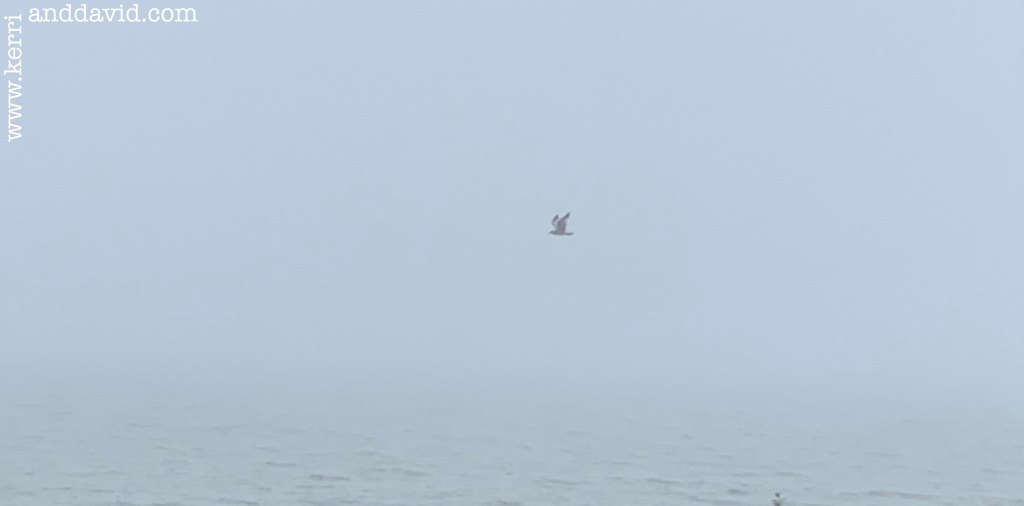
Sometimes the fog hangs heavy all day along the shore of the lake. The sun tries in vain to penetrate the fog so the air glows. When, in combination with the fog, the lake is still, like it was today, it becomes invisible, inaudible; the lake disappears. Standing on the great rock barriers, staring into the void, it feels as if you have arrived at the edge of the world.

photo-5

looking the other direction

All of my life I have been fascinated by edges. What is the line between wild and tame? Most good stories require a stride beyond the boundary, a movement into territories unknown. And, at the end of the story, what was once known becomes unfamiliar. Every ending is a beginning. What is the line that distinguishes the known from the other place? A good dose of reason will assure us that most things can be understood but a walk through a spring meadow or a night spent gazing into the stars will remind us that understanding is illusive or at best illusionary. What do we understand?

Once, working with a group of teachers, we had a terrific discussion about beginnings. Where does a story or a life begin? There is always an easy answer, “Once upon a time,” a birth date, when two people meet, the day the crisis arrived on the doorstep. In fact there is always a multitude of easy answers, of possible beginnings, and none of them are definitive. Which beginning point is the beginning point? At what moment did success arrive? Or, when did failure begin? Does my life begin with my parents or their parents or…? Edges are esoteric!

There is a long tradition in the arts of Dances with Death. Paintings, dances, compositions, plays,…; Hamlet ponders life as he holds poor Yorick’s skull. It passes all too quickly. Most spiritual traditions carry the notion that life cannot be understood, valued, or fully appreciated without first grasping that this life-ride is limited. Living a good life, a fully appreciated life, demands a nod to the edge. It’s the ultimate paradox.

I’ve courted a bundle of trouble in my life because I rarely see the black-and-white of things. Where is the line between hope and hopeless? What wall delineates faith-full and faith-less? Like happiness, edges are made, not found. Ask a physicist if it is a particle or a wave and they will uniformly answer, “It depends upon where you place your focus.” Even in the era when people believed there was a hard edge to the world and finding it meant falling off, sailors supplied their ships and sailed toward the horizon to find it.

 Icarus reached for the sun.

Icarus

Step Toward Faith

My latest. An unusually small canvas.

My latest. An unusually small canvas: Will Is Belief.

I began writing this post a few weeks ago, just before the run to Florida and the launch of Beaky’s book. It was a very busy week and I’d forgotten that I started but did not finish the thought. This morning, wanting to get back into the rhythm of writing, I opened my iPad and found these words already written and awaiting my return:

I’m sitting in the choir loft watching the evening sun illuminate the stained glass window. I’m tired tonight and listening to Kerri, preparing for the Maundy evening service, rehearsing Nancy’s solo. Nancy’s voice is like a warm cello, deep and rich, and is working like a sound-massage on my tired bones. I’m giving over to it.

This cycle of services on Easter week is relatively new to me so I’m paying attention to all of the symbols and rituals of this story of rebirth. As is true of every great story cycle, the night is darkest before the dawn (thus, the cliché). This night, called Maundy Thursday in the cycle – I’m told that Maundy means mandate – is the night of the last supper and all the betrayals that followed. It is the segment of the story that is chocked full of crises of faith. If, like me, you are a lover of story you will recognize that some form of betrayal usually precedes a crisis of faith and, in turn, a crisis of faith always leads to growth and new direction; it always leads to sunrise.

Others betray us. We betray ourselves. Betrayal happens on the edges of the dark forest and forces a step into the unknown. Betrayal happens when we fall asleep (that is most often how we betray ourselves – sitting in front of the television to numb us to the richness of our lives). Things crumble: the relationship that we believed was secure, the truth into which we rooted our belief, the career that we thought would carry us to retirement. Security dissolves, identity dissipates, and then what? All the fears bob to the surface. All the dragons come out of the closet.

This was the unfinished thought I found this morning. I have no recollection of where I was going with it. Now, two weeks and a lot of life later, I read it as if someone else wrote it. However, there was one other sentence, detached from the others. It now reads like a mystery to me. When writing, I routinely float a sentence at the bottom of the page because it is the point of what I’m trying to reach. My floating sentence read:

A crisis of faith often has very little to do with faith.

And, as I try to resurrect my thought of a few weeks ago, I can only smile and write the first thing that occurred to me when I scrolled down and found the floater: Faith, like love or truth or time or anything else, is not something fixed. It moves and grows as we move and grow. A crisis of faith is really a step toward faith renewed. It enlivens. It helps us retire old dragons or let go of empty promises. It gets us out of our easy chair and helps us fully feel the day.


Capture The Essence

Dog-Dog and treasure

Dog-Dog and treasure

Tripper Dog-Dog-Dog gathers his stuff around him. He has two stinky blankets that he pulls from his crate each morning, a red Kong, a blue chew bone with a handy looped rope pull, another blue toy that once looked like a jack but has been chewed beyond recognition, a once-stuffed moose from Josh that is now an unrecognizable shredded mess though he carries it around as if it was precious cargo. There is also a muddy tennis ball, a raw hide bone and usually a sock pilfered from my sock basket. If Kerri and I shift locations within the house, move from the living room to the sun room, Dog-Dog’s worldly possessions will slowly migrate with us. He is subtle and I rarely see the migration in progress; I suddenly realize that I am sitting within a nest of Dog-Dog treasure.

My favorite section in The Lost Boy is a series of questions that Tom asked: 1) if you were given a cardboard box and it was all that was going to be allowed to provide proof that you walked on this earth, what would you put in your box? 2) Beyond proof, what would you put in the box that captured the essence of who you were, that distinguished you from all the others? 3)What are the collections, the things you gather around you that are somehow supposed to tell others who you are? These questions might seem simple but are surprisingly complex. How does your stuff tell the story of who you are? Or, a better question: does your stuff define you? Can your stuff – your car, your house, your granite counter tops, your clothes, your jewelry,…, – capture your essence?

Tom asked two other related and relevant questions: In packing your box, would you be tempted to scrub your life of its messiness? Would you try to eliminate the mundane, the everyday? Would you throw away your rough drafts? Would you ignore the relationships that didn’t work out? Would you explain away the ugliness, the ruthless choices? Would you burn your personal journals so that the future might never glimpse your doubt, your struggles, your frailty?

I would add these questions: What if your essence was only available to you once you value the messiness? What if, in throwing away the mundane, you actually eliminate what is truly special about you? I’ve often taught and touted a tenet from improvisational theatre: drop your clever and pick up your ordinary – most of us diminish/neglect our greatest gifts because we label them as ordinary. They come naturally to us so we don’t always recognize them. In trying so hard to be clever, to be right, to be flawless,…to be other, we regularly overlook the real treasure and relegate ourselves to that most shameful pile labeled ‘ordinary.’

Scrubbing life to a sterile, conflict-less blandness is a recipe for….boredom and, at the end of the day, a very uninteresting box. Of this I am certain: if Dog-Dog had to pack his box today, I would be proud to sit amidst the stinky blankets, blue bones and remnants of moose toy. Dog-Dog hides none of his messiness.