But If I Had [David’s blog on Not So Flawed Wednesday]

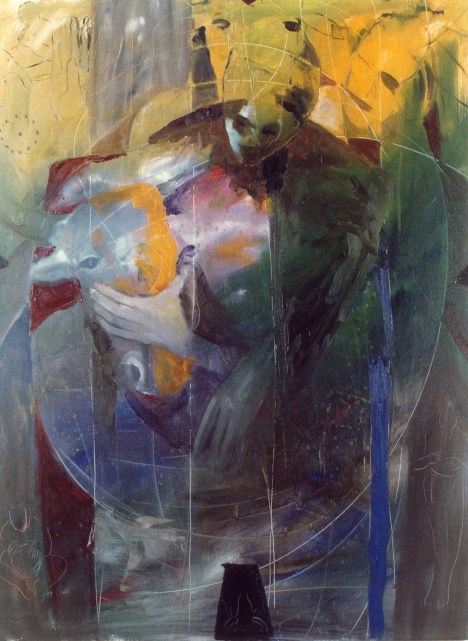
I’ve never taught visual art but if I had, I’d have sent my students outside to look at color in nature. I wouldn’t spend a moment having them study an abstract color wheel or match paint swatches indoors. Together we’d look at light, the angle of the sun. We’d play with shadows and discover the changing hue of shadows; they are more full of color than we want to admit.

We’d bring-to-light, uncover, unearth…we’d learn to see, a skill much more valuable to the artist than merely looking. We’d walk through the world as if for the first time. We’d share our color notes. We’d tease and be teased by a full range of morphing value as the sun played with our perception.

We’d remind ourselves that our window on this life is only open for a short while. We’d saturate ourselves in the infinity of shapes and textures, the marvel of pattern and interconnection; the riches of diversity. We’d immerse-in-the-immensity and not pretend that we were in any way separate or better-than.

We’d stave off a world insistent that we live within the narrow strictures of black and white, bland cubicles of dulled minds. I’d have sent my students outside to wander into their thicket of questions and step boldly into a world without answers but alive in rich, vibrant color.

read Kerri’s blogpost about THE LEAF

likesharesupportthankyou

The Only Question [David’s blog on KS Friday]

Breck the aspen tree is no longer a sapling. Since May she has grown a few feet taller. Her trunk is now the sturdy stock of a mature tree. Her bark is taking on the whitish hue of mature aspens. We stand at her base, crane our necks looking up, and marvel. In a few short months we have watched her come-of-age.

In a contentious time, an age of the disappearance of justice and the rise of a criminal, Breck is a reminder for us of all that is good. When we need a dose of sanity, when we need a reminder that nature takes little notice of human folly, we sit with Breck. We allow ourselves to be soothed by the comforting shimmer of her quaking leaves.

Joseph Campbell wrote The Hero With A Thousand Faces in 1949. I almost spit my coffee this morning when I read, “The tyrant is proud and therein resides his doom. He is proud because he thinks of his strength as his own; thus, he is in the clown role, as a mistaker of shadow for substance; it is his destiny to be tricked.”

I know it is a mistake to conflate myth with biography, yet, have you ever read a more perfect description of our authoritarian wanna-be?

Myth meets the historical moment. The tyrant is a clown. He is a mistaker of shadow for substance. He thinks his strength is his own. His destiny is to be tricked. Campbell also wrote that, in the mythic cycle, the tyrant, “usurps to themselves the goods of their neighbors, arise, and are the cause of widespread misery. They have to be suppressed.”

Usurping to himself the goods of his neighbors? Check.

The cause of widespread misery? Check.

In mythology, the tyrant is the harbinger of the hero’s rise (note: the hero need not be a male). “The great figure of the moment (the tyrant) exists only to be broken…The ogre-tyrant is champion of the prodigious fact; the hero the champion of creative life.”

The word “prodigious” in this sentence = unnatural, grotesque.

Locked in a shadowy lie-about-the-past with a monstrous clown? Or, progressing forward toward actual possibilities? We are a nation quaking to come-of age.

The tyrant exists only to be broken – and it makes sense in mythology and in the patterns of history. Breck can only grow in one direction. The same is true of us. The only question is how much damage will the tyrant do before we-the-people, the actual hero in our tale, awaken, open our eyes and rise?

WATERSHED on the album AS IT IS © 2004 Kerri Sherwood

watershed,(noun): an event or period marking a turning point in a course of action or state of affairs.

Kerri’s albums are available on iTunes and streaming on Pandora

read Kerri’s blogpost about BRECK

likesharesupportcommentsubscribethankyou

Cycles Of Change [David’s blog on DR Thursday]

“Wars and temper tantrums are the makeshifts of ignorance; regrets are illuminations come too late.” ~ Joseph Campbell, The Hero With A Thousand Faces

It is a warm evening. The breeze has shifted and comes off the lake, blessed cool. The bird alights on the pinnacle of our roof. Like us it pauses in the refreshing breeze. It drinks it in and rests. This image, this moment, is ancient and I am taken by it.

In the midst of the chaos of the country, the seeming unprecedented circumstances we now face, it is somehow comforting (to me) to remember that no one escapes the cycles of mythology. Mythology is a universal growth pattern, cutting across culture, delivered through story. It is a human-life-map. It is unwise to confuse mythology with make-believe.

Our collapse of moral authority in leadership is not unique in history. Neither is the rise of our tyrant. Neither is the corruption of our court Supremes or the silent cowardice of Congress. We follow a historical pattern just as we perform a mythological cycle.

The Roman Empire fell for much the same reasons that the American Experiment is now wobbling: political corruption, the widening gap between the haves and have-nots eroding social cohesion (maga, the impact of inanity like “trickle-down-economics”, unfair taxation, granting “personhood” to corporations…), the exploitation of division, overspending on the military, limits imposed on innovation and education (the impact of DOGE and the decimation of research among other things).

When servant leadership is upended by self-serving-leadership, the path becomes explicit. It doesn’t happen all it once. It is gradual, this erosion of the foundation takes time. This is a mythological death.

Of course, each death signals the birth of something new. As Joseph Campbell wrote of times like these, it is wrongheaded and naive to try and go back in time to capture some imaginary heyday. It is equally misguided to try to force the fulfillment of some imagined ideal. Both facilitate dismemberment.

Our protests of autocracy, our resistance to brutality, plant the seeds of our transfiguration. We will never restore our democratic republic as we’ve known it. Neither will we fulfill it as first conceived: exclusive; democracy for the few. Fire transforms and what will emerge from this hot collapse is anybody’s guess. I will probably not live long enough to see it. Gestation like this takes time, too.

However, I take heart knowing that the cycle will eventually present us with a new generation of servant leaders, people who rise from the wreckage and sacrifice personal gain for the common good. People who were transformed by this current fire. They will carry in their hearts the pain of their ancestors’ regret.

The bird on the pinnacle served as a herald of that distant day. The wind shifts, cutting through the heat, bringing with it sweet relief and the promise of the cycles of change.

read Kerri’s blogpost about THE BIRD

likesharesupportcommentsubscribe…thankyou.

A Closer Look [David’s blog on KS Friday]

“Art enables us to find ourselves and lose ourselves at the same time.” ~ Thomas Merton

A closer look at the dandelion reveals a fractal. Each level a repeat of the same or similar pattern at a progressively smaller scale.

Listen to your inner monologue. It is the story that you tell yourself about yourself. Listen to the stories in the news or racing across your social media screen. They are the stories that society is telling itself about itself. Any good novelist or playwright will tell you that conflict is the motor of story. Note: conflict need not be violent. Longing is a conflict. Unrequited love is a conflict. A search for meaning is a conflict. A closer look at humanity reveals a fractal. Each level a repeat of the same or similar pattern at a progressively smaller scale.

Robert Olen Butler defined story this way: “When a yearning meets an obstacle.” I believe words matter. I have always appreciated Robert Olen Butler’s definition of story because it does not use the word “conflict”. It is the fractal of the human experience.

The Buddhists teach that desire is the cause of suffering. I giggle every time I consider that marketing is essentially the creation of desire so it follows that it is the engine of suffering. The peace found in possession is fleeting. My Buddhist cartoon: retail therapy is but a single stop on a continuous cycle of suffering. If I was a teacher of story-writing I’d send my students to the outlet mall to study shoppers. My bet is that they’d eventually recognize themselves in the shoppers; then they’d have something essential to write about.

Picasso said, “Every painting is a self-portrait.” His sentiment is a fractal. We watch movies to see ourselves. We attend concerts to transcend ourselves – to lose and then find ourselves in the music.

A closer look at us reveals a fractal. We are both the yearning and the obstacle. A repeat of the same or similar pattern no matter the level or the scale.

Fistful of Dandelions © 1999 Kerri Sherwood

Kerri’s albums are available on iTunes or streaming on Pandora

read Kerri’s blogpost about THE DANDELION

likesharecommentsubscribesupport…thankyou.

How We Fit [David’s blog on Not So Flawed Wednesday]

Yesterday it rained all day. We tossed out our plan-for-the-day and decided to hunker down at home. After cleaning everything that was possible to clean in the house, we turned our attention to the Enneagram. Kerri already knew her number. During his visit, she and Dwight compared notes and learnings. He not only knows his number but studies the Enneagram. I listened to their enthusiastic conversation but could not participate because I was ignorant of my number. They each had notions of where I would fall in the 9 types but refused to offer their suspicions; they did not want to unduly sway my discovery. Now, after a rainy day inquiry that included a test and some text queries with our chief-Enneagram-informant, I am certain of my number. The core character traits described in my number fit me like a too tight glove. “No wonder!” I sighed more than once while reading the narrative on my type.

We had fun during our rainy day pursuit. We read about ourselves and the compatibility of our respective numbers, the potential trouble-spots and issues. We laughed when reading general descriptions that might have been written specifically about us.

The exercise sent me down a rabbit hole. I wondered at the real-desire to type ourselves into a connected system. What makes the Enneagram or astrology any more or less valid and valuable than the minute marketing data that tracks my movements, my interests, my purchasing patterns and types me into a neat predicable category? Boomer. GenX. Progressive. Liberal. Conservative. Extrovert/Introvert…Judging/Perceiving. Survey upon survey. Sacred numbers. Archetypes. Where do I fit? Where do you fit? It’s a layer-cake of association. The rabbit hole? In a nation that is so hell-bent on defining itself as divided, irreconcilable in our differences, we are – on a much deeper level than the political – intensely interested in how we fit together in the web.

Scrape a layer off the noise. On the next rainy day, sit on your raft (bed) and take note of how much energy you and your world-o-technology are investing in weaving a greater web of interconnectivity. Pay attention beyond the toxic rhetoric of the stream and you just might see that we are, as a species and as a nation, much more interested in how we fit than how we are irrevocably broken.

read Kerri’s blogpost about THE SHADOWS

like. share. comment. subscribe. support. thank you!

Pull The Thorns [David’s blog on Merely A Thought Monday]

Matthew and Rumi agree: “You hypocrite! First take the beam out of your own eye, and then you will see clearly to remove the speck from your brother’s eye.”

 The Buddha is purported to have said: “The faults of others are easier to see than one’s own.”

The message is ubiquitous. The teaching is universal. If you wish to wander in the fields of flowers, pull the thorns from your heart. And, like all simple truths, it’s easier said than done.

History is riddled with the greatest persecutors loudly proclaiming themselves victims. It’s a pattern. Sometimes the odor of hypocrisy is faint. Sometimes it stinks to high heaven. Currently, we are watching this age old drama play out on our political stage. No-self-awareness. Not-an-iota-of-personal-responsibility.

It’s worthy of Aeschylus. It’s a theme that runs through the greatest works of Shakespeare. Othello. Hamlet. MacBeth. Lear. Tortured thorny hearts with split intentions. It’s ever-present because it’s a bear-topic that every human has wrangled. Psychologists call it “projection.”

There is no path to inner peace that does not begin with dedicated self-reflection, self-revelation, and a subsequent healthy course of eye-beam-removal. A good honest look at the thorns carried within the heart before the plucking. What’s true of an individual is also true of a community.

And, if we are lucky and brave and honest, “…at length, truth will out.” A good test of truth is the flood of peace that ensues. A wander through the fields of flowers.

read Kerri’s blogpost about PULLING THORNS

like. share. subscribe. support. comment. thank you.

Babble [David’s blog on KS Friday]

This could be a Jackson Pollack splash painting or an x-ray of arteries, veins and capillaries. A winter sun attempting to reach through the cover of clouds and trees.

If I believe the forecast, as hard as it tries, the winter sun will not reach us today.

I’m paying attention to language a bit more than usual. Looking up through the veins and arteries of the tree, I ask myself: What could it be? What could be? What is “it”? I shiver and am reminded of a quote I used in my book. It is appropriate for our times:

“One must be leery of words because words turn into cages.” ~ Viola Spolin

Language Matters. A double entendre. One of my favorite. It’s right up there with my favorite double entendre title of a book: The End of Education. Classic Neil Postman.

The question is, in our day-and-age, amidst the torrent of words and the easy belief-systems that words construct, how to stay out of the cage?

It’s a question with roots back to The Tower of Babel. A human race united by a single language builds a tower that reaches into the heavens. It is a threat to Yahweh. To protect his status, he confounds their speech and scatters them around the world. Language is the barrier against unity.

A bramble of branches to a Pollock painting to the inner working of life-blood to a weather report and landing at last in the Tower. An epic journey in just a few words, reaching through metaphor and pattern.

Language can be a cage. It can also set us free. Language Matters. A double entendre.

Nurture Me/Released From the Heart © 1995 Kerri Sherwood

Kerri’s albums are available on iTunes and streaming on Pandora and iHeart Radio

read Kerri’s blogpost about WINTER SUN

like. support. share. comment. all words that describe actions that we appreciate.

buymeacoffee is. nothing more. nothing less.

Cycle Forward And Back [David’s blog on Two Artists Tuesday]

Last week I saw a suit in a store that was frighteningly similar to the burgundy tuxedo I wore to my junior prom. Fear not, there are photos of a youthful me in my clothing-abomination that you will never see. I refuse to blackmail myself. I generally avoid ridicule unless I’m in the mood to perform a prat-fall.

Beauty is not a fixed idea. Nor is it unique enough to be held in the single eye of any one beholder. Beauty is shared. Communal. And the community is restless. It cycles through contour and color and pattern expectation. Each year a new style born of reaction against the previous styles. When I look at photographic proof of my willing-wearing of a horrific burgundy tux, I shake my head and think, “What was I thinking?” A better question would be, “What were we thinking?” At the time, I thought my tux was cool. My pal, Oz, wore a powder blue tux and strutted his blue-ness all prom-long.

The fashion cycle always returns to itself. The fabrics are improved (less petroleum) but the style is textbook. What’s new is old and what’s old is new. I stood in the store utterly agog at a full rack of wine colored suits. Laughter-tears streamed from my eyes though I can’t be sure I wasn’t reacting to the shock of terrible print patterns on the stacks and stacks of shirts. Terrible to me; beautiful to the other festive and frantic shoppers.

I’ve spent hours staring at our tree. The fragile glass ornaments reach back into the 1940’s and 50’s. They mirror the shape of cars from the era. Appliances, too. Light fixtures. Do you remember the spaceships of Buck Rogers or the marionettes of Space Patrol? The ornaments are Shiny Brites. Massed produced but decorated by hand. They were all the rage in their time. The shapes and story inspire me. That’s how the cycle works.

This year the Shiny Brites are all the rage in our home. Beautiful in our time. What’s old is new. What’s new is old.

read Kerri’s blogpost about SHINY BRITES

like. share. support. comment

buymeacoffee is a blowback to a time when coffee was a thing that people drank from manufactured glass mugs while sharing the stories of their day.

Listen To The Sing-Song [David’s blog on Merely A Thought Monday]

The sound, rhythm and pattern of language. Listen to the sing-song of a mother talking to her infant child. Exaggerated prosody. Love carried through time and space on a warm carpet of sweetly over-elaborated sound waves. The words carry less meaning than the prosody. The shape of the sound, exaggerated to invoke a giggle. A bright face. A smile.

In our house, the exaggerated prosody is reserved for Dogga. “It’s time for sleepy-night-night!” Kerri sings to a tired-faced-Dogga. There is a distinct rhythm to “sleepy-night-night” that has become a comforting ritual chant. Our day would not be complete without it. He wags his tail and lopes toward the bedroom. Or, “We’re going to the living room!” she says in response to his constant anticipation of our next move. The words “living room” elongated and embued with excitement. He dashes to beat us there and, in my mind, to convince us that he’s been waiting all along.

When Unka John arrives, his ritual Dogga sing-song goes like this: “Hey! Hey! Give me that bone!” The game is explicit, the sound of the words as exacting as a line from Sondheim. After Unka John pretends to eat Dogga’s bone and returns it to the awaiting Dogga mouth, signaling the end of the arrival game, he chants two consecutive times, “Do you want a treat!” with the hard accent and lift on the word “treat.” It sets-off a full body wag and race to the treat jar. “Gentle! Gentle!” is the incantation that signals Dogga to sit and tenderly accept the treat. Of course, the whole sequence of Unka-John love-fest is ignited when we say to Dogga, “Guess who’s coming?” in a melodic line that we know will provoke a bouncing-dog-rush to the front door as we await the imminent arrival.

The meaning is not carried in the words, rather, it’s in the poetry of the tones. The generosity of the sound.

It’s the poetry of everyday life. The ritual sounds we use to shape our day, to create our comfort-home. To fill our hearts with gratitude. To clearly say, “I love you” in sound and tone when our words are merely, “Do you want some lunch?”

read Kerri’s blogpost about EXAGGERATED PROSODY

like. support. share. comment. all carry forward the meaning and are appreciated with or without sound.

buymeacoffee is a sing-song of generosity offered to the ongoing work of the artists and travelers that support you journey.