Two Sons and Two Fathers [on Merely A Thought Monday]

The original contractor arrived with heavy machinery and an army of men. It was November. Our waterline broke and water was bubbling up in our front lawn. He was the only contractor available and willing to do the job so late in the year. By the time he was finished, he’d busted out portions of the city sidewalk, trenched a 5-foot-deep moat from the street to our foundation, broke out a piece of our front walk, and drilled a sizable hole in our foundation. It was the equivalent of performing open heart surgery for a toothache. Look up “overkill” in the dictionary and you’ll find a picture of this man.

The wreckage that he left behind was prodigious, though he was obligated to return in the spring to fix or replace what he’d broken.

To say we had to fight is an understatement. The city forced him to replace the sidewalk. The burial mound that was our front yard, after weeks of wrangling, was finally leveled and the grass reseeded. He promised to return to complete the final bit of repair work, the last of the pieces: a single square of our front walkway. We knew we’d never see him again.

This story has an extraordinary ending. A series of companies were contacted. None wanted to do the job. It was too small. It was too complicated: the original walkway was scribed with lines and no one knew how to match it.

And then, one day, I looked out the window and saw Frank, hands on his hips, standing on our driveway, staring at our sidewalk. “I remember this job,” he said when I came out to greet him. “I was a kid. I was with my dad when he poured this.” He scrutinized the house. “I’m certain of it.” He smiled, adding, “I think I still have the tool he used to make those lines.”

We talked for several minutes. My dad worked in concrete so we swapped dad stories. He was excited to restore the walk that his father installed. Scribing the lines would not only be easy, but a way to connect his work with his father’s. His connection to his father provided a mainline connection to my father. I was suddenly extremely grateful for the disappearance of the original contractor. Into the void he created walked a heart-legacy, a special opportunity.

Now, the final steps you take approaching our house, will be the place two sons met with their lost fathers, a stone of remembrance and pride. What could possibly be a better welcome to our home.

read Kerri’s blogpost about CEMENT

Renew [on Not So Flawed Wednesday]

I’m not sure why it hit me with such force. It’s a simple thing. It happens every day. A business fails. This business has been, for years, the place where I catalogued my paintings. Artmoi.com. It is the platform I use to publish my art website. The email notification suggested we export our work. It came with suggestions for other cataloguing options and sites. Generous in their exit. Responsible to their customers. It’s why I signed on in the first place.

I felt it as the end of an era. I wondered if it was the end. It would be a good time to pull it down. Let it go.

For a few years I’ve been writing about my struggles as a visual artist. The time of pandemic has also been the epic of water in our basement, my studio. The subsequent shuffling and reshuffling of boxes and crates and books and clothes and furniture has left my studio filled with our life-stuff. No where to stand. My easel sits above the high water mark.

The disruption came at a good time. I was becoming bored with my paintings. I was becoming disgruntled with the growing stack of paintings. Showing on the web has not proven very useful. I was primed for some productive disarray. And, when it came, it came with a vengeance. Pandemic. Broken wrists. Job loss. Economic free-fall. A curious series of water events; water falling from the ceiling, water rising from the floors, water line breaking through the walls. Water, water, everywhere. Full stop.

I sit on the stairs and look at the easel standing tall above the boxes and bags. There’s a canvas clamped in, ready. Waiting. It looks like an art installation entitled “Wreckage or Relegation?”

In the meantime, I’m drawing cartoons. We write every day. My work remains a thrilling creative challenge and requires full engagement of both sides of my brain. I’m lightly rehearsing for a performance in May. There’s no shortage of creative energy expenditure in our house.

On the trail yesterday, surrounded by flowers at the end of their season, I recognized that the end of Artmoi will become the beginning of renewal. An opportunity for a new site, a next-identity, is an opportunity for new eyes. A new approach. One that is much more appropriate to this chapter of my artist’s life, this season.

read Kerri’s blogpost about HIGHER GROUND

Reflect [on DR Thursday]

This reflection spiraled me into a fond memory. A long ago chance dinner in London with Jonathan Miller. He was kind and funny and took me upstairs to his studio to show me photographs he was readying for a gallery show. I could have talked with him all night. As I left he gave me a copy of his most recent book, On Reflection. Questions of reality and identity in the arts and beyond, explored through reflections. I had the book for years and lost it in a loan.

Reflections. I have crossed paths with many brilliant artists. Some, like Jonathan Miller, a single evening, a passing glance. Others, I had the good fortune to spend many years assisting and watching and learning from their work. James Edmondson. If I ever delude myself into the notion that my artistry is unique and truly individual, I only need stop for a moment and track the people who shaped me, who inspired me, who challenged me, who passed to me their traditions, who gave me an hour of their time to share their work and thoughts with me. I am a reflection of those many, many people.

My work in the world is made better by the reflections of Horatio and David and Master Marsh, people who give me their time by reading my work and sharing their thoughts. People who have jumped into my mad projects and made me and my work better.

I am the luckiest man alive. Each morning I get up early and sit next to my wife. We drink coffee and write. She edits my posts. We read to each other and offer advice or talk about word choices. I take her hand and bring her into my studio and ask, “Will you tell me what you see?” Lately, as I draw in pencil cartoons for work, she digitizes them, dumps them in Photoshop, cleans up my messes and makes them better. She makes suggestions. She offers reflections. She formats them for publication. They are transformed from my work to our work.

And, that is the secret I learned from my many master teachers. A unique perspective, an artist’s eye, is the blossom of many, many wise eyes coming together, expressing through a single moment, an opportunity. It’s all collaboration. Artistry is nothing more than a hologram of reflection.

read Kerri’s blogpost about REFLECTIONS

pax © 2015 david robinson

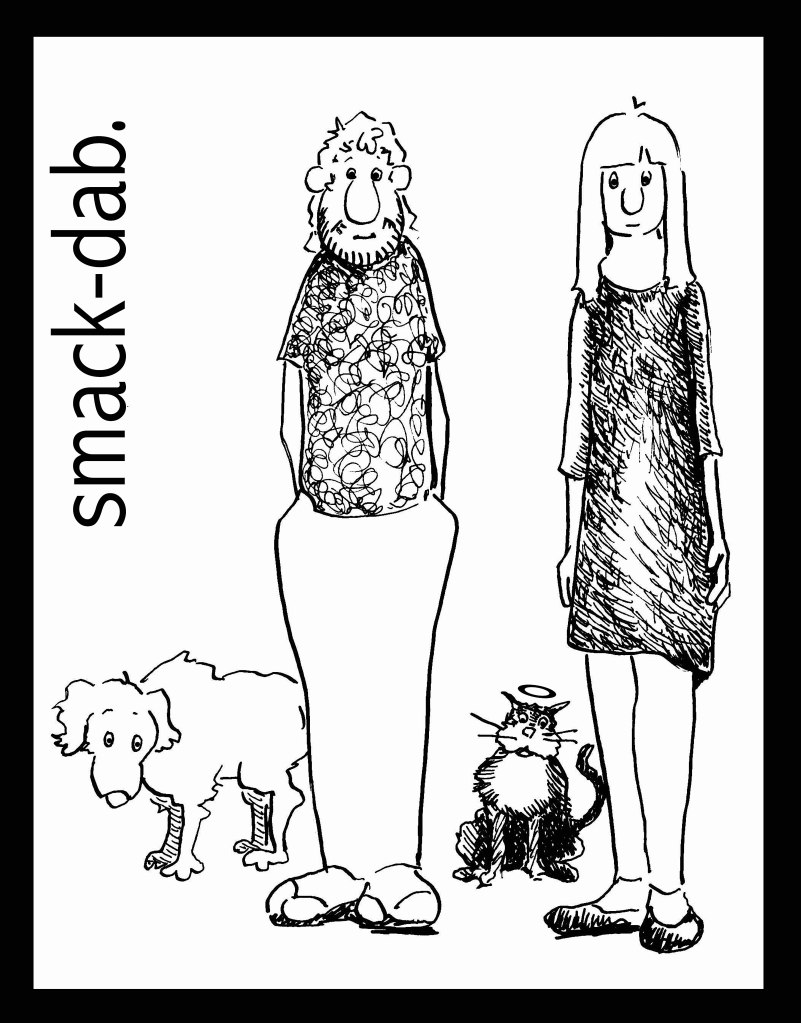
Bargain With Bacon [on saturday morning smack-dab.]

Kerri is the true fan of bacon in our house. If I’ve pinched her last nerve, if she’s having a hard day, bacon for breakfast will always turn the tide. All of this is to say, this cartoon is less about bacon than it is about bargaining.

Have you ever made a deal with the universe? If this, then that? I don’t know about you, but I am notoriously bad at keeping my end of the universe-bargains. There’s always another piece of flourless chocolate cake. That whiff of bacon is sure to invoke another bargain-on-top-of-the-last-bacon-bargain.

I suspect the universe smiles when we bargain. Silly humans, tossing up imagined obstacles in the name of good behavior. And, you know what they say, every obstacle is an opportunity!

Bon appetit bacon mi amore!

read Kerri’s blog post about BACON!

smack-dab. © 2022 kerrianddavid.com

Choose How [on Not So Flawed Wednesday]

My friend’s children are having children. The top-of-the-list advice my friends offer their children, now parents themselves, is this: it goes so fast. Appreciate every single moment. Love every phase. You will blink your eye and they will be grown and gone.

I lost my dad in September. I have, like most people who’ve lost a loved one, spent much of the time since his passing remembering and reflecting. It’s a mixed bag of treasuring moments and wondering why I didn’t fully appreciate others. It is true, you don’t know what you have until it’s gone.

What is so hard about appreciating – fully appreciating – the limited moments of your life?

I used to facilitate an exercise. It had four phases. Working in small groups, the first phase was to have a group member identify a problem in their life and then tell a blame-story about the problem. The rest of the group helped by supporting the person in their story of blame. The groups howled with laughter. Blame is fun. It’s addictive, like sugar.

In the second phase, the groups tried to “fix” the problem. The serious, concerned faces puzzled possible fixes but inevitably dissolved into more laughter: there’s nothing like trying fix a problem to create more problems and loop back into a juicy blame story.

Phase three was simple: I asked the original problem-story-teller to retell their story as a story of choice, not blame. I asked the other members of the group to support the teller in their story of choice. Silence ensued. And then, quiet presence as the new narrative – the story of choice – slowly inhabited the room.

Blame stories are like too much candy. They are easy to eat and yet have no real sustenance.
Stories of choice are much harder to tell but they are rich in awareness and appreciation of the moment.

We never arrived at the fourth phase: stories of opportunity. Activating choice. The notion of taking responsibility for choices always stopped the exploration. Our conversations about choice-avoidance usually filled the time.

What we gain in blame, we lose in appreciation of our moments. In order to taste the moment, one must first choose to be in it – and then choose how to be in it.

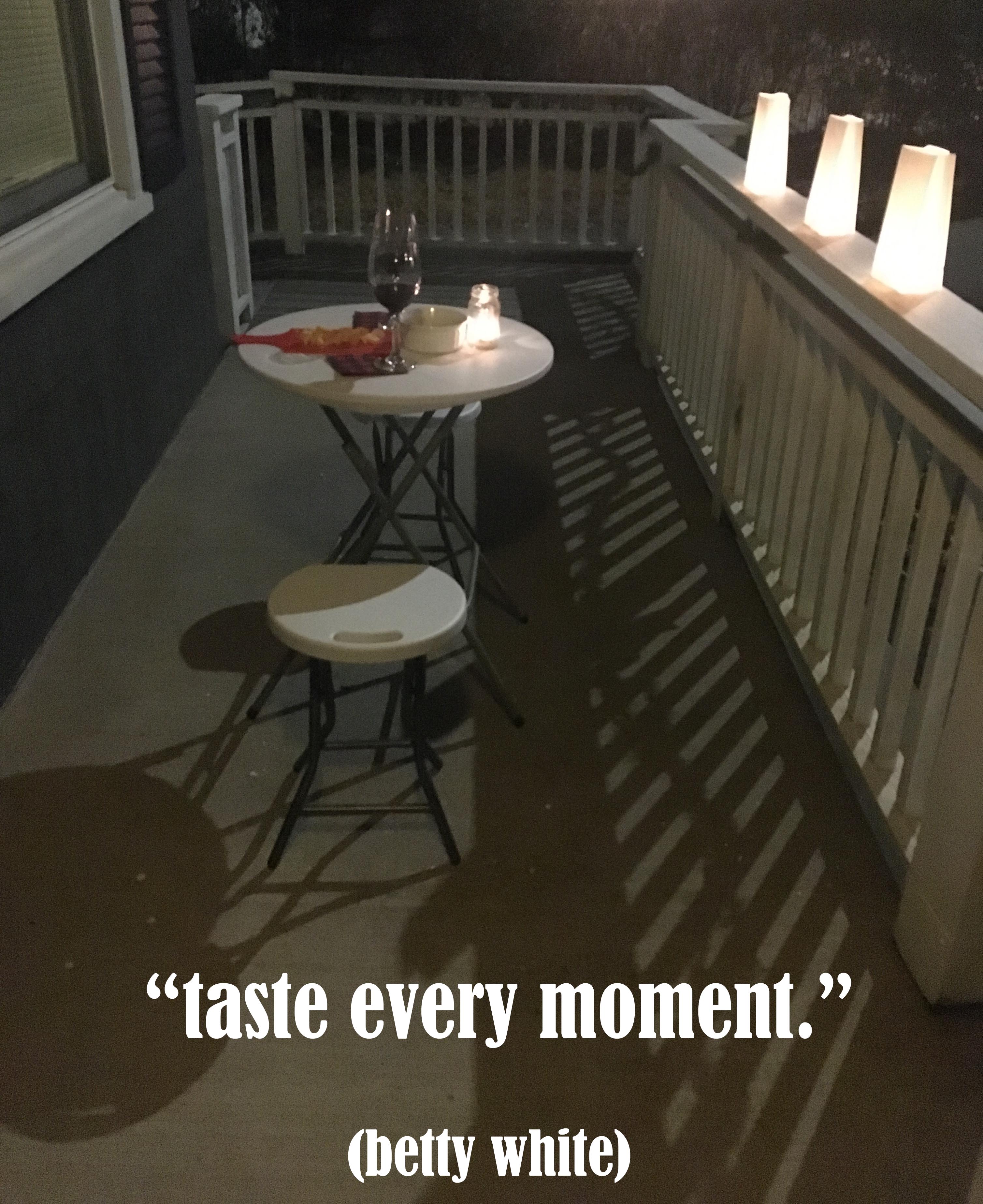
Grief is a phase to be loved, not avoided. As is the celebration of a first birthday. A new life. A lost love. A full spectrum. Taste every moment.

read Kerri’s blog post about MOMENTS

Root And Fly [on KS Friday]

“Inspiration does exist but it must find you working.” ~ Pablo Picasso

At some point I realized that all of the good guidance I have received, all of the masters that I have admired, made statements about Roots & Wings.

“A writer writes. A painter paints.” ~ Tom McKenzie

“You must write 10 bad pages to arrive at one good page.” ~ John Guare

“Live on the plateau (in the present moment).” ~ George Leonard

“Cultivate your serendipity.” ~ Tom Quinn

I remember Jim E. teaching actors not to push their voices to be heard but, first and foremost, to root down into the earth.

After years of practice I am approaching the lesson that Saul taught his tai chi students: stay on the root and the energy will move you. He also taught me, on a brilliant Saturday morning when I was trying to bend the world to my will, to look beyond my opponent into the field of opportunity. It is two ways of saying the same thing. Root. And the wings will appear. Root, and possibility will find you.

Work at the easel, and inspiration will arise.

all of Kerri’s albums are available on iTunes or streaming on Pandora

read Kerri’s gorgeous blog post on ROOTS AND WINGS

give me roots, give them wings/released from the heart ©️ 1995 kerri sherwood

Take The Opportunity [on Two Artists Tuesday]

Paul used to teach his actors that, in choosing to step onto a stage, they had a profound responsibility. “Never underestimate your power to influence another person’s life,” he’d say. I took his lesson and passed it along to my students. I hope that a few of my students took Paul’s lesson and, in turn, passed it on. You have a responsibility.

Another lesson I learned, this time from Jim, was that great acting is about standing in truth. “Acting is the honest pursuit of an intention in imaginary circumstances.” Honest pursuit. It’s a misunderstanding to equate the art of acting with pretending. The circumstances are pretend. Actors are meant to be portals to a shared story, a channel to a common experience. They transport. They transform. “Never underestimate your power…”

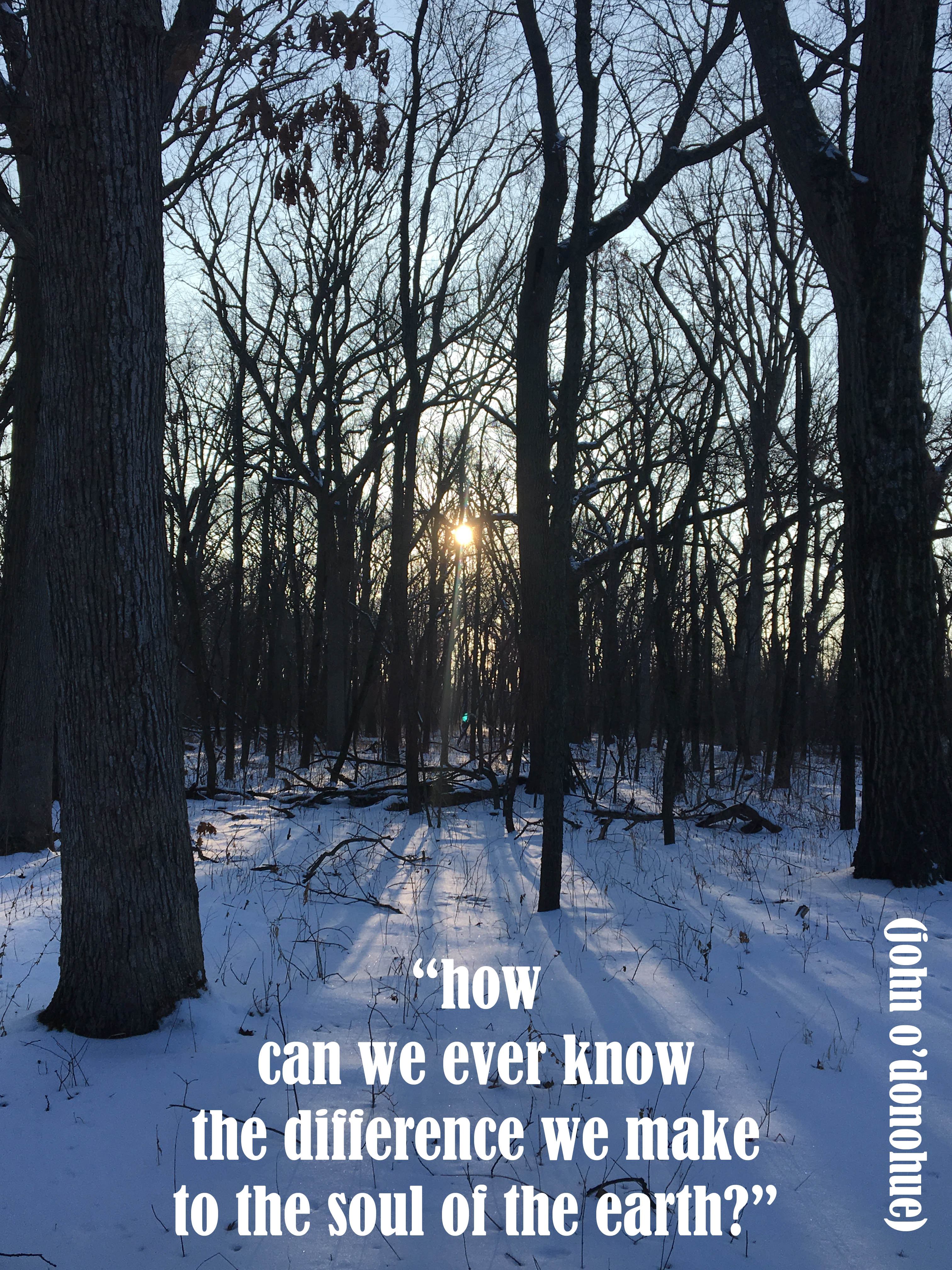
John O’Donohue writes that the soul does not inhabit a body. It’s the other way around: bodies live within the soul. We only think we are isolated individuals, bubbles. The bubble is singular, soul, and we play our small dramas within it. We fill our bubble by how we stand in it, by what we bring into it. There is no on-stage or off. It’s all the stage.

The other day I was exhausted. I was standing on the edge of despair when my phone dinged. It was Rob. “What kind of wine do you like?” he texted. The edge disappeared.

From across the country, MM sends me cartoons that make me smile. Horatio sent an episode of The Twilight Zone. “You gotta watch this,” he said. David sends photos of Dawson at the easel. There is nothing so freeing to an aging artist than to watch a child draw. No limits.

The bubble is singular. The soul of the earth. These good friends, living honestly on the stage, have no idea of their profound impact and influence on me.

These days, when I think of my good teachers and dedicated mentors, when I think of Jim and Tom McK and Paul, I know that, were I to teach again, I would add a small caveat to our legacy-lesson. I’d say, “In choosing to step onto the stage, you have a profound responsibility and opportunity: never underestimate your power to influence another person’s life.”

Take the opportunity. Each and every moment. Ripples sending ripples.

read Kerri’s blog post about SOUL OF THE EARTH

Power Up! [on DR Thursday]

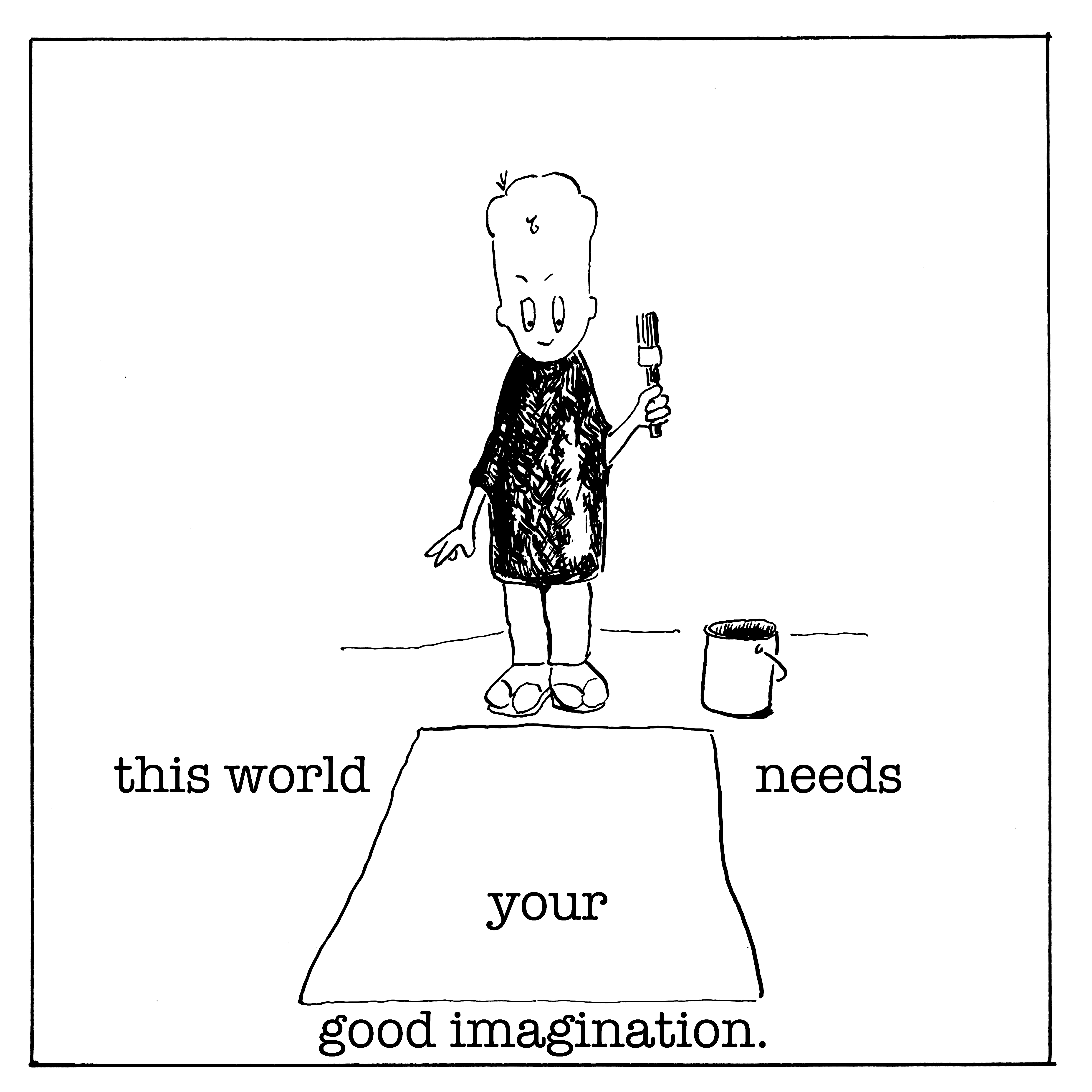
thisworldneedsyour WITH EYES jpeg copy 2

I was going to write about something else but given the news-of-the-day this seems more pressing. Simply this: I believe in the power of imagination. Why? I’m glad you asked!

It takes imagination to lead. A lack of imagination is the only requirement to blame or bully.

It takes imagination to unite people. No imagination is necessary to divide people. Division is a well-worn tool of the fearmonger and the gaslighter. For instance, the weakest chimpanzee will bang pots and make enough noise that they might be deemed leader for a day.  On day two, however, the community learns the difference between empty noise and actual capacity.

It takes no imagination to tear things down. Imagination is essential to build, to create, to change.

Imagination is always a step toward something true and beautiful. Imagine it! Can you? Imagination always reveals. The opposite of imagination, namely deception, deflection, and lie are the smoke that fills the void of absent imagination.  Deceit is meant to conceal the false promise, a step away from what is honest and true.

And so, in this era of pandemic, climate change, social change, and economic uncertainty, division and bluster will only take us deeper into the wasteland. The opportunities for a better world are knocking at our door. More than ever, this world needs your good imagination. It needs our good imagination.


read Kerri’s blog post about GOOD IMAGINATION


prayerflags pastel website box copy


visit society6.com for Chicken Marsala products [mugs and pillows and wall art and other stuff]. Kerri designed a million of them when Chicken was running around our house.


drc website header copy


chicken marsala ©️ 2016-17 david robinson & kerri sherwood

Look For It [on Two Artists Tuesday]

des plaines copy

“Consider yourself blessed. These stones that break your bones will build the altar of your love.” ~ Lynn Park

20 has a collection of images. Faces found in objects. A light socket that seems to be eyes and a nose and a mouth. A teapot face. A widget-face at the hardware store. He sees them everywhere because he looks for them.

Looking for it. It’s the key to a positive attitude: you see what you look for. Look for generosity and kindness and you’ll see it everywhere. It’s also true of a darker view on life: there’s plenty of horror story to be found if you spend your days looking for it.

As a rule, both kindness and cruelty are available in abundance. Both are on display at any given moment of the day.

People seem to be more attracted to cruelty – especially for pleasure. We build coliseums so we can watch gladiators do combat. We thrill when the car crashes on the track. The bloodier the video game the better the sales. We love to yammer on and on about our bad experiences but will tell far fewer people about the good moments. We’ve managed to turn something as benign as Facebook into yet another bloody coliseum for e-battle. People negating people. Dedicated division. “Shouting into the canyon,” as Rob called it.

And, as a rule, we will either go through life seeking meaning for our experiences or we will go through life giving meaning to our experiences. We focus on what we have or we focus on what we lack. Opportunity or obstacle. Us or Them. Either way, it’s a story and we are the storytellers.

People are patterned so they generally see what they expect to see. It’s the lesson that’s all the rage these days in the USA. Lesson #2: once patterned, people are resistant to seeing anything other than what they believe. We have the unique capacity, in the face of overwhelming evidence to the contrary, to argue to the death to maintain our point of view. The anti-mask crowd are providing generations of psychologists with a heyday of research: people literally arguing to death to maintain their point of view despite a veritable mountain of evidence that contradicts their belief.

It seems impossible, yet there it is. There we are.

Like 20, I have decided to train my eyes to see. Only, instead of faces found in inanimate objects, I’ve decided to look for the little miracles. Intrepid life. The magnificent force that expresses in small affirmations. An unlikely plant growing from a crack in the wood. A snake stretched out on the path to catch the sun. The single-day proliferation of crabgrass taking over our yard! A meteor flying by.  People more invested in the sunset than the Facebook. The fox at midnight. The turkey on the roof. The friends who love each other enough to keep their distance.


read Kerri’s blog post about INTREPID LIFE


squarecat website box copy


underpainting copy

untitled


Tickle Open The Closed [on Merely A Thought Monday]

eleanor roosevelt copy

It used to be one of my favorite exercises to facilitate. Ask one person in a small group to tell a story of blame. Ask the rest of the group to invest in the story. In no time the small groups would be indignant, talking over each other in disgruntlement. A klatch of agitated victims, howling.  They’d laugh in their aggravated frenzy. They’d devise clever revenge or ways to torment the object of their blame story. They’d grow a monster.

Blame stories are like sugar. They are easy to eat and highly addictive. There’s rarely any real substance, so much gossip-cotton-candy, but there is an odd pleasure in playing the role of  “the injured party.” The groups would always reflect that the exercise was fun. So much so that they’d often forget it was an exercise. Commiseration and validation, after all, are the point of a blame story. That, and making someone else responsible for how we feel.

Ask the same groups to tell a story of choice or opportunity and most times, after only a minute or two, they’d sit in silence. Their, “Great. That’s really great,” support would dwindle. Feeding an idea is not nearly as easy as feeding a story of blame.

Quinn used to tell me that creativity is not for the faint of heart.

The groups were always shocked to discover how much of their lives were spent chewing the gristle of discontent, of feeding the notion that someone else was to blame for their choices or their circumstance. They’d generally comment on how easy it was to commiserate and how difficult it is to question, challenge or stop the blame-game. Mostly, they were shocked to discover how little of their time they dedicated to feeding ideas, theirs or another persons.

Blame stories are easy because they are reductive. They engender tight little balls of closed minds and closed circles. They close hearts. They take almost no energy at all to spark but, once burning, like a wildfire, they are capable of consuming entire forests.

Idea exploration is expansive. Seeing possibilities requires eyes that look up and out.  It takes much more energy to imagine, to question, to ponder. To try. To experiment. To ask. To challenge what you think you know. Opening minds, opening circles and hearts requires a deep sense of self-responsibility. It requires an even deeper sense of responsibility to others.

One of the purposes of the artist is to open closed circles, to tickle open closed minds. To help their community see anew and entertain never-before-imagined possibilities.

It takes more effort and courage to sail to the edges of the known world than it does to hang out around the water cooler and complain about others. Great minds do not have more capacity than any other mind, but they do require a very different focus.


read Kerri’s blog post about GREAT MINDS & IDEAS


k&dbw backs website box_ copy


FaceTheRain

feel the rain, mixed media, 2019