The Way Home [David’s blog on Two Artists Tuesday]

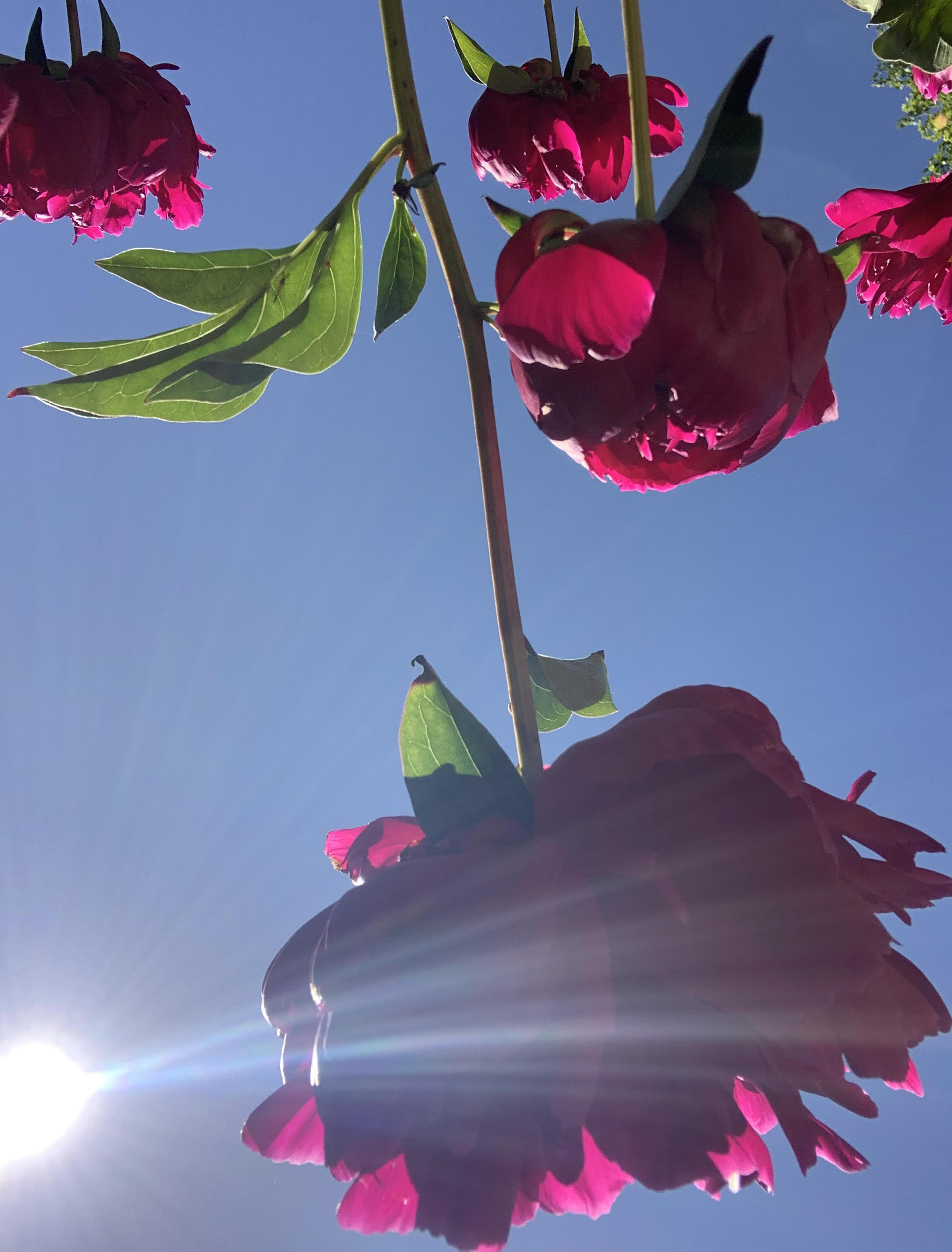
This peony-perspective begs to be the inciting image of a children’s book. I imagine the main character comes from a world where people are smaller than flowers. Where bumblebees are happy Ubers delivering their small human riders to distant neighborhoods when they need a lift. Where nature is magical, playful and esteemed.

Not all ideas make it to the final draft so it’s important to stack up the ideas and have fun with the images. The main character sleeps inside the peony. The Uber bees are chaotic fliers and one never knows where they land; in this world, destination is always a surprise. Spontaneity is the norm.

In this world where people look up to flowers, “Home” is everywhere for everyone – so people, unacquainted with ownership or territory, have evolved as intrinsically helpful. Generosity of spirit is a highly prized character trait. Survival is not of the fittest but of the kindest.

Hummingbirds know the secret of finding sweet treats, caterpillars know the secret of patience.

Since this storybook is evolving as a sweet utopia, it begs the question, “What’s the conflict?” Stories do not work without obstacles. The bigger the better. What is the lesson our main character must learn? What gets lost that must be found? Maybe our little person, like Adam and Eve, falls out of their garden? Perhaps an Uber bee unwittingly flies our hero/heroine through a magic portal, to a place where people are bigger than flowers? In a world that seems sad and upside-down, the question becomes, how does our little person, lost in the land of big, find their way home?

read Kerri’s blogpost about PEONY PERSPECTIVE

Bonus! Perhaps this amazing composition will be the theme for the animated version of the story book once it garners a world-wide audience!
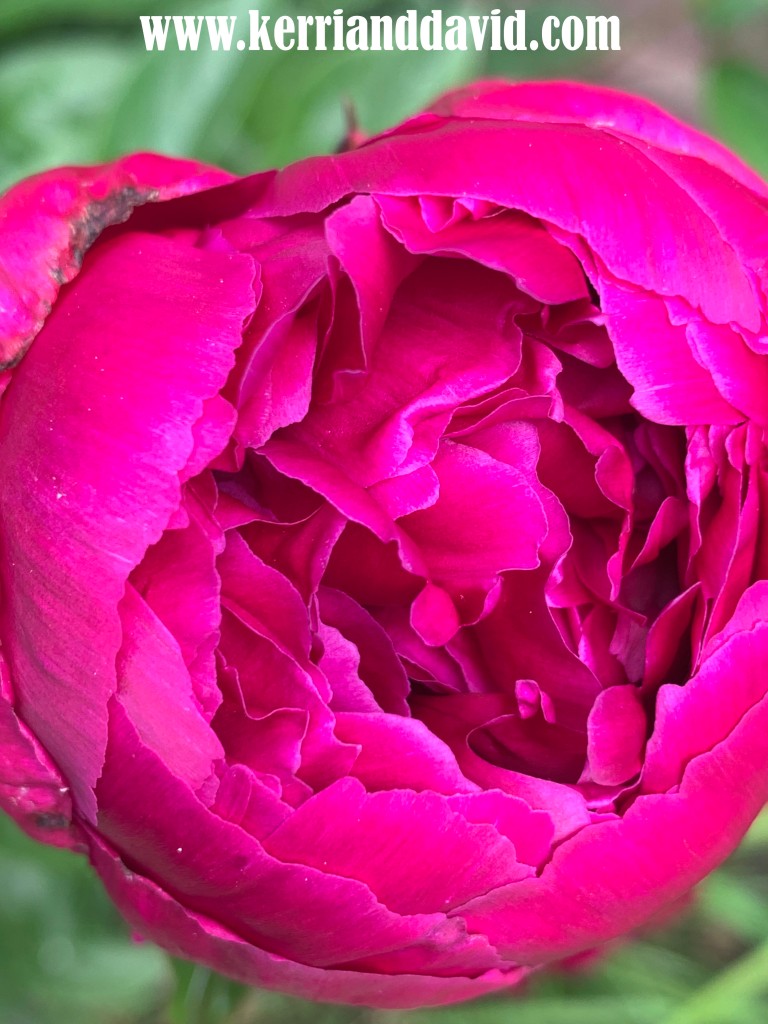
The Way Home/This Part of the Journey © 1997/2000 Kerri Sherwood

like. support. share. comment. subscribe. many thanks!

Be An Alien [David’s blog on Two Artists Tuesday]

“We are in an alien world…” he wrote, “and it is unraveling.” Somedays I wonder if I went to sleep and woke up in a tragicomedy. I wanted to reply that I feel more and more like an alien moving through an increasingly unrecognizable world. Well, truth be told, I’ve always felt like an alien. The rules of the game make no sense to me. For instance, if safe supportive society is what we seek, why are we arming ourselves to the teeth? I imagine I am not alone in my alien-feeling.

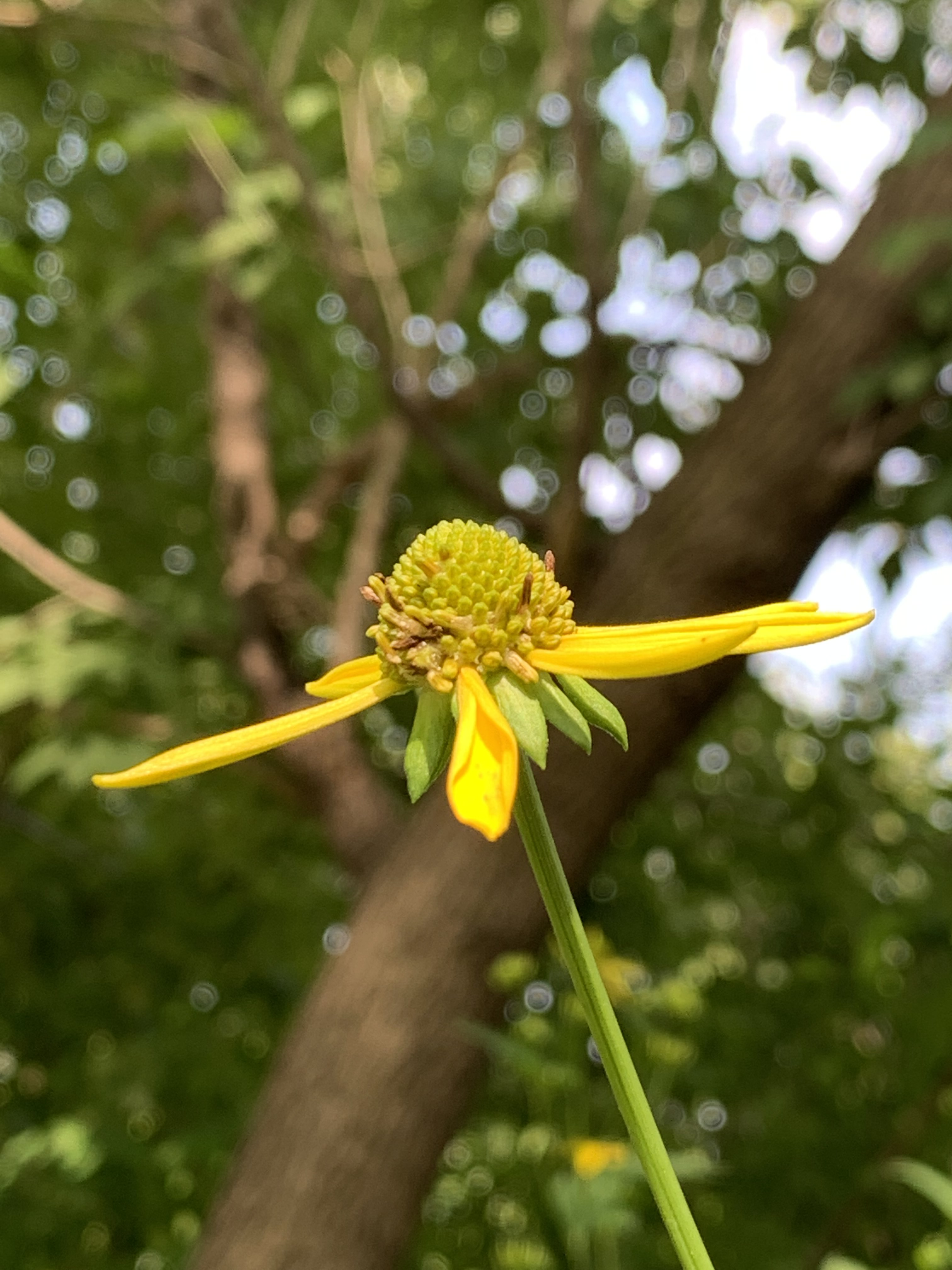
Walking the trail Kerri stopped and pointed. “Doesn’t that flower look like a spaceship?” Yellow petals stretched-like-wings in every direction. “Imagine the cool aliens!” she said, kneeling to take a photo.

The word “alien” brought to mind the recent congressional hearings on UFO’s (or UAPS: unidentified aerial phenomena). The hearings were a discussion about what we know. “No, really,” asked the panel, “What do we know?” It’s not known what we know or it’s known but concealed to the point of being unknown. The unknown is what makes an alien an alien, so, apparently, we’ll remain aliens to each other in the foreseeable future.

I had a jolting revelation yesterday. Kerri and I watch vlogs of PCT through-hikers. People who walk 2650 miles from Mexico to Canada. Thousands of people start the trail each year and only a small percentage actually finish. It seems a herculean task. They have tents, travel stoves, proper shoes, all-weather clothes, resupply stops, rest days and are well-funded. They speak lovingly of the kindness of strangers on the trail. In contrast, a hungry person leaving the Honduras walks approximately 2,558 miles, often with few or no resources, through dangerous and hostile environments, to reach the border of the mythical United States. Rather than celebrating their spirit, their fortitude and perseverance, qualities to be admired, qualities we celebrate as uniquely American, we vilify these people, calling them “aliens.” They do not tell stories of the kindness of strangers.

If you boil down the storyline of most apocalyptic-alien-invasion films, you’ll find the same inspiring moment. Humanity turns from its division and finally recognizes that ultimate survival necessitates combining forces, acting as one. Identifying as one. Transcending superficial differences and abstract lines on a map, redefining “us” to include “all human beings.”

He concluded his email with this: “I’m waiting for the crisis to finally arrive and further devastate us.  At least then we can get to the Awakening phase during which we will come together and reunite as humankind.”  He’s referring to the book The Fourth Turning. The cyclical pattern of chaos and order.

The question that identifies me more and more as an alien is this: why does it take a crisis? I know, I know…the rules of the game make no sense to me. And, after all, nature uses forest fires for renewal. I know, I know. Yet, why point a gun when extending a hand actually produces the safety and security we ultimately seek? Reaching creates kind humans; pointing a gun creates unkind humans. What am I missing? We always pull together in a crisis – it’s our natural impulse – so why wait for a crisis?

We are strange beings. Our stories are universally driven by conflict. Unknown to each other, we opt to be frightened of what we don’t understand (or refuse to consider). I’ve read that we are hardwired and dedicated to an Us-and-Them world.

I’ve also read that the purpose of our big-big brains is to transcend our animal nature so I’m confident that, one day, in the far distant future, our big-big brains will respond to the latest crisis and transcend our ancient hardwiring.

read Kerri’s blogpost about ALIEN FLOWER

like. support. share. comment. many thanks.

Open The Story [on Not So Flawed Wednesday]

Put on your swimmies for a dive into the esoteric.

It was hot last night so I lay awake thinking and that’s never a good thing for the people – like you – who pay attention to the random things I write or say. This is what I thought in the heat of the night: Saul always instructed me to look beyond my opponent and place my focus in the field of possibilities. “Look a hundred feet beyond your opponent,” he said.

It’s universally true that a mind needs something on which to focus. And, left untended, most minds will focus on complaints or problems. During my tilt-at-windmills-consulting phase I’d tease my clients with the notion that, rather than eliminate challenges, people create them. We need them. We call them hobbies. Or play. Or problems. After all, stories are driven by conflict and we are, at the base, storytelling animals. It’s worth noting that a great collaboration is not the absence of conflicting opinions but the capacity to use the heat of creative tension to find/discover a third way.

What does this have to do with Saul and the field of possibilities? A focus, to be useful, needs to be specific. What exactly does the field of possibilities look like?

The reason our untended minds sort to the negative is that the negative is usually concrete, an easy fixation. Fear is a clear picture – even when imaginary. Obstacles are easy to spot. Possibilities are rolling and amorphous. Changeable. It is the nature of a good possibility to shape-shift.

The masters of meditation mostly tell us to soften our focus. Or to let the thoughts roll through the brainpan like clouds; do not attach to what we think. Do not take ourselves so seriously. Practice flow instead of the hard fixing of thought.

And, therein is the source of my late night esoteria: the mind needs something to focus on. Or does it?

If I soften my gaze, if I look beyond the problem-of-the-moment to a vast field of floating possibility, am I tossing myself into a feedback loop? I lay awake wondering what the field of possibility might look like if it was graspable. Some people make vision boards for just this reason. Quinn used to hum and fill his mind with lyrics.

Tjakorda Rai laughed at me and told me I needed to “open my story.” At the time I thought he meant to take responsibility for my story. Now, I know exactly what he meant: let it flow. Get out of the way. The demons and monsters and fears and problems and challenges are…passing things. Story fodder, nothing more. So look beyond them. Flow. Focus on the flow. Open the story.

read Kerri’s blogpost about THE FOUNTAIN

Step Off [on Two Artists Tuesday]

“A tree is not made of wood, it is wood.” ~ Alan Watts, The Watercourse Way

Language is powerful. It’s a drum I have beat for a long time, the notion that we insist that the narratives we wrap around ourselves are somehow “reality.” We are told that 50% of Russians believe the hell wrought on the Ukraine is merely propaganda. A made-up story. Not true. It is the narrative they are fed and, in order to eat it, they must ignore any evidence to the contrary. Their economy crumbles. The ruble falls. How could they not see it? Don’t laugh. 40% of USAmericans still believe the last presidential election was stolen, a plausible story only if wearing blinders with fingers placed firmly in ears. Burying your head in the sand is not a Russian or American trait, it’s uniquely human. We see what we believe, not the other way around. Our language makes it so.

Years ago I read that the word “wild” could only come from a people who believe all things must be tamed. Wild makes no sense without the concept of tame. Wild, bad. Tamed, good. So, a people afraid of their own “nature” must become tamers. A people who think “nature” not only can be but must be managed. To be “above” it all, in charge and atop the pyramid, giver of names. It is the necessary narrative for such tamers of the wild, those who story their very nature as corrupt. Tamed, good. Above it all. Separate. Is it any wonder the intrinsically conflicted human world rarely embraces peace? Our narrative leads us to believe, amidst so much inner and, therefore, outer conflict, peace is something to be created because we are naturally conflicted. What else?

Where, exactly, does wild end and tame begin? Where’s the line that delineates nature from civilization? What if nature is neither good nor bad? What if your nature was neither good nor bad? Perhaps self-love would be within reach and, as a natural extension, the love of others, too. It’s an alternative narrative though not possible in a belief-story that fears the wild. Wholeness begins with a step off the pedestal.

It’s in the language. Somehow separate from the world in which we live, not “in” nature or “of” nature , we are deluded to believe we are made of different stuff. Above it. Divinely manufactured. Made.

Manufactured. Made. Trees made of wood.

And, just what are we made of? I guess it depends on the story we decide to tell. Wild stuff.

read Kerri’s blogpost about TREES

Disagree [on Merely A Thought Monday]

Months later, she* is still angry with me. I asked her to “stop blowing me off.”

Some things need to be discussed and necessarily require entertaining differing points of view. Finding middle ground or considering alternate possibilities requires hearing what others have to say – and giving others the courtesy of hearing what you have to say. Her standard phrase of choice, when faced with an opinion or idea not her own, is this: “I guess we’ll have to agree to disagree.”

No. I don’t agree to disagree. Especially at the onset of a dialogue. I want to talk about it. I want to hear what you have to say and more importantly why you hold your point of view. I won’t agree to not hearing or being heard.

Opposing points of view, differing opinions, need not be conflicting. They can be highly generative. Mind opening. Thought provoking. “I’ve never thought of that,” is an expression that results when considering a different point of view. In ideal, our nation is based on the notion of two opposing points-of-view extending to each other the courtesy of listening and considering possibilities not yet seen. Yep. And, we are witness to what happens when one side (or the other) rejects the basic premise. Dismissiveness is the strategy of an empty suit.

Why assume conflict?

She followed “I guess we’ll have to agree to disagree,” with the real statement, her actual aim: “You do what you want. I’m going to do what I’ve always done and follow my plan.” In other words, she had no intention of hearing anything that did not support her plan. Why, then, I wondered, did she invite conversation?

When the only tool you have is a hammer, then everything looks like a nail. When the only door you have is a closed door, then every knock sounds like an intruder.

I laughed aloud when I read Bill Murphy’s article in Inc. Magazine about his pet-peeve phrase: “Look, I get it.” He writes, ‘”Look, I get it,'” is almost always inherently untrue…Even worse for our purposes, it’s woefully ineffective.”

It’s dismissive. Just as is “I guess we’ll have to agree to disagree.” The agreement she wanted was for me to agree to be dismissed. An agreement of silence. Why would I – or anyone – agree to that?

[* “She” is not Kerri. We hold each other in high esteem. It’s why the sign in our kitchen reads, “You are my favorite pain-in-the-ass.” We welcome our differing perspectives. Neither one of us dismisses the other nor tolerates being dismissed.]

read Kerri’s blog post about “LOOK, I GET IT.”

In-Tolerate [on Not So Flawed Wednesday]

In theatre school, I was taught that the action of the play was driven by conflict. I’ve never been comfortable with that word. Something did not ring true with the concept of conflict. A dividing line. Battle. Fight. Kerri just suggested that conflict is not simply a line, it is bandwidth. A full spectrum of color in our human struggle.

I recently read that, through resistance, all things become visible. We see color because some light rays are absorbed and others are reflected. The light ray is filtered, separated into color bands. We see the color that was resisted. Rejected by the surface. Split off. Separated. Is it any wonder that the epicenter of most faith traditions, the driver of most origin stories, is the journey through separation back to unity?

We become visible in our birth. Separate. We become invisible in our death and are given to imagining a comforting story of reunion. Re-union. In between those two points, separation and unity, there is life made visible and wildly colorful by the separation. The filters. What is absorbed and rejected. Reflected. Learned. Ignored. Appreciated. Vilified. Visible. Invisible.

This time of pandemic has been, for us, an exercise in separation. In the distancing, we’ve nurtured, intentionally and unintentionally, an appreciation of quiet. Over these many months we’ve grown a garden of simplicity. We read together. We walk our paths slowly. We’ve found that we do not need to be entertained or distracted. We have a low tolerance for crowds and run the opposite direction when there’s too much noise ahead.

We’ve fostered an appreciation for those who walk through life considerate of the needs of others. Our circle of friends has come into focus. We’ve dropped off the plate of many and many have dropped off of our plate. The connective tissue is felt, established and hearty. In some cases, even though our actual conversations are rare, the focus is sharp. Deeply rooted. Arnie. Judy. Jim. Mike. David. In other cases, we communicate almost every day. 20. Brad and Jen. Heart-y.

Our play has become visible through resistance. What we absorb and what we reject has come into stark contrast, clear focus, through the separation. Layers of shallow tolerance have been peeled away revealing a much deeper understanding of what we desire to create in this life, how we desire to live. It is necessary to understand the boundaries set and the colors illuminated by intolerance. Said another way, it is important to be able to thoroughly sort substance from noise. Both inner and outer. I have learned that I have limited tolerance for thoughtless acceptance, for unthinking noise. My resistance. I surround myself with questioners, those curious enough to dig, dedicated to building their thought-castles on bedrock instead of shifting sands. Those few who are capable of releasing their grips on the comfortable known and step willingly into the uncomfortable question. I absorb them. Take them in.

We – all of us – walk the same path, visible in our birth. Separate. Invisible in our death. Re-union. In this we are equal. What we do, how we choose to support each other, or choose not to, in the passage between those two universal points, is all. These choices define the story we live.

The pandemic, the separation, has helped me to a deeper understanding and appreciation of this word: Intolerant. A word that used to inspire egg-shell walking for what it implied. A word held with shallow roots. Now, it is a word rich in complexity, useful in paradox, a resistance that has made so much come visible. Tolerance, ironically, is at the same time intolerance. What, in your play, is acceptable? What, in your play, will you tolerate? What, in your play, will you not tolerate? Your play is not separate from mine.

read Kerri’s blog post about TOLERANCE LEVELS

Breathe and Make Choices [on Two Artists Tuesday]

“The greatest weapon against stress is our ability to choose one thought over another.” ~ William James

A note from the Rejuvenation Fairy: the relief we seek may depend upon the phrase we choose. For instance, consider this phrase: coping mechanisms. What ease might become available if we viewed ourselves as something other than machines? Turn this dial. Adjust this screw. Add a little oil. Check the battery. Do this, then that will happen. Turn down the pressure gauge. Talk to others. Take a break. Cause and effect.

Breathe. Sentient beings are much more complex and subtle than apparatus made from iron and steel.

We story ourselves. For reasons no one will ever fully comprehend, we sort to the tragic. We imagine the worst. Ask any good storyteller and they will confirm that conflict is the driver. Yearnings meet obstacles and stories ensue. Everyone, without exception, is telling themselves a story. Everyone, without exception, is starring in their own movie, complete with impossible mountains to climb, monsters to face, dreams that remain just out of reach. Robert Sapolsky has it right: zebras don’t hold onto their tale of stress while human beings are reticent to let it go. We like to tell it again and again and again.

If we cast ourselves as victims in our movie, our stories will be filled with ogres to blame. If we reduce ourselves to the mechanical, our stories will be endless attempts at fixing what’s broken, looking for the right hose to replace. How to recharge the battery. The fortunate few recognize that their movie might be a story of choice. Choices made within given circumstances. The storm, like time, passes. How do we stand in it?

There’s little doubt that we are living in stressful times. There’s nothing like a deadly pandemic to turn up those mechanical pressure gauges. Add another notch or two of pressure with extreme national ideological division, cowards at the switches of government, mix in some economic stress…there are plenty of choices on the angst-menu. All are visceral. All are circumstances to the story we choose to tell, the story I choose to tell.

I came across a few universal coping strategies. Eat healthy. Exercise. Give yourself a break. Get plenty of sleep. Talk to others. Recognize when you need help and ask for it. I wondered why these good choices are reserved for times of stress. Why not give yourself a break as an everyday expectation. Talk to others. Eat healthy. Weave a calm center it into the fibers of daily life. Make choices. Especially in the story you tell yourself about yourself. The thought upon which you choose to fixate, to play over and over again in your movie-mind.

When Kerri and I fall off the pony and run around like our hair is on fire, we make chicken soup. I am the sous chef. She is the master mind. The recipe comes from her mother so the making of the soup is more than food prep, it’s a love-touch to her anchor. We touch love. And, of course, defying the advice of experts to avoid alcohol, we enjoy a glass of red wine. We choose the glasses: Jamie’s? Or Skip’s? Or Joan’s? For our wedding, we were gifted with many special wine glasses from many special people. Recently, Jay and Carol and Rob sent us wine. When we clink our glasses, we touch the depth of our support and reach of our friendships. We call 20 and laugh. As the soup simmers and the wine disappears, we realize that our hair is not on fire, that, although we are not zebras, we are infinitely capable of releasing our tale of woe. We need not cope or distract. We can grasp hold of the full tale of the enormity of our lives. We need only refocus our eyes, see the depth and expanse of our story and choices, enjoy the warming soup. Appreciate the story of the wine.

read Kerri’s blog post about CHICKEN SOUP & WINE

Sit On The Wire [on Not So Flawed Wednesday]

birds on a wire copy

Google the question, “Why do birds sit on a wire?” and you’ll get a curious tidbit of information. This is what I read: birds are able to sit on electrical wires because the current ignores the bird’s presence.

It’s human to ask the question “why?” In fact, asking the question “why?” is probably a central characteristic of the critter called human being.

Another characteristic of a human being is personification: attributing human characteristics to things non-human. For instance: the current ignores the bird’s presence. I laughed heartily when I read the phrase. The electrical current dissed the birds on the wire. Wait. Is that why the birds sit there?

Now we have two possible questions.”Why?” you might ask, “did the current dis the birds?” OR, you could ask,”Why do the birds taunt the electrical current?”

Either way it sounds like the beginning of a really good joke. Or, a good question to ask in a philosophy class: why and when did the conflict between birds and electrical current start?

All good stories, like all good jokes, begin with a hearty conflict. Yearning meets obstacle. Bird meets wire.

Why?

We critters are excellent at asking the question. Why, you might ask, is there rarely a definitive answer? Well, asking the question seems to be the point. Curiosity is what makes us human. Don’t ask me why.


read Kerri’s blog post about BIRDS ON A WIRE


sunsetonisland website box copy

Stand On Any Street Corner [on Merely A Thought Monday]

kindness kerouac copy

For reasons that are beyond my pay-grade to comprehend, human beings are obsessed with seeing conflict and division. The news of the day is generally antagonistic and despair-inducing – and that is not unique to our day. Ancient temples and modern televisions alike are overrun with images of war and hostility.

One of the greatest powers a human being can achieve is the power of focus placement. ‘Seeing’ is, after all, a matter of choice.  It is not passive. In any given moment there are multiple points of focus, there are multiple stories, there are many interpretations to choose from.

Stand on any street corner and watch the world happen. Watch the overwhelming number of acts of kindness and generosity. The small moments of simple kindness and consideration. They are everywhere. People giving way, making way, helping. You will be surprised to find that the kindnesses by far outnumber the rudeness, the antagonism.

Stand on any street corner and watch where your focus goes. In the midst of a tsunami of kindness, if you are human and like all other humans, your focus will be captured by the angry guy honking his horn, the commuter shouting at the bus driver. “Such an angry world,” you think and close your eyes, despairing. Anger is so much louder than kindness.

Tell a story of discord, see a story of discord. Practice a story of discord, live a story of discord. Discord is easily leveraged. Division is easily sold. It is like selling candy to a kid. It is readily chiseled into pillars and hungrily read into teleprompters.  It is so easy to see.

Tell a story of kindness, see a story of kindness. Practice a story of kindness, live a story of kindness. Although it is more readily available it is, somehow, more difficult to see. It is less sell-able and, so, is discarded as trite. It requires choice and discernment rather than default. It requires opening your eyes and your story to what is actual, what lives beyond the thundering chorus of conflict-peddlers.

The angry shooters and tweet-happy presidents live on the far margins yet they garner the majority of the attention. Stand on any street corner and open your eyes. There is a sweeping quiet kindness that permeates the vast majority, that defines the middle ground. You can see it if you so choose.


read Kerri’s blog post about KINDNESS


hands across tree WEBSITE BOX copy


Organize Your Principle [on Not-So-Flawed Wednesday]

tupperware wall cropped copy

On a snowy cold day a few weeks ago, Brad and Jen rearranged the books in their library according to color. Their shelves are now a gorgeous gradation of color through the spectrum. “It’s cool,” Brad said laughing, “but now we can’t find anything.”

Organizing principles. They are the silent partners in most collaborations and conflicts. If shared, they make things easy to find. If not, they make things impossible to see. The genius of our government is based on the simple recognition that there is more than one way to organize. The breakdown of our government comes with the refusal to consider that there is more than one way to organize. My-way-or-the-highway is a great organizing principle if you are a hermit but a lousy choice if community is part of your equation.

‘I am my brothers’/sisters’ keeper’ is an organizing principle. As is ‘every man/woman for him/her self.’ “We The People…” is a declaration of an organizing principle.

With growth comes new necessities. That generally also brings a need to revisit the principles of organization. A teenager operates according to an entirely different set of imperatives than did their 5 year old self. Nations grow and change. They mature (one hopes). We have courts ostensibly to help us hold a common set of principles amid the pains of growth and change.

Distraction and deflection, intentional clutter, concocted chaos sometimes obfuscate the presence of organizing principles. But the greater principles do not go away. Dust settles. The principles remain. We will hear them again when we speak in quiet voices.

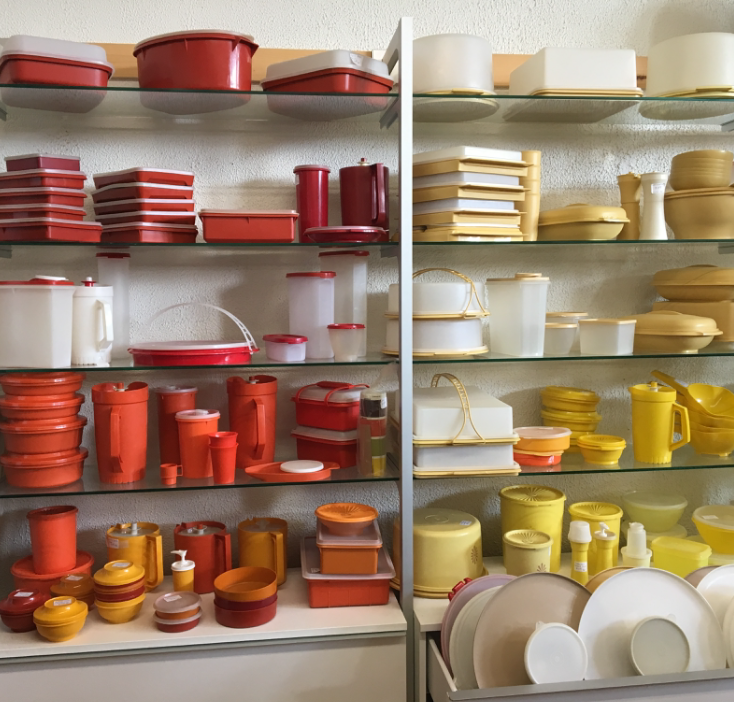
Kerri and I walked through School Days Antique Mall, through booths, many stacked with clutter. It is fun to sort through but hard to see what’s really there. Because I am usually awash in metaphor I thought how much the Mall felt like our nation. Stacks of chaos. Warring organizing principles. But, just when I felt like I couldn’t breathe, we rounded a corner into a highly organized room of colorful Tupperware. Hope! There was space and air. It stopped me in my tracks. Tupperware organized by color. The same system as Brad and Jen’s books!  I laughed aloud. The color-organizing-principle! Applied to Tupperware, I could in an instant find anything. I could see.


read Kerri’s blog post about COLORFUL TUPPERWARE


kettlemoraineacornwebsitebox copy