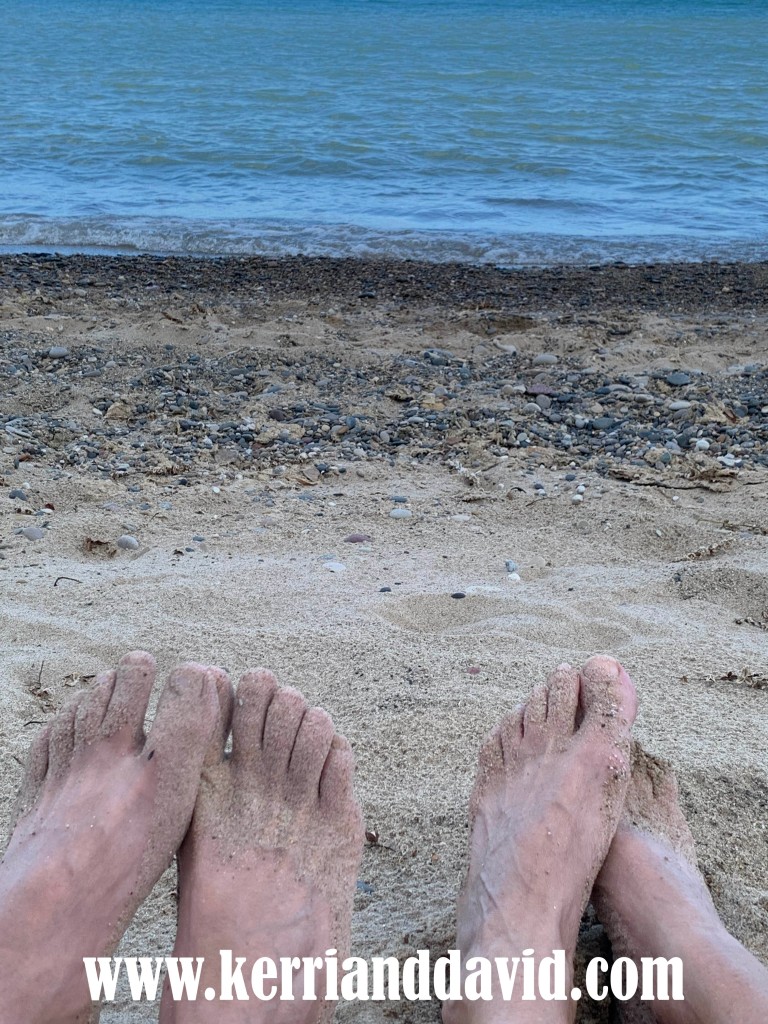
Kerri rarely buys herself anything. Shoes have to fall off her feet before she will allow herself to buy another pair. And so it was with her flip-flops. Meant to be worn for a single season, her old pair had seen several seasons. They carried her for many, many miles. The heel was so thin it was nearly transparent when held up to the light. It’s worth noting that our summer footwear consists almost entirely of flip-flops. Recently, on every walk, on almost every step, she’d grit her teeth or squeak, “Ouch!” She felt every pebble, every uneven crack in the sidewalk. She was the Princess-and-the-Pea of footwear.
I was stunned when we went to the Old Navy outlet to take advantage of their $2 flip-flop sale and she walked out the door with three pair! “Who are you?” I asked, deeply concerned that she was experiencing a severe medical event. She explained that she couldn’t decide so in an uncanny, unusual and unfamiliar act of self-care, she splurged and bought all three.
“Six bucks!” she told 20 as she was modeling her footwear-coup. “Six bucks!”
“Wow,” he said, “That’s incredible. Catching my eye he added, “That’s 20 cents a toe! Good job!”
She beamed. Three pairs of flip-flops and deep inner satisfaction – all for six bucks! Worth every single penny spent on every single toe.
Thriving in an unlikely and inhospitable place, this thistle served as a sign, a testimony to possibility, the rugged beauty available only through dogged perseverance. Stretching up through a tiny crack in a busy sidewalk outside aging buildings in a bustling city, these thistles stood nearly five feet tall. Their colorful flowering heads brought us to a full stop. We set down our knitted-brows and absorbed their vibrant pink and purple stick-to-it-ed-ness. “Gorgeous,” she said, reaching for her camera.
More than beauty-through-resilience, these hardy thistles spoke to me with the veracity of an oracle. As I watched Kerri take photographs, the oracle whispered in my ear “Both beautiful and prickly,” she said, “Her prickles protect her against herbivores and others.”
“Ahhh,” I sighed. A well-rounded plant, indeed. No shrinking violet could possibly survive in this environment, let alone thrive. Bloom.
For a moment I stood watching the passers-by. Few took notice of the gorgeous thistles. Some scurry-ers glanced sideways at Kerri cooing and snapping photos of what, I imagine, they thought of as weeds for someone else to pull. No time for beauty. No time for responsibility. On-to-the-next.
“I’ll bet those people think I’m crazy,” she said, tucking her camera inside her purse.
“Yep,” I agreed. “You are definitely more like the thistle than you are to the people passing-by.” She gave me a sideways glance but decided to accept the compliment.
I winked and whispered to the thistle-oracle. “All the time in the world for beauty. All the time in the world for responsibility. Nowhere else more important to be.” Beautiful and prickly. Resilient to the core.
A few months ago Horatio told me that I needed to paint. Lately I’ve been mostly writing. He suggested that it would be good for me to get back into the visual part of my brain, the part that isn’t reliant on words. Horatio is wise. This morning I went down stairs and spent some time in the studio. As is usually the case, he was right.
Weeks ago I sketched a painting on a canvas. It’s been sitting on my easel. Waiting. For today.
It took a few minutes for me to let go. Standing and staring at the sketch, I felt locked up. I grabbed a small brush which is always a signal that I am thinking too hard. I was trying to “solve” the image through a linear sequential process. I put down my little brush, opened a jar of paint, and dunked my fingers in the jar, and began to spread the red paint just like I did when I was 5 years old. I used a rag to smear and pull and shade some of the globs. I reminded myself that I didn’t need to know where I was going. In fact, I needed to “not know” where I was going and dance with the image.
After a while I stopped thinking and started responding. I sighed a deep sigh of relief. I lost track of time. I felt a wave of spaciousness roll in to my too tight mind. Energy restoration.
Horatio must have seen it in me. My grief.
It’s a question of balance. I have lately of my artistry been asking the question, “Why?” As I roll into the next phase of life I am revisiting my roots. Why did I start doing this anyway? Why, as a child, did I paint through the night. If you’d have asked the child version of me the question “Why?” I’d have answered, “Because I have to.” There was no choice. There was no “Why?” There was a driving imperative. A siren call to “What if?”
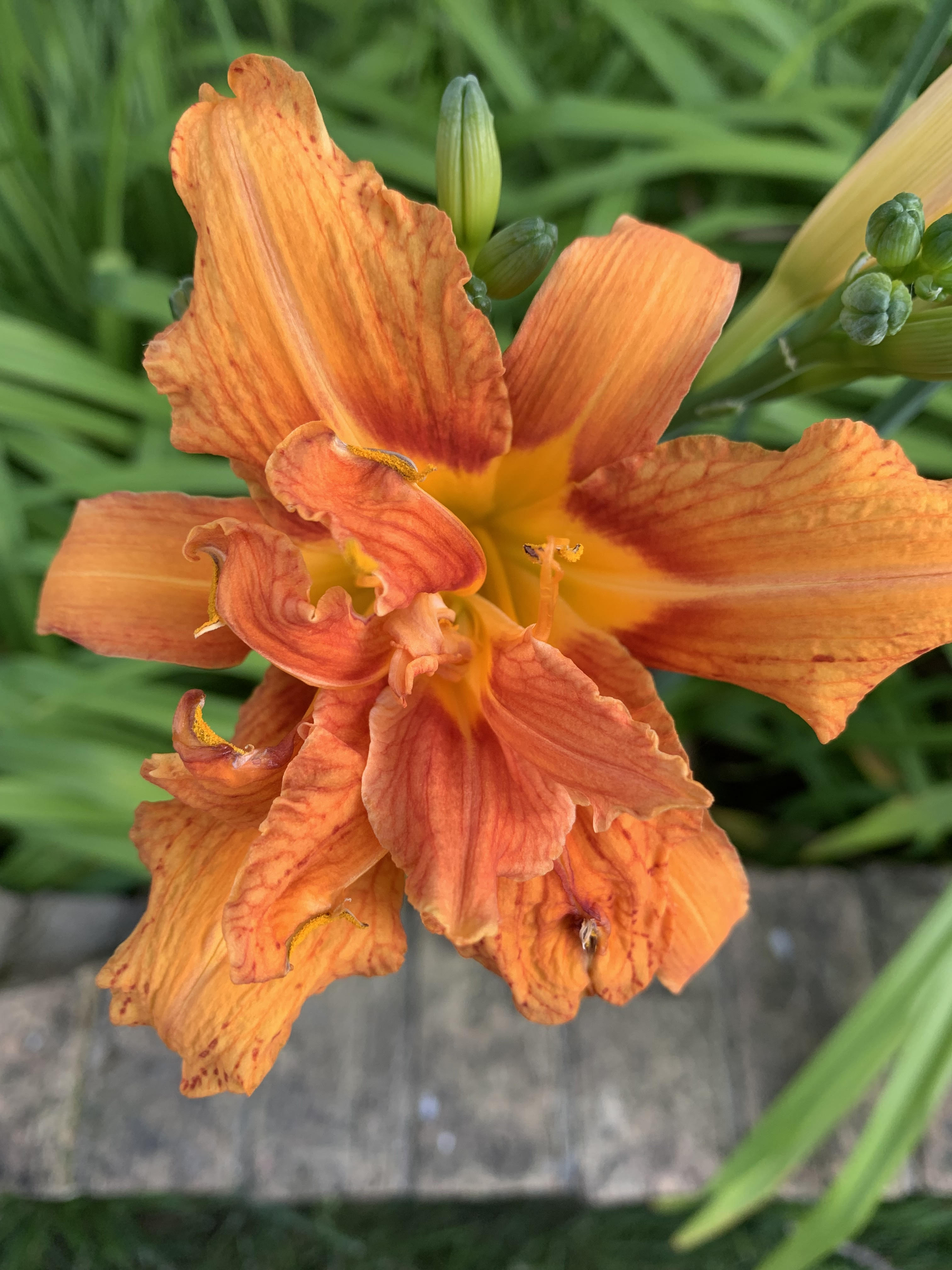
An aging Daisy. Kerri’s photograph brought to mind Tom Mck. He told me when he entered his sixties, he became invisible. He felt as if he was stepping into the prime of his creative years yet the people he’d mentored or directed or coached – the people whose careers he had informed, shaped and helped launch – the people he reached out to after retiring from his “real” job – no longer considered his artistry valid or valuable. They never told him that he was no longer viable in their eyes but he knew. They either didn’t return his calls or it was months later that he’d get a dodgy response to an inquiry or a question.
I am experiencing some of that.
Today in the studio I realized that I have been asking the wrong question. I already know why. Asking “why” is like picking up a little brush, it is to think too hard. The truth is that I’ve always known: Because I have to. The five year old version of me was not concerned with value and validity in the eyes of others. That version of me thought nothing of dipping his fingers into paint and swirling them across the page. Because it felt good. Because it felt right. This version of me – after I stopped thinking – knew just what to do. I “thought nothing” of opening the jar, dipping my fingers into the paint… What if?
My visibility or invisibility is, in fact, irrelevant. As Tom Mck drilled into me: A writer writes. A painter paints. The rest is simply out of my hands.
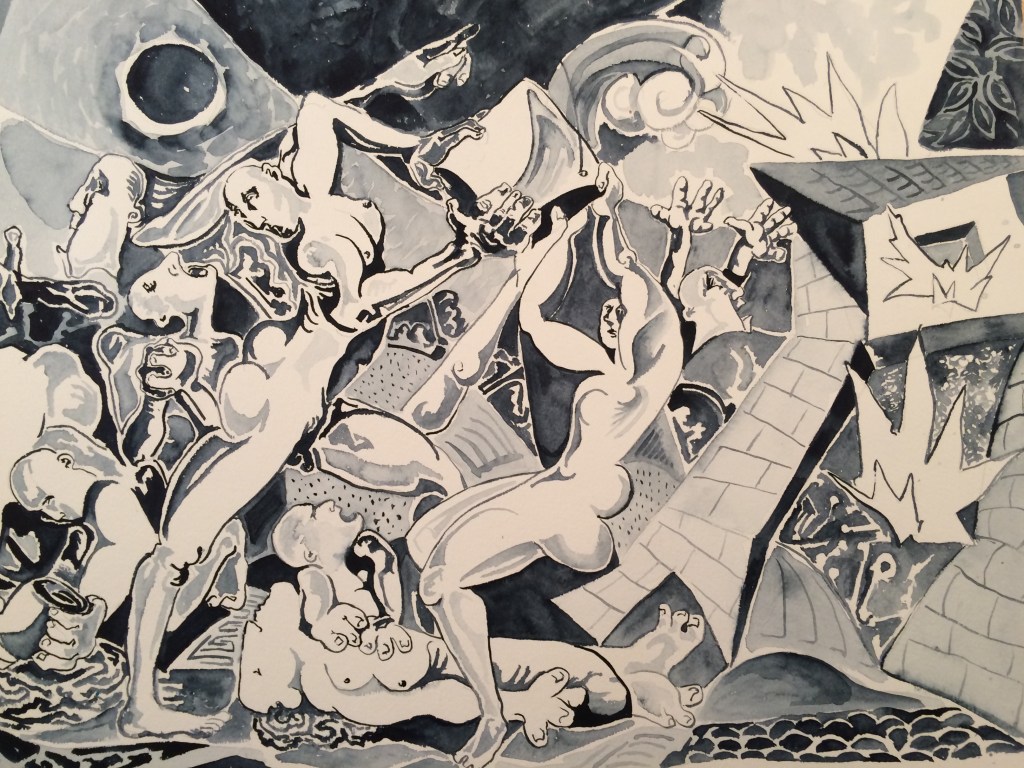
County Rainy Day. Underpainting the sketch with painty fingers
Yesterday was a hard day for me. It sometimes happens that the smallest thing – a comment, a slight – rubs, becomes a hotspot, and blisters. The rub became the focus-of-the-day and I made myself miserable. Obsessing. I blistered.
Until the sunset.
Sunset came like a soothing balm. Towering storm clouds passed through earlier in the evening. We heard the thunder and saw flashes of lightning (emblematic of my inner state of mind) but the system moved to the north so we had nary a sprinkle. And, just before sunset, the clouds parted. Suddenly vibrant yellow and orange clouds danced on a field of light cobalt blue. By the time the purples appeared, I was back in-my-right-mind. The rub vanished with the waning sun. The blister began to heal. I sighed and was careful not to ponder why I gave away the day to the smallest thing.
The smallest thing. What other people think. What happened yesterday. What I fear will happen tomorrow. What I think (ask Kerri, I have more than my share of opinions and perspectives and I sometimes lack an internal editor. If you are a compassionate human being you will immediately send to her your condolences).
What I think. The sunset dissolved my roiling inner monologue. And, again, I learned that what I think is… just that. No more, no less. I heard this phrase a hundred years ago and again last week: where your thoughts go, so too will your energy. Yesterday my thoughts went into a very dark place. So, too, went my energy. A day of my life.
The sunset brought me to a lesson I learned a hundred years ago and apparently needed to learn again yesterday: I have choice. My thoughts need not be reactive. I can aim my focus anywhere I choose. I can attach my thought like a barnacle to any-old-whale-of-an-idea-stream that I desire. And, the deep dark secret to making the thought-choice-of-the-day easy? Recognize that what I think is just that – what I think – no more and no less. Lose the import. Drop the judgment. Let go the valuation. Recognize it for what it is.
I used to wonder how Emily Dickinson, living most of her life in the isolation of her family home, could write poetry so soul-expansive. Her world of experience was impossibly narrow yet her view into the human heart so broad and deep. I am no longer confused about the limitlessness available in a tiny garden. There is more life teeming in our small backyard than I can possibly comprehend.
It had been years since we gathered with the Up-North gang in our home. They commented that our yard was “zen”. It’s true. We’ve come to think of it as our sanctuary. A creation borne of Covid isolation, of necessity during the pandemic, we brought our full attention to the only place in the world that seemed safe. Our yard. Over long winter months, sitting at the black table in our sunroom, we stared into the backyard. We watched the patterns of the birds and discovered the nests of bunnies and chipmunks. We watched with awe the subtle changes of seasons and the play of light. We wondered how we could make our safe space more comfortable for us and amenable to the plants and animals. We dreamed. And slowly, throughout our isolation and beyond, we carefully attended to our peace-of-heart. Is it no wonder that we now adore sitting in our yard, daily trying to comprehend the abounding life within our eyesight?
Emily Dickinson wrote her poems from just such an expansive place. Lately I feel an affinity with her. More than once, lost in wonder, I have thought, “How can I possibly describe what I’m seeing and feeling?” I understand, like Emily, it’s not possible to capture, but isn’t that the artist’s job, the poet’s errand, to somehow express that which is beyond our capacity to grasp? To bring hearts and minds together through a poem or play or a composition, so we might together whisper, “Yes. It’s like that.”
Never-in-my-life did I imagine that I’d sit on a deck and wile away a day peering through binoculars at a crow’s nest. We cooed and awed at the babies when they showed their beaks or flapped their young wings, the diligent parents flying to and fro to feed the bottomless bellies of their hatchlings.
Never-in-my-life did I imagine that discovering a turtle’s nest, the eggs newly hatched, could inspire the depths of wonderment that we felt. It was such an unusual find that, at first, we had no idea what we were seeing. We pondered what kind of bird nests in the ground and then it hit us. We were witness to an ancient birth rite, turtle eggs cracked open from the inside. With no mother to guide them, feed them or protect them, the newly hatched turtles somehow knew where to go, what to do. They scrambled to the safety of the river, at least that is what I imagined. We were giddy with excitement.
Last night we watched – again – the movie About Time. It remains my favorite movie of all time. Even after multiple viewings I laugh aloud and struggle not to sob along the way. Even knowing what is about to come, I am deliciously caught by surprise. It makes me yearn to go back and do things differently AND to not change a single precious moment. Both/And. Every single time we watch it. Never-in-my-life.
Enjoy life. Morsels. Alan Watts might say, the ever-present now. Last night, while setting up the coffee for the morning, I wondered how many bags of Cameron’s Velvet Moon Espresso Roast I have ground and thoroughly enjoyed. Maybe hundreds. Lately, I’m paying attention to how much I enjoy the evening ritual of closing our day by grinding coffee, the smell and the anticipation. Watching Dogga wind-down by following the chipmunk trail across the yard one last time. Never-in-my-life did I think I would love so extraordinarily so much…ordinary.
Kerri is sitting next to me – her writing interrupted, caught in the hate-stream and disbelief of a conservative’s rhetoric. It brought to mind a quote by Neil Postman, written in another era but prophetically describing our era: “…irrelevance seems to us to be filled with import, and incoherence seems eminently sane.” Entertainment posing as the news-of-the-day. Noise without substance. A manufactured thrill. Contextless content. Like a drug it is meant to keep us hooked. Nothing more, nothing less. Never-in-my-life did I imagine…
Never-in-my-life did I think I would so thoroughly delight in living upside-down, so appreciate my quirky capacity to question, my driving desire to detach from the noise. It is no wonder that I find the reality of the crows nesting so refreshing. The smell of the coffee so grounding. The miracle of turtles emerging from the earth to find the water so utterly hopeful.
The very first time I ate breakfast on the deck, the morning after we first met, we sat and talked all day. We never moved. We ate breakfast. Then lunch. And talked and talked the afternoon away. For an introvert like me, it was nothing short of a minor miracle to lose all track of time. Talking. Basking in the sun.
Little did I know that days lost-in-time on the deck would become a norm. And, yes, sometimes on the weekend we don our PJs all day long (writing and talking and writing and talking does not require a costume change. Saturday is smack-dab and select-the-melange-for-next-week day. And, let’s face it, we are artists…’nuff said).
I awoke this morning with a line from Hamlet running through my mind: “There are more things on heaven and earth, Horatio, than are dreamt of in your philosophy.” What dream, what night-wander was I following that made me bob to the surface with a line from Hamlet as my first thought of the day?
Sometimes I use Google like I use the i-Ching. A divining tool. I called up the phrase from the mighty Google and read two opposing opinions of the meaning of the line. Of course. Divining tools generally cast a broad net. The first writer interpreted the line to mean that the human imagination has limits; there is so much that we don’t know and cannot yet imagined. The second interpretation was stated with absolute authority. This is what Shakespeare meant! “One must believe what he or she sees. Even if they previously did not think so, the real evidence should change their mind.”
Evidence or the limits of imagination? Evidence as the limiter of imagination? I was no closer to answering my dreamtime question but I was affirmed in the dynamic nature of perception and interpretation. What a great play!
Living as we now are, in the advent of A-I, one must not believe what he or she sees. I have no idea what Shakespeare meant – we never discussed it – but I am certain that what one sees is no longer evidence of anything. What one hears requires vetting. There are more things on heaven and earth than Shakespeare could have possibly imagined. Our world is beyond his dreaming or he might have suggested to Horatio that he must question everything he hears and challenge everything he sees.
And, about my dreamtime question? I’ll leave that, too, to Hamlet: “A dream itself is but a shadow.”
At the very end of my life I imagine I will understand – perhaps for the first time, in my final moment – that each day was momentous. I will come to understand that every tick-on-the-tock held more import than I had capacity to conceive. To “just get through it” or to assign “good days” and “bad days” a mind-boggling misunderstanding of the opportunity-of-life.
How much of my perception is chemistry? Ventral vagus tugging-at-war with dorsal vagus for story dominance? Meaning made via neurotransmitter? Does my chemistry generally opt for connection or protection? Like most of us, I imagine myself as somehow independent of my environment, an individual, self-actualized. As it turns out, that is proof of delusion. Or human-specific-hubris. I cannot know myself without your reflection. You cannot know yourself without mine.
First we sense. And then we story. And then our stories wear paths in our mind meadow, chemical preferences.
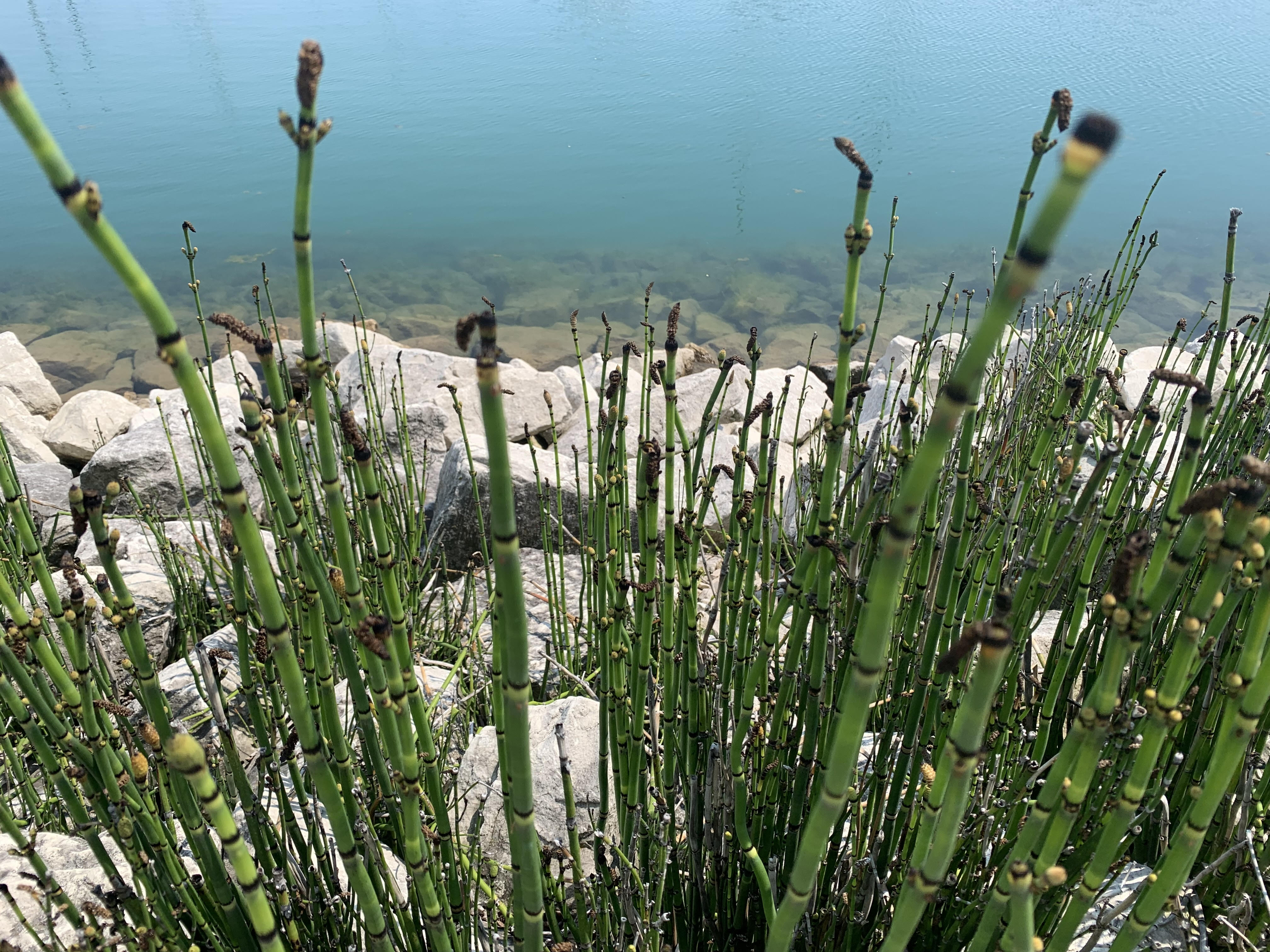
Green on green. Not as simple as it seems. Boundless as this passing moment. Infinite.
[*special thanks to The Marginalian by Maria Popova – June 9, 2024 – for her reflections on polyvagal theory]
I just re-read The Little Prince. Our imaginary child, Chicken Marsala, made me do it. He’s lodged an idea into my heart and suggested I revisit some classics. Kahlil Gibran’sThe Prophet is on Chicken’s short list of recommendations.
“One sees clearly only with the heart. Anything essential is invisible to the eyes.” Antoine de Saint-Exupery, The Little Prince.
I suppose it might seem odd that our imaginary child makes book recommendations but before you leap into full-blown judgment, I would ask you to ponder this: why might you consider anything borne of imagination as odd? This device that I am typing upon was once a figment of someone’s imagination. Consider this: there is power in imagining kindness. Peace will come first to the world through our capacity to imagine it as possible.
This past weekend we were at Pride-Milwaukee watching our amazing son perform on large stages and small. I loved being in a celebratory mob that embraced difference, that celebrated the divergent, that held an all-inclusive understanding of love. There was not a hint of body shaming, in fact, there was the opposite. Can you imagine that? “One sees clearly only with the heart.”
I had a minor epiphany standing behind the stage at the street fair. Watching the revelers, strangers dancing with strangers, people fearless in their acceptance, reaching one-to-the-other – these people unashamedly promoting acceptance-and-love-of-others are regularly branded as deviant. Our world is upside-down. Or perhaps it simply lacks imagination.