Wiggle And Be Warm [on Not So Flawed Wednesday]

“Cuckoo, jug-jug, pu-we, to witta-woo!” ~ Thomas Nashe, Spring, Sweet Spring

“It’s not possible,” we said in unison. For weeks, the temperatures were bitter cold. The mound of snow at the end of our driveway was as tall as I am. The sun finally emerged. We pulled on our snow pants, our heavy boots, and walked into the snow-shocked world. Rounding the corner by the dentist’s office, at the base of the south facing wall, through a patch of cold wet earth surrounded by mounds of ice and snow, tender shoots of green were breaking through, reaching for the warmth. Daffodils. Spring.

We stood staring as if slapped. It was as if we had rounded the corner and come face-to-face with alien hope, something we thought existed only in some distant future, a Hallmark promise of light in the darkest of winters. Yet, there it was, tenacious and tender, a harbinger of Persephone’s return to the sweet surface of the earth. “I have to take a picture,” Kerri whispered, as I broke into a spontaneous sun dance. Passing motorists stared at the lady climbing into the bushes and the wiggling crazy man.

I felt as if I suddenly held a precious secret. I did a slow 360 degree turn and saw only winter, winter, winter. Cold, frozen, frigid, freezing, ice damming, black ice, snow plow, sand and salt world with people puffed out and covered in too many layers to please-god-stay-warm. And, in the middle of it all, a tiny patch of promise. A force greater than despair or depression or pandemic fatigue. Life.

We stayed just long enough to make sure it wasn’t a mirage, linked arms and set course for home. Cold fingers but warm in our core.

As we trudged home, breaking trail in snow, I thought of a small piece by Ellsworth Kelly. He pasted a chunk of warm yellow on a postcard image, a Japanese print. He called it “Spring (Yellow curve).” A shock of yellow completely out of place yet transforming the entire world. I imagine, one day, he took a walk in the bitter cold and saw a shock of yellow blowing through the soil. So out of character yet so welcome. Spring. Yellow curve. “Cuckoo, jug-jug, pu-we, to witta-woo!”

read Kerri’s blog post about SPRING?

Invite The Humor [on Two Artists Tuesday]

The sun at last. We pulled on our snow boots and walked the neighborhood, arriving at a place sacred to us, the Southport Beachhouse. It’s the site of our wedding reception and candlelight anniversary dinners on the beach.

Kerri packed a snow ball and another and another. She made a tiny snowman. We scrounged the snow for sticks, small cones for eyes. “He’s so cute!” she said. And then, “Do you think he knows the world is off its axis?”

“No.”

“Lucky snowman!” she sighed.

Horatio had me laughing during our call. He told me that the story of Job was meant to be a comedy and, in his telling, it was hysterically funny. He has me convinced. Grim circumstance is fodder for good humor. It’s why the classic slip-on-the-banana-peel is so funny. I told him that Kerri and I are waiting for the whale to burp. Despite what it seems, our time in the belly of the whale is temporary. Sooner or later, every good comedy comes to a happy ending.

The trick, I suppose, is to recognize that you are living in a comedy and it is better to laugh than shake your fist at the sky.

Sand paintings, like snowmen, are temporary. They are meant to invoke healing. They are meant to provide protection. “Do you think he’ll be here tomorrow?” Kerri asked as we walked away.

“No. He’ll enjoy his day in the sun and that will be it,” I said. She looked at me sideways.

Impermanence. A day in the sun. A snowman made for fun and not forever. In making it, we found an ounce of perspective, some tiny snowman healing.

read Kerri’s blog post about THE SNOWMAN

Look To The Hand [on KS Friday]

This is the year of the hand. Not ox or rat or snake or dragon. Hand. Not merely as a symbol but as an overriding metaphor for our latest circle around the sun. And, like all good metaphors, “hand” is complex and signals more than one level of meaning.

You’d be amazed what you cannot do when both your hands are immobilized, when both your wrists are broken, when your thumbs are bound in plaster. So, the first level of meaning in our metaphor of “hand” points to all the things we take for granted. Try and wash your hair without your wrists. Try and cut a piece of bread without the use of your hands. Try to open a door without your thumbs. The failure of proper appreciation for simple function. There’s nothing like a good hard tumble, complete with casts, to revivify genuine indebtedness to the temple of the hand.

I’ve read that an opposable thumb is a physical adaptation that helped humans survive – and thrive – in our many habitats. In addition to all the things we take for granted (and now fully appreciate), our “hand” metaphor-of-the-year also reaches into the wonders of adaptation. I watched with utter amazement, two weeks after her fall and with no time off extended to her, my wife played the piano. Standing across the room you’d never know that she was in casts. This woman, who could not button a shirt, somehow, managed to play. To make music. To open hearts. Standing behind her, I was slack-jawed at the contortions required, the adaptations necessary, to reach the keys. Spread a thick layer of pandemic on top of lost jobs and injury, and the year of the hand is a miracle of rolling adaptation. An affirmation of the possible.

And, while considering miracles, I would be remiss if I did not mention the mittens. Gloves are not made for hands-in-casts. To keep hands warm while walking-through-winter we tried a succession of thick socks, borrowed mittens, and other inventions that included sacks, wraps and duct tape (I’ll leave it up to your imagination to fill in the gory details) – none of which did the simple job of keeping fingers warm. We visited multiple sporting good and camping supply stores and found possible solutions but they were not in the budget. Not even close. The year of the hand is, above all, a year of tenacity. One step at a time. Keep walking. Keep looking. Keep trying. And then, one day, an after Christmas sale brought to us, as Kerri likes to call them, her miracle mittens. They are easy to slide onto injured hands and over splints. On sale they were within our reach. “My hands are warm,” Kerri purrs as we crunch through the snow. “It’s a miracle.”

The year of the hand. Filled with appreciation for all that what was once taken for granted. Adaptation in circumstances that we might once have called impossible. Tenacity. There’s always a way. And, if we forget that we can do almost anything regardless of the fury that surrounds us – and we sometimes forget – all we need do is take a breath and look at our hands.

read Kerri’s blog post about MIRACLE MITTENS

Stroll The Esoteric Garden [on Not So Flawed Wednesday]

Lately, I am strolling the esoteric gardens and have picked for you these wild blossoms.

First, my favorite quotes of the week:

  1. “Life is mysterious and transcends logic, so the living thing can never be fully analysed, taught or learned…The doctor may explain why the patient is dead, but never why the patient is alive.” [Declan Donnellan].

2. “Samuel Beckett is a wonderful writer who has meditated deeply on the mystery of death…All of Beckett’s works, especially Waiting For Godot, are about death. In other words, because death exists, time is radically relativized. All we do here is invent games to pass the time.” [John O’Donohue]

DogDog and BabyCat are food-driven. The levels of excitement in our house escalate when the food bowls are filled. DogDog performs his vertical-jump-and-counter-clockwise-spin dance. BabyCat uncorks an excited verbal symphony that sounds a lot like “now, now, now, now, now…” The anticipation of the bowl, it seems, is far more satisfying than eating of the food from the bowl. The anticipation lasts longer and I am certain that, in the gobbling, neither DogDog or BabyCat actually taste their food.

3. “After a time, you may find that having is not so pleasing a thing after all as wanting. It is not logical, but it is often true.” ~ Mr. Spock. I laughed the first time I heard this in an episode of Star Trek. Capitalism reduced to a simple, single phrase. The economics of desire, wanting and having en route to wanting.

I have crossed paths with many a seeker. Mostly, they talk of presence or mindfulness or being as a noun. A thing to achieve or possess or gobble. Food in a bowl. The anticipation of unity in a path devoted to separation, thus, we are seekers. The Buddhist’s remedy to the dedication of separation is to chop wood and carry water. In other words, being is a verb.

With the notable exception of how-to-go-on-a-walk-without-pulling-our arms-out-of-the-socket, using the promise of a treat, Kerri can teach DogDog anything. There is no end to the tricks he will perform, the indignities he will suffer, en route to a treat. He sneezes on cue. He counts, high-fives, sits, jumps up, jumps down, wears paper plates on his head…his little Aussie body quakes with excitement, his eyes firmly locked on the promised treat.

We wrinkle our brows daily and ask, “How can they possibly believe that?” Horatio would respond, “It’s game theory. What are the incentives, the promised pay off?” Anticipation. Treat. We might as well ask, “How did hate, division and lie become food in the human bowl?’ There is no end to the tricks people will perform, the lies they will embrace, the funny hats they will wear, the indignities they will suffer or inflict, eyes firmly locked on a promised treat. Superiority. Or mattering?

I have crossed paths with many a power player. Mostly, they talk of winning, and owning, and being-on-the-top. There is never enough food for the bowl. The anticipation of achieving abundance through eyes that only perceive a pie with limited pieces. Owning this piece and then the next and the next and the next…

“Life is mysterious and transcends logic.”

Yearning meets obstacle.* The strange alchemy necessary to invent a story.

Dogs and cats living together, oh my!

“All we do here is invent games to pass the time.” I wonder, as I wander through my esoteric garden, what might it take for us to invent more inclusive, life-giving games, a more generous story?

*this definition of story courtesy of Robert Olen Butler

read Kerri’s less esoteric blog post on ANTICIPATION

Cast A Shadow [on DR Thursday]

“The soul has no limits.” ~ Heraclitus

It was a hot summer night, humid and sticky, and the community was gathered in the outer ring of the temple. The Wayang Kulit master, shadow puppet master, was performing a play. Part ritual, part entertainment, the Balinese have not yet banished their arts from their worship. Laughter is welcome in the temple. Although the puppets are beautiful, ornate, the audience can only see the shadows they cast on the screen. It is a metaphor for life: in consciousness, we see only the shadows. We are the shadows. Our life-stories are illusion.

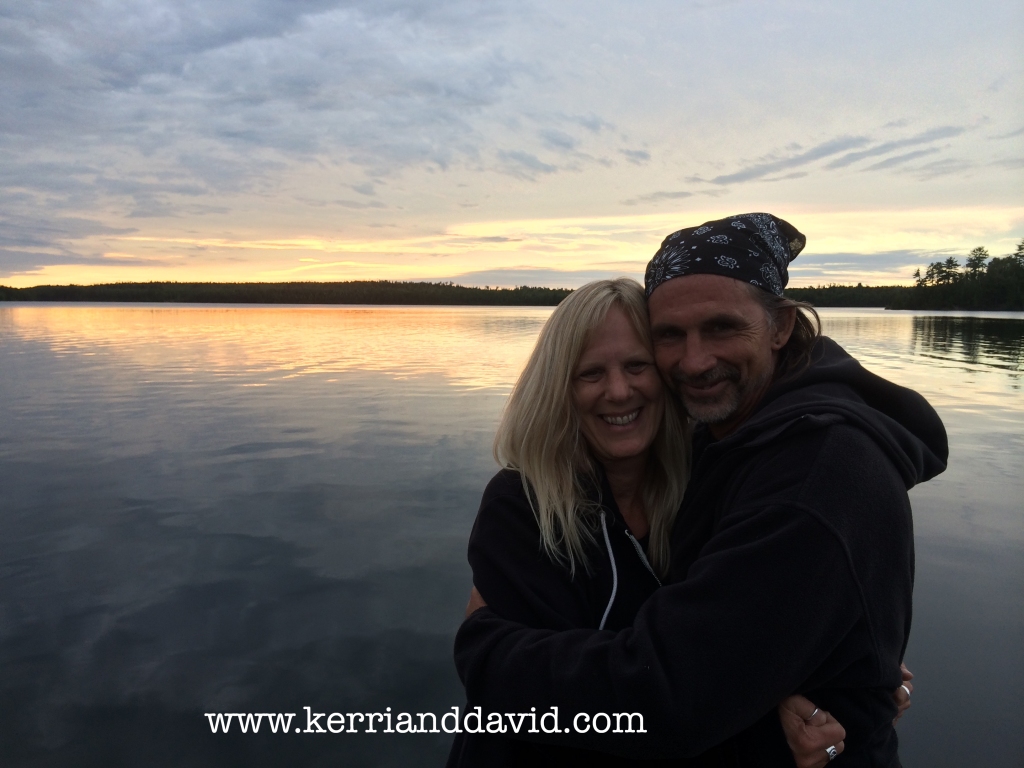
We walked in silence. Watching our shadows on the snow I thought of that hot night in Bali, of my astonishment of the skill of the master, manipulating all of the puppets, voicing all of the parts, a lamp of hot oil burning on his head – the light source to create the shadows. If that were not enough, he conducted the orchestra, seated behind him, by tapping the ground with a piece of wood wedged between his toes. He was a priest. A storyteller, not a preacher. Words and laughter swirl in the outer ring. As you progress to the inner ring, the most sacred place, language falls away, no words are spoken. No words are necessary. Kerri and I, while we walk, often occupy the inner ring. We hold hands. We listen to the sounds in the forest. We cast shadows.

Sometimes I feel far away from that hot summer night. Sometimes I sit right next to it. Our walks bring me closer to it.

It was a revelation to me to sit with people that experience no division between what is sacred and what is not. They do not worship on the weekend and then leave their holy place. To the people watching the shadow puppets, it is all sacred. It is all temple, even themselves. They know themselves as sacred. It is all holy, even to the forks and spoons in their drawer.

The separation they experience in this life – as individuals – is the shadow. Separation is the illusion. Fears and foibles are without lasting substance. The puppet master plays his rowdy tale to remind the people seated on the ground in the temple, that the truth of their existence is beyond the projection on the screen of their minds. Forms are fluid, not fixed. Souls have no limits.

read Kerri’s blog post about SHADOWS

Witness Time [on Two Artists Tuesday]

I have this odd sense that time is standing still. I know it is not true though I still go outside each day to check my one sure source of proof: the ever-growing icicles. Ice damming. Without time, the icicles would not grow.

I have this odd sense that the earth is off its axis. I know it is not true though I still go outside each day to check my one sure source of proof. Through the roof, the heat of the house melts the snow and it behaves as water should. It takes the path of least resistance and flows downhill to the colder gutters and, again, behaves as water should. It slows and drips and refreezes as it reaches for earth. Snow to water to ice sculpture. Nature is still behaving according to its principles.

We are expecting snow again today. People are rushing to do their errands early. They want to be in before the snows come.

Twice yesterday, in separate phone calls, we heard the voices on the other end of the line declare that “Three weeks ago seems like a decade ago.” So much has happened. Everything seems in limbo. Both. Like the icicles, it’s hard to reconcile.

I opened the door early this morning to let DogDog out and I was delighted to hear a chorus of birds. I stood in the cold open doorway for a few moments and enjoyed the music. I closed my eyes. The chirpy sounds of spring were out of sync with the piles of snow and ice in our yard, so, with my eyes closed, I gave myself over to the moment.

There is a poignant moment in the Sisyphus saga. Death is bound to a post so time stands still. Without death, nothing moves. Nothing changes. Crops cannot grow. Water cannot flow. Eternal life comes at the expense of change, growth and uncertainty. Absolute certainty brings absolute boredom. Stasis. Icicles cannot form. Sisyphus frees Death from his captivity so water can once again behave as it should.

read Kerri’s blog post about ICE DAMMING

Breathe and Make Choices [on Two Artists Tuesday]

“The greatest weapon against stress is our ability to choose one thought over another.” ~ William James

A note from the Rejuvenation Fairy: the relief we seek may depend upon the phrase we choose. For instance, consider this phrase: coping mechanisms. What ease might become available if we viewed ourselves as something other than machines? Turn this dial. Adjust this screw. Add a little oil. Check the battery. Do this, then that will happen. Turn down the pressure gauge. Talk to others. Take a break. Cause and effect.

Breathe. Sentient beings are much more complex and subtle than apparatus made from iron and steel.

We story ourselves. For reasons no one will ever fully comprehend, we sort to the tragic. We imagine the worst. Ask any good storyteller and they will confirm that conflict is the driver. Yearnings meet obstacles and stories ensue. Everyone, without exception, is telling themselves a story. Everyone, without exception, is starring in their own movie, complete with impossible mountains to climb, monsters to face, dreams that remain just out of reach. Robert Sapolsky has it right: zebras don’t hold onto their tale of stress while human beings are reticent to let it go. We like to tell it again and again and again.

If we cast ourselves as victims in our movie, our stories will be filled with ogres to blame. If we reduce ourselves to the mechanical, our stories will be endless attempts at fixing what’s broken, looking for the right hose to replace. How to recharge the battery. The fortunate few recognize that their movie might be a story of choice. Choices made within given circumstances. The storm, like time, passes. How do we stand in it?

There’s little doubt that we are living in stressful times. There’s nothing like a deadly pandemic to turn up those mechanical pressure gauges. Add another notch or two of pressure with extreme national ideological division, cowards at the switches of government, mix in some economic stress…there are plenty of choices on the angst-menu. All are visceral. All are circumstances to the story we choose to tell, the story I choose to tell.

I came across a few universal coping strategies. Eat healthy. Exercise. Give yourself a break. Get plenty of sleep. Talk to others. Recognize when you need help and ask for it. I wondered why these good choices are reserved for times of stress. Why not give yourself a break as an everyday expectation. Talk to others. Eat healthy. Weave a calm center it into the fibers of daily life. Make choices. Especially in the story you tell yourself about yourself. The thought upon which you choose to fixate, to play over and over again in your movie-mind.

When Kerri and I fall off the pony and run around like our hair is on fire, we make chicken soup. I am the sous chef. She is the master mind. The recipe comes from her mother so the making of the soup is more than food prep, it’s a love-touch to her anchor. We touch love. And, of course, defying the advice of experts to avoid alcohol, we enjoy a glass of red wine. We choose the glasses: Jamie’s? Or Skip’s? Or Joan’s? For our wedding, we were gifted with many special wine glasses from many special people. Recently, Jay and Carol and Rob sent us wine. When we clink our glasses, we touch the depth of our support and reach of our friendships. We call 20 and laugh. As the soup simmers and the wine disappears, we realize that our hair is not on fire, that, although we are not zebras, we are infinitely capable of releasing our tale of woe. We need not cope or distract. We can grasp hold of the full tale of the enormity of our lives. We need only refocus our eyes, see the depth and expanse of our story and choices, enjoy the warming soup. Appreciate the story of the wine.

read Kerri’s blog post about CHICKEN SOUP & WINE

See The Action. See The Motivation. [on Merely A Thought Monday]

“It’s discouraging to think how many people are shocked by honesty and how few by deceit.” ~ Noel Coward

Lately, I’ve been rereading books on playwriting. Put them on the stove, boil them down and you will have a fine reduction of action and motivation. The actions a character takes. The reason a character takes them. A playwright’s tool box is filled with words but a playwright’s creation is a sequence of motivated actions.

Tom McK told me that plays are about one moment. A moment of choice. A moment of revelation. A moment of truth. A moment of reckoning. All of the actions of the play lead to the moment. And the world will never be the same.

I began rereading my dusty old playwriting books because of the impeachment trial. I feel as if I am witness to an ancient Greek drama. Power falls. Courage fails. Morals collapse. Act One: the temple is sacked. The actions and motivations for the assault could not be more clear. Naked sedition. Act Two: the trial. The ideals of the temple are gutted. Blind justice is made a mockery as nearly half of the jurists fail in their courage, choosing personal gain over public good. They defend sedition. They kneel to it. Their actions and motivations could not be more clear.

Like every Hallmark movie, the end of this play was known before the actors took the stage. We watched the play to confirm what we already knew.

Doug had a saying: health was a measure of the distance between who-you-say-you-are and who-you-know-yourself-to-be. The shorter the distance, the healthier the person. By Doug’s account, the actions and motivations of the 43 jurors who protected sedition could not be more clear. Despite what they say. Despite what they proclaim. The distance between who-they-say-they-are and who-they-know-themselves-to-be is vast. They are unhealthy. Shiny suits that are rotten to their core.

The climax of the play. The one moment. The realization. Just as in a horror movie, the recognition that the person in the passenger seat is the murderer. All of the actions of the play lead to this one moment, this single recognition: their defense of sedition is not aberrant to this jury’s character. It is their norm. Their fall from grace, their collapse of principle, happened long before their vote to acquit.

Action. Motivation. Expressed through character.

“Character,” Tom McK taught, “is how you do what you do.” This is who they are. It is a matter of character. Their actions and motivations could not be more clear. And the world will never be the same.

read Kerri’s blog post about WORDS & DEEDS

Defy Augury [on Two Artists Tuesday]

It lifted my spirits. David sent a short video, a snippet of a play. He called it “Sofa Shakespeare.” Using small toys from his son’s collection, he performed – and filmed – a puppet version – of Act 5, Scene 2 of Hamlet. “…we defy augury. There is special providence in the fall of a sparrow….” He’s a professor of theatre, a director and playwright, a major member of my inspiration-tribe. He is a bubbling wellspring of the creative.

We have a periodic-ongoing-for-years-conversation about Hamlet. The play is special to both of us. I’ve had two runs at Hamlet. Both were significant. Both productions popped open new doors of understanding for me. Both productions also came to me just before the floor-of-my-life collapsed. I’ve come to think of Hamlet as an omen. If today I was approached to direct it, I’d say “Yes,” but, inwardly, I’d think, “Uh-oh.” I would defy augury. Like Hamlet, I’ve come to realize that I have little or no control over my fate.

Later in the day, after Sofa Shakespeare, Kerri and I hit the trail. The sky stopped me in my tracks. It was winter-radiant. I felt as if I was standing between heaven and earth. Staring at this magical sky, Kerri asked, “What do you think is going to happen?” Our lives, like so many others during this pandemic, have been blasted into utter uncertainty. We ask this question daily, “What do you think will happen?”

“I don’t know. Something will happen. That’s for certain,” I respond. She punches my arm.

“Not helpful!” she grimaces.

Making choices. Making peace with your choices and your fate. Chasing ghosts. Asking the ethers for more information. “What does it mean?” Trying to decipher whether the ghost you chase is “a spirit of health or goblin damned.” Whether your ghost brings “airs from Heaven or blasts from hell…” What will happen?

Continuing down our snowy trail, more words from Hamlet rolled to the front of my brain. These words come at the beginning of the play: “There are more things in heaven and Earth, Horatio/Than are dreamt of in your philosophy.” At the end, “We defy augury.” This great magical world is beyond our capacity to grasp. Still, we must try. And, like Hamlet, the best we can do is arrive at peace with our uncertain fate.

“If it be now, ’tis not to come; if it be not to come, it will be now; if it be not now, yet it will come – the readiness is all.” Hamlet. Act V, ii

read Kerri’s blog post about HEAVEN AND EARTH

Pay Attention [on Merely A Thought Monday]

I read this morning in my brainpickings, “We have to try and cure our faults by attention and not by will.” Simone Weil.

Kerri and I walk almost everyday. We head for our known, usual trails, and only occasionally go in search of something new. Even though we walk a well-known path, it never fails to seem entirely new. Kerri attends to the details, taking photographs of unusual pine cones, a downy feather on a limb, the sun streaming through the trees. She pays attention. My awareness is more global, the movement of forest, the orchestra and dance of trees and wind. I pay attention.

Our walks bring us perspective when all else seems dark and disorderly. Our walks refill our well of hope when our circumstance seems bleak. Mostly, our walks “cure our faults,” they bring us into a present moment where all of life’s judgments and fears fall away as the illusions that they are. Our walks, if only for a few hours, wipe clean our canvas and return us to a childlike curiosity.

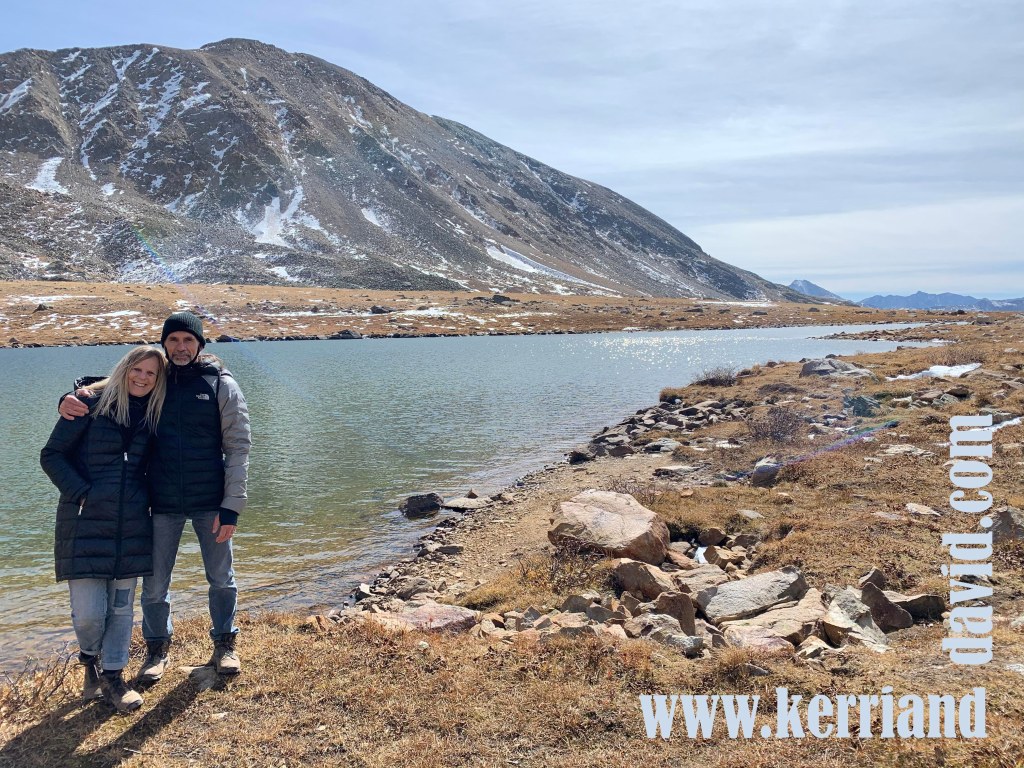
Sometimes, after a snowfall, we arrive at our trail and it is untouched. It never fails that we stand at the trailhead and marvel at the unblemished snow. Sometimes we hold hands and jump in with both feet and laugh. Sometimes we step carefully, quietly. Reverently. Either way, it seems a special gift. First steps are to be noted. Last steps are to be noted.

This morning I read an article about How Aging Shapes Narrative Identity. How the story-we-tell-ourselves-about-ourselves changes as we age. Our investments change. We become less interested in pursuits and achievements, in willful purpose. We become more interested in appreciation of our precious, limited moments. And, so, we begin to tell a different story. New snow on an old path.

The article was timely. Kerri and I lay awake most of the night. Among other things we pondered my dad’s dementia, the stories that he weaves and realities he inhabits. He is obsessed with going home.

Deep in the night, we talked about the stories that we currently weave together as we grow older. It seems that this time in our lives is a blank canvas, a path of new and untouched snow. Standing at the trailhead of our next chapter, no steps to follow or map, neither of us has any desire to reinvent or become different than what we are. Certainly, the circumstances of our lives are changing, but more and more we merely want to pay attention. To hold hands and jump into the unbroken snow. To laugh. To note the downy feather in the tree. The wind song, the deer that surprise us, leaping through tall grasses. “Did you see them?” I whisper. Kerri nods and smiles. Reverence. Nothing in the world, at that moment, is more important.

read Kerri’s blog post about UNBROKEN SNOW