For The First Time [David’s blog on DR Thursday]

As I have previously written, probably ad nauseam, I am a fan of the mythic tale of Parzival (not the opera) mostly because I sometimes feel that I am living the story. Completely bungling the opportunity in the Grail Castle by doing what he was taught to do, feeling full responsibility for the ensuing wasteland, fighting every ogre in pursuit of redemption, his trusty secret weapon shatters in a crucial moment leaving him unprotected and vulnerable to death. Stripping off the armor – his “role” – he walks away grieving the full-realization of his folly. Now, completely lost he follows a hermit who has no answers…and in his lostness, no longer trying to be found, he finds himself for the first time. The Grail Castle returns; he enters to meet again the Grail King, this time without armor or title or role or status or expectation. Fully exposed.

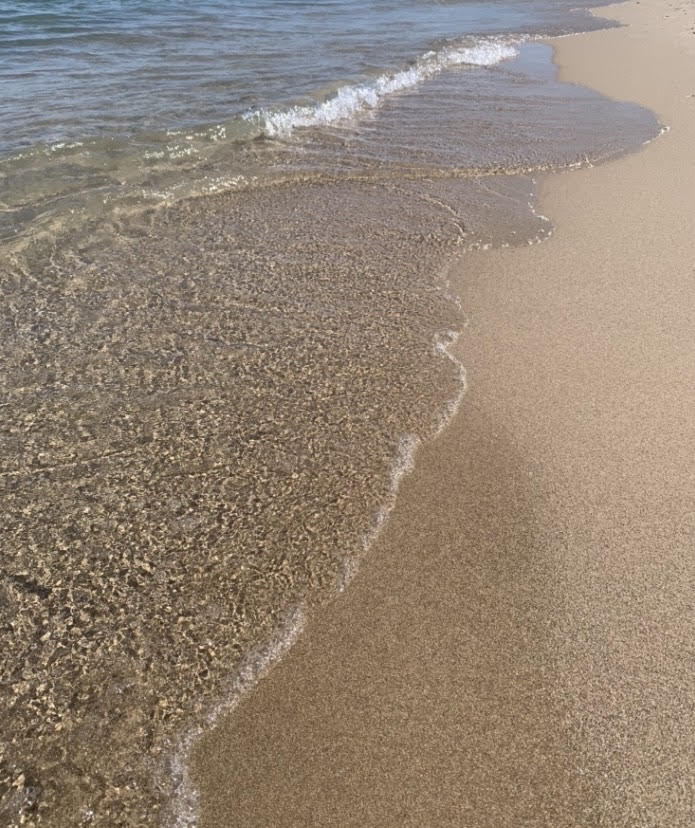
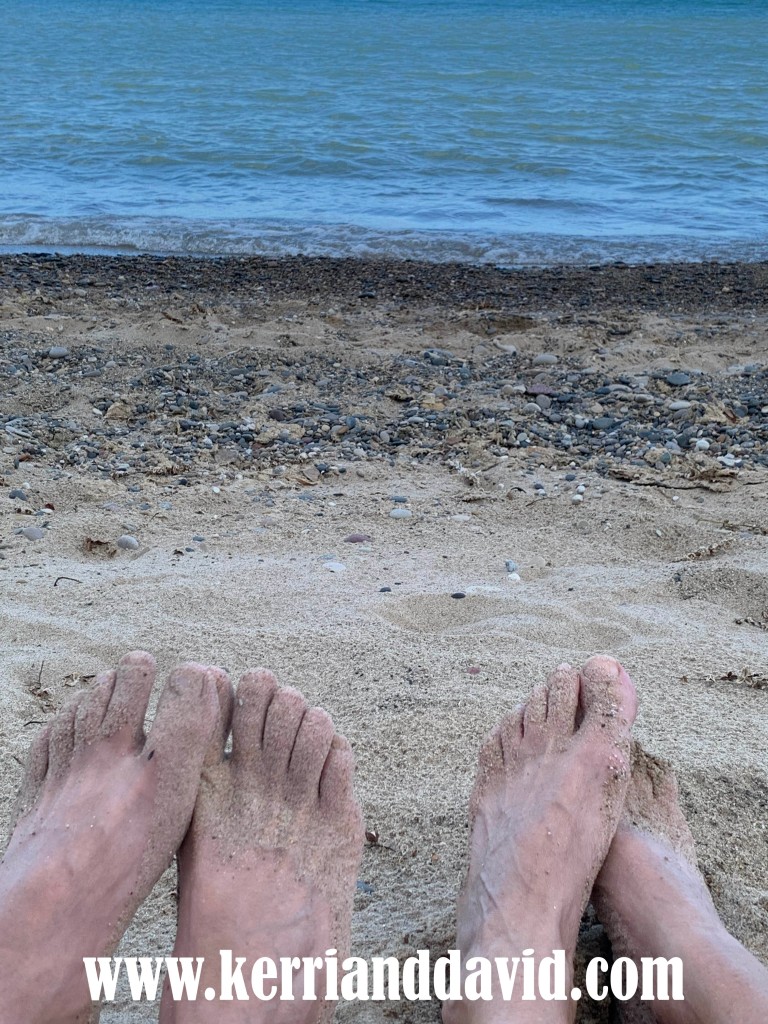
We walked a beach that merely a year ago was rocky and secluded. In a miracle of modern machinery, in record time, the state covered the beach with tons of sand and built a protective breakwater. It is transformed. Now, much more friendly for families and safer for swimming, for boats and jetskis, it is popular and populated. We strolled it as if we’d been transported to another era. It was at one time the same beach and a wildly different place. It is beautiful and protected, its natural rocky state completely covered over with appearance. “No worries,” I thought, “time has a way of washing away the facade, revealing the truth of everything.” In the meantime, the joy-squeals of children racing into the water was a delight.

“Can you see the dinosaur?” she asked, showing me the picture of the tiny breaking wave.

“A Tyrannosaurus Rex!”

“Yes! Look at its tiny arms!” she said, laughing.

Our feet in the sand, lost in time, nowhere else we’d rather be.

“Surrender to what is. Say ‘yes’ to life – and see how life starts suddenly to start working for you rather than against you.” ~ Eckhart Tolle.

read Kerri’s blogpost about THE SHORE

like. share. support. subscribe. comment…thank you.

The Greatest Weapon [David’s blog on Merely A Thought Monday]

The timing was uncanny. While on a slow walk in the park, deep in a conversation about our discouragement – no, our despair – for loved ones sucked down and seemingly lost in the dark, angry MAGA hole, we passed a group of girls engaged in an emphatic conversation and overheard the phrase, “I don’t know you like that!”

The phrase came like a slap. Kerri took out her phone to capture the slap in her notes. “That’s exactly it,” she said. “That’s precisely what is so troubling. It’s what I want to say: I don’t know you like that.”

I am lately haunted by the words of H.G. Wells: “Civilization is in a race between education and catastrophe. Let us learn the truth and spread it as far and wide as our circumstances allow. For the truth is the greatest weapon we have.”

There is a reason that the template outlined in Project 2025 includes the elimination of the Department of Education. There is a reason that governors in red states are (and have been) waging a war on education. Educated people ask questions. Educated people check the veracity of statements hurled their way. They take time to check facts and sources of information. In a democracy, an educated populace would never sign on with an autocrat exploiting their anger. They’d ask questions of their anger -and so would be impervious to exploitation. An educated populace would demand ideas from their leaders, respectful debate, reasonable compromise, adherence to the Constitution. They’d demand the same of themselves. An educated populace would see through the ugly name-calling and victim-squeals of a would-be dictator. An educated populace would pay no heed to the cries of “fake news” because they’d have learned to check it out for themselves. They’d hold news organizations to a higher standard. They’d care enough to question and verify information before jumping onto a hate-train. In fact (hear those two words) they would not so easily jump onto any train other than the truth-train because they were dedicated to living-in-facts that transcend bubble-gossip and tribal tittle-tattle.

This morning I had an HGTV revelation about our current political choice. It’s my latest metaphor illuminating the dangerous nonsense running around our nation in a red hat. I’ve learned in my HGTV viewing that demo-day feels good, takes very little time, very little thought, and requires only a sledgehammer. Anyone can do it. Destruction is easy. On the other hand, building the house is hard. It takes ideas, time, thought, planning, cooperation, collaboration, flexibility, knowledge, well-researched choices, skills, process and patience. Wisdom. All are the results of education.

Destruction is not complicated. It asks no questions, requires no learning. Destruction is the center of the red hat campaign.

Creating something beautiful and long-lasting is hard. It takes skill, the capacity to question and learn from mistakes. It takes a plan, forward thinking, and complex considerations, not fantasies sought in the rearview mirror of some imagined sitcom past. And it is never done. Building a better house is the center of the blue team’s campaign.

The red hat and company certainly espouse a plan, Project 2025, but an educated person would only need to ask the authors of the plan a pair of questions before rejecting it outright: 1) Why would you tear down the shining-city-on-the-hill and replace it with a dark prison? 2) Why are you trying to hide your plan from voters?

People I love, those caught in the undertow of the red swirl, empty of fact but full of shared-victim-anger, gulping and then spewing mouthfuls of toxic-fox-swill, waving their flags, raging with a dedicated ignor-ance…I don’t know them like that. I wonder how they came to know themselves like that.

Let us learn the truth and spread it as far and wide as our circumstances allow. For the truth is the greatest weapon we have.”

Let us learn about truth: Truth is not what we hear or see in the stream. It is not something verified by people passing memes around our social bubbles or validated because we share the same opinion and invest in the same misinformation sources that cater to our opinions. Truth is what we find when we question what we hear. It is verified by exiting our bubbles and questioning what we think we know, examining the foundation of our likemindedness. Truth is learned when we fact-check our own opinions and especially challenge our rigidly held beliefs. Rigidity is a red flag, a marker that something false is hiding.

I have learned to remember this: an opinion shared with great passion or rage is still just that – an opinion. Any strong belief held without question or reflection is, in fact, weak and makes us easily exploited, easily led. Lemmings. Fools. Learning the truth requires constant effort and personal responsibility – especially in our age of easy misinformation. In learning truth, our greatest weapon, there is never a need to fill the communal cup with fear-mongering. Truth dispels fear. It dissipates gossip, and, because it demands personal responsibility, affords no room for blame.

Truth is a common center. Education, the art of questioning and discernment, is the compass that gets us there.

read Kerri’s blogpost about I DON’T KNOW YOU LIKE THAT

like. share. comment. subscribe. support…thank you.

The Essentials [David’s blog on Merely A Thought Monday]

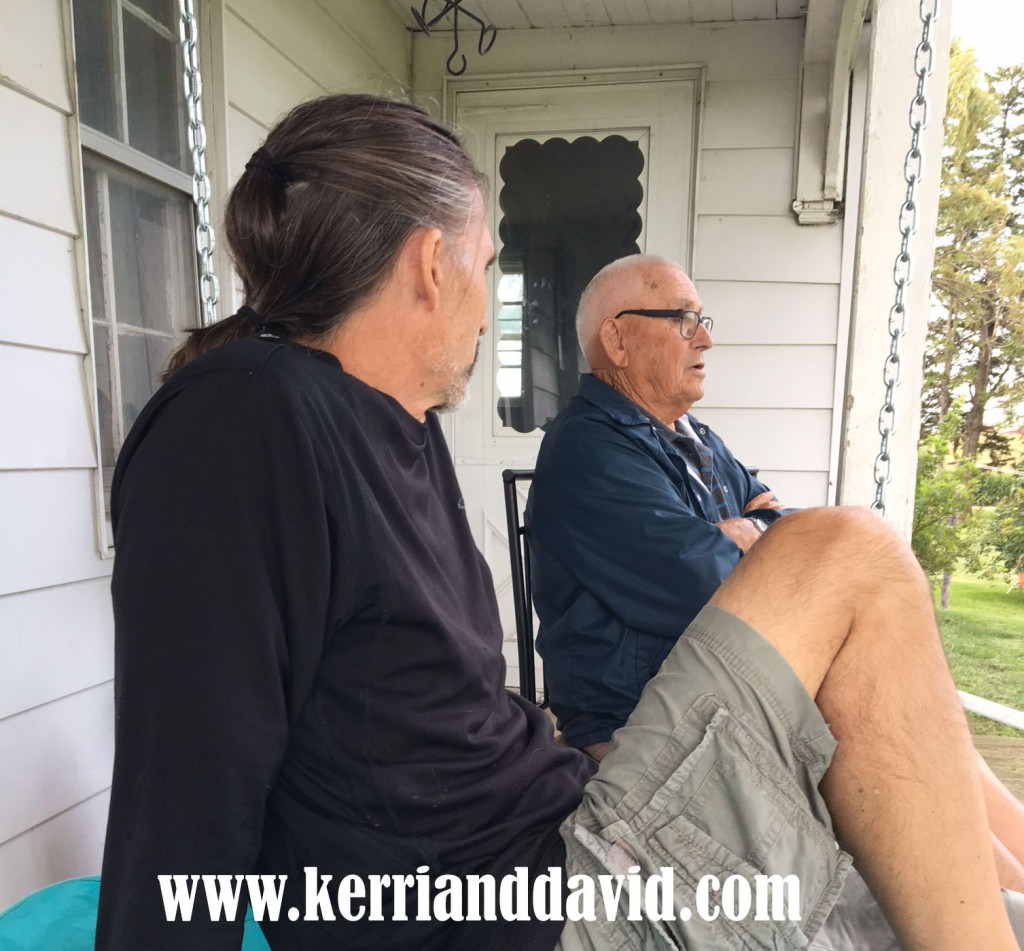
The interviewer asked me to name three things I love and three things that piss me off. “Ah, here’s the trick question,” I thought. Tom Mck once told me that, when conducting interviews for teaching positions, he’d ask a trick question, “Tell me about your experiences with a bad student?” If the interviewee answered the question, he would not hire them. “There is no such thing as a bad student,” he said. I knew better than to answer the interviewer’s question but I did anyway: “I can’t see my dad anymore and sometimes that really pisses me off.” Of course, I did not get the job.

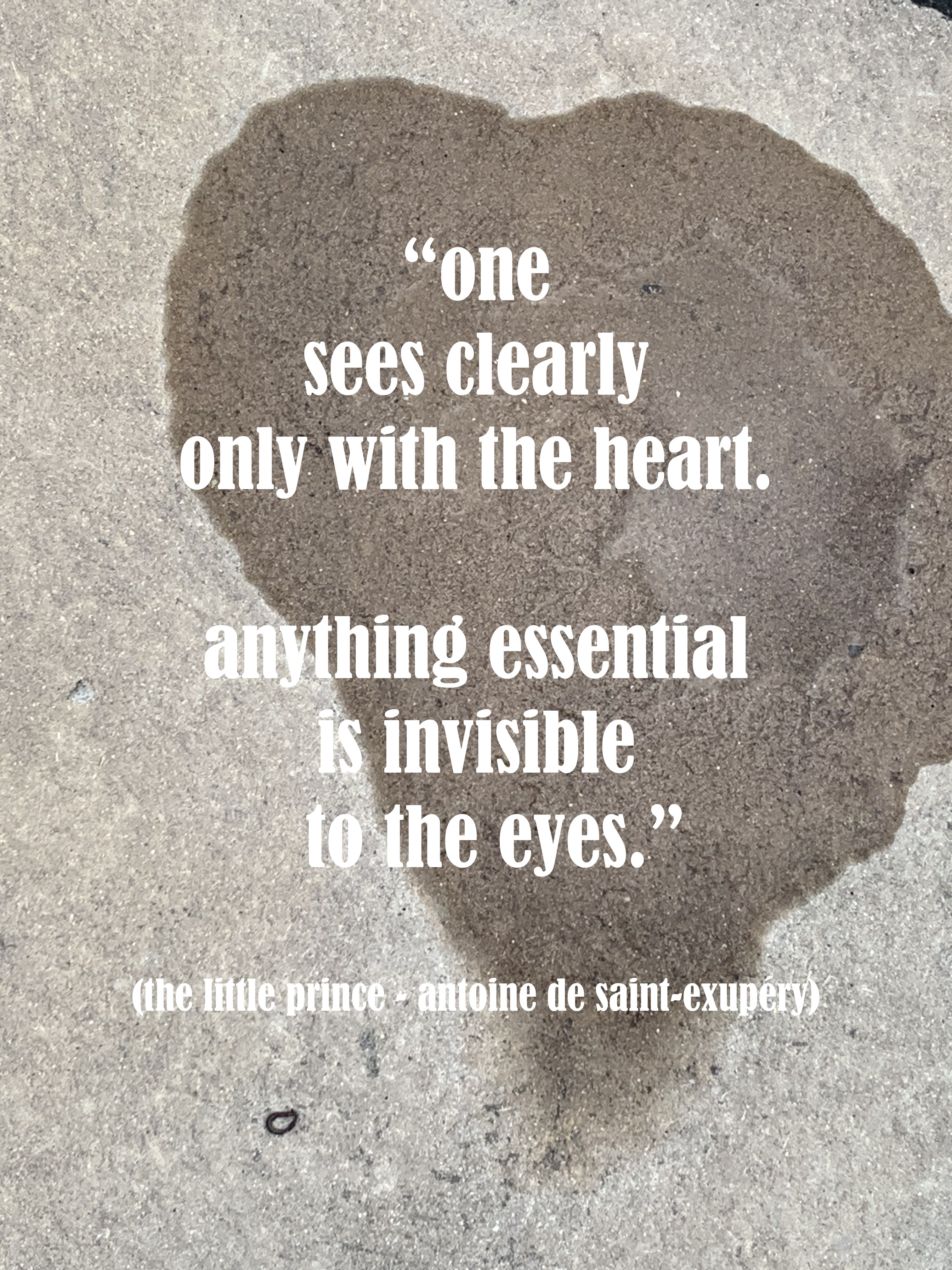
I read The Little Prince, first to myself and then aloud to Kerri. As I turned the last page I saw that she was silently crying. “I forgot how it ended,” she said. So had I. In the book, after the Little Prince is bitten by the yellow snake and dies, the narrator searches the sand but cannot find his body. The author, Antoine de Saint-Exupery, a year after he wrote the book, crashed his plane over the Mediterranean Sea. It was 1944. His plane was later found but not his body.

Neil Postman wrote Amusing Ourselves to Death in 1985. It is more relevant today than when it was written. He predicted our indifference to lies. It’s not that we cannot discern fact from fiction, it is that we do not care to. It’s much more entertaining to spew self-righteous bile and shared discord within the confines of the social-bubble. A free press, the mechanism meant to function as society’s lie-detector, has collapsed and become a terrific magnifier of falsehood. Entertainment. That which can be seen with the eyes but is nowhere detectable with the heart. Wild lies, outrageous claims and blame, blame, blame, blame, blame are much more captivating than essential truth. It’s about numbers: grotesque behavior attracts more audience than genuine discourse so completely dominates the info-stream.

The body politic fragments, like pieces of an airplane tumbling from the sky.

Lately, I hear often – and speak – this common refrain: “I just can’t understand how people don’t see it.”

“Oh, people do see it,” whispers The Little Prince, sweeping clean his volcano, adding, “With their eyes.”. He winks, “Closed hearts are not concerned with the essentials.”

The wind shifted so we sat outside and enjoyed the evening cool after a hot day. Just like my dad used to do. Now, when I close my eyes, I can see him. We made dinner with 20 and ate under the waning light in the sky. It was the solstice. The stars made their slow entrance. Gazing up, I wondered if perhaps Antoine de Saint-Exupery found a way to join The Little Prince on his planet so together they might attend to the vanity of the rose. I hope so. For a moment, we sat in silence and appreciated all that our open hearts could see.

read Kerri’s blogpost about SEEING CLEARLY

like. share. subscribe. comment. support. thank you.

Beautiful And Prickly [David’s blog on KS Friday]

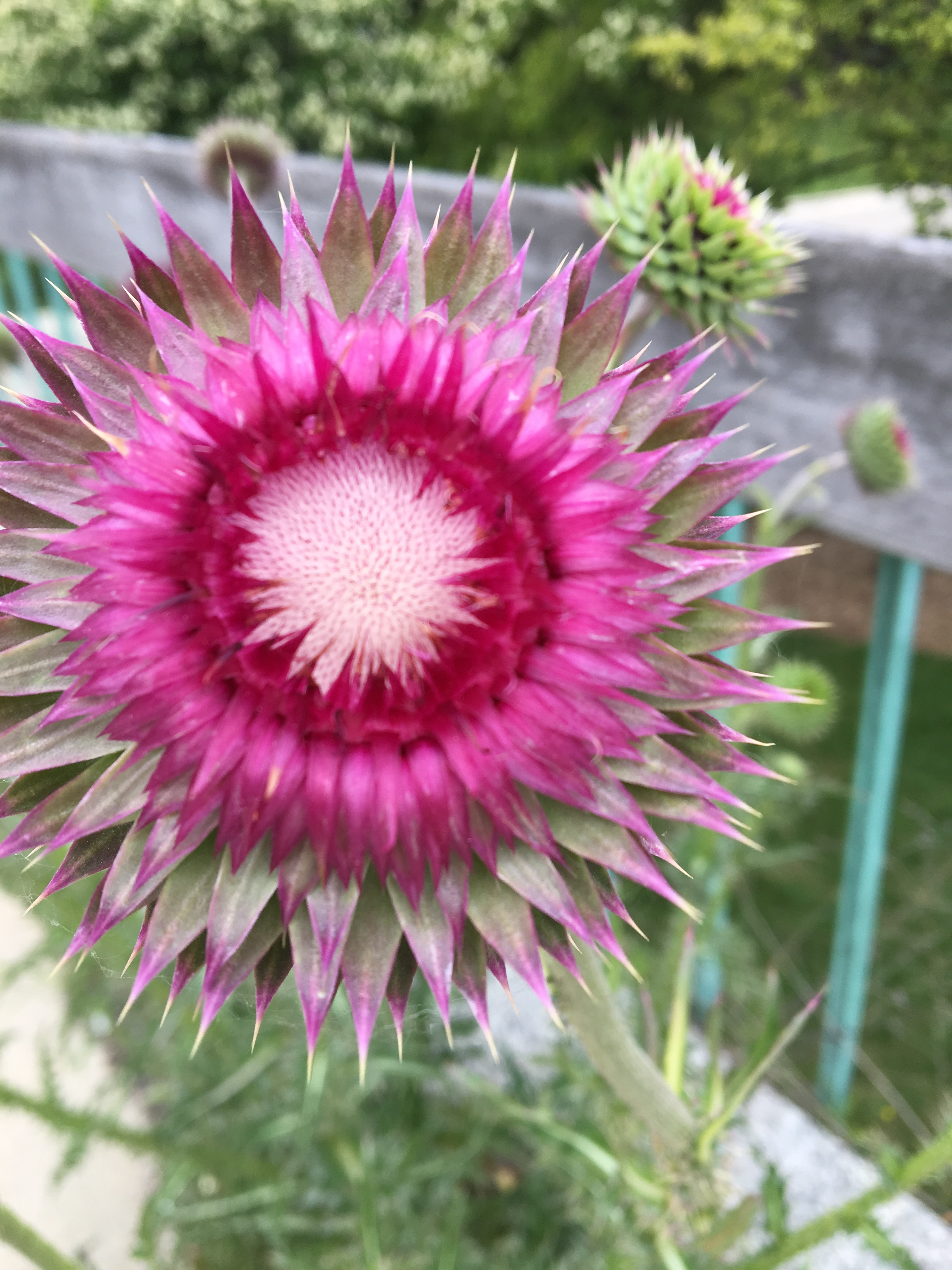
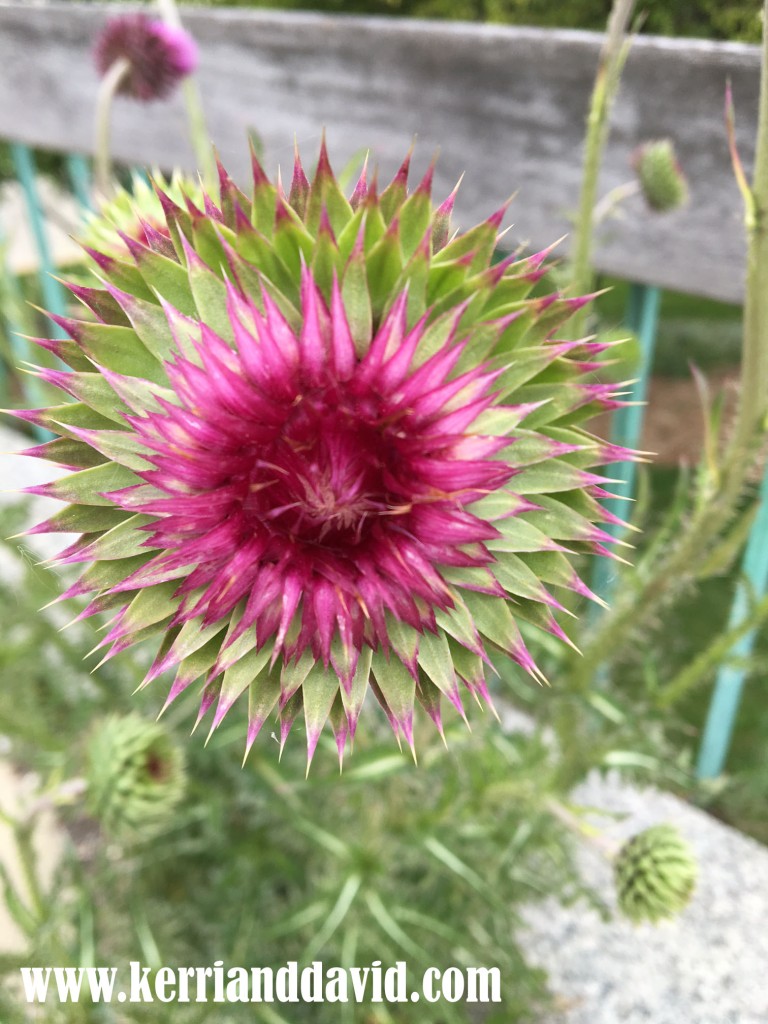
Thriving in an unlikely and inhospitable place, this thistle served as a sign, a testimony to possibility, the rugged beauty available only through dogged perseverance. Stretching up through a tiny crack in a busy sidewalk outside aging buildings in a bustling city, these thistles stood nearly five feet tall. Their colorful flowering heads brought us to a full stop. We set down our knitted-brows and absorbed their vibrant pink and purple stick-to-it-ed-ness. “Gorgeous,” she said, reaching for her camera.

More than beauty-through-resilience, these hardy thistles spoke to me with the veracity of an oracle. As I watched Kerri take photographs, the oracle whispered in my ear “Both beautiful and prickly,” she said, “Her prickles protect her against herbivores and others.”

“Ahhh,” I sighed. A well-rounded plant, indeed. No shrinking violet could possibly survive in this environment, let alone thrive. Bloom.

For a moment I stood watching the passers-by. Few took notice of the gorgeous thistles. Some scurry-ers glanced sideways at Kerri cooing and snapping photos of what, I imagine, they thought of as weeds for someone else to pull. No time for beauty. No time for responsibility. On-to-the-next.

“I’ll bet those people think I’m crazy,” she said, tucking her camera inside her purse.

“Yep,” I agreed. “You are definitely more like the thistle than you are to the people passing-by.” She gave me a sideways glance but decided to accept the compliment.

I winked and whispered to the thistle-oracle. “All the time in the world for beauty. All the time in the world for responsibility. Nowhere else more important to be.” Beautiful and prickly. Resilient to the core.

Divine Intervention/Released From The Heart © 1995 Kerri Sherwood

Kerri’s music is available on iTunes and streaming on Pandora and iHeart Radio

read Kerri’s blogpost about THISTLES

like. share. subscribe. comment. support. thank you.

The Smallest Thing [David’s blog on Not So Flawed Wednesday]

Yesterday was a hard day for me. It sometimes happens that the smallest thing – a comment, a slight – rubs, becomes a hotspot, and blisters. The rub became the focus-of-the-day and I made myself miserable. Obsessing. I blistered.

Until the sunset.

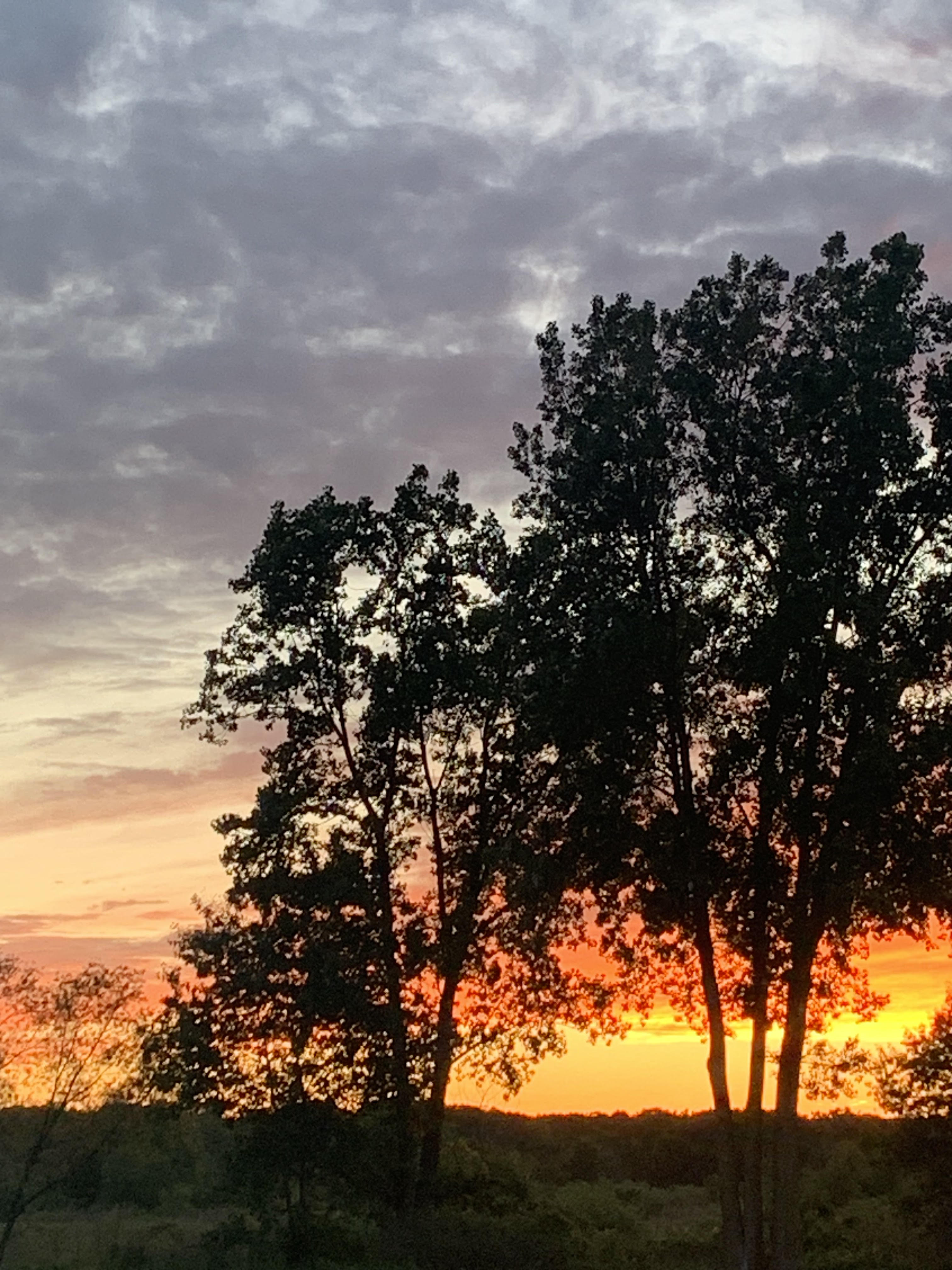
Sunset came like a soothing balm. Towering storm clouds passed through earlier in the evening. We heard the thunder and saw flashes of lightning (emblematic of my inner state of mind) but the system moved to the north so we had nary a sprinkle. And, just before sunset, the clouds parted. Suddenly vibrant yellow and orange clouds danced on a field of light cobalt blue. By the time the purples appeared, I was back in-my-right-mind. The rub vanished with the waning sun. The blister began to heal. I sighed and was careful not to ponder why I gave away the day to the smallest thing.

The smallest thing. What other people think. What happened yesterday. What I fear will happen tomorrow. What I think (ask Kerri, I have more than my share of opinions and perspectives and I sometimes lack an internal editor. If you are a compassionate human being you will immediately send to her your condolences).

What I think. The sunset dissolved my roiling inner monologue. And, again, I learned that what I think is… just that. No more, no less. I heard this phrase a hundred years ago and again last week: where your thoughts go, so too will your energy. Yesterday my thoughts went into a very dark place. So, too, went my energy. A day of my life.

The sunset brought me to a lesson I learned a hundred years ago and apparently needed to learn again yesterday: I have choice. My thoughts need not be reactive. I can aim my focus anywhere I choose. I can attach my thought like a barnacle to any-old-whale-of-an-idea-stream that I desire. And, the deep dark secret to making the thought-choice-of-the-day easy? Recognize that what I think is just that – what I think – no more and no less. Lose the import. Drop the judgment. Let go the valuation. Recognize it for what it is.

The smallest thing.

read Kerri’s blogpost about SUNSET

share. like. subscribe. comment. support. thank you.

Beyond Words [David’s blog on Not So Flawed Wednesday]

Sometimes the obvious is hard to write about. A heart path. A heart on the path. My mind jumped to the easiest association: a heart path is a metaphor for a spiritual life. Despite the countless tomes written across cultures and through the ages, including the current river of memes flowing across our screens, a spiritual life is impossible to wrap in words. Yet we have a long and complex history of trying.

I have friends who are Buddhist, friends who are Christian, friends who are Jewish, friends who are Muslim. I’ve spent time with Hindu priests and I’ve been introduced to the Tao. As they say, many paths, one destination. Heart paths, all. It is worth remembering that no single path is better or worse than any other. As Joseph Campbell suggested, religions are vehicles. A ride share.

A spiritual path need not require a deity or a book of rules. As Kerri says, “If it’s not about kindness it’s not about anything.” Kindness is an expression of the heart. Kind-heartedness. Warm-heartedness. Tender-heartedness. A heart path invokes this quality: selflessness. Deities and rulebooks can be twisted, human-made as they are, to serve un-kind, selfish intentions. Stoke divisions. Division is the opposite of a heart path. Kindness is an expression of unity.

A heart is a good symbol for the path because we all have one – every single one of us. Skin color, cultural orientation, systems of belief, sexual identity…do not alter the simple fact: we have hearts in common. Many hearts (plural) reaching for the single shared heart. One heart (singular).

Transcendent.

read Kerri’s blogpost about HEART ON THE PATH

like. comment. support. share. subscribe. many thanks.

Step Out. Step In [David’s blog on Merely A Thought Monday]

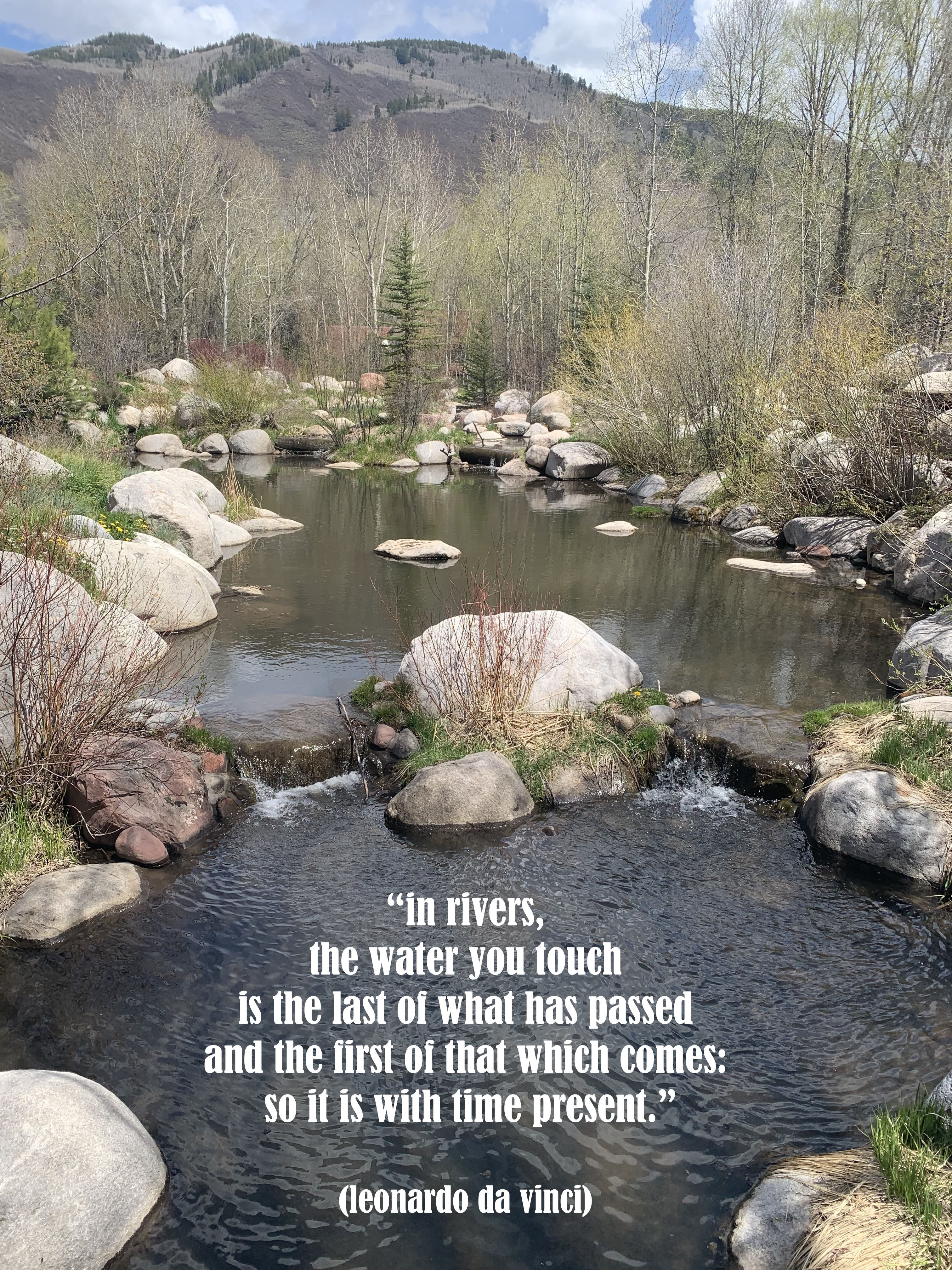
“In rivers, the water you touch is the last of what has passed and the first of that which comes: so it is with time present.” ~ Leonardo da Vinci

I might say that, in the mountains, in the sanctuary, we stepped out of time.

We sometimes forget that time is a relatively new invention in human history. The mechanical measurement of our moments. So, when we say that we “stepped out of time”, I literally mean that we temporarily exited the quantification of our moving experience. Future/past. To-do lists and locators. It begs the question, “If we step out of time what do we step into?”

Everyone knows the word “present”. The present. It’s a very big little word. The English language would have us understand it as a place. An arrival. We look for it, strive for it and, paradoxically, we enter it by forgetting to look or strive. It is where we are – always – and yet we so rarely know it. It’s where meaning is found and connection. It’s where peace and beauty are realized.

A poet might write that to die is to step out of time. To be born is to step into it. It’s the epicenter of our mythology, this cycle of dying and rebirth. Into and out of time. Winter and spring.

We stepped into the sanctuary and stepped out of time. Our cares dropped away. We took a deep breath. Sometime later, we stepped back into time and both felt renewed. Of course.

read Kerri’s blogpost about THE PRESENT

like. share. support. subscribe. comment. all are appreciated.

Look-At-Me-Look-At-You [David’s blog on KS Friday]

It struck me that as the crowd gathered to watch the family of foxes, the foxes, in turn, gathered to observe the rabble of humans. Look-at-me-look-at-you. I wondered if they thought of us as wild, uncultivated. I know they were delighted that a makeshift fence stood between us and them.

The mother fox leapt onto a stone and seemed to pose for photographs but I was certain she was drawing attention away from her brood. Look-at-me-not-at-them. She knew how to make her frolicking children disappear. And they did. Once safe, she stepped off her platform, no rush, and also disappeared.

A local woman walking her dog saw the crowd and asked, “Is it the foxes?” I nodded. “Thought so,” she said and nonchalantly continued on her way. A family of foxes in the center of town. Nothing new. For her it happens every day. For us, passers-through, it was a surprise. A delight. A family of foxes have never rollicked on our street at home. I may never see this again. She will see it again on her stroll tomorrow, just like yesterday. Thus, the power of perspective.

I read that foxes are observers. They easily meld into their surroundings. They vanish so they can watch. So they can see. “If Fox has chosen to share its medicine with you, it is a sign that you are to become like the wind, which is unseen yet is able to weave into and through any location or situation. You would be wise to observe the acts of others rather than their words at this time.”

Tom Mck told me that as he aged he felt that he grew invisible. I feel much the same way these days though my encounter with the foxes has made me realize that I have mostly lived my life as an observer of others. Like the wind. I much preferred coaching people over the phone: I could listen purely – no negotiating of image – and easily hear the message behind the words. Perhaps I have not grown invisible but am only now fully realizing the truth of one of my gifts. Weaving through any location or situation: Look-at-me-look-at-you.

Every Breath/As It Is © 2004 Kerri Sherwood

Kerri’s albums are available on iTunes and streaming on Pandora and iHeart Radio

read Kerri’s blogpost about THE FOXES

share. like. subscribe. comment. support. many thanks.

Where [David’s blog on Not So Flawed Wednesday]

Where to now? It’s the ever-present-topic of conversation.

On our recent trip to the mountain, we speculated. What was going to happen? What did we want to happen? What did we hope or fear would happen? Supposition is a kind of storytelling. Building a container for the unknown.

On the way home we recounted what happened. We discussed the gems, the surprises. We talked of the special moments that we anticipated and the hard moments that we predicted. We reveled in the fulfillment of intention, a visit to the sanctuary, a return to the stream. Narrating our experiences is a kind of storytelling. Sense-making. Building a container for the known.

Both types of container are too small. There is only so much anticipation that can be held. There is infinite sense to be made so story choices are necessary: what goes into the container and what must be let go? How will I make meaning of what just happened? And what does that mean for the next container of supposition that we must build?

They are connected questions. Where have I been? Where to now? Of necessity, despite all expectation, neither question ever arrives at an answer.

read Kerri’s blogpost about STORIES

support. like. share. subscribe. comment. thank you.

Arrive [David’s blog on KS Friday]

“You must understand the whole of life, not just one part of it. That is why you must read, that is why you must look at the skies, why you must sing, dance and write poems, and suffer, and understand, for all that is life.” ~ Krishnamurti, Think On These Things

The amaryllis is making a reach for the sky. The first time I saw it – a bulb encased in pink wax – I wondered what alien life form just entered our house. We had to ask the same questions we’d need to ask if it was an alien creature: How do we take care of it? How do we feed it? The answer was simple. Leave it alone. That answer confirmed my suspicion. It was an alien after all!

There is so much in this life that I do not understand. In fact, if I am honest, I think most of this life is beyond my capacity to comprehend. Last night, not ready yet for sleep, I watched a nine-minute youtube teaching by Thich Nhat Hahn. Stop Running. The title caught my eye because so much of life feels like running. Running to explain, Running to justify. Running to judgment. Running from fear. Running toward gain. I wanted to hear some thoughts about standing still. In that way, I might understand why there is so much running. In the end, his answer was beautifully simple: rather than run, arrive. Be home.

Rob made us laugh. He’s one of several people who lately reminded Kerri and me that we are not normal. “I didn’t mean for that to sound like it did!” he exclaimed. He’s helping us sort out our plan B. It’s true. Our “normal” in comparison to others is alien like the amaryllis. Rob is attempting to help us see what is special about how we are doing life. And, like everyone, we are mostly blind to ourselves. To our unique choices. To our “one wild and precious life.”

Between the alien amaryllis growing in our sunroom, conversations with Rob and a brief teaching by Thich Nhat Hahn, I am fully confident that I need to cease all attempts at understanding anything at all. Maybe it is time to arrive. Maybe it is time to arrive, to stand still and fully breathe-in all the possible awe teeming in this mysterious ungraspable universe.

Connected from Released From The Heart, The Best So Far © 1995, 1999 Kerri Sherwood

Kerri’s albums are available on iTunes and streaming on Pandora and iHeart Radio

read Kerri’s blogpost about AMARYLLIS

comment. like. support. share. subscribe.