Trust The Symbol [on Not So Flawed Wednesday]

“Perseverance, secret of all triumphs.” ~ Victor Hugo

It is nearly November and the tomato plants are still producing. I’ve come to think of our tomato proliferation as a dance between Kerri and the plants. Each morning, all summer long, with the good advice of 20, she tended the tomatoes. And, the tomatoes tended her. They continue to inspire quiet in her. I’ve watch the gentle morning dance from the window, DogDog circling the yard, Kerri with the watering can, pinching leaves, securing supports, or simply admiring yet another green orb that appeared overnight.

There was also the basil, mint, and lavender. After the tomatoes were nurtured, they joined the dance. Presence.

You know things are not going well when your friends start comparing you to Job. I’m not a bible guy but even I was keen to the reference. We’ve had a few years of rolling bad luck and molehills turned into mountains. 20 is fond of saying, “Karma is a long game,” and there were days that I asked Kerri what she did in a past life to deserve the most recent disaster. After punching my arm, we’d chant in unison, ‘One day at a time.” Take this step. Enjoy this day. The circumstance doe not define us. And, mostly, we lived it, staying in the center of the hurricane.

And, then, about the middle of May, the winds changed. It was palpable. Somethings actually began to tip in our favor. And, for reasons I cannot explain, we needed to grow tomatoes. Kerri needed to grow tomatoes. Last summer we made an anemic attempt at growing lettuce. We ate a salad or two from our mini-farm, but it was more of an exercise, something to do, rather than a symbol of the arrival of better times. The tomatoes came as harbingers, heralds of a new era.

To say that they’ve been prolific is an understatement. All summer long, lines of tiny red miracles sat on our table, ripening. The plants have withstood pounding rain, excessive heat, and withering humidity. Not only have they withstood it, they’ve prospered in it. It’s a hopeful symbol. Somewhere deep down inside, we hope to follow their lead. After a few years of the-other-shoe-always-dropping, we’re slow to trust our symbol. But, like our symbol, we’re taking our time, not getting ahead of ourselves, and will harvest our good fruit when the time is right.

Until then, we persevere, one day at a time, grateful for the portent our good tomatoes bring.

read Kerri’s blog post about TOMATOES

Glance Sideways [on Not So Flawed Wednesday]

It came as quite a shock. Our beloved plant, Snake-In-The-Grass, was hosting a community of Gnomes and Faeries. We haven’t actually seen the Gnomes and Faeries – they are notoriously hard to spot. They are not fond of human beings since we are famously territorial and also so easily eschew our imaginations. Fearing all things “wild,” we generally erect fences and street lights, build dams and make management plans for “nature.” If we could see them, I suspect we’d notice how often they roll their eyes at us.

When I was playing the role of consultant in public school systems, I took note of a central mandate of the adults, playing the role of teacher or administrator: clamp the imagination of the young people, those imaginers playing the role of students. The students would enter the system with wide-open imaginations, free from limitation, and the oldsters found it necessary to kibosh or contain that wide-open meadow. This is not meant to disparage those actors playing the role of adults; when young, they’d been recipients of the imagination whammy, too. They were simply carrying on the tradition. The imagination is apparently considered a wild-thing so necessary of damming.

Dammed imaginations do not die, they distort. Imagination, as a wild thing, will run in circles when put in a cage. It will gnaw its leg off when caught in a snare. It will invent monsters and madness as it paces to-and-fro. It will get angry as it descends into madness. You might say that millions of Americans are gnawing their legs off, angry at the swirl of dark imagining run amok in their caged craniums, seeking reasons and someone-to-blame for their dark imagining. The caged imagination will lead all the lemmings over the cliff with the shout, “Where we go one, we go all!” It seems that we are awash in imprisoned imaginations howling to be freed.

I took it as a positive sign that the Gnomes and the Faeries took up residence in our house under the good protection of Snake-In-The-Grass. While the world outside our doors goes deeper and deeper into the cage-of-its-own-creation, the world inside our house seems to have become a refuge, a safe haven, for those beings still alive in their imaginations.

David recently wrote that he was dedicating himself to being a better artist. He’s been making art with his son again, a wild imaginer that has pulled his daddy (and me, too) out of our cages and into the open meadow. I can’t wait to see what David will do next. Who he will now become. What role he will shed. He’s already a great artist so the possibilities are…wild.

I confess that I regularly wander into the sunroom and glance sideways at Snake-In-The-Grass. Sideways – so they say- is the only way we humans can catch a glimpse of the Gnomes and Faeries. I want them to know that I’m looking.

read Kerri’s blog post about TINY MUSHROOMS

See Through It [on Flawed or Not-So-Flawed Wednesday]

Light passes through. Transparent. Trans; across or beyond. A prefix of movement.

Last night we had snacks with some pals. Our conversation turned to politics and how resistant we are as a nation to tell our full story. Opaque. The opposite of transparent. Impenetrability of light. “It’s just history,” someone said. “History is history.”

Narrative. With a point of view. The winners of wars tell one story. The opposite side has another tale to tell. History is never just history. A country as deeply divided as ours is warring over its history. What happens if we actually tell our full story? Who are we if we acknowledge our shadow? Shine the light or snuff it?

Boiling our times down to the essence, we’d arrive at these two words. Transparent. Opaque. Isn’t it always the way that people who have something to hide proclaim transparency? Isn’t it always the case that people who lie claim to be holders of the truth? Opacity is a tricky business.

I recently watched again Simon Sinek’s first TED talk. He said, “There are leaders and there are those who actually lead.” We could call it a simple truth: we know those who actually lead because they boldly shine-the-light. They are not afraid of being seen or seen through. They are, however, a threat to those who call themselves “leaders,” those that fear the revelations of light. Reveal-ations. Those leaders will fight to-the-death to maintain their opacity. They will sacrifice the greater for the lesser if necessary to remain opaque.

We are watching – and participating in – history being written. Our question – as has been true from the beginning: will we shine the light without fear of transparency or hide behind the wall of opacity? It’s just history.

read Kerri’s blog post about TRANSPARENCY

Glut And Remember [on Flawed Wednesday]

Max Boot just wrote an op-ed: The GOP has become the stupid party – and proud of it.

Recently, in the Wall Street Journal, Lance Morrow wrote, “You Are Living In the Golden Age of Stupidity.”

As we drove across the country I read headlines to Kerri. “It’s all so unbelievably stupid!” we say in unison as the miles tick by. I see vast farms with sign-after-sign declaring anger with government interference though the farmers seem okay with the interference when it comes as a subsidy. A manipulated market. A paved road. A public school.

Ignorant. Dense. Brainless. Foolish. Mindless. Synonyms of stupid. “Maybe we’ve always been this stupid,” I offer as we pass an abandoned Stuckey’s. “Maybe,” she says.

One day, when I lived in LA, I opened my studio to find the space filled with pigeons. I closed the door and called the landlord. The next day, after hearing all was clear, I returned to find my studio filled with dead pigeons. I closed the door and called the landlord. “Oops,” he said.

It haunted me that the pigeons died, their bodies forming a perfect circle. They knew in death something that we can only imagine.

We walked downtown and saw pudgy pigeon in a doorway. He’d eaten himself into a conundrum. Too heavy to fly. Alone. All he could do was sit and glut and remember what it felt like to soar.

“Oops,” I said. “No landlord necessary,” I mused, darkly.

“What?” she wrinkled her brow.

“Nothing,” I muttered.

“So sad,” Kerri replied, looking at the flightless bird.

A metaphor, I thought. No circle. Solitary. Just stupid.

read Kerri’s blog post about PUDGY PIGEON

Hold The Vision Lightly [on Not So Flawed Wednesday]

“Тhe gentle overcomes the rigid.
The slow overcomes the fast.
The weak overcomes the strong.”

“Everyone knows that the yielding overcomes the stiff,
and the soft overcomes the hard.
Yet no one applies this knowledge.” ~
Lao Tzu, Tao Te Ching

If there is a metaphor on this day – or a lesson – it is that a plan or a goal held too firmly is…not useful. Tom Robbins wrote that stability is not rigidity. Stability, like all aspects of balance, is dynamic, constantly adjusting. How’s that for a paradox? Stability is fluid.

My clan is gathering. We are driving a long distance to attend so have plenty of time to talk, to think, to remember. Kerri has lost both of her parents so I have many questions about the river of complex feelings running through me. Joseph Campbell said in an interview with Bill Moyers that “No one lives the life they intend.” I wonder what life my father intended? I think he was more capable of rolling with his circumstance than I, at first, understood.

There are no straight lines in nature and it turns out that we humans, we storytelling animals, are a part of nature and not above it. Our story of dominion is just that, a story. My dad loved to be outdoors. He tried to be a school teacher but there was not enough air in a classroom. He couldn’t breathe so he made a life out in the elements. His skin, at the end, was so sun-baked that it was brittle. He achieved his desire and his desire was simple.

I am, at this point in life, ecstatic that I didn’t achieve what I set out to do when I was 20. I actually thought I was a train on a fixed track and learned through derailing (a few times) that I needed to let go of my notion of the track. I found my artist when I let go of my artist. On this drive, en route to the funeral, I fully appreciate my wanderer heart and my compulsion to step off of edges. I could have done with a bit less chaos but am now of the mind that life has given me a master class in balance. It continues to teach me to open my hand and not hold so firmly to my ideas, my beliefs.

I am currently working with software engineers. They are building a system. It has rules and boundaries and limits. It has a guiding principle. It will do what it is designed to do. And yet, it will never be finished. It grows and changes almost daily. There is a master plan, but the vision does not blind the visionary or the developers to surprises. To changes. They learn as the software emerges. On one hand it is a foreign land to me and on the other, I know intimately how this land works. There are no iron tracks. No straight lines. The movement is in cycles and circles and every time we try to force it into a line, we impede the process, we inhibit the growth.

The lesson is always the same.

We awoke this morning exhausted. And, rather than push our way back onto the road, we sat and sipped coffee. We watched the sunrise. We decided not to put our day on an iron track. We appreciated our moment. So, there is some hope, some small evidence – some – that the lesson is taking root.

read Kerri’s blog post about TRACKS

Feel The Rhythm [on Not So Flawed Wednesday]

We lay awake in the night listening to the waves pound the shore. Boom. Rest. Boom. Rest. This lake that is sometimes glassy-in-stillness can rival the Atlantic Ocean in restlessness. It has many moods. It can turn on a dime. I have found great peace walking the shores. I have stood in awe as it blasted those very same shores, hurling boulders with ease.

When we were fortunate to live for a summer in the littlehouse, right on the lake. Kerri had to adjust to the constant sound. Her musician’s ears were caught in the rhythm of sound lapping the shores. Nature’s metronome. We teased about parking a piano on the back deck so she might compose an album of pieces set to the lake’s pulse.

The most striking visceral-revelation that I brought back from Bali is that we function together. Just as I am impacted by the lake, my pace and rhythm are impacted by the people around me. No one is an island. David Abram wrote in The Spell of the Sensuous that it is nearly impossible to meditate in the un-united states. We are an angry frenetic lake, fast moving wave. Changeable. I will always remember pausing at the custom’s gate re-entering the country. It was too much. Finally, I stepped through the doors and felt sucked into a chaotic turbulent whitewater river. It was months before I adjusted, before a walk down the street didn’t feel like a fist fight.

Columbus (my dad) would sit for hours each morning, on the porch. Listening. When I was younger I wondered what he was listening to – or for. He grew up in Iowa and came into adulthood moving to the rhythm of the corn. He lived his adult life in Colorado. It was a different rhythm, the metronome of the mountains. For many years he yearned to live where he understood the rhythm. He was, I think, listening for the corn.

When I return to Colorado I feel an immediate recognition. The mountains are the rhythm I was born into. Alignment. My original dance was a mountain dance.

Kerri and I are both transplants to the lake. Perhaps that is why we hear it so clearly. Jim E. told me that people go to the shore to stare into the infinite. We listen to the lake with the same awareness. The lake was here before me. The lake will be here after I am gone. The mountains, too. We are, of course, delusional to entertain the idea that we control it – nature. That we are somehow separate. Sometimes I think it is the artist’s job to bring proper perspective to the community, to pop the separation-notions – even for a moment – out of ego-brains.

This lake could hurl me like a pebble. It also brings peace to my soul. Stillness. We are not as distinct as we want to believe. That recognition is the single greatest blessing of artistry. It’s a circle dance. Just as my dad is disappearing back into the corn, I, too, will someday rejoin my original rhythm and fold back into the mountain.

read Kerri’s blog post about THE LAKE

Look At The Display [on Flawed Wednesday]

Del and Dorothy’s house sat on the side of a mountain. It was small. The kitchen table accommodated two and was placed close – very close – to the front door. Dorothy cooked on a wood burning stove. The house listed to the downhill side. It had a small yard that seemed carved out of the mountain. Del’s WW II jeep sat close to the edge. Dorothy populated the yard with blue glass and hummingbird feeders. It was a quiet home. A peaceful place.

Artifacts of a time gone by. Del fought in the second world war. He kept a corner display cabinet with things he’d brought home from the war. A Luger. Nazi insignia. A flag. Patches and medals. Booty from the enemy. It seemed out of place, especially in a home dedicated to simplicity and peace. The display was a curiosity for me. Why enshrine in your home objects from an enemy-of-the-past? I wanted to ask Del about it but he was not a talker. In fact, while, 50 years later, I would recognize Dorothy’s voice if I heard it today, I have no recall of the sound of Del’s voice. I can’t remember him uttering a word. I never broached the subject of the artifacts.

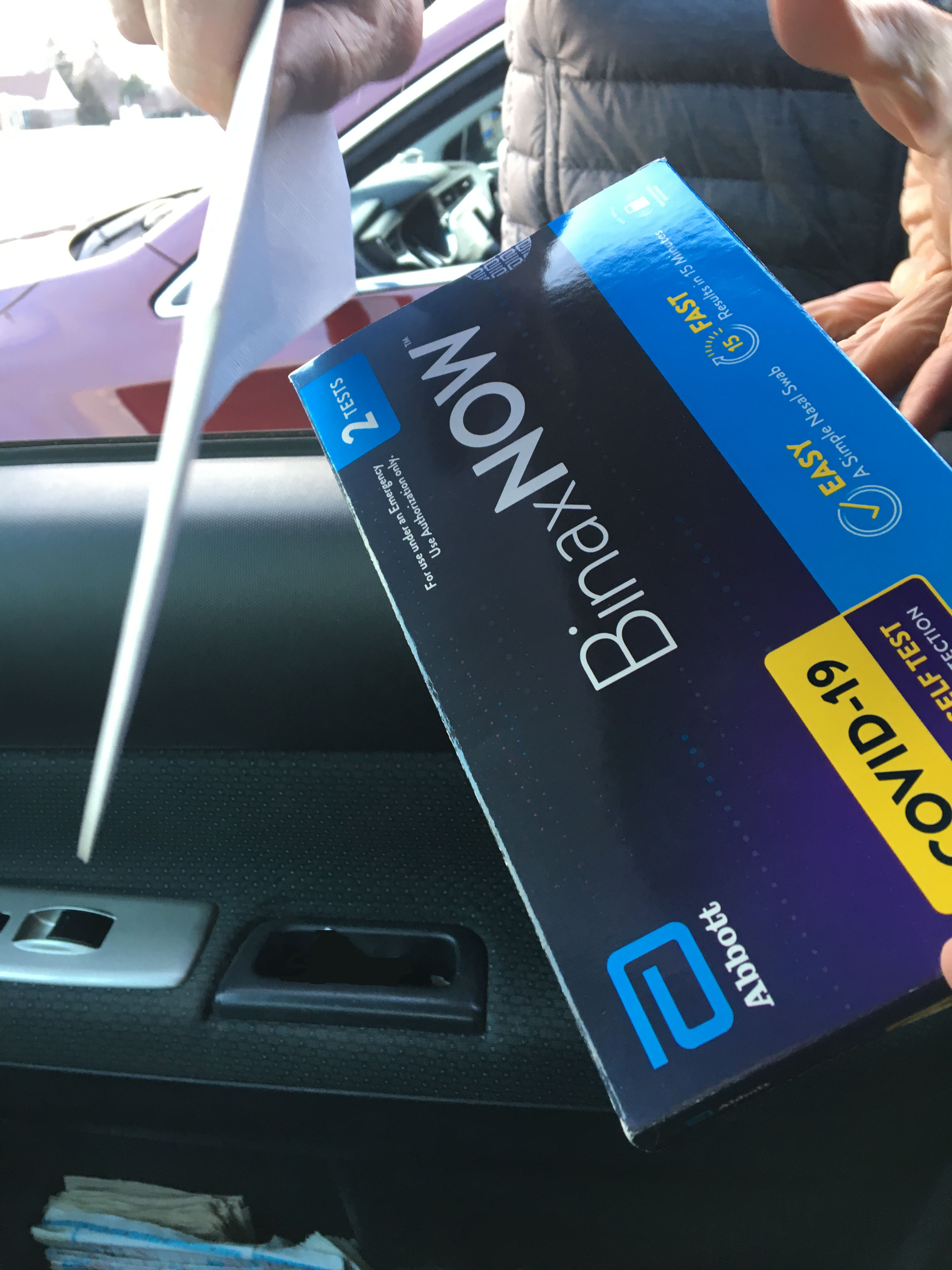
Each day we receive an alert on our phone. Exposure Notification Available. Recently, when Kerri officiated a wedding, we both took two Covid tests to make certain, while also vaccinated, that we were negative. Dangling from a clip on the side of our refrigerator are masks. Many, many masks. We put in our special box the flag they gave us on the day we were vaccinated. Wave the flag if you have a question or need help. The artifacts in a time of pandemic, now so normal that we barely see them.

This weekend, with all of the observances of 9/11, I watched a tour of the 9/11 museum. A crushed firetruck. A shoe. Xerox pages with faces and the word, “Missing.” Del whispered into my ear, “Pay attention. This is why I kept my display.” The tour guide said, “So we never forget.” The Luger. The Nazi flag and insignia. The medals and ribbons. The reason Del and Dorothy retreated to the mountainside, the reason they simplified and built a life of quiet and peace, the reason he kept his glass-cabinet-display. So they wouldn’t forget. The horrors that people enact upon each other in the name of…righteousness, control. Superiority. The madness people embrace when they are angry or scared. The lies so easily told and so hungrily gobbled.

People are capable of great things. We know because those things are meant to draw us together. They unite us. Great art.

People are capable of appalling acts. We know because those actions are born of and meant to divide. They rend us apart.

Del lived through the full savagery of what people are capable of doing, one to another. He came home and with Dorothy lived an intentional life of quiet, on the mountain, out of the main. I’ve noted of late that Kerri and I talk often, dream, of a mountain retreat. We are witness of what people are capable of doing, one to another. We are also witness of and generators of the beauty meant to draw people together. Her music. My paintings. The things people are capable of doing, one for another. We are surrounded by artists and art. Both/and.

History repeats itself. The story is told – again and again – through the art and artifacts we display, the symbols we keep. The memories we carry forward. Guernica. Empty shoes. A simple mask.

read Kerri’s blog post about ARTIFACTS

Offer The Chair [on Flawed Wednesday]

“Indeed, the effect of the forum is all the more powerful if it is made clear to the audience that if they don’t change the world, no one will change it for them.” ~ Augusto Boal, Games For Actors And Non-Actors

Many of my pals in the theatre turned their noses up at me when I began doing work in corporations. They thought I was yet another theatre artist doing improvisation-games with the terminally neck-tied. I was not. My work was more in the tradition of Augusto Boal than Keith Johnstone. Some of the best plays I’ve ever facilitated, some of the most profound pieces of theatre I’ve directed and witnessed, happened in board rooms, classrooms or conference spaces. Here’s how I know: the actors and audience were one-and-the-same. Their play was personal. When they left “the theatre” they did not leave the nice story behind and end the evening with a cocktail. They were disrupted. They had seen something that could no longer be ignored or deflected. The hard work was about to begin.

People yearn. People entrench. People plant their flags and claim the most ridiculous territory. I’ve seen teachers come to blows over an overhead projector. I’ve seen lawyers undermine colleagues to gain dominion over a swiveling chair. And, the chair or the projector are never really the issue. The issue is usually an abstraction. Pecking order. Boundaries. Alliances. People have killed each other over a pair of shoes. It’s not the shoes but the status the shoes represent. Abstraction and illusion.

People are generally unconscious about the reasons beneath their passions. I’ve met a score of dedicated meditation practitioners who meditate to control their thoughts rather than realize them. Once I led a group of teachers through the ritual they enact each morning before the arrival of their students. The question was, “What are you preparing to do in your day?” Their answer was unnerving and revolutionary: they were preparing to control the kids. Teaching and learning were secondary.

We are witness to a country-wide communal piece of theatre, an unconscious play. The issue is not the mask. The issue has never been the mask. The issue is, I suppose, people feeling out of control, imposed upon. Fearful. They are, with their bare faces, making a stand. Drawing a line in the sand. That “no one can tell me what to do” might as well be “I am losing control over my life.”

And, as is always the case, as with the office chair and the overhead projector, refusing to don the mask does not really address the real issue, it merely deflects it. The energy and action is focused on non-sense. And when non-sense rules the day, the action taken actually brings about the thing-most-feared. Loss of control. The pandemic continues, the children are being taken, the economy suffers, the community fractures. It’s a lengthy list.

The lesson in the office chair wars and the overhead projector games is always the same. No one wins. Everyone loses in a toxic tug-of-war. The chair might be yours today but it will be theirs tomorrow. The game only ends when one of the players offers the chair to the other or the projector becomes a reason to share. The same will be true of the mask wars. People will die, the pandemic will continue until the mask becomes a generosity. Then, low-and-behold, the virus will abate and real control over our destiny will be within our grasp.

I hope that, like the lawyers or teachers who were brave enough to walk into the real story, to stand face-to-face with a dysfunction, that we meet our story and ask, “Why would so many sacrifice so much over a little piece of cloth?” An overhead projector. A pair of shoes. A chair that swivels…

read Kerri’s blog post about MASKS

Welcome Home [on Not So Flawed Wednesday]

The people that bought my parent’s home flipped it in a few months. They remodeled the bathrooms and updated the kitchen. They refaced the fireplace. They pulled up the carpet and refinished the hardwood floors. It was gorgeous. It was a surprising chapter of what has become my unintentional 2021 mediation: home. At the beginning of the summer, after days of hauling and cleaning, as my last act before leaving for good, Kerri suggested that I crawl into the cedar closet of my boyhood bedroom (I loved sitting in that closet as a boy) and sign my name. A sweet goodbye and thank you. Home is a memory.

It was only a few months ago that we moved my mom into her “new home.” She wanders the halls and we know that time is the only cure for what she seeks. Home, for her, will be a feeling that finds her, at last, only after the wear and tear in the rooms is of her making. Her pacing is wearing a trail, carving a path. Home is a feeling.

In the past 8 months my dad has moved three times into his “new home.” Memory care facilities are surprisingly inept at caring for elders who’ve lost their memories. High price. Low care. Everything is a business: a theme/rant for another post. In his current home, finally, he feels safe and, after a trip out, wants to return to his room. Home is safety.

Before his memory was gone, we took my dad back to his hometown, Monticello, Iowa. His primary need was to show us the tiny Home that his grandfather built. It’s the place where his dad was born. It is across the yard from where he was born. His tales were glorious in their hardship. They needed very little to make good memories. Today, the tiny house built with no money and huge heart is a storage shed but through my father’s eyes it was nothing short of a castle. I will always savor the image of him standing in front of his Home. Home is an origin and an anchor.

When we pull into the driveway, after a long trip or a jaunt to the store, we always greet our home, “Hello, happy house!” Our home feels alive, a presence or being. The walls carry our story. The rooms remember and replay the voices of her children. We’re packing a lot of story into the walls of our old house. It is packing a lot of story into us. Home is a relationship.

When we came upon the woodpecker-condo-tree, Brad said in jest, “Why don’t you stick your hand in there.” We laughed. “I told him I’d be like the monkey with its fist in the coconut, I wouldn’t be able to let go of the critter inside and also wouldn’t be able to get my fist out of the small hole. I’d be stuck on the trail forever. The woodpecker condo would be my new home. Kerri and Jen were inspecting the perfect circles. It felt good to be on a walk with them. It had been a long time since we’d had the chance to just hang out. Home is a friendship.

We had tacos at Jay and Charlies with the Up North gang. Jay showed us her new porch. We sat in the shade and drank margaritas and laughed. I told Jay that her porch and yard felt serene. She smiled and told me that it was her sanctuary. I was, for a moment, completely overwhelmed by how much life we’ve walked with these special people. Passages. We’ve shared and received so much support – immediate presence when need arose – from our stalwart gang. Sanctuary. Home is a community.

It’s just as the needlepoint declares: Home is sweet.

read Kerri’s blog post on Home Sweet Home

Let’s Get On With It [on Not So Flawed Wednesday]

It was a national campaign of the US Department of Homeland Security. If you see something, say something. The enemy is here. It is us. We pulled it from an episode of Grace & Frankie. Old folks have hair that grows in places it ought naught. Frankie plucks a hair from Grace’s chin. “How long has that been there?” Grace exclaims. “Frankie, if you see something, say something!”

Yesterday, I had a collision of experiences at the courthouse during my jury pool swim. First, I read an article in The Atlantic, by Tom Nichols, Afghanistan Is Your Fault. He wrote, “The soldiers who served overseas in those first years of major operations soon felt forgotten. ‘“America’s not at war” was a common refrain among the troops. “We’re at war. America’s at the mall.”’

He continued, “A serious people—the kind of people we once were—would have made serious choices, long before this current debacle was upon them. They would today be trying to learn something from nearly 2,500 dead service members and many more wounded. They would be grimly assessing risk and preparing both overseas and at home for the reality of a terrorist nation making its way back onto the international map.

Instead, we’re bickering about masks. We’re holding super-spreader events. We’re complaining and finger-pointing about who ruined our fall plans.

Next, I was among the many chosen for voir dire (the jury selection process). I was in the last group selected so the odds of my serving on the jury were slim. I sat in the courtroom and watched an amazing moment unfold. The judge said something that all Americans should hear. It aligned perfectly with Tom Nichols’ thoughts. A potential juror, a young man, claimed serving on a one-day trial would create hardship. He’d miss a day of work. The judge questioned him to get more context and then sat back, considered for a moment, and said this:

“Democracy is hard work. When I was young, there were three things that we had to do: pay taxes, honor the draft if called, and serve on a jury if called. All of those things create hardship. Taxes aren’t easy. The draft changed the lives of thousands of young people. Serving on a jury interrupts life. It creates hardship. Giving of yourself to the common good means serving something greater than yourself. It is an interruption. Today, there are only two of those things because there is no draft. My point is, giving of yourself to make this gorgeous system work is not easy. It is hard work. It creates hardship to ensure that our system, the oldest democracy in the world, thrives and survives for the next generation.”

America is at the mall. Meanwhile, democracy is hard work.

For a serious people, there is a center to our commons and, keeping it alive, takes a bit of self-reflection and sacrifice. Giving of yourself to the common good means serving something greater than yourself.

Divided we fall. It is a cliche’ but could not be more relevant.

The enemy is here. It is us. Bickering about the lesser while the greater slips from our fingers. “If you see something, say something” is predicated on an assumption: we are in service to something greater than ourselves. We are on the same team with a common, shared interest.

The judge sat back in his chair after his lecture and asked the young man, “Are you less capable of handling hardship than anyone else in this room?”

“No, sir,” the young man sat back in his chair, resigned.

“Good!” the judge exclaimed. “Now, let’s get on with it.”

read Kerri’s blog post about SEE SOMETHING, SAY SOMETHING