Help Them Smile [on Not So Flawed Wednesday]

I howled with laughter when she said it. “You can buy anything that looks like something.” She was referring to the sweet Italian sausage that was not sausage at all but made of plants. I thought she was making a political statement. We are solidly in the age of things-are-not-what-they-seem. Photos can be manipulated. Words that come out of mouths can be placed there, not by the speaker. Propaganda is called news and American cowboy culture does not see its full-lemming transformation. Sausage-not-sausage is everywhere!

“What are you laughing at?” she asked, placing the sausage look-alike in our basket. Linda made us a yummy vegetable hash that included the not-sausage and we enjoyed it so much that we left with the recipe. “The age of enlightenment is officially over,” I thought but did not say. Had I answered honestly she would have told me to “gear down.” The grocery store is no place for philosophical hoo-haw.

“Nothing,” I said, giggling.

Standing in front of the cold not-sausage-section, looking down the aisle at people masked and not masked, some wearing masks on their chins, I felt thrust out of all reality and into the tragi-comedy that is our times. Peter Barnes wrote a terrific play, a comedy called Red Noses about the plague that swept Europe in the 14th century. A priest and his band of fools traveling through the villages offering humor as the only relief for the fear and pain. They wore red noses.

“When people in the future look back at us, I hope they laugh,” I said.

“What?” she asked, furrowing her brow.

“We need a band of fools.”

If we could laugh at ourselves, we’d probably have a better time of life during the pandemic, I thought, as an unmasked woman sneered at my fully masked face. I wonder how we’d have fared had there been a red nose mandate? Protect your neighbor by helping them smile.

Kerri stared at me and smiled. “Don’t make me tell you to gear down.”

“Yes, ma’am,” I said. “I think we need Dogga food.”

read Kerri’s blogpost about ANYTHING AND SOMETHING

Stack Your Nickels & Pennies [on Flawed Wednesday]

From the school of if-you-are-sitting-on-the-mountain-you-can’t-see-it comes the hot mess we call healthcare in these un-united-united-states. Insanity never looks at itself and says, “I’m insane.” Our system of healthcare – and I use the term “system” loosely, is insane. In my sordid past as an organizational consultant I facilitated an experience called reverse design: ask people to design the worst system possible. The worst product imaginable. Hilarity ensued. None of those mad-mad sessions could have concocted what we call healthcare in the richest nation on earth. It seems the money has both blinded us and made us batty.

I just asked Kerri how much a postage stamp costs. “58 cents,” she grumbled, “And we got three mailings.” We finally achieved our get-out-of-jail-free card: a job with benefits. We canceled our ACA prison policy but, apparently, there was a one-day crossover in the billing cycle. I know a computer sent us the three-times-nasty-gram and spent $1.74 in postage to collect $.27. No human was involved though, having spent an inordinate amount of time on the phone with people paid to try and make sense of the nonsense, we’ve learned how numb the human mind can become when sense-making in a swamp of gobbledygook. We paid our debt online.

No human involved. De-human-izing. The Turing test is…a test of intelligence in a computer. Is the machine’s behavior indistinguishable from that of a human being? Hubris is a human quality that imagines the computer will become more like us while not recognizing that, in the process, we are becoming less like us. I doubt the computer will ever evolve to that point of pomposity. I suspect that the computer will someday recognize the folly of attempting to model itself after something so flawed as human intelligence. What intelligent machine would model itself on beings that seem incapable of creating a competent system for the care of its own health? No advanced intelligence would submerge its prime directive for the secondary intention of stacking nickels and pennies.

read Kerri’s blogpost about HEALTHCARE

Step Back And Realize [on Flawed Wednesday]

If you are like us, every day brings another report of a friend or loved one who has Covid. As someone recently said to me, “With Omicron, it’s only a half degree of separation between you and someone who’s carrying the virus.” I’d say, given the wave of people we know falling sick and reporting positive test results, it’s true. It’s no time to let down your guard.

On Saturday we watched a documentary film, The First Wave. It’s a film everyone should see. It chronicles the first few months of the pandemic in a New York hospital. It is shocking how, in a few short years, we’ve normalized hospitals being overrun. How removed we, the populace, are from the tangible horror of this pandemic. Refrigerator trucks used as temporary morgues. We stand today at 865,000 deaths and counting. People. By comparison, 620,000 people died in the Civil War. 418,500 US citizens, military and civilian, died in World War 2. We ought to be grieving instead of dividing. We ought to be reaching to help rather than peacocking our politics. This film will slap you awake. It will help you step back and realize what we – all of us – are passing through. It might help you grieve.

Kerri tells me that the woman in the next car thought she and 20 were doing a drug deal. He felt sick, needed a test and could find none. We had a few so they met in a parking lot to make a safe pass. While making the exchange, he handed her an envelope. Money for the phone bill but I’m sure it looked suspicious.

It reminded me of the time, many years ago, that Sam asked me to meet him in a parking lot. He rolled down his window and passed to me a sheaf of poems. The window went up. I was to tell no one. It was terribly vulnerable for him to share. I cried the day he published his first book of poetry. It was a titanic journey from fear-of-certain-shame to proudly publishing his beautiful work. He was transformed.

I imagine someday we will stand and look back at this titanic journey. I hope that I remember with fondness the story of Kerri and 20 making an exchange in the parking lot, the women one-car-over shocked by what she thought she was seeing, and we smile. Transformed. Remade as better people in a better community making better assumptions of each other. Stronger.

For now, as the credits rolled on The First Wave, we looked at each other and together said, “I’m exhausted.”

read Kerri’s blog post about THE EXCHANGE

Watch The Dance [on Not So Flawed Wednesday]

It was once a guilty pleasure. After a snowfall, through newly plowed streets, I’d tie on my red Nike shoes and go for a long, long run. In Colorado, the sun and the cold air play well together. Atmospheric sweet and sour. Run toward the sun in the snow quiet. Sensual pleasure. I’ve never felt more alive than during those treasured runs.

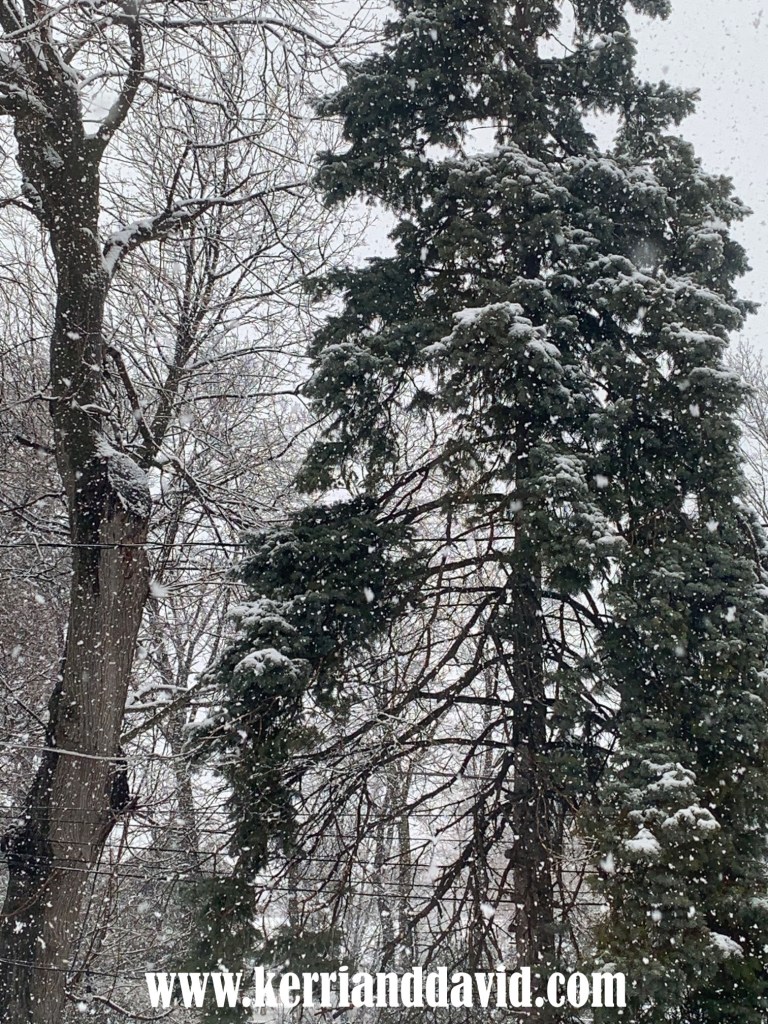
Our yard is a miracle of shadow-play after the snowfall. Between the trees and the tall grasses that grow along the property line, the cool blue sways and dances across the ice-white canvas, a visual conversation between limb and wind. It can be mesmerizing. Sometimes it reminds me of Wayan Kulit, the shadow puppets of the Balinese. An epic tale told on the screen of our front yard. The lesson of Wayan Kulit: we are not substance, not really. Rather, we are passing shadows projecting our story onto the canvas of our minds.

The mailwoman told me that she adored bringing our mail during the winter afternoons. “The light on the grasses,” she said, “they knock me out.” We wait until spring to cut back the grasses for exactly that reason. The pink, orange and purple light of a late winter afternoon makes the grasses luminous. And the shadows they cast! A gentle blue waving, aloha! Greeting or parting? Longing or fulfillment? I’m never sure.

Sylvia Plath wrote in The Bell Jar, “I thought the most beautiful thing in the world must be shadow.” Staring out our front window watching the dance, the frigid air and sun at play together, I think she was right. What could possibly be more heartbreakingly beautiful?

Share Appreciation [on Not So Flawed Wednesday]

“I’ve got an old mule and her name is Sal
Fifteen miles on the Erie Canal”

~Low Bridge, Everybody Down, music and lyrics by Thomas Allen, 1913

She’s a donkey, not a mule, yet I couldn’t help but appreciate the collision of power sources present in this photograph. From donkey to solar.

I’ve read that the innovations of the industrial age were meant to spare humans of muscle-toil. If an engine could power it, a human didn’t have to. The innovations of the information age are meant to spare us mental and sense toil: why stress to parallel park your car if the car can do it all by itself? Why add the numbers if the spreadsheet does it for you? Why look up information if Siri or Alexa can bring it to you? What does it now mean to stay in touch? Text and facebook and tweet and email and zoom and facetime and slack and chat and…call.

Oil, coal and gas are the energy systems of the past. They are donkeys and mules standing next to renewable energy sources like wind and power. It takes time for an infrastructure to be built. It takes time for people to wrap their imaginations around a different way. Do you remember the loud resistance in the early days of the credit card proclaiming that plastic would never replace paper money? That was not so long ago. There were similar angry voices declaring the auto-mobile was a flash-in-the-pan. “Nothing will replace the horse!” Our local supermarket just installed banks of electric car charging stations. Energy systems are slowly moving away from grids: the power source and the property will (mostly) be one and the same.

Industries, like people, either adapt or die. Most retail chains that came late to online shopping are going or already gone. Many have said that they didn’t see the change coming. Or that they couldn’t imagine a world in which people bought stuff without first touching it. Cars are in vending machines. Isaac Asimov would have loved it!

Did I mention that the solar panel in the photograph senses and moves with the sun? As it turns out, the donkey does, too. Much for the same reason. Only, for the donkey, the heat of the sun feels good and I doubt the solar panel cares or feels anything. Sensing and feeling are still on opposite sides of the change-line. At least so far. There may come a day in the not-so-distant-future that the donkey and the solar panel share appreciation for the heat of the sun. The donkey will wag its tail. The solar panel will stretch and sigh. The stuff of children’s books or sci-fi. At least for now.

read Kerri’s blog post about DONKEY & SOLAR PANEL

Choose How [on Not So Flawed Wednesday]

My friend’s children are having children. The top-of-the-list advice my friends offer their children, now parents themselves, is this: it goes so fast. Appreciate every single moment. Love every phase. You will blink your eye and they will be grown and gone.

I lost my dad in September. I have, like most people who’ve lost a loved one, spent much of the time since his passing remembering and reflecting. It’s a mixed bag of treasuring moments and wondering why I didn’t fully appreciate others. It is true, you don’t know what you have until it’s gone.

What is so hard about appreciating – fully appreciating – the limited moments of your life?

I used to facilitate an exercise. It had four phases. Working in small groups, the first phase was to have a group member identify a problem in their life and then tell a blame-story about the problem. The rest of the group helped by supporting the person in their story of blame. The groups howled with laughter. Blame is fun. It’s addictive, like sugar.

In the second phase, the groups tried to “fix” the problem. The serious, concerned faces puzzled possible fixes but inevitably dissolved into more laughter: there’s nothing like trying fix a problem to create more problems and loop back into a juicy blame story.

Phase three was simple: I asked the original problem-story-teller to retell their story as a story of choice, not blame. I asked the other members of the group to support the teller in their story of choice. Silence ensued. And then, quiet presence as the new narrative – the story of choice – slowly inhabited the room.

Blame stories are like too much candy. They are easy to eat and yet have no real sustenance.
Stories of choice are much harder to tell but they are rich in awareness and appreciation of the moment.

We never arrived at the fourth phase: stories of opportunity. Activating choice. The notion of taking responsibility for choices always stopped the exploration. Our conversations about choice-avoidance usually filled the time.

What we gain in blame, we lose in appreciation of our moments. In order to taste the moment, one must first choose to be in it – and then choose how to be in it.

Grief is a phase to be loved, not avoided. As is the celebration of a first birthday. A new life. A lost love. A full spectrum. Taste every moment.

read Kerri’s blog post about MOMENTS

Story A Romance [on Not So Flawed Wednesday]

The town was mostly deserted. The streets alive with the light of christmas, almost past. The brink of the moment after. The birth of a memory. We strolled the empty streets. We took our time peering at window displays and pressing our faces to the glass to look at the old-time soda fountain. It was quiet. The night was warm. There was, at that moment, no one else on earth.

“It’s like a Hallmark movie,” she said.

“No, it’s like the set of a Hallmark movie. All the actors have gone home.”

My comment made me smile. Walking down the empty streets, alight and sparkling, perhaps we were the actors on this set. It was our scene to play. The actors had not gone home. The actors had just arrived on set. It was ours to make special, comic or tragic.

Actors on a set. Everyday. Somedays, it is more apparent than others.

“Everyone is just making it up,” Quinn used to say and laugh. Just so. We held hands and decided our story was – is – a romance. We couldn’t have chosen a better set.

read Kerri’s blog post about THE TOWN

Note The Beautiful [on Not So Flawed Wednesday]

There is a genius in simplicity.

Lately, one of the conversations swirling around me, a conversation I very much appreciate, is about beauty. What is a beautiful building? What makes a software beautiful? Certainly, beauty is subjective though I suspect a sunrise over the ocean is beautiful to all. A baby’s smile. A first kiss.

We are surrounded by noisy advertisements telling us what is (and what is not) beautiful. By this standard, most of us fall into the not-beautiful category. Though, deep down, we know, that the real test of beauty is not in what is concealed but in what is revealed. A warm heart is more potent than skin creme or make-up.

My niece had a birthday yesterday. She is on this earth to help people. She is creating a beautiful life. She probably doesn’t know it – and, that’s a mark of true beauty – it doesn’t need to call attention to itself.

Every collaboration I’ve had with MM was beautiful. We had fun. We explored ideas. We have nothing but respect for each other. We’ve made each other better people, better artists. When I revisit any one of the many projects we created together, I smile and feel rivers of gratitude and pride. A memory that inspires a smile is the very definition of beauty. It brings the goodness of the past into the present moment. Light travels.

20 is a master of the beautiful because he knows the power of simplicity. A heart shape torn from a piece of paper – acknowledging grief that goes beyond words. A construction paper bow. He’s not forgotten the lessons he learned in kindergarten. Laughter, he knows, is the most beautiful gift of all and we receive it from him weekly.

What makes a design beautiful? Aspen leaves shimmering in fall. I’ve stood in front of paintings by Picasso, Matisse, John Singer Sargent…and cried. They were so beautiful. I’ve held Kerri’s hand, walking on a trail, and wanted the moment to never end. Simple.

read Kerri’s blog post about THE BOW

Consider The Donkey [on Not So Flawed Wednesday]

What you can’t see are the barriers and signs on either side of the wet cement declaring, “Sidewalk Closed!” I took a break from work, came down the stairs and Kerri said, “Some a**hole just walked across the wet cement.”

When the waterline to the house broke, when the process of fixing it became complex, when the heavy machinery arrived and the crew size doubled, when the guys from the city arrived to observe and inspect, the first thing the big machinery did, before digging the very-deep-moat, was to break out the sidewalk. And then they broke out the sidewalk to the porch. And then they trenched. And then they drilled a hole through the foundation of the house. That’s when the new pipe was installed. Those guys worked into the night. They were stalwart and steady.

The next day dawned and we saw in the light of day the destruction the fix caused.

Our front yard looks like a giant gopher dug a tunnel from the house to the street. We’ve considered finding a giant inflatable gopher but rejected it as “over-the-top.” Sometimes we have standards. A giant gopher is a step too far. The theory beneath the inflatable gopher is sound: if you can’t do anything about it, lean into it. We put a round-a-bout sign in the backyard when it became apparent that our dog was a secret velodrome maker and nothing we could do would stop his capacity to carve circles. It helped that he almost always circles in the same direction so the sign makes some sense. To us.

“We’re those people,” Kerri said, hands on hips, surveying the front yard damage. The grass is gone. Straw and mud are our new normal. “We look like a stable,” she said.

“Maybe this is the moment to get that donkey you’ve always wanted,” I replied. She really does want a donkey but the timing of my suggestion must have been off. She huffed, gave me the evil eye, and went inside. I counted to ten before following. Sometimes my brilliant suggestions take a few moments to penetrate and it’s best if I’m absent during the revelation.

The footprints across the concrete was too much to bear. That little patch of temporary concrete was the only new and unblemished area of the front yard. It’s as if our giant sore thumb had a nice and newly polished nail. The cement-stepper made certain that the destruction was complete: blemish, blemish everywhere. Giant gopher, old (donkey-less) stable, with a touch of marred cement.

The new permanent cement will come in the spring. “We’ll put up better barriers,” I said.

“We’ll sit out there with big sticks and a bad attitude,” Kerri replied.

Our reputation is certain to grow. “We really are those people,” I smiled. The evil eye – twice in a few short minutes – wiped the grin off my face. “I think I’ll go back to work,” I said and headed up the stairs, saying, “Think about the donkey.” Sometimes it takes a few minutes and a little prompting for the brilliant penny to drop.

read Kerri’s blog post about WET CEMENT

Sing Red! [on Not So Flawed Wednesday]

We were awake much of the night so we ate bananas and talked. Our conversation rambled over miles and covered acres of territory. In the wee-hours, Kerri explained to me the compositional elements of a symphony, the placement of a solo in a piece, and the foundational support offered by the other instruments. In other words, it takes a village to raise a solo.

There’s a famous story of Leonardo Da Vinci, paintbrush in hand, staring all day at his mural-in-progress. Finally, after hours of staring, he approached the wall and added to his composition a single brushstroke. If you are a painter you understand that the story is not about the single brushstroke but where it was placed. Color lives or dies relative to other color. Leonardo spent his day assessing relationships.

We are new gardeners. It may seem silly to expert growers, those who’ve been around the farm a time or two, that through the fall, we jumped out of bed every morning, ran to the kitchen, to see our cherry tomatoes. When we pulled the plants at the frost, the vines were laden with green tomatoes. Not to worry, Kerri told me; put the little green orbs together in a sack (ours landed in Tupperware and never left because we delighted in watching them) and they will make the journey to red. They’d help each other to ripen. And so it was. Each day the palette changed until, one day, the entire tomato choir sang red. I am filled with wonder.

It is a cliche’ that every great journey begins with a single step. A single step and lots of encouragement. A single step and a team of support. Explorers need financing. Too often we place the accent on the single player and ignore the symphony. We get a big kick out of the crowds of individuals standing in line to stand atop of Mt. Everest, thrusting their hands like Rocky Balboa in the very-thin-air, playing conquerer of the mountain, forgetting that a Sherpa carried their gear, set up their tent, cooked their food, set their ropes, tended their wounds, warmed their tea, hauled away their waste and sometimes carried their bodies back down when they couldn’t make the round trip.

No one walks this walk alone. Individualism is like Leonardo’s brushstroke: it only works if it furthers community, when it makes life better for all. How’s that for a paradox!

We are tomatoes, all. Green and small by ourselves. But when brought together in our little Tupperware crossroads, red, red, red, red, red!

read Kerri’s blog post about TOMATOES!