Sit On The Horizon [on KS Friday]

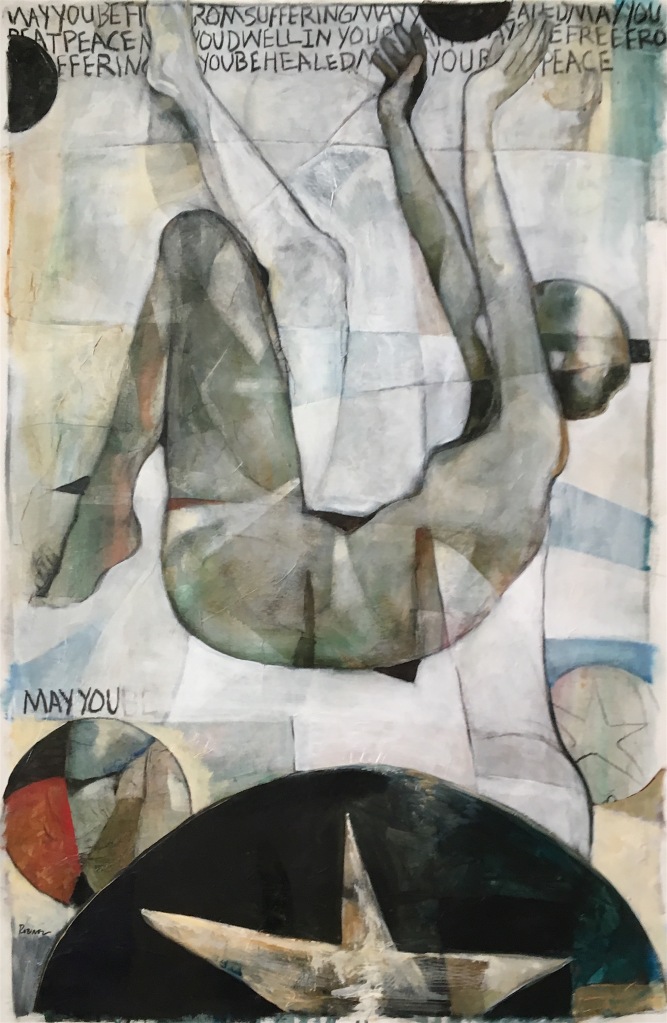
We are the first wave of humans to experience a pace of change so fast that the media of our memories becomes irrelevant – and sometimes inaccessible – even before the paint on the memory is dry. A crank driven film camera caught a toddler version of me running down the hall in my footie pajamas on Christmas morning. Images rare and, at the time, expensive to develop, our technology makes those films seem prehistoric. Kerri and I work on computers that are separated by over a decade. Mine works lightning fast and hers…is teaching her patience.

I’ve recently been pondering a quote attributed to many: “We shape our tools, and thereafter our tools shape us.” Facebook is a tool. Twitter, too. This screen that opens entire universes for me is a tool. These screens that pull us into them are tools. Our stories, our expectations, our experience of time and space and each other, shaped by our tool. This river runs so fast that front page news is less than an afterthought tomorrow. We take so many photos and movies that we can’t remember taking them. It’s a million miles from the days of precious and rare footage in footie pajamas.

Kerri found the bin. It holds many treasures. Movies that her dad recorded of her first album release concert. Early performances. Recording of movies complete with commercial breaks (before tevo was a glimmer in its inventor’s eye). Luckily, we have a VHS player. And it works! Some night, very soon, we’ll plug in the player and I will get to see her, at the very beginning of her career, long before we met, play.

Reaching back. Racing forward. Little miracles of remembrance rendered obsolete by faster and smaller miracles of moment-capture.

We sit squarely upon the event horizon, our memories both a bin found in the basement and an intentional composition – Instagram stories, Facebook memories, a story shaped by our tools, tools shaping us, a creative act.

read Kerri’s blogpost about THE BIN

Kerri’s albums are available on iTunes & streaming on Pandora

let me take you back/as it is © 2004 kerri sherwood

Call It Realism [on Not So Flawed Wednesday]

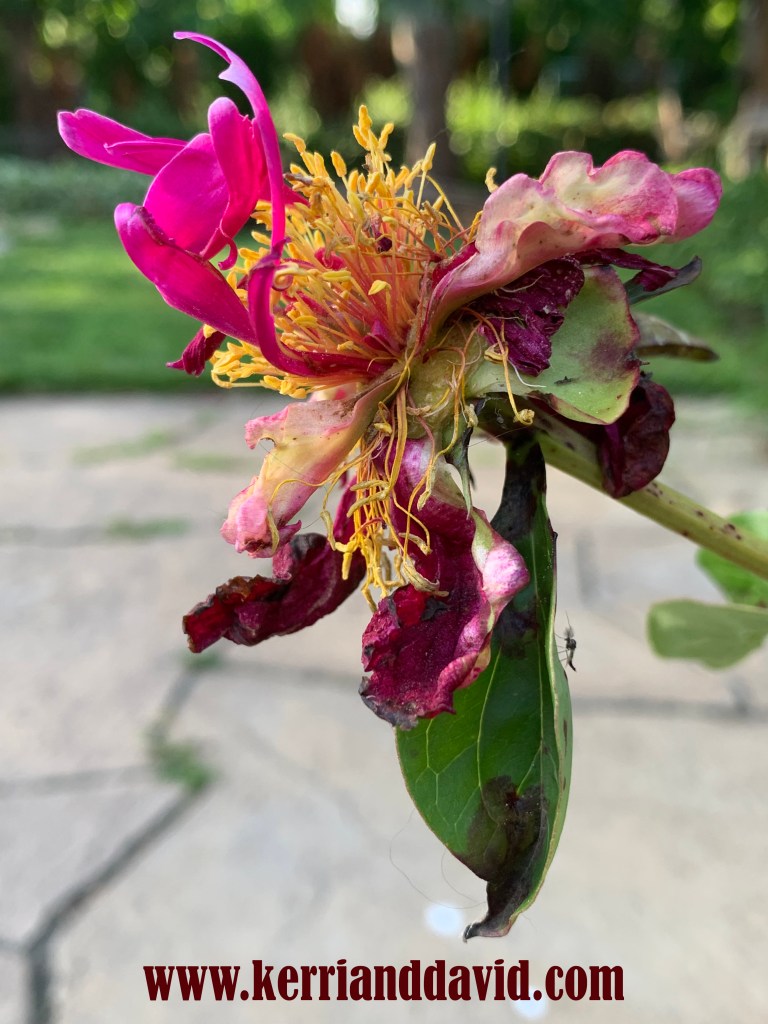
This garlic could have been painted by Jan Vermeer. To my eye it looks like the work of a Dutch master, an artist more concerned with realism than the ideal.

Art that reveals the beauty in the ordinary. For a few weeks in my surly youth I studied with a realist painter. I was wowed by his technique but could not yet grasp his dedication to capturing the everyday. Only later did I come to understand that his art was not about the technique but about bringing attention to the experience of the everyday. He rejected the aloof and desired to pull art down from the pedestal so it might reflect the lives of the “common people.” He believed that people needed to literally see themselves in the paintings to have access to the painting. They needed to see their hardship and toil as well as the objects that surrounded them.

Bertolt Brecht believed the opposite. In order for people to have access to the deeper messages of a play, they needed to be removed from their circumstance. So, in his way of thinking, people are more capable of seeing themselves in a piece of science fiction than in a reality-mirror.

David is working on a re-imagining of Pirandello’s play, Six Characters In Search of an Author. One of the questions of the play is, “Who is telling your story?” And, how are they telling it. I reread the play and was struck by how relevant it is to our times.

The beauty in the ordinary. The turmoils and struggles of the everyday. Ours is a time of tumultuous story tug-of-war. I wonder, in a hundred years, what historians will write about our time. I wonder what aspect of artistry – if any – will be considered “realism.” As defined by Vermeer and Pirandello, it’s to reach across a social line, from the privileged to the working class. For Brecht it is spatial: step out to look in.

One thing is constant, while reaching across time and artificial boundary, it is always the role of the artist to help their community ask the questions: Who is telling my story? Whose story am I telling? What is the story that we are telling?

I imagine those someday-historians will write tomes on our messy struggle to sort out what is “real” and what is not.

read Kerri’s blogpost about GARLIC

Look Out [on Two Artists Tuesday]

Perhaps the most useful and profound lesson I’ve learned happened under the water. I was doing my first night dive. I was scared. I was not yet a confident diver. As we descended the world became inky black. All I could see was where I pointed my light.

It was that simple. I can see where I point my light. That’s it. And, more to the point, I choose where I point my light. I have the capacity to choose what I see. I can…and have…chosen to focus on hardship and lack. I can…and have…chosen to focus on what I love. On any given day my focus bounces full spectrum between complaint and appreciation. And then I remember: it’s my light, where do I want to aim it?

There’s a second aspect of the lesson. My focus is a beam. My light is not all encompassing. Each of us looks at life through a soda straw. None of us has the big picture. That’s why the commons is so important. In order to know what to do, we need to bring our many perspectives together to approximate something close to a full picture. Rather than fight about disparate points of view – who is right – it’s more useful to try and assemble all of those differing views, like the pieces of a jigsaw puzzle, into a bigger picture. No one wins when the pieces refuse to interlink.

With two broken wrists the cello became impossible to play. It has sat in her studio, the case unopened, since her fall over two years ago. I remember the day we bought it. We were early in our relationship, not yet married. I knew she was having cello dreams. We went to the music store for some other purpose, I can’t remember. The cello was sitting in the corner. She sat. She began to play. It was a perfect fit. And, although we could not afford it, we also could not leave it behind. It was a perfect fit.

Our lives these past two years have been a descent into dark water. We’ve worked hard to shine our light at our good fortune in a dark and inky landscape. As we make our way back to the surface, we are cleaning out. Taking stock. “The cello needs to be played,” she said, deciding to sell it. “I’ll never be able to play it, now.” She took photographs of her cello. Sent out a message through the network.

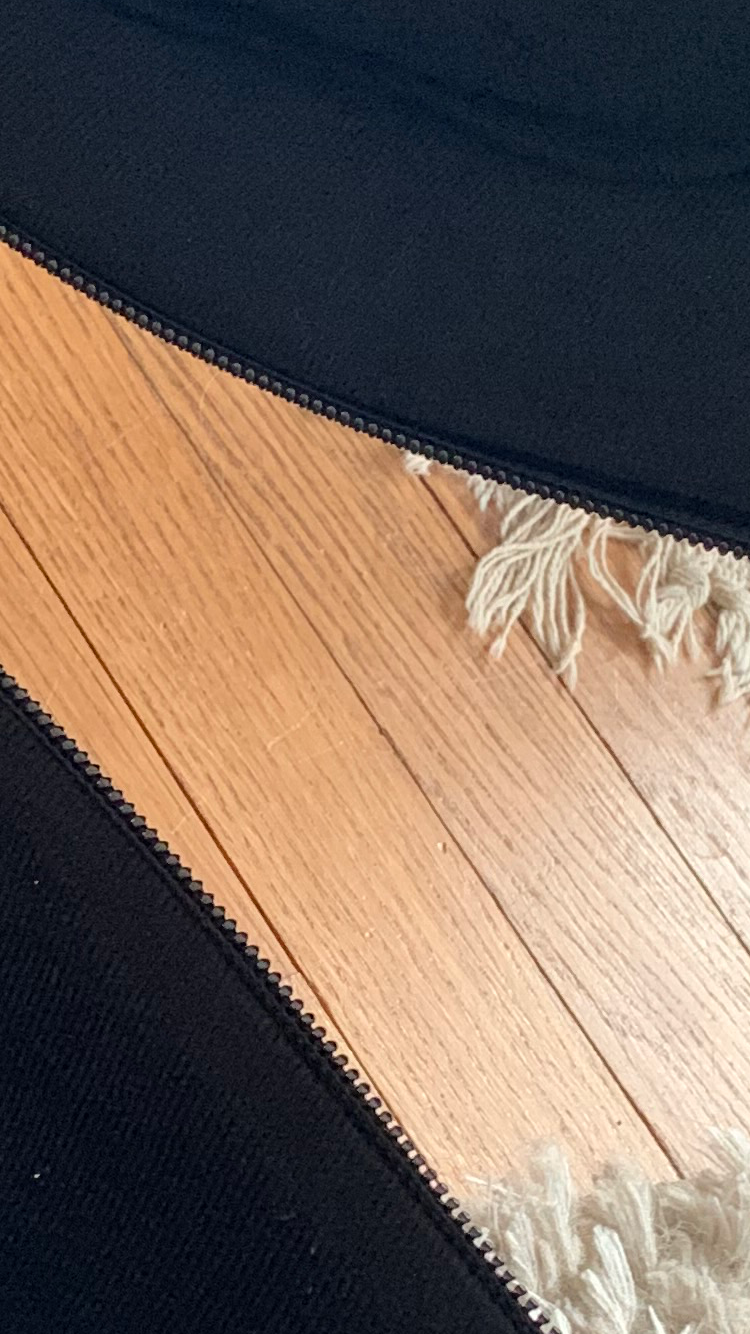
At the end of the day she showed me the photo. Edges. The view from inside the empty cello case, looking out. A slice of the world visible outside the case.

What’s “out there” is rarely clear. We see a small slice. It tickles our curiosity. The cello dream moves on making space for…? Who knows? We can’t see that far. In the meantime, we keep our eyes and hearts uplifted as we slowly kick our way back to the surface.

read Kerri’s blogpost about EDGES

Love The Wreckage [on DR Thursday]

It sounded like a thousand bees hitting the glass, trying to break the pane to get inside the house. Hail. Little pellets driven by the wind, appearing from nowhere. The last time I’d looked out the window it was sunny. And then, the rain. I stood at the window and watched the water find its path of least resistance from sky to glass pane to ground.

I was grateful for the bees hitting the window. The hail called me from the other world and back into this reality. When I work I tend to be too focused. I’ve always been that way. If I’m painting or – these days – assembling Powerpoint slides to map an idea or make a point – I am no longer available in this world. In my past life, you could come into my office or studio and sing an aria and I’d miss it. My focus was like a fortress.

Years ago when I lived in L.A., my friend Albert would “drop by” my studio every afternoon and make me join him for a cup of coffee. He was the best of friends. He knew I would not – or could not – come out of my other world without some prompting. He was like the bees hitting the window. Intentional hail. He’d sit with me, sipping coffee until I once again became verbal, until I wandered out of the fortress. I think he saved me. It’s too easy to get lost in a fortress.

Yesterday Kerri and I had a “talk.” I confessed that moving to Kenosha was like being a brakeless semi-truck hitting the sands of a runaway truck ramp. Full stop. Pieces of me flew everywhere. All momentum stopped. Wreckage and a broken nose. And, there, the lessons began.

I fought hard to keep the fortress intact but there were too many pieces scattered across the gardens. Light was pouring in. Focus became less about blocking out disturbance – disappearing – and more about attending. Giving attention. There’s a balance and for me it is a high wire act everyday. Learn to walk the wire of presence rather than disappear into a myopic fortress.

Pieces scattered akimbo do not reassemble but they do provide nutrients to the soil for new growth. Spring is calling. New shoots of green are poking from the crusty ground. The hail calls me from my creation. The fortress was a dark place. I much prefer the ruins and the budding gardens fed by the driving rain.

read Kerri’s blog post about RAIN

in dreams i wrestle with angels © 2017 david robinson

Gaze At The Seam (on KS Friday)

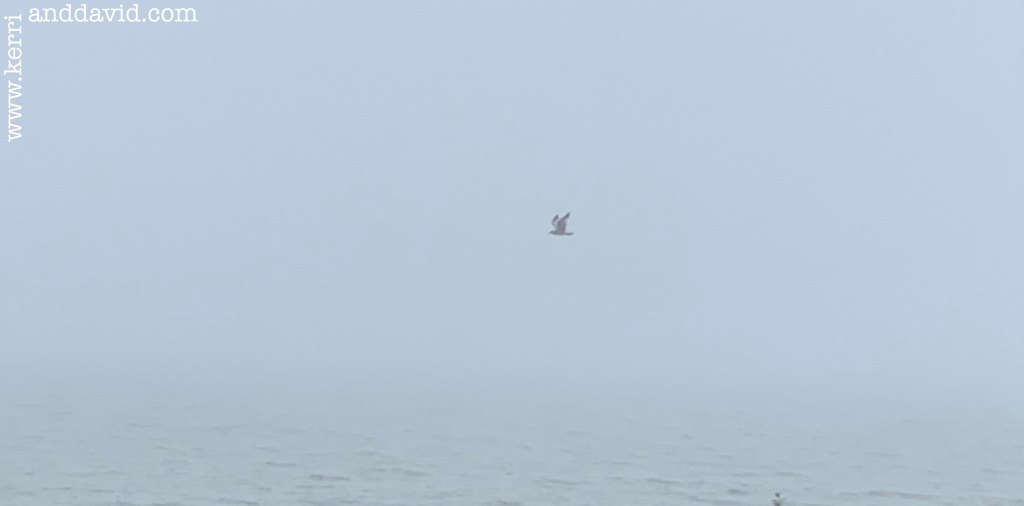
Some things are hard to grasp. When that’s the case, it’s a good time to look at the sky. You’ll not find many explanations up there but gazing at the seam between us and the infinite-universe can, in moments of clenched fists, bring some perspective. As Kerri says, “It just keeps rolling.” No problem can remain large when measured against the seam, that fragile ozone layer that makes breathing and every current dilemma possible.

Sometimes when I look at the sky I wonder how many people across the ages have engaged in seam-gazing.

I imagine, one day in Kansas, 1932, as his fields turned to dust, a farmer looked to the sky. All his appeals for rain exhausted.

I can’t imagine how many women looked to the sky over the 100 years of protests and parades before being afforded the right to vote.

Can you imagine how many African-Americans looked to the sky as slaves in a nation that boasted to the world about its freedom and equality?

I look to the sky every time another state in the union passes legislation prohibiting discussions about our history, so fearful are we of critical race theory and the equality that we profess.

I find nothing in the seam that explains anything, but the clouds remind me that it just keeps rolling and, since I believe we tend toward wholeness, I catch a whiff of hope in all the blue and moving puffy white.

Someday, somewhere down the historic road, someone will look to the sky, in a post-nonsense era, and will, perhaps, imagine me staring back. To them, from their perspective, my unanswerable questions will have found resolve. They will have questions of their own, no doubt, but won’t it be nice to have a new set of questions to thrust at the seam?

read Kerri’s blogpost about THE SKY

Little By Little (©2022 Kerri Sherwood featuring Dogga)

Let Fly [on Two Artists Tuesday]

“We have to continually be jumping off cliffs and developing our wings on the way down.” ~ Kurt Vonnegut, If This Isn’t Nice, What Is?: Advice For The Young

It is now my opinion, based on life’s experience, that it you don’t find the cliff, the cliff will find you. Wing development is the name of this game. Hide in the closet, bury your head in the sand, drink yourself to oblivion, pretend the monster is not at the door, and you’ll discover in your last moments that looking the other way was, in fact, your cliff.

Master Marsh once asked me why I had the need to run and jump off every cliff. At the time I said, “I don’t know!” My latent response comes straight from Vonnegut: wing development. Apparently my wings took their sweet time developing and needed some extra cliff-age. And, as we all know but are too polite or arrogant to admit, wing development never ceases. There’s always another cliff until there’s not.

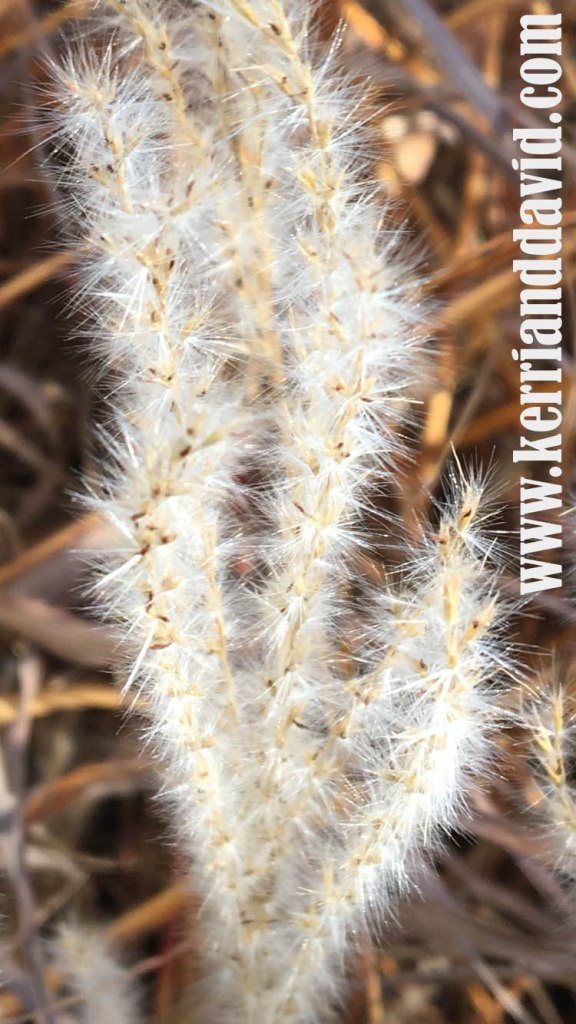
We had a rare warm day so took a walk on our favorite trail. The brilliant raw sienna of the empty pod caught Kerri’s eye. While she took photos of the pod I thought about the thousands of seeds it once held that took flight on the wind. A few certainly found fertile soil. Most did not. That’s the idea behind Kurt Vonnegut’s advice. Don’t hoard your idea seeds. Put them out. Audition for the play. Submit your story. Offer your idea. There’s great truth to the advice: your job is to put it out there, not to decide whether or not it is good enough. Explode the pod rather than protect the seed.

Greg recently told me said, “it doesn’t have meaning until it’s published.” He wasn’t speaking about publishing in a newspaper or by Random House. Sending an email is an act of publishing. To text is to publish. Greg was referring to sharing. It has no meaning until it is shared. And, sharing your creations can be -and often is – vulnerable and scary. Giving a speech is terrifying to most people. Dancing, painting, composing a song, playing a solo, offering your idea in a meeting…all are acts of publishing. All are potential cliffs to jump off.

Explode the pod. Let the seeds fly. The wind will carry them. Some will find fertile soil. Most will not. Wing development is easier when you realize that you are a pod of ideas and not a judge of worth or value.

read Kerri’s blog post about THE POD

Call It An Art Piece [on Merely A Thought Monday]

When the ancient television antenna tower fell in the windstorm, it snagged on the neighbor’s fence and tilted precariously above their garage. We did not know what to do – so we did what we always do in similar circumstances: we texted our tribe with a rousing, “HELP!!! And then we asked, “What do we do?”

No one had a clue. This was a first. The insurance company was certainly clueless. Their advice was to (I’m paraphrasing and scrubbing for courtesy) let it fall. The fire department didn’t know. We called a contractor friend who recommended finding a crane. We called tow trucks. We called antenna companies who told us that this problem was out of their league.

A single, sensible, and fantastic piece of advice came as it always does, from Master Marsh. “Just leave it and tell the neighbors it’s an art piece: The Death of Broadcast Television.” Had it not been dangerous, I’d have taken his sage advice. I’d have gone so far as to make a plaque for the base. I’d have sent out a press release. Our art piece might have one day been moved to the permanent collection at The Chicago Art Institute or been featured at Biennale Arte 2022. It would be necessary to compensate the neighbors for a piece of their fence – since it is a crucial element of the statement – but that is a minor detail and certainly worth sorting out for such a prestigious end to our dilemma.

It did make me wonder how many of my life’s tribulations would have been better solved with a bit of rebranding? Call it an art piece and make it all better with plaques emblazoned with clever titles. I laughed when I imagined moving through my life’s calamities as a gallery show. Children asking their grandparents, “What is broadcast?” The raging waterfall through the ceiling would be fantastic!

In the end, rather than art, we opted for a tree service. These amazing guys came, sawed up and carted away our precarious antenna in less than 30 minutes. An entire era of technology disappeared in less than half an hour.

As they say, in our times, the only constant is change and, if you keep asking the right question, “What do we do?” a proper answer is certain to find you. And, if not, there’s always the art route.

read Kerri’s blogpost about BROADCAST TELEVISION

Dance The Future [on DR Thursday]

“There are more things in heaven and earth, Horatio, than are dreamt of in you philosophy.” William Shakespeare, Hamlet

We opened the oat milk ice cream container and read the message printed on the protective cover. It made me laugh. I appreciate marketing messages with a sense of humor. The best news, beyond the giggle-inducing package, is that the ice cream was delicious. Coffee. The woman in the store recommended Salted Caramel but we were on a mission to find some coffee ice cream.

We watched some of the events at the recent winter Olympics. I always appreciate watching the athletes, prior to their competition, imagine their path down the mountain or performing on the ice. They quietly dance the future they envision. They “see” themselves perform. Actors do it, too. Jim taught me, rather than push my voice so I might be heard by the people sitting in the back of the hall, to walk to the edge of the stage and imagine that every person in every seat is included in the embrace of my voice. Not push or reach. Include. Draw in.

Have you ever said, “I just knew it was going to happen!” Or, “My gut told me…” Or, “I knew in my heart.” Even the most hardened scientist follows their intuition. Happy accident, good luck, serendipity, right-place-right-time. Where preparation meets opportunity. Luck of the draw.

Hamlet saw a ghost. His pal from the university had doubts. Reason draws a wide circle but, despite what it thinks of itself, does not encompass all things. Accidents happen. “It’s as if it was meant to be.” Kismet. Follow your heart.

Kerri and I talk of our meeting as destiny. “What are the odds?” we ask. I’m filled with stories of “knowing.” Aren’t we all? And, isn’t it also true, the most oft used phrase following, “I knew it,” is “I can’t explain it.”

And, isn’t that where the wonder lives? In the land beyond explanation?

read Kerri’s blog post about SEEING THE FUTURE

With Fresh Eyes, See [on Merely A Thought Monday]

In retrospect, many of the experiences I used to facilitate were meant to pop people – even for a moment – out of the fog of their life story. It’s a curious intention for a guy whose career was/is centered around the telling of stories.

I loved working with masks, especially with people in corporate settings or lofty educational towers. They feared the exposure that a mask might bring so they approached it with eye rolling and whatever-ego resistance. Yet, in every case, they put the mask on with reverence. There is a sequence, after donning the mask, that the wearer “wakes up” and looks at the world for the first time through fresh eyes. Everything is new. Everything. Their hands. The movement of their arms. The color and feel of the carpet. Jaded people, blunted with puffy assumption, through the eyes of the mask, are astonished by the miracle of their fingers. And then, imagine the moment that they discover each other. Their discussion during the debrief would make you weep. It was quiet. Respectful to the point of sacred. In every case the people, newly out of the mask, had to tell of their astonishment and discovery. Their eyes wide with the utter beauty of the world in and around them. And, their new eyes never carried further than the next day. The old mask, the one worn daily, the one full of fear and inflated self-importance, is powerful, too. As they say, masks reveal and masks conceal.

Masks reveal and masks conceal. The phrase refers to the wearer but it also applies to the world seen or not seen through the mask. New eyes are astonished with the ubiquitous beauty of the world newly revealed. Eyes fogged through been-there-done-that stories are dulled to the point of inattention. The magical world is concealed from their sight.

I am working on a script for a piece that I’ll perform in the fall. I realized in my latest draft that it is really about masks. The astonishment of seeing – and seeing is nothing more than or less than the revelation of connectivity. Paying attention is a step toward the eyes that see crackling vibrant color, ears that hear the birdsong. When the dull eyes open, even for a moment, the next impulse is to reach, to “call attention” to the connectivity. “Do you see that?” “Listen, isn’t it gorgeous!”

read Kerri’s blog post about PAYING ATTENTION

Listen To The Memento [on DR Thursday]

Stop for moment and look around your house. How many of the objects that populate your shelves and walls are mementos? Keepsakes from travels or special events? I’m always struck, after a devastating fire or tornado, how often I watch people sifting through the rubble of their home to find a photograph or a special ring. There is the shock of losing the home, but the stories! What will happen with the loss of the reminder, the things that carry the story?

Last week, after the night we thought there was a fire in our walls, we talked about our race to get out of the house, and the question of “What do we grab and take?” The dog. The special papers. The computers. A few clothes. Those “items” fall into two categories: what you love (the dog. each other) and what we need to start again (special papers, the computers, a change of clothes). Although losing the passports and birth certificates would be difficult to replace, the first category is really all you need.

I’m certain, because our experience was so recent, I want to sob watching the news footage of families fleeing their homes in Ukraine. What do you grab and take when yesterday you went to work and today you are fleeing bombs and war? Where do you go? We have friends a few minutes away who would have taken us in and helped us back on our feet. When fleeing is the destination…where do you go?

The sun was bright through the cold on the day we pushed LittleBabyScion down the driveway so we could get Big Red out and onto the street. At first, she thought she found a wedding ring poking out of the snow. One of the men who worked so hard to replace our water line must have lost it. But then, we realized it was a brass fitting. We brought it in house. Someday, when the trench has settled, the front yard has grass again, when we feel comfortable leaving the television plugged in, and the house is restored to order, the ring will serve as a memento to remind us of the upheaval.

Yesterday I held the ring for a moment and I wondered why we – humans – build memorials to war that carry messages chiseled in stone, “Never again…” or “Remember…”, sentiments that are meant to remind us that murdering each other for resource or political gain actually achieves nothing but pain and the erection of yet another stone and steel memento – it’s a flip of priority – as if the special papers and computers have more importance than the people. The people become expendable. Where do you flee in the face of such madness?

read Kerri’s blog post about THE RING