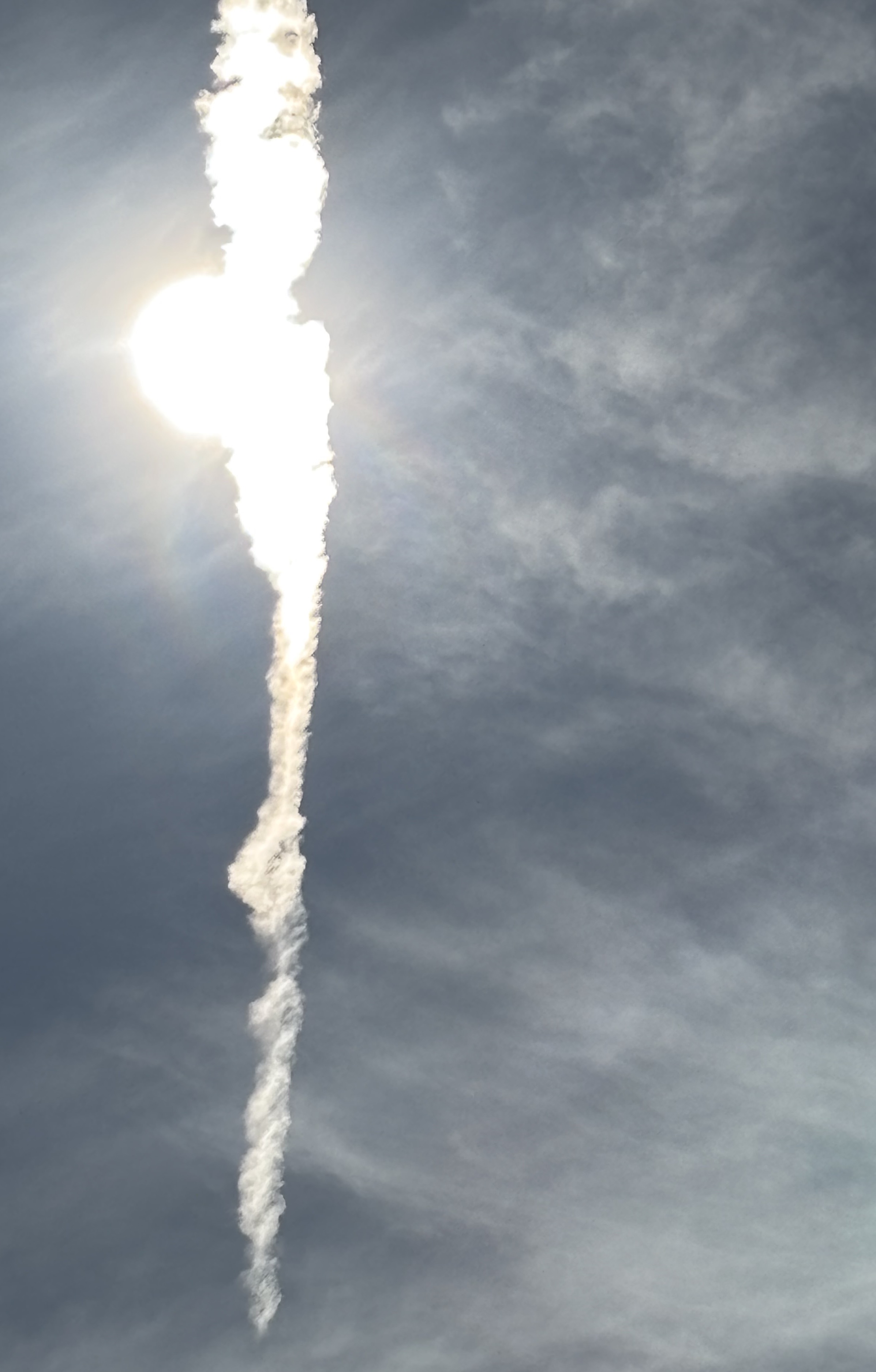
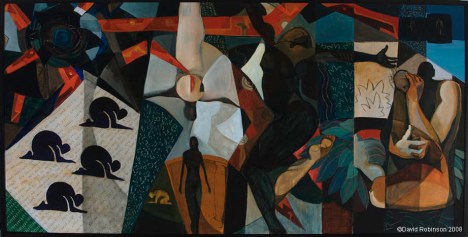
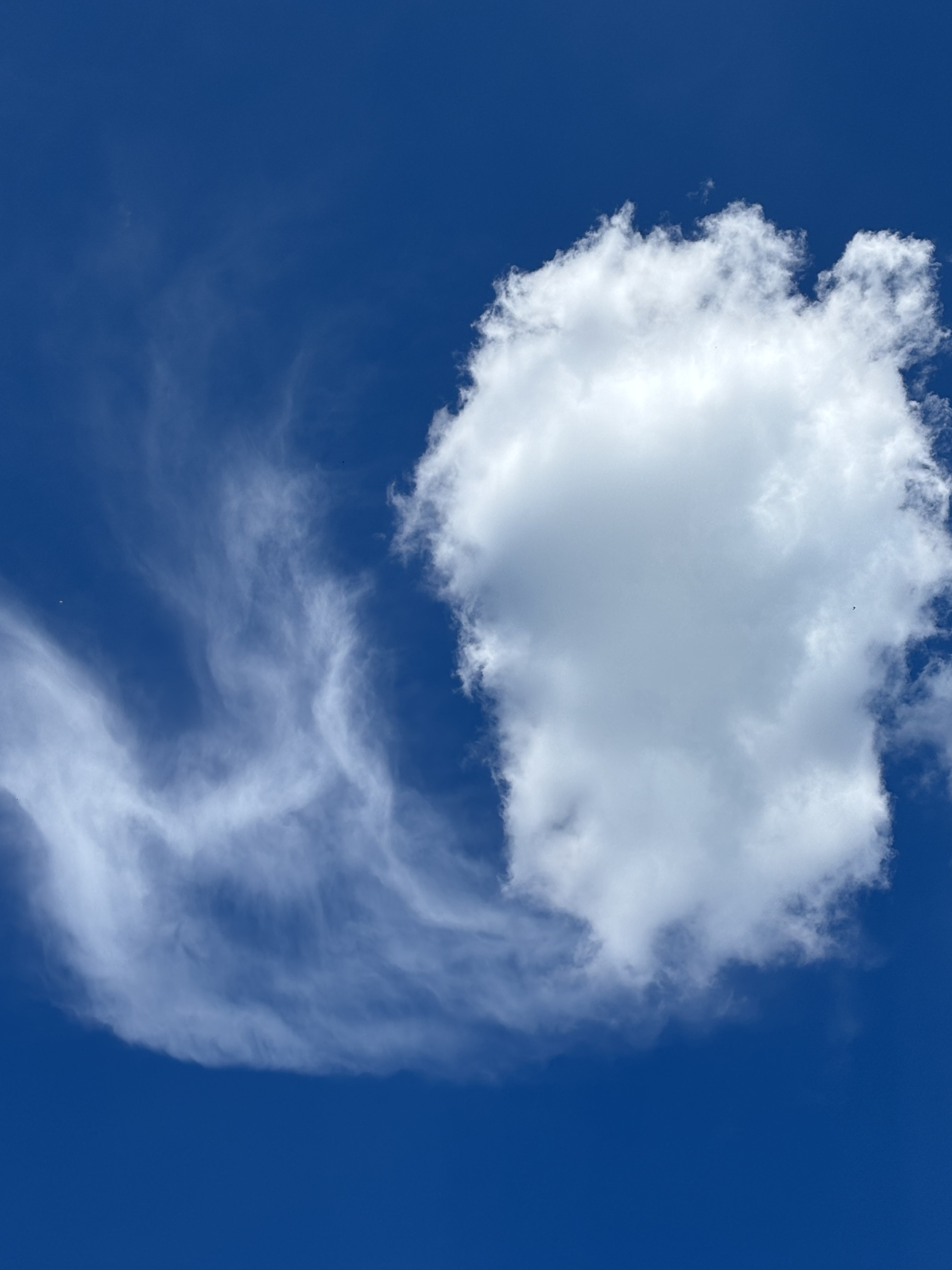
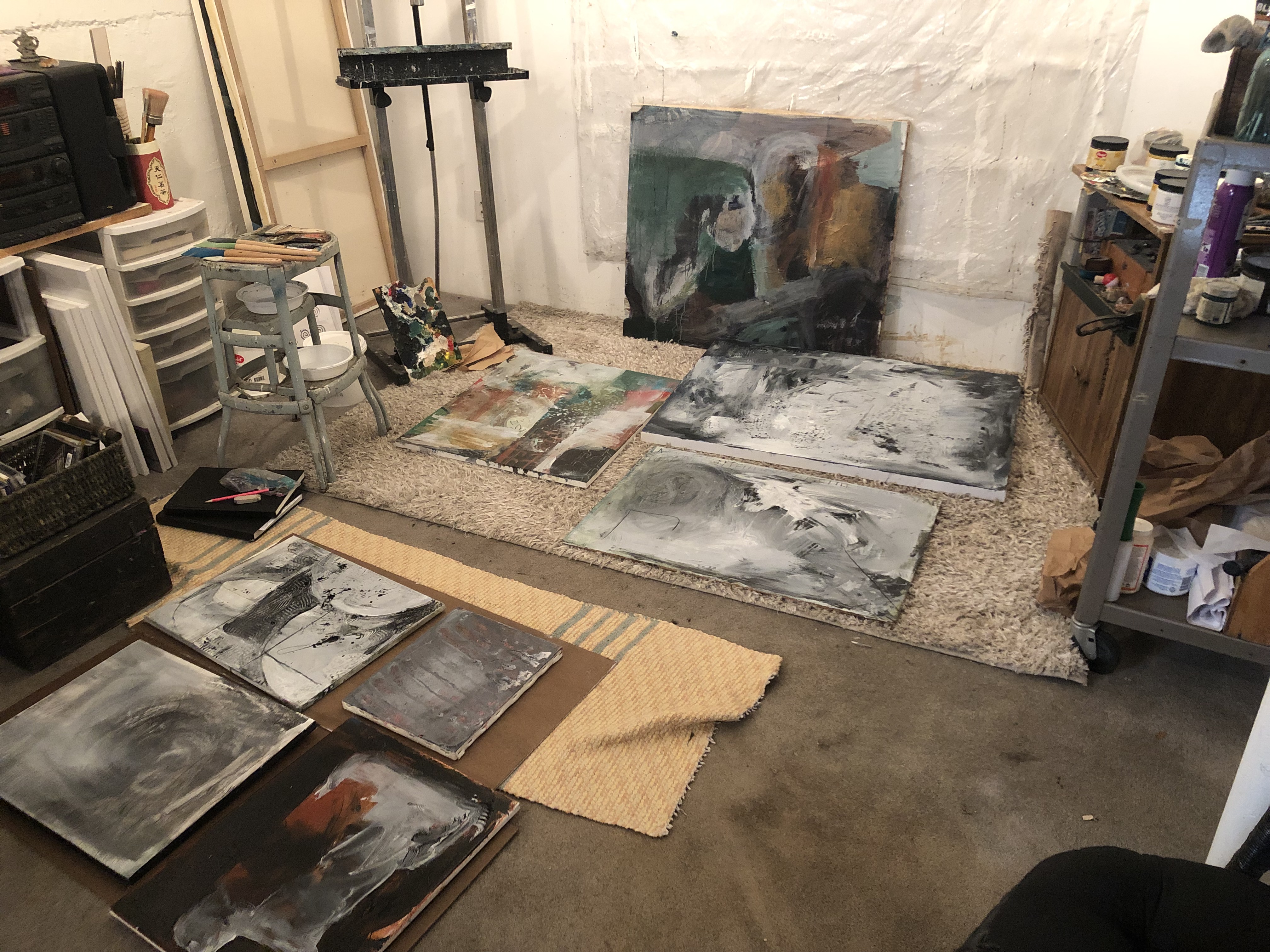
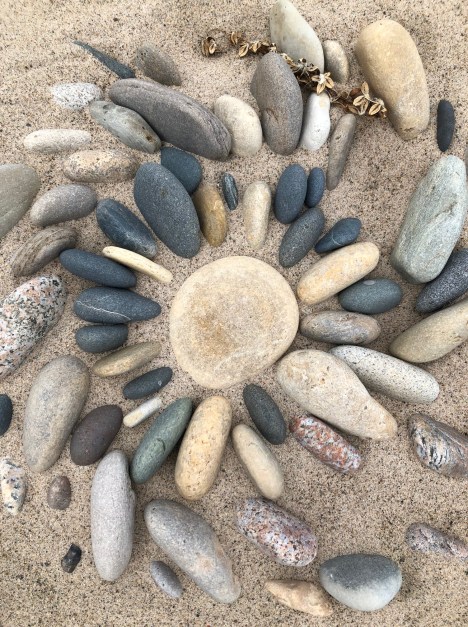
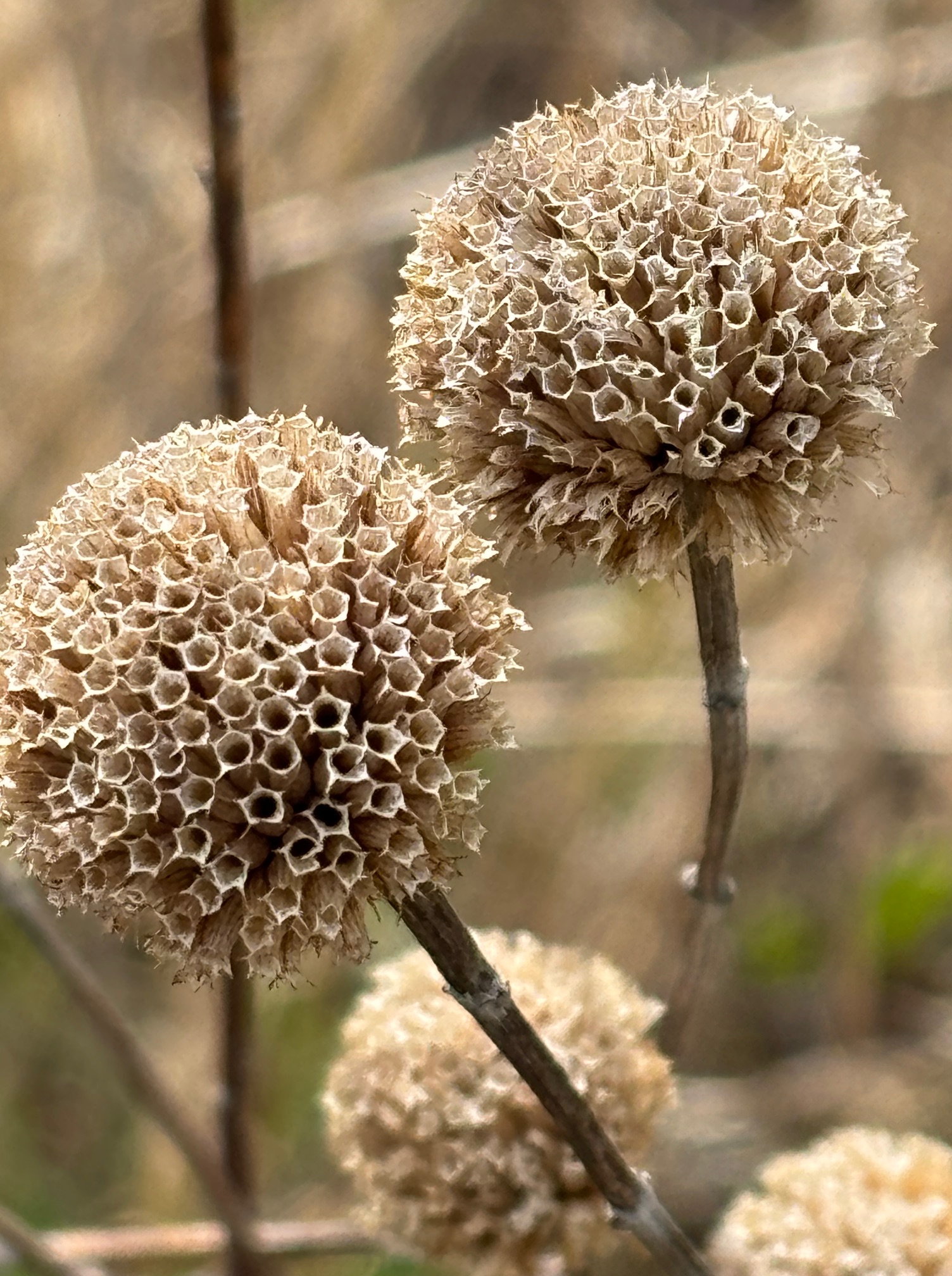
I love it when the parks department rakes the beach. It reminds me of a Zen garden. Yohaku-no-bi: “The beauty of blank space.” I read that Zen gardens are meant for contemplation rather than meditation. Intentional thought rather than quieting the mind. What could be a better topic of contemplation than the beauty of blank space?
I have given much of my life to sitting before a blank canvas contemplating possibilities. Raking the sand in my garden.
Today Dwight flies to Portugal where he will embark on a pilgrimage. I love what he wrote as he prepared for his adventure: “…what audacious thing might occur to me when I let my mind get quiet?” Embracing the opportunity and the unknown!”
I flipped his words for contemplation: When I let my mind get quiet what audacious thing might occur to me?” Following a sentiment attributed to Aristotle, if “nature abhors a vacuum”, then a quiet mind is an invitation to the audacious.
A blank canvas. A quiet mind. An audacious thing. An embrace of the unknown opportunity. Beauty.
I didn’t intend it but I just wrote a haiku, a send off for Dwight using his own words:
We took a break and sat outside, soaking up the sun. Had we continued working we’d have missed the hummingbird, the first of the season. You’d have thought by our reaction to the hummingbird sighting that we just scored the winning goal in the World Cup finals. It’s what I love about how we are walking through the world. Small things are cause for big celebration.
We moved the bags of leaves to the curb for pick-up. The bags were sitting on the driveway beneath the bird feeder. After we removed the bags, Kerri spotted some wriggling worms. “It’s not a good thing to be a worm wriggling beneath a bird feeder,” she remarked, lifting them one-by-one and gently placing them in the grass away from the feeder. Small things. Big empathy.
It seems in a single day Breck’s many buds popped open as leaves. They are yet teeny-tiny but perfectly shaped aspen leaves, ready for quaking. They catch the evening light and literally glow. “You go, Breck!” we cheer our hardy aspen tree. For us, Breck is a symbol of perseverance. If at first you don’t succeed…Those new leaves are very small things but they invoke in us big, ancient hope.
We ask, “What we can possibly do in the face of the assault-from-within on our democracy?” Small things.
In the past two days I’ve seen pleas for support from several small arts organizations. The current administration has eliminated their grant money. Their survival is now tenuous at best. They are small things that could use our big support. “Theater, in particular, invites us to imagine another’s perspective, to reckon with injustice, and to practice compassion in real time. To defund it is to silence one of the sacred spaces where we learn to be human together.” ~ Chris Domig, Artistic Director, Sea Dog Theater.
Consider helping the many, many sacred art spaces in this country to survive – and perhaps thrive – in this time of silencing voices.* For them, our support is no small thing [My short list: Sea Dog Theater Company. Seven Devils New Play Foundary. Changing Faces Theater Company. Your local companies – museums, galleries, dance companies, writer’s retreats, symphonies…the storytellers, the tradition-keepers, the mirrors to power – all depend upon grants and donations. All are in danger of disappearing. Help them in any small way if you can].
We are very small things but no less capable than Breck, or the hummingbird, or the worms of inspiring hope, evoking empathy for otherness, of celebrating all that makes us human.
We are, by ourselves, small things but united we are capable of a big, loud, unified voice – we are capable to sending a potent message to those who fear and would silence the power of the arts, those who would shutter the spaces where we learn to be human together.
*non-profits, like your local food banks or social service organizations…are also under threat. Find them. Help them in any small way that you can.
“Find a place inside where there’s joy, and the joy will burn out the pain.” ~ Joseph Campbell
She told me this photograph was for me. My paintings often include orbs. I wasn’t aware of my orb-inclusion until the day many years ago that I showed Jim E. my paintings. He asked, “What’s up with the orbs?” Confused, I examined my own paintings. It was a hysterical moment of self-discovery.
At first I liked to think of the orbs as spirits. Guardians or messengers. I am an intuitive painter so I assigned some Glenda-the-good-witch sensibility to my ever-present orbs. Later, I imagined they represented unhatched possibilities or germinating ideas. I loved the idea that we are surrounded by bubbles of potential. Now, I have no story at all for them. I like them. They are there. They make me happy. They make compositional sense.
Last night we discussed our broken road path to each other. If this or that had changed, would we have found each other? Would we be living entirely different lives? From this vantage point, our meeting was all but impossible. At the time, what seemed like the worst possible thing – life collapsed in both of our stories – nudged us to somehow bump into each other. Two bubbles in a vast universe.
Now, joy is burning out the pain.
Perhaps my orbs are homage to the wonder of bubbles in the universe? A nod to the unanswerable question of my life path – ours or any life path: is it random or is it destiny?
“Whatever your fate is, whatever the hell happens, you say, ‘This is what I need.’ It may look like a wreck, but go at it as though it were an opportunity, a challenge. If you bring love to that moment–not discouragement–you will find the strength is there…” ~ Joseph Campbell
In a fit of serendipity, while awash with an overwhelming feeling of loneliness, this morning I opened The Marginalian and found musings about loneliness:
“Jungian analyst Robert A. Johnson groups all the possible lonelinesses into the three core kinds that pulsate beneath our daily lives and govern our search for love: the past-oriented loneliness of missing what once was and never again will be, the future-oriented loneliness of longing for what could be but has not come to pass, and what he calls “the profound loneliness of being close to God… The first two lonelinesses are rooted in time…The third kind of loneliness deals not with the temporal but with the eternal; it exists outside of time — like music, like wonder, like love.“[Maria Popova, The Marginalian, April 20, 2025]
Yearning for the past. Fear of the future. Disappearing into the now.
I’ve spent my entire life standing in front of an easel. The younger me was trying to get to something behind the eyes. He was reaching into the mystery to try to understand it. Paint was the means to get there. I miss that man. A later version of me became burdened with trying to get eyes to see what I had painted. He was trying to reconcile the inner pursuit of the mystery with the outer necessity of paying the bills. His valuation became wonky, sometimes confusing personal worth with sales of his paintings. His intention split. He questioned the price of pursuing the mystery. When the acknowledgment finally set in that he would never have pieces in museums or coffee table books written about his work, he struggled but soon realized his struggle was akin to a butterfly breaking free and shedding a cocoon.
Two kinds of loneliness. No one can go with you when you gaze into the past; sense-making what-was is a solo journey. Similarly, no one can accompany you into the cocoon or know what lies beyond.
I loved this phrase in the article: “…the existential disorientation of feeling your transience press against the edge of the eternal, your smallness press against the immensity…” That perfectly describes how I now feel standing before my easel: small.
Kerri sat with me in the studio. I have two tiny canvases sitting on the easel. As I was describing what I was intending she stopped me and challenged me to do something new. She challenged me to let go of what I know. She asked me to step beyond my comfortable place into the mystery. I knew she was right. I know it is the only way forward. That is why I miss terribly the younger version of me who didn’t know any better. He threw paint with enthusiasm because he didn’t know any other way. He lived each day on a new trail; exploring.
I heard Horatio in my head: “Paint crap!” he said, howling, a laughing Buddha. “Paint lots and lots of crap.” Stepping onto a new trail is lonely. And, that’s the point. There’s nothing like not knowing what’s ahead to open the eyes (and heart) to the greater mystery (read: possibility), to fill-up withwonder, to resurrect the spirit of play.
from the archives: LAUGH, 18″x24″ oil on canvas (the collection of Marian Jacobs)
“The true work of art is but a shadow of the divine perfection.” – Michelangelo
I still marvel even though I’ve grown used to it. Without warning she suddenly jumps up and races to capture an image. Walking on the trail, mid-conversation, she suddenly disappears; I turn and find her kneeling in the dirt, her camera aimed at a new bud or the methodical march of a caterpillar. Her muse is not gentle. Her muse demands immediate action.
At first her sudden bursts of energy frightened me. I thought she saw a snake or was leaping to dodge a tarantula. I jumped, too, usually crying out, “WHAT? WHAT?” After the hundredth scare I learned to temper my response to her bursts of inspiration. I’m painfully aware that with my new conditioning it’s likely that she will someday leap to avoid a rattlesnake while I step on it, thinking she’s having a muse-call. I am certain that she will get an excellent photograph of the snake biting my ankle.
In The Artist’s Way, Julia Cameron wrote, “Creativity is God’s gift to us.Using our creativity is our gift back to God” She continued with a more tangible sentiment, one that every human being experiences: “The refusal to be creative is self-will and is counter to our true nature.”
Blunting ourselves is not natural. It is what KDOT is teaching me. Do not doubt or delay the muse. Jump with both feet into the beauty when it beckons. Play with the moment. Share what you find there.
We forget that we, too, are works of art. We’re not finished pieces but ongoing shadows of divine perfection. We express. We are most alive when we are uninhibited in our participation and celebration of what we experience. It’s called “connected”. Plugged in. Present. Flow.
The muse will open the door and like Kerri, we could all learn to joyfully jump through it. Anything less is unnatural.
“Art enables us to find ourselves and lose ourselves at the same time.” ~ Thomas Merton
If you visited our house you’d immediately notice that Kerri’s design style is “well-worn and well-loved.” Rather than mask the wear-and-tear of age, she revels in it. Our dining room is a wonder, made beautiful by the marks left when she removed wallpaper. Rather than paint over the marks she recognized their unique beauty and showcased them. A happy accident. I stopped in my tracks the first time I walked into the dining room, asking, “How did you do that?”
I love our backdoor. The pressure of our hands on the door has overtime peeled and revealed the white underlayer beneath the black paint. It’s the story of our comings-and-goings. It is the mark of our human hands pressing on an old door that swells with the humidity and shrinks with the cold. It is our personal hand-print-petroglyph.
The beauty of age. The patterns of rust. The celebration of the flaw. Most people would scramble to cover the cracks or repair the damage. I have occasionally earned her Irish ire by repairing something she thought was aesthetically interesting. I have learned to ask.
Standing on our deck, Columbus was concerned that the exposed unsealed wood was disintegrating. “You oughta’ stain this,” he said. “It needs protecting.” I told him of the time Kerri pressure washed the deck, removing the patina of age. Even though with time the rough hewn look returned, she has yet to forgive herself for her pressure-washing-indiscretion.
“Kerri likes it this way,” I replied. “She doesn’t like the way it looks when it’s neat and stained.”
“Well I guess that’s the way it’s gotta be!” he smiled, knowingly.
Our house is an ever evolving work of art. A perfect home for two artists. Nothing matches yet everything goes together. It’s filled with visual and repurposed surprises. It is warm, sometimes a cocoon where we shut out the world and sometimes a place for our community to gather. It is the sanctuary where we have come to discover and appreciate ourselves, barnacles and all, while steadily growing into something we could never have imaged.
“Everything that is done in the world is done by hope.” ~ Martin Luther
Master Marsh tipped me over the edge. He sent a basket-load of cartoon ideas and encouraged me to draw a few. Prior to the arrival of his basket I’d been considering channeling some of my national-dismay into cartoons. Drawing them makes me laugh. Laughter fills me with hope. Hope shines a bright light into the dark age in which we find ourselves.
The gift of the current administration (I use the term loosely) and the clown car of billionaire appointees is that they lampoon themselves. It’s a confederacy of dunces so cartooning comes easy. It’s why in only a few short weeks Master Marsh was able to harvest a full basket of material.
Sometimes laughter is the only path through despair to find hope.
Charles Dickens could not have created a line-up of more despicable characters. A president and an oligarch ravaging social safety nets to give billionaires a tax cut. A Director of Homeland Security infamous for shooting her puppy in the face.
Socrates or Plato suggested that humor is often derived from the misfortune of others. The man slips on a banana peel. The woman walks into the glass door. Laughter based on the pain of others. Humor is also invoked from shared pain. We need to laugh at our communal misfortune: a rapist, felon, liar, grifter, lover of autocrats, tv personality, dancing to Rupert Murdoch’s fiddle, is elevated to the seat of power by the mega-rich and is surrounded by Congressional apologists and Supreme Court enablers.
If we stacked the malicious stupidity manufactured in just two months, it might reach to the moon and back. It’s too easy to lampoon. Baskets and baskets full of nonsense.
There are a few signs of hope. The thousands upon thousands of people attending Bernie Sanders rallies – people who do not find malice and ignorance funny – give me hope. The very few Republicans breaking ranks with the silently-stupid-and-complicit-republican-congress give me hope. May my rough drafts bring you a smile and, perhaps, the tiniest ray of hope:
My latest painting I did for Kerri. It is a painting of invocation. I did not paint it from knowledge or plan. I felt my way through it.
On the day I thought I’d completed the painting I asked her if she wanted me to make any changes. After staring at the image for a few minutes she said, “I love it,” and then asked, “But what’s up with the pizza thing?”
In the many art openings I’ve had in my life I’ve learned that what I paint is rarely the whole of what a viewer sees. I used to be surprised by what others saw in my paintings but now I expect it.
“Pizza thing?” I asked.
“You know, the thing they use to put pizzas in the oven. A paddle.”
“Where is it?”
She pointed to a series of connected shapes on the canvas.
Once someone sees something in an abstract image – like a dragon in a cloud – they can never again not see it. I knew the painting was not-yet-done. She would always see a pizza paddle in the painting if I didn’t alter the shapes. “Do you want me to change it?” I asked. She nodded, afraid I was offended.
It is the great challenge of perception: people rarely look in the same direction and see the same thing. We do not share experiences until we…share them, talk about them, compare notes, come to a common perceptual ground.
A younger me would have defended the painting as I saw it. This older version of me feels no need to defend what I see since I don’t expect others to see what I see. I want to learn what they see. I want to step into a common ground, a space of collaboration. That doesn’t mean that I necessarily must change the painting. It does, however, afford me the opportunity to make it better if I so choose, if my question, “What do you see?” actually opens my perspective.
It’s why I feel the need to shout into the winds of our current political and national circus. It is unimportant whether or not we see eye to eye. It is most important that we share notes, ask questions, discuss discrepancies…discern what is fact from what is fiction. We have to want to step into common ground.
When we walk she often stops and aims her camera at the ground. “What do you see?” I ask.
She snaps the photo and shows me the screen. “A heart,” she smiles. “Do you see it?”
“Now, I do.” I say. I would have stepped over the stone and never seen the heart. And aren’t I fortunate to walk through life with someone who is surrounded by hearts and takes the time to show me what I do not see?
In Dreams She Rides Wild Horses (finished, without the pizza thing)
Somewhere in my past a teacher suggested that it is helpful for a writer to know to whom they are writing. Who is your audience? And more specifically, is there one person that your words are meant to reach?
The question came up for me on our trail. The snow dampens sound. Some people find a winter landscape bleak but I find it beautiful. Distinct. Thought provoking. Ideally suited for an introvert like me. Quiet life. Stands of warm sienna reeds sharp against the ice blue snow. The creaking-moan of tree limbs rubbing in the cold breeze. Perfect for inspiration and reflection.
Much is changing in the world broadly and in our world close-in. I am not writing as I once did. I am not painting like I used to. When I first began writing my audience was a community of international coaches, interculturalists, and diversity, equity and inclusion facilitators. I wrote broadly. I had points to make. A brain to flex.
Now I am bereft of answers and have only questions. Some days I write specifically – for Alex or Buffalo Bob. Some days I write for Horatio or Judy or Dwight or 20. Sometimes I write to members of my family though I know they don’t often read what I write. Sometimes I write for Kerri. Many days, probably most days, I write to myself. I reach in. I am asking myself questions about what I believe.
The people who populate my audience – my community – now and in the past – are bonded in their empathy. They care about others. They strive to make the world a better place for others. They are modest. Humble. The opposite of elitist. They are kind. They ask questions. They are thinkers who seek truth in all things; they are open hearts, open minds, with finely-tuned crap detectors. They care enough to fact-check what they hear. They are learners, curious about difference, unafraid of stepping beyond what they know. They are the people I want to hang out with.
On my walk in the snowy woods I realized that I need them now more than ever. A community that inspires hope, that fuels the creative fires burning inside of me and others. A bevy of goodhearted people I admire and believe in. A community of sanity – my community of sanity – in a country deliberately trying to lose its mind and sell its soul.
I write each day so I might sit for a few moments in the circle with these good people, whether they know it or not.
Posted on February 11, 2025 by davidrobinsoncreative
“Love opens the door of ancient recognition. You enter. You come home to each other at last. As Euripides said, ‘Two friends, one soul.‘” ~ John O’Donohue, Anam Cara
For months I’ve been wrestling with Act 2 of a play. I start to write. I get lost in it. Even though I have a plot map, I lose my way. Act 1 is in good shape. It has been ready-to-go for a year. Why do I keep getting lost? I’ve learned, when perpetually lost, to let it sit, walk away, and the path will find me.
Last night I had a dream: The tension between animal nature and human nature. We are both. We have the capacity to be conscious of our animal nature. It is the reason we have codes of ethics. Standards of decency*. In the dream I learned why I am perpetually lost in Act 2. I did not yet understand what I was writing about. The problem was not in Act 2. There was something in me that knew I was not yet understanding the full scope of my topic. My map led to the wrong place. I now have a clear grasp of Act 2.
This is the reason I love artistry; the messy conversation I am capable of having with myself and the greater…universe.
We have matching salt lamps in our studios. Some say there are health benefits to salt lamps but that is not why we have them in our studios. We love the light. It’s calming. Each morning I go down to my basement studio and turn on my lamp. Each night I go down again and turn it off. I’ve decided my daily trip down the stairs is a ritual of invitation. For me, painting, like all things sacred, is a “joining”. An opening for something bigger to come through. Turning on my salt lamp is saying to that-greater-something, “I’m here. I am ready.”
*Standards of ethics. Codes of decency. Isn’t this what we witness as missing in our leadership?The complete abdication of consciousness; the absence of ancient recognition. The door closed on Love.