Posted on August 12, 2023 by davidrobinsoncreative
We’re staying put this summer. Circumstance requires it though that hasn’t put a damper on our capacity to dream. “If you could go anywhere right now, where would you go?” For us, it’s a daily game and fun to play.
Kerri and I are roadtrippers. New experiences feed our imaginations and our artistry. Kerri imagines composing with her piano firmly seated at the edge of the canyonlands. I imagine a series of artist-residencies providing stops along the way, taking us to beautiful places to create, stir the pot, meet new people, ignite ideas…
It’s a great dream. Our job, as we see it, one way or the other, is to bring it to life.
If you want to learn some great Italian recipes – or just simply want to pick up some great cooking tips, visit Sip-And-Feast. We stumbled on their YouTube channel a year ago and have been desperately hungry ever since. We fantasize about making a trip to Long Island and showing up on their front stoop just in time to taste test their latest recipe. We don’t care what’s cooking since everything they make looks delicious.
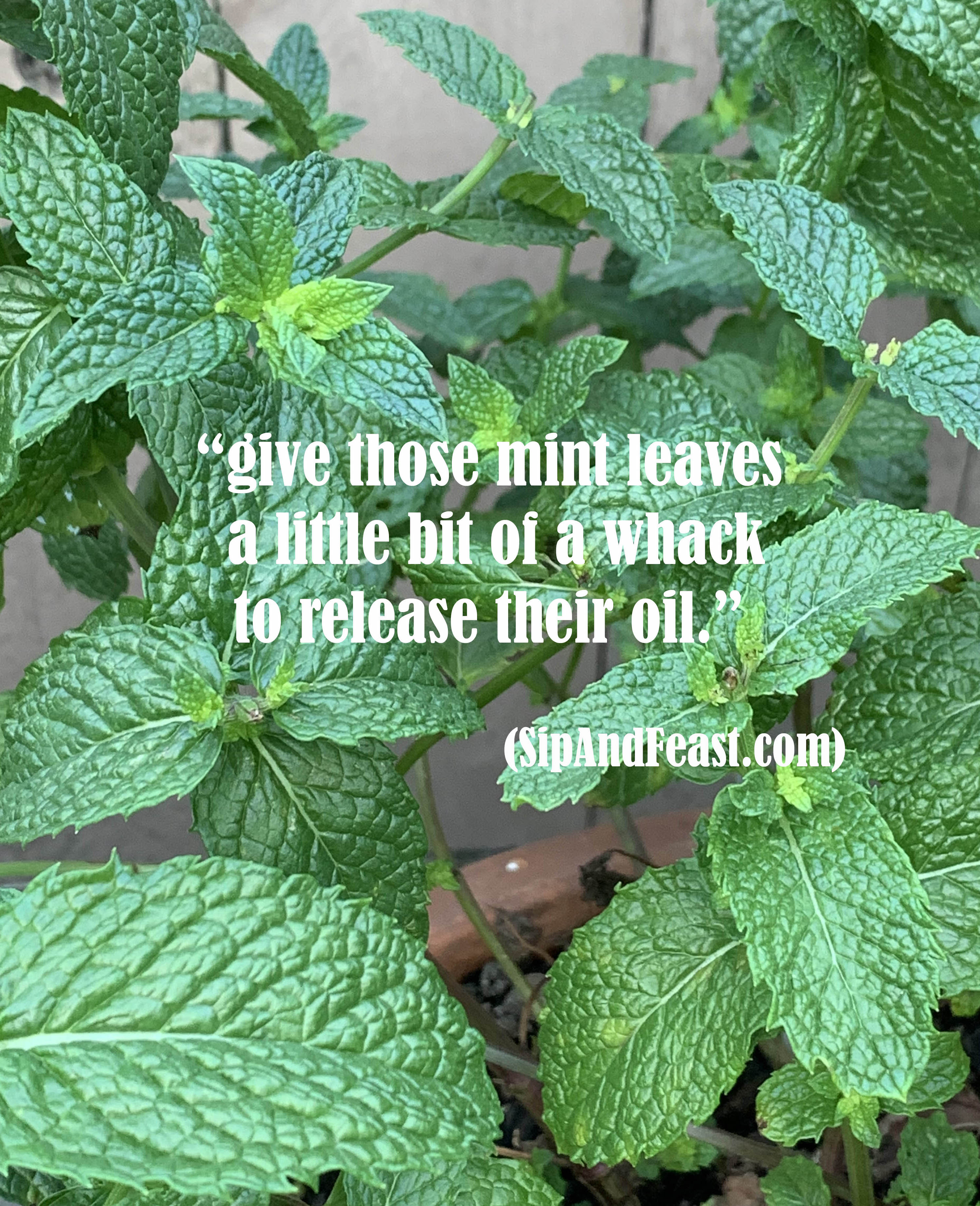
I howled with laughter in a recent installment when Tara Delmage suggested whacking mint leaves to release their oil. My current two-pages-a-day-book is called A Whack On The Side Of The Head: How You Can Be More Creative. In an instant I imagined people as mint leaves needing a whack to release their creative-impulse-oil. It was a hilarious image.
It was an accurate image, too.
I’ve coached a lot of people in my life. The pattern is explicit. Erecting barriers against creative impulses comes standard in all human beings. As social animals, conformity is a vital skill. Fitting-in equates to survival. The dark-side of fitting-in is the requirement of walling-off natural expression. It’s why so many people seek their voice or try to find the time but never find the time to write their book or paint their painting. It’s scary to step out of line.
It’s the reason artists are often seen as wild or dangerous: they exercise the muscles of free expression. It’s also why artists are essential: they counter-balance the conformity. They open doors in the wall. They serve as a gravitational pull toward the mint-oil of natural creativity. They know the secrets of a good whack on the side of the head. They know the right moment to deliver the shock. They know when to encourage chaos and when to infuse some order. The push-me-pull-you of progress.
From the wisdom of Sip-And-Feast I can now offer this piece of solid advice: go make yourself a nice limoncello spritzer. The recipe for the spritzer will provide you all the information you need to pop open your creative flow.
More than a decade and a half ago, a friend, a mystic, gave me a short-hand for my ikigai, my life-purpose. We were having a casual conversation when she got that look in her eyes. Nodding to some whispering voice I could not hear, she turned to me and said that she saw no career for me. Mine to do, my job, had (has) three aspects: to express what is true, to reach people through their hearts, to help them to believe (in themselves).
I confess to being a bit distraught at the “no career” part of her message. “What about my career as an artist?!” I wanted to protest but kept my panic to myself. I wanted her to ask the future a surprisingly pertinent question: In the absence of a career, how will I make a living? I kept that question to myself, too. I knew what she was telling me was true. Apparently I will bushwhack my way through life to the very end.
I thought about our conversation, her message to me, this morning while staring at Kerri’s photograph of green teasel. Staring at our prompts I never know what will pop into my mind. I never know what popcorn trail I will follow when we sit down to write. I am constantly surprised by the memory or idea that reveals itself. It’s akin to consulting the oracle: Why did this memory flood my heart and overtake my mind while staring at green teasel? It’s why I love writing our posts: the cultivation of surprise.
Looking back I have to admit that the whispering voice was spot on. When we write – and we write together every day – my hope is to reach people through their hearts. We laugh because I am much more “heady” in my writing than Kerri, who is all heart. Perhaps the whispering voice saw clearly our daily dedication to writing. Expressing my truth in word and image. It is the singular constant in my otherwise seemingly incoherent passage.
Wild teasel is a medicinal plant. In an age before modern medicine I would have sought it to treat my Lyme Disease. It’s an anti-inflammatory so I’d make a tincture to help my aching joints. I’d be filled with the wisdom of self-healing, connected to and grateful for the plants that surround me.
Perhaps that is why wild teasel inspired a memory of my mystic friend? An oracle. Nature’s healing. The sagacity of hindsight. Grateful for the wisdom and good hearts that surround me. The willingness to follow the popcorn trail, especially when it makes absolutely no sense, but knowing in my bones that it will lead to a delightful surprise: a memory of Ikigai revealed. A worthy life-purpose that can only be found in giving your gift to others.
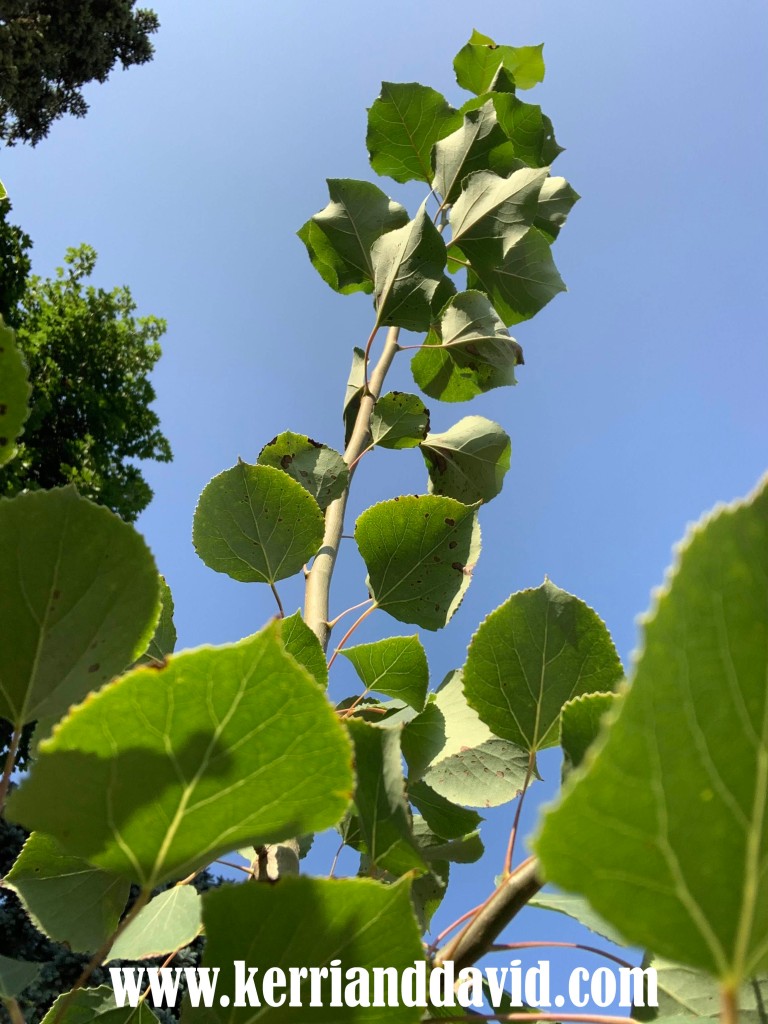
As you know, Breck-the-aspen-tree almost didn’t make it. Three years in a pot and one ill-conceived planting in the backyard left our poor Breck withered. A new spot in the yard restored Breck’s health but her growth was minimal. We removed dead branches. We assumed we’d stunted Breck’s growth so she would always be beloved and diminutive.
And then…It seems Breck is growing an inch every day. We began the summer looking down at her. Now, we crane our necks to see the new leaves sprouting at the top of her gangly reach. We joke that Breck is doing her Jack-In-The-Beanstalk imitation, though, at this rate of growth, it’s no joke. I confess to having a sit-down chat with her, cautioning her to not grow up too fast.
Last night I was awake most of the night. I thought about Breck and new growth. I thought about the cicadas, a surprising new form emerging from a discarded old body. I hoped against all hope that nature was talking to me, sending me a message. Be patient. All in good time. I’ve been sitting in the hallway for a very long time.
Perhaps, like Breck, I too am waiting for the optimal time, some intrinsic trigger and, suddenly and without warning or inhibition, I will reach to the sky. Perhaps, like the cicadas, in a moment of surprise, my new form will burst out of the old body, amazed at the sudden addition of wings.
In the meantime, I continue to do as I was taught: my job is to “put it out there”. The rest is out of my control [meantime: the intervening time. The hallway]. The operative word is “it”. It. I write and publish almost everyday. I paint and publish. We cartoon and publish. I toss resumes into the wind.
In the dark of night, thinking of aspen trees and cicadas, I ponder worthy questions. Breck needed assistance to move to new soil and then required recovery time. Storing energy for the right moment. The cicada lived underground until it felt an internal imperative to climb – an imperative that I imagine made no sense but had to be heeded just the right moment. For me, if nature is talking to me, it has me pondering what else – that I’ve not yet considered – might “it” be that I should “put out there”? Or better, does “it” matter at all? Perhaps all that I lack is the right moment. And there’s nothing to be done about that.
Gordon MacKenzie ends his wise little bookwith this: “You have a masterpiece inside of you, too, you know. One that is unlike any that has ever been created, or ever will be. And remember: If you go to your grave without painting your masterpiece, it will not get painted. No one else can paint it. Only you.”
His analogy – his encouragement – is to let go of others’ expectations and paint your painting, not the paint-by-number painting that you think is required of you.
I wrote this note to myself over ten years ago: you do yourself a terrible disservice to doubt what you know.
I know the world is round. If I set off on an adventure to the unknown I will never touch the horizon. It will always call to me. And, if I sail toward it long enough I will arrive back where I started. Home.
If I believed the world was flat, I would delude myself into thinking that I could catch the horizon – and touch it – merely a moment before I sailed over the edge and into the dark abyss. I know this: no one holding a flat world belief will knowingly sail toward the horizon, the great unknown. That would be crazy! No one willingly sails into the abyss. Better stay safe in the harbor! Color within the lines!
Masterpieces are made by sailing into unknown territory. Releasing control and discovering what’s just over the horizon. And, what’s just over the horizon is more horizon! More questions. More experiences. More discoveries. More tastes. More textures. More sounds. And, to sail toward the horizon with abandon first requires an understanding that the world is round. It is all horizon.
Paint-by-expectation is the road of a flat-earther. Perfection is a false horizon. Try to touch it and the abyss is yours.
Young artists jump back and forth between the flat and the round earth philosophy. They have to. Vulnerability is a learned skill and comes easily when the quest to touch the horizon is abandoned. In other words, painting a masterpiece comes when the quest for a masterpiece is ditched. When making a mess takes precedence over “doing it right.” When following your bliss determines the rules you uphold.
It’s counterintuitive. There’s a place where control and freedom blend into one. You’ll find it when you aim at the unattainable horizon.
Kerri’s photos serve as our writing prompts. Sometimes I know exactly what I want to write about. I lead. Sometimes, like today, I stare and follow the first thought that comes to mind, whether or not it makes sense. I let the thought lead me.
Sometimes I follow. Sometimes I lead. Inevitably, during the writing, the process flips. The follower takes charge and leads. The leader gives over and listens. It’s a nice description of a creative process, a tennis match between the intuitive and intentional.
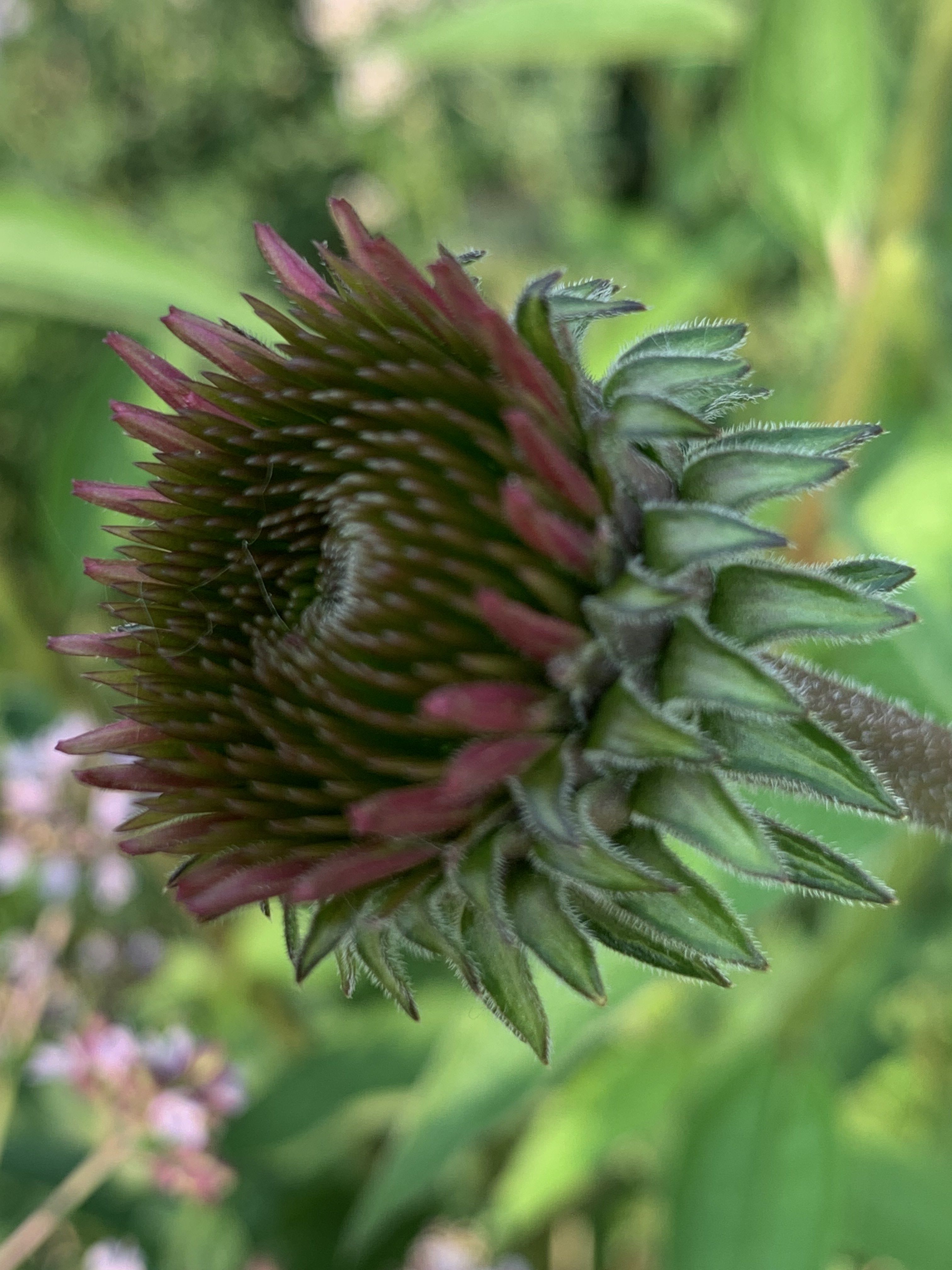
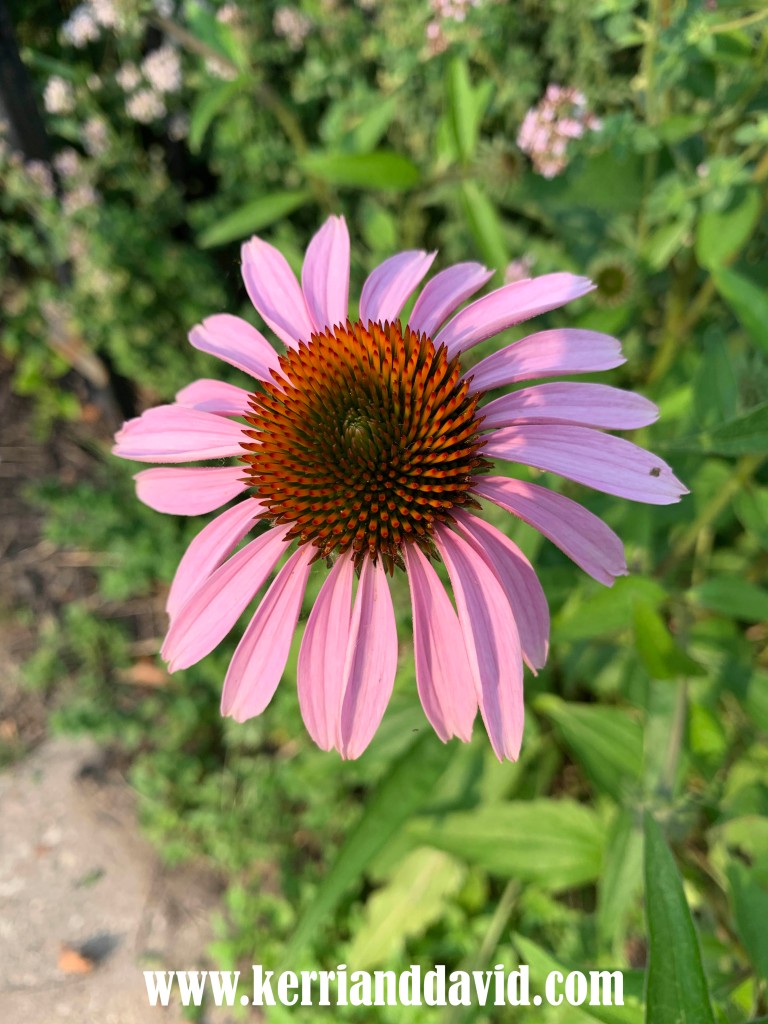
Today’s first thought? It’s perfect design. A still shot masks the truth that this flower is designed for motion. Time-lapse photography reveals the pulse of life, opening and closing. Petals and sepals, pistils and stamen, folding and unfolding with the delicate movement of the planet spinning around the sun. And those tiny hairs on the stem and sepal? Trichome – absorbing life, protecting the dance.
It occurs to me that the word “design” implies a designer and there we go again bumbling into the morass of the godhead. How to explain such perfection? This miracle of life, utter interdependence, as seen in a purple coneflower.
Perhaps it’s enough to acknowledge that my mind is way too limited to grasp the enormity of the concert. I dabble in the power of imagination but will never grasp the infinite, contain the uncontainable, neither in word or way.
Perhaps my desire to affix a definition to the undefinable, to understand the boundless, is no different than staring at a writing prompt. Sometimes I know exactly what I want to write. Sometimes I have no idea. Sometimes I lead. Sometimes I follow. Intuition dances with intention yet neither are capable of explaining the boundless, of measuring the immeasurable, describing the indescribable.
It is enough to perform my part and fully appreciate the caper.
I love our smack-dab cartoon. In a cartoon, dogs can talk, people can transmogrify, we can laugh at the worst of ourselves and reveal the best of ourselves. In other words, anything is possible. I think that’s why cartooning has long been an aspect of Kerri and my relationship. Anything is possible.
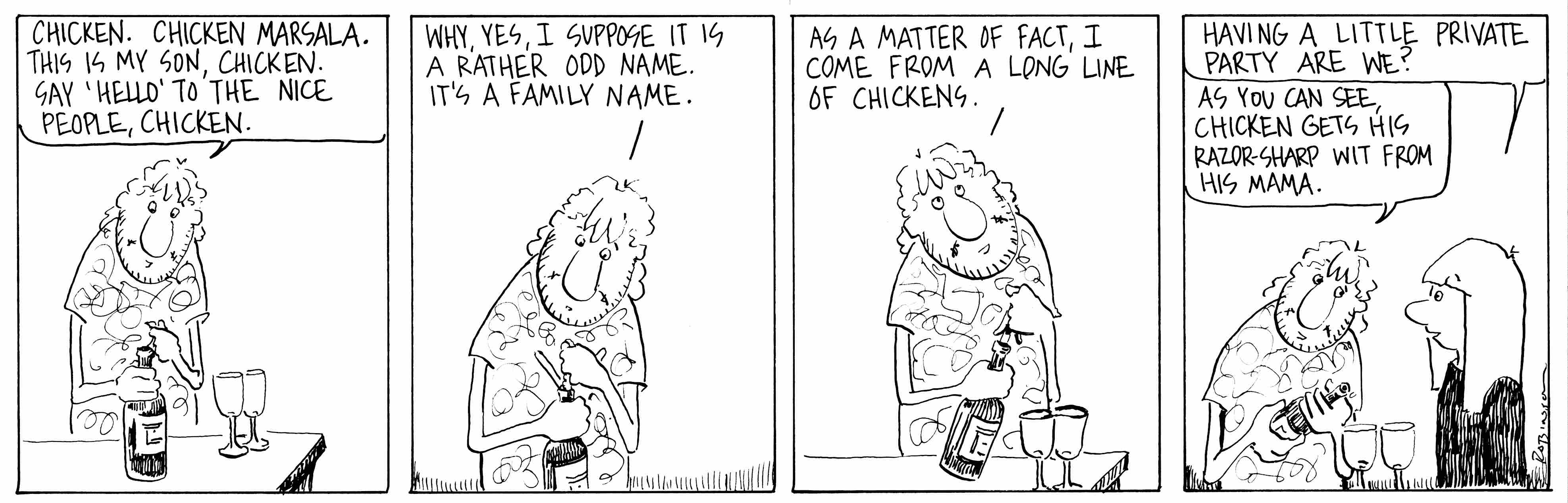
Our first cartoon idea popped up when we were punchy on a roadtrip. We asked a “what if” question. What if we’d met earlier in life and had children. What would we have named our little pot roast? Miles of hilarity ensued because we landed on Chicken Marsala. Our boy Chicken was born and for the rest of the trip, the voice of our imaginary child chimed in with commentary about his parents. We submitted five rounds of Chicken Marsala cartoons to the syndicates. Chicken strips and single panel Chicken nuggets (clever, no?). The imaginary child of two artists who met late in life. What a great premise! Especially since the two artists were hot messes and the child was grounded, capable of scaring them into sensibility and taunting them into play. Idealists, all.
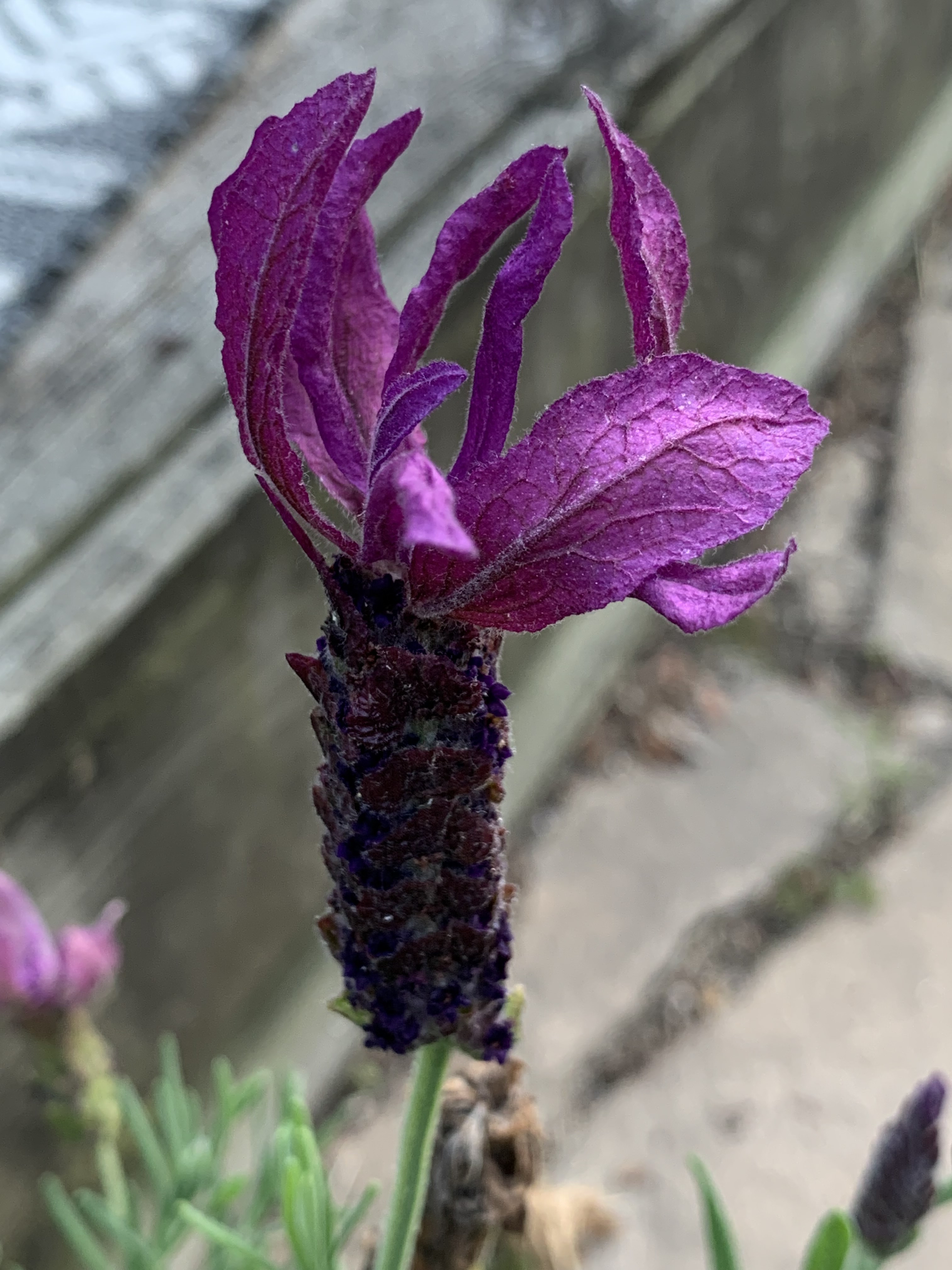
It used to be that when I asked a “what if” question I zoomed into the outer reaches of inner space. That’s still true though now I have a second, equally powerful path to imagination. Look close-in at the miracle shapes of plants. Look close-in at the worlds at play all around us. I give full credit to Kerri’s compulsion to photograph minutiae. “Lookit!” she proclaims and shows me a miracle image. I’ve picked up the pattern. I rarely photograph what I see but I am just as apt to look close-in as I am to fly into the Netherworld. I am on a daily basis gobsmacked by color or texture or shape or sound or smell or taste of this amazing world. Look at the lavender! Just look! No, really. Slow down and look.
This morning I read a definition of imagination: thinking that is not bound by real world constraints. I wanted to add this: senses that are capable of experiencing real world detail.
It’s a great polarity, the spectrum of potential between “anything is possible” and “I never could have imagined it.” Chicken tried to tell us to look both ways but, you know, it’s harder than you think to listen to your imaginary child, especially when they understand more about life than you ever will.
I designed the set using a David-Hockey color palette. Rich and vibrant. A gifted scenic artist brought my renderings to life. I was concerned. Sometimes what looks good on paper does not scale well. Sometimes scaling up fulfills the promise. Dreams are that way, too. You can’t possibly know a good idea is genuinely good until you give it a try.
I moved from California to Seattle. When I first arrived in Seattle I took my paintings to many, many galleries hoping to find representation. I was excited to be in a city with a mature art scene. I was ready to scale up my career. The response was unanimous: my paintings were too vibrant. Too much color. As a kindness, one gallery owner suggested that my paintings were appropriate for a California audience but would never sell in Seattle. Apparently the cloudy skies and reputation for rain dampened en masse the local appreciation of color.
I was deflated but undeterred.
After a season or two in Seattle my color palette was noticeably different, toned down. The ubiquitous rain naturally muted my spectrum of color. There’s no telling what will happen when lofty dreams hit the hard work of reality. It’s unpredictable. The labor of surprise. Once I was sufficiently color-muted, everyday, every-single-day for 15 years, I showed paintings in galleries, in coffeehouses, in theatre lobbies, in studios, in pop-up shows…
I left Seattle when I met Kerri. I knew immediately that she was The One. Early on, before I actually moved, as we were driving around town, I wondered if my art-life would survive in this new place. I wondered if it was time for me to scale down. The same rule that applies to scaling up also applies to the opposite direction. It was new territory. My dream had never included the idea of trimming. From this vantage point I can safely say that I had no idea how hard it would be and no idea of the abundant changes – that brought simple abundance – this move would bring.
Yesterday Jen asked, if we had life to live over again, and money wasn’t an option, would we make the same choices. Kerri and I laughed heartily at the money-part. This path has been hard – so far, money hasn’t been an option – but we were unanimous and immediate in our response: I wouldn’t – we wouldn’t – change a thing. This dream was and continues to be a genuinely good idea, regardless of scale, filled to the brim with vibrant color and the hard labor of surprise.
Earlier this week I wrote of DeMarcus’ notes on color made when he was a first year art student. I flipped through the fading pages before placing the notebook back on my shelf and lingered on these gems:
“If we wish to create we must learn the Language of Color.”
“Color stands for JOY in this world of seeing.”
“Through the language of COLOR, we add JOY to the world of seeing.”
His notes are from a lecture. In my mind I see some fantastic art teacher, a life teacher, standing before a class of enthusiastic hearts that included the young DeMarcus, infusing them with a purpose that demanded they pay attention to others, to their reason for creating. Bring joy. Through the language of color, speak to a world that doesn’t know how to see. Speak to a world desperately in need of Joy. Color theory as community tending. Igniting the idea in the students, the teacher then set them free to explore how, through color, to bring joy to the world. The lesson was simultaneously both practical and existential.
I wish I knew the name of DeMarcus’ instructor. I’d send a deep debt of gratitude into the universe.
It is profoundly easy to diminish the role of artists in our culture. Note the dearth of art programs in schools. The emaciated National Endowment for the Arts relative to other budget lines. What might be more important in our times than artists striving to weave togetherness through the language of color? What might be more necessary than opening eyes to see beyond grey assumptions? We diminish ourselves when we devalue our art.
I knew DeMarcus when he was in his 90’s. Those early lessons still twinkled in his eyes. Or, perhaps, a lifetime of speaking the language of color, a lifetime of offering the joy of seeing, brought a permanent twinkle to his eye . He understood artistry as more than indulgent self-expression. He understood – and helped me understand – that artistry came with a responsibility to others as well as to the self. Service. See, in order to help others see, through the language of color, joy.
One of my most prized possessions is the homemade notebook DeMarcus made as an art student. It’s his notes from a class on color. The pages become more brittle with each passing year. The pencil notes are fading. Every so often, when I need a masterclass from a simpler time, I gingerly open the notebook and read a few pages.
The first entry always catches me. “Color: Light is a form of radiant energy transmitted by wave movement through space and is perceived visually.” The underlines are his. Radiant energy. Wave movement. Perceived.
It’s the second half of the page that grabs me: ” The (3) Qualities of Light: Physically = Life-giving. Mentally = Intelligence. Spiritually = Divine Wisdom…Think of color as light reflected.”
Keep in mind this is a beginning art student taking notes during his very first course introduction to color. His instructors are teaching him that working with color is working with light that is either life-giving, intelligence emitting or wisdom divine. In other words, working with color matters. To work with color is to give voice and expression to light. The work of an artist is about more than finger painting.
“Light is individualized by its contact with substances into COLOR…Think of color as LIGHT REFLECTED.”
If I could, I’d offer DeMarcus’ little notebook to all those fear-mongers out there scrubbing Diversity, Equity, and Inclusion curriculums and initiatives from their states. Scrubbing color from their palettes. Eliminating light. Life-revoking, intelligence numbing, wisdom stripping.
Repeat in pencil: To work with color is to give voice and expression to light. Think of color as light reflected.
Simple clarity from the first pages of a first year art student written in a homemade notebook more than a century ago. This nation is made vibrant through its rich diverse color palette. Why-on-earth would we knowingly, willingly, turn off the light?