See It Blaze

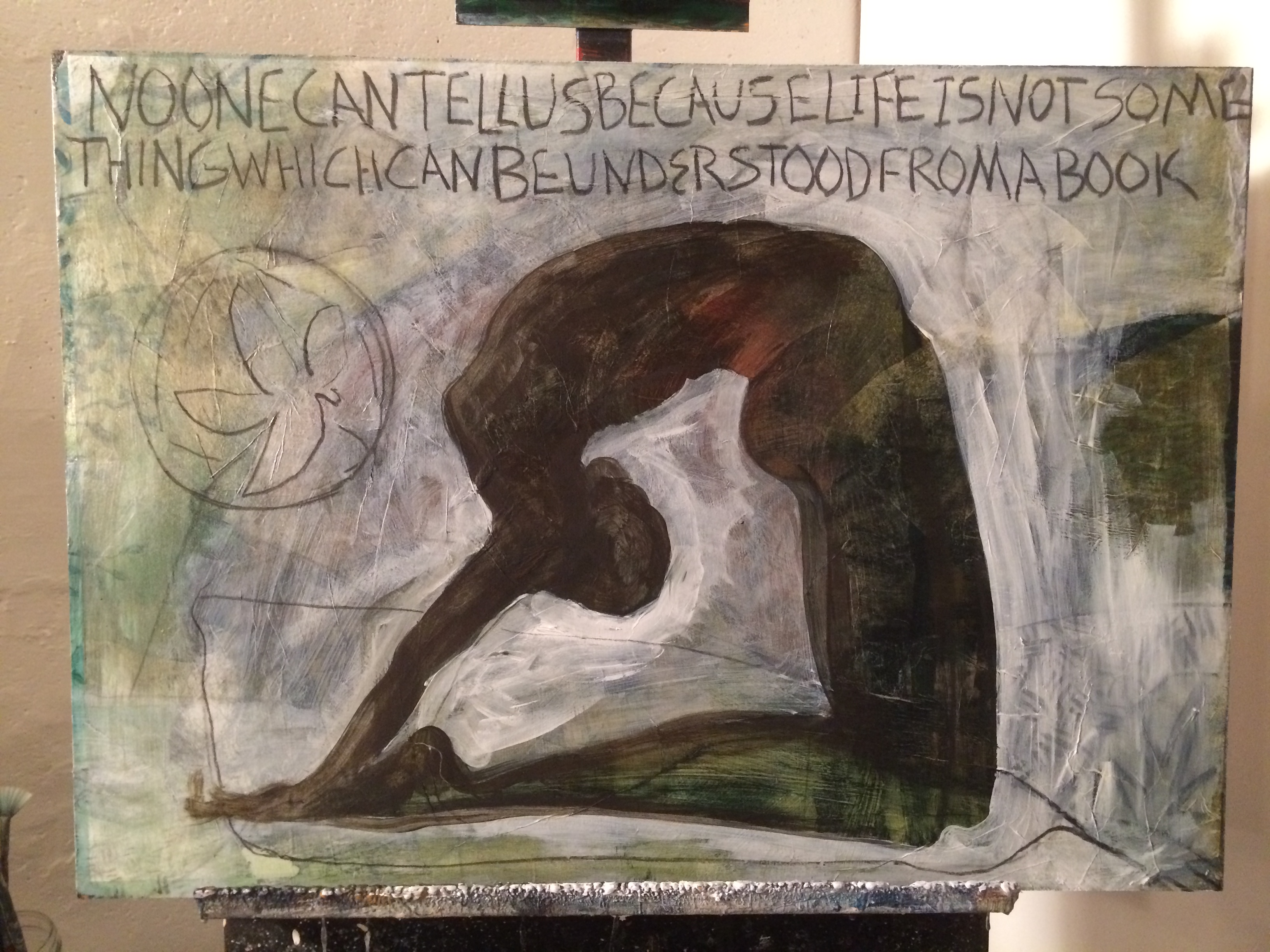
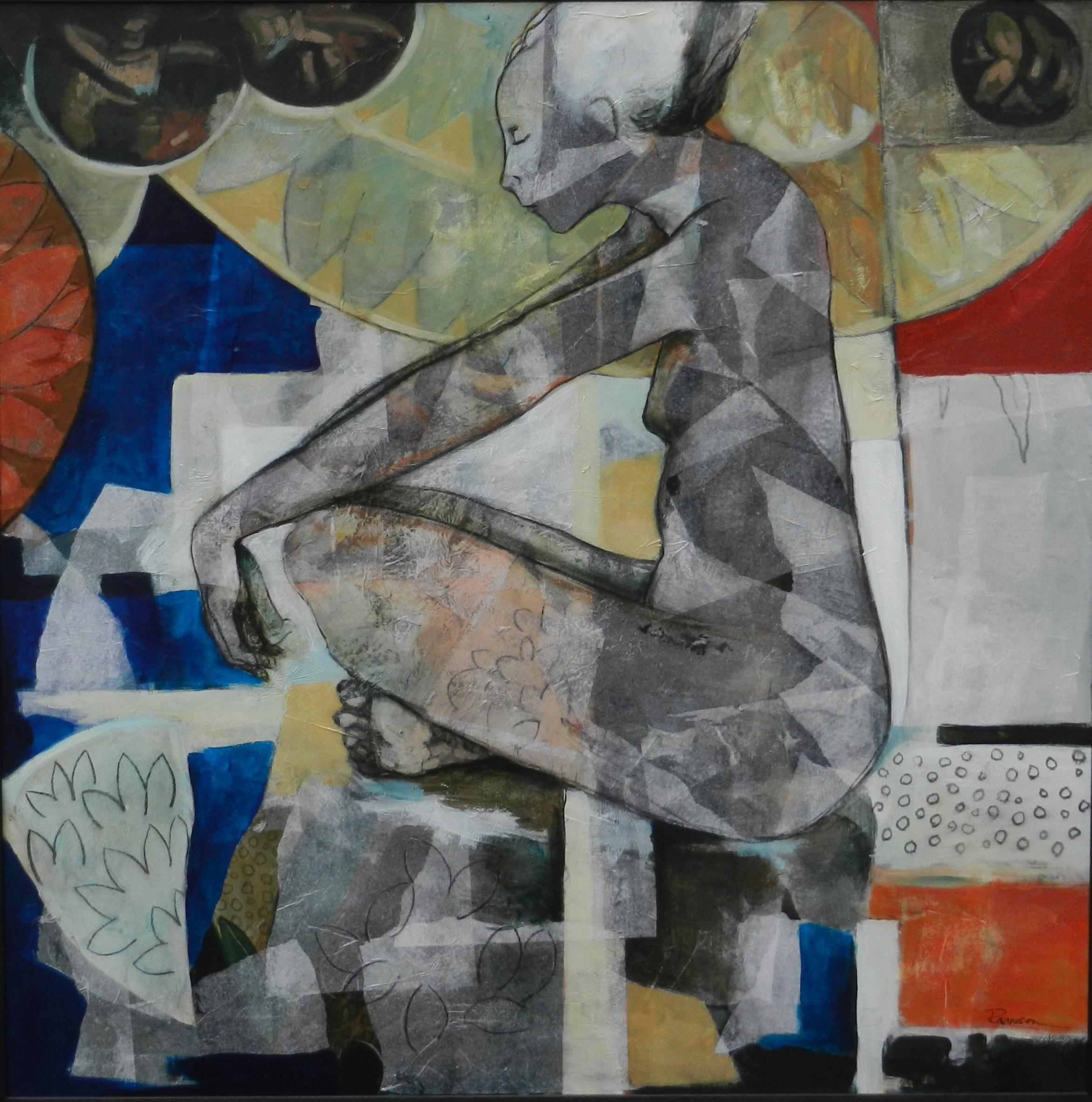
text from Krishnamurti as it appears in my painting

text from Krishnamurti as it appears in my painting

Every once in a while the things I read, the experiences of my life, seem to coordinate. Like a thought-confluence, the books, the poems, the errands, the conversations, run into a single thought-stream. It’s as if they called each other last week and asked, “So what are you going to wear?” Often, this is how the universe places its hammer on my head.

A few stanzas from a Mary Oliver poem, Morning Poem (read the whole poem sometime. It’s breathtaking):

each pond with its blazing lilies
is a prayer heard and answered
lavishly,
each morning

 whether or not
you have ever dared to be happy,
whether or not
you have ever dared to pray

Did you catch the word, ‘lavishly?’

Here’s a bit from Carlos Castaneda, A Separate Reality:

What makes us unhappy is to want. Yet if we would learn to cut our wants to nothing, the smallest thing would be a true gift…. A warrior knows that he is waiting and what he is waiting for; and while he waits he wants nothing and thus whatever little thing he gets is more than he can take.

Prayers answered lavishly. Whatever little thing he gets is more than he can take.

For me, there are a few important words that have, from over-use, fallen into the bin of meaninglessness:

presence, transformation

Actually, they are in the bin because we’ve managed to make them (like the word, ‘art’) commodities, marketing terms, something owned or purchased with coin or wile or reason. Something possessed or not possessed. Something available to a few but not all.

Sometimes the words open again, the experience opens again, when said another way. For instance, the phrase, “cutting our wants to nothing,” is another way of saying ‘presence.’ Don Juan would have made a good Buddhist! When present, the ordinary pond blazes, it teems with life and isn’t the experience of teeming life at the heart of any good prayer? The last time you caught your breath, a sunset or watching your child sleep, you were present, you wanted for nothing,  your prayers were lavishly answered.

my latest work-in-progress

not yet finished – maybe never will be – an, perhaps, that is the point.

The message of the hammer on my head: The pond is always blazing. The transformation is not in the pond but in our ability to see it.


Make It So

Pasta. Meat sauce. Warm Bread. Wine.

Pasta. Arugula salad. Wine.

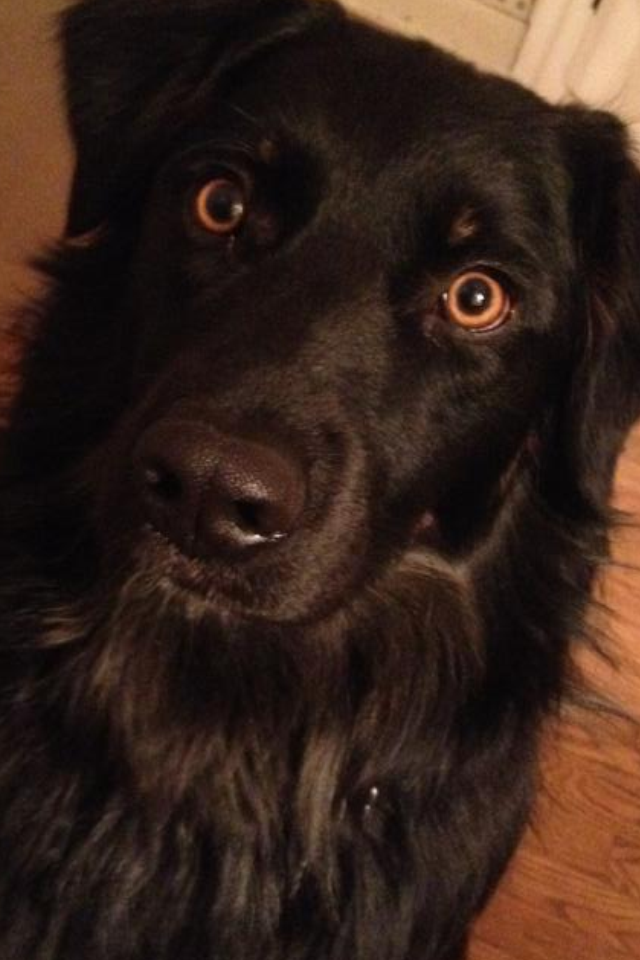
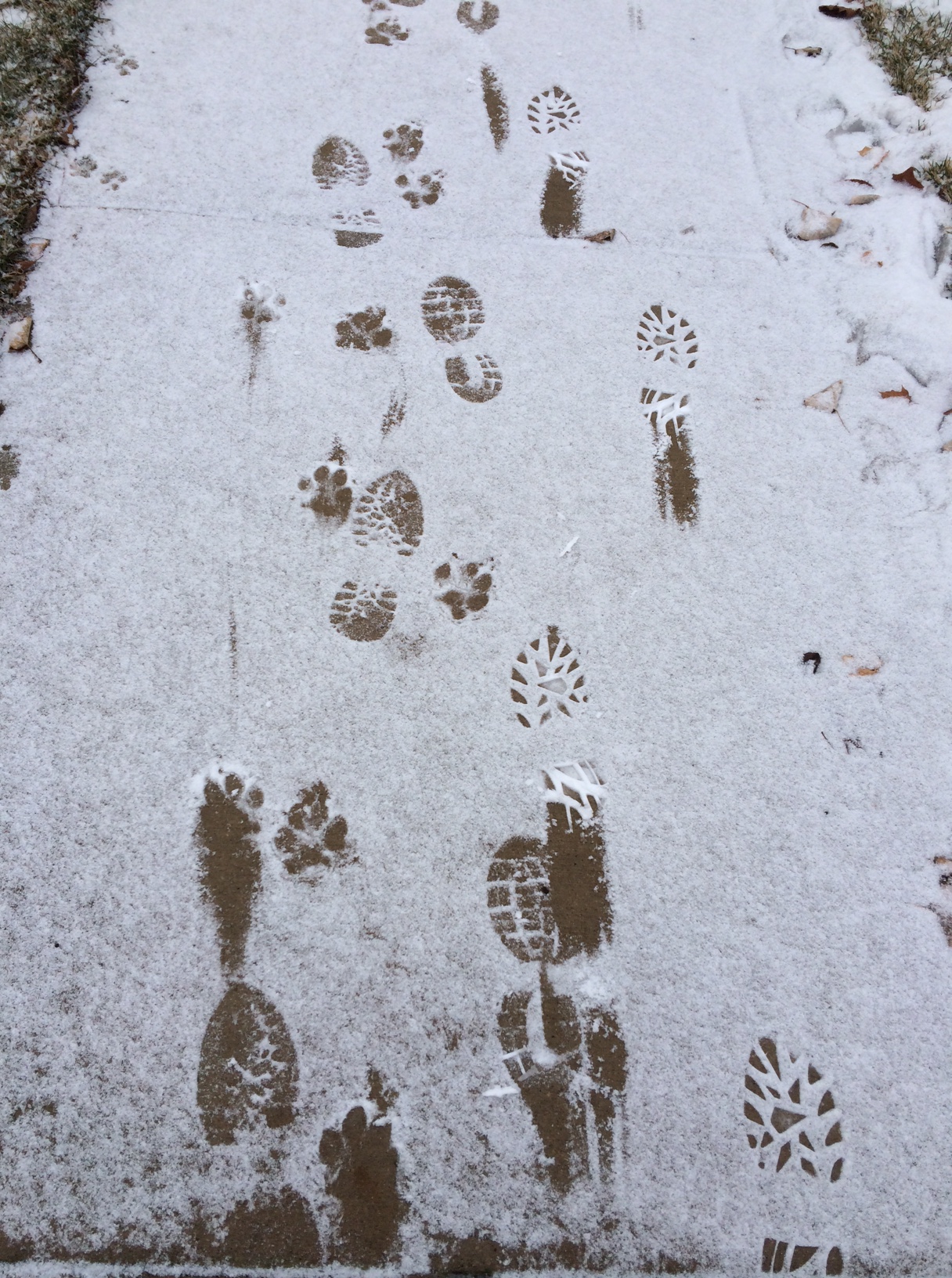
Tripper Dog-Dog-Dog knows the world through his nose. He sniffs everything. It is not uncommon after we finish a meal to come face-to-muzzle with a scent-curious Dog-Dog. Lately, as the objects of his sniffer, we’re given to staring into his amber eyes and offering the menu, saying something like, “Pasta. Arugula salad. Red wine,” or “English muffin. Peanut butter with black cherry jam. Banana. Coffee.” Satisfied with our description, he moves on to the next smell-enticing investigation.

I delight in our Dog-Dog food reports. They’ve become commonplace and matter of fact; “Chocolate chip cookie. Espresso.” Our reports never contain qualifiers, so, for instance, we never say, “A great chocolate chip cookie. Delicious espresso.” We provide the minimum, the noun.

Our Dog-Dog reports have rekindled an age-old fascination of mine: the power of words, specifically, the enormous power of the labels we attach to our experiences.

Language is a sword that cuts both ways. It can liberate and it can imprison. The difference is in how it is used. Language is the primary tool we use to make meaning. Big magic happens the day a person realizes that meaning is not something that is found, rather, it is something that is given and it is given the moment we apply a word-label to an experience. Nothing is good/bad, hard/easy until our label makes it so.

Applying a label to an experience is an act of creation. It is not passive. Take note of the word-judgments you apply to yourself or to others. For a week make a game of flipping them over and applying the label “beautiful” to where you usually apply a judgment. So, for instance, instead of, “I am fat,” why not say to your self, “I am beautiful.” Both are labels. One imprisons while the other liberates. The difference is a single word.

The label determines the possibilities we see (or don’t see). In a past life I used to facilitate organizational change and I came understand that my role was to help my clients ask better questions (use different language). They always came to the table with a “how” question: how do we change without feeling any discomfort? Response: what might you see if you stopped pre-labeling what you might feel as “discomfort?”

The mantra: have the experience first, make meaning second. And then, recognize the great capacity and opportunity you have to make meaning. Why not make a better meaning? Why not take a step and let it be a step merely?

Try this: do the Dog-Dog and, for one week, eliminate the qualifiers so that nothing is good or bad or right or wrong. It just is because you choose to make it so.

Make Quiet

A sanctuary

A sanctuary

It is Thursday night. Kerri is attending a meeting at the church and I have tagged along so I might sit alone in the sanctuary. I’ve always loved entering the quiet spaces. Once, a lifetime ago in Sedona, John called me “guru dude” because I sat for hours nestled in the quiet of a vortex. It felt like minutes to me. I think it unsettled him that I was so completely settled. I know it unsettled him that I would rather seek quiet than make noise.

Sanctuaries, I’ve learned, are everywhere.

My task, my mantra, and my delight of a few years ago was to realize that all the world is my studio. I had some amazing help and more than one universal dope slap before that realization sank in. I used to believe that in order to create I had to escape the world to find the refuge and quiet of my studio. I felt like I had to go to my studio to find my creative place just like I felt like I needed to go to a vortex to experience deep quiet. I had it upside-down. A studio, like a meditation practice, is meant to bring us into communion-with, not reinforce our isolation-from. It is not a place of escape. It is a place of joining. Quiet is not something we find as much as something we allow.

To me, the word “studio” and the word “sanctuary” are now equivalents. They are the places that creating happens and creation is a quiet process: the inner chatter stops, channels open, and something comes through. A few weeks ago, in the second performance of The Lost Boy, we stepped onto the stage and everything was quiet inside. There was no past and no future; there was only the moment – and it joined us, audience and performers, in a single, shared story. Something came through us; together we created. There was no effort, there was no striving; there was, as Jim Edmondson used to say, “a dance of giving and receiving.”

This “joining” is the dirty little secret and great power of the arts. It is something that school boards will never understand but something that dictators across the ages have feared. Artists are the vortex of joining, of shared identity, of explosive quiet, of laughter that crosses lifetimes. The arts do not separate; when at their most potent they unite. They clarify. They delineate substance from chatter en route to a powerful common center that is as holy, as quiet, as it is creative.

Reach

photo-6In these few weeks post Lost Boy I’ve been writing thank you letters and sending Kickstarter rewards to the many people who donated to the campaign. I am humbled by the number of people who stepped forward to lend a hand, offer resources (financial and otherwise), and/or heap us with the moral support necessary to produce the play.

The Reminder: no one does anything alone. All creative acts, all things that are useful in this world, all triumphs that seem on the surface to be an individual achievement, are, in truth, a group effort. Life is a team sport. Quarterbacks are nothing without a front line, a coaching staff, a back office, a marketing machine spinning the tale. They also had mothers that for years drove them to practice, families that stood in the cold to watch them play little league, and a host of friends who told them that they could do it if the only kept going. Artists are no different. Even the loneliest painter has a rolling lifetime team whether they recognize it or not. Consider this simple basic: a painting is never complete until someone other than the artist engages with it. A play is never complete until an audience arrives. The whole point is to make or accept an offer to/from an other.

We, the people of these United States, place the accent of our existence on the achievement of the individual and that sometimes makes us blind to the obvious truth of our existence. We do nothing of worth on this earth without the support and participation of others; relationship is at the core of anything worth doing.

from the 2015 Racine snow carving contest. I'm sorry I did not capture the artists names!

from the 2015 Racine snow carving contest. I’m sorry I did not capture the artists names!

Once, many years ago, I lived in Los Angeles. I did not know my neighbors. I had no idea or desire to know who was living in the houses next to me. One night the earthquake came and our illusion of independence was stripped bare. With no power, no water, no heat, and compromised housing, the first thing we did was to reach to each other. When the illusions of comfort and security are stripped, our real need (each other) becomes glaringly apparent.

I wrote this play, The Lost Boy, because someone dear to me, over a decade ago, asked me for help. I was grateful that he asked – it meant I got to spend time with him and return some of the attention and love that he had invested in me. When the metaphoric earthquake hit – when Tom died – I had no recourse but to reach out to others; I produced this play when I realized that I was not alone and all I need do was ask for help. Legacy, like story or life, is an infinite loop of relationships.

Do What Is Most Natural

IMG_0817The snows have come. The temperatures are grindingly low. Sitting at my desk, staring out the window at the world’s hibernation, I had a few thoughts about transformation. Actually, just before coming to the desk I flipped open the Bibles of Mankind for my random-thought-of-the-day. Today I landed on the Tao and specifically, this line: “By a transformation they live. By another transformation they die.”

In our births and our deaths we are all experts at transformation. In fact, in our progression through the many bodies we will in habit, the many phases we will navigate during the span of our singular life, we need not think about transformation or try to achieve it. Transformation is what we do. It happens. Track the progression of any life from infant to old age and you will witness a remarkable transformation.

I’ve just completed the first full cycle of seasons in my new home. Because it is all new to me, I’ve had the eyes to see the nuances, the profound changes in the trees, the lake, the rhythms of life including the migrations of geese. Nothing is normal (yet) so everything is special and alive. The cycle of the seasons, like the continual movement through the long body of life, is an ever-present transformation. The seasons do not try to transform; they are transformation.

People think they need to intend transformation. We seem to think we need to work at it to achieve it and somehow do not transform if we don’t marshal the process. Consciousness, like the body and the cycles of the seasons, transforms whether we intend it our not. That is the nature of consciousness. That is the natural movement of awareness.

title_pageGo here to buy hard copies (and Kindle) of my latest book: The Seer: The Mind of the Entrepreneur, Artist, Visionary, Innovator, Seeker, Learner, Leader, Creator,…You.

'Dancing In The Front Yard' by David Robinson

‘Dancing In The Front Yard’ by David Robinson

Go here to get posters and prints of my paintings.

Look Up

Eve, by David Robinson

Eve, by David Robinson

The nights have been bitter cold and clear. The cold always seems to make the stars sharp like crystals. Standing on the back deck, looking at the stars, I remembered a conversation I had years ago. I was working with students and we strayed into a discussion of human beings connection to the stars. It was cosmology in a nutshell.

Here was the gist of the conversation: something happened to human consciousness when they (we) understood that our patterns of life on earth were (are) oriented to happenings in the sky. For instance, our impulse to worship is intimately connected to the solstice and equinox: the disappearance and return of the light. Our migration habits, planting habits, daily rising-and-shining habits are relative to the movement of the sun. The tides in the ocean and the waters in our body are responsive to the pull of the moon. With the awareness, we crossed a line from chaos to order, from unconsciousness to consciousness. There was a relationship, a pattern, a belonging, a participation. There was something bigger.

During that same period in my life I also worked with a group of inner city students who had never seen the stars. It was a revelation for me. For them, there was no sense of relationship, there was no “something bigger.” There was a load of anger and existential separation.

This holiday season, I was struck by two things: 1) how many times I had conversations with people, glued to their televisions, who are frightened and feeling helpless by the happenings in the world, and 2) how many casual family photos crossed my path featuring a gathering of individuals, alone together, faces to smart phones. Everyone was looking down.

Standing on the back deck on a dark and starry night, wrapped against the cold, I wonder what some distant teacher in the future will tell his or her students about what happened to human consciousness when they (we) ceased looking up.

title_pageGo here to buy hard copies (and Kindle) of my latest book: The Seer: The Mind of the Entrepreneur, Artist, Visionary, Innovator, Seeker, Learner, Leader, Creator,…You.

Yoga Series 7Go here for prints of my paintings

Make No Sense

Untiltled Narrative by David Robinson

Untiltled Narrative by David Robinson

The cliché: life is a cycle. Order begets chaos and chaos begets order. Both are necessary. Just as spring is not possible without winter, order without chaos makes for only half a life. Safety without uncertainty makes for only half a life and a very boring life story.

Ann passed away last night. Her battle with cancer was long and nothing short of heroic. Kerri said, “She was such a bright light! Damn cancer. This makes no sense.” Too true.

Last night, John came back into our lives. We sat for hours talking of the events and changes of the lost years. He told us of the necessity to finally stop trying “to make things work” and how he stepped into the discomfort of uncertainty. Now, standing solidly in his uncertainty, he feels both lost and found. That is a great description of how change feels. We got the news of Ann’s death while John was visiting. We had a glass of wine and made a toast to her life. And then we made a toast to appreciating life in all of its textures. John said, “At the end of the day, all that really matters is a bottle of wine to share with friends.” Too true.

More clichés: rejuvenation necessarily begins in the province of disorder and the unknown. The journey back to self winds through miles and miles of uncharted territory.

Each journey is made beautiful by the monsters and masters we meet along the way. Both are teachers. Both bring gifts and force changes of direction. The Cyclops is as necessary as the sage and both serve new sight and the refocusing of the eye. Both are necessary to strip away our resistance to the cycles, to peel away the protective layers we pile on to life that obscures what truly matters.

title_pageGo here to buy hard copies (and Kindle) of my latest book: The Seer: The Mind of the Entrepreneur, Artist, Visionary, Innovator, Seeker, Learner, Leader, Creator,…You.

Yoga.MeditationGo here for Fine Art Prints of my paintings

Play For The Light

Photo by Wes Morrissey. See more at rocknfish.com

Photo by Wes Morrissey. See more at rocknfish.com

I’m hanging out listening to the handbell choir practice. I meant to bring my ipad so I could write while hanging out but I forgot it so I had to go old school and find a pen and some paper. The pen was easy but the only paper I could find was the back of an old church bulletin. I opened the bulletin and found the language for the communion celebration, “…he took bread, gave thanks, and broke it saying, ‘Take this and eat. This is my body, given for you….”

In reading the words I was thrown back in time (a meditative handbell soundtrack is very useful when being cast backwards in time). Many years ago, just after I moved to Seattle, the Makah tribe attempted to revive their traditional whale hunt. The entirety of their traditional ritual life stems from the hunt – the whale is their central god much as the buffalo is central to the worship of the plains tribes. In the early 20th century the Makah voluntarily suspended the hunt because European whaling techniques had devastated the whale population. Consequently, with no central ritual, their community fell into disarray. The revival of the hunt brought intense opposition and a media circus of epic proportions.

At the time, I was taking a masters degree in systems theory with a focus on Cultural Mythology and Transformational Art and, so, was enrapt by the collision of cultural perspectives. Through one lens, the hunt was an unnecessary slaughter of a whale. Through another lens it was a communion meal; the hunter is deemed worthy and chosen by the god (the whale), the god gives his life to nourish the people (spiritually and literally), and the people, in turn, perform the rituals of rebirth that bring the god back to life. It is a cycle of death and rebirth, the god nourishing the people and the people revivifying the god through their rituals and attention to life.

The central word is “communion;” to commune with the divine – regardless of faith tradition. And, in the end of the day, when the shopping is all done, isn’t that what this season is about? Does it matter how we mark the return of the light, the winter solstice, the return of the god to eventually bring life to a barren winter landscape (I’m writing metaphorically, too), the fulfillment of a prophecy, as long as we truly experience communion with something bigger than ourselves? It is an awesome responsibility to revivify the god – especially when the return depends upon how we live our lives and perform our rituals.

The handbell choir is working extra hard. Although they play each month, this preparation is for something special. They play with a sense of stress and excitement and desire a perfection that they usually do not entertain. This performance matters more than the others because they know, just like this time last year, they are playing for the return of the light.

title_pageGo here to buy hard copies (and Kindle) of my latest book: The Seer: The Mind of the Entrepreneur, Artist, Visionary, Innovator, Seeker, Learner, Leader, Creator,…You.

Or, try Leanpub for all forms of digital copies.


Yoga.ForwardFoldAnd, for fine art prints of my paintings, go here.

Visit With Your Guardian

My Threshold Guardian at the Jelly Belly store.

My Threshold Guardian at the Jelly Belly store.

In addition to being a dear friend, Arnie is my personal threshold guardian. His appearances in my life always signal that change is a’comin’. The last time that I saw Arnie I left behind everything that I knew (literally and metaphorically). I began a long pilgrimage to the church of my self. It felt as if I stepped into my big wooden sailing ship and set a course for the edge of the known world and then, with great intention, sailed over the edge.

Two years have passed since our last meeting. In the interim, I have experienced Sirens and Cyclops, I lost my metaphoric ship and crew to the great whirling Charybdis, I was held captive on an island, I paid an extraordinary visit to the underworld and, at last, returned to the light with new knowledge. And, this week, as is his custom when I am ready to pass through the next portal, Arnie came to visit.

Saul’s voice roared in my head as Arnie and I debriefed my two-year journey: address your self to the field of possibility, not to the opponent. Possibility, I learned, becomes visible when we are vulnerable and available to it. It appears when we place our focus on it, when we seek it. Pushing and protecting and fighting and resisting obscures the field of possibility because our focus is on the opponent, not on the possibility.

And, of course, the greatest opponent is our self.

In the language of story, for great personal transformation to occur, we must leave behind everything we know and go on a journey into the unknown. That includes leaving behind who we know ourselves to be. In other words, we are required to let go of all the things we believe that we can control – but in truth cannot; we are required to release our insistence on keeping things “as they are.” In the end, we are required to face and then release the things that we are trying “to make work” but cannot – and let go of all the things we want to force into existence but cannot. That is the moment the opponent in our self disappears and we are at last able to turn our eyes outward and see the field of possibility that has been available for us all along.

title_pageGo here to buy hard copies (and Kindle) of my latest book: The Seer: The Mind of the Entrepreneur, Artist, Visionary, Innovator, Seeker, Learner, Leader, Creator,…You.

Eve, by David Robinson

Eve, by David Robinson

Go here to buy fine art prints of my paintings.


Let Yourself Dance

'Dancing In The Front Yard' by David Robinson

My painting, ‘Dancing In The Front Yard’

It is the season of the light’s return. The Equinox is only a few days away. The dark days bode of new light. It is the literal, solar-lunar cycle-dance of rebirth, the return of the sun.

The great theatre artist, Jim Edmondson, spoke of all life as a dance of giving and receiving. To give and receive are energies similar to the tides or the intake and exhale of breath. The dance requires both giving and receiving and, in truth, they are not separate but are one action, one continuous connected cycle as is chaos and order, birth and death, winter and summer, boredom and breakthrough.

All stories lead back to this dance, this source of light’s disappearance and return. Frodo wrestles with the pull of the ring, Orpheus descends into darkness to bring Eurydice back to the light, a too-early-death affords a healthy heart and new life to a stranger, a baby is born and down the hall Hospice is called, lost love leads to new love, we wrestle with our limitations and someday transcend them (or not); we dance the dance every day because, in truth, we never know what the day brings and learn that this life sparkles when with clear intention we bring our light to the day. What else?

With all of our talk of transformation and renewal, we pretend that the dance is something new, something we must intend, when it is a dance as old as time and as ordinary and extraordinary as the sun setting and rising again. It is new when we pay attention and greet each day as a new step in a very old dance, a new opportunity to give and receive. To live fully, to transform, requires nothing more than to pay attention and let yourself dance.

title_pageGo here to buy hard copies (and Kindle) of my latest book: The Seer: The Mind of the Entrepreneur, Artist, Visionary, Innovator, Seeker, Learner, Leader, Creator,…You.

Johnny crop copyJoin the campaign to fund my play, The Lost Boy