Make A Pie

Taking  a walk with K.Dot and Dog-Dog

Taking a walk with K.Dot and Dog-Dog

Stay with me. This post is not nearly as curmudgeonly as it might first appear.

Many years ago I was directing a play in Santa Fe. It was the week before Halloween and I went into a coffee house. I was taken aback to find the place decked out for Christmas. Since then I’ve kept a running count of the first day in the fall that I see Christmas appear in the shops. As you might have guessed, it is earlier and earlier every year. This year’s arrival date: October 3rd.

I laughed out loud this Thanksgiving season when I heard an advertiser shout that, this year, Black Friday begins on the Monday before Thanksgiving. The whole week is black! Mark my words, next year Black Friday will begin on the Friday before Black Friday. Soon, the month of November will be decked in black while also decking the halls.

As has become our national custom, the midterm elections began the day after the last Presidential campaign and the new Presidential campaign began the day after the midterms. Are we never out of an election cycle (a rhetorical question)? It is the only example I can cite in which politics is running ahead of the rest of the advertisers.

I’ve not had a television for a few years so I’m a bit behind the wheels of progress. This morning, as we made pies, we turned on the Thanksgiving Day parade and I was wide-eyed with wonder that the entire affair is now a not-so-veiled advertisement for products, television shows, and musicals on Broadway. Along with each float came a cut-away commercial for the sponsoring company (I learned how to bake a lot of new desserts and was prompted more than once to rush out and get the ingredients NOW). Even the shots of Al-in-the-crowd were interviews, not with the crowd, but with celebrities; I heard when their show airs, and learned what their character might eat on this holiday and be grateful for if they were not imaginary. I was also prompted to text the network and tell them what I might be grateful for so that I might feel a sense of participation.

Take a step back. There is so much noise. There are so many competitors for our attention. I read that our attention spans are shrinking and how could they not shrink (or flee into hiding) under such an unceasing assault. Apparently with a shorter attention span it takes longer and longer to get our attention. I can’t help but think it is all stuffing and no bird.

Each year I work with people actively seeking for meaning or purpose. They tell me that something is missing in their lives. The pattern is to purchase-for-fulfillment but commerce makes for a lousy core and inevitably shows its true colors as a temporary numbing agent or distraction. And that’s the point. Seekers cease seeking when they learn where to place their attention. They step out of the noise cycle. Instead of navigating the noise they simply turn it off and take a walk or a nap. Instead of texting the network they look at their loved ones and say, “Let’s make a pie.”

title_pageGo here to buy hard copies (and Kindle) of my latest book: The Seer: The Mind of the Entrepreneur, Artist, Visionary, Innovator, Seeker, Learner, Leader, Creator,…You.

Doubt

Pidgeon Pier - acrylic on canvas

Pigeon Pier – acrylic on canvas

It’s been months since I had a good chat with the stained glass window. I hadn’t realized that the conversations had stopped. The summer was a blur of unplanned travel and I suspect during the chaos of coming and going that I simply stopped asking questions.

This morning we awoke to snow, the first of the season. Snow arrives silently and inspires inner silence. Steeped in the snow’s quiet I heard the window’s greeting. “Ah, Welcome back.” And so began our conversation about doubt.

Doubt is a double-edged sword, it has two distinct faces. The first face, unlike the snow, is noisy. Doubt does not arrive in silence. It demands to be heard. In the middle of my conversation with the window I heard P-Tom say, “Fear makes us doubt our belief and believe our doubts.” This face of doubt is a crazy maker. It makes muddy the inner waters. It makes all fears come true.

There is another face of doubt, not born of fear but arising from love. The 5th Agreement of Don Miguel Ruiz is this: doubt everything that you think. To doubt what you think makes little sense without the preceding agreements, the most powerful (to me) is this – Be impeccable to your word: speak your truth and nothing else; do not blame or accuse or make others responsible for your pain (your thoughts and actions); own your thoughts; own your actions. Or, better said, love yourself enough to express your love and nothing else. Don Miguel writes that impeccability to your word requires self-love. In this context, this other face of doubt is a step forward. Coming from love, to doubt what you think is akin to cleaning up the dirty dishes. It is to not take anything too seriously. Thought is nothing more than storytelling and to doubt the story births detachment from investment in the story. Detaching from the story-investment brings quiet, like the snow.

title_pageGo here to buy hard copies (and Kindle) of my latest book: The Seer: The Mind of the Entrepreneur, Artist, Visionary, Innovator, Seeker, Learner, Leader, Creator,…You.

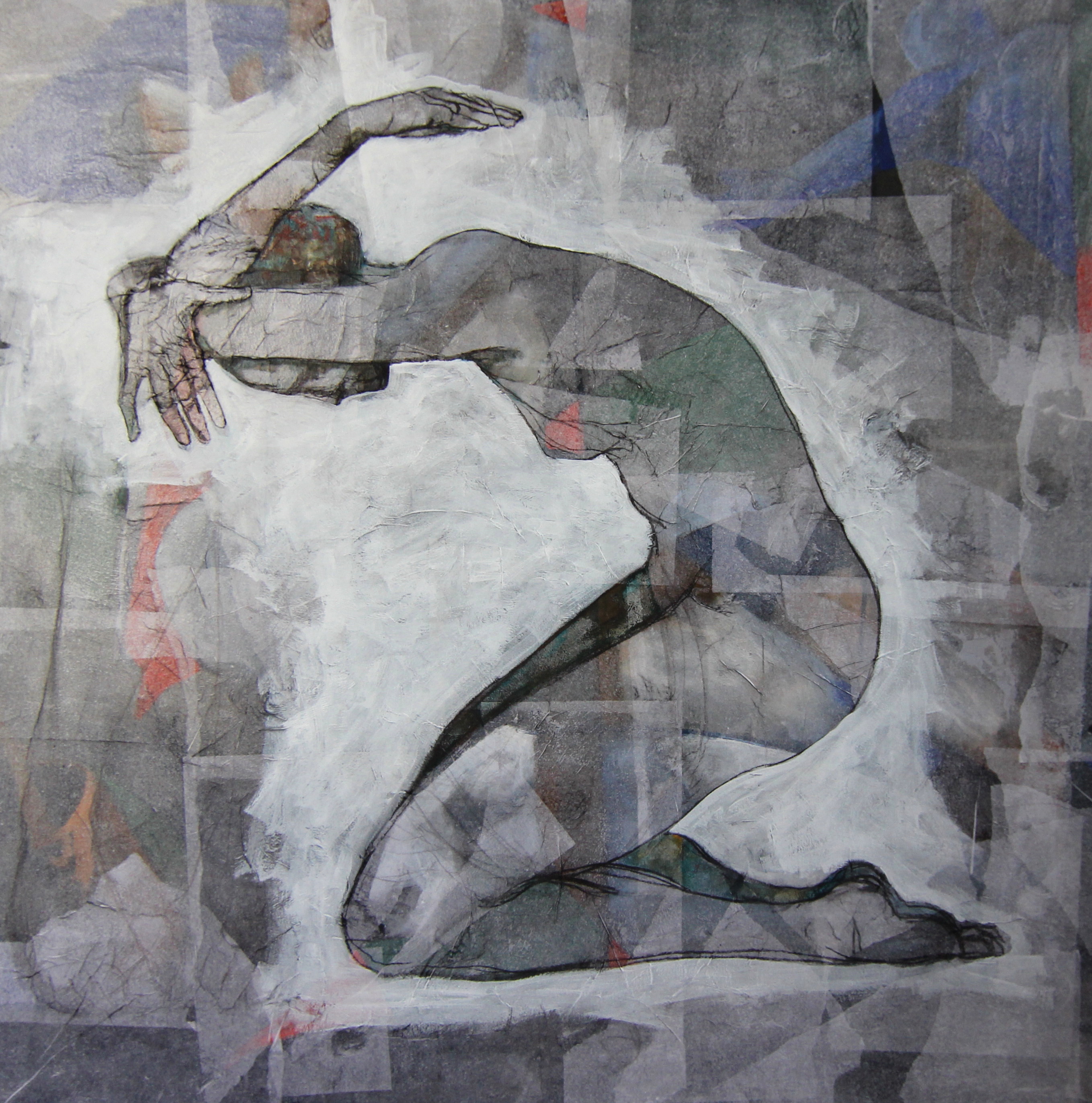
Yoga Series 7Go here for fine art prints of my paintings

Laugh For Warmth

'The Wind' by David Robinson

‘The Wind’ by David Robinson

Someone threw a switch and it’s winter. There was no gentle drop in temperature, no ease into the cold. Monday was balmy. Tuesday was bitter. Today, the pond is frozen and I am watching the front edge of the snowy season dip its toes into the world. Last night we cut short our usual walk; we were shy a few layers of clothing and feeling was leaving all fingers and toes. We laughed for warmth and walked faster.

Life changes fast. We are reminded of that when tragedy strikes. When death comes to the too young or the fire consumes the neighbor’s house and all their treasures, we say, “Remember how precious this life is! Remember to be more grateful for what we have!”

Sometimes that seems to be the single salient point of tragedy: to make the rest of us stop, remember and appreciate what has real value. And, the moment of appreciation, like all moments, is passing. We get caught again in the dull pull of routine and stop seeing the miracle.

I just entered an art competition (note: isn’t it strange that “art” and “competition” can exist in the same sentence?); the theme is peace (note: isn’t it strange that the theme of a competition could be peace?). In my artist statement I wrote that peace is a practice, not an outcome. It is something people bring to the table, not something negotiated at the table. Conflict is at the core of every story and, therefore, is the engine of movement in every story. That is also true in every life story. We tell stories of enmity and we tell stories of amends and, if we are paying attention, we realize that both are a single story told from a different point of view. The story we tell, like peace, is something we bring to the table, not something we find there.

Flip the switch, stand in the others’ shoes, laugh for warmth and walk faster or simply slow down and feel the cold. Life not only changes fast, it passes fast, too. It seems impossible that I moved here a year ago. It seems like last week. Today, looking out the window as big snowflakes float to the ground, watching the Dog-Dog chase them with great delight and snap them out of the sky, I made a conscious decision to see the miracle and forgo the necessity of a thump to wake me from dullness. This winter is like no other.

title_pageGo here to buy hard copies (and Kindle) of my latest book: The Seer: The Mind of the Entrepreneur, Artist, Visionary, Innovator, Seeker, Learner, Leader, Creator,…You.

Be The Fool

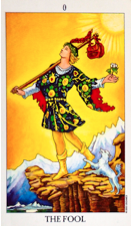
The Fool card from The Radiant Rider Waite deck

The Fool card from The Radiant Rider Waite deck

Each day I open The Bible of Mankind (sadly, now out of print) and read a phrase. It’s a form of daily meditation for me akin to throwing the I Ching; I pick from the reading what seems relevant. Some days the phrase is confusing, some days it is curious, some days it is profound. Every day it is significant. Today, the phrase was from the Buddhist tradition and under the subtitle, Foolishness & Wisdom:

“The man who has learned little grows old like an ox. His flesh grows but his knowledge does not.”

I delighted in the pairing of foolishness with wisdom. I suspect there is only one path to wisdom and it requires a good deal of foolishness. I googled the meaning of the Fool card in the tarot because, as I recollect, when upright, the Fool is about beginnings and bold steps into the unknown. From my search I found other words and phrases like unlimited potential, purity, and innocence. The Fool is ever present and has in his (her) bag all the tools and resources necessary for the journey through life. The Fool came to this earth to learn.

Another phrase that caught my attention was this: the Fool is always whole, healthy, and without fear. He is the spirit of who we are, the spirit expressed and experienced as wonder, awe, curiosity, and anticipation.

Recently, Bruce and I had a great talk about how life looks different at 50 than it did at 30. The main difference is that you know without doubt that it is limited. And, because the big death is visible, all the little death passages, the steps into the unknown, take on more import. Yearning is more electric when mortality is undeniable. All of the belief and investment in outcomes and achievements dissipate. This life is an experience, nothing more. It passes. And, it is dealer’s choice whether the experience is expressed and experienced as fear or expressed and experienced as The Fool: wonder, awe, and curiosity.

The wisdom path is the Fool’s path. The ox, to become a fool filled with knowledge, need only step out of its pen, into the unknown, and be filled with new experiences.

title_pageGo here to buy hard copies (and Kindle) of my latest book: The Seer: The Mind of the Entrepreneur, Artist, Visionary, Innovator, Seeker, Learner, Leader, Creator,…You.

Eve, by David Robinson

Eve, by David Robinson

Go here for Fine Art prints of my paintings.

Tell A Good Story

The Storyteller emerges from the forest. Lucy & The Waterfox

The Storyteller emerges from the forest. Lucy & The Waterfox

Over the years I’ve tried countless marginally successful ways to define for others what I do. It would seem obvious: I am a painter. I am a writer. Oh, and a theatre artist. And a consultant. And I’ve maintained a coaching practice. I’ve worked in education, the corporate world, with non-profits, and with entrepreneurs. So, in conclusion, I do too many things.

Well, that’s not exactly true. I do one thing. I deal in story.

I speak the language of story and that is confusing in any arena. What does it mean? Such a simple word, story, and yet it can mean so many different things. For instance, a truism in effective, transformational coaching is that the story doesn’t matter. By story, coaches mean the circumstance; in transformation, in the fulfillment of potential, the details of what happened – the story – are not useful. The circumstance story usually equates to blaming or endless attempts at self-fixing. The circumstance story gets in the way of growth. It is an anchor in the sea of dysfunction.

I don’t work with circumstance stories.

By story, I mean inner monologue, the-story-you-tell-yourself-about-yourself. By story, I mean the language that we use within ourselves to articulate belief. I work with the orientation story, the personal and communal mythology. Rather than get in the way, the orientation story defines the way. It defines what we see. It defines our relationship with time, with nature, with god, with community: it is the lens through which we make meaning. I help people change their lenses. Try explaining that to a CEO!

Last year, when Skip and I shuttered our business, I also shuttered my coaching practice. I ended my corporate work. Much of it came to feel like wearing an ill-fitting shirt –or a host of ill-fitting shirts – so I decided to clean out the closet. I wanted to drop all the definitions, the old forms, to make space for the new.

Last week I decided it was time to peek into the empty closet. And, as serendipity would dictate, I happened to be reading Frank Delaney’s engaging book, The Last Storyteller. On page 99 of this fictional tale, this is what I read:

“…every legend and all mythologies exist to teach us how to run our days. In kind fashion. A loving way. But there’s no story, no matter how ancient, as important as one’s own. So if we’re to live good lives, we have to tell our own story. In a good way. A way that’s decent to ourselves.”

I threw my head back and laughed. There is no story as important as one’s own. To live a good life we have to tell our own story in a good way. And then, there was this:

“…I don’t give anybody advice. All I do is release the good thinking that’s already inside of you. You’re the one who acts on your own advice, and I have the pleasure of helping you reach those thoughts about yourself. So it’s not me helping you. It’s you helping you.”

Ask me today what I do and I will say, I write. I paint. Ask me for more detail and I’ll open the book to page 99.

[to be continued]

title_pageGo here to buy hard copies (and Kindle) of my latest book: The Seer: The Mind of the Entrepreneur, Artist, Visionary, Innovator, Seeker, Learner, Leader, Creator,…You.

All digital forms of The Seer can be found here

Order Chaos

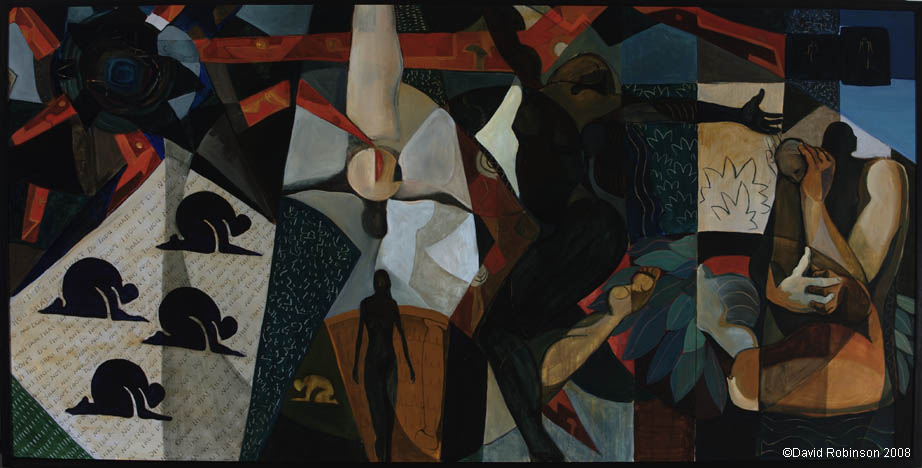
One panel of a triptych I did for a performance with The Portland Chamber Orchestra. This is, "Prometheus: Resurrection"

One panel of a triptych I did for a performance with The Portland Chamber Orchestra. This is, “Prometheus: Resurrection”

There is order. There is chaos. They are as intimately related as magnetic poles, the pull and push of action. Chaos is pulled into order and order is pulled into chaos, forms are thrown up and pulled down again. Life spins on this axis.

Today during my walk I made certain to step on the leaves. With the assistance of the wind, the trees are releasing leaves in great flurries of color. Orange and yellow and red swirl to the ground and then swirl on the ground, too. The movement is an invitation to step boldly on the carpet of color. I love the sound that it makes, the swirling and the crunching. What was out of reach a few short moments ago is now underfoot. Life is like that.

The wind off the lake was bitter so we turned down a side street and sought protection amidst the houses. It is rare that we don’t, as a Buddhist might say, “Eat the cold,” but today we desired presence to be warm. We scurried home, shuffling our feet through the leaves, and sipped hot apple cider, fingers wrapped around the mug to absorb the heat.

I read recently that the path to realizing our divinity is to accept our human-ness. Trying to be better than we are blinds us to how beautiful we really are. It’s a paradox. Apparently, divinity is not found in perfection but in the messiness of everyday. It is not a fixed state, but moves between the poles, sometimes wearing the mask of order, sometimes arriving in the face of chaos.

title_pageGo here to buy hard copies (and Kindle) of my latest book: The Seer: The Mind of the Entrepreneur, Artist, Visionary, Innovator, Seeker, Learner, Leader, Creator,…You.

See Why

Once again, H wrote me with some good advice concerning my limping kickstarter campaign. I opened his email while taking a break from research I was doing on grants for artists. His email collided with something I’d just read (and applauded) on the Surdna Foundation grant site. Here’s his email:

Something dawned on me today when I checked your KS page. Two things, actually.

The first, you actually could make your goal. $7k days are not that uncommon on KS.

The second is that you can’t seem to stop yourself from teaching, and I think you need to for this work, just as you should in order to write and direct the play. All the “truths” and lessons of story and of art should be axed. Because they are true and obvious when we see them in action. But the statement of those truths and lessons distract and dilute that action. 

Tell why you love Tom’s legacy and The Lost Boy, why it is essential to your life’s work, and why your life’s work matters, why it has to be done… 

You have time for one more ask…..

And, here’s the bit of text that I applauded from the Surdna site:

“Art is fundamental to our collective understanding of who we are, what we believe, and how we relate to each other and our surroundings. Artists and their coconspirators weave the cultural fabric necessary for a sustainable, vibrant society.”

In 1998 I applied for and was accepted into master’s programs in both painting and theatre (directing). It was confusing for me at the time because both acceptances felt miserable, like walking into a cage. In my desire to go back to school, I wasn’t looking for technique or an answer to “how-to.” I needed to take a deep dive into “why?” So, instead of the obvious route, I jumped into a degree in organizational systems because I could bend it to my real pursuit: art as central to the identity function of a culture: art (specifically ‘story’) AS the system. As the folks as Surdna wrote: artists weave the fabric necessary for a sustainable, vibrant society. The story inside you, the story-you-tell-yourself-about-yourself, is inseparable from the story happening outside of you, the story-the-community-tells-itself-about-itself. When a society has a living, breathing mythology, they live from a single, shared story. As Joseph Campbell famously said, “Our mythology is dead.”

We orient and make meaning according to a shared narrative. So, if there is something that bugs you about the world it is most likely a reflection of something within you. If you want to change the world, you must start with your self. How do we begin to tell a different story when we imagine that our story is separate from all other stories? How do we make a better world when the story of the individual supersedes the story of the community?

Working with the shared narrative, dancing with the inner and outer story in all of its power and potential is my life’s work. Tom is one of the few people I’ve ever known who understood this dance. He is responsible for igniting the fire in a legion of artists, for guiding a multitude of lost boys onto a power path. He opened my eyes to a deeper path through the arts and life. He taught me that the Greeks believed that the telling of the epic stories was necessary for the health and wellbeing of a community. He taught me that we’ve forgotten what the Greeks knew. The story of The Lost Boy is Greek and has the power to help us remember. Tom believed in a better world and that a better world happens naturally when we tell a better story. That is why this play needs to be done.


Go here to help me make possible a $7k day:

DSC_1196 copy

Explore The Human

photo-2

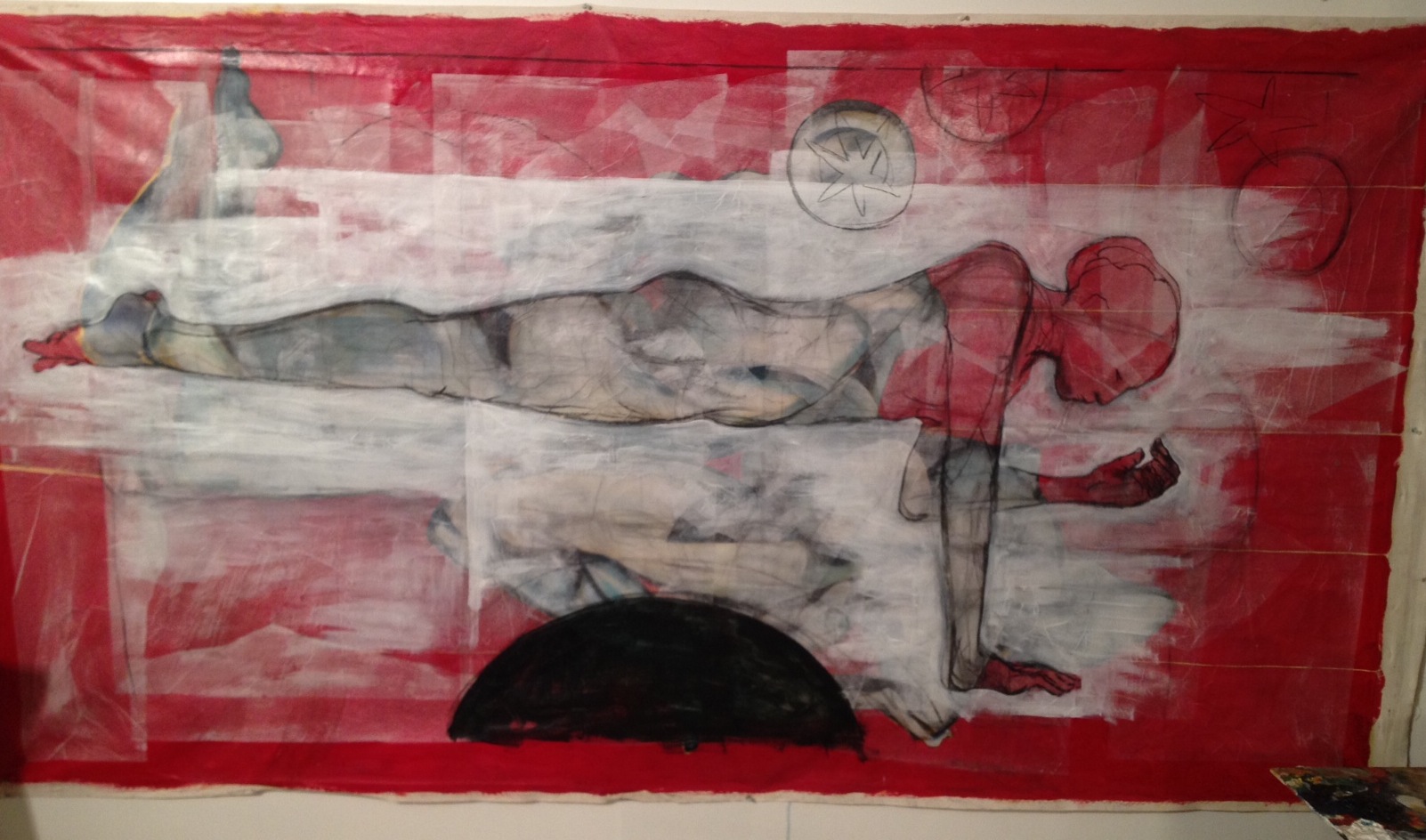
my latest work-in-progress. No name yet, approximately 5ft x 9ft.

Standing on the stair to her studio, Pam said, “I’m not sure where my work is going. I’ve pulled out all of the old paintings so I can see where I’ve been, what I’ve been doing, and maybe that will help me live into what’s next.” Like me, Pam has been a painter most of her life. She’s been through this transition many times before and recognizes the necessity of fallow artistic fields. Rather than push or panic, she’s matured as an artist and knows enough to value the emptiness.

With maturity comes faith. The muse never leaves. She rests. Artistic cycles are no different than seasons. Like a farmer living through the winter months on the harvest of the fall, Pam will spend hours sitting with her old work, thinking nothing, drinking in the nutrient of her artistic yield, allowing her inspiration fields to recharge and rejuvenate. She will allow herself to go empty, creating ample space for the new work when the muse reawakens. And then, one day, she will pick up a brush and be surprised by what comes through her.

Hans said, “An artist matures when he or she ceases working from their pain and begins exploring the human condition.” Working from the wound is necessary as adolescence is necessary. Most artists in our western tradition begin in rebellion, pushing against, making statements. We celebrate the outsider, the margin-sitter and so the wound can be difficult to escape: artistic pain becomes a role, an expectation. In practice it is akin to a developmental stall. The only place to go when pain is the norm is into the intellect: to produce, to make statements. Pain isolates and ultimately, an isolated artist is ineffective. Artistry, like all things vital, must occupy a shared space. It is communal or it is impotent.

Potency comes when the eyes turn out, when the question of “we” becomes more vital and interesting than the question of “I.” Artists mature when they reorient, when instead of the art expressing their pain, they serve the art and, make no mistake, art is another word for “human condition.” Art is bubbling life in all its forms: visual, kinesthetic, aural. As Hans said, “I want to fall deeper and deeper into the music. I want to find the edges and follow where it takes me, give myself over to it.”

title_pageGo here to buy hard copies (and Kindle) of my latest book: The Seer: The Mind of the Entrepreneur, Artist, Visionary, Innovator, Seeker, Learner, Leader, Creator,…You.

DSC_1196 copyGo here to support the kickstarter campaign for my play, The Lost Boy.

Tend The Root

The moon over Benziger Winery

The moon over Benziger Winery

I am not and have never been a landscape painter. I paint the figure. Yet, my current sketchbook is filled with fanciful landscapes, sketches from places I have been and places in my mind. Great scribbles, cross hatches, and curly cues carve rolling hills and midnight skies. I started drawing these landscapes just before I stepped off the reservation and went on my walk-about. They are meditations.

When I was very young, over and over again, I drew a cabin in the woods. There was a tree in the foreground and beyond, across a meadow, stood a rough cabin. It was as if I knew the place and I was drawing it to remember. I must have drawn it hundreds of times, the leaves on the trees, the door and windows calling for a visit. The quiet. Even today, forty years later, I can feel the quiet when I remember drawing my cabin.

Doodles and Dwight notes

Doodles and Dwight notes

The other night while on the phone with my long lost friend, Dwight, I needed to write a note – he was sparking such great insights – and all I had within reach was my sketchbook. I wrote the notes and also started to doodle as we talked. My doodles went the way of the landscape. Shapes and swirls and squiggles. Drawing is also a form of note-taking.

Dwight talked about going through the crush and coming out the other side as something – someone – wholly new, simpler. The crush refers to the process of grapes becoming wine. Life can crush us. Life does crush us. We change form, grapes to wine, children to adults to ancestors.

I told Dwight of the gift Skip gave me: lessons in wine and a few days with Barney who walked me though a vineyard and taught me about the roots and the vine. Trying to rush the grape with fertilizers and pesticides will perhaps provide short-term gain but will kill the vine in the long term. It makes the vine weak and incapable of drinking the nutrient. Health, true health, requires respect for the root and an understanding of the natural pace of things. This simple respect for the root, care and attention to the whole plant, the seen and unseen, and not a blind focus on production or the test score or the bank account, creates health. It is a meditation.

title_pageGo here to buy hard copies (and Kindle) of my latest book: The Seer: The Mind of the Entrepreneur, Artist, Visionary, Innovator, Seeker, Learner, Leader, Creator,…You.

DSC_1196 copyGo here to support my kickstarter campaign for my play, THE LOST BOY

Do.

from my children's book, Play 2 Play

from my children’s book, Play 2 Play

About the river, Jim said something like this: I had to stop complaining, leave town, or do something about it.

Jim chose to do something about it. He got busy. Now, he’s dedicating time each week to clean and care for a stretch of the river. He’s working to make people aware of the rich life that the river supports. He’s drawing the plant life. He’s made and delivers an incredible Powerpoint presentation.

Jim came to an awareness threshold: complaining is not doing – but unlike most people, he crossed the threshold and changed. The first necessity in any change process is to change yourself. Complaining is a first step but it is where most people stop. Complaining feels good because it provides the illusion of action. Complaining can become fuel if it is followed with a step toward action.

I’ve worked with scores of people who wanted to write books or paint paintings and most came to me with a complaint: lack of time, no quiet space, or some other circumstance that blocked their happiness. When we removed complaining as an option, they created time or quiet space. They wrote. They painted. It was not magic. It was practical. Complaining requires dedicated energy. It also takes time and more than a little thought-space. Painting, writing, or cleaning the river also requires dedicated energy. The question is about where the energy is dedicated.

Ultimately, as Jim described it, the move from complaining to doing changed how he was in the world. He changed so his world could change. He stepped from helpless witness to active participant.

title_pageGo here to buy hard copies (and Kindle) of my latest book: The Seer: The Mind of the Entrepreneur, Artist, Visionary, Innovator, Seeker, Learner, Leader, Creator,…You.

DSC_1196 copyGo here to support my kickstarter campaign for my play, The Lost Boy