Go Empty [on DR Thursday]

Readers…will welcome the enlightening description of ’emptiness as a beneficent state before creation.” ~ Anna Freud, forward to ON NOT BEING ABLE TO PAINT by Joanna Field

Kendy gave me the book, On Not Being Able To Paint in 1999. That was the year I burned almost all of my paintings. Let’s just say that I hit a wall. Another interpretation of my 1999 big fire is that I needed to create space. It’s a paradox I very much appreciate: as an artist, the overwhelming need to create space when feeling completely empty. ‘Being empty’ is not in-and-of-itself spacious.

Emptiness before creation is…biblical – it is pre-biblical, Chaos and Abyss are players in the Greek-god-canon. The universe abhors a vacuum but welcomes space.

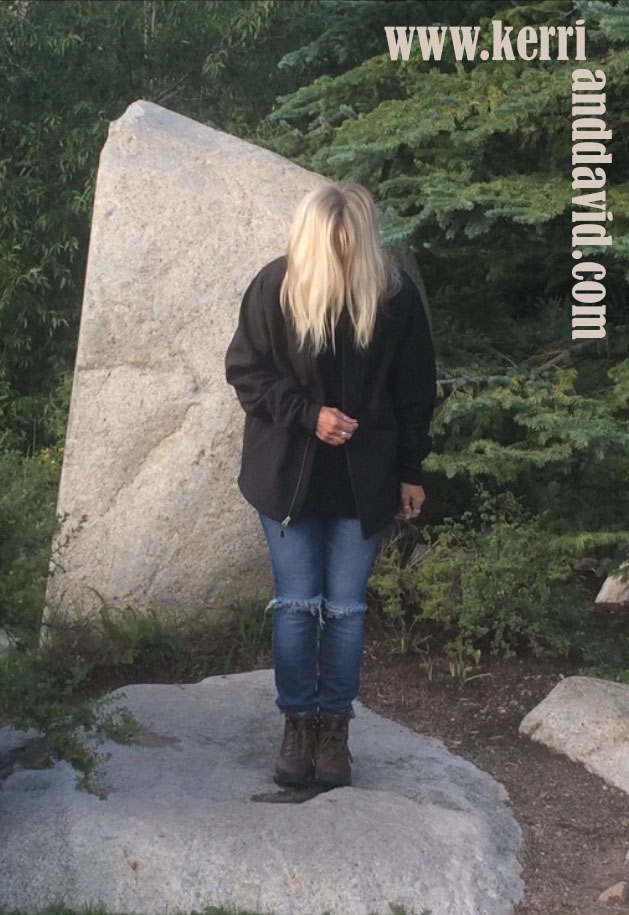
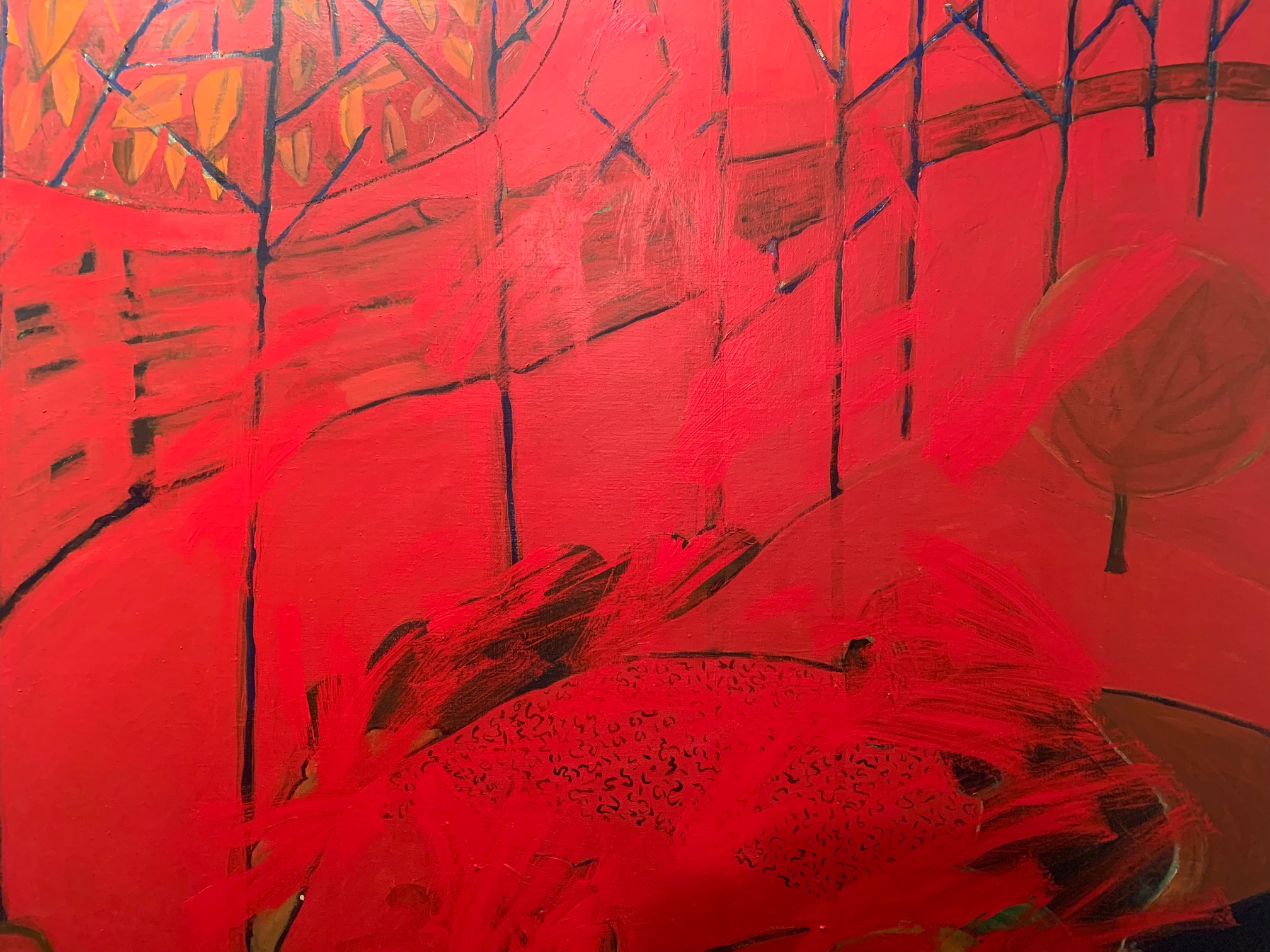
This painting, lovingly dubbed THE RED MESS, has been on my easel for months. It predates the great basement flood. It’s what I was painting when I entered the void, when my tank went empty. I must have known I was low on creative fuel because I was trying something new. Red. The painting was, before I wiped it, an image of Kerri taking a photograph of a train through the trees on the Des Plaines river trail. She has a series of Trains-Through-Trees and I’ve delighted in watching her race to catch the shot.

Karola, perhaps the wisest AND happiest person I have ever known, encouraged me to allow myself to “go empty.” At the time, I was in my twenties, I feared emptiness. I thought my muse might leave and never come back. I fought her advice while trying to take her advice. One foot on the gas and the other foot on the brakes. “David,” she said in her German accent, “you have to let the glass go empty before it has the space to fill up! Let yourself go empty!” She laughed so hard at the look on my face that tears came to her eyes.

Now, I’ve sorted out my pedals. I descend into the studio every day and stand before this red mess. I don’t want to take it off the easel. It’s helping me embrace-the-space. It’s a loving postcard to myself, a reminder to respect the emptiness. To stand in the void and welcome the spaciousness.

Muses do not leave. People routinely turn their backs on the muse. Mine is right in front of me, sitting on my easel, draped in brilliant red, just like a stop sign. It is not a matter of hitting the gas or the brakes. Sometimes you just have to get out of the car and rest your eyes for a while.

read Kerri’s blog post about THE RED MESS
Use Your Chalk [on Two Artists Tuesday]

There are two words floating around in my universe these days: structured and unstructured. Structured data. Unstructured data. Structured time. Unstructured time.

The world as seen through the Puritan lens gives great preference to structure. Unstructured anything is suspect. “Idle hands,” we are taught, “are the devil’s workshop.” Yikes. Apparently it’s dangerous to take a stroll, to sit and ponder, to clear the day and do nothing.

I suspect it explains why our notion of business is hyper-focused on the bottom line and often misses the value of relationships. Bottom lines are easy structure. Relationships, not so much. It is the same with test scores in education. Easy structure. However, stepping into the unknown – the very definition of learning – is largely eschewed because it begins in an unstructured pursuit. Creating the structure, making the meaning, discovering the connectivity is what our hearts and brains like to do. When learning isn’t merely a factory, when business is more than a bottom line, people prosper. They come alive.

Unstructured time. There was a time when time had no structure. Monks attempted to “keep” time by monitoring water through a bucket or sift sand through an “hour” glass. Sometimes the water froze in the bucket so the structure of evening prayer was disrupted. The sand clumped in the hour glass and the measure of time clumped with it.

There are moment on the stage when the actor forgets their lines. It’s called “going up” or “drying.” It is always, in the re-telling, the moment when everything becomes real, alive. It is the moment when the structure becomes unstructured. Hearts race. Eyes widen. The stakes are suddenly palpable. The actor breathes, stands in the vast unstructured universe, and the words return like a swinging bar to a high-flying aerialist. The play is infused with aliveness. Presence is mostly unstructured.

As is common in the structured and unstructured use of the English language, oppositions are easily constructed. Unstructured simply means the meaning has yet to be made. Structured data, structured time, are the tip of a largely unknown iceberg. Love, joy, despair, awe…the full spectrum of experiences, bubble in the unstructured spaces. Numbers can describe a moment in time, can orient for a moment, but will never “explain” yearning or desire or our fundamental need to tell stories (put structure on unfathomable experiences). Structure & Unstructure: they are dancing partners, not combatants.

Where do we come from? What are we here to do? I am going to die, what then? It takes a good deal of unstructured time to sit in these unanswerable questions. There are, of course, plenty of people who will gladly provide structure to your unanswerable – and therefore uncomfortable – questions. Perhaps that is why we adore our structure and demonize the empty spaces? Comfort. Ease.

Kerri cannot pass a hopscotch template chalked on the street. It’s almost automatic. Step, hop, hop, step, hop. The little girl in her connects to the child who chalked the squares on the sidewalk. A simple game. Play. It’s one of the things people do with unstructured time. Set challenges. Make up obstacles. Seek puzzles. Invent. Dream. Connect to the deeper places. Where’s the structured bottom line watching the little-girl-in-my-wife hop and skip and turn in the game-chalked-on-the-sidewalk? The laughter of remembering? The giggle and freedom of the woman hopping the scotch, just because she can?

read Kerri’s blog post about HOPSCOTCH

Await The Whoooosh! [on KS Friday]

Although the genre-labels attached to her music, words like “new age” or “easy listening,” might lead you to believe otherwise, Kerri is not a gentle player of her piano. She doesn’t sit at it. She stands. Often, when she plays, the piano literally hops. This diminutive woman is a force of nature when she steps into her music. For her, playing is a full-body affair.

In this day and age of electronically generated music (and art), it’s hard to explain the love of the analog, the delight in full-body art-making. There is a flow – there is no other word for it – that is possible when using brushes and paint on large canvas or making music on keys that aren’t digitally supported. It becomes a dance. It requires opening, getting out of the way.

Early in our lives together we’d listen to her recordings, “Can you hear the whooosh?” she’d ask. “That’s the pedal! I love that sound!” she’d say. “Whooooosh! I don’t like playing on keyboards. There’s no whooosh.”

No whooosh. I’ve watched her play on keyboards – many times. You’d never know it but she has to hold herself back. If she let herself play, full-body-play, she’d knock the keyboard off its stand. She has to contain the force, water through a dam.

It’s anybody’s guess how she’ll play after her wrist recovers from the wet-floor-fall. There are still some months to go. In the meantime, the piano is calling. I know because she’s cleaning her studio. A studio cleanse is always the sign of an artist preparing for the next…Open space. A gathering storm. There’s only one thing I know for certain: on that day, when the pain is gone and she calls, “Come here and listen to this!” DogDog and I will go into the studio, find a safe place clear from potential piano hops, and we’ll take full-body delight in the return of the whoosh.

listen for the whooosh

Kerri’s albums are available on iTunes and streaming on Pandora

read Kerri’s blog post about PEDALS

that morning someday/blueprint for my soul ©️ 1997 kerri sherwood

Do What They Do [on DR Thursday]

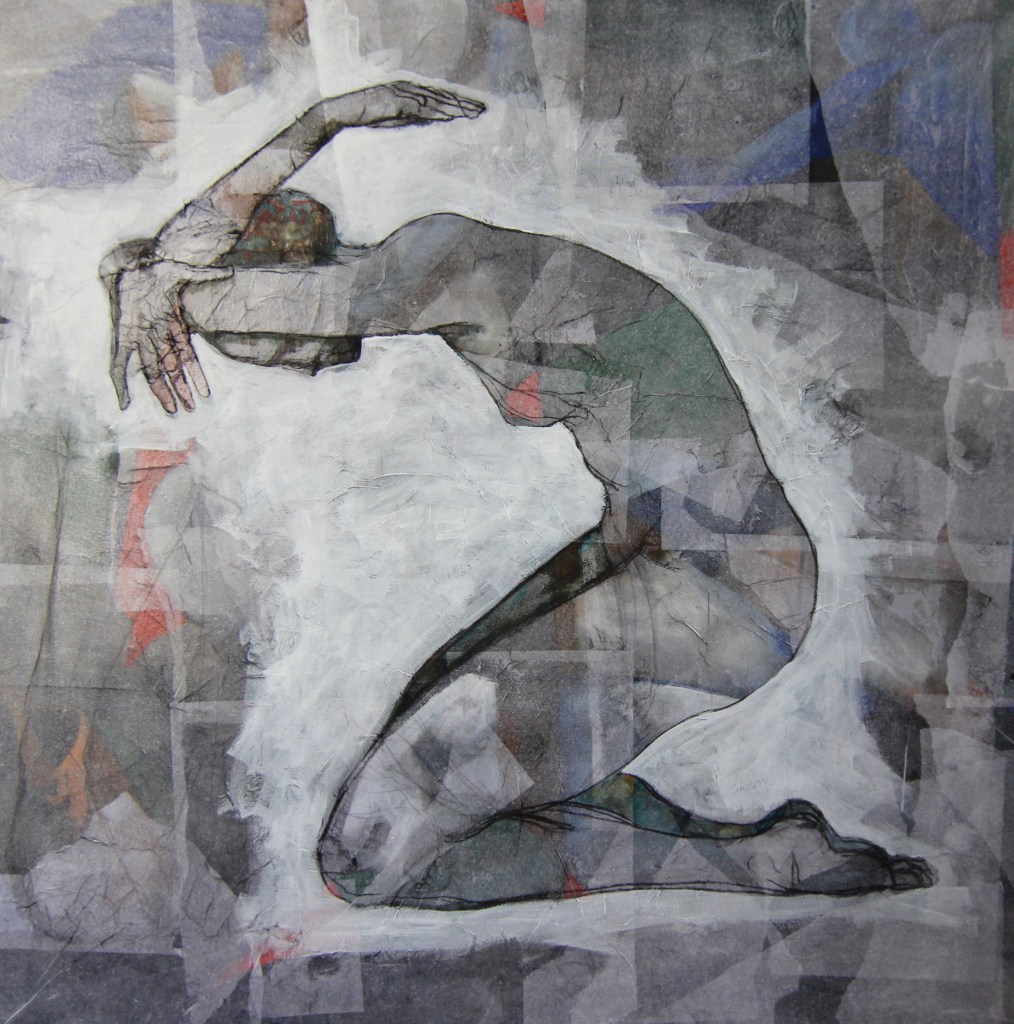
I’ve posted this painting more than any other in my stacks.

Some paintings serve as markers for new directions. This painting is one of those. What came before this painting was suddenly old. What came after was an exciting unknown path. Exploration and play. Big mistakes and messes followed by understanding. Materials can only be pushed so far. Bodies and shapes reveling in negative and positive space.

When I met Kerri, this painting did not have a name. I called it #7 in my yoga series. She called it “Iconic” and the name stuck. I liked the name. It seemed appropriate. An icon is a symbol. Something worthy of veneration.

Now, over ten years later, this icon, once the harbinger of the new, serves as the hallmark of what was.

I delight in this painting, Iconic. It is one of the few. And, although I am grateful for where it led me, I’ve come to realize that it no longer serves to locate me, except in a past chapter, like a yearbook photo.

Letting go. It is why I stand in my studio – I can’t even sit there of late – and look at the mess on canvas that sits untouched on my easel these many months. Somewhere, after this mishmash phase, somewhere, beyond the chaos and disorder and wiping away, there will emerge another marker. An icon. A compass.

Although I’ve written it many times in these past few months, it’s way past time that I admit – to myself – that I am, once again, in the wilderness. Someone once told me that we go to the wilderness to face our demons and find our gods. That seems a bit dramatic. Demons and gods are one and the same, like positive and negative space or comedy and tragedy. The lesson is always the same: stop taking yourself so seriously and the oppositions, the demons and gods, will stop pulling you apart.

Find a child and watch them play with paint. Do that. Do what they do. The wilderness is rich in sustenance if you know where to look.

Someday, in the midst of being lost, I’ll make an accidental mark that jolts me. I’ll turn it around, asking, “What’s this?” A new direction will emerge.

Read Kerri’s blog post about ICONIC

iconic ©️ 2010 david robinson

Read A Tiny Note [on Two Artists Tuesday]

I was still in shock. It was late, beyond midnight. The roosters were watching for the sunrise. The ritual I’d witnessed that night blew the metaphoric wheels off my car. Wave after wave of knife-wielding priests ran at the Rangda, a priest chosen for the evening to wear the mask, to enter the trance and become the demon. The priests stabbed the Rangda but to no avail. The blades bent. They were repelled. Eventually, all entered the trance and turned the knives on themselves, taking the energy, the protection of the Rangda, into their bodies. Into the community. No one was injured. Peace was made with the Rangda. Balance was affirmed.

I held one of the knives after the ritual was complete. It was not a stage prop. I could not have bent the blade on my chest without doing injury to myself.

Budi explained it all to me. I had so many questions. In his culture, the dark forces are not to be resisted or banished. There is no hell separate from heaven. Evil and good are not compartmentalized. There are energies, some dark and some light. There is no need to make peace with the light. The necessity is to face and make peace with the dark. Balance is created, an intentional relationship with a dynamic whole. It’s a dance of responsibility, a balance of dark and light. The middle way.

Balance.

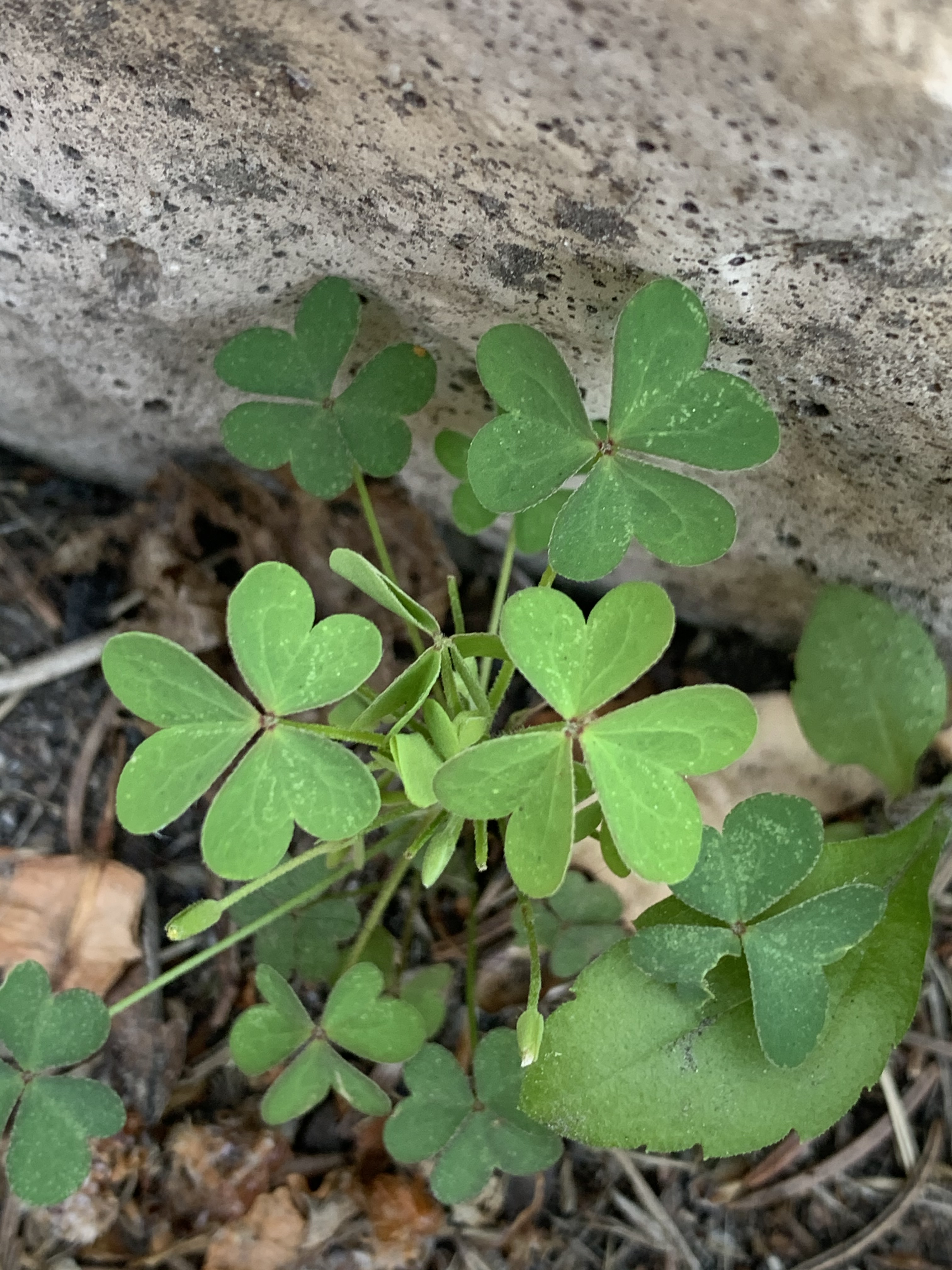
I loved this photo when Kerri showed it to me. Clover. You can’t tell but it is tiny. It is bursting from beneath the stone that serves as the step onto our deck. It made we wonder if the fairy people were close at hand. They serve, in the western tradition, a similar role to the Rangda in Bali. Nature spirits. It was most important to keep in the good graces with the Fairies. Honor their places. Respect and maintain the balance. According to tradition, they went into hiding, they left because we assaulted their spaces; we came to value the path of resources, mining, deforestation, fracking, damming…over the path of balance.

This tiny breath of clover. I sat on the stone last night. The air was cool after a humid and hot day. DogDog was doing his rounds. I had not thought of the Rangda in years. A tiny community on a tiny island. The “mayor” of the town introduced the ritual to us as their art. “We have so little to offer you,” he said in his broken English, “but we bring you our most prized offering, our art.”

Art. A prized offering. The dance of energies, an intentional relationship with the dynamic whole. An ongoing ritual of balance. It was the first time I witnessed a community that had yet to exorcise its art from the sacred. It bent knives. It restored balance. It belonged and gave deep meaning to every member of the community.

Tiny. Like the Fairies or the community on the island. A simple respect for what is good for the whole. Balance is expressed in the tiny things, the choices of where to walk, what to say. What helps in the long run. What does not. What gives meaning and cohesion to a community. What does not.

Budi would caution us with COVID and guns and a globe that is weirding and warming, “Rangda is ignored,” he’d say.

“Yes,” I’d reply, “the fairies have gone into hiding.”

But, all is not lost. They left a tiny note at our back door. Balance, it reads, is a relationship, an intentional act. It is an ongoing ritual, a tiny sacred thing.

read Kerri’s blog post about CLOVER

Tether Well [on KS Friday]

It’s official. YouTube has blocked forever our channel for the crime of using Kerri’s music. It’s happened before on other platforms so we’ve actually grown accustomed (sadly) to the loss. She is the composer, the performer. She holds all of the copyrights. We’ve learned that it is impossible to fight with an algorithm. I suspect that our appeal never met human eyes otherwise where is the sense? The algorithm wrote back assuring us that our claim was reviewed thoroughly but their decision stands. Vanish-ment.

Our vanish-ment is only one of the many examples of my latest fascination: what gets between you and your soul? What gets between you and your sense-making? What gets between you and your voice? In other words: what is real and what is not?

On a grand scale, we are alive at a time when deep fakes can put words into the mouths of anyone. We are witness to propaganda tv perpetuating fantastic lies, inserting themselves between people and their common sense. It is important to note that just because you believe it does not make it true. In fact, in today’s day-and-age of easy belief in the outlandish, it is a best practice to check everything you hear. It takes a bit of time – but only a bit – to tether yourself to reality. It takes no time at all to swallow the fables, conspiracies, and cotton-candy-illusions, currently blasting fire-hose-style across the e-waves.

“There is only one good, knowledge, and one evil, ignorance.” ~ Socrates

Anger and hatred are great mind foggers. They are easily-fed-fires-fueled-by-the easily-led. Make no mistake, the purveyors of propaganda see their audience as nothing more than firewood and depend upon dedicated ignorance and unquestioned belief. Those who stoke the fires generally revel in standing between people and their sense, people and their souls. Arsonists always have an agenda.

I’ve always understood that meditation and education share the same intention: remove the noise between your self and your experiences. Discernment. Quiet the mind. Open the mind. Artistry, at its best, does the same thing. It exposes you, opens you, to your greater self, to the fields beyond ‘what you think is true.’ Revelation, reveal-ation. At their very essence, artistry, meditation, education…require a full challenge of belief; belief is the final frontier of white noise, a worthy and necessary din to challenge.

Barney, the piano, grows more beautiful with age. The plants and flowers are again growing around his base. Chipmunks and squirrels sun themselves on his lid. One of Barney’s functions in our life is to remind us of what is real. That’s also true of the rusting sunflower that now lives by Barney’s side. After our YouTube vanish-ment, we sat for a moment on the back porch. “Look at the wild geranium!” Kerri said. She jumped to her feet to take a picture. Have I mentioned that she is also a great photographer?

The artist is intact. More, she is full of energy and ideas. A channel may have closed but the essential remains. Nothing can stand between an artist and her artistry. Not really.

Kerri’s albums are available on iTunes or streaming on Pandora

read Kerri’s blog post about BARNEY

this part of the journey ©️ 1998 kerri sherwood

Ask The Gorilla [on DR Thursday]

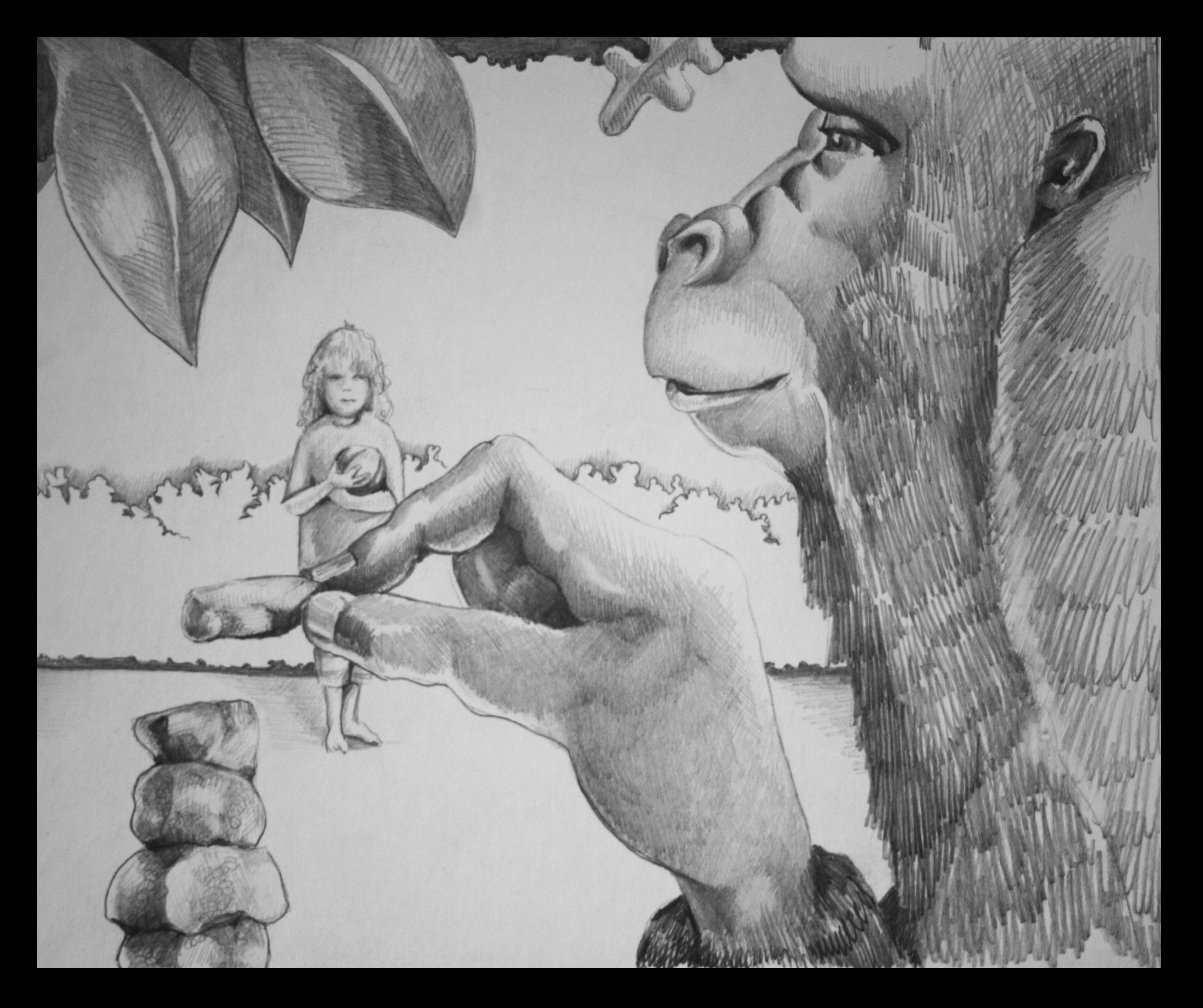
I’m not the first person to use a gorilla as the teacher in a story. This gorilla, in this story, is teaching the little girl the difference between playing-to-win and playing-to-become-a-better-player. The story begins when the girl asks the gorilla, “Do you want to play?” and the gorilla responds, “Well, it depends. What do you mean by ‘play’?”

It’s not a flippant question. It speaks directly to the “why” of what you do. The reason. Simon Sinek put this question at the center of his golden circle. James Carse wrote his philosophical masterpiece, Finite and Infinite Games, about this simple distinction.

Yesterday I had a conversation about success. A conversation about the difference between internal and external motivation. External motivators, like winning-as-your-why, are necessarily grounded in fear. What if you lose? Who are you if you fail? Winning at all cost will eventually lead to quagmires not unlike where the Republican party now finds itself. Obstruct. Lie. Gerrymander. Fix the vote. Fix the game. Any and all deeper value or ethic is sacrificed. There is always a cost when the “why” is as superficial as “to win.” The body seizes-up, loses its freedom of movement when fear of losing is the central driver of action. The nation-body, too.

The path to mastery cannot run through a win-lose “why.” Failure is an essential on a master’s path. Throw many pots, the metaphor from Art & Fear, is a mantra not only for artistic freedom, but for honing skills. Getting better and better at playing. See what happens. Playing to play, to become a better player, transcends and finally removes the word ‘failure.’ The body gains more and more freedom of movement when every action is a learning experience.

I wrote and illustrated this book back in my dark ages when I was facilitating diversity and inclusion trainings. Some companies hired us because they feared being sued. They feared losing money and had no real interest in diversity, inclusion, equality, fair play, betterment for their employees. They feared losing their privilege. Diversity initiatives ask that we stop rigging the game.

Other companies hired us because they truly desired to address the inequities in their organization. They wanted to step into their blind spots and see. They wanted to become better and better players in their communities. Early on we learned to distinguish between the fear-clients and those that were sincere. We became better players by choosing to work with organizations that were honest and sincere about their “why.” Players of infinite games.

I never attempted to publish Play-to-Play, my little illustrated meditation. Over the years I’ve given away some of the illustrations. It is one of the many stones I’ve stacked, pots I’ve thrown, the many projects and paintings that are literally stacked in my studio. It seems more relevant now than ever before. Yesterday, looking again at the illustrations, I told Kerri, “I should draw this again. I’m better now.”

She asked, “Why?”

I said, “Exactly.”

read Kerri’s blog post about STACKING STONES

play to play ©️ 2005 david robinson

Root Into The Worth [on KS Friday]

As Tom Mck used to say, “There are only three people in the United States qualified to review plays and none of them live in Stockton, CA.” His point: it’s best not to read your reviews but, if you must, don’t invest in what you find there. Good or bad, the review has little to say about the work of the artist and everything to say about the mind of the reviewer.

To be an artist is to be vulnerable. Vulnerability is an especially complex skill to master when the work of an artist is an open invitation for commentary.

The worst play I’ve ever seen got a standing ovation the night I saw it. Some of the best work I’ve ever done drew little or no audience. I directed a play that regularly had half the audience storm out of the theatre in anger while the other half was on its feet cheering; which half should I believe?

Many years ago I directed a play. One of my leading ladies had a family friend who was the theatre reviewer for the local paper. After opening night, my actress’ fine performance started to twist and sour. It was a mystery to me how her good work could go so bad. Later I learned that she was taking notes from the family friend. She lost herself in the cloudy opinion of an other and her performance suffered for it. She suffered for it.

Artists – not unlike everyone else – like to be liked. Most wait tables or teach lessons so they can pursue the thing they love. I use the word “love” purposefully. Most are regularly asked to give away their love/work for free on the empty promise of “exposure.” As Kerri says, “It’s hard to pay your rent with exposure.” It’s very, very easy for an artist to feel undervalued in a world where money defines value – while constantly being asked to perform for free. It makes being-liked an especially dangerous value-default.

Some of the greatest artists I’ve known lived marginal financial lives; financial success evaded them – but they knew without doubt the single secret that kept their work vital all of their lives: they alone were the judge of whether or not their work was good. They alone knew the pure driver of their pursuit. They knew the real danger of an artist’s life is to lose the purity of their artistic driver in the swamps of “being liked” or getting good reviews. They worked hard to stay centered and avoid becoming dancing bears at the circus.

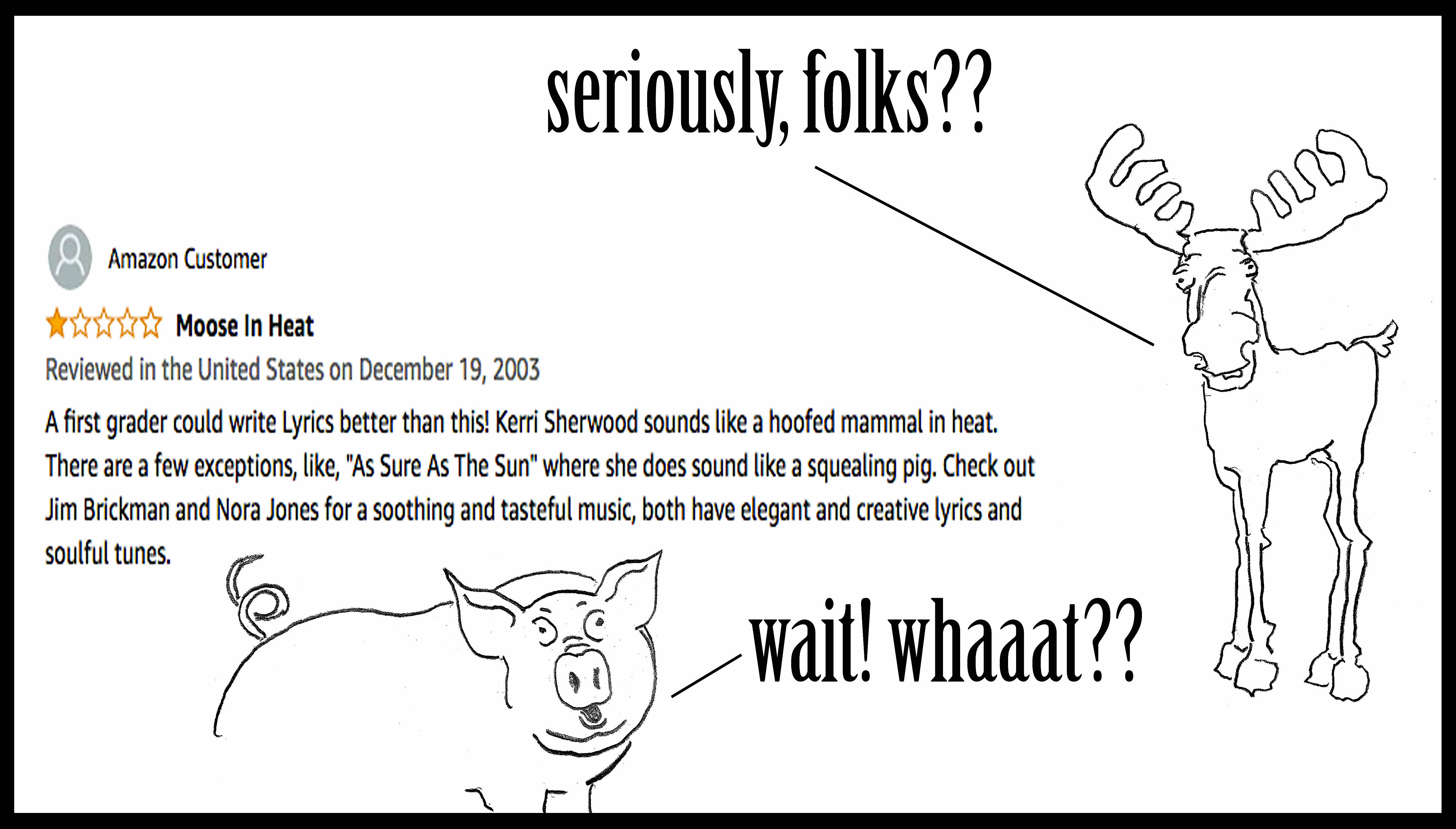
It was Tom’s greater point: only you – the artist -will know if your work is good or not, if you’ve truly found and pushed your edge or discovered new territory. You will know when your work is shallow. No accolade can change that. You will also know when your work is exceptional. No criticism can change that. Its best to root into the worth of your pursuit, to grow and learn, rather than gorge on the ever-abundant-opinions of others. Good or bad. Moose or pig.

read Kerri’s blog post on MOOSE IN HEAT

all of kerri’s albums are available on iTunes & on Pandora

Set It Free [on DR Thursday]

Horatio told me that, according to the happiness index, the good folks in Iceland sit atop the happiness-mountain. One reason, he explained, is that they’ve removed failure from their national equation. They cheer the effort, not the outcome.

Removing failure from the equation is the main ingredient for fun and success in all arenas, especially the arts. It is impossible to learn color theory without making some extraordinary messes. Ask a dancer how many times they tried and fell before they made that astounding leap look easy. Throw many pots and, over time, mastery will come – and mastery is nothing more than the understanding that there is no such thing as failure. It is the feel and touch of a long relationship with clay that can only come from not being afraid to throw it, to see what happens if…

Sometimes, no matter how hard I struggle with it or adjust it, a painting just isn’t working. Usually it doesn’t work because I’ve forgotten the rule about failure-removal. My brush is too timid. My brain is in the way. And yet, sometimes, in the middle of a painting that isn’t working, there is a small piece, the actual inspiration for the painting, that isn’t stilted, that remains alive and free of my fear. It’s easy to see. It captivates my eye, a warm island in the middle of a frozen sea. Every so often, rather than paint over the whole thing, I’ll lift the island, cut it out, set it free from it’s too-labored surroundings.

“Brutal,” Kerri said. “I liked that painting.”

“I’ll do another,” I replied. And maybe, I thought, another and another and another. Who knows, learning to cheer the effort takes some not-so-serious practice. It’s the only road back to the freedom of finger painting and the joy of playing in the sand.

Beautiful K.Dot, 12 x 9IN, mixed media

read Kerri’s blog post about CUT OUT

beautiful k.dot ©️ 2021 david robinson

Look Closer [on Two Artists Tuesday]

Arnie recently sent me a book, Connection by Kristine Klussman. As is my practice these days, I’m reading it slowly, a few pages at a time. I recognize much of what she’s writing about: focus placement, meaning making, cutting through the ‘should’s’…all in the process of re-connecting to what is really important in this life. The book offers specific exercises and process steps to help readers take a closer look at their lives. To identify the gaps between espoused and lived values in order to make different choices and close the gap. Alignment.

In art school, the most valuable lesson (for me) was to learn to see beyond what I ‘think.’ I’ve written about the professor who asked us to look at our yellow #2 pencils and tell him what color were the pencils. A riot of eye rolling ensued but, in the end, he helped us to see that the simple yellow pencil was alive with green and purple and red. Our minds generalize. It requires a bit of slowing down and, dare I write, a bit of presence, to see and experience how rich and alive even the simplest things, a yellow pencil, really are. The dictum applies to each and every day of life, especially the days we generalize into boredom or “same-old-same-old.” Slow down. Look again. There’s more to the yellow pencil than you think.

When Kerri and I arrived home from our trip to move my mother into an independent living community, we poured a glass of wine and opened the box my parents had kept with the artifacts of my life. Old newspaper clippings of play reviews, playbills, gallery opening announcements, elementary school report cards, photographs that reached back through proms and school portraits to blurry black and white infant prints with “David, 4 months” scribbled on the back. It was a poignant exercise of pulling the life-camera in for a closer view. Life-fragments in a box are like the yellow pencil. They require a closer look.

I’ve always appreciated Kerri’s tendency to pull the camera in closer. She is forever taking photographs and then pulling the image this way and that, like so much taffy, looking for the most interesting slice, the most dynamic composition. In her photographic-push-me-pull-you, there is often a discovery. “Look at this color!” she’ll exclaim. Or, “Did you see this! Look at the spines on this plant!” She cultivates surprise. She understands that a closer look will always reveal tiny not-yet-seen-miracles.

Expecting surprise. Taking the time to look beyond yellow-pencil-expectations. Closing the gap between lived and espoused values. Slowing down just enough to realize that there is no such thing as “same-old-same-old.” These are age-old sage suggestions for living a rich and meaningful life. All of it, born of a tender, quiet suggestion to take a deep breath and have a closer look.

read Kerri’s blog post about A CLOSER LOOK