Feel The Rhythm [on Not So Flawed Wednesday]

We lay awake in the night listening to the waves pound the shore. Boom. Rest. Boom. Rest. This lake that is sometimes glassy-in-stillness can rival the Atlantic Ocean in restlessness. It has many moods. It can turn on a dime. I have found great peace walking the shores. I have stood in awe as it blasted those very same shores, hurling boulders with ease.

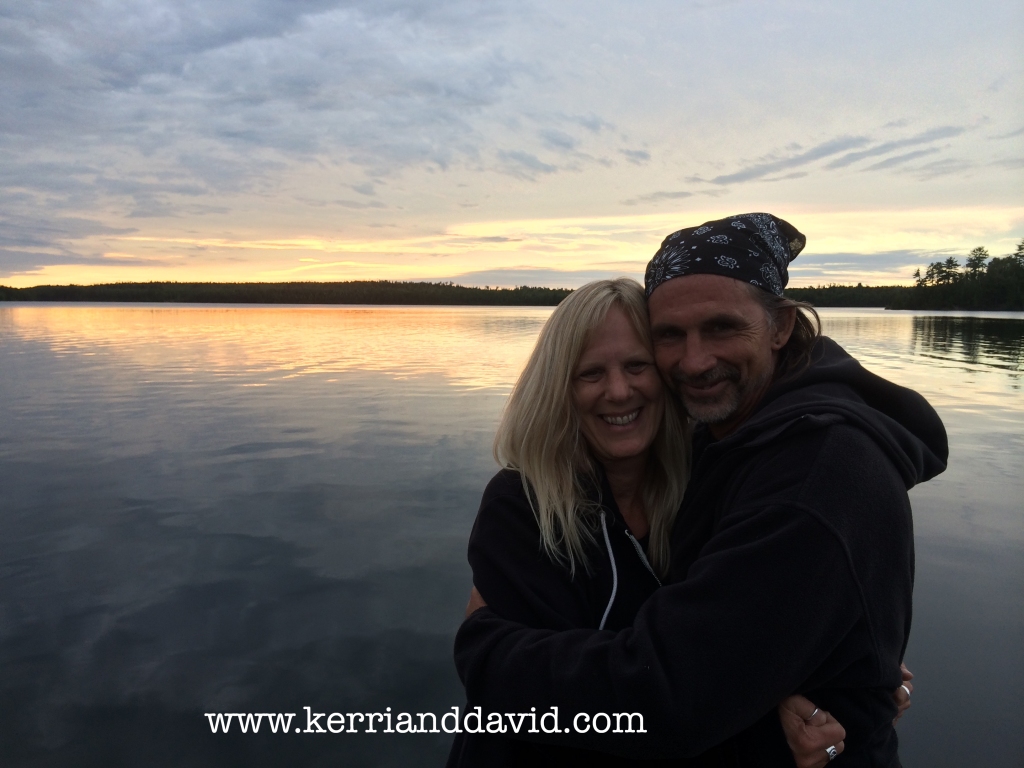
When we were fortunate to live for a summer in the littlehouse, right on the lake. Kerri had to adjust to the constant sound. Her musician’s ears were caught in the rhythm of sound lapping the shores. Nature’s metronome. We teased about parking a piano on the back deck so she might compose an album of pieces set to the lake’s pulse.

The most striking visceral-revelation that I brought back from Bali is that we function together. Just as I am impacted by the lake, my pace and rhythm are impacted by the people around me. No one is an island. David Abram wrote in The Spell of the Sensuous that it is nearly impossible to meditate in the un-united states. We are an angry frenetic lake, fast moving wave. Changeable. I will always remember pausing at the custom’s gate re-entering the country. It was too much. Finally, I stepped through the doors and felt sucked into a chaotic turbulent whitewater river. It was months before I adjusted, before a walk down the street didn’t feel like a fist fight.

Columbus (my dad) would sit for hours each morning, on the porch. Listening. When I was younger I wondered what he was listening to – or for. He grew up in Iowa and came into adulthood moving to the rhythm of the corn. He lived his adult life in Colorado. It was a different rhythm, the metronome of the mountains. For many years he yearned to live where he understood the rhythm. He was, I think, listening for the corn.

When I return to Colorado I feel an immediate recognition. The mountains are the rhythm I was born into. Alignment. My original dance was a mountain dance.

Kerri and I are both transplants to the lake. Perhaps that is why we hear it so clearly. Jim E. told me that people go to the shore to stare into the infinite. We listen to the lake with the same awareness. The lake was here before me. The lake will be here after I am gone. The mountains, too. We are, of course, delusional to entertain the idea that we control it – nature. That we are somehow separate. Sometimes I think it is the artist’s job to bring proper perspective to the community, to pop the separation-notions – even for a moment – out of ego-brains.

This lake could hurl me like a pebble. It also brings peace to my soul. Stillness. We are not as distinct as we want to believe. That recognition is the single greatest blessing of artistry. It’s a circle dance. Just as my dad is disappearing back into the corn, I, too, will someday rejoin my original rhythm and fold back into the mountain.

read Kerri’s blog post about THE LAKE

Attend To The Quiet [on KS Friday]

My studio is a place of quiet. Inside and out. It is the place where I go – where I’ve always gone, when I need to recenter myself of exit the crazy-brain. Lately, my studio has been blown to bits. Water has been a near constant invader, either from the ceiling when the pipe broke in the spring or from the floor when roots clogged the sewer main. Twice. It seems as if water wants me to take a break from painting. There’s a metaphor in there somewhere.

Each time the water rises, the paintings rise, too. We scramble to move everything up the stairs. Mostly, they are stored on blocks so live protected above the rising tide – but pulling up carpet or clearing space for the plumbers has meant a perpetual studio deconstruction. Kerri stubbed her toe – okay, broke her toe – on one of the bigger paintings that now populate our sitting room. It’s a maze of paintings out there. Yet, she is wise. She’s insisting that we leave the paintings where they are, scattered here and there. At least for now. At least until we can clear out and rethink our space.

Kerri is much more sound sensitive than I am. I am much more spatially sensitive than she is. The sign on our deck, “Shh” addresses her need for sound-quiet. It’s all about space-quiet for me. Space-quiet means open space. It’s been that way all of my life: if there’s too much stuff, I shut down.

The water, as it turns out, is trying to tell me something. Lately, when I go down into the blasted-apart-and-now-empty-studio-space, I can breathe. I feel it every time I descend the stairs. I breathe. My space had become too impacted. Too many paintings, too many tables, too little space. “Shh.”

I’ve often written about the time, after I moved to Seattle, that I burned most of my paintings. I needed space. I felt like I couldn’t breathe. I was tired of hauling and storing paintings. I didn’t know what else to do. I needed air and fire brought it to me.

And, so, the water pours from the ceiling. It bubbles up through the floors. Again. What feels like a catastrophe comes with a cautionary message. No fire is needed this time. To attend to the space is to attend to the quiet. Stop. “Shh.” Breathe.

SILENT DAYS on Kerri’s album BLUEPRINT FOR MY SOUL, available on iTunes or streaming on Pandora

read Kerri’s blog post about SHH.

silent days/blueprint for my soul ©️ 1997 kerri sherwood

Look At The Display [on Flawed Wednesday]

Del and Dorothy’s house sat on the side of a mountain. It was small. The kitchen table accommodated two and was placed close – very close – to the front door. Dorothy cooked on a wood burning stove. The house listed to the downhill side. It had a small yard that seemed carved out of the mountain. Del’s WW II jeep sat close to the edge. Dorothy populated the yard with blue glass and hummingbird feeders. It was a quiet home. A peaceful place.

Artifacts of a time gone by. Del fought in the second world war. He kept a corner display cabinet with things he’d brought home from the war. A Luger. Nazi insignia. A flag. Patches and medals. Booty from the enemy. It seemed out of place, especially in a home dedicated to simplicity and peace. The display was a curiosity for me. Why enshrine in your home objects from an enemy-of-the-past? I wanted to ask Del about it but he was not a talker. In fact, while, 50 years later, I would recognize Dorothy’s voice if I heard it today, I have no recall of the sound of Del’s voice. I can’t remember him uttering a word. I never broached the subject of the artifacts.

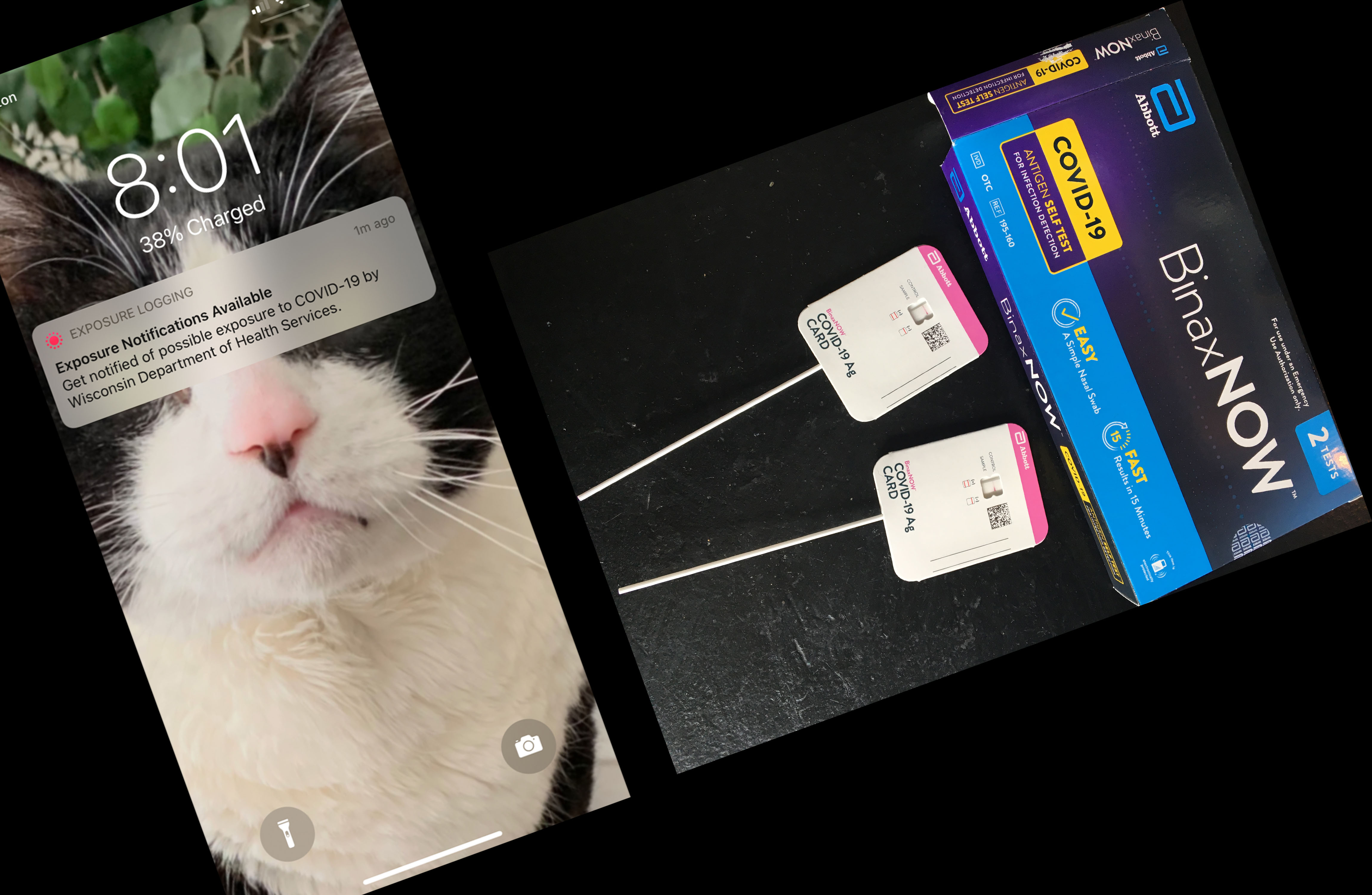
Each day we receive an alert on our phone. Exposure Notification Available. Recently, when Kerri officiated a wedding, we both took two Covid tests to make certain, while also vaccinated, that we were negative. Dangling from a clip on the side of our refrigerator are masks. Many, many masks. We put in our special box the flag they gave us on the day we were vaccinated. Wave the flag if you have a question or need help. The artifacts in a time of pandemic, now so normal that we barely see them.

This weekend, with all of the observances of 9/11, I watched a tour of the 9/11 museum. A crushed firetruck. A shoe. Xerox pages with faces and the word, “Missing.” Del whispered into my ear, “Pay attention. This is why I kept my display.” The tour guide said, “So we never forget.” The Luger. The Nazi flag and insignia. The medals and ribbons. The reason Del and Dorothy retreated to the mountainside, the reason they simplified and built a life of quiet and peace, the reason he kept his glass-cabinet-display. So they wouldn’t forget. The horrors that people enact upon each other in the name of…righteousness, control. Superiority. The madness people embrace when they are angry or scared. The lies so easily told and so hungrily gobbled.

People are capable of great things. We know because those things are meant to draw us together. They unite us. Great art.

People are capable of appalling acts. We know because those actions are born of and meant to divide. They rend us apart.

Del lived through the full savagery of what people are capable of doing, one to another. He came home and with Dorothy lived an intentional life of quiet, on the mountain, out of the main. I’ve noted of late that Kerri and I talk often, dream, of a mountain retreat. We are witness of what people are capable of doing, one to another. We are also witness of and generators of the beauty meant to draw people together. Her music. My paintings. The things people are capable of doing, one for another. We are surrounded by artists and art. Both/and.

History repeats itself. The story is told – again and again – through the art and artifacts we display, the symbols we keep. The memories we carry forward. Guernica. Empty shoes. A simple mask.

read Kerri’s blog post about ARTIFACTS

Compose [on DR Thursday]

Many years ago I attended a workshop facilitated by Sam, a brilliant landscape painter. I was delighted and amused when he demonstrated his technique. Rather than paint what he observed, he took great pleasure in rearranging the elements. He moved the trees, altered the hills, relocated the barn. He laughed while mixing up his elements. His eyes sparkled with mischief. Rather than a workshop on painting, the day became an exercise in joy-in-art. Seeing and playing with what we see.

This morning I read that the word ‘composition’ means “putting together.” Definers-of-art-terms associate composition with freedom. “The artist has freedom when choosing the composition of their artwork.” It is a mistake to believe that compositional freedom is the sole province of an artist. If the mind is a canvas then thought is a composition. It is patterned and composed. Arranged and rearranged. We choose where we place our focus. Point-of-view is cultivated, it is not a default setting. We design the story-we-tell-ourselves-about-ourselves. And, then we project it onto the world.

The trick in both art and thought composition is not to wear ruts in the road. Sam was joyful in his art because he was constantly challenging and engaging with what he saw. Art was fun, not morbid tradition. Art was delight-full, not rule-bound or laden with the pressure to capture. Recall that stepping out of the rut was the first lesson in Julia Cameron’s The Artist’s Way. Morning pages and artist’s dates are meant to both see the ruts and open new paths. The same process applies to the thought-canvas. See the rut. Step out of it.

As Sam taught me so many years ago, seeing and playing with what we see begins with letting go of what we think we see. It begins with a blank canvas, an unfettered mind, and the freedom to choose the composition.

read Kerri’s blog post about COMPOSITION

Unfettered ©️ 2018 david robinson

Read The Walk [on Two Artists Tuesday]

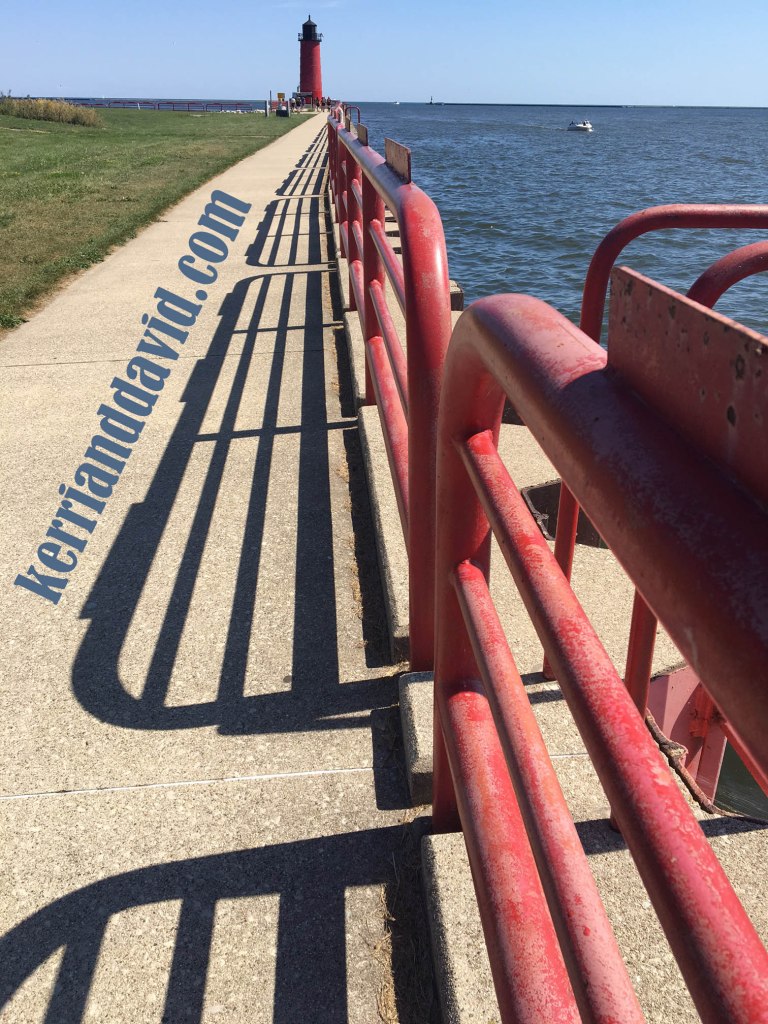
Between the morning rehearsal and the evening wedding, we had several hours without commitments so we did the thing we most like to do. We walked. It was a gorgeous September day. We were in Milwaukee’s Third Ward, a miracle of reclaimed and converted warehouses, shops and condos that line the waterway. We followed the Riverwalk, Kerri snapping photographs, ambling our way to Lake Michigan.

It’s odd in this age of pandemic, to be in a city on a beautiful weekend day. The rules of engagement are different. The rules of enjoyment are different. Be out in the day but avoid the crowds. There was an art fair, a crush of people, so, as artists, normally pulled toward art gatherings, we walked the other way. In years past we would have waded in to the fray, talked to the artists, enjoyed people enjoying art.

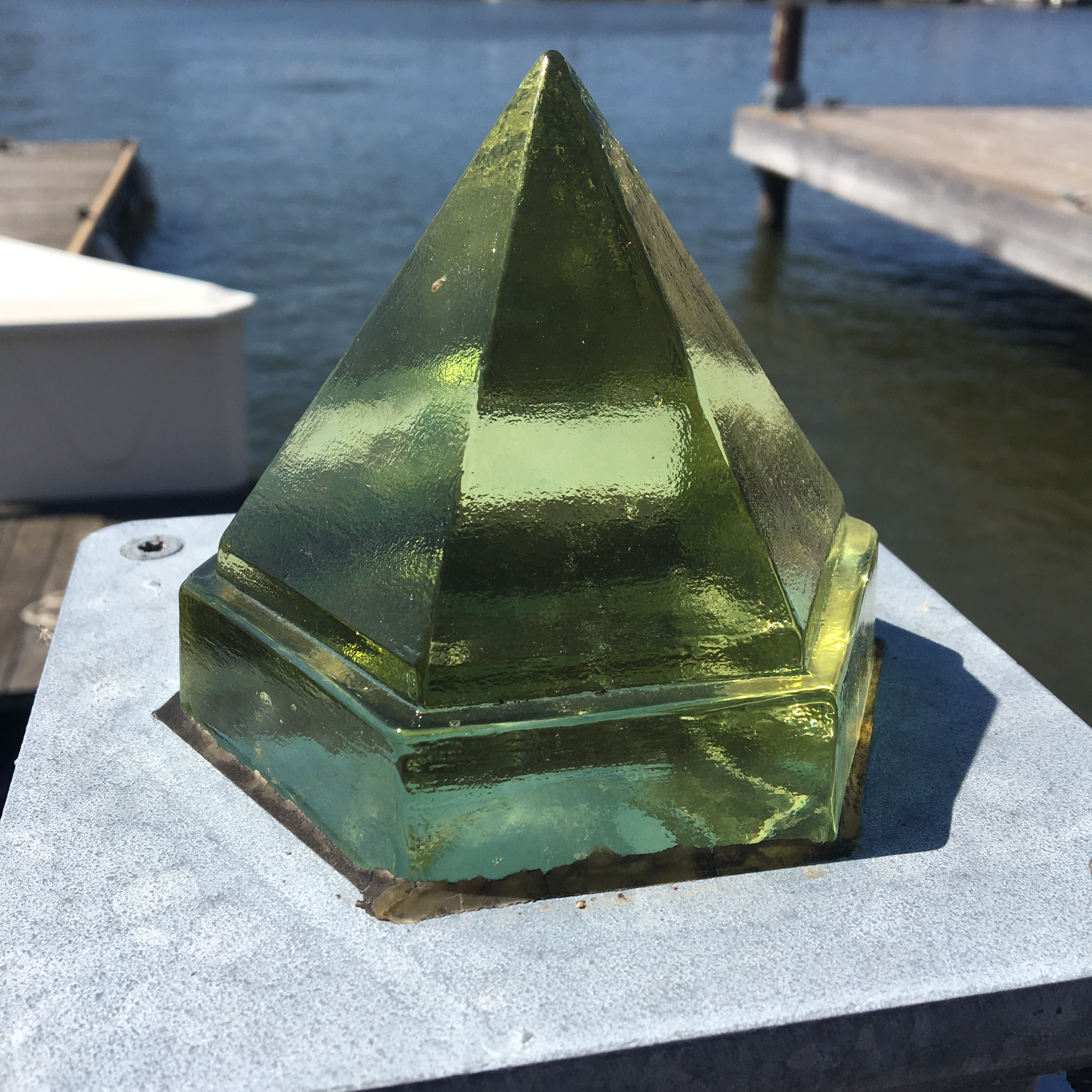
Instead, we found a bounty of art on our walk. The shadows playing on the walls. The flowers. The finials. The sculpture. Everywhere we looked we found riches of intentional design. People dedicated to creating beautiful spaces had a field day re-imagining what had once been an industrial wasteland on the water.

Chiseled into the the boards upon which we walked was a narrative history of the city. We stepped on top of important dates of the Civil War. We walked across innovations, breweries arising in a city of beer, World Wars and the changes they wrought. Sports victories. We walked across the story of a previous pandemic, a hundred years ago. A few thin boards, markers of a tragic toll.

For a moment I stood and watched the kayaks paddling, the pontoon boats cruising the channel, the diners seated beneath umbrellas, the strollers, like us enjoying the day with no destination calling. Full moments in lifetimes that someday might be told in a few thin boards of narrative highlights.

I wondered how many people, how much dedicated action, it took to make this moment beautiful and possible. The architects. The artists. The artisans. The craftsmen and women. The laborers. The florists, The gardeners. The shopkeepers. The waiters. The chefs. The suppliers. The mail carriers,…Dreamers all, stretching back through time. Interconnected and interdependent in ways that only few recognize.

That’s the challenge, isn’t it? Were I to chisel the story of our pandemic in a boardwalk, or create a sculpture meant to capture our moment in narrative time, my theme would be interconnection and interdependence unnoticed. Unmasked. A myopic madness, a messy delusion of every-man-for-himself, a sure-fire way to perpetuate a pandemic or warm a globe.

There is, of course, no evidence for life thriving in a vacuum. On the other hand, there’s plenty of evidence, apparent on a stroll in a city on a beautiful sunny September day, killing some time before a wedding, that it takes all of us, every last life, to thrive. An artist needs an audience. A developer needs a supplier. A doctor needs a patient who wants to be healthy. Who wants to do more than survive. Thriving is, after all, a group sport. A careful reading of the boards tells a very specific tale: no one does this walk alone.

read Kerri’s blog post about OUR WALK

Light The Dark [on DR Thursday]

Strong contrast between light and dark: chiaroscuro. Renaissance painters loved it. The word ‘chiaroscuro’ literally means light-dark.

Today is Stephen’s memorial service. It is across the country or I would be there. I confess, I am haunted by Stephen’s death. When Mike wrote to tell me of Stephen’s passing, he told me that he was at peace when he died.

I’m not sure why his passing has hit me so hard. The last time I saw Stephen was 1998. He was following MM like a puppy. They were working on a set construction project. That’s what I remember. He was 14 years old, so, in my mind, he is frozen at 14. He was one of a pack of brothers that formed a solid core of Dimension’s Theatre Project, a theatre program that I spent more than a decade resurrecting and nurturing into artistic vitality. Stephen and his brothers were present in its heyday. For me, it was an artistic and learning laboratory, a place of spirited artistic creation. I loved every minute of it.

Of the brothers, I knew Stephen the least. I worked most directly with his older brother, Greg. I prided myself that Dimensions was a safe space. Artists, especially young artists, are vulnerable. They need to know that they can make strong offers, take chances, find their edges, without shame. That means living in and creating a culture of mutual support. The person selling the tickets mattered just as much as the actor on the stage. Every member of the community was directly responsible for the health and well-being of every other member. It is the philosophy I inherited. It is the philosophy I carried forward.

Mike took the reins of Dimensions when I left. He carried on the tradition, made it his own, Changing Faces Theater Company. Mike knew the artist that Stephen would become. The musician. The designer. The man who cared for the health and well-being of others, artistic and otherwise. Mike knew the dark and the light of Stephen’s short walk on the earth.

Usually, when I am confused or need to sort out my heart, I take a break and visit the pond. Magic, the frog, lives there. He’s a good hider but every few days comes out for a visit. After Mike’s news, confused at the depth of my confusion, I went to the pond and hung out for a few minutes with Magic. Dogga was running circles, making my visit safe from marauding squirrels. The sun was down.

“Look at this picture!” Kerri smiled. She’d caught Magic in chiaroscuro, made more dimensional and full in light-dark.

“It’s beautiful,” I said, looking at the photograph.

Light-dark. The Renaissance masters loved it. I smiled this morning when I read Stephen’s obituary. It began with a quote, something he must have often said. His words brought to me what I couldn’t find at the pond. Peace for Stephen. “Proper lighting can change the world.”

read Kerri’s blog post about MAGIC

surrender now ©️ 2016 david robinson

Root And Fly [on KS Friday]

“Inspiration does exist but it must find you working.” ~ Pablo Picasso

At some point I realized that all of the good guidance I have received, all of the masters that I have admired, made statements about Roots & Wings.

“A writer writes. A painter paints.” ~ Tom McKenzie

“You must write 10 bad pages to arrive at one good page.” ~ John Guare

“Live on the plateau (in the present moment).” ~ George Leonard

“Cultivate your serendipity.” ~ Tom Quinn

I remember Jim E. teaching actors not to push their voices to be heard but, first and foremost, to root down into the earth.

After years of practice I am approaching the lesson that Saul taught his tai chi students: stay on the root and the energy will move you. He also taught me, on a brilliant Saturday morning when I was trying to bend the world to my will, to look beyond my opponent into the field of opportunity. It is two ways of saying the same thing. Root. And the wings will appear. Root, and possibility will find you.

Work at the easel, and inspiration will arise.

all of Kerri’s albums are available on iTunes or streaming on Pandora

read Kerri’s gorgeous blog post on ROOTS AND WINGS

give me roots, give them wings/released from the heart ©️ 1995 kerri sherwood

Look Again [on DR Thursday]

I’m not sure when I started using floral shapes and imagery in my paintings. There was Sam The Poet and Eve, trees as symbol.

Sam The Poet, acrylic, 48 x 48IN
Eve, acrylic on hardboard, 48 x 48IN

I know my sketchbooks began filling up with flower shapes and symbolic landscapes. Petals appeared throughout my Yoga Series. Leaf and flower shapes found their way into the bodies as well as the surrounding spaces.

Joy, mixed media, 50 x 56IN

I played with tissue paper over color as a ground for the images. When Tony recently visited my studio, he said my paintings were sculptural, visually commanding. I wrote his words on a scrap of paper since artists are mostly terrible at describing their work. He is an artist so he knows that the proper answer to the question, “Tell me about your work?” is “Go look at it and then you tell me about my work.” He didn’t ask the question; he went straight to the looking.

Tango With Me, mixed media, 39 x 52IN

We walked down a path at sunset. Kerri saw the sunflowers and I knew a photo op had arrived. “You should use this as your Thursday post,” she said, showing me her photo, “because your paintings always have flowers in them.”

Well, good enough, then. Sunflowers, shape and symbol, will find their way into the next painting, I’m sure of it.

read Kerri’s blog post about SUNFLOWERS

copyrights for all paintings in this post, 2010 – 2021, david robinson

Be Indeterminate [on Two Artists Tuesday]

Through the good graces of our tomato plants, I’ve learned a few new concepts this summer. Determinate and indeterminate. Bush and vine. Determinate tomato plants (bushes) are bred to stop growing. Indeterminate tomato plants (vines) will grow indefinitely or until the weather conditions “are no longer favorable.”

Our plants are indeterminate. Each morning, Kerri visits our planting bench and checks her tomatoes. 20 taught her a few simple tending-rules and now, each morning, there are more and more little indeterminate miracles moving backward along the color spectrum, finally arriving at a brilliant red.

Life is indeterminate.

My new tomato-terms come just in time. My current project has me revisiting my past life as a teacher and facilitator. If I apply my new terminology to people I can’t help but think it is the lucky few who survive so much dedicated energy to stop the learning-mind in the name of education. The natural output of a system designed on manufacturing principles is to truncate the questioning mind by patterning the notion that there is a predetermined answer. It becomes a game of finding the answer that teacher wants – a closed loop – instead of an incitement of curiosity. Children are excellent game players and translate the gaming pattern into their now-dulled-adulthood.

There is a cycle apparent in all genuine learning processes. It begins with discontent. Curiosity is a movement born from some form of discontent. It leads to questioning. Questioning always leads to disturbance (the interruption of the known). And, just like that, out of the disturbance something new is seen, call it a breakthrough, call it an insight, call it new learning…Many classrooms – certainly the systems – are designed and organized to keep disturbances to a minimum. The mantra is ‘control’ rather than ‘inspire curiosity.’ Business has the same dedication.

We’re taught that disturbance is the sign of something wrong rather than the crusty earth breaking to reveal new verdant life.

Discontent leads to questioning, leads to disturbance, which leads to breakthrough. And, an insight will always lead to discontent. It’s a story cycle, where yearning meets obstacle. Learning is by definition uncomfortable and at its best when it is uncontrollable.

Last week I attended a meeting. My two companions and I brought our homework back to the team. One was content. The other two of us were filled with discontent. The leader of the session, at first, was angry. He did not get the result he’d anticipated from his exercise. “So, you two are telling me this process was worthless!” he raged. We’d spent our week questioning instead of answering. Discontent. Questioning.

“No! It was great!” we chimed in chorus. “Look at all the good information we uncovered!” It was a mess. Big disturbance. We cycled through our misalignment a few times, wrangling over perception and usefulness. More rage. And then…an insight. The breakthrough. All of the rage, all of the appeasing, began to flow in a single direction. A possibility took shape. A target materialized that was much better than the prescribed pursuit. Energy filled our zoom-osphere. Laughter. Excitement.

Learning. Indeterminate. Open questions. Hot pursuits.

I am drawn to and surrounded by the dedicated indeterminates; those who refuse to stop learning: David, Mike, Horatio, MM, Bruce, 20, Judy, and yes, Kerri…I am a very fortunate man to be surrounded by so many tomatoes moving their way backward along the color spectrum, not afraid to walk through their discontent toward bigger and bigger questions.

read Kerri’s blog post about TOMATOES

Make Life Better [on Merely A Thought Monday]

Lately, the universe has pitched me headlong into a master class on efficiency. Maximum productivity with minimum wasted effort. A useful concept in certain arenas and an intensely destructive concept in others. For a person who’s spent his life in a study of curiosity, art, and the creative, it’s an unexpected study at this stage of the game. It is sometimes uncomfortable but I consider it an opportunity for balance. Artists rarely meditate on efficiencies. We’re more of a discovery clan and efficiency is generally the enemy of discovery. No one ever sailed to the edge of the world with efficiency-on-their-lips.

Once, I made the argument to a school board that daydreaming was highly productive. It seems a no-brainer to me that exercising the imagination should be highly valued in a learning environment. Einstein’s Theory of Relativity came to him in a dream about cows. It is not an accident that many insights and revelations come in the shower or while driving or peeling a carrot. Newton’s apple did not fall on his head while he was exercising maximum productivity. The mind, to be efficient, needs space to breathe, fields to roam. It is the most elegant of paradoxes but mostly lost on worshipers at the altar of efficiency. In the modern business world, efficiency is all about time since time is billable. You know the mantra: time is money. Do more with less. Somehow, we’ve turned that nonsense into a virtue, a thing to be desired. A reason to squeeze.

There’s another, more admirable side to efficiency-seekers. How to make work less arduous. Grease the wheels and remove the friction. Relieve the burden. Not faster but easier. Ann used to say, “Find a need and fill it.” She’d look at people toiling and ask, “How can I ease their struggle?” Beaky was that way, too.

Near our home there is a stretch of shoreline with an ineffective seawall. It was built with stones and debris that become projectiles when hit by forceful waves. The locals know to avoid that stretch during a storm. It’s deadly. After the storm, it has become our ritual to walk the path to see the destruction. It’s always impressive. How far can a wave throw a heavy stone? The answer: farther than you think. Mother Nature yawns when we think we can control her. The seawall has become my metaphor for human hubris but also masterful inefficiency. It would cost money to build a proper wall. So, instead, after each storm, crews collect the rocks and pile them back on the shore, readying them to be hurled by the next storm.

We saw a double-rainbow and turned toward the shore. Kerri never misses an opportunity to capture a little miracle or a slice of beauty. We parked in front of the seawall-of-inefficiency and I laughed out loud. A budding Banksy sprayed a message on the rubble: love. The secret message-maker could not have found a more appropriate word: Love. Can you imagine anything more inefficient and, at the same time, more potent? Love moves mountains but is not billable. It transcends time. What better reason to do anything? Well, perhaps reason has nothing to do with it and never has. Reason has the worshipers-of-the-efficient perpetually re-stacking stones.

It’s easy to be seduced but let’s face it, life reduced to billable hours is not life at all. On the other hand, there is nothing more inspiring, nothing more curiosity-invoking than asking, “How can I make life better for everyone?”

Love on a rubble pile. What could be better? On second thought, what could possibly be more efficient?

read Kerri’s blog post about LOVE ON A ROCK