Language Blossoms [David’s blog on Two Artists Tuesday]

I just experienced something new: a visual route to a find synonym. That might not seem like a big deal but for a visual-guy like me it fundamentally changes my relationship with language.

I wanted another word for “shine” and, instead of finding a static linear list, a blossom of interconnectivity unfolded on my screen. Shine in the center, five interconnected primary synonyms, with each of the five subsequently sprouting five fingers of word possibility. I was gobsmacked. Like a child with a new toy, I clicked back into the site again and again so I might see the word bloom.

I’ve directed (and loved) many of Shakespeare’s plays. I am an avid reader. I write everyday and spend more time than I care to admit chasing down words. Yet, had you met me when I was a wee-lad of 22, none of these things would have seemed possible. It hurt to read. The worst hell imaginable for me was diagraming sentences. My knuckles were rapped by stern-faced English teachers more than once for poor use of language, rotten sentence construction. And, although I had an undeniable enthusiasm for the theatre, I literally hated reading plays when I was in high school.

Linear sequential is not my friend.

One day in my 24th year an actor introduced me to Shakespeare. Active language. Delicious sounds and living images. The penny dropped. The world opened. I have been a voracious eater-of-language ever since. When rehearsing, I dance my words.

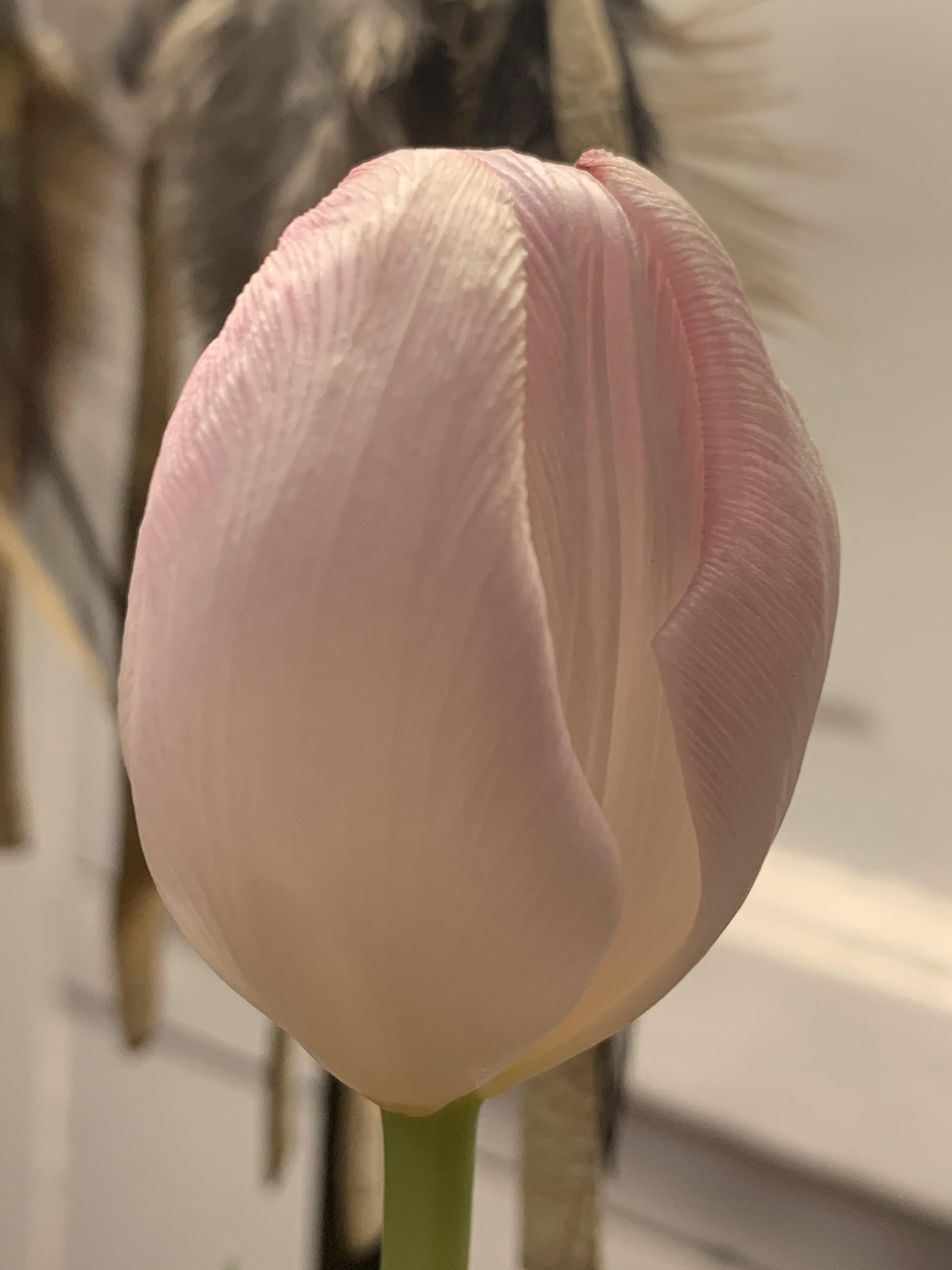
Words matter. They are alive when not forced to toe-the-line. Symbol and sound, makers of meaning, each intimately connected to the other. When I come back to this earth I will hopefully be a poet, attempting to capture in language that which is impossible to articulate. The beauty of a pink tulip. A flower selected by a mother for a rare visit from her daughter. Our daughter. Our daughter: a surprising and remarkable combination of words I never thought I’d utter.

Language unfolds and reaches deep into pools of meaning. Words blossom. And nothing is ever the same.

read Kerri’s blogpost about PINK TULIPS

like. share. support. comment. four words that inspire gratitude in our hearts.

buymeacoffee is exactly what you make of it. the meaning is yours to give.

Go Glacial [David’s blog on Not So Flawed Wednesday]

The rain has washed away the snow. Our world this week is cold and damp. Our backyard is part lake, part mud pit. We’re feeling the lack of fresh air, the need to get out onto a trail. We’ve been housebound too long. Later today we’ll bundle up against the rain and walk the neighborhood. We’ll skirt the lake. We will breathe. We won’t be in a hurry to arrive anywhere.

The winter has always been good for slowing down. It’s not advisable to race to-and-fro on icy roads. It’s contrary to the message of the machine. The rule of more/faster.

During these past several months I have learned something about myself. I’ve been working on a new play though I’ve only had a few hours a week to dedicate to its development. The work has been glacially slow. In old times, in colder climates, people used to keep their water running a trickle so their pipes didn’t freeze and burst. I started writing this play for much the same reason: to keep my creative energy flowing so my pipes didn’t burst. I had no other expectation beyond keeping the channel open through this time of freeze. Much to my surprise, glacial is a great process for me. This play is good. I’m coming to believe that most of the really bad playwriting that I’ve done in the past – most of the atrocious painting – is the result of working too fast. And, now that I think about it, most of the pieces I am most proud of took years to mature. The Lost Boy took over a decade – and multiple iterations – to finally find the stage.

Last night as I lay awake listening to the rain patter against the window, I had a wild idea. What if…?

And, what if my wild “What if…?” was not a complete idea, a fully formed god jumping from my brain, but merely the tiny thought-spark that starts my ice age rolling? A little bit of light calling for my attention. I’ll let this one simmer for a spell. In the meantime, I have a walk to enjoy, some air to breathe.

read Kerri’s blogpost about RAIN IN WINTER

share. like. comment. support…thank you.

buymeacoffee is a trickle of energy capable of keeping the pipes from bursting.

See Down The Pike [on Flawed Wednesday]

“Age and stage,” 20 says, to explain the behavior of people. Age and stage.

I pulled up Shakespeare’s Seven Ages of Man soliloquy. Jaques from As You Like It. “All the world’s a stage…” We perform the role of ourselves in this drama of life. In a funny coincidence, I’m spending some time inside Pirandello’s play, Six Characters In Search of An Author. David is updating the script and preparing for a production. I’m fortunate enough to play witness to his journey. ‘All the world’s a stage’ meets ‘who will tell our story?’

In the final lap of his career, Tom was an assistant superintendent at a school district. He’d shake is head and say, “Parents forget that they were once children and expect their kids to do things that they themselves could not do as children.” Each age grows blind to the previous stage. We forget the great learning-power of making a mistake.

My favorite of Tiago Forte’s 10 Principles of a Second Brain is to make it easier for your future self. It’s a great idea and I wish the bevy of my past selves had been kind enough to consider me at this age and stage. When I turn and look at the rough wake of my passage I know that, with some better choices, I might have scribed a more direct path. Or not. My past selves caution me to fully appreciate the messes and the mistakes that they made. My life is better today because of the rampant foolishness of those former-me’s.

The Balinese believe that we come back every seventh generation. They are an ancestor returned. As such, they are less likely to foul their nest believing they will themselves be the future inhabitants of the nest. Looking down the long-road, they see themselves dealing with the world they currently create. And so cooperation, sustainability, and peace are much higher on their priority list than guns and every-man-for-himself. To care for another is to care for their future self. They find a society like ours, that allows anyone in the community to be homeless, to be broken. Diseased. Or simply adolescent.

I can’t help but think they are mature while we are mewling toddlers. Considering the impact of your actions seven generations into the future is surely a sign of maturity. Thinking of others, understanding betterment as a shared responsibility, is an adult perspective. Currently, we allow our children to be slaughtered and protect the gun that killed them. Surely there’s some growing-up to be done.

I wish I had a penny for every recent conversation I’ve heard that began with the phrase, “I don’t understand what’s going on in this nation.” 20’s voice pops into my head, “Age and stage,” he says in my mind. “Age and stage.” Let us hope that there’s some maturity coming down the pike, that we survive this stick-your-finger-in-the-socket stage.

Perhaps we will someday look back and appreciate the mess, the rampant foolishness, the mishmash we are making.

read Kerri’s blogpost about AGE AND STAGE

Call It Realism [on Not So Flawed Wednesday]

This garlic could have been painted by Jan Vermeer. To my eye it looks like the work of a Dutch master, an artist more concerned with realism than the ideal.

Art that reveals the beauty in the ordinary. For a few weeks in my surly youth I studied with a realist painter. I was wowed by his technique but could not yet grasp his dedication to capturing the everyday. Only later did I come to understand that his art was not about the technique but about bringing attention to the experience of the everyday. He rejected the aloof and desired to pull art down from the pedestal so it might reflect the lives of the “common people.” He believed that people needed to literally see themselves in the paintings to have access to the painting. They needed to see their hardship and toil as well as the objects that surrounded them.

Bertolt Brecht believed the opposite. In order for people to have access to the deeper messages of a play, they needed to be removed from their circumstance. So, in his way of thinking, people are more capable of seeing themselves in a piece of science fiction than in a reality-mirror.

David is working on a re-imagining of Pirandello’s play, Six Characters In Search of an Author. One of the questions of the play is, “Who is telling your story?” And, how are they telling it. I reread the play and was struck by how relevant it is to our times.

The beauty in the ordinary. The turmoils and struggles of the everyday. Ours is a time of tumultuous story tug-of-war. I wonder, in a hundred years, what historians will write about our time. I wonder what aspect of artistry – if any – will be considered “realism.” As defined by Vermeer and Pirandello, it’s to reach across a social line, from the privileged to the working class. For Brecht it is spatial: step out to look in.

One thing is constant, while reaching across time and artificial boundary, it is always the role of the artist to help their community ask the questions: Who is telling my story? Whose story am I telling? What is the story that we are telling?

I imagine those someday-historians will write tomes on our messy struggle to sort out what is “real” and what is not.

read Kerri’s blogpost about GARLIC

Turn Toward It [on KS Friday]

This is what he wrote. “The irony I feel is that the world is lost on the artistic temperament of these students.  They don’t seem awake to all that’s going on.” He’s directing teenage students in a play. He was my student thirty five years ago and reached out to me. We compared notes of the production I directed when he was a teenager, and the production he’s directing now. The world has changed mightily. His production will be viewed through a wholly different lens.

I flipped his phrase over in my mind. Artistry is to be awake to all that’s going on. And, awake is not a steady state. It’s not an arrival platform. It’s a relationship between the inner and the outer. What I know about that relationship is that sometimes you need to look away. His students have drilled for active shooters in the hall since they were in kindergarten. Mine couldn’t have imagined it. His students are navigating a pandemic, they’ve never known a world pre 9/11, they live in a country that is eating itself alive. My actors had easier access to what was going on. What was going on was closer in, more immediate and less abstract. They were not looking at a world-wide horror story or lost in the morass of social media. Cell phones were science fiction to my cast. My actors looked at each other and not at their screens.

Stories are about something. We just watched Erin Burnett’s interview with a Ukrainian husband who lost his wife and children to a Russian mortar attack. A month ago, violent death was nowhere on their radar. They were making dinner, going to school, doing homework, late for work. Erin Burnett began to cry and thank goodness. Humanity breaks through and we awake to what’s going on – really going on. We should all be weeping with Erin Burnett and this man.

Sometimes I feel as if I am looking for the small beautiful moments. I am trying to root my day in the explosion of color, the pastel sky, Dogga in the sun. Holding hands. Cooking dinner together. I am trying to be awake to what is going on, the anger and division and warmongering and carelessness as we soil our nest – without it frying my insides. Holding hands is just as real. Reaching toward our neighbors is also what’s going on.

Stories have to be about something and most often stories are about transcendence. Waking up to what is going on is less about waking up – we already know – and more about fully acknowledging it, facing the full picture and turning toward it rather than running away. But, before that final act, that moment of deciding enough-is-enough, before we are willing to blink open our eyes, we pretend the problem is non-existent or small. We ignore the obvious. 500 year storms every year. A family killed by a mortar shell. We bury our faces in our phones, we ban critical race theory, and toss our attention in a Twitter reality or a Tik-Tok diversion.

I wanted to write back and suggest that the world is not lost on the artistic temperament of his students, it’s simply too hard to look at the world so they are choosing to look away. That’s what their play will ultimately be about.

read Kerri’s blogpost about COLOR!!

Kerri’s albums are available on iTunes & streaming on Pandora

the way home/this part of the journey © 1998 kerri sherwood

Care For Your Space [on Not So Flawed Wednesday]

It seems like such a simple concept. Tom taught it. So did Paul. And, since I was one of their students, I taught it, too. How you treat your space is a reflection of what you think of your art. The concept is universal. Replace the word “art” with “work” or “life.” You and your space are not separate. We worked hard at the theatre to become better artists and produce better plays and a significant part of that work was bettering and maintaining our artistic “home.” We were proud of our work and it showed -everywhere. Our “space” included our community and our art was meant to make it better.

Yesterday it was warm so we took a walk on a favorite loop. As we returned to the car we watched a man clean out his truck. He’d come to the park, not to walk or appreciate the quiet. His purpose was to dump his trash onto the paved lot. In an earlier time, pre-gun-gun-everywhere, we might have said something. Instead, we stared in disbelief. His space,I thought, does not extend beyond his truck. Neither does his community.

Yesterday, after the walk I received a text from Mike. He was a big part of my long-ago theatre. He’s realizing a dream and opening his own theatre. He’s led a company for a few decades but they didn’t have their own space. Now, they do. He – the artistic director – was mopping the floor and paused to send me a text. It’s the other part of the lesson from Tom and Paul. And Demarcus. And Quinn. There’s no hierarchy. There’s no above and below. Loving the space, loving the art that happens in the space: no separation. One and the same for everyone involved and everyone needs to be involved.

You and your space are not separate. The care you take of your outer space is equal to the care you give to your inner space. And, vice-versa.

[visit Justin’s to see how a company can make a better world]

read Kerri’s blogpost about NEAT EARTH

Help Them Smile [on Not So Flawed Wednesday]

I howled with laughter when she said it. “You can buy anything that looks like something.” She was referring to the sweet Italian sausage that was not sausage at all but made of plants. I thought she was making a political statement. We are solidly in the age of things-are-not-what-they-seem. Photos can be manipulated. Words that come out of mouths can be placed there, not by the speaker. Propaganda is called news and American cowboy culture does not see its full-lemming transformation. Sausage-not-sausage is everywhere!

“What are you laughing at?” she asked, placing the sausage look-alike in our basket. Linda made us a yummy vegetable hash that included the not-sausage and we enjoyed it so much that we left with the recipe. “The age of enlightenment is officially over,” I thought but did not say. Had I answered honestly she would have told me to “gear down.” The grocery store is no place for philosophical hoo-haw.

“Nothing,” I said, giggling.

Standing in front of the cold not-sausage-section, looking down the aisle at people masked and not masked, some wearing masks on their chins, I felt thrust out of all reality and into the tragi-comedy that is our times. Peter Barnes wrote a terrific play, a comedy called Red Noses about the plague that swept Europe in the 14th century. A priest and his band of fools traveling through the villages offering humor as the only relief for the fear and pain. They wore red noses.

“When people in the future look back at us, I hope they laugh,” I said.

“What?” she asked, furrowing her brow.

“We need a band of fools.”

If we could laugh at ourselves, we’d probably have a better time of life during the pandemic, I thought, as an unmasked woman sneered at my fully masked face. I wonder how we’d have fared had there been a red nose mandate? Protect your neighbor by helping them smile.

Kerri stared at me and smiled. “Don’t make me tell you to gear down.”

“Yes, ma’am,” I said. “I think we need Dogga food.”

read Kerri’s blogpost about ANYTHING AND SOMETHING

Go To The Shoe Room [on Two Artists Tuesday]

When I managed the theatre conservatory at PCPA Theaterfest, I occasionally gave backstage tours. It was great fun because the favorite stop on the tour – on every tour I gave – was the shoe room. Visitors always enjoyed standing on the stage, they were impressed with the scene and costume shop, they delighted to watch the prop master at work, but the moment we entered the shoe room, they were transcendent. Wide-eyed and giggling, pulling period shoes from the shelves to show their companions, it was as if they’d entered a candy store. The magic was released through the shoes.

The shoes, I suspect, harkened back to a time of dress-up. Childhood. The shoes touched their spirit of play. They beckoned to be worn and, as any actor knows, the shoes will inform how a character moves. The sooner you don the shoes, the sooner you will “find” the character. The shoe room was a portal to possible-other-lives.

I am more enamored by sketches than I am by final drafts. I delight in watching master craftsmen and craftswomen work. Theatre artists do not create illusions, they provide access to other worlds, unknown paths. They invite us to the shoe room to try on another life, even for a moment. The process, to me, is more beautiful than the performance.

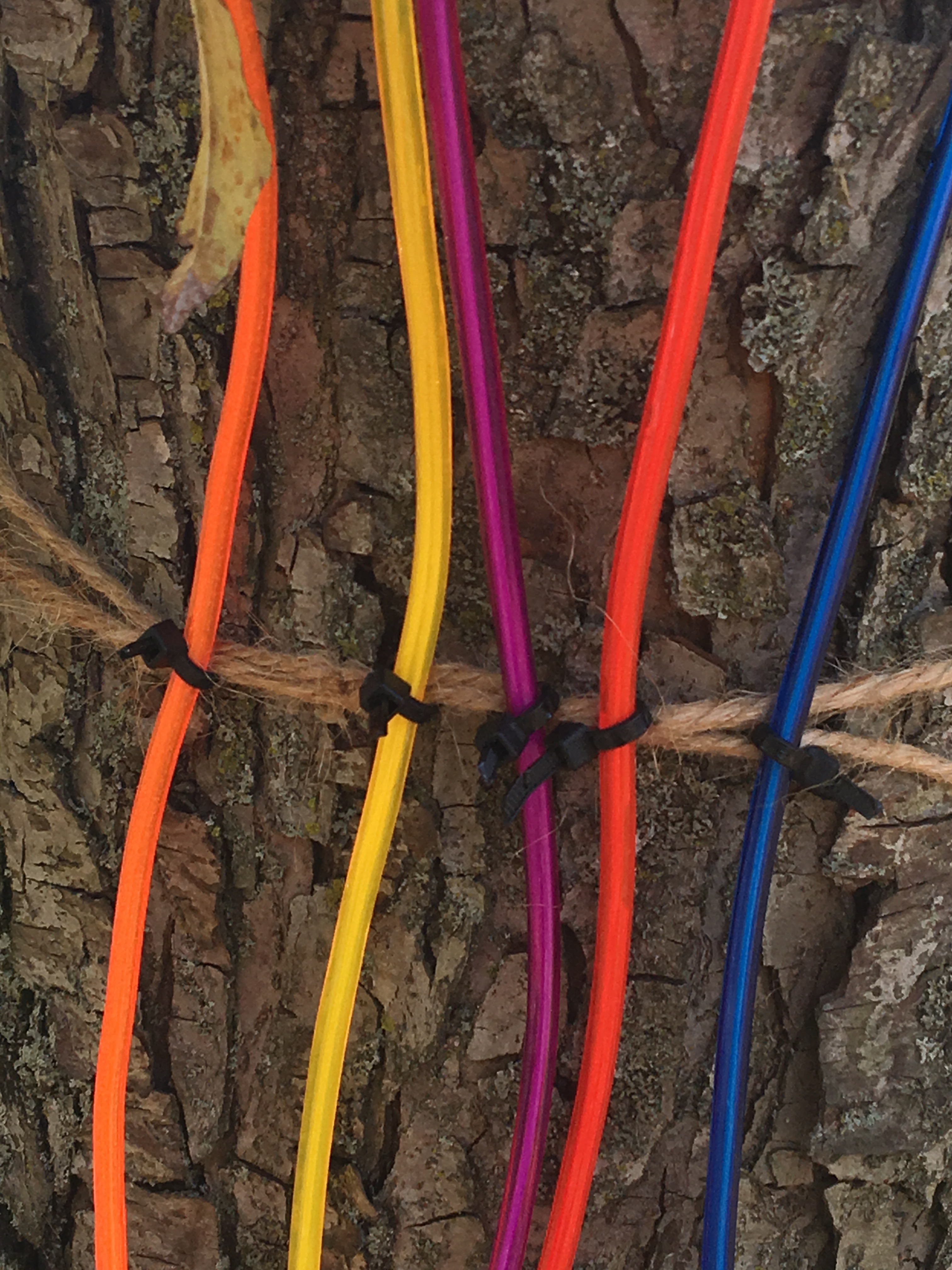
As we walked the paths of the Botanical Gardens, the technicians were preparing for the festival of lights. Walkie-talkies crackled. Connections were checked. Battery packs were carefully placed. Multi-colored light strands ran like rivers up the trunks of trees. E-candles on armatures floated in the waterways. Magic was in the making. During the daylight, the entire expanse of the Garden is backstage – exposed wires and explicit design. At night, the mechanics will fade behind the light curtain. Backstage will become fore-stage. The light will invite us into another world. The light will touch the spirit of play.

I have always believed that people, lurking behind those serious faces, really just want to play. It’s the reason I kicked off my shoes every time I entered a room to do a facilitation. Lose your shoes and it’s no longer a serious affair. Play threatens. Play is suddenly a real possibility. The spirit of play cracks even the most harden entrenchment. Play necessitates collaboration and sharing. Pirates and Princesses need mates and parrots and knights in order for the world to be complete. Lawyers will take off their ties and wear them as headbands when the shoes come off and the serious topics are approached in socks and bare toes.

I recently – as we all have – been privy to an endless contentious debate about what this nation needs to do to get back on track. I believe it is not so complicated. We can carry on our oh-so-serious-division, but the single rule should be that no one can open their mouth – politician, pundit, and pedestrian alike – before first taking off their shoes.

read Kerri’s blog post about LIGHT STRANDS

Offer The Chair [on Flawed Wednesday]

“Indeed, the effect of the forum is all the more powerful if it is made clear to the audience that if they don’t change the world, no one will change it for them.” ~ Augusto Boal, Games For Actors And Non-Actors

Many of my pals in the theatre turned their noses up at me when I began doing work in corporations. They thought I was yet another theatre artist doing improvisation-games with the terminally neck-tied. I was not. My work was more in the tradition of Augusto Boal than Keith Johnstone. Some of the best plays I’ve ever facilitated, some of the most profound pieces of theatre I’ve directed and witnessed, happened in board rooms, classrooms or conference spaces. Here’s how I know: the actors and audience were one-and-the-same. Their play was personal. When they left “the theatre” they did not leave the nice story behind and end the evening with a cocktail. They were disrupted. They had seen something that could no longer be ignored or deflected. The hard work was about to begin.

People yearn. People entrench. People plant their flags and claim the most ridiculous territory. I’ve seen teachers come to blows over an overhead projector. I’ve seen lawyers undermine colleagues to gain dominion over a swiveling chair. And, the chair or the projector are never really the issue. The issue is usually an abstraction. Pecking order. Boundaries. Alliances. People have killed each other over a pair of shoes. It’s not the shoes but the status the shoes represent. Abstraction and illusion.

People are generally unconscious about the reasons beneath their passions. I’ve met a score of dedicated meditation practitioners who meditate to control their thoughts rather than realize them. Once I led a group of teachers through the ritual they enact each morning before the arrival of their students. The question was, “What are you preparing to do in your day?” Their answer was unnerving and revolutionary: they were preparing to control the kids. Teaching and learning were secondary.

We are witness to a country-wide communal piece of theatre, an unconscious play. The issue is not the mask. The issue has never been the mask. The issue is, I suppose, people feeling out of control, imposed upon. Fearful. They are, with their bare faces, making a stand. Drawing a line in the sand. That “no one can tell me what to do” might as well be “I am losing control over my life.”

And, as is always the case, as with the office chair and the overhead projector, refusing to don the mask does not really address the real issue, it merely deflects it. The energy and action is focused on non-sense. And when non-sense rules the day, the action taken actually brings about the thing-most-feared. Loss of control. The pandemic continues, the children are being taken, the economy suffers, the community fractures. It’s a lengthy list.

The lesson in the office chair wars and the overhead projector games is always the same. No one wins. Everyone loses in a toxic tug-of-war. The chair might be yours today but it will be theirs tomorrow. The game only ends when one of the players offers the chair to the other or the projector becomes a reason to share. The same will be true of the mask wars. People will die, the pandemic will continue until the mask becomes a generosity. Then, low-and-behold, the virus will abate and real control over our destiny will be within our grasp.

I hope that, like the lawyers or teachers who were brave enough to walk into the real story, to stand face-to-face with a dysfunction, that we meet our story and ask, “Why would so many sacrifice so much over a little piece of cloth?” An overhead projector. A pair of shoes. A chair that swivels…

read Kerri’s blog post about MASKS

Light The Dark [on DR Thursday]

Strong contrast between light and dark: chiaroscuro. Renaissance painters loved it. The word ‘chiaroscuro’ literally means light-dark.

Today is Stephen’s memorial service. It is across the country or I would be there. I confess, I am haunted by Stephen’s death. When Mike wrote to tell me of Stephen’s passing, he told me that he was at peace when he died.

I’m not sure why his passing has hit me so hard. The last time I saw Stephen was 1998. He was following MM like a puppy. They were working on a set construction project. That’s what I remember. He was 14 years old, so, in my mind, he is frozen at 14. He was one of a pack of brothers that formed a solid core of Dimension’s Theatre Project, a theatre program that I spent more than a decade resurrecting and nurturing into artistic vitality. Stephen and his brothers were present in its heyday. For me, it was an artistic and learning laboratory, a place of spirited artistic creation. I loved every minute of it.

Of the brothers, I knew Stephen the least. I worked most directly with his older brother, Greg. I prided myself that Dimensions was a safe space. Artists, especially young artists, are vulnerable. They need to know that they can make strong offers, take chances, find their edges, without shame. That means living in and creating a culture of mutual support. The person selling the tickets mattered just as much as the actor on the stage. Every member of the community was directly responsible for the health and well-being of every other member. It is the philosophy I inherited. It is the philosophy I carried forward.

Mike took the reins of Dimensions when I left. He carried on the tradition, made it his own, Changing Faces Theater Company. Mike knew the artist that Stephen would become. The musician. The designer. The man who cared for the health and well-being of others, artistic and otherwise. Mike knew the dark and the light of Stephen’s short walk on the earth.

Usually, when I am confused or need to sort out my heart, I take a break and visit the pond. Magic, the frog, lives there. He’s a good hider but every few days comes out for a visit. After Mike’s news, confused at the depth of my confusion, I went to the pond and hung out for a few minutes with Magic. Dogga was running circles, making my visit safe from marauding squirrels. The sun was down.

“Look at this picture!” Kerri smiled. She’d caught Magic in chiaroscuro, made more dimensional and full in light-dark.

“It’s beautiful,” I said, looking at the photograph.

Light-dark. The Renaissance masters loved it. I smiled this morning when I read Stephen’s obituary. It began with a quote, something he must have often said. His words brought to me what I couldn’t find at the pond. Peace for Stephen. “Proper lighting can change the world.”

read Kerri’s blog post about MAGIC

surrender now ©️ 2016 david robinson