Posted on October 15, 2025 by davidrobinsoncreative
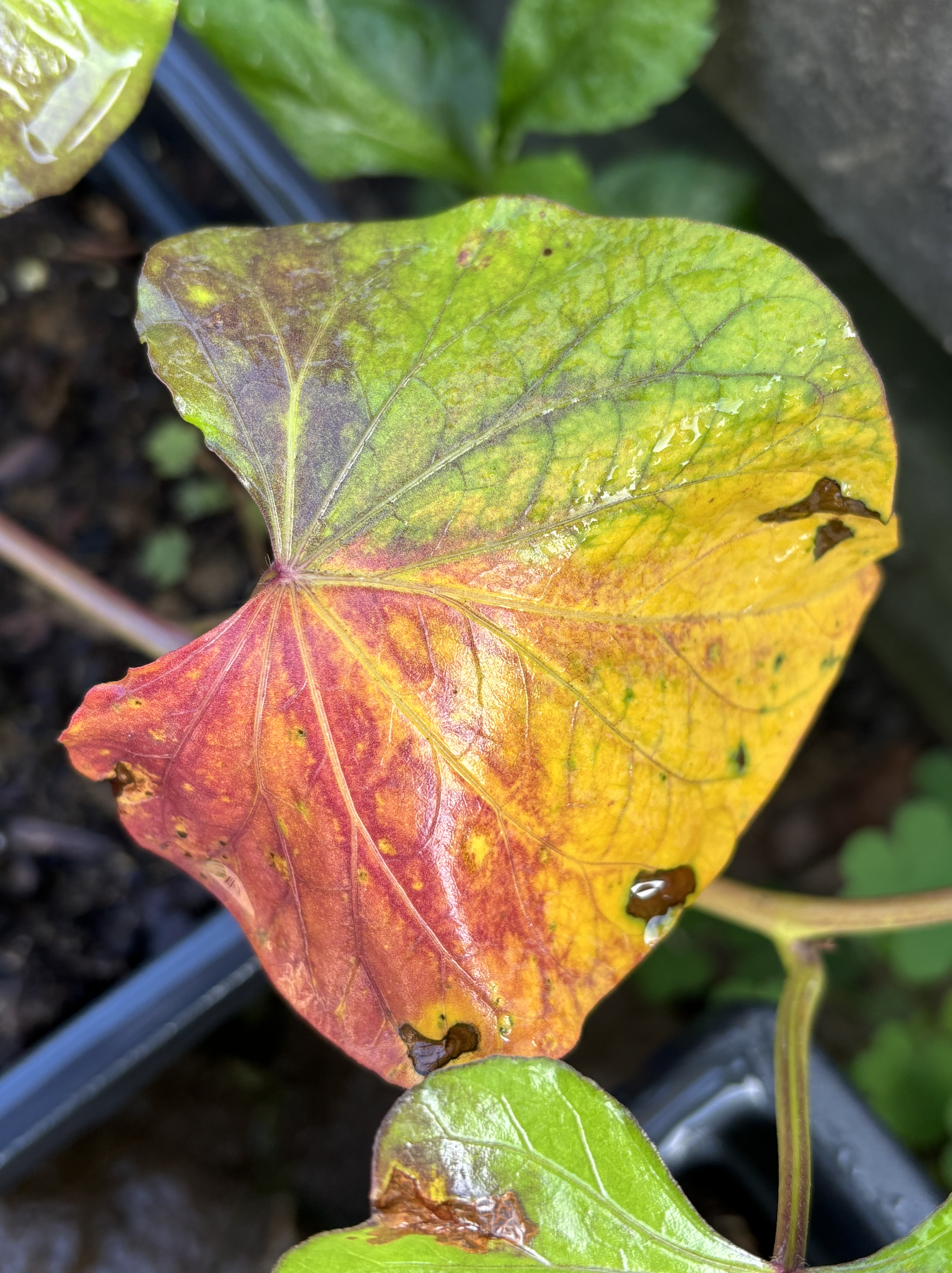
I’ve never taught visual art but if I had, I’d have sent my students outside to look at color in nature. I wouldn’t spend a moment having them study an abstract color wheel or match paint swatches indoors. Together we’d look at light, the angle of the sun. We’d play with shadows and discover the changing hue of shadows; they are more full of color than we want to admit.
We’d bring-to-light, uncover, unearth…we’d learn to see, a skill much more valuable to the artist than merely looking. We’d walk through the world as if for the first time. We’d share our color notes. We’d tease and be teased by a full range of morphing value as the sun played with our perception.
We’d remind ourselves that our window on this life is only open for a short while. We’d saturate ourselves in the infinity of shapes and textures, the marvel of pattern and interconnection; the riches of diversity. We’d immerse-in-the-immensity and not pretend that we were in any way separate or better-than.
We’d stave off a world insistent that we live within the narrow strictures of black and white, bland cubicles of dulled minds. I’d have sent my students outside to wander into their thicket of questions and step boldly into a world without answers but alive in rich, vibrant color.
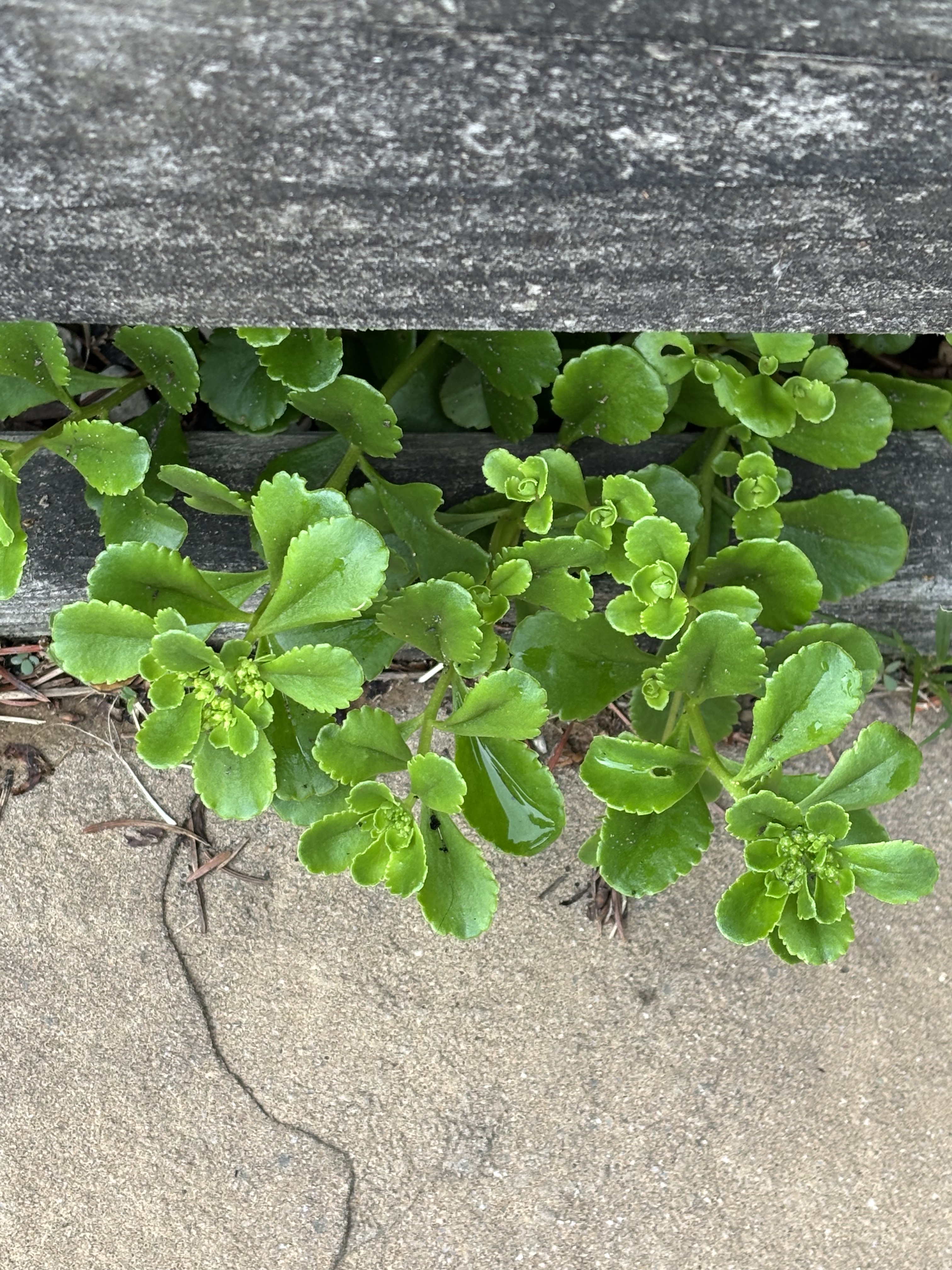
This sedum is a volunteer. It somehow took root beneath the deck and yet has found a way to reach the sun. It’s funny. Each day I check on this little plant because its resilience gives me some small measure of hope: good things can take root in dark places and through natural tenacity, find a way to the light.
When I step back from our national horror story and take in the whole picture, I am overwhelmed at the abundance of light. People showing up for other people. People expressing outrage at the treatment of others. The shadow spaces are small in comparison.
In this way people are no different than plants. Our tendency – our need – is to seek and find the light and the light is found in the community and what it values. A community can only stay in the dark for so long before it – like a plant – begins to perish.
“They have no respect for human life,” she said, showing me the latest video of an ICE arrest. And then came her list of disrespect: “Decimating USAID, cuts to Medicaid and SNAP…” It was a very, very long list.
I responded, “They have no respect for others because they have no respect for themselves.” It would be impossible to vote for that Big Bloated Bill and be able to look at yourself in the mirror.
They crawl into dark places to flee the light. The assault on the free press. The prevention of congressional oversight – and the nation – from seeing into their “deportation detention centers”. The restrictions (elimination) of due process and habeas corpus…This, too, is a very, very long list. Dark hearts creating dark places.
Here’s the thing: in dark places people lose track of where they are. Disoriented, they also lose track of where others are. In panic, they lose track of how important others are. They become physically, mentally and morally confused. They default into “every man for himself”. In survival-mode, people push others underwater in an attempt to elevate themselves. In the end, all drown.
In the dark we lose track of who we are because we can only know ourselves in relationship to others. Societies collapse in shadowy amorality and the dim fantasy land of every-man-for-himself (obviously).
It is the way of fascist regimes to drag the people of their nation into the dark. Our current leadership in these un-United States is following the Nazi playbook exactly. To perpetuate their dark intention they need to manufacture enemies; the trail of enemy creation will eventually lead back to themselves. They will eventually have to eat each other in their dog-eat-dog fascism. Even though it doesn’t look like it at this moment in time, dragging us into the dark will bring them to perish in an inky bunker.
Like the sedum rooted beneath the deck, it is our natural tendency is to reach for the light.
The only real question that remains is how much dark-malfeasance will we tolerate before we-as-a-nation say, “Enough,” break free and turn toward the light?
And, if we make it, if we survive this dark time and stumble back into the sun, I hope we will have the courage to look at what the light reveals to us – about us. I hope we have the capacity to see fully the totality of our history – all of it. I hope we are capable of asking why so many of us drank from a fox-fire hose of lies and so willingly embraced fantastic falsehoods. I hope we might once and for all align our actions with our rhetoric and put to rest the ugly idea that We-The-People only applies to a privileged few, but applies equally to all of us – a wildly diverse community dedicated to keeping the experiment of democracy vibrant and in the light.
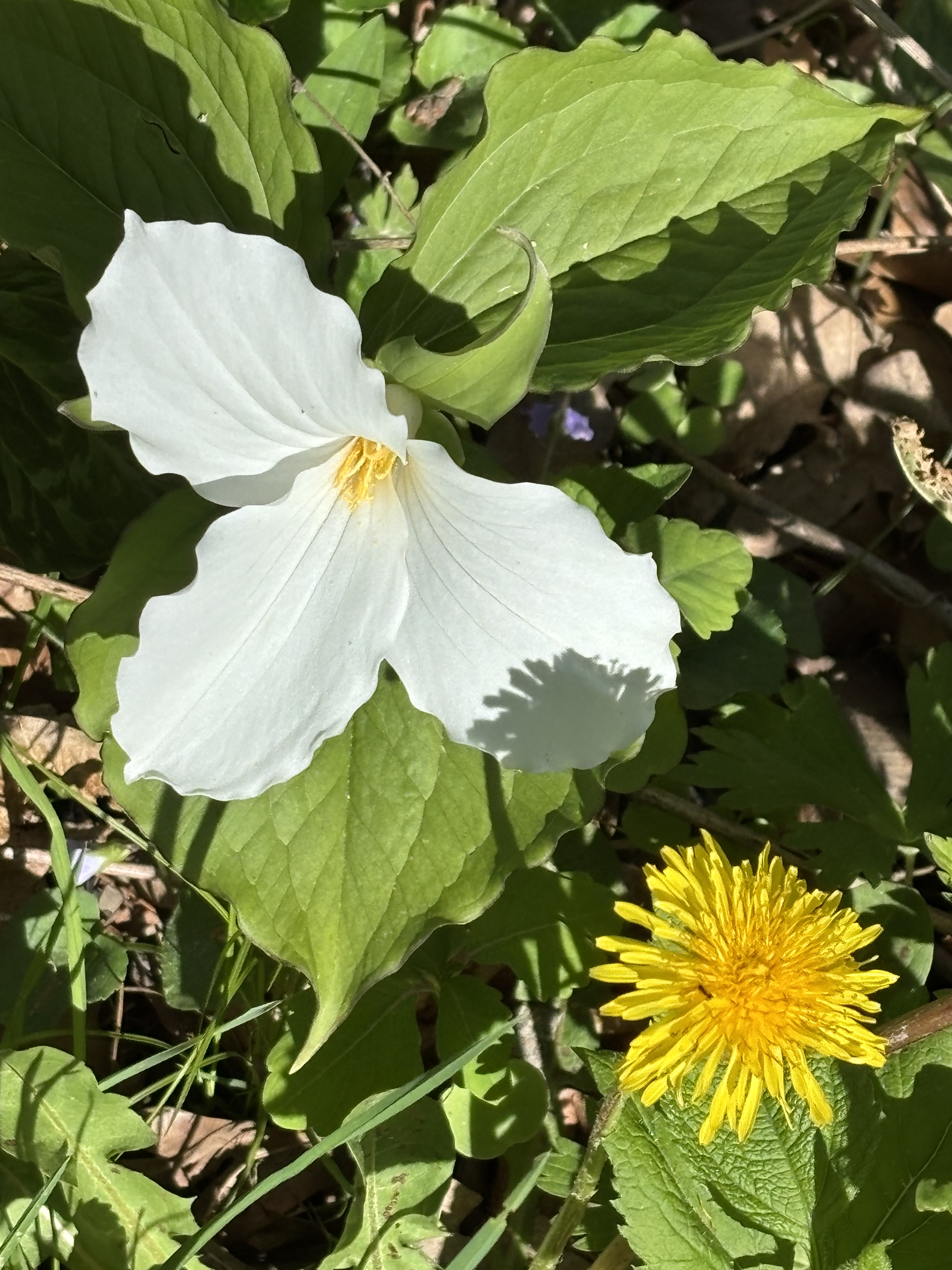
Look carefully and you will see the shadow that the dandelion cast upon the white petal.
Can you see the veining of the leaves? The watercourse way? The ridges in the petals serve the same life-giving purpose although by a subtly different, visibly beautiful design. Can you see it?
There is a small spot of purple. Can you find it? It pulls the eye. It provides the tension necessary for focus, inspiring movement of the eye.
Is the ant adventuring across the dandelion apparent at first glance? Like the spot of purple, it is there though probably not apparent at first glance.
At first glance. To the casual eye. On the face of it.
And then there is the purpose beyond the pretty. Do you see it? The petals of white, the yellow pistil attract pollinators in an attempt to perpetuate their species. The ant does not adventure for fun but for food.
Do you see the dried leaves supporting the green and white, the yellow and purple? Once green themselves, drinking the sun, they now provide sustenance to the next generation, warmth to the root.
It was the shadow of the dandelion cast that caught her attention.
It takes time to see the purpose beyond the pretty. It takes a longer second glance. Seeing – and understanding – interdependence takes more than a first glance. It requires some learning. Observation. Study.
My father used to tell me that I’d educated myself into stupidity. I did not take it personally as I knew that he was captive to the fox. He knew, as do I, that the fox is dedicated to the superficial. He was schooled by the fox to believe that looking beyond the superficial, a thing called “learning”, was a worthless thing. The fox preaches simple idiotic solutions. Build a wall. Deport without due process.
Critical thinkers and active questioners are less likely to eat the smorgasbord of drivel and easy conspiracy served up as sustenance by the fox. The fox relies on the superficial. The fox defends against a second glance. The fox talks fast, a carnival barker, enticing people into the tent with freak-show promises, bearded ladies and conjoined twins, performances guaranteed to shock the most hardy of viewer.
Every carnival barker knows that a longer second glance would shed some light on the subject. It would reveal the make-up, the spirit gummed whiskers, the hollow dumbbells of the strongman. A little study would reveal the purpose: outrage in exchange for your nickel.
The only way to keep the viewer in the tent is to escalate the outrage. Keep them solidly in their reptile brain. The only rule? Never ever provide a second glance. Prevent at all cost a deeper look. Stigmatize learning. Undermine fact. Distract. Gaslight. Blame. Assault education. Oh, and never ever pass up a chance to charge another nickel.
“Yes, I’m bein’ followed by a moonshadow Moonshadow, moonshadow Leapin’ and hoppin’ on a moonshadow Moonshadow, moonshadow”Cat Stevens (Yusef), Moonshadow
All of my life I have been captivated by shadows. The ghost dancing grasses cast on the trail. The moving patterns of telephone poles and lines waving on the asphalt. The cloud shadows gliding over the hills. Kerri and I regularly stop and take photos of our shadows. “Look how long we stretch!” I adore the shadow puppets of Wayan Kulit. It is a ritual performance of universal stories meant to remind us that in this life we only see the shadows we cast upon the screen of our minds. What’s “real” is beyond our capacity.
“Everything we call real is made of things that cannot be regarded as real.” ~ Niels Bohr. The quantum physicist and the Balinese puppet master – a priest – agree. Reality is a shadow.
Yesterday we attended a Hands-Off rally. The number one statement most often uttered by people in the crowd (according to my count): “I can’t believe this is happening!” It doesn’t feel real. It doesn’t seem possible that our representatives have so easily rolled over rather than honor their oath to protect the Constitution. In their reality they play on team Republican. In our reality – we assumed in a crisis moment like this – that they would play on team United States.
Assume nothing. Reality is what we agree upon and at present there is no agreement.
Charlie is wise. Looking at the hundreds of people chanting and waving signs, he said, “When the rule of law collapses then there’s chaos. In chaos the people have no recourse but to take to the streets.”
The Constitution is the epicenter of our laws. It is the foundation stone upon which our democracy was and is constructed. When disregarded it is no more than a piece of parchment. A relic. “Everything that is real is made of things that cannot be regarded as real.” The Constitution has purpose and meaning only if we agree to honor it, to protect it – to adhere to the boundaries – the law – that it prescribes.
A woman in the crowd said, “It’s been less than 100 days and look at this.” The people have no recourse when our elected officials ignore their foundation stone. When they choose to serve a different reality.
About Moonshadow, Yusef wrote, “Whatever happens to you there’s always something good to look forward to.” Standing in the crowd, alive with concern and caring for the well-being of the nation, I thought, “This is good. There is hope. This is how a democracy survives.”
Posted on December 12, 2024 by davidrobinsoncreative
“I would rather walk with a friend in the dark, than alone in the light.” ~ Helen Keller
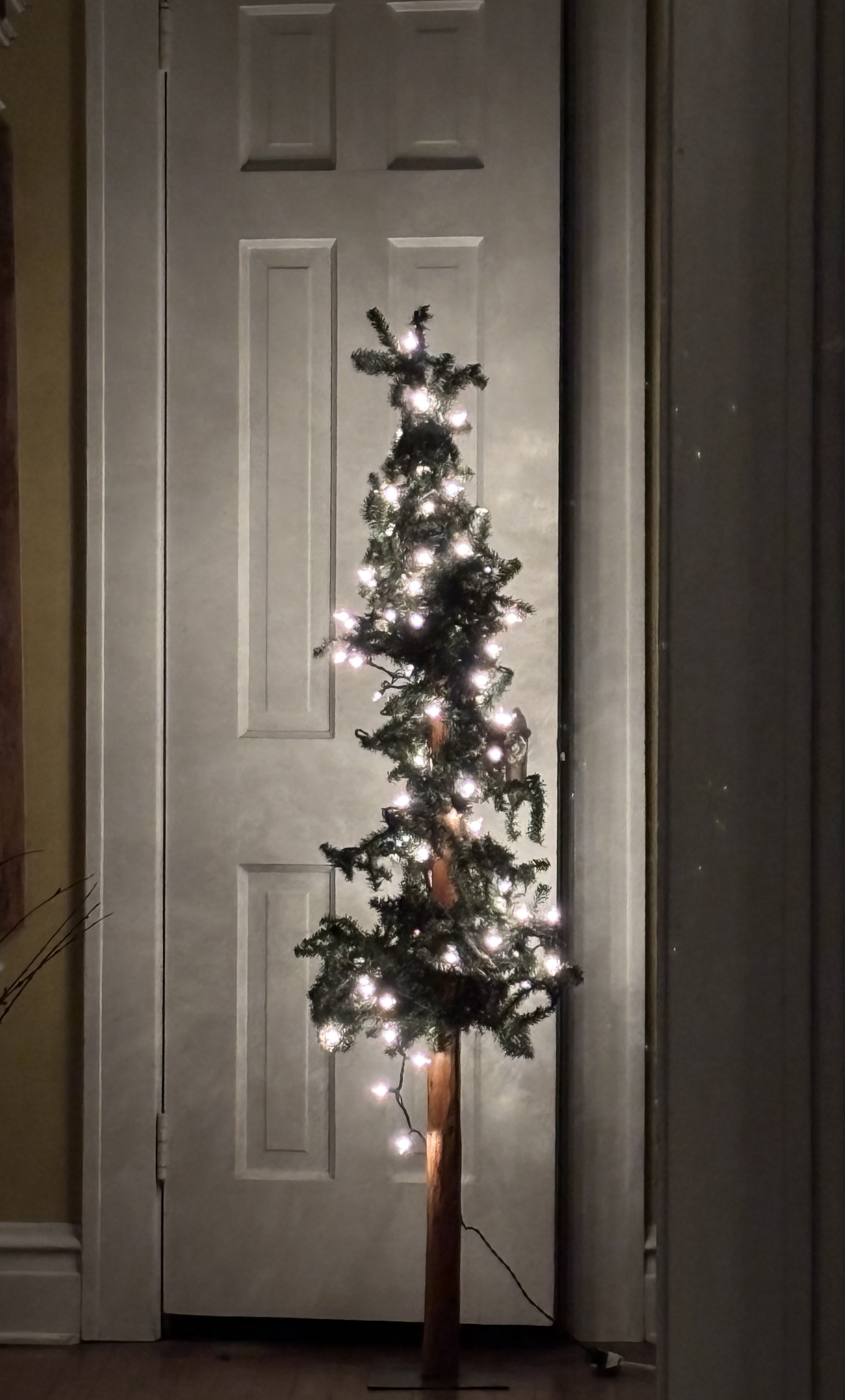
We bought the chandelier a few years ago. It was meant to hang over Barney, our disintegrating backyard piano, but it wasn’t the right fit. For a single summer it lived just outside our backdoor. It’s a solar chandelier so it jumped to life for a few hours after the sunset. It never held a charge for very long.
It migrated into our sunroom, suspended just beneath the plant table. It tickled us that we had a low chandelier that nearly touched the floor. It didn’t get a ton of sunlight from its place beneath the table so it sprang to life for only a few minutes each night after we turned out the lights.
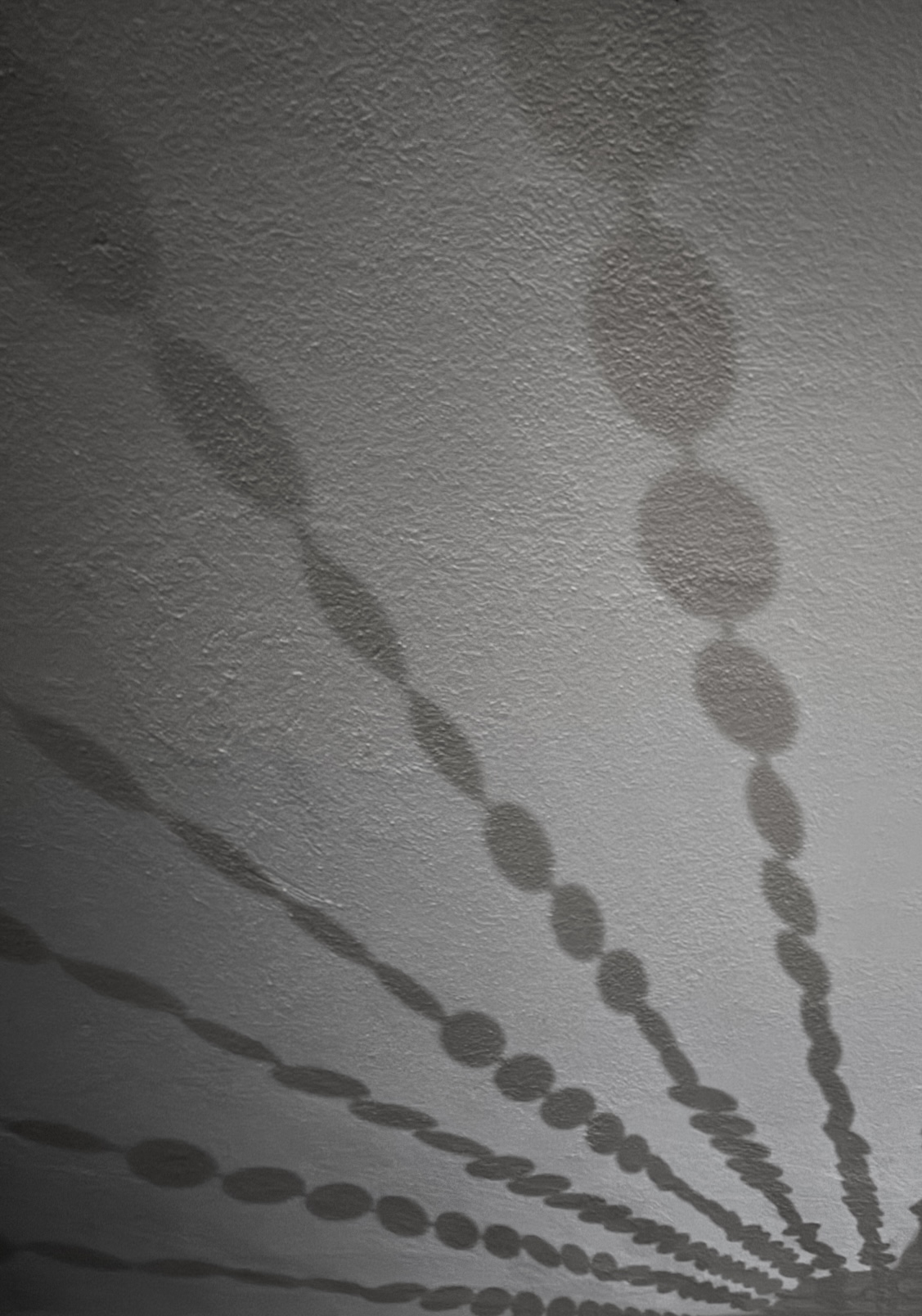
As part of the recent whirling-dervish-clean-fest, the chandelier has been elevated to a new position. Now, instead of dangling beneath the plant table, it proudly hangs above it in a prime position receiving plenty of light. Now, when the lights go out and the chandelier springs into life, it casts glorious shadows across the ceiling.
As part of my evening ritual of closing up the house, I move room-to-room pulling the plug on our many happy lights, saving the sunroom for the last. I like watching the chandelier illuminate, fulfill its purpose and cast its shadow. It both amuses me and I find it oddly comforting.
Last night, knowing that it had only a few minutes of charge since the day had been dark and cloudy, I stood and watched the shadow change as the little chandelier waxed and then slowly waned. A lifespan of a few moments, a complete arc, as the vibrant jeweled octopus stretched across the ceiling and then almost immediately faded into nothingness. The quick visit of a happy spirit. It sent me to bed with a smile and the promise of another visit in the morrow.
Posted on September 13, 2024 by davidrobinsoncreative
She began taking pictures of our feet when, early in our lives together, we traveled to The Netherlands, Belgium and France. The point was not to capture our feet, rather it was to record the variety of surfaces we walked upon. Cobblestones and ancient wood. Mosaic tile. The unusual and the seeming ordinary, though, when traveling, no surface is ordinary. For awhile we entertained assembling a collage of the many many surfaces were we found our feet standing. A quirky memory wall.
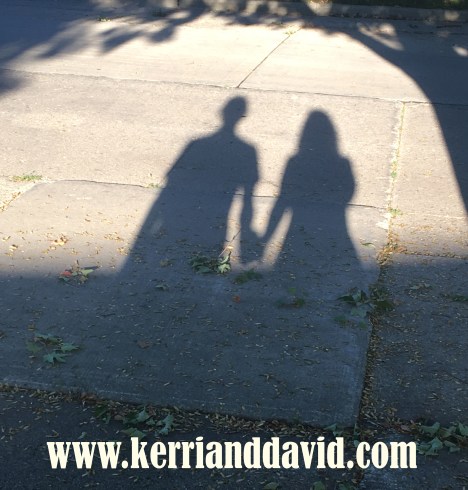
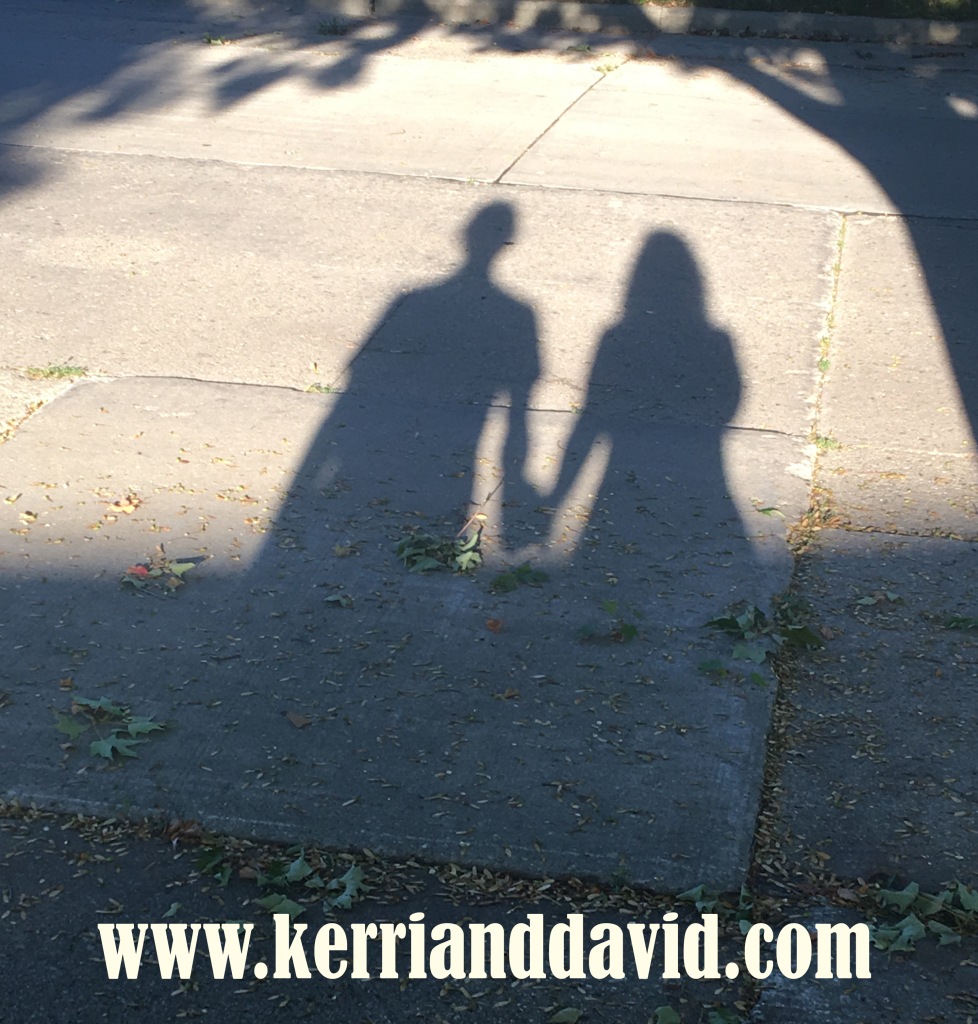
Adding to her series of traveling feet she began capturing our shadows. It’s now common for her to say, “Wait!” I know exactly what to do. No questions required. My job is to hold still until she snaps the latest edition to her shadow collection. I love them. To me, they are our version of the Balinese shadow puppets. Wayan Kulit. At best we are aware of the shadows we cast, the projections of our minds. Our lives a moving grand illusion.
Like the feet series, the shadow collection serves as markers of our life together. Trails we’ve hiked. Bridges we’ve crossed. Friends who entertain without question our odd request for a shadow portrait.
I just read a story about a man who tried to outrun his shadow. He was, as you might imagine, unsuccessful. It was a particularly poignant story for me since I spent many of my younger years trying to escape my shadow. I was, like the man in the story, unsuccessful. Though, unlike the man in the story, I stopped running. Some small grace whispered in my ear to stand still, to turn and look at it. To really look. To walk with it.
Isn’t it poetic that after all that time running, I now hold hands with a woman who regularly stops me on the trail, not only to look but to capture our shadow – singular – as it stretches out before us, leaning in, two people blending together as one?
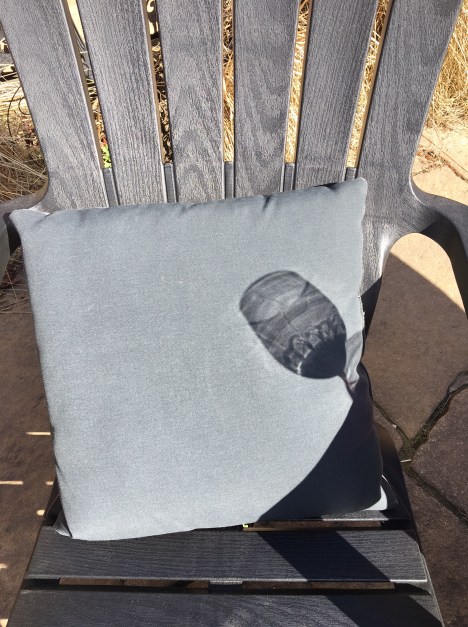
And with no warning, Cat Stevens was suddenly holding a concert in my head: Oh, I’m being followed by a wine-shadow, wine-shadow, wine-shadow. A leapin’ and hoppin’ on a wine-shadow, wine-shadow, wine-shadow…
Carl Jung wrote that “Everyone carries a shadow,…” I suspect Carl chose his verb carefully. Rather than being followed by it, everyone carries their shadow. The absolute weight of weightlessness. The next part of his thought goes like this: “…and the less it is embodied in the individual’s conscious life, the blacker and denser it is.” The moral of his story: get to know your shadow.
I had a long talk with a high priest in Bali. He explained that, according to their belief, they see no need to run from the dark as we do. They strive to make peace with the dark. Keep in mind that their construct is not built upon the hard rock of heaven-or-hell. For them, there is dark energy and light energy. The two dance and balance each other. They are necessary to each other. Our work, he suggested, is to walk between them, hold them both as meaningful and sacred. Getting to know the shadow is about having a relationship with the light.
“Don’t sit down!” she said, jumping up, camera in hand.
“What? What?” I asked looking around. She rarely jumps up like that. Only in the presence of bees.
She pointed enthusiastically at my chair. “Shadow! Shadow!” she whispered, as if her voice would scare the shadow away. She focused her camera on the weighty-weightless.
“It’s beautiful,” I whispered, just in case she was right. I’ve ruined a shot or two in the past by using my outdoor voice. I didn’t want to get “the look” if I caused the shadow to flee before she could snap the picture.
It was during her photoshoot that Cat Stevens popped in. And Carl Jung, not wanting to be out-sung, offered his quote.
“I look forward to getting to know this shadow,” I said.
“What?” she whispered, aiming and re-aiming.
“Never mind,” I smiled.
“Did it take long to find me? I asked the faithful light Oh, did it take long to find me? And are you gonna stay the night?” [Moonshadow, Cat Stevens]
I wrote with great derision of the day I went to the Museum of Modern Art in NYC and watched people line up to take selfies with Van Gogh’s Starry Night. So, more than 15 years later, I howled with laughter at myself when Kerri beckoned me to stand with her so we might take a shadow shot with Diebenkorn’s painting, Ocean Park #68. “We’ll call it ‘Richard and Us!” she smiled.
Kerri recently challenged me to let go of my figurative work, release the image and paint my feelings. The moment before she beckoned me to take the shadow shot, I was having a minor revelation. There’s a reason I have stood in front of this painting for hours. There’s a reason it “talks with me” about simplicity and courage. Early in his life Richard Diebenkorn was a figurative painter. Even earlier, his work was abstract and resembled the paintings of the masters he admired. As his work matured it circled back to abstraction. He didn’t “let go” of his figurative work; he grew through it. He reached through it. In Ocean Park, he fulfilled his unique voice.
I read that his Ocean Park series was greatly influenced by the work of Henri Matisse. I imagined Richard Diebenkorn standing in front of his favorite Matisse, having a quiet conversation about simplicity and the courage to explore. In the gallery light, his shadow cast upon the painting as he moved forward to study the brushstrokes. He leaned in. He reached back to Henri to move forward. Had he lived in the age of cell phones and easy shots, I’m certain he’d have taken a shadow-selfie so he might remember the moment his shadow touched Henri’s.
We were alone in the gallery when Kerri took our shadow-selfie with Richard. We had him all to ourselves. We leaned in. I thought it especially poignant, our shadows cast upon a painting, an artist, who has cast his long shadow upon me. We caught the moment our shadow touched Richard’s. Reaching back to move forward,
Posted on January 19, 2022 by davidrobinsoncreative
It was once a guilty pleasure. After a snowfall, through newly plowed streets, I’d tie on my red Nike shoes and go for a long, long run. In Colorado, the sun and the cold air play well together. Atmospheric sweet and sour. Run toward the sun in the snow quiet. Sensual pleasure. I’ve never felt more alive than during those treasured runs.
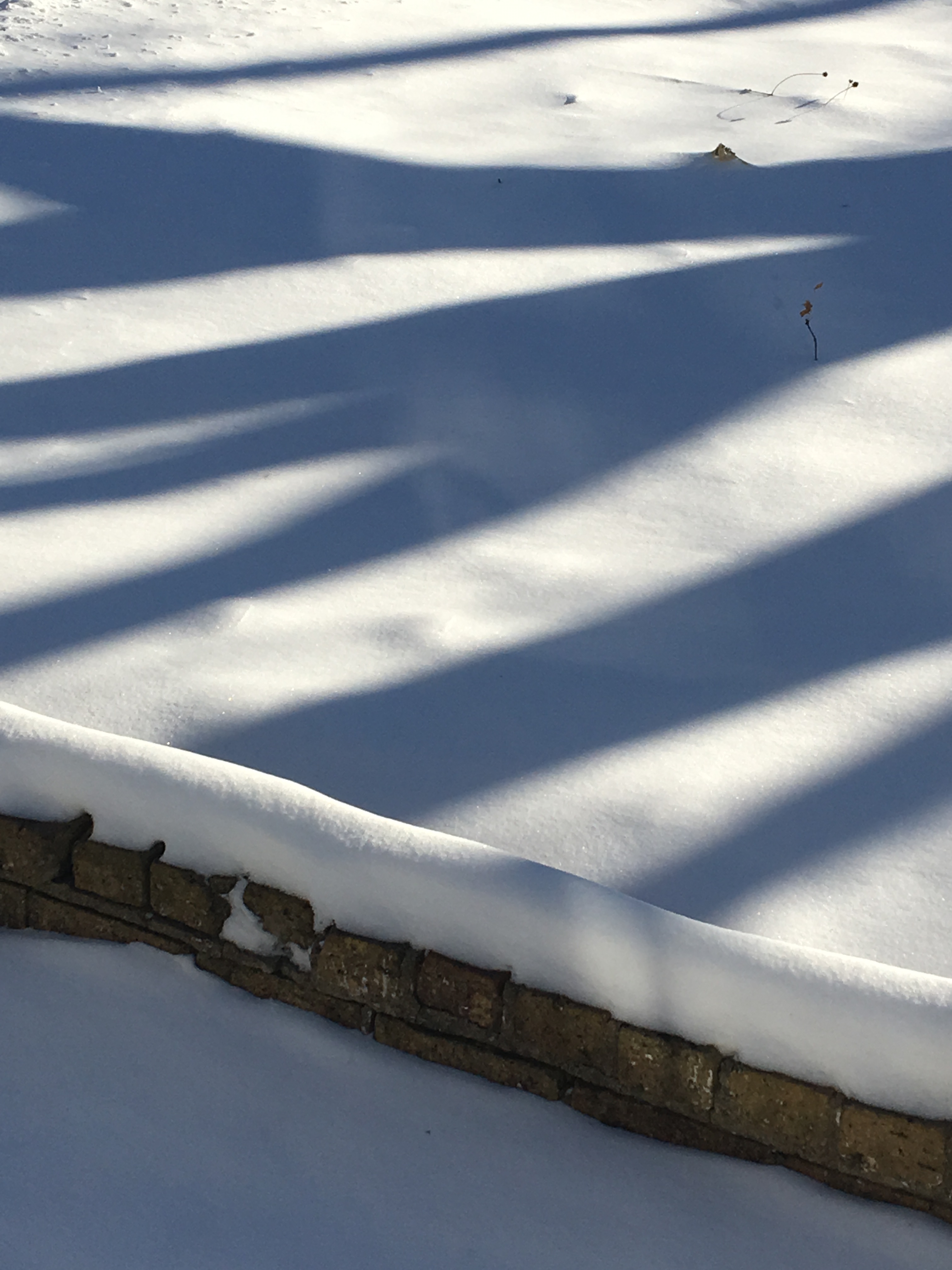
Our yard is a miracle of shadow-play after the snowfall. Between the trees and the tall grasses that grow along the property line, the cool blue sways and dances across the ice-white canvas, a visual conversation between limb and wind. It can be mesmerizing. Sometimes it reminds me of Wayan Kulit, the shadow puppets of the Balinese. An epic tale told on the screen of our front yard. The lesson of Wayan Kulit: we are not substance, not really. Rather, we are passing shadows projecting our story onto the canvas of our minds.
The mailwoman told me that she adored bringing our mail during the winter afternoons. “The light on the grasses,” she said, “they knock me out.” We wait until spring to cut back the grasses for exactly that reason. The pink, orange and purple light of a late winter afternoon makes the grasses luminous. And the shadows they cast! A gentle blue waving, aloha! Greeting or parting? Longing or fulfillment? I’m never sure.
Sylvia Plath wrote in The Bell Jar, “I thought the most beautiful thing in the world must be shadow.” Staring out our front window watching the dance, the frigid air and sun at play together, I think she was right. What could possibly be more heartbreakingly beautiful?
Lately I am awake for the sunrise. I know it is coming because, very slowly, the birds begin to sing. At first there is one voice, then a few more and then more. By the time the light through the window glows soft purple and gray, the full bird chorus is in session. They sing the sun into rising.
Although I didn’t recognize it at the time, these lawn-art-birds would come to represent to me threshold guardians. Harbingers of the test that my move to Wisconsin would bring. In story terms, threshold guardians are not friendly; they serve as the test of readiness: are you willing and able to greet the challenges that come with change. Or will you run away? Sometimes they are monsters. Sometimes they require the answer to a riddle or solving a puzzle. The new world will open after the obstacle is met. In facing and overcoming the challenge, the guardians often become allies. In truth, they are allies all along. They help you find your self by testing every idea that you have of your self.
Driving the Budget truck on my move from Seattle, filled with the artifacts of my life, Kerri and I stopped in a little village, Stockholm, just as we crossed the Mississippi River into Wisconsin. We wandered down the street and into a gallery. We were drawn to these simple bird-sculptures. They are the first thing we bought together. They represented our step into relationship. Us. They would stand together in our yard.
My first few years in Kenosha were akin to being lost in the woods. My livelihood disappeared. My networks disappeared. Art opportunities vanished. Many of my friendships faded. Every project I tried to pitch or create stalled, every path I attempted to plow broke the plow. I felt stripped. Of little or no value. Even in arenas where I was once appreciated, I was invisible. I’ve done extraordinary consulting work in organizations but learned in my new life that my experience and observations were not welcome. So, silent as well as invisible.
More than once I went out back and sat with the sculptures. They remained silent when I asked of them my questions. Who am I now that I have no useful purpose? What do I do now? In the absence of an answer, the sculptures and I listened to the birdsong.
Often the test brought by the threshold guardians is one of letting go. You cannot become a butterfly if you insist on remaining a caterpillar. The armor must fall. The known shape must go to mush. The what-the-hell-is-happening-to-me necessarily falls unanswered into the void. What’s happening is not complex: you are changing. The old stuff isn’t working because it is too small for the new shape. Let go.
It is not complex but it is uncomfortable. Dark night is cold when you’ve shed your skin. The sun will rise. The birds will sing it into existence. Warmth will return in the moments beyond the soft purples and greys.
We recently moved the bird sculptures from their spot by the pond to a new home by the fence. I hadn’t realized how invisible they were when standing over the pond. By they fence, they are glorious! They are also a metaphor, standing tall, made more vibrant and dynamic by their incorporated shadows. They are transformed. They are present, standing together in the yard. They are signaling the path to the new world, singing into existence the new day.