Learn A Thing Or Two [on KS Friday]

A decade ago I wrote and self-published a book. I called it The Seer. The see-er. A few days ago I pulled it off the shelf and began a slow-read-through. It’s a good book! I’m actually learning a few things from my younger self.

Yesterday I made a spreadsheet (I’ll never again confess to making a spreadsheet so appreciate this moment). The purpose of my spreadsheet was to build a database for Kerri of the cartoons that I’ve drawn for work. She takes my pencil drafts and digitizes them, colorizes them, and adds some quirky dynamics. They begin as mine and complete as ours. To finish my database it was necessary to open every file and look at each cartoon. They made me laugh. I’m proud of those cartoons, our work. I’m excited to share them beyond the small circle of eyes that currently see them. I know I’ve learned a few things because they are so simple.

We have a few sparse analytics on our blogs so can see when someone reads a post from the deep past. Lately, when someone reads a post from several years ago, we read it, too. “Where did that thought come from,” Kerri asked herself after rereading her long-ago-post. Often, after I dive into the archive, I want to rewrite what I read. I’m a much better writer now that I have a great editor reviewing my posts every day. The grammar police should have sent me to the gulag years ago. I am fortunate now to have a daily read through and revision with the-daughter-of-beaky-who-won’t-tolerate-improper-grammar. It’s too soon to know but I might be learning a thing or two.

We had occasion to revisit 2015. We didn’t mean to but were looking for a picture of a lanai and a pizza. It was the year we produced and performed The Lost Boy, illustrated and produced the first of Beaky’s books, we lost her a few weeks after the book release party, we were married in the fall of that year, we inadvertently created our first cartoon character, Chicken Marsala. “We’re content-creating monsters,” I said during our reminiscence. “We’ve learned a few things,” Kerri replied.

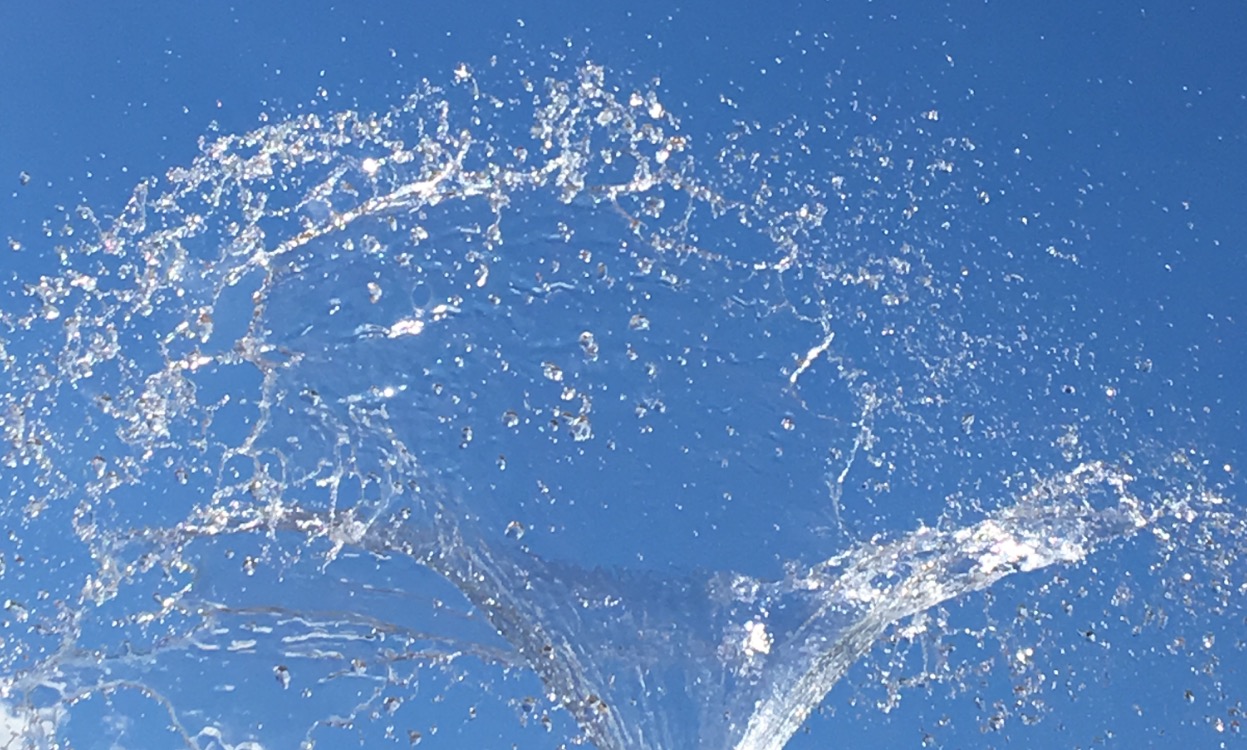
We walked to the channel. The last time we took this walk was before Covid. It seemed like a stroll into the past. A walk into a former life. So much has changed. We stopped at the waterpark to take some photographs. Children danced in the fountains. Parents smiled. Innocence at play. Elders occupied benches.

“Look at this,” she said, showing me the picture of the fountain. “I think maybe I’ve learned a thing or two.”

read Kerri’s blogpost about THE FOUNTAIN
kerri’s albums are available on iTunes & streaming on Pandora

good moments/this part of the journey © 1997/2000 kerri sherwood

Know Their Name [on Merely A Thought Monday]

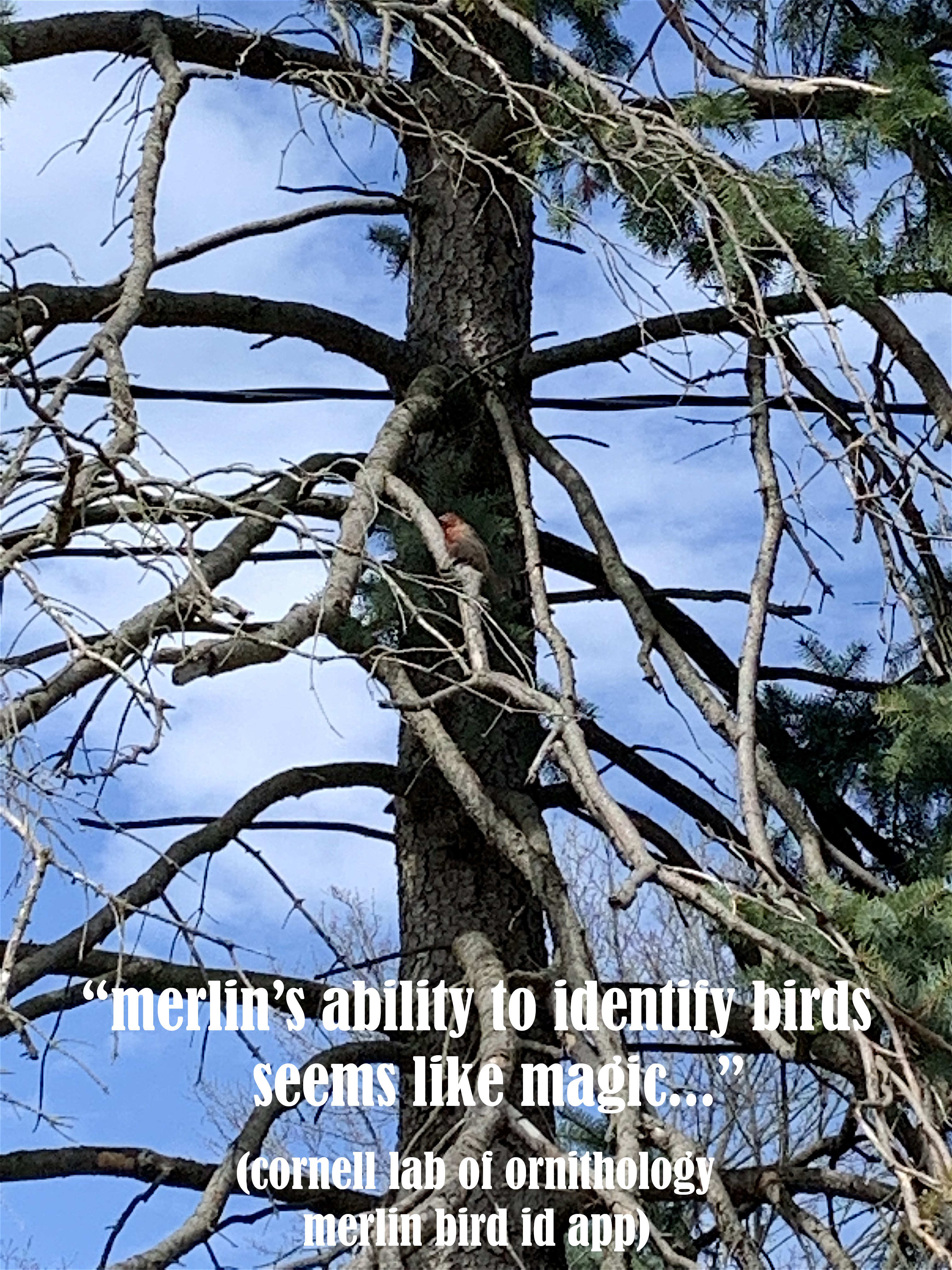
As I let Dogga out each morning, I stand for a few moments and listen to the birdsong. Our particular spot on the earth is alive with birds: starlings, finches, sparrows, robins, hawks, crows, owls… The Mourning Doves always stop my motion. Their song is hypnotic.

The pandemic changed – and continues to change – many things. Our world became significantly smaller. The table in the sunroom. The backyard. Our trails. As someone with his head in the clouds I am a dedicated generalist. I have always appreciated bird song yet never, not once, thought of identifying the specific birds and their song. “Sparrow? Finch? Who cares! They are beautiful and that’s enough for me! I spend too much time in my left brain as it is! The last thing I want to do is categorize the birds!”

COVID changed that. Sitting on the back deck or at the COVID table staring out the window for hours on end, our relationship with the birds grew. From general appreciation to specific experience. From passive appreciation to personal connection. We began to see nuance. Pattern. We wanted – and want to know more about these beings that sing us awake each morning, that alert us to changes in the weather, that signal alarm in the neighborhood.

While visiting the Botanical Gardens, Kerri found a small book, coded by color, that identifies the birds in our region. In a flash we can open the book and identify the bird. “Hey! Look! That’s Paul!” I say.

“Stop!” Kerri scowls. “It’s Martha. Paul’s on the fence.”

Just kidding. House Sparrow. Carolina Wren. My favorite to pronounce is Grackle. Great-tailed Grackle to be exact. I’ve decided that, were I to somehow achieve tough-guy status and ride a Harley to breakfast, my motorcycle-dude name will be Grackle. “Hey, Grackle,” the waiter will say, as I come through the door en route to my usual stool. “Hey,” I respond. Motorcycle-dudes named Grackle are birds of few words.

Deb showed us an app. Merlin. It identifies birds by their song. Now, armed with our book from the Botanical Garden and our Merlin app, when I ask, “What’s that?” Kerri – who is always alarmingly way ahead of me – has the answer. “Eastern Towhee,” she says.

“You’re making that up!” I cry, knowing she can’t stand to be challenged so will immediately jump to prove to me that she is right (it’s my secret fast-track to knowledge).

“Look it up!” she insists, showing me both the book and the Merlin return.

“Wow,” I say. “Towhee. Who knew. Maybe my pen name should be Grackle Towhee!”

She yanks the book from my hands. “Oh, Look!” she exclaims. “Merlin has identified you: Midwest DoDo.”

read Kerri’s blog post about BIRDS!

Breathe At Human Pace [on KS Friday]

We live in a time in which cars are capable of parking and braking themselves. I am able to type a message into a little box that I carry in my pocket and my message, through space and time to anywhere in the world, is delivered immediately. I write my thoughts in this device and then publish all over the world. I’ve learned of a software that is able to write my thoughts without me – faster and with fewer grammatical errors at the outset. I think and write in a pattern capable of being recognized. I am, therefore, capable of being approximated. What is amazing today is common tomorrow. So it goes with the pace of change.

I read in The Dream Society, written two decades ago, that the aim of the industrial era was to spare humanity physical toil and the aim of the information age is to relieve us from the exertion of thought. We’re producing data at a staggering rate and, ironically, the explosion is both serving the intention and overwhelming our capacity to keep up. We can’t possibly process the tsunami of information that washes over us everyday. We are human. We have a tough time sussing out truth from belief-fantasy even when not washed down the roaring information streams.

It is why I hang out with Desi. Desi is the little tree sprout that we rescued from the Des Plaines river trail over two years ago. When Desi came home with us, her tiny trunk was needle thin. She is thriving in her pot and has more than doubled in size, yet, by the standards of data, her growth is glacial. And that is precisely why I visit her each day. She is in no rush. Efficiency for Desi has nothing to do with speed. Health is about good soil and light. Like all plants, she could be pushed artificially, but why? Pushing might get her to adulthood faster but would also damage her systems. Efficiency and health, for Desi, are all about natural pace. Slow, slow, slow to human eyes.

Desi reminds me that the pace of my life is artificial. A choice. The pace, the incessant noise vying for my attention, are human-made, unnatural. Don’t get me wrong. I delight that Google maps gets me where I want to go. I appreciate having a phone available while walking a backwoods trail. One of the great joys of my life is watching Kerri photograph – with her phone – the world she sees. I love to write and push a button to share. I am, despite my advertising, not a luddite. I’m also aware that the media – the medium – is the message. We are – we become – what we consume and how we consume it. It is a necessity in our age of rolling miracles to keep both eyes open.

I think it is healthy (although virtually impossible) to occasionally crawl out of the stream and breathe at human pace. To think without the expectation of assistance. Each day, for a few minutes, I hang out with Desi, a reminder that an inch of growth every year is sometimes fast enough.

Kerri’s albums are available on iTunes and streaming on Pandora

read Kerri’s blogpost about DESI

taking stock/right now © 2010 kerri sherwood

View The World [on DR Thursday]

Dogga is a wrecker of backyards. He’s a destroyer of pristine spaces. His joyful enthusiasm propels him in rapid circles and his circles have become etchings in our smallish yard. Initially, we tried to cover his etching path in stone. Were you to visit you’d find flat stones covering a wide spiral around the pond, his first velodrome. To no avail. He is a living Spirograph, a dervish of delightful circles. Viewed from the air, I’m certain our backyard smacks of alien visitation, mysterious crop circles.

We’ve learned. Rather than resist nature, attempt to control it or cover it up, it’s a much better plan to work with it. I knew we’d crossed a thought-bridge the day Kerri suggested we install a round-about sign. We had to be direction-correct so we bought one for right-sided drivers. The details matter. If Dogga was to suddenly switch and run in the opposite direction we’d have to issue a citation or get a new sign.

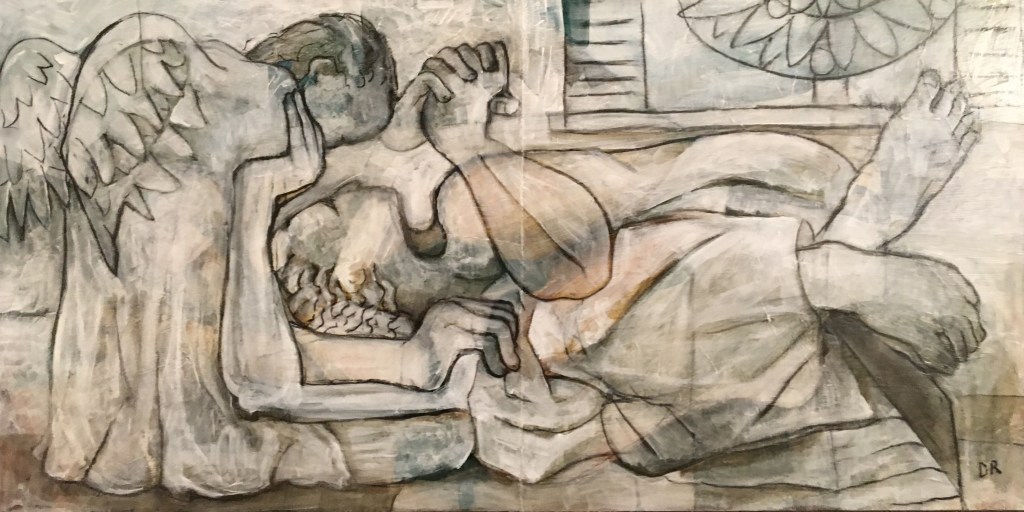
If there is a devil in the details there must also be an angel. As I’ve previously noted, I am not naturally a detail-guy; my head is at home in the clouds. I’m conceptual and can see great distances. It’s why metaphors are my currency, movement and pattern my friends. Please do not ask me to write a grant or make sense of the world through a spreadsheet. I can. I have, mostly out of necessity. But the cost to my soul is mighty. Luckily, as this great world spins, and the draw to a comfortable center is the force-at-play, I’m currently surrounded by teachers-of-detail, Kerri and Dogga are my favorite two but there are many in my circle. Angels, all.

Kerri runs to show me the photo she’s just taken. A close-in shot. A texture. A bud. An entire world in minutiae. See the beauty in the detail. For me, that’s the passage to the center. There’s entire universes to be found in the smallest detail. The up-in-the-clouds and close-in are relative terms. There’s a whole other worldview available from the grasses.

Lay on the ground and the Dogga will run circles of joy around you, his center point. There’s nothing better and that’s the kind of detail that’s not to be missed.

read Kerri’s blogpost about FROM THE GROUND UP

face the rain © 2019 david robinson

Look Around [on DR Thursday]

My sketchbooks are punctuated by weird landscapes. It was a practice. When I felt the need to draw regularly, to exercise my artistry, I worked on compositions for future paintings. And, when I had no idea what to draw, no composition in my head, I sketched my weird landscapes. They were fun and I got lost in them.

There was a blowback effect. I’ve never been a landscape artist. I considered my weird landscapes as not-serious exercises. Yet, they were made of scribbles and patterns and it became a game to collect patterns from nature. My not-serious exercises required me to look around. To get close. To look at the edges and splashes and etchings available in nature. To see. My weird landscapes became eye-opening meditations.

There are miracle-patterns in bark. Orchids, I recently learned, are a master-class of pattern, shape, and color. It is impossible to find a hand painted brush and ink painting as perfect or as spontaneous and lively as the strokes on the rattlesnake plant. Go to the garden if color combinations are in question.

I will never invent anything as imaginable, as impossibly beautiful, as what already exists in this world. I will never produce any painting as glorious as the paintings in nature. The best I can do is play. Look and marvel. And isn’t that a great relief?

read Kerri’s blogpost about RATTLESNAKE PLANT

eve © 2006 david robinson

Make A Savory Day [on Two Artists Tuesday]

“I don’t believe in guilty pleasures. I only believe in pleasures.” ~ Ira Glass

Among other things, covid has been a great disruptor of our patterns. Our life today barely resembles the life we knew two looooong years ago. Yesterday, while driving through the farmlands en route to buy a loaf of bread at Simple Bakery in Lake Geneva, Kerri said, “It’s all so weird.”

Among our new patterns is more appreciation of our time. We are less willing to stuff our day with things to do, rather, we’ve established a slower rhythm and points during the day to stop, sit together, and savor the events of the day. It began at the onset of the pandemic with our covid-table in the sunroom. A place to sit and watch the sunset at days end. Soon, there were snacks. And then a glass of wine. It became a ritual. Now, there is nothing more important in our day than to meet at our table. Talk. We call friends and family from the table. Dogga leads the way. He meets us there, positioned just behind our chairs with his bone or a few mauled toys. Sometimes we sit for hours – far beyond sunset. We eat our meals there.

We’ve also established patterns of anticipation within our patterns. My favorite, the silliest but most effective, is french fries for snack. There’s nothing more satisfying on a cold winter evening, than hot salty french fries. We make sure that it’s not a common, every night affair. We save it for the tough days or as a surprise. “Is it french fry night?” Kerri hops and claps in anticipation when she notices that the oven is preheating. Yes. Oh, yes.

The new pattern, of course, is not the table or the fries. It’s the decision to make moments special. We decided amidst the pandemic, the broken wrists, the job losses, the civil unrest, the loss of family and friends, to make lemonade from this time of abundant lemons. We decided to accent the pleasures. To walk slower. To meet our days, not with a list of things-to-do, but with the intention of making a most savory day from the ingredients found in our pantry.

Pattern disruption. Within the hard breakdown of the known, the loss of the comfortable, we are fortunate. Many times, sitting in our sunroom, the happy-lights reflecting in the windows, Dogga quietly behind us chewing his bone, Kerri says, “I love this space.” I nod my head. Me, too. The literal and the metaphoric.

read Kerri’s blogpost about FRENCH FRIES!!!!

Dump The Suit [on DR Thursday]

“When you are content to be simply yourself and don’t compare or compete, everybody will respect you.” ~ Lao Tzu

Lately, I’m on a Lao Tzu quote kick. Have you noticed? An advocate for a simple life, his words – or those attributed to him – appeal to me at this moment in my walk.

The outstanding characteristic of my working life is that I have mostly been a sore thumb, the person in the collective who doesn’t belong to the collective. That’s been my value: I am the consummate outsider. I do not sit on the mountain so I can more clearly see the mountain. The alternative perspective. I’ve not always found that to be a comfortable role. For instance, alternative perspectives are invited into conversations but the alternative perspective, when voiced, is rarely welcome. The first response to the alternative perspective is almost always an emphatic whisper, “Conform!”

I have, my entire life as the sore thumb, been told that, “Our people will never do that!” or “They don’t think that way, therefore you must conform-modify-edit…” The emphasis is placed squarely on the limit, the notion that “They can’t…” or “They won’t…”

And, I’ve never found that to be true. In fact, that’s precisely the perception that a sore thumb is hired to challenge. “They” can. “They” will. The job of the alternative perspective is to emphasize the possible, to open paths to the not-yet-imagined, to the revelation of, “We didn’t know we could do that.” Or see that. Or feel that.

In order to walk in an alien world, the sore thumb necessarily steps into the unknown. The first step is to listen and learn: to open to the possible within themselves, to challenge the inner-limiter. The alternative perspective lives on a two-way-discomfort-street with their client.

It is never comfortable to “not know.” It’s never comfortable to say, “I have no idea what that means.” However, it’s a great exercise, a necessary practice. And, it’s actually what the alternative perspective is paid to do and to model. “We didn’t know we could do that,” are words that come after a step into discomfort, a step beyond the known limits. “We step together because we both know how this feels.”

The alternative perspective is never right or wrong, it is simply an alternative. “These are the patterns I see. They may be useful or not.” Conformity bristles when the unknown beckons. Conformity is safe, and the emphatic whisper, while meant to maintain comfort for all, is the line that a sore thumb is hired to help the whisperer cross, “The possibilities we seek live beyond this line.”

The first day I put out my consultant shingle, I bought a suit. It’s what I thought I was supposed to wear. I bought my suit because I’d snagged a client, a financial advisor who wanted me to work with his staff. He’d seen my work – he’d seen me work – in another context. After the job, he asked me, “What’s up with the suit?” I’d always been told by well-meaning teachers that I should “dress for the job I wanted,” so I told my client that I’d dressed for the job. He gave me some great advice: dump the suit. “I want you to show up as you are, not as the person you think we want to see.”

His words became my mantra.

Truth: I hated that suit. I felt like an imposter wearing it. My client gave me a great gift. Be content to be yourself. Challenge the inner-limiter. Inner-limiters are very loud, and like outer-limiters, are generally not worth listening to; they will always advise you to conform, say nothing, and put on an ill-fitting suit.

[Happy Thanksgiving]

read Kerri’s blog post about GOURDS

tango with me © 2018 david robinson

Decide To Learn [Flawed Wednesday]

[No image today. My technology is having a rough morning]

I spent my day yesterday thinking about lines of perception. I’ve known for a long time that where a focus is placed will largely determine the dynamic reality, the movement, that is created. For instance, a focus on opposition will always produce a chaotic, explosive pattern. The moving energy locks up, tension builds, explosion. Repeat again and again. Focus on the relationships, the spaces between, and the movement, the energy, will harmonize around a common center. The behavior of a system is visible if you know where to look.

Points. Spaces between. Analytics or Synthesis? Break it into parts or look at the whole. Is it a particle or a wave? Both/And.

Tom used to say, “Teaching is a relationship.” It’s not about the material-to-be-covered. It’s never about the test. It’s always about the spaces between. Learning, at its best, is not about coverage. It’s about incorporation. It’s about meaning made from relevant experience. Experiences made relevant.

Every action has an intention, even if the intention is to stir the pot, to see what happens.

A few blocks from our home, outside the courthouse, protestors face each other across a perceptual dividing line. The energy is locking up. Tension is building. Last year a boy, too young to legally order a beer in a bar, legally brought a big gun to a protest. His mom brought him to the protest, big gun and all. He killed two people and maimed a third just a block or two from where he now stands trial. In the year since, he has been made a symbol, a well-financed icon of those who desire a dividing line. The pressure builds, just as the system demands. We await the explosion. It will be here, a few blocks away, or elsewhere, but it is coming just as the system requires.

There’s a less understood truism when the focus is placed on the points & oppositions: the tension builds and the explosion happens again and again because no one ever learns. It’s a repetitive pattern that perhaps feels like progress but is actually an eddy. Empty movement.

The only way out of the eddy is to attend to the relationships, to turn the focus to the spaces between.

read Kerri’s blog post about DIVIDING LINES

Surface The Pattern [on DR Thursday]

Steve read my book and said he didn’t really understand the thing about pattern. His comment at first surprised me but then I realized he was actually reinforcing the point: we are unconscious to our patterning. We think in patterns. We see in patterns. Culture is pattern. Pattern is invisible and making it visible is a necessary first step in change processes.

The people who surface pattern are often seen by the mainstream as deviant or rebellious. Women demanding equal pay are attempting to make a pattern visible. The BLM movement is attempting to make a cultural pattern visible. Shining a light on longstanding oppression is never welcome in the halls of power.

The people who work to repress the visibility of cultural pattern, conserve the norms, generally claim a righteous superiority. They are keepers of the culture and feel threatened, even victimized, by the sudden visibility of cultural pattern. Exposure is always a threat to the existing pattern and no one relinquishes power or privilege without a fight. The current raft of voter suppression laws – made possible by the fantasy of a stolen election – is a great example. The Big Lie is a textbook example of how far people in power will go to hide a privilege-norm. It is, for us in these un-united states, not a new phenomenon; it is a longstanding well-guarded pattern.

Change happens when the patterns are surfaced. There will always be a tide that rises to extinguish the light of exposure. In the long run, those hardy voices that were, at first, branded as deviant or dangerous, we come to honor and respect. They refused to be silenced. We claim them as our heroes. MLK. Gandhi. Rosa Parks. Cesar Chavez. Susan B. Anthony. There are so many. It is no easy task to surface the patterns. The path of a light-shiner is dangerous and difficult.

John Lewis gave great advice for those dedicated to surfacing unconscious patterns: “Get in good trouble, necessary trouble, and help redeem the soul of America.” He also said that, “…transformation will not happen right away. Change takes time.”

Opening eyes to unconscious pattern, to what is obvious yet unseen, is an artist’s path. Seeing beyond what you think you see…seeing beyond your field-of-dedicated-belief, being curious enough to question what you are being told – can you imagine anything more necessary – more vital – in our age of rabid-misinformation and desperate-pattern-suppression?

read Kerri’s blog post about PATTERN

in dreams I wrestle with angels ©️ 2018 david robinson

Gather And Share [on DR Thursday]

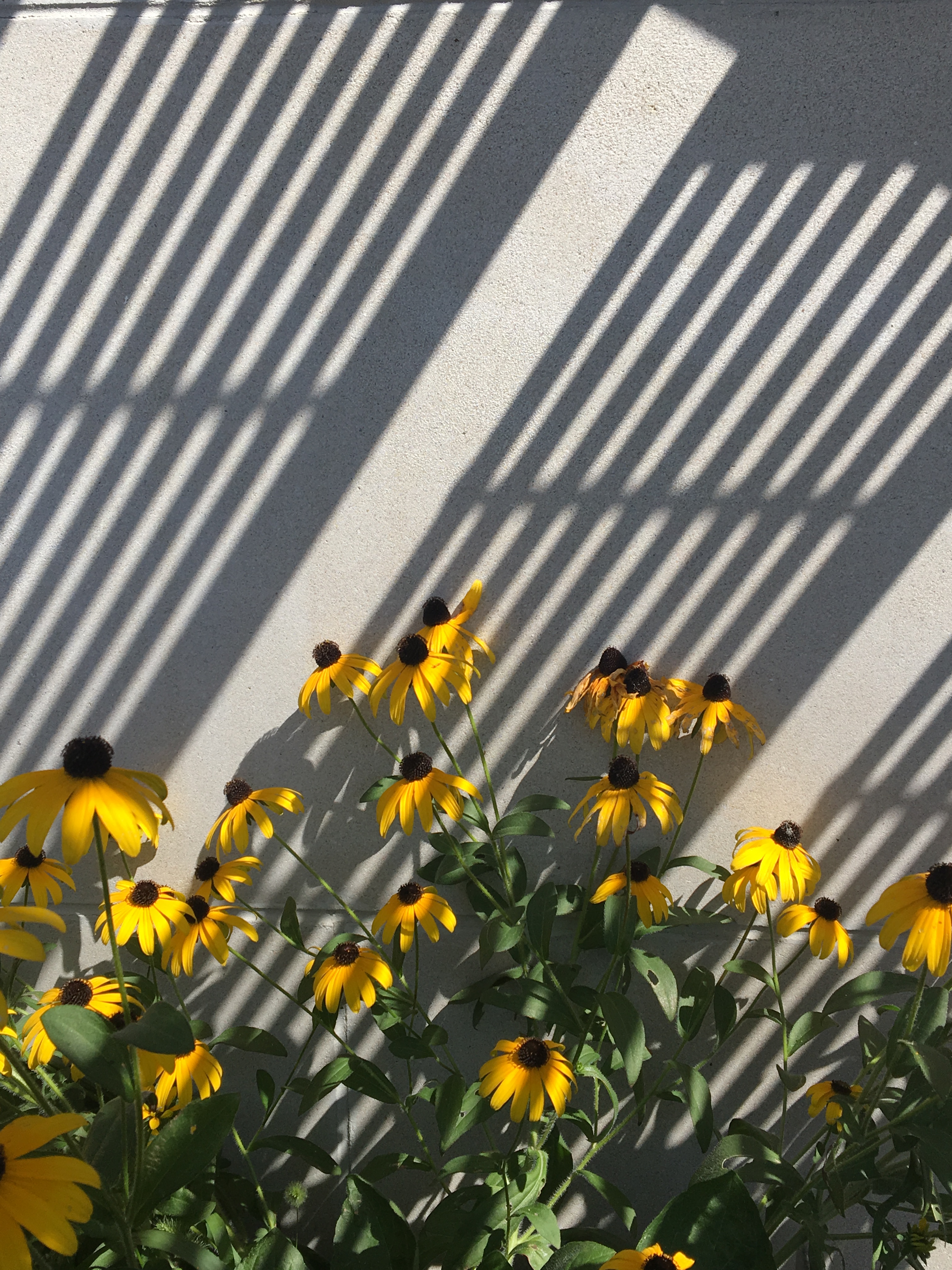
Back in my Don Quixote days, with the onset of a camera in every phone, one of my favorite exercises to give to groups was to send them out in search of textures. Gather texture. Gather pattern. It was quite literally eye-opening. It was also, quite literally, presence-enabling and life-invigorating.

There is enormous power in the simple phrase, “Stop and look.” See.

In “gather” there is no judgment. Consequently, the photos that came back, rich in texture and collision of texture, patterns revealing themselves everywhere, were gorgeous. Dynamic. But, mostly, they were revealing. Otherwise serious adults, who believed that there was nothing new, that life was less-than-exceptional, came back from their texture-gather with open eyes. Some giggled. These people, claiming that they did not possess an ounce of artistry, would show their photos to the group and say, “I pulled that in so we could see it better.” Or, “Don’t you just love how those two things come together?” Or, my favorite, “You didn’t give us enough time! I couldn’t gather it all!”

Ah. Not enough time to see it all. Not enough time to take it in. Now, isn’t that a statement of the-love-of-life? Isn’t that the epicenter of an artist’s life. Isn’t that a more interesting path than, “Same-old-same-old”?

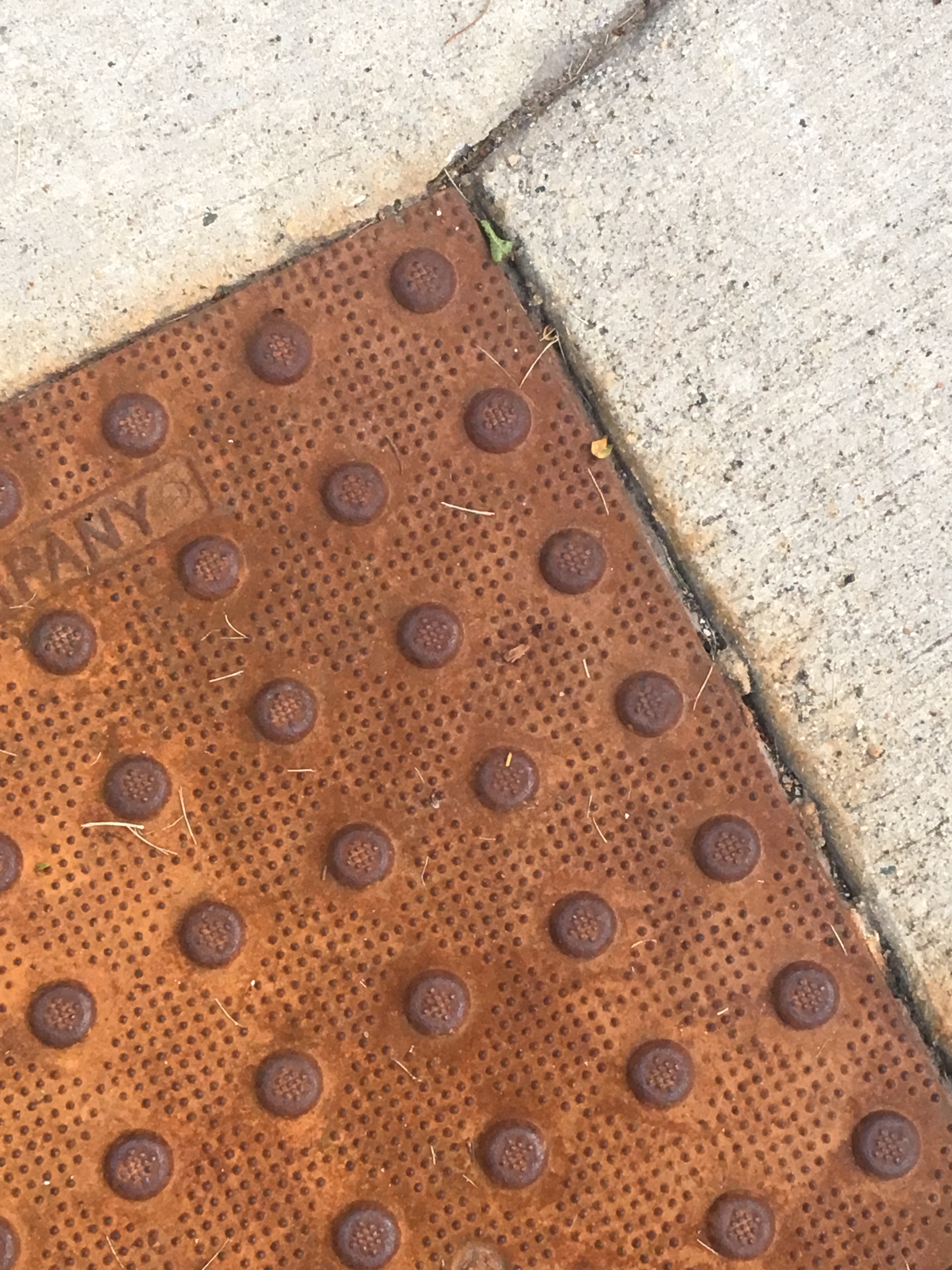
Dots. Diamonds of dots. Lines. Pattern. Texture. Too much to see. Too much to experience. And the best, most simple way to step into vibrancy is to stop and look.

But, there is one more step, the part that made the exercise powerful. The essential part was and is almost always overlooked. Stopping and looking and gathering is great but only has meaning – only becomes artistry – when it is shared. Without fear or judgment. Stop. Look. Gather. Come back to the center and share what you see.

read Kerri’s blog post about TEXTURE

yoga series: meditation ©️ 2012 david robinson