Know The Difference [David’s blog on Flawed Wednesday]

“Public education does not serve a public. It creates a public. And in creating the right kind of public, the schools contribute toward strengthening the spiritual basis of the American Creed. That is how Jefferson understood it, how Horace Mann understood it, how John Dewey understood it, and in fact, there is no other way to understand it. The question is not ‘Does or doesn’t public schooling create a public?’ The question is ‘What kind of public does it create?'” ~ Neil Postman, The End of Education: Redefining the Value of School.

It’s important to know the difference.

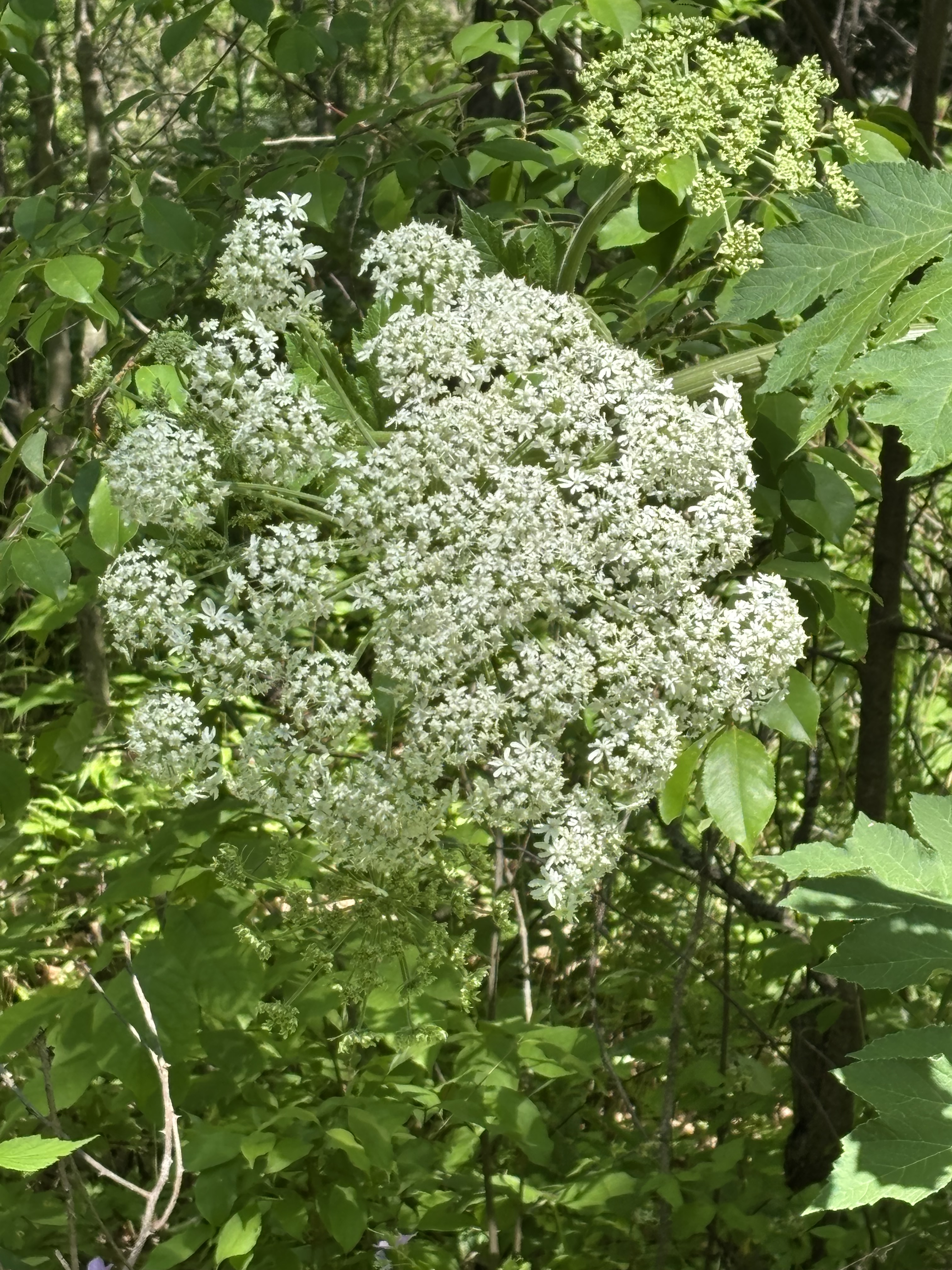
In the forests and fields through which our walking path winds, there is Cow Parsnip, Queen Anne’s Lace, and Hemlock. All sport umbrella-clusters of tiny white flowers. They are all members of the carrot family. To the untrained eye – like mine – they look similar. They are dangerously different.

Socrates was sentenced to death and was made to drink Hemlock. It’s very toxic. Queen Anne’s Lace is edible and used medicinally. Cow Parsnip can be eaten “if handled properly,” however a combination of sap and sunlight can cause a painful rash.

It is important to know the difference. It is why education is so important. It is why asking questions, stoking curiosity and looking deeper – beyond the superficial – is invaluable. The point of education, as Neil Postman reminds us, is not to get a better job, it is to be a well-rounded human being capable of making informed decisions.

“At its best, schooling can be about how to make a life, which is quite different from how to make a living.”

Republicans since Reagan have been actively undermining our public schools. Cutting budgets, hyper-emphasizing testing (answer-driven rather than question-inspiring), and waging a foxy campaign against “the woke,” a term referring to people who are curious enough to question what they are being told – a skill useful in learning. The demonizing of education and the educated has without doubt led us to this moment: a gullible, angry and easily distracted citizenry. I almost wept the day the young man, an expectant father, told me that he was going to home school his child because he didn’t want his son’s head to be filled with “any of those crazy ideas” that they teach in the public schools. He didn’t want his boy to be woke.

I wanted to tell that young man that democracy is an idea. So is fascism and communism and authoritarianism. It’s important to know the difference.

The fox and Republicans have been for years weaponizing the term “socialism”, an accusation they level when their wealth is threatened by those who question why taxation is unfair, who ask why Republicans cheer when government creates programs uplifting corporate America but snarl when government creates programs that uplift private citizens. Socialism is an idea, too. Asking questions, protecting civil rights, and believing in the promise of democracy is not socialism. It takes some study and questioning to know the difference.

There’s a reason that the cartoon symbol for insight is a light bulb illuminating brightly over a character’s noggin. Letting in the light.

Discernment. Distinction. Knowing the difference between indoctrination and education. Knowing the difference between character and corruption, value and vice, wisdom and hogwash. Knowing how to discern news from propaganda would seem to be essential – democracy-saving. Life saving.

And so, here we are, awash in a cult movement called MAGA, enabled by a feckless Republican Congress, that worships incompetence and promotes ignorance. It shields itself against even the most basic of questions and eschews responsibility for, well, anything (blame is their game). It howls in indignation at the very thought of learning. It is a celebration of the dim-bulb. Drinkers of toxic hemlock, totally incapable of discerning the difference between the deadly and the medicinal, the truth and a lie.

“Because we are imperfect souls, our knowledge is imperfect. The history of learning is an adventure in overcoming our errors. There is no sin in being wrong. The sin is in our unwillingness to examine our own beliefs, and in believing that our authorities cannot be wrong.” ~ Neil Postman, The End of Education: Redefining the Value of School.

read Kerri’s blogpost about DISCERNMENT

likesharecommentsubscribesupport…thankyou

Our Dull Ho-Hum [David’s blog on Merely A Thought Monday]

“In spite of indignation and anxiety over what has occurred, I cannot help wondering where we have failed. There was a time during the war when we enjoyed the trust and respect of little and big nations everywhere. What has happened to turn that, in some cases, into suspicion and disdain? We cannot blame our leaders, because we are a democracy. Somehow we the people have failed.” ~ Eleanor Roosevelt, My Day, August 23, 1946

Our conversation was sparked by a post by John Pavlovitz: The people I’m struggling the most with right now are the polite people, the patient people, the people who are acting as though they are above those of us who have f*cking had it.

If our democracy fails – as it now seems is almost inevitable – we could blame the cowardly Republican congress, the unscrupulous executive or the corruption of the Supreme court. What of the responsibility that falls squarely on our shoulders?

We the people voted the corruption into place. For years we’ve tolerated the lies, the meanness of spirit, the grift. We tuned in to news that was more interested in ratings that in factual reporting. We allowed an insurrectionist, rapist, felon to run for the highest office in the land. We did not express outrage when the Supreme Court not only protected the felon, but granted him immunity from the law, elevating him to monarch status.

We’ve normalized the abhorrent. We’ve made the monstrous acceptable, ho-hum.

We have, for a decade, watched the real-time dismantling of democracy like we watch reality tv. We perform the daily doom scroll, seeking, grousing about and then forgetting the latest outrage. I return, again and again, to the forward Neil Postman wrote for his book, Amusing Ourselves to Death:

Orwell warns that we will be overcome by an externally imposed oppression. But in Huxley’s vision, no Big Brother is required to deprive people of their autonomy, maturity, and history. As he saw it, people will come to love their oppression, to adore the technologies that undo their capacities to think.

We are allowing the whitewashing of history, the celebration of ignorance over education. Only an empty-headed society would tolerate the elevation of the most unqualified to positions of leadership. 90 million people yawned and rolled over rather than go to the polls when the very existence of democracy was on the ballot. Congress knowingly confirmed a kakistocracy that made no effort to hide its authoritarian agenda.

Last weekend 4 – 6 million people took to the streets to protest the ho-hum. It was the largest protest in the history of our nation. It had no visible impact on our elected leaders. Ho-hum. They pushed forward their Grossly-Gluttonous-Bill with language that prevents the courts from checking the overreach of the executive. They added language that would make it impossible for a citizen to seek redress from government abuse.

They no longer fear the vote of the people. They are counting on our passivity. They are counting on our dull-minded ho-hum. They are counting on our capacity to change the channel when we don’t like what we are watching.

“We seem to have forgotten to weigh our values and to realize that we have to pay for the things we want. The payment which can bring about friendly and peaceful solutions is infinitely less costly than the payments which will have to be made if we are going to be an enemy to all the world.” ~ Eleanor Roosevelt, My Day, August 23, 1946

read Kerri’s blogpost about HO-HUM

likesharecommenttalktoeachothersupportsubscribeprotestspeakupspeakout…thankyou.

Our National Meme [David’s blog on Merely A Thought Monday]

This weekend while I was busy elevating Neil Postman to prophet status I realized I was also putting to rest a debate that began with my business partner during the dawn of social media. Her contention was that meaningful relationships were possible over social media. I held – and still hold – now more than ever – the opposite view. Our latest election is all the proof I needed.

Meaningful relationships are complex. They require time. They require presence – slowing down and paying attention. Listening. They are expansive as well as intricate. They are investments in the other.

The medium is the message. Social media is reductive. It is immediate. It does not slow down, rather, it speeds us up. It affords only simplistic exchanges. It’s great for memes, for sharing photos, for updates. It is self-centered. It is limited in characters and increasingly relies on emojis. It is a great medium for the superficial, the tit-for-tat. Jabs. Clever comebacks. And, if you don’t like what you are hearing, a touch of a button unfriends the annoyance. No investment required.

Social media has become our public square.

Our ease of unfriending creates information eddies, impenetrable echo chambers. We sort to bubbles of agreement with nary a nod to fact or uncomfortable truth. We do not have to listen to each other since insulting and negating each other is within the reduction-capacity of the medium while listening, questioning, discussing and debating is not.

Our medium inhibits complicated in-depth conversations or layered debate of ideas which, in-turn, inhibits fact-based conversation while promoting gossip, conspiracy, accusation and misinformation. I am haunted by a piece Kerri included in her Smack-Dab post on Saturday:

“…Catherine Rampell and Youyou Zhou of the Washington Post showed before the election that voters overwhelmingly preferred Harris’s policies to Trump’s if they didn’t know which candidate proposed them.  An Ipsos/Reuters poll from October showed that voters who were misinformed about immigration, crime, and the economy tended to vote Republican, while those who knew the facts preferred Democrats. Many Americans turn for information to social media or to friends and family who traffic in conspiracy theories. As Angelo Carusone of Media Matters put it: “We have a country that is pickled in right-wing misinformation and rage.”  (heather cox richardson – american historian, professor of history – boston college, previously MIT, university of massachusetts amherst )

The info-bubbles generated by our social-media-public-square are fortresses. Inside the walls we are capable of demonizing the other, ramping up our rage, but are incapable of promoting or encouraging the sharing of policy ideas, a comprehensive discussion of competing visions for the nation’s future, the character of the candidates, the possible impact to other nations and the ramifications of our choice…

The info-river is fast-moving and keeps flowing with little or no regard to the worth or truth of the information it carries. Not only are we pickled in misinformation and easily distracted, we are also incapable of tracking the tsunami of information that washes over us each day. We scroll and forget. Our attention span is a long as what rolls through our screen.

The voters of this nation have forgotten the train wreck of the despot-elect’s first time in office. “Trump’s own staffers, subordinates, and allies frequently characterized Trump as infantile…The number and scale of Trump’s statements in public speeches, remarks, and tweets identified as false by scholars, fact-checkers, and commentators were characterized as unprecedented for an American president, and even unprecedented in U.S. politics.”

“In the 2018 presidential rankings by the Siena College Research Institute, Trump ranked as the third-worst president in history. C-SPAN’s 2021 President Historians Survey ranked Trump as the fourth-worst president overall and the worst in the leadership characteristics of Moral Authority and Administrative Skills.”

Trump ranked last in both the 2018 and 2024 surveys of the American Political Science Association Presidents and Executive Politics section, with self-identified Republican historians ranking Trump in their bottom five presidents.

And so, we willingly walk behind the mule for a second time. There is nothing new to be learned except perhaps how damaging or fatal a second kick will be. Maybe, just maybe, if our democracy survives, we will have learned to stop tweeting at each other and step into a real public square for our most important conversations. I know, I know. I’m an idealist.

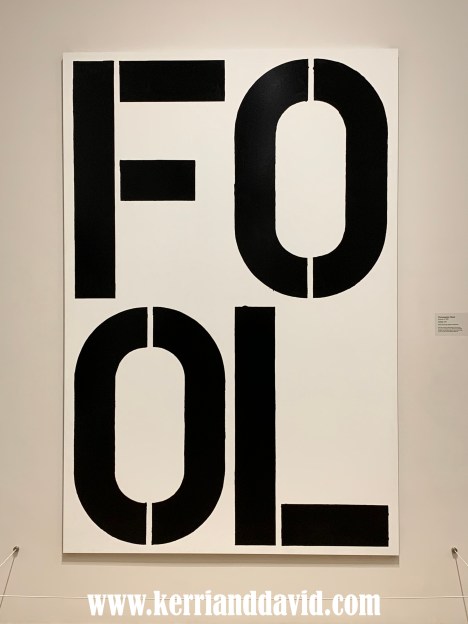
I have a suggestion for our new national meme: “Fool me once, shame on you; fool me twice, shame on me.”

read Kerri’s blogpost about THE SECOND KICK

like. share. comment. support. subscribe…thank you.

For The Truth Will [David’s blog on KS Friday]

In the past three days I’ve seen this quote by H.G. Wells cross my screen more than once: “Civilization is in a race between education and catastrophe. Let us learn the truth and spread it as far and wide as our circumstances allow. For the truth is the greatest weapon we have.”

I would say, given the outcome of our most recent election, education just lost the race. It was not an accident that H.G. Wells wrote that we must “learn the truth”. Truth, like democracy, is a question, not an answer. Learning is a pursuit of questions, not an indoctrination of answers. It doesn’t take a prophet to see the coming elimination of questioners, the (continued) banning of books, the suppression of ideas. As we have just witnessed, truth has no relevance in a society fortressed against learning – especially about itself.

In my personal cosmos, Wednesday morning I officially elevated Neil Postman to the status of prophet. There was no ceremony. I’ve included both of these Postman quotes in previous posts but they are startlingly relevant and revealing of our current catastrophe. He published them in 1985:

“When a population becomes distracted by trivia, when cultural life is redefined as a perpetual round of entertainments, when serious public conversation becomes a form of baby-talk, when, in short, a people become an audience, and their public business a vaudeville act, then a nation finds itself at risk; culture-death is a clear possibility.” ~ Neil Postman, Amusing Ourselves to Death

Historians will certainly write extensively about what we just experienced: a serious public servant lost an election to a vaudeville act. A nation finds itself at risk.

I am in a news blackout. I couldn’t bear to hear the pundits debate all-the-reasons-why without actually taking a good hard look at themselves, without actually recognizing that they, too, are part of “the perpetual round of entertainment” squeezed in-between commercials.

“For in the end, he [Aldous Huxley] was telling us that what afflicted the people in Brave New World was not that they were laughing instead of thinking, but that they did not know what they were laughing about and why they had stopped thinking.” ~ Neil Postman, Amusing Ourselves to Death

The maga-madcap-clan is doing a victory lap and posing for pictures. Their Project 2025 plan will sooner or later drive the faithful – and the rest of us – out of the vaudeville tent. Serious chaos has a way of slapping even the most entranced audiences into consciousness. Catastrophe, if survived, is a great clarifier. The maga-madcaps will look and sound much differently outside the distractions of the tent in the full light of reality.

Maybe then – just maybe – we will be capable of coming together, looking at ourselves, newly unafraid of the rigors of learning and where it leads us, and rekindle an honest pursuit of the truth. We may, once again, start thinking. As is always true in the harsh light of day, when the circus leaves town, serious questions will be all that is left, all that we have to hold onto.

read Kerri’s blog about TRUTH

Goodness Is Quiet [David’s blog on Merely A Thought Monday]

What is it to do good? It may at first seem like an inane question until you consider how completely unmoored from simple kindness that we’ve become.

It’s the best concluding sentence in a non-fiction book: “For in the end, he [Aldous Huxley] was telling us that what afflicted the people in Brave New World was not that they were laughing instead of thinking, but that they did not know what they were laughing about and why they had stopped thinking.” ~ Neil Postman, Amusing Ourselves to Death

Like many of my friends, I did not watch the most recent presidential debate. I knew, like we all knew, that it was not really going to be a debate of ideas or an opportunity for serious comparison of party platforms for moving the country forward. It was an entertainment. It was billed with all the hype of a UFO wrestling match. It featured referees called moderators who mostly did nothing but pose and let the contestants trade blows. Think about this: we do not think it odd or sad – or reason for disqualification – that one candidate requires a real time fact-checker because he is renowned for outrageous lying and is a famous bully. He draws a crowd, ups the ratings, and that is more important and far more entertaining than an a thoughtful exchange of plans. One need not be credible if drawing a crowd is the criteria.

“…they did not know what they were laughing about and why they had stopped thinking.”

What is it to do good when we do not expect good from our leaders – or ourselves?

Here are synonyms for doing good: behave morally. Act virtuously. Behave virtuously. Be kind. Do the right thing. Act in good faith. Conduct oneself ethically…There are many, many variations.

Yesterday was our local 4th of July parade. The man who drove around the assembled families in the brown truck with a large flag waving with from back, “F*CK BIDEN, certainly was not concerned with doing good. How did it not occur to him that there might be children at the parade? How is it that he didn’t care? He was, like his role model, not at all concerned with conducting himself ethically. I assume he thought he was doing good for his team and that is precisely my point. Where is the expectation of good? Lost in the entertainment. The bully behavior mirrors the bully behavior.

Here are other synonyms for doing good: stand out. Steal the show. Boom. Reign supreme. Make the big time…There are many, many variations.

What is it to do good?

It is no more or less than what we expect it to be. What we allow it to be. If we want better, we must first be better. Our candidates mirror us, not the other way around. Right now, in the absence of serious debate, awash in noisy entertainment posing as political discourse, all we know is that we have competing ideas of what it means to do good. One is concerned only with itself. One is concerned with helping others.

For me, booming may draw a big crowd, it may be entertaining and sell abundant advertisement, but I will go with ethical every time. Kindness, like genuine goodness is quiet and has no need to draw attention to itself. Doing good, the kind that is focused on helping others, does not grow old.

read Kerri’s blogpost about DO GOOD

share. like. support. comment. subscribe. thank you.

Exactly The Point [David’s blog on Two Artists Tuesday]

Chris wrote that he was taking a break from Facebook. “I’ve spent too much time in this space.”

I told Kerri that after I was finished with my slow re-read of Amusing Ourselves to Death, for a while I was only going to read books that filled me with light. “I’ve had too much of darkness,” I said.

Walter Lippmann posited that “…distorted information was inherent in the human mind. People make up their minds before they define the facts…” In other words, we are more gullible and impressionable than we care to admit, and are too soon planting our belief-flags in the sand. In other-other words, fact checking is not a human forté. Gossip mongering is.

Kerri and I often walk arm and arm along the waterfront, an old-world evening constitutional, a stroll taken slowly enough to notice, an opportunity to say “Hello,” when passing neighbors and friends. More and more I think it an essential to regularly set aside those little screens that dominate our viewpoints, and clear our minds. Every painter knows that perspective is gained by stepping back. I can read streams of opinions all day long but nothing beats the affirmation of real community than a hot summer night, people sitting on porches and a neighborhood mosey.

Families filled the park. The cool breeze off the lake drew them to the shore. Barbecues. Children chasing balls and each other. A feeling of respite was pervasive. Laughter. Shared space. We passed two teenage girls sitting on a bench with a bucket of colored pencils between them, coloring their books and chatting.

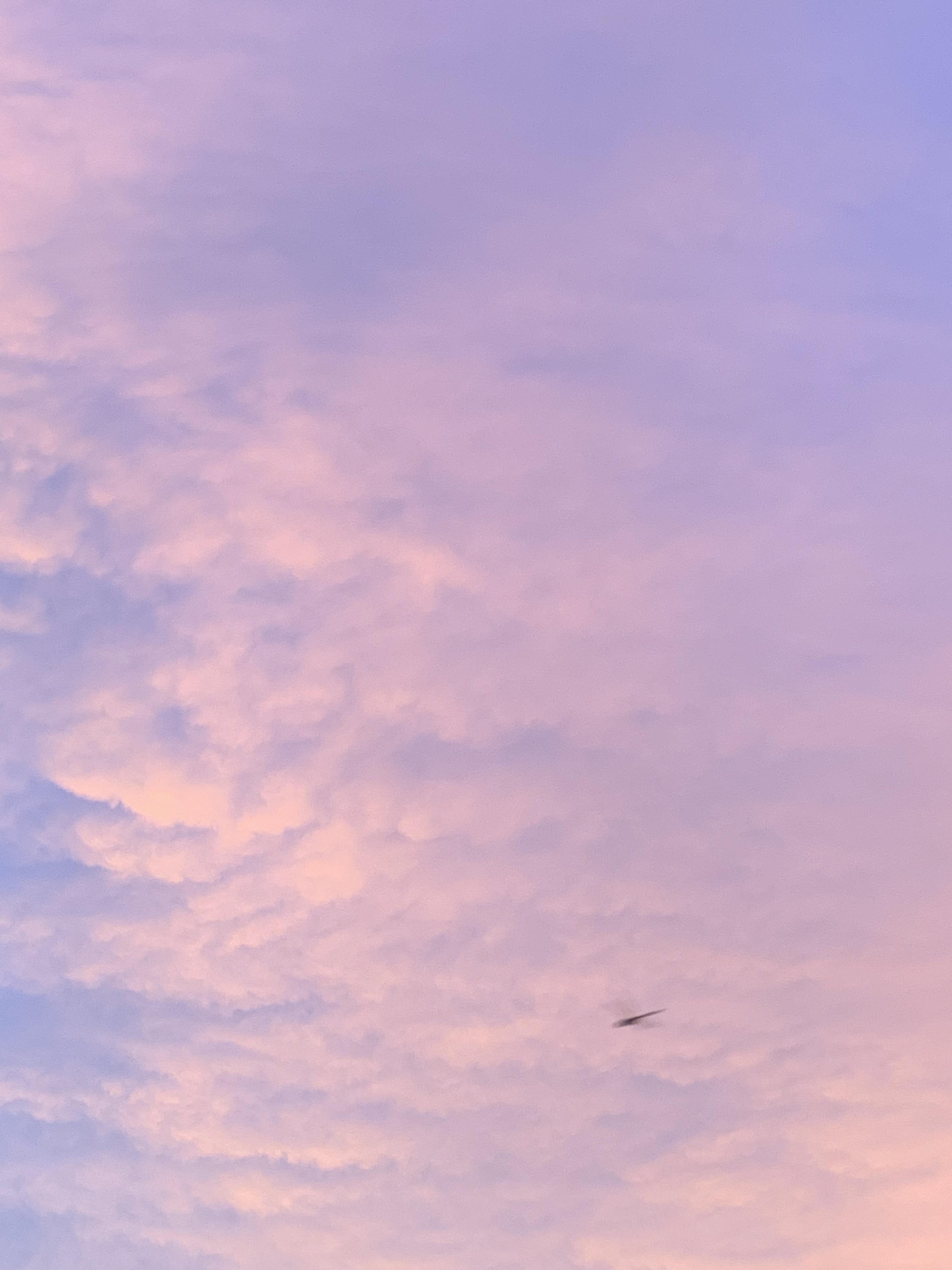
The sky morphed from orange and blue to purple and pink. A single bird arced across the sky. “What are you thinking?” I asked.

“Nothing. Nothing at all.” she said. “I’m just enjoying the moment.”

I smiled, thinking, “Yes. And isn’t that exactly the point?”

read Kerri’s blog post about THE PINK SKY

like. support. comment. share. subscribe. thank you!

The Essentials [David’s blog on Merely A Thought Monday]

The interviewer asked me to name three things I love and three things that piss me off. “Ah, here’s the trick question,” I thought. Tom Mck once told me that, when conducting interviews for teaching positions, he’d ask a trick question, “Tell me about your experiences with a bad student?” If the interviewee answered the question, he would not hire them. “There is no such thing as a bad student,” he said. I knew better than to answer the interviewer’s question but I did anyway: “I can’t see my dad anymore and sometimes that really pisses me off.” Of course, I did not get the job.

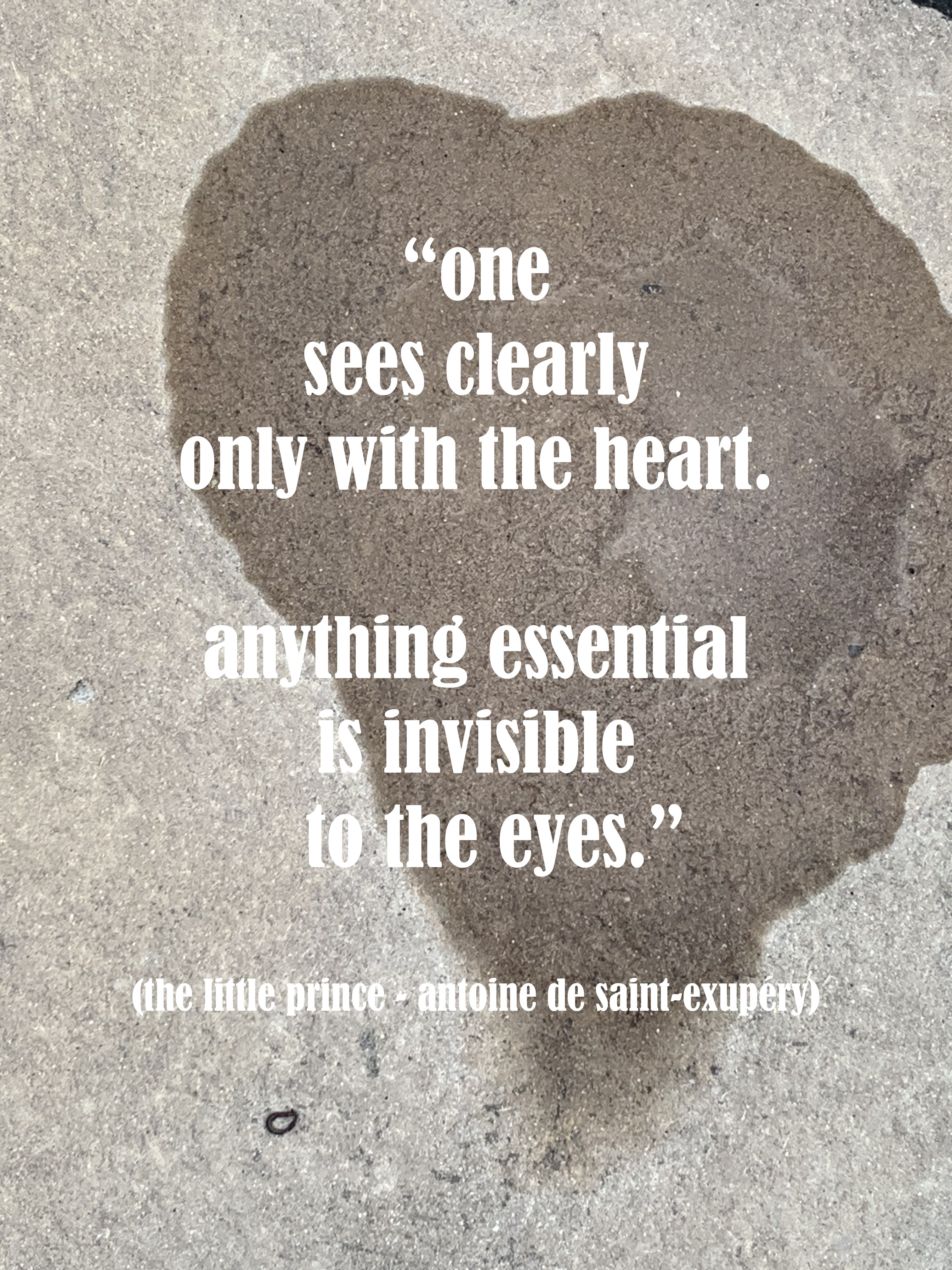
I read The Little Prince, first to myself and then aloud to Kerri. As I turned the last page I saw that she was silently crying. “I forgot how it ended,” she said. So had I. In the book, after the Little Prince is bitten by the yellow snake and dies, the narrator searches the sand but cannot find his body. The author, Antoine de Saint-Exupery, a year after he wrote the book, crashed his plane over the Mediterranean Sea. It was 1944. His plane was later found but not his body.

Neil Postman wrote Amusing Ourselves to Death in 1985. It is more relevant today than when it was written. He predicted our indifference to lies. It’s not that we cannot discern fact from fiction, it is that we do not care to. It’s much more entertaining to spew self-righteous bile and shared discord within the confines of the social-bubble. A free press, the mechanism meant to function as society’s lie-detector, has collapsed and become a terrific magnifier of falsehood. Entertainment. That which can be seen with the eyes but is nowhere detectable with the heart. Wild lies, outrageous claims and blame, blame, blame, blame, blame are much more captivating than essential truth. It’s about numbers: grotesque behavior attracts more audience than genuine discourse so completely dominates the info-stream.

The body politic fragments, like pieces of an airplane tumbling from the sky.

Lately, I hear often – and speak – this common refrain: “I just can’t understand how people don’t see it.”

“Oh, people do see it,” whispers The Little Prince, sweeping clean his volcano, adding, “With their eyes.”. He winks, “Closed hearts are not concerned with the essentials.”

The wind shifted so we sat outside and enjoyed the evening cool after a hot day. Just like my dad used to do. Now, when I close my eyes, I can see him. We made dinner with 20 and ate under the waning light in the sky. It was the solstice. The stars made their slow entrance. Gazing up, I wondered if perhaps Antoine de Saint-Exupery found a way to join The Little Prince on his planet so together they might attend to the vanity of the rose. I hope so. For a moment, we sat in silence and appreciated all that our open hearts could see.

read Kerri’s blogpost about SEEING CLEARLY

like. share. subscribe. comment. support. thank you.

Never-In-My-Life [David’s blog on Merely A Thought Monday]

Never-in-my-life did I imagine that I’d sit on a deck and wile away a day peering through binoculars at a crow’s nest. We cooed and awed at the babies when they showed their beaks or flapped their young wings, the diligent parents flying to and fro to feed the bottomless bellies of their hatchlings.

Never-in-my-life did I imagine that discovering a turtle’s nest, the eggs newly hatched, could inspire the depths of wonderment that we felt. It was such an unusual find that, at first, we had no idea what we were seeing. We pondered what kind of bird nests in the ground and then it hit us. We were witness to an ancient birth rite, turtle eggs cracked open from the inside. With no mother to guide them, feed them or protect them, the newly hatched turtles somehow knew where to go, what to do. They scrambled to the safety of the river, at least that is what I imagined. We were giddy with excitement.

Last night we watched – again – the movie About Time. It remains my favorite movie of all time. Even after multiple viewings I laugh aloud and struggle not to sob along the way. Even knowing what is about to come, I am deliciously caught by surprise. It makes me yearn to go back and do things differently AND to not change a single precious moment. Both/And. Every single time we watch it. Never-in-my-life.

Enjoy life. Morsels. Alan Watts might say, the ever-present now. Last night, while setting up the coffee for the morning, I wondered how many bags of Cameron’s Velvet Moon Espresso Roast I have ground and thoroughly enjoyed. Maybe hundreds. Lately, I’m paying attention to how much I enjoy the evening ritual of closing our day by grinding coffee, the smell and the anticipation. Watching Dogga wind-down by following the chipmunk trail across the yard one last time. Never-in-my-life did I think I would love so extraordinarily so much…ordinary.

Kerri is sitting next to me – her writing interrupted, caught in the hate-stream and disbelief of a conservative’s rhetoric. It brought to mind a quote by Neil Postman, written in another era but prophetically describing our era: “…irrelevance seems to us to be filled with import, and incoherence seems eminently sane.” Entertainment posing as the news-of-the-day. Noise without substance. A manufactured thrill. Contextless content. Like a drug it is meant to keep us hooked. Nothing more, nothing less. Never-in-my-life did I imagine…

Never-in-my-life did I think I would so thoroughly delight in living upside-down, so appreciate my quirky capacity to question, my driving desire to detach from the noise. It is no wonder that I find the reality of the crows nesting so refreshing. The smell of the coffee so grounding. The miracle of turtles emerging from the earth to find the water so utterly hopeful.

read Kerri’s blogpost about ENJOY LIFE MORSELS

like. share. support. comment. subscribe. many thanks.

Experience It [David’s blog on saturday morning smack-dab]

“In a Google world, we are all experts for a moment,” she said. Somewhere out there, in the ethers, I heard Marshall McLuhan applauding. I heard Neil Postman guffawing. It was the perfect statement encapsulating our times. The medium of our message. Knowledge need not stick. No need to remember. Teflon brains.

And, because I had no idea what it was. And, because I suddenly needed to make a statement to myself about living, I ordered it. I happily mispronounced it. So I might experience it firsthand with no intermediary. No curator. Unprotected. So I could have the experience first – before my machine made meaning of it for me.

All the way around, the experience was mysterious and delicious. Unforgettable.

read Kerri’s blogpost about GOOGLE KNOWING

smack-dab © 2024 kerrianddavid.com

like. share. subscribe. support. comment. the machine has positive uses, too.

Beyond Words [David’s blog on DR Thursday]

“Truth, like time itself, is a product of a conversation man has with himself about and through the techniques of communication he has invented.” ~ Neil Postman, Amusing Ourselves To Death

I’ve felt for months the need to apologize to J. We were having a conversation about truth – and notions of god – and in his current place-on-the-path he’s necessarily seeking absolutes. For him, relative truth smacks of falsehood or some loosey-goosey scary philosophy. He’s looking for a hard rock on which to build his house of wisdom. I was flip rather than helpful. How do you begin to discuss truth as a cultural orientation or a fluid marker that changes with time? When I was J’s age, truth could be established with a photograph. Not so anymore.

Breck, our little quaking aspen tree has come to represent a form of truth for me. Breck almost didn’t make it. We brought her home from the high mountains of Colorado and for a few years she lived and struggled in a big pot. She barely survived the first place we planted her. It was not a good location so we moved her to different soil where she’d enjoy more sun. And now she is flourishing. Last year she grew more than three feet taller.

Breck’s truth/health has very little to do with hard answers to abstract questions. For her – and me – truth is found in relationships; her environment. The right spot. Good soil. Rejuvenating sun. She brings an impulse to life: perseverance. Tenacity. Adaptability. We love her and I believe she “knows” that, too. Love is a truth that knows no absolute. I couldn’t explain that to J because I was playing with him, bringing levity to his seriousness.

And, in truth (what other word can I use?), I have become a doubter that any serious conversation about truth or gods can happen through something so limited as language. That’s what I should have expressed to J. I should have taken him outside to see the stars.

Now, when I want to have those conversations with myself, when I am seeking a better question, I walk on the trail next to the river. I turn my face to the sun. I try to detach myself from the clocks and lists and tv debates. I look at Breck quaking in the wind. I await each spring for the buds to appear on her limbs. There’s truth-beyond-words in her life-cycle, the return of her leaves and her captivating shimmer dance with the breezes.

read Kerri’s blogpost about BRECK

share. like. subscribe. comment. support. thanks!