Try To Explain [on Merely A Thought Monday]

It’s nearly impossible to explain. I’ve had the conversation a thousand times and I know it’s fruitless from the outset. Why did I choose a life without a safety net? A life with stability and benefits? Why was I willing to work 80 hour weeks for not-very-much-pay? I’ve heard more than once that “Artists are indulgent.” Or, “Artists are fools.”

Maybe. I’ll never know because it is impossible to explain to someone who operates from a different imperative. I’ve thought myself foolish more than a few times, and, usually, when I measure myself by the standards of 9-to-5.

For me, like all the artists I know and admire, there has never been a distinct line between work and play. Given any amount of free time, I’d rather be in the studio than anywhere on earth. When I was directing plays and running theatre companies, I couldn’t wait to get up in the morning and get back to work. The time between productions or studio time, what most people call “vacation,” was-and-is meant to catch up on sleep and fill up the well for the next project. Often, this thing called ‘vacation’ was an opportunity to visit museums, drink in art/inspiration or stand in a castle or sit in the city where the next play is set.

For most of my life, even before I really thought about artists or artistry, vacation involved a sketchbook. I sat in the back of the station wagon and drew Colonel Sanders from the bucket of chicken or tried to copy a photo from the National Geographic magazine. Fun and play involved a deep dive into the world I could create/discover through a pencil on blank pages.

I can spend hours sitting and watching people. Small dramas. Gestures. Manipulations. Kindnesses. A little burst of love that would otherwise go unnoticed. Traveling for work meant time spent in airports, a goldmine of observation-time. Work or play?

Perhaps that is why there is no line between work and play. I see it in Kerri, too. We are constantly noticing. Paying attention to what is beautiful or interesting. Feeling what is needed and what is not. We’ve talked endlessly about being empathic. Feeling what others feel. I’ve watched Kerri walk into a rehearsal and “know” where there is pain, where there is joy, know when she needs to wrap some humor around a bruised community. Many years ago, a wise-old-artist told me that I had to learn to distinguish between what was my “stuff” and what was not. What were my feelings and what was not. Sage advice. I’ve been witness to many artists imploding, carrying other people’s garbage as their own.

When we walk, Kerri takes photographs. “I’m sorry,” she says, stooping to focus on a leaf or stone. Why does she apologize for noticing? Here’s a hint: all of her life she’s been asked to explain why she stops to notice. What value can there possibly be in stopping forward motion, especially in a world hell-bent on “getting there faster.” What is the value-proposition of noticing? “Can you please explain why you have to stop and see and, of all things, make it into music?” Or a story. Or a painting. Or a dance.

“Why did you climb that tree?” the adults asked. “It’s where I write poetry,” she explained. Work or vacation? Is it play?

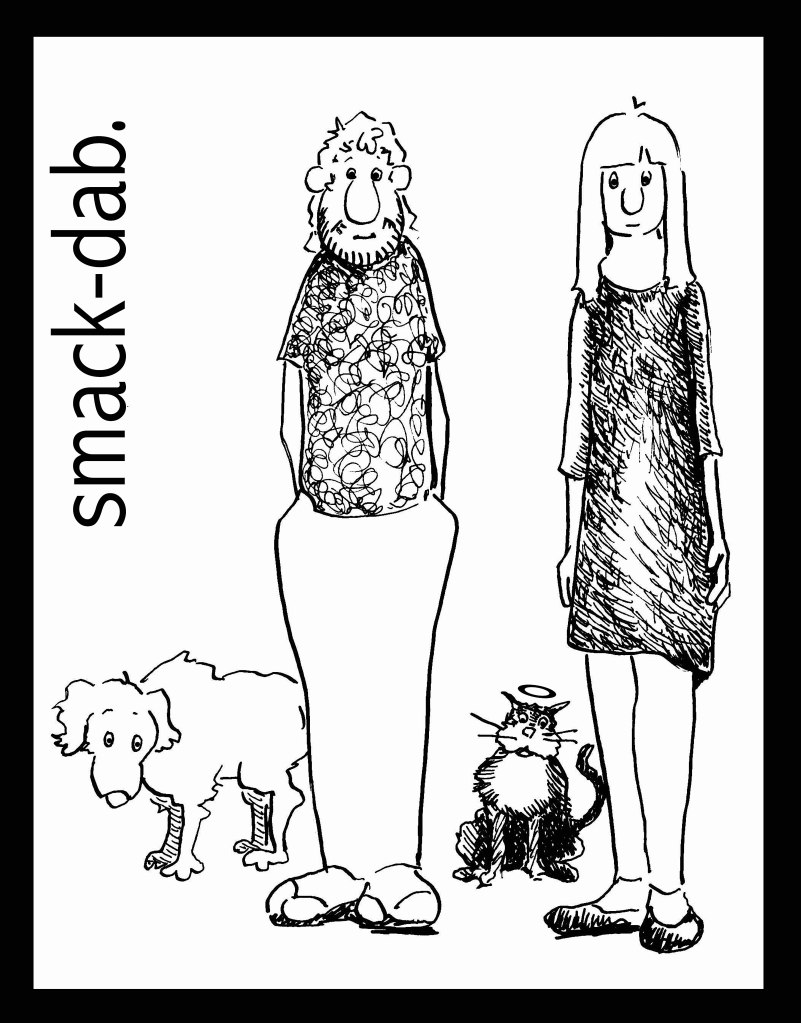
Every Saturday we go through Kerri’s photos from the week and choose five as prompts for our Melange. We collect phrases we hear, words that inspire or disturb. Those end up in the Melange, too. Are we working? Is this play? We delight in sitting each day and writing together. We laugh at our Smack-dab cartoon. They are fun to write and draw and color. None of this makes us any money. Is it work or is it vacation?

I’m currently drawing cartoons and tossing thought-bombs into a community of software entrepreneurs – the boss understands that I notice things and can translate what I notice into other shapes and expressions. Is there value in that? Is it work? Is it play? Will it make money?

Are there possibly other measures of value?

It’s nearly impossible to explain.

read Kerri’s blog post about VACATION

Obsess [on saturday morning smack-dab.]

I’d never heard of Munchos until I met Kerri. I’d never pulled all of chip bags off the shelf at a store in search of Munchos until I met Kerri. I’d never been escorted out of a store by the police because of a Muncho search until I met Kerri. And, to make this fun, only two of the last three statements is actually true. Let me just add that the police were kind. Evidently, the officers that came that day appreciated Munchos as much as Kerri.

In reviewing the past several weeks of Smack-Dab, I see how snack-driven we really are. I’d have denied it outright before today. Dogga is completely food driven and you know what they say about people and their dogs. Dogga was in the car during our Munchos near-incarceration. He pretended that he didn’t know us though his deniability was questionable since he was in our car and had a collar with our phone number chiseled into it. The police were kind though. They cautioned him to keep a better eye on us and to forbid us from going back into the market. And then, they gave him a treat. Not a Muncho-treat. Those were nowhere to be found.

read Kerri’s blogpost about MUNCHOS!

smack-dab. © 2021 kerrianddavid.com

Lookit [on KS Friday]

“It was not that he had nothing to say, he just hadn’t realized that what he had to say was enough.” ~ Kent Nerburn, Dancing With The Gods

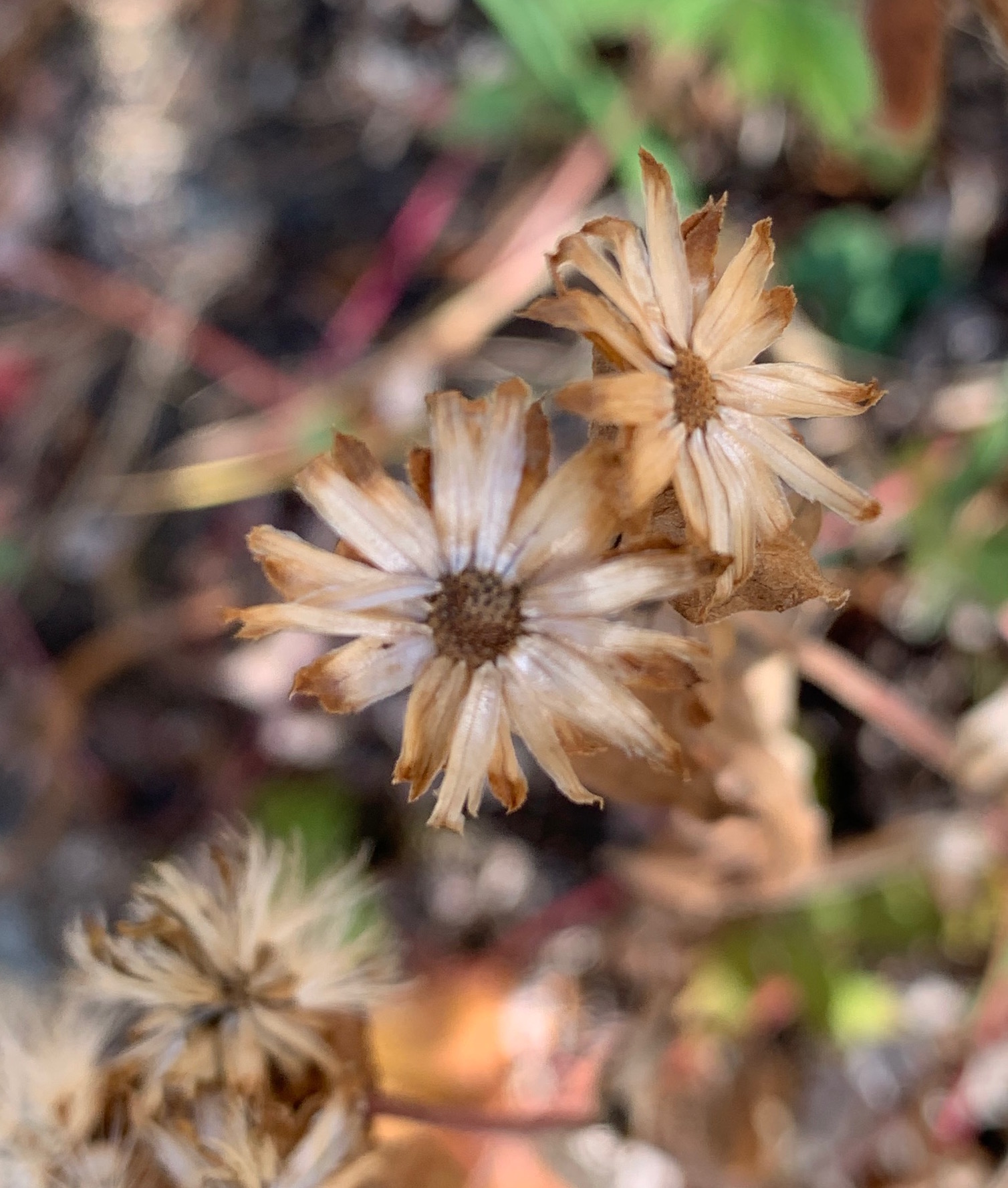
Kerri practices what Kent Nerburn calls “the art of close inspection.” When we are on the trail or in the backyard or in the kitchen, she’ll suddenly jump, grab her camera, and take a shot of some gorgeous detail. A reflection. A flower. A texture. I would have walked by without ever noticing. She sees detail. And, she is never off duty; she is always looking. Seeing.

I know her images are authentic – meaning that she is not trying to “make art” or make grand statements or be clever – because she is tickled by what she captures. “Lookit!” she exclaims as she shows me the image. Her delight is as pure as her eye-for-composition.

When I moved to Wisconsin and put my studio in the basement, she’d take photos of my paintings. Never the full painting, always a detail. It unnerved me a bit because the composition of her detail-image was always much better than my composition of the full painting. “Lookit!” she’d say, showing me the image. We called them “morsels.” I started studying her morsel-shots. My musician-wife was a secret master of visual composition and I had much to learn. She encouraged me to take photos of my works-in-progress as a way of standing back from the painting, as a way of seeing what my eyes could no longer see.

I’ve been drawing cartoons for months. This series is special because it is simple, pared down. How much expression can I capture in a simple line – in fact, in the fewest lines possible? The art of close inspection is having an impact on me. I’m getting paid to draw this series and am fully aware that they might never see the light of day. And, it simply does not matter. I love them. I know they are pure because, with each new cartoon, I race down the stairs (my drafting table is upstairs) and say, “Lookit!” as I hand them over to Kerri to finish them with her photoshop magic. After she performs her magic, she brings the computer to me and says, “Lookit!” and I smile. “Doyoulikeit?’ she asks.

“Ilikeit.”

read Kerri’s blog post about FALL FLOWERS

Kerri’s albums are available on iTunes or streaming on Pandora

you come to realize/this part of the journey © 1998 kerri sherwood

Go To The Mountains [on DR Thursday]

For Mike, it was the ocean that called. For me, it was the mountains. When Columbus passed, more than a service, more than any gathering, I needed a walk in the mountains. I needed the quiet of aspen, the smell of pine. A moment in time, time that keeps moving through the monumental and the everyday. The trees and stream were here before I was born and they will be here after I am gone. I went to the mountains for perspective.

I am working with brilliant people. We are developing something that we hope will help people. Our conversations are genuine. Our intentions are pure. And, yet, how easily do we get lost in the minutiae. How often do we spin out into abstraction. Right now I have a unique perspective on life. I am in no hurry to get anywhere. I easily let go of my end of the rope in any potential tug-of-war. Will what we create actually help others? That is like asking, “Will they like my painting?” That is not for me to decide. Mine is to paint it. All I know is that our conversations are genuine. Our intentions are pure. None of the rest really matters.

I’ve decided to put two paintings into a local show. I’ve only shown and sold online since moving to Wisconsin eight years ago. I was tired. Before I moved, I had paintings in galleries or office spaces or bars or restaurants every single day for over a decade. I was moving or mailing paintings all of the time (and my paintings are mostly large). Once, I took 15 paintings, loaded on a cart, on the light rail. I arranged for a truck that did not show up and I had to deliver the paintings that day, within a specified time-window. I wheeled 15 large paintings down the street, onto an elevator and maneuvered them onto the train. The train-police came to make sure I meant no harm. We had a nice chat and I showed them my work. We laughed heartily at my delivery method. I wheeled them off the train and through a neighborhood to the gallery. “I’ll never do that again,” I said to the train-police when I wheeled my empty cart back onto the light rail. It all seemed so necessary, important.

A specified time-window. We only have so much time. The clock is ticking. The funds may run out. Will we get there in time? Will our/my work matter? Is the message clear? What is the message? What am I willing to do and not do?

And, so, I went to the mountains for perspective.

read Kerri’s blog post about PERSPECTIVE

Chasing Bubbles © 2019 David Robinson

Glance Sideways [on Not So Flawed Wednesday]

It came as quite a shock. Our beloved plant, Snake-In-The-Grass, was hosting a community of Gnomes and Faeries. We haven’t actually seen the Gnomes and Faeries – they are notoriously hard to spot. They are not fond of human beings since we are famously territorial and also so easily eschew our imaginations. Fearing all things “wild,” we generally erect fences and street lights, build dams and make management plans for “nature.” If we could see them, I suspect we’d notice how often they roll their eyes at us.

When I was playing the role of consultant in public school systems, I took note of a central mandate of the adults, playing the role of teacher or administrator: clamp the imagination of the young people, those imaginers playing the role of students. The students would enter the system with wide-open imaginations, free from limitation, and the oldsters found it necessary to kibosh or contain that wide-open meadow. This is not meant to disparage those actors playing the role of adults; when young, they’d been recipients of the imagination whammy, too. They were simply carrying on the tradition. The imagination is apparently considered a wild-thing so necessary of damming.

Dammed imaginations do not die, they distort. Imagination, as a wild thing, will run in circles when put in a cage. It will gnaw its leg off when caught in a snare. It will invent monsters and madness as it paces to-and-fro. It will get angry as it descends into madness. You might say that millions of Americans are gnawing their legs off, angry at the swirl of dark imagining run amok in their caged craniums, seeking reasons and someone-to-blame for their dark imagining. The caged imagination will lead all the lemmings over the cliff with the shout, “Where we go one, we go all!” It seems that we are awash in imprisoned imaginations howling to be freed.

I took it as a positive sign that the Gnomes and the Faeries took up residence in our house under the good protection of Snake-In-The-Grass. While the world outside our doors goes deeper and deeper into the cage-of-its-own-creation, the world inside our house seems to have become a refuge, a safe haven, for those beings still alive in their imaginations.

David recently wrote that he was dedicating himself to being a better artist. He’s been making art with his son again, a wild imaginer that has pulled his daddy (and me, too) out of our cages and into the open meadow. I can’t wait to see what David will do next. Who he will now become. What role he will shed. He’s already a great artist so the possibilities are…wild.

I confess that I regularly wander into the sunroom and glance sideways at Snake-In-The-Grass. Sideways – so they say- is the only way we humans can catch a glimpse of the Gnomes and Faeries. I want them to know that I’m looking.

read Kerri’s blog post about TINY MUSHROOMS

Listen To Claude [on Two Artists Tuesday]

In his 60’s, the famous Impressionist painter Claude Monet went blind. Cataracts were removed, restored his sight, but also changed his capacity to see color. He painted in blues because he couldn’t perceive red and yellow. He was not fond of the paintings that he produced. He painted what he could see. Historians, on the other hand, credit his blue paintings as an important link to abstract painting.

We never really know the impact of our actions or our work.

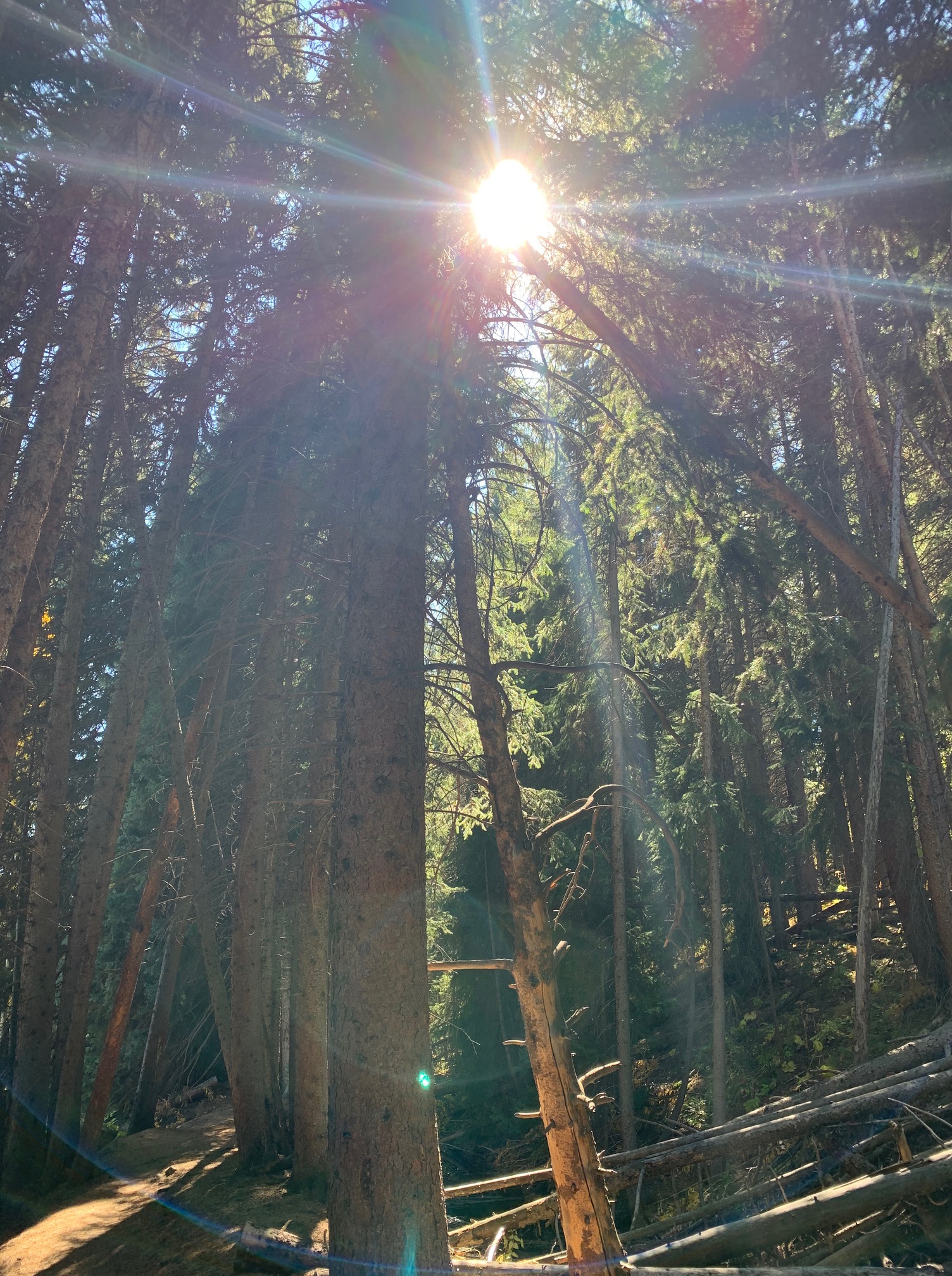
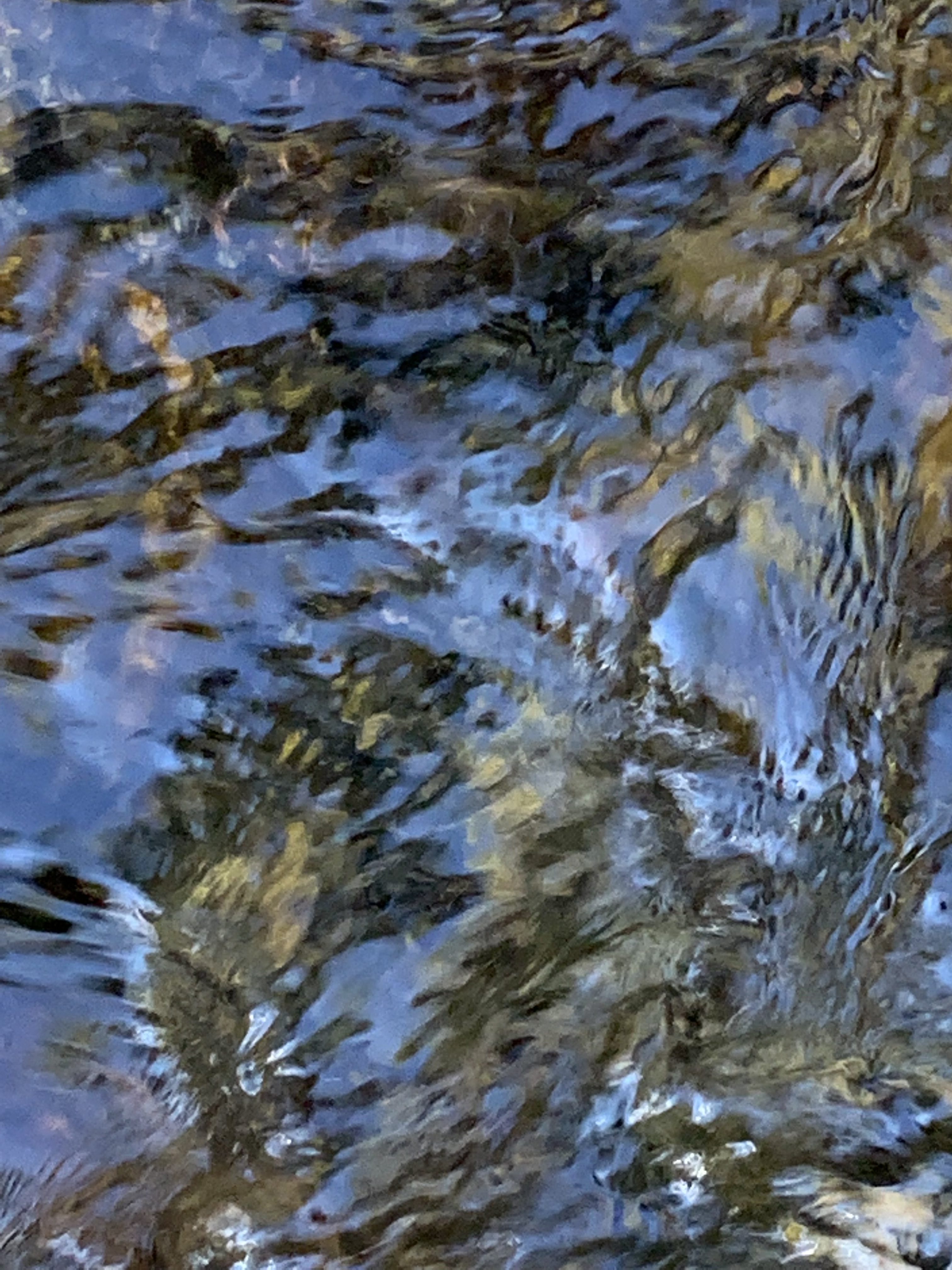
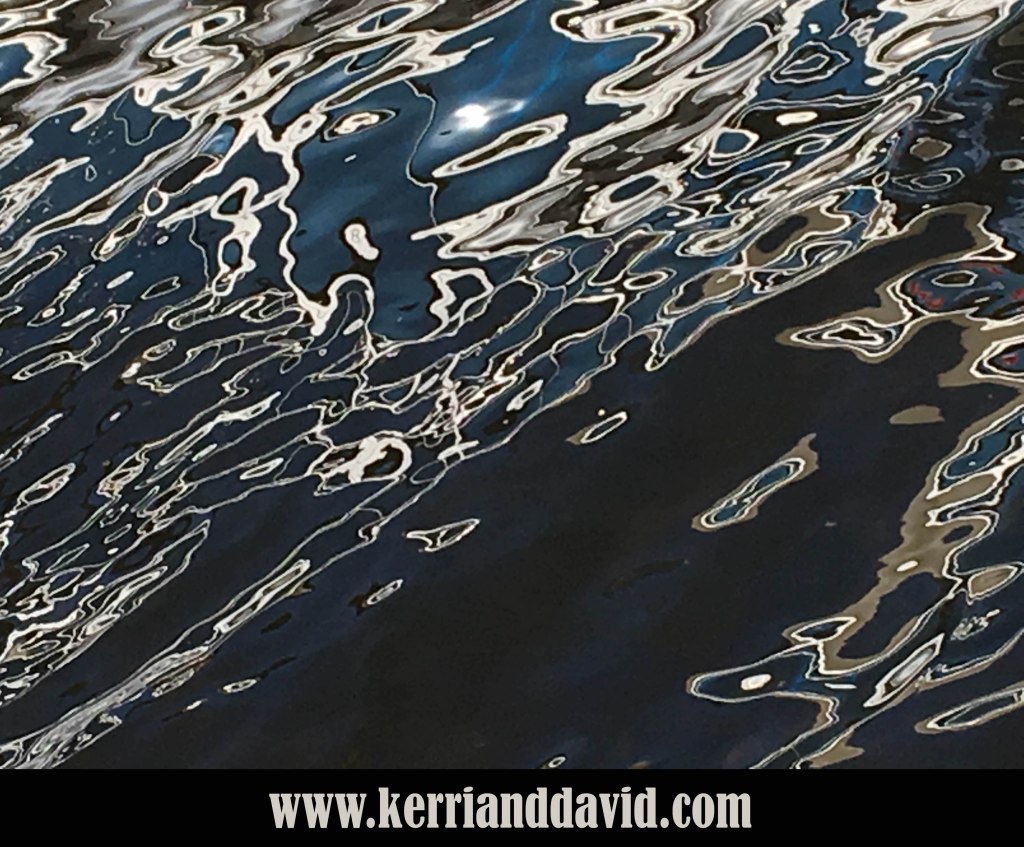
The path paralleled a stream. As we walked up the mountain, she stopped often and took photographs. The sun on the water was enticing so she aimed her camera at the stream. “Look!” she said, showing me. “These look like abstract paintings!”

“They look like Monet,” I said. “Gorgeous.”

Whether they know it or not, artists are always having conversations with their artistic ancestors. I was amused at the idea that Kerri and Claude were having a chat. The world of a master painter, living before ubiquitous photography, meets they eyes of one who sees and quickly captures.

I was also amused that, through Kerri’s picture, Claude and I were having an exchange. “I love your blues,” I say. Claude responds, “Ah, but it’s the reds and yellows that make the blue so vibrant. Contrast principle,” he winks.

Excited, she returned to the stream to take more photos.

I turned my face to the sun. I breathed in the mountain air, the aspen leaves fluttering. I have not finished a painting since the pandemic began. “I feel empty,” I say to Claude.

“We paint what we see, ” Claude whispered. “Sometimes we simply cannot see.”

“Yes,” I said, “I am blind. But my cataracts are not in my eyes.”

“No,” Claude replied. “You are not blind, you see well enough. You’ve closed your eyes.”

“Lookit!” Kerri smiled, “These are so cool!” She shows me more water close-ups, a symphony in orange, blue and gold.

“Don’t worry,” Claude smiled. “When you are ready, you’ll open your eyes again. You’ll see a whole new world. New colors and shapes. More than blue.”

“You think so?” I ask.

“Isn’t it beautiful!” Kerri glowed.

“Do you see?” he smiled and faded into the photograph.

“Yes,” I laughed and nodded, “It’s really beautiful.”

read Kerri’s blog post about MONET WATER

images of water © 2021 kerri sherwood

See The Point [on Merely A Thought Monday]

“When we are no longer able to change a situation, we are challenged to change ourselves.” ~ Viktor Frankel

There is a new mantra cycling through my circle of friends. Once, highly frustrated with people refusing to participate as a community in the relatively benign measures necessary to end the pandemic, they’ve now forged their frustration into a different shape: there’s no point in trying to change “them.”

The circle is closed. Or, perhaps, it has been closed all along. Us. Them.

We spent the weekend in a special cabin with The Up North Gang. Walks in the woods. Pontoon boat rides seeking a sunny spot to anchor. Friends that heal what hurts. Laughter and wine. Occasionally, our conversation wandered into politics and pandemics, usually spurred by a local man posting cryptic and apocalyptic messages from deep within his conspiracy well. He is one of “them.”

“How can he believe this stuff?”

“Imagine everything he has to ignore to believe this stuff!”

“He’s always been a bit kookie.”

“There’s no point in reasoning with him.”

“There’s no point in writing a response, he’d just deny the facts, the court cases, the data, the science, the…”

There’s no point. That’s the mantra. There’s no point.

Us and Them. Together in the same boat. One half trying to rock the boat. The other half trying to keep it from flipping.

Exhaustion? Surrender?

“It’s like they’re drowning in bad information,” she said,

He replied, “And, there’s no sense throwing them a rope, they’d refuse to take it.”

“We have thrown them a rope,” she added. “It’s called the vaccine.”

We laugh a sad laugh, shaking our heads. What’s the point?

read Kerri’s blog post about Safe Together

Release The Tether [on saturday morning smack-dab.]

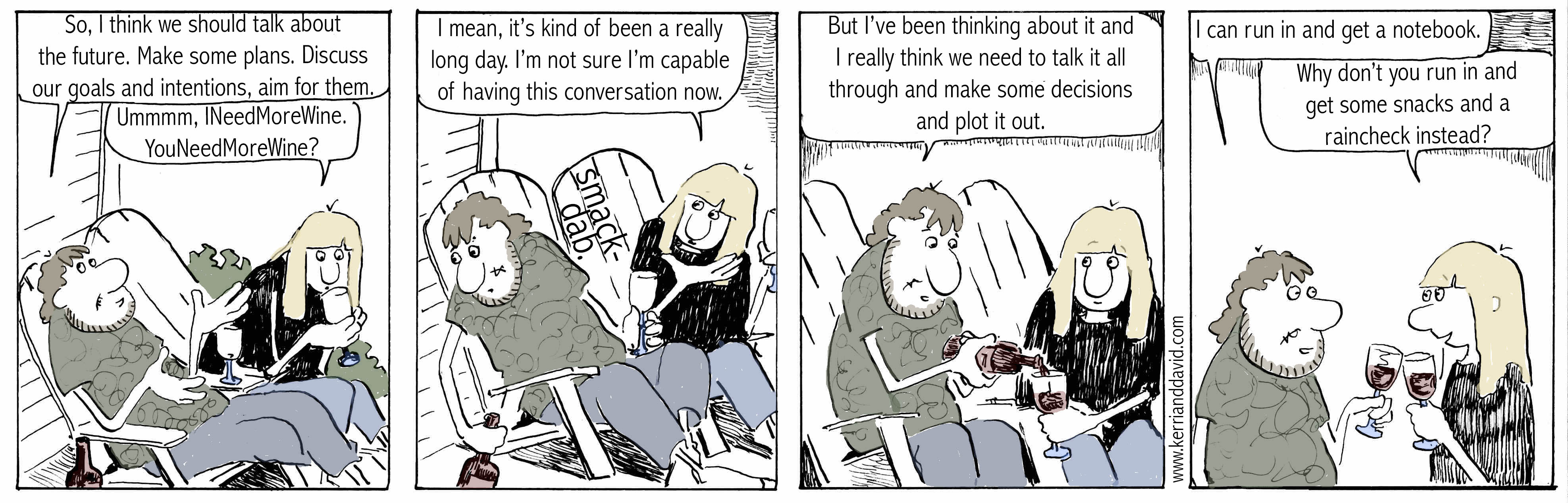
As the old adage goes, timing is everything. It is a lesson I will probably never learn. When something pops into my noggin, I grab hold of it like the tether to a hot air balloon. I can’t let go of the tether until I’ve expressed it. So, I am, and always have been, a master of bad timing.

Kerri has adapted well to my balloon-filled-brain. She knows that I can release the tether, the balloon will fly away, and life will go on with or without my urgent need to capture-the-thought. And, usually, there will be a second chance: all balloons come down again and, sometimes, they arrive at just the right moment. No raincheck required.

read Kerri’s blog post about RAINCHECK

smack-dab. © 2021 kerrianddavid.com

Roll Easier [on KS Friday]

“I feel like I’ve been writing about fall all week!” she said, “What more do I have to say?”

She took this photograph during a walk around our neighborhood. When we left for Colorado the leaves were just beginning to turn. A week later, when we returned, the ground was a festival of color. The sidewalks beckoned children of all ages to drag their feet through the leaves. Shushing sounds. Instead of dragging her feet, she knelt to get closer. “Lookit!” she gasped, all one word. If appreciation is prayer, then sometimes taking a picture is prayer.

Rather than at new years, the fall is when I find myself making resolutions. My resolutions are rarely about achievements – things that I want – and more of what I desire to let go. What will lighten my spirit-load? I am a wanderer to the core and so much of what I’ve accumulated in life is heavy to carry. Making shushing sounds through the leaves, I know this fall that I will leave behind some friction. I’m dropping some long-held resistance, so I might roll easier in the world.

Fall is for reflection. Fall is for dropping brilliant leaves and making sounds with the crunchy color. Synesthesia. What more is there to say?

all of Kerri’s albums are available on iTunes or streaming on Pandora

read Kerri’s blog post about FALL

millneck fall/blueprint for my soul © 1997 kerri sherwood

Place It In The Hollow [on DR Thursday]

For some reason, people need to leave a trace of their passage. We paint on the walls of caves. We erect monuments to ourselves and our heroes. We build cairns to mark the way for those who come behind; we build cairns so others will add stones to the marker. We put plaques on benches and engraved bricks in walkways. We graffiti bridges and walls. Banksy has made a fortune tracing his masked passage.

Growing tired as we hiked up the trail, we sat on an old log. We looked over the valley, turned our faces to the sun. And, as we stood to continue up the trail, Kerri pulled a sharpie from her bag. We left two small dots on the log. “We were here.”

Our work in the world not only can be a marker, it is a marker. Every little action is a stone on the cairn: we contribute to the whole whether we like it or not. The person who delivers packages to my door makes my life better. Easier. The score of people who created this computer, invented this software, manufactured the chip that makes it all work, have made my life better. Someone coming behind us will see the cairn we’ve constructed and add to it. Improve upon it. The first computer I touched was a toy compared to this miracle sitting on my lap.

I’m an artist and sometimes wonder if my paintings will live beyond me or will they end up in the Goodwill as so much used canvas. I hear the advice, so often offered to me: “Yours is to paint them, not decide what happens to them.” Too true. Mine is to make the offer. I have no control over the acceptance.

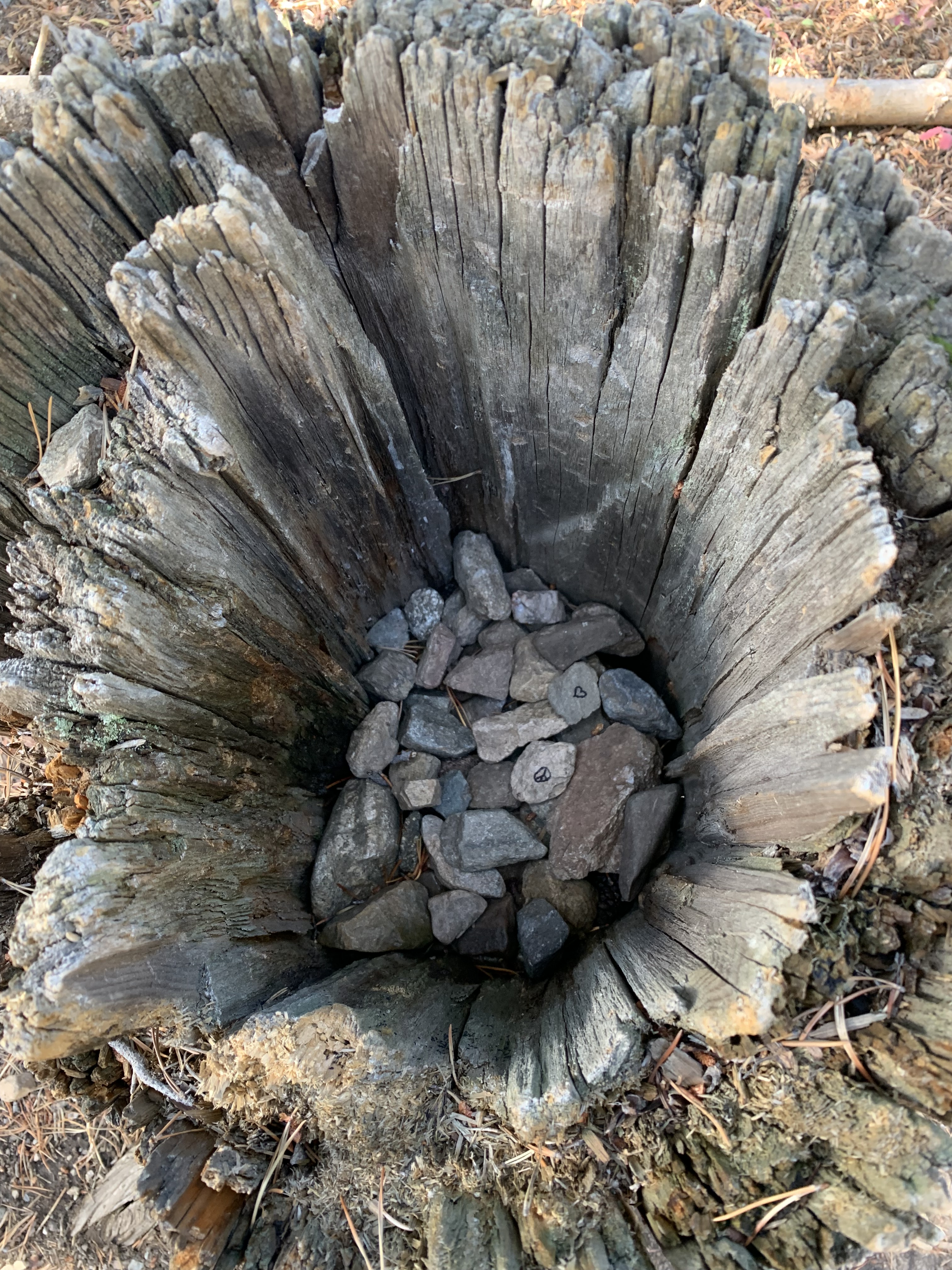
Returning down the trail, Kerri peered into the hollow of a stump. It was filled with stones! Hikers, just like us, had left a note that also served as an ancient invitation: I was here. We picked up stones, the sharpie came out of the bag, scribbled a heart and a peace sign on our rocks before placing them in the hollow. “Do you think anyone will see our stones?” Kerri asked.

An ancient question. Deeply human. Heart and Peace.

read Kerri’s blog post about THE HOLLOW

three graces © 2012 david robinson