A Simple Thing [David’s blog on Merely A Thought Monday]

In our defense, we didn’t buy the cupcake. Our dear Jen heaped a dizzying array of treats upon us before we hit the road. Also, she knows us. I imagine she predicted that, at the end of ten hours of driving, a bit of snack-decadence with wine would warm our hearts and make us feel at home.

Everyone on earth should have a Jen: a friend who is dedicated to making your life better and easier.

Everyone on earth should be a Jen: a person who is dedicated to making the lives of the people in their circle better and easier. And, since the circles we populate are not fixed or exclusive, the intentional kindness would overlap, ripple, and literally connect us – each to one another in a dedication of support – making the world a better place.

The first time I met Kerri, climbing into the car at the airport, I found a sandwich and a hot cup of coffee waiting for me. She thought I might be hungry after traveling so far. It was such a simple thing, a generosity. It reinforced what I already knew about her, what I already loved about her.

Making the world a better place. It doesn’t seem that difficult but it does require asking a question that seems radical in a dog-eat-dog culture: what can I do to make your life better and easier? It’s really a question of responsibility, isn’t it? The Butterfly Effect.

Yes, I am fully aware of the impossibility of my idealism. Yet, how fortunate am I to have a friend like Jen? How utterly impossible is it that I met and married a woman like Kerri?

read Kerri’s blogpost about CUPCAKES AND WINE

likesharesupportthankyou

Each Other’s Destiny [David’s blog on Not So Flawed Wednesday]

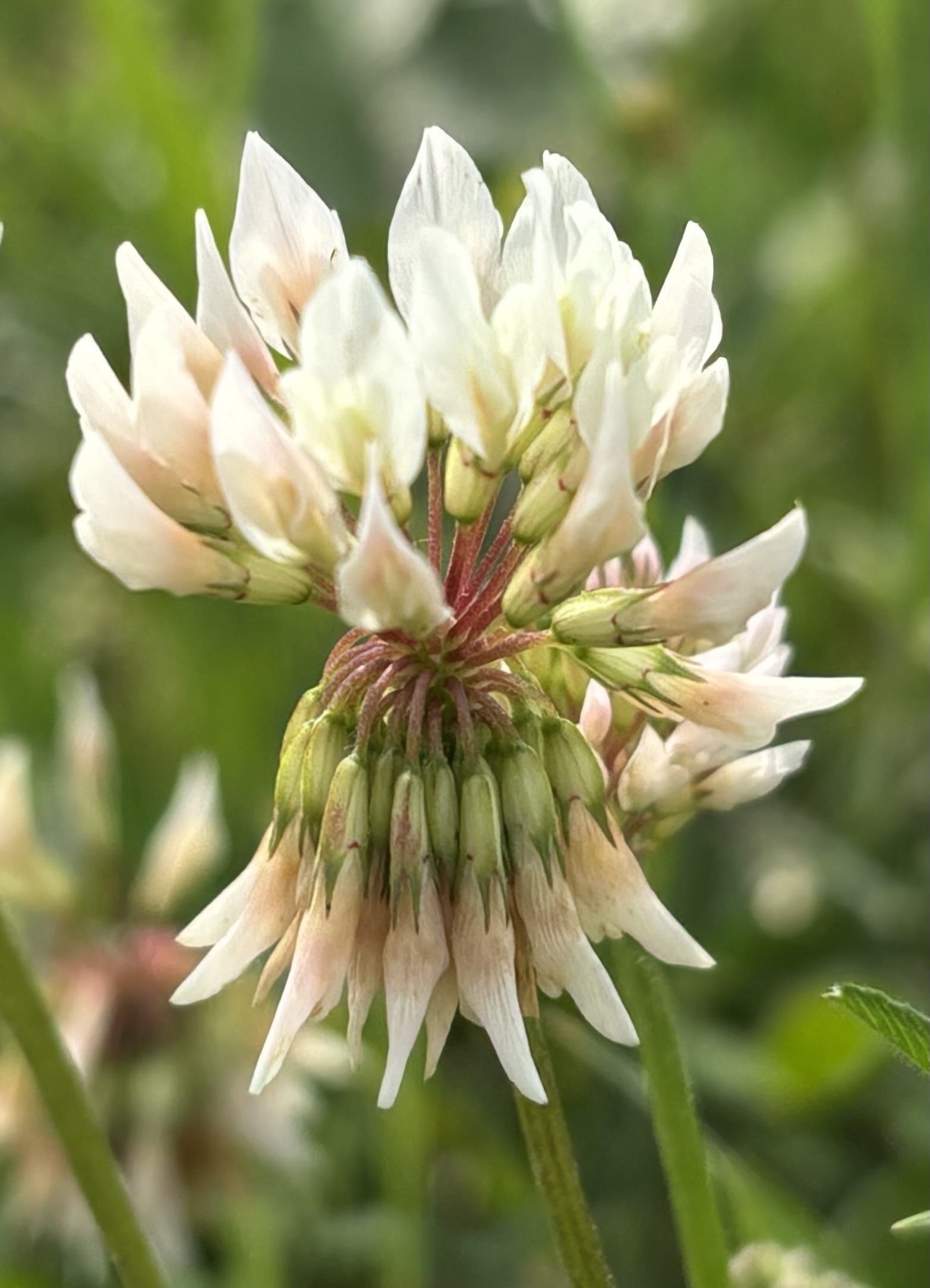
This tiny white clover flower, no bigger than my fingernail, is an entire universe unto itself. It is a miracle of pattern, designed to attract pollinators. Although I am certain is doesn’t waste a moment of its existence pondering its purpose, it serves as a nutrient to soil and through its vast root system it prevents erosion.

When I write that it is an entire universe unto itself what I really mean is that it is intimately connected to everything. Although we have given it a name and dissected it to the last atom, it does not know itself as separate from the sun that feeds it or the bees and mammals that feed on it. It serves and is served. Both/And. That is the nature of the entire universe. We have words for it: interconnection, flow, movement, relationship.

Words separate this from that. That’s the whole point of a word: to make distinct. To make distinct for us and for our purposes. And, because we think our thoughts in words we can’t help but think of ourselves as separate, distinct. In our word-infused minds we lose contact with the connection. Is it no wonder that we spend much of our time pondering our purpose? Having blunted the experience of interconnection is it no wonder that we story ourselves above it all?

That we name things has given us the illusion that we are higher beings, better than the white clover flower. Hubris is most often the cause of civilization’s collapse. Our capacity to name things comes with a matching capacity to deny – that is to lie and lie until we lie to ourselves. We are both the spider and the fly entangled in the web.

Leave it to a poet to capture in two sentences what I have not captured in paragraphs:

“The farthest star and the mud at our feet are a family; and there is no decency or sense in honoring one thing, or a few things, and then closing the list. The pine tree, the leopard, the Platte River, and ourselves – we are at risk together, or we are on our way to a sustainable world together. We are each other’s destiny.” ~ Mary Oliver, Upstream, Selected Essays.

***

we are trying to regroup, rethink and refocus our melange blogpost writing a bit. we – like you – know what is really happening in our world and do not need one more person – including ourselves – telling us the details of this saddest of descents destroying democracy and humanity. though we know our effort will not be 100% – for there is sooo much to bemoan in these everydays – we have decided to try and lean into another way – to instead write about WHAT ELSE IS REAL. this will not negate negativity, but we hope that it will help prescribe presence as antidote and balm for our collective weariness. ~ xoxo kerri & david

read Kerri’s blogpost about WHITE CLOVER

likesharesupportcomment…thankyou

Be-Longing [David’s blog on Two Artists Tuesday]

“Be yourself; everyone else is already taken.” ~ Oscar Wilde

I am spiraling down a rabbit hole of thought. This morning I read that many Indigenous languages have no verb form of “to be”.

It might seem like a small thing but it is not. We make sense of our world – and ourselves – through the language we use.

“To be” is a verb of separation. It is a verb of identity, placing primary emphasis on the individual, emphasizing difference rather than similarity. It places the identity-accent on “I”. A present tense of “to be” is “I am”. To be is to be alone.

“To be” fosters “be-longing“; the longing to find and express the unique self, and then “to be” accepted, paradoxically through differentiation. Our “to be” imperative requires us “to be” removed, above it all, accenting the ego, so that the highest achievement, the most celebrated “being” is the one who rises above the crowd. The one who successfully separates.

Is it no wonder that the three “great” western religions place humans atop a hierarchy, high above and removed from nature? Our notion of original sin stories us as born bad to the bone; we kick ourselves out of the garden of our own nature so we might strive “to be” better than we are.

Our language, rooted in “I am”, is incapable of storying us as belonging to nature, being a part or expression of nature. We must strive to return to the garden in order to find the tree of everlasting life.

Our language requires us to story a god living remotely in the sky. The god promises an exclusive resort called heaven if-and-only-if we elevate ourselves above our original nature. Separate to belong.

To this day I ponder a conversation I heard again and again in graduate school: people, living in a city of 1.8 million, yearning for community, discussing over and over the need to create community. How is it possible for nearly two million people to live together in a city without feeling a sense of community? It was not community they yearned for, it was belonging. Connection. An identity of inclusion.

Recently Kerri asked me, “I wonder what it would feel like if…?” I carried her question into our hike. I wonder what it would feel like if I did not story myself as separate? What would it feel like if I knew belonging as a given? Not just belonging to a community of people but intrinsically belonging to all of creation.

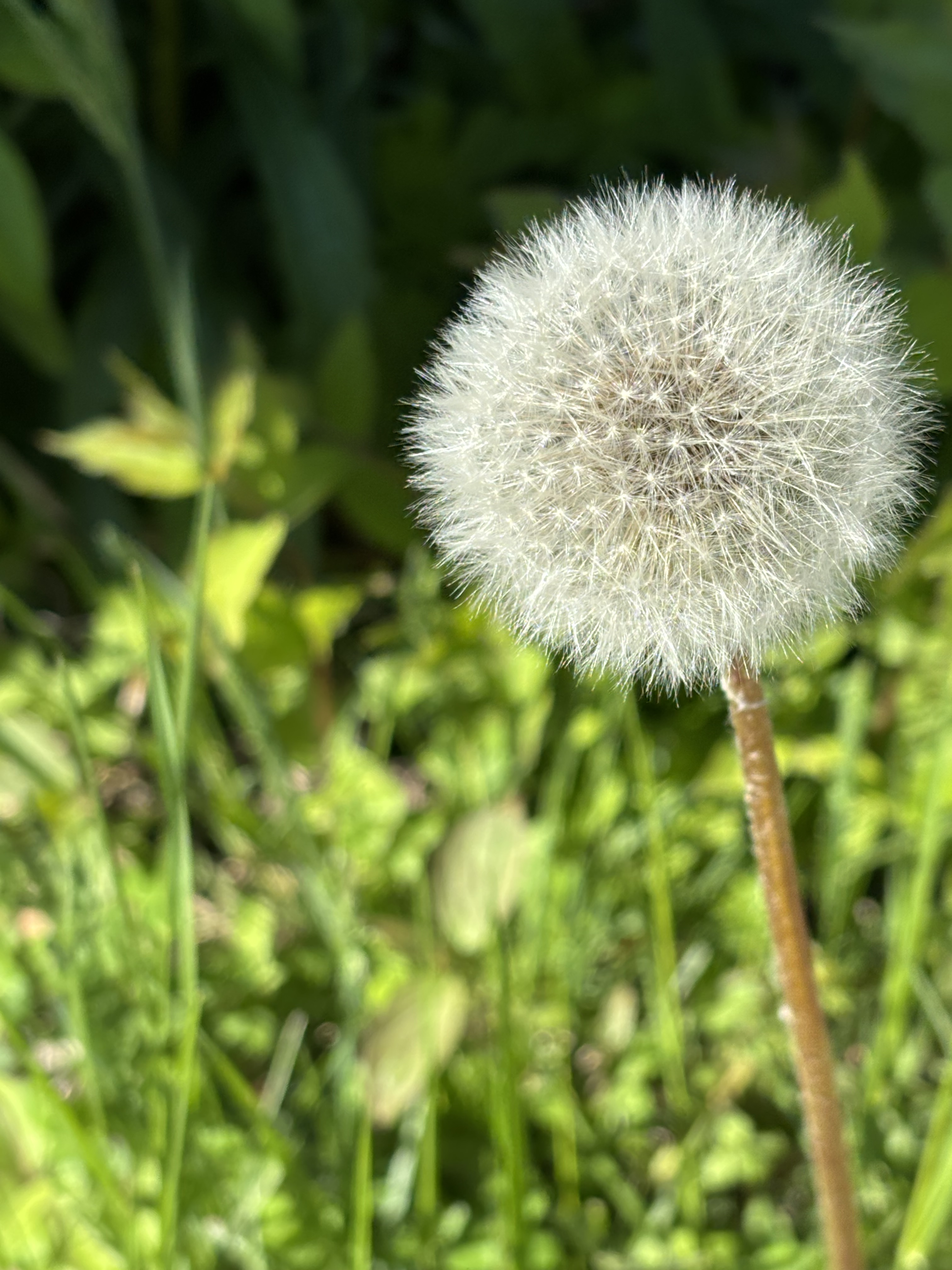
“Lookit,” she said, showing me the photograph that she’d just taken of the dandelion. “Isn’t it perfect?”

Perfect (adjective): flawless. ideal. magnificent. A word of unity. Belonging.

“Yes,” I said, aware of the story-limits of my language. I wondered what it might take for us “to be-ers” to see ourselves as perfect – as a given- to be as perfect as the dandelion.

read Kerri’s blogpost about THE DANDELION

likesharesupportcommentsubscribe…thankyou.

Connective Tissue [David’s blog on Two Artists Tuesday]

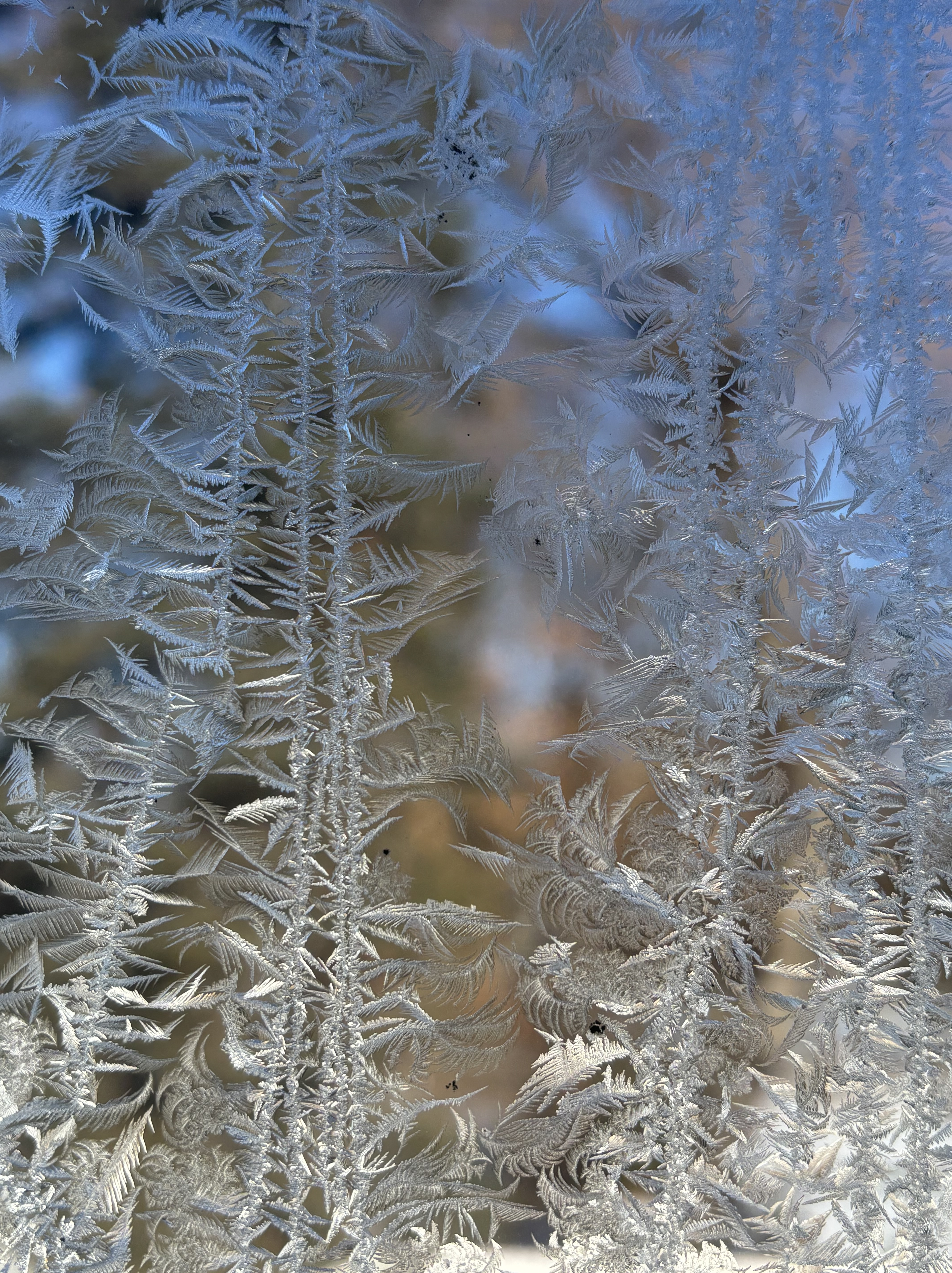
I literally watched the ice crystals blossom on the glass. I was Jack watching multiple bean stalks stretch and reach into the sky. They feathered and connected, the light behind them making the ice-miracle color-lush.

It brought fascia to mind. That is not as arbitrary a thought as it might as first seem. I am reading about fascia. Don’t ask me why. I won’t be able to answer. My reasons are not random, just hard to articulate.

Fascia is the connective tissue of the body. It not only wraps around muscle, organs, and bones, it also embraces every ligament, every joint, every nerve, every artery and vein, every cell of our bodies. Every thing. It is a paradoxical wonder: it is flexible but provides structure, it is soft and loose but provides support. It literally holds our bodies together. It gives us shape. Most amazing of all, it is continuous, a an unbroken tissue-web from the tippy-top of our heads to the farthest molecule of our big toe, from the outermost layer to the innermost core.

When fascia is stressed, it tightens. It grips. It holds down the fort.

It responds to sensory stimuli. It feels. Trauma, physical or psychological, can cause the fascia to lose flexibility; this loss is called “restrictions”. In other words, too much stress makes fascia grip and not let go. The restriction creates an energy eddy that solidifies. A hard spot. A place where toxins congregate.

The good news is that the eddy or restriction can be released – but never through force. Pressure only serves to make the grip tighter. Gentle oppositional touch, fascia yoga, will eventually send the message: you can let go now. Relax. Trust.

I remember watching Koyaanisqasti, the 1982 documentary composed of slow motion and time lapse footage, no spoken words, that explores our relationship with technology and nature. Koyaanisqasti is a Hopi word meaning “life out of balance.” I was awe-struck by the interconnectivity it revealed. We move as one whether we realize it or not. We are not separate from nature or the world in which we live. We are nature. Out of balance with ourselves.

My long lost pal Roger used to say that it is a trick of language that fools us into compartmentalizing our experiences. “When you hurt your toe, it’s not just your toe that is injured; your whole body is injured,” he’d say.

Every “thing” impacts every other “thing”. Separation is an illusion.

The second day. The fascia of the nation is stressed. Hard spots have formed. Our faith in the populace is strained. We tighten our grip. We isolate, circle the wagons and hold down the fort. It is early so we can do little more than shake our heads in disbelief. 77 million of us chose the path of hatred and gross indecency. We fracture. We necessarily emphasize separation, “I am not them.”

And yet, we…The whole body is injured.

Perhaps the fascia has some lessons to teach us about how we might deal with the trauma to our national body: the election of indecency, the elevation of a confederacy of dunces. It certainly provides clues for how we – those of us who did not vote for hatred – might regain a healthy equilibrium. Gentle touch. Send the message to one another, “I am here.” Not only are we more than opposition; we are the carriers of the spark of the ideal of democracy. We are the movement forward. Even though an abomination currently sits at the resolute desk, we are the connective tissue, the shape givers of our nation and of the future.

read Kerri’s blogpost about ICE

likesharesupportcommentsubscribe…thankyou.

Commune With The Sun [David’s blog on KS Friday]

I confess. For several days I’ve dreaded the sunset. My COVID symptoms seem to escalate in lock step with the march of the setting sun. Sundown; pain up. I’ve read that I am not making it up; apparently my circadian rhythms signal my immune system to be more active at night. That makes for some increased inflammation, fever spikes, and my favorite cough more active.

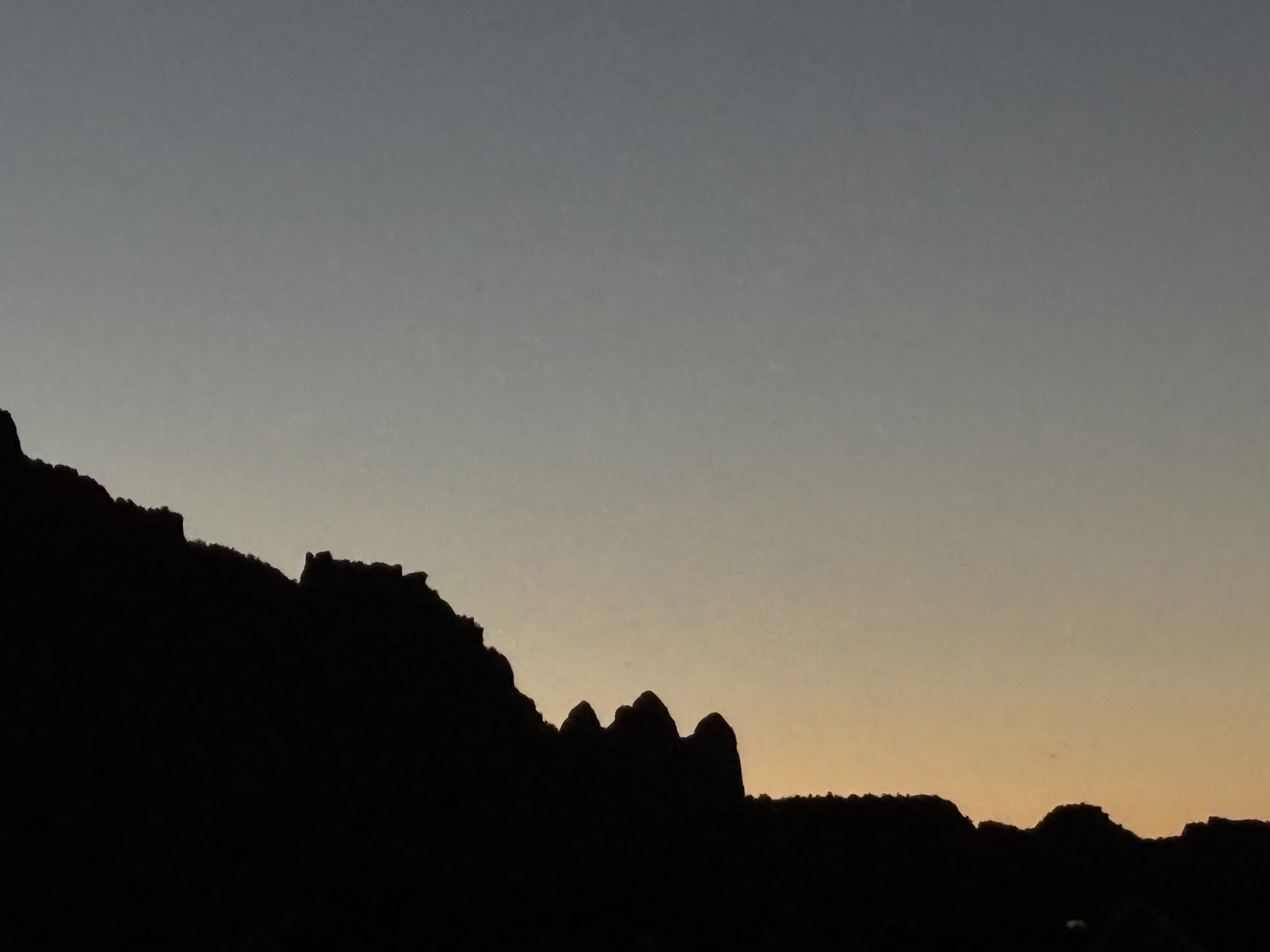
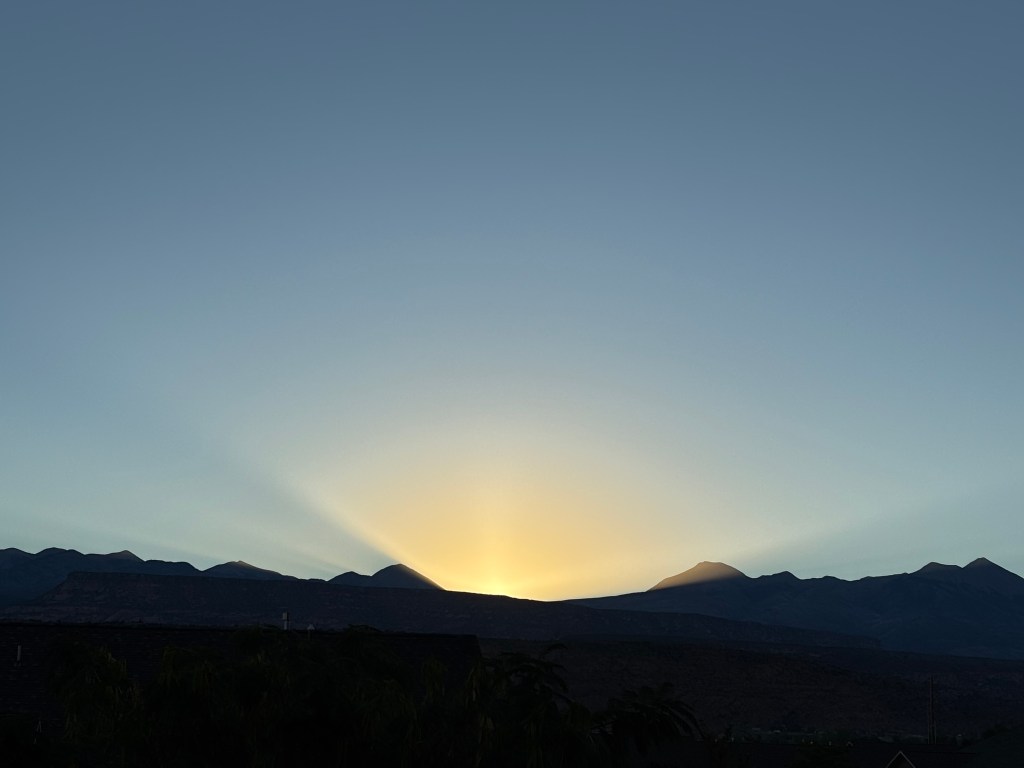
In the previous era, prior to the virus-that-seems-eternal, I was treated to some extraordinary sunrises and sunsets over the desert. I adore the wind that rises just before the sun breaks the horizon and the heat washes over me. I’m in awe the sense of peace I experience each time the sun dips beneath the sculpted red cliffs and how quickly the temperature drops. My rhythms are indistinct from the circadian rhythms of the earth. I suspect that recognition is the source of peace I feel. Adoration and awe. No separation.

Yesterday, for the first time since we’ve been home, the sun broke through the clouds. We bundled up and set our chairs in the sun. It was better than Advil, soaking the warmth into my aching bones. We sat for a long time in the sun, so intent on drinking in the goodness and heat, neither of us was able to speak. There was the occasional moan and an “Uh-huh,” of agreement. We moved our chairs across the backyard as the sun moved. Healer in the sky.

We are without doubt tuned to the rhythm and movement of the sun. Physically, emotionally, spiritually. Yesterday, with my eyes closed and face to the warmth, I thought, “I am no more or less than this.” I thought again of Gay, standing on the edge of the canyon, saying, “And I get to be here to see it.” There is no pleasure more sensual and reassuring than this: in the midst of feeling ill, to sit in communion with the sun. Drinking it in, so grateful to feel it reach deep and give comfort to the very center of my being.

Dawn At Crab Meadow on the album Blueprint For My Soul © 1997 Kerri Sherwood

Kerri’s albums are available on iTunes and streaming on Pandora

read Kerri’s blogpost about SUN

like. share. comment. subscribe. support…thank you.

Walk The Path [David’s blog on DR Thursday]

It’s been awhile. I’ve fallen into an art book, Ancestral Modern: Australian Aboriginal Art. I bought this book after attending the exhibit at the Seattle Art Museum. It was – and still is – one of my favorite exhibits, reaching me on many levels. I went back again and again so I might spend quality time with a few of the paintings.

The paintings of the Aboriginal artists are mythologies, though not as we think of mythologies. They are more than dusty stories. Explanatory. They are active guides on a life path. Were I Aboriginal I’d “read” them. I’d know the stories so each piece would speak personally to me. The paintings would escort me along my life-path. Mythology as my story.

This is what amazed me most: many of the pieces were as abstract as a Rothko or Frankenthaler. Vibrant lines and color. They shimmered. Dreaming. Living foundational narrative carried in energetic swirls and dots of paint.

In my experience it is not uncommon in a gallery or museum to come across someone puzzling over a painting by a master artist and hear them say, “I don’t get it.” The abstraction is a closed door. “I could do that,” I heard a man huff while staring intently at a Jackson Pollock painting. The door is not closed between the Aboriginal artist and his or her community. The mythology has not broken down. The artist is not exclusively serving an individual expression, rather, they are maintaining an ancient connection, drawing from and carrying forward the deep well of communal story. “Meet Blue-Tongued Lizard Man…” Artists paying homage. Artists serving their role as keepers of the flame.

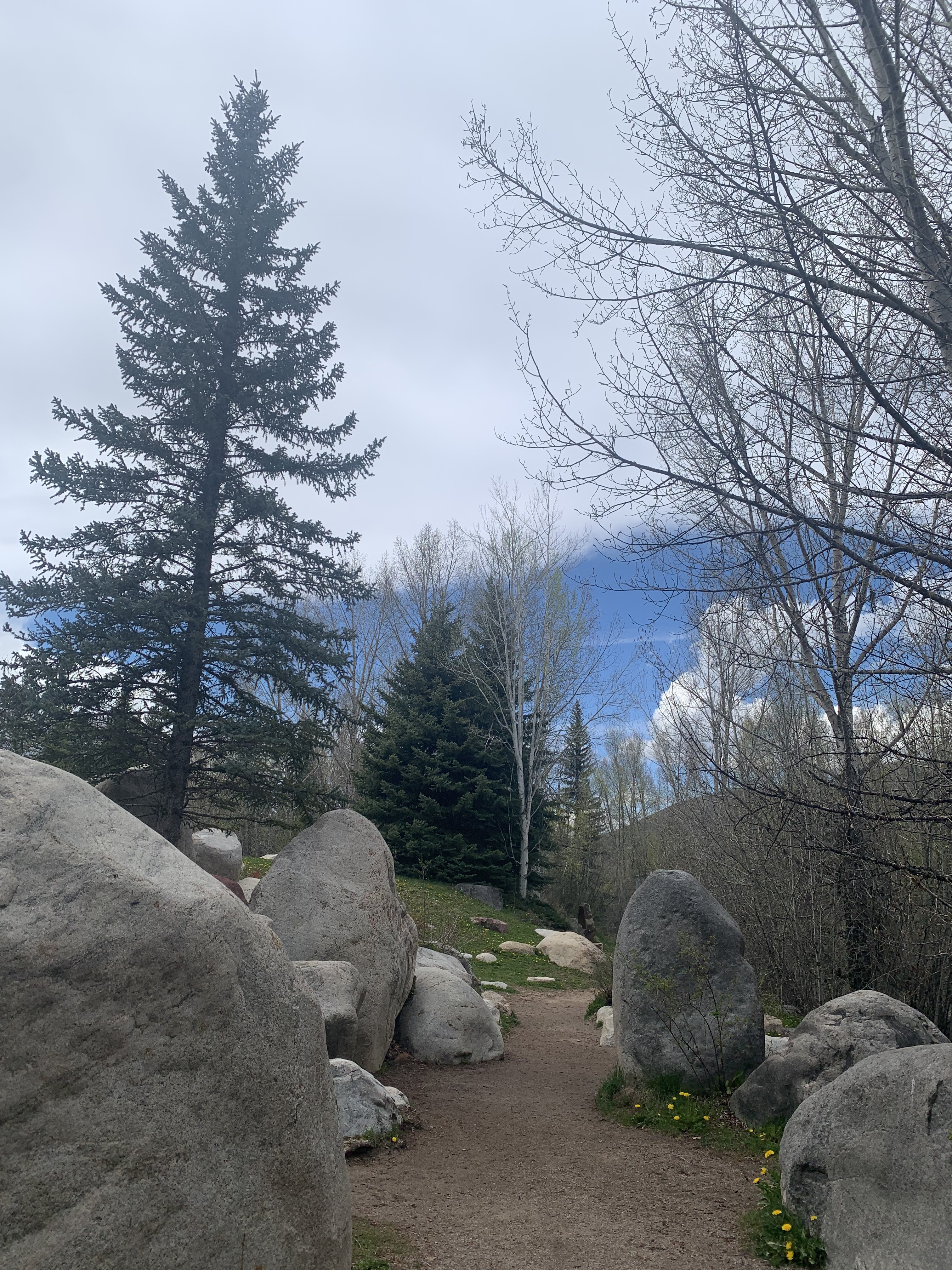
Kerri and I talked of our artistry as we walked the paths of the John Denver Sanctuary. He was a guide-star for her and continues to influence her work. Simple lines. Music that does not rely on acrobatics or embellishment. It was poignant that we had the sanctuary to ourselves. Sometimes it is nearly impossible to know whether or not our work-in-the-world reaches anyone or serves any real value beyond satisfying our imperative to create it. And sometimes, like that day walking the path through the sanctuary, the clouds rolling over the mountain, the Roaring Fork River singing at our side, the ancestry is clear. “This is where I come from,” she said. “This is where I belong”.

read Kerri’s blogpost about THE PATH

like. support. share. comment. subscribe. thank you.

Step Out. Step In [David’s blog on Merely A Thought Monday]

“In rivers, the water you touch is the last of what has passed and the first of that which comes: so it is with time present.” ~ Leonardo da Vinci

I might say that, in the mountains, in the sanctuary, we stepped out of time.

We sometimes forget that time is a relatively new invention in human history. The mechanical measurement of our moments. So, when we say that we “stepped out of time”, I literally mean that we temporarily exited the quantification of our moving experience. Future/past. To-do lists and locators. It begs the question, “If we step out of time what do we step into?”

Everyone knows the word “present”. The present. It’s a very big little word. The English language would have us understand it as a place. An arrival. We look for it, strive for it and, paradoxically, we enter it by forgetting to look or strive. It is where we are – always – and yet we so rarely know it. It’s where meaning is found and connection. It’s where peace and beauty are realized.

A poet might write that to die is to step out of time. To be born is to step into it. It’s the epicenter of our mythology, this cycle of dying and rebirth. Into and out of time. Winter and spring.

We stepped into the sanctuary and stepped out of time. Our cares dropped away. We took a deep breath. Sometime later, we stepped back into time and both felt renewed. Of course.

read Kerri’s blogpost about THE PRESENT

like. share. support. subscribe. comment. all are appreciated.

As If [David’s blog on Two Artists Tuesday]

In a festival of irony, the moment we sat down to write about our peony, our harbinger of summer sun and the return of good weather, the sky darkened, the lightning flashed, the thunder clapped, and the rain is now dropping in buckets. The weather alert screeched with a warning for hail and possible tornadoes.

I delight in how readily my superstition-gene leaps out of the murky depths of my subconscious pond and concocts fabulous explanations about current circumstance. That is, as a human-being, a maker of stories – I am quite capable of connecting the rush of the sudden storm with our attempt to write about peonies. As if our attempt to write about peonies somehow invoked the storm!

This is not surprising. It is nothing new. My ancestors – and yours – created all manner of rituals in an attempt to appease the angry thunder-hurling god. To influence the powers of dark and light. To invite good fortune. To bring rain to crops. We have always personified nature and then imagined it is responsive to our behavior. Our behests. All around the globe, in many varied and culturally diverse forms, we do it in houses of worship to this day.

It might seem that I am making fun – and I am – but more than that, I am marveling at our genuine desire to be connected to “something bigger” and yet how rarely we recognize that we already are. We are as the peony, not separate from but a part of the pulse of life. We are of nature – not separate from it. My theory is that we have a hard time recognizing it because we imagine that we can control it. We use it to explain what we experience. We use it to justify our abuses to each other. Chosen people; Manifest Destiny and all of that ugly business. The personality we project upon it is at once beatific and horrific. We wonder why it blows our house away. We thank it for our good fortune.

In truth, we do influence Mother Nature and Father Sky, just not in the magical ways we imagine. Carbon emissions. Tapping mighty rivers dry before they reach the sea. Dumping our trash in the oceans. Fracking. It turns out that our behaviors are powerful and, perhaps, our destiny is in our hands. We need not pray to the gods for intervention and salvation, perhaps we need to be the gods of intervention that we desire to be, recognize and behave as if are not above it all, giver of names, but integral, intrinsic, no more or less essential than the peony.

read Kerri’s blogpost about THE PEONY

like. support. share. subscribe. comment. or not – it’s all good.

Belonging [David’s blog on DR Thursday]

It’s hard not to imagine the light-circles dancing on the far wall as a visitation of spirits. Ancestors or angels come to check-in, to let us know that we are not outside but within the circle of their warm embrace.

Last year Kate took us to a cemetery where many of our ancestors are buried. It was a revelation. Although right along the road, this graveyard was hard to find. It was hard to see. Yet, once inside, it opened wide; a bluff overlooking cornfields. As we walked from stone to stone, she told us what she knew of the life of each person. Of how we are connected.

I felt rooted in that place, surrounded by those lives. Like the light-circles dancing on the wall I felt inside the warm embrace. That’s a rare feeling for me.

Many years ago I had a casual conversation with a psychic. I told her that I didn’t feel as if I belonged anywhere and she laughed. “Belonging is not an issue,” she smiled but did not elaborate. Standing on that grassy knoll on a warm Iowa day, the psychic’s words came back to me. Belonging is not an issue.

Belonging is a word with both a horizontal and a vertical plane. There’s the circle that is seen. There is the circle that is felt. There is the circle of warm embrace that is today. There is the greater circle that reaches back and back and back. Those are the light-dancers, the surprise visitors who, on a sunny morning, show up for a moment or two, twinkling to remind us that all is well. We can rest easy knowing that, no matter what, we are and always will be surrounded by their love.

an oldie: Embrace, acrylic

read Kerri’s blogpost about MAGIC LIGHT

like. support. subscribe. share. comment. thank you.

Deal In Imagination [David’s blog on Not So Flawed Wednesday]

“The imagination is not a state: it is the human existence itself.” ~ William Blake

I think a lot about artists that were influential but financially unsuccessful. The list is much longer than you might imagine. Most artists fit into that category. William Blake shook the cultural foundations but died a pauper. Mozart. Van Gogh. Artists that are successful according to our recognized standard are the exception and not the rule. Thankfully, there is an imperative that reaches deeper than money. A need to create. A need to come together. There is a resonance that we recognize with the currency of genuine appreciation.

Occasionally I revisit a book by Wayne Muller, How Then Shall We Live. It’s about giving meaning to life, bringing purpose to it as opposed to finding purpose in it. Although Wayne Muller might not recognize it, his book is about imagination. Imagination is what we bring to life (yes, a double entendre). Imagination is where we create our purpose. We imagine ourselves whole.

Wander your neighborhood for an hour and comprehend the truth that everything you see sprang from someone’s imagination. The plumbing and electrics, the structures and finishes; someone, somewhere, imagined it before it came into three dimensions. Form and function chasing each other. Someone imagined how to make life easier or prettier or more secure. We are a rolling anthill of roiling imagination. We might think our imagination is self-serving but even the most dedicated expressionist needs an audience to fulfill their purpose. No one throws paint on a canvas or dances on a stage without imagining the witness of others. The moving of spirits to join together. No one builds a road so they alone can drive on it.

Look around. Imagination is abundant. The paper napkins are designed. The silverware is crafted. In our old house, the wood floors were laid by someone who cared about their work; caring is a function of imagination.

So is remembrance; my wild imagination loves to toy with the past: this is how I remember it! This is how I’d like to remember it.

When I am lost and afraid, like you, I imagine myself warm at home. It keeps we walking.

Artists deal in imagination and, so, are stewards of a special kind of riches: the power to bring even the most lost heart back to itself, the power to bring a room full of dedicated strangers into a single shared story.

read Kerri’s blogpost about FLOWERS

like. share. subscribe. support. comment. we thank you.