Make Life Better [on Merely A Thought Monday]

Lately, the universe has pitched me headlong into a master class on efficiency. Maximum productivity with minimum wasted effort. A useful concept in certain arenas and an intensely destructive concept in others. For a person who’s spent his life in a study of curiosity, art, and the creative, it’s an unexpected study at this stage of the game. It is sometimes uncomfortable but I consider it an opportunity for balance. Artists rarely meditate on efficiencies. We’re more of a discovery clan and efficiency is generally the enemy of discovery. No one ever sailed to the edge of the world with efficiency-on-their-lips.

Once, I made the argument to a school board that daydreaming was highly productive. It seems a no-brainer to me that exercising the imagination should be highly valued in a learning environment. Einstein’s Theory of Relativity came to him in a dream about cows. It is not an accident that many insights and revelations come in the shower or while driving or peeling a carrot. Newton’s apple did not fall on his head while he was exercising maximum productivity. The mind, to be efficient, needs space to breathe, fields to roam. It is the most elegant of paradoxes but mostly lost on worshipers at the altar of efficiency. In the modern business world, efficiency is all about time since time is billable. You know the mantra: time is money. Do more with less. Somehow, we’ve turned that nonsense into a virtue, a thing to be desired. A reason to squeeze.

There’s another, more admirable side to efficiency-seekers. How to make work less arduous. Grease the wheels and remove the friction. Relieve the burden. Not faster but easier. Ann used to say, “Find a need and fill it.” She’d look at people toiling and ask, “How can I ease their struggle?” Beaky was that way, too.

Near our home there is a stretch of shoreline with an ineffective seawall. It was built with stones and debris that become projectiles when hit by forceful waves. The locals know to avoid that stretch during a storm. It’s deadly. After the storm, it has become our ritual to walk the path to see the destruction. It’s always impressive. How far can a wave throw a heavy stone? The answer: farther than you think. Mother Nature yawns when we think we can control her. The seawall has become my metaphor for human hubris but also masterful inefficiency. It would cost money to build a proper wall. So, instead, after each storm, crews collect the rocks and pile them back on the shore, readying them to be hurled by the next storm.

We saw a double-rainbow and turned toward the shore. Kerri never misses an opportunity to capture a little miracle or a slice of beauty. We parked in front of the seawall-of-inefficiency and I laughed out loud. A budding Banksy sprayed a message on the rubble: love. The secret message-maker could not have found a more appropriate word: Love. Can you imagine anything more inefficient and, at the same time, more potent? Love moves mountains but is not billable. It transcends time. What better reason to do anything? Well, perhaps reason has nothing to do with it and never has. Reason has the worshipers-of-the-efficient perpetually re-stacking stones.

It’s easy to be seduced but let’s face it, life reduced to billable hours is not life at all. On the other hand, there is nothing more inspiring, nothing more curiosity-invoking than asking, “How can I make life better for everyone?”

Love on a rubble pile. What could be better? On second thought, what could possibly be more efficient?

read Kerri’s blog post about LOVE ON A ROCK
Let’s Get On With It [on Not So Flawed Wednesday]

It was a national campaign of the US Department of Homeland Security. If you see something, say something. The enemy is here. It is us. We pulled it from an episode of Grace & Frankie. Old folks have hair that grows in places it ought naught. Frankie plucks a hair from Grace’s chin. “How long has that been there?” Grace exclaims. “Frankie, if you see something, say something!”

Yesterday, I had a collision of experiences at the courthouse during my jury pool swim. First, I read an article in The Atlantic, by Tom Nichols, Afghanistan Is Your Fault. He wrote, “The soldiers who served overseas in those first years of major operations soon felt forgotten. ‘“America’s not at war” was a common refrain among the troops. “We’re at war. America’s at the mall.”’

He continued, “A serious people—the kind of people we once were—would have made serious choices, long before this current debacle was upon them. They would today be trying to learn something from nearly 2,500 dead service members and many more wounded. They would be grimly assessing risk and preparing both overseas and at home for the reality of a terrorist nation making its way back onto the international map.

Instead, we’re bickering about masks. We’re holding super-spreader events. We’re complaining and finger-pointing about who ruined our fall plans.”

Next, I was among the many chosen for voir dire (the jury selection process). I was in the last group selected so the odds of my serving on the jury were slim. I sat in the courtroom and watched an amazing moment unfold. The judge said something that all Americans should hear. It aligned perfectly with Tom Nichols’ thoughts. A potential juror, a young man, claimed serving on a one-day trial would create hardship. He’d miss a day of work. The judge questioned him to get more context and then sat back, considered for a moment, and said this:

“Democracy is hard work. When I was young, there were three things that we had to do: pay taxes, honor the draft if called, and serve on a jury if called. All of those things create hardship. Taxes aren’t easy. The draft changed the lives of thousands of young people. Serving on a jury interrupts life. It creates hardship. Giving of yourself to the common good means serving something greater than yourself. It is an interruption. Today, there are only two of those things because there is no draft. My point is, giving of yourself to make this gorgeous system work is not easy. It is hard work. It creates hardship to ensure that our system, the oldest democracy in the world, thrives and survives for the next generation.”

America is at the mall. Meanwhile, democracy is hard work.

For a serious people, there is a center to our commons and, keeping it alive, takes a bit of self-reflection and sacrifice. Giving of yourself to the common good means serving something greater than yourself.

Divided we fall. It is a cliche’ but could not be more relevant.

The enemy is here. It is us. Bickering about the lesser while the greater slips from our fingers. “If you see something, say something” is predicated on an assumption: we are in service to something greater than ourselves. We are on the same team with a common, shared interest.

The judge sat back in his chair after his lecture and asked the young man, “Are you less capable of handling hardship than anyone else in this room?”

“No, sir,” the young man sat back in his chair, resigned.

“Good!” the judge exclaimed. “Now, let’s get on with it.”

read Kerri’s blog post about SEE SOMETHING, SAY SOMETHING

Refresh [on Two Artists Tuesday]

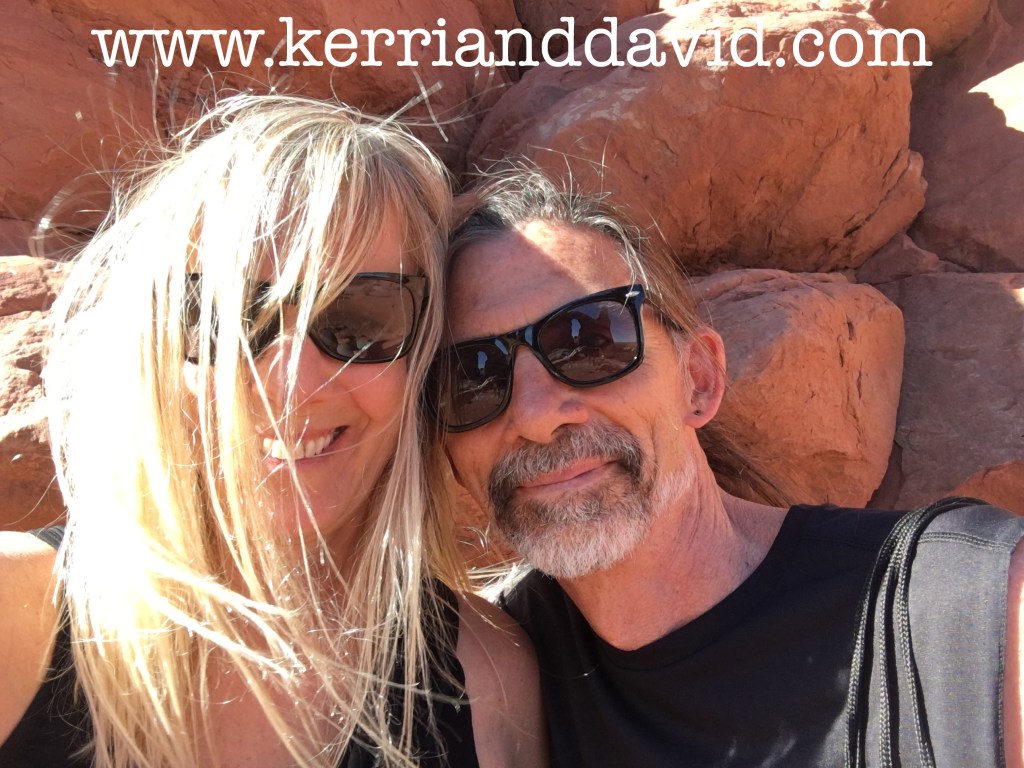
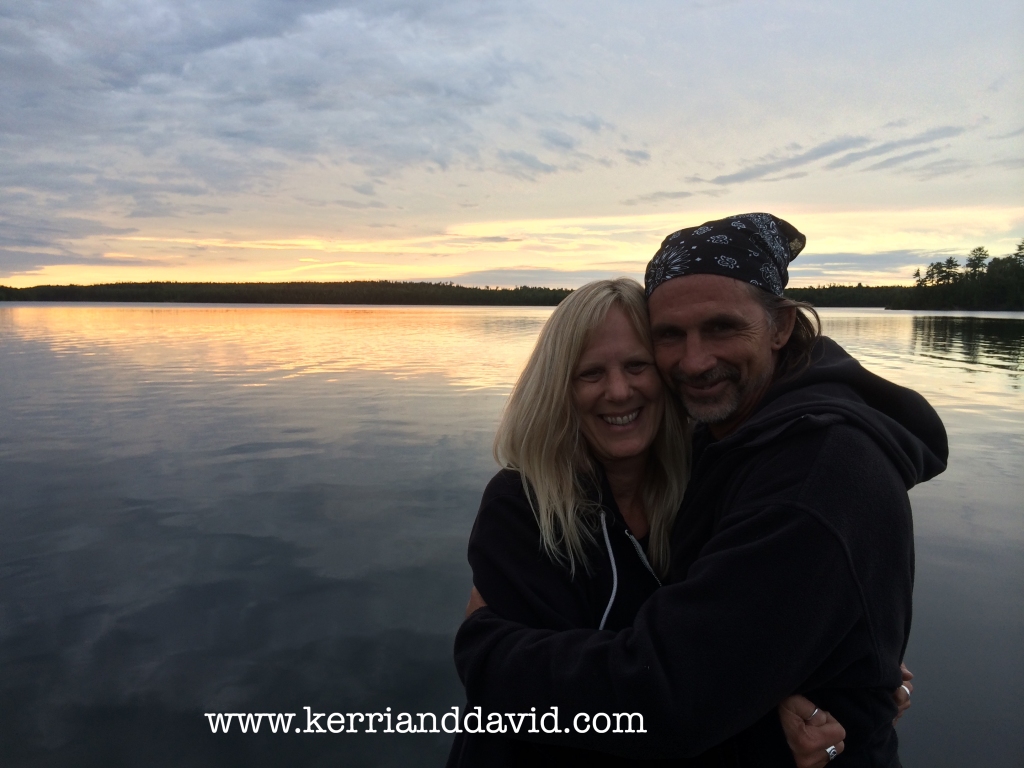
It’s been true since we met. People stop us in airports and on the street, they give us thumbs up or take a faux paparazzi-photograph. They tell us that we are cute or “lookin’ good!” Once, a shopkeeper came out of his store to tell us that we made him smile. When we walk the neighborhood, we are often met with people who tell us that we make their day. It always takes us by surprise and it always makes us smile.

What are people seeing? We are older and link arms when we walk. We hold hands. Our clothes are unintentionally the same. Black on blue jeans. We walk slowly. We talk to each other. We stroll; a walk without a destination. We don’t know what inspires the comments but always appreciate them.

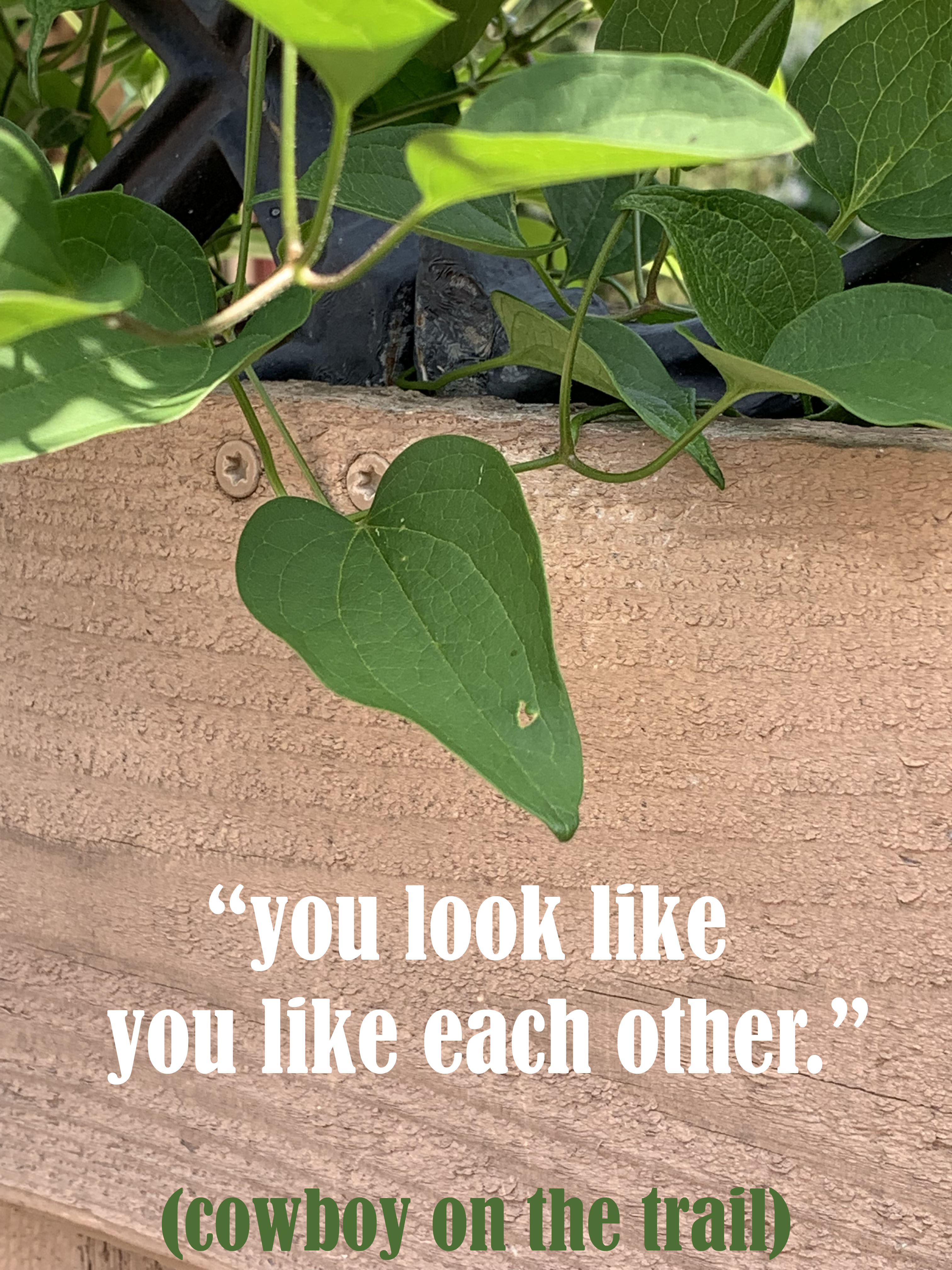
Kerri always coos when she sees a horse. In our imaginary life, she has horses, a donkey, and an old truck. We were walking on the trail in our flip flops (that always gets a raised eyebrow or two) when the cowboy came around the bend. “A horse!” Kerri whispered, and squeezed my arm. The cowboy sat up in his saddle, nodded as he rode passed, then said, “You look like you like each other.”

“We do.” I replied.

Perhaps it is that simple. We like each other.

We’re fortunate. Our work allows us to be together all day. Every day. That would, I’m sure, be the end of most relationships. We like it. When I need feedback on a painting, she is my best wise-eyes. “What do you see?” I ask. We read our posts to each other before we publish. We edit together. We cook together. We create together. Our list of joint projects is growing. Lately, our once-weekly-cartoon about…well…us, Smack-dab., is giving us tremendous energy. It is fun. We poke fun at ourselves. We capture the ridiculous and the poignant. We pay attention to the marvels of simple relationship.

Picasso said that, “Love is the greatest refreshment in life.” He also said that, “Art is the elimination of the unnecessary.” Those thoughts, placed side-by-side, I believe, holds the reason a cowboy sat up in his saddle and a shopkeeper ran into the street. We are refreshed. We practice the elimination of the unnecessary – on canvas, at the piano, and in life.

We didn’t try to make 24/7 togetherness. There was no rule or expectation. It’s what we wanted. It’s what we want.

I am on jury duty this week and was at the courthouse most of the day. When she came to fetch me I got in the car and we said at the same time, “That was weird!”

“Tell me everything!” she said.

“No. You first! What did you and Dogga do?” Our conversation took us deep into the night. There’s so much life and so little time. Perhaps that’s it. We know this day is precious and fleeting and act accordingly. It must show.

read Kerri’s blog post about YOU MUST LIKE EACH OTHER

See The Spaces [on DR Thursday]

The space around and between. Shapes that share edges. Emptiness that provides definition. In art it is called negative space. Not-the-object. In art classes, students draw the negative spaces in order to see or to learn a new way of seeing. Try it. See the holes and the space around the leaves as primary. It’s not as easy as it sounds.

Some folks use the term “air space” because they get snagged on the word “negative.” It’s a term of opposition when set next to “positive.” Yet, just as there is an electric field that flows between negative and positive ions, electrons and protons, there is a field that flows between negative and positive space. Yin and Yang. A dynamic polarity. A creative field of movement and energy. The air space is alive because of the perceived opposition. The positive space is not visible without the negative.

When I was a consultant, I used the phrase “the space between” to imply relationship. There are people. There is the space between people. Relationship is invisible but it defines the people. Relationship illuminates the otherwise unknowable individual. They are impossible to separate. In a community obsessed with nouns, bottom lines, test scores and individual rights, the verbs and the relationships often go unnoticed and unappreciated. As if the negative space didn’t matter. The space between is where the movement lives and the problems are solved. It is where new seeing is possible. It is created and creative. The word “community” lives in the space between.

Try it. Take a day and focus on the space between. See relationship as primary. You may experience a whole new way of seeing.

20 sent this image,a memorial. It makes the point.

read Kerri’s blog post about NEGATIVE SPACE

iconic ©️ 2010 david robinson

Pull The Weed [on KS Friday]

One of my favorite simple pleasures each day is watching Kerri go out in the early morning and tend to her tomatoes. The world is quiet. The coffee is brewing. Dogga makes sure the yard is clear of marauding squirrels so the path to tomatoes is safe. An extraordinary ordinary moment. A tender ritual. A wonderful world.

Put down your clever and pick up your ordinary. It is one of my favorite “rules” of improvisational theatre. It is also a good credo to live by. Trying to be clever will take you out of the game every time. It is as true in all aspects of life as it is in art. The beautiful little secret: power, presence, flow…these live in the province of the ordinary.

When I was learning to scuba dive,Terry tried to teach me one central concept: get neutral. After several dives, fighting for control, trying “to do it right,” burning through my oxygen with my dedicated stress, I simply relaxed. I found the neutral that he advised. It was as if I joined the current. The colors sharpened. Time seemed to slow. My breathing definitely slowed. What was a struggle only a few moments before was suddenly easy. I’d picked up my ordinary. I got out of my way.

I delight watching children draw. They are free in their ordinary, not a shred of clever to be found. They lose that. We lose that, trying to be…something other than what we are. How many of us shudder in the notion that we are inauthentic? How many of us invest in the notion of low “self-esteem?” The circle of ordinary comes back around though it is cloaked in words like “self love” or “acceptance” or “wholeness.” Get neutral. Put down your clever.

Ordinary, not clever. It is a discovery that ought to stick early in life but generally lands much later. There’s very little distance between the child that freely colors and the adult that one day remembers that nothing is broken, nothing needs fixing. It is ordinary to color with abandon. The riches are in tending the tomatoes. “Clever” is merely a weed that needs pulling. In the ordinary, a wonderful world is waiting.

PULLING WEEDS on Kerri’s album RIGHT NOW is available on ITunes or streaming on Pandora

read Kerri’s blog post on TOMATOES

pulling weeds/right now ©️ 2010 kerri sherwood

Expect Surprise [on Not So Flawed Wednesday]

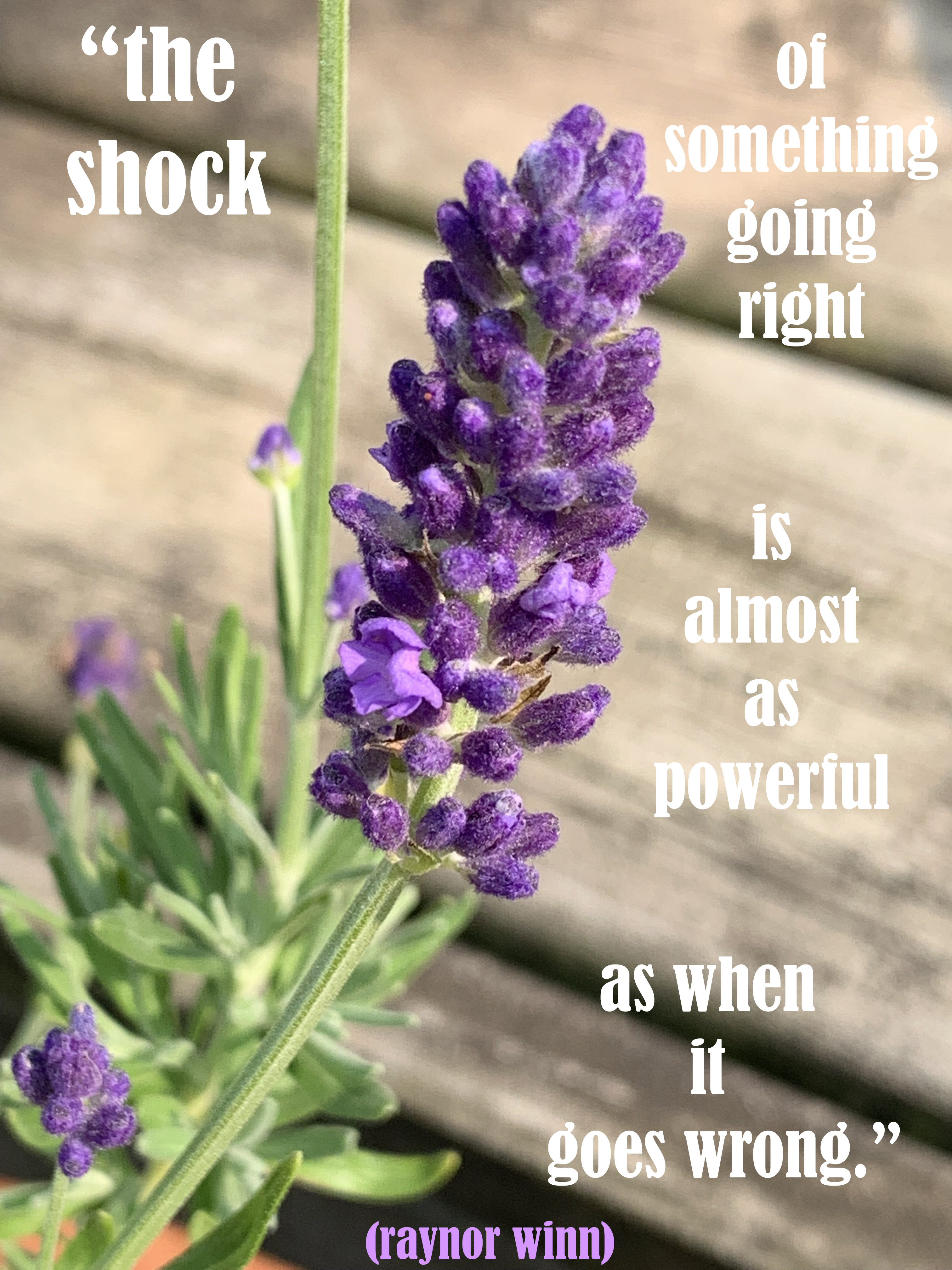
Walking through the Lake District in a driving rain, cold and soaked to the skin. Roger had a high fever and was near delirious. The hostel closed. We had to leave. It was miles to the next village. This day was not going according to plan. The trip was not going according to plan. It was the darkest moment in a series of dark moments. “What else could go wrong?” I asked. There was nothing to do but shiver and take another step. And then, unheard of at the time, an RV rounded the bend. The door popped open and a cheery voice asked, “Do you need a ride?”

I often think of that ride. That unlikely RV. Suddenly there were towels to dry ourselves. Aspirin for Roger. The mother of the clan took over and attended to my sick friend. Mugs of hot tea. We were delivered safely to the next village. They did not leave until they knew we had a warm place to stay until the rains passed. Something went right. It was breathtaking.

It was a life lesson for the younger version of me. My very own Aesop’s Fable. What looks like tragedy is often an opportunity, and vice versa. When it appears that things cannot get worse, they often do get worse en route to something better. The real lesson was to be in it, rain or shine. Joyful participation. I didn’t get the lesson right away. It took a few laps before it stuck.

That trip was decades ago and, to me, seemed ill-fated from the outset. But, when I think back on it, I remember the kind family in the RV, the man standing in line behind me who secured a ticket for me when I didn’t have enough money. The kindnesses too many to count. The utter shock of serendipity. What we needed always appeared somehow, in unexpected ways.

Quinn used to say, “Cultivate your serendipity.” Open yourself to chance, to the unexpected. Expect surprise.

read Kerri’s blog post about THINGS GOING RIGHT

Choose [on Two Artists Tuesday]

“It’s a serious thing just to be alive on this fresh morning in this broken world.” ~ Mary Oliver

Were I to have been born in an earlier century I would not be alive today. Twice on my life-path doctors have declared that, “You are now a miracle of modern medicine.” Leeches and blood-letting would not have cured what ailed me.

This thing called ‘science’ is what gave me more days of life. It is the same science that developed vaccines for a pandemic but also made possible the technology that makes mass-media-misinformation possible. Here is the medicine. Here is the disease. It is exactly as Sophocles wrote: Nothing vast enters the life of mortals without a curse.

One morning, deeply tired, I arose to go do a job that I did not like. It was a means to an end and I dreaded the day ahead of me. Stepping out the door, the cold morning air stopped me in my tracks. It slapped me awake. The air was crisp and clean, the neighborhood was quiet. The light in the sky was brilliant. I drank it in. I vowed never again to dread a day of my life. In truth, I had no idea what the day held for me. Why then, would I story my day with a frame of dread? Why tell myself a tale of just-getting-through-it? Why not open to the possibilities of surprise and miracle? Why not embrace the already-stated-obvious-thing: I had no idea what the day held. That simple fact would be true every single day of my life. Dread was a choice, not an inevitability.

To be alive on this fresh morning. It is a serious thing. In this world, broken by the little story of us-and-them, the tiny tale of power-over. Choices. The miracle of the new day is present whether it is seen or not. We can cloak it in dread or gratitude, in support or division. It doesn’t care either way. The miracle of the new day, the gift of being alive on this fresh morning in a world that is broken or healed, whole or fragmented – it all depends upon the story-frame we wrap around it. The story we tell is a choice, not an inevitability.

read Kerri’s blog post about JUST TO BE ALIVE

Pull The Weeds [on KS Friday]

My very first painting teacher offered me some sage advice. I was painting figures while the rest of the class worked on landscapes. Being the odd-child-out I assumed something was wrong with me. She said, “Tree painters are a dime a dozen. Someday, being the only one will seem like a gift so ignore what they are interested in and paint what is interesting to you.” Jospeh Campbell said, “Follow your bliss.” It’s the same advice that Jackie Fry gave to the boy-version of me.

I never imagined myself with a back yard. And, now that I have one, I find it a place of rest and peace. This is a confession that I’ll never admit to in the future: weeding is meditative. Each day I find myself taking a few moments to go out and yank the invaders out by the roots. No thought. No other thing to do. I simply tend the garden, knowing I am accomplishing nothing since weeds are good at growing and more will appear tomorrow. We are strange allies, they provide me with a daily meditation.

If I was as an art teacher, I’d send my students into my back yard. Nature is a masterful teacher of color. Orange and green. Highlights of yellow. Barney provides subtle blues, purples, and pinks. The orange and green of the lily pop against the purple and blue of the aging piano. Warm colors come forward. Cool colors recede. It’s all there.

I read somewhere that, as an artist, “to discover” is more potent than “to invent.” See what is there, beyond what you think is there. Everything is fluid so the discoveries are endless. While I weed the sun passes beneath a cloud. Everything changes. The sun reappears and the colors change again. Not the same. Different. I’ll never be able to capture it and that is the best held secret of an artist. Another wisdom from Jackie Fry: you will never succeed. Art is a relationship, not a transaction. So, no pressure. It is a relationship, complex and dynamic. It is not about capturing an image. It is about freeing your sight and possibly freeing the sight of others. Facilitate discovery. Play to play, to become a better player. Open a small door to peek into the vast inner universe.

It’s a paradox. It’s impossible to eradicate the weeds. That is not why I pull them. It’s impossible to capture life in an image. ‘Capturing’ is not why I paint. Relating is why I paint. I do it because I’ll never create anything more beautiful than the Tiger Lily dancing with Barney. I paint so that I might see and share in the dance.

ALWAYS WITH US on the album AS IT IS by KERRI SHERWOOD

Kerri’s albums are available on iTunes and streaming on Pandora

read Kerri’s blog post about the TIGER LILY

always with us/as it is ©️ 2004 kerri sherwood

Meet The Frame [on DR Thursday]

“There are people who prefer to say ‘yes’ and there are people who prefer to say ‘no’. Those who say ‘yes’ are rewarded by the adventures they have. Those who say ‘no’ are rewarded by the safety they attain.” ~ Keith Johnstone

A violent storm blew through so we spent the night hunkered down in the basement. We had very little sleep. Sleeplessness always leads me to moralize and for that, I apologize.

A frame of reference is a powerful thing. Experiences are interpreted through a frame of assumptions. We are witness to a time in which verifiable reality is denied because it doesn’t jive with the tribal frame.

Master Marsh passed along this quote from E.O. Wilson’s Sociobiology: “(Humankind) would rather believe than know.”

Knowledge often challenges the frame. That is the point of knowledge. Growth. And growth is always a challenge to what was formerly believed possible.

It is somehow easier to lapse into a conspiracy theory, demonize an other, deny what is indisputable, than it is to allow that the frame is just that, a frame. It’s not a truth. It’s a context. It’s a binding agent. Culture is a frame of reference. Religion is a frame of reference. What we believe of ourselves is not a fact. Identity is a frame of reference. Democracy is a frame of reference. Autocracy is a frame of reference. Supremacy is a frame. Equality is a frame. Every-man-for-himself is a frame. Brother-and-Sister’s-keeper is a frame.

None are truth. Frames are creations. Agreements. Aspirations.

Frames that allow for challenges, for growth, are sustainable. Those that do not, those that deny insight, fact, data, new knowledge, those that are threatened by opposing-point-of-view, inevitably collapse in their denial.

The fire burns. A garden hose is not an effective defense, regardless of belief. Temperatures rise relative to emissions. Rain forests disappear. A lie undermines the foundations of democracy. Believe it or not. Harry Truman sat in his cabin nestled into the mountain called St Helens. Despite repeated appeals from fleeing neighbors, repeated rumbles and tremors, warnings from scientists and safety personnel, he believed he would be safe, that his mountain would never erupt. Traces of Harry have never been found.

So it goes with the denial of believers. Frames held too tightly blind rather than reveal.

Every artist knows the transformative power of a frame. A frame can make almost any scribble look substantial. A cheap frame can diminish the greatest masterpiece.

New knowledge meets an old frame. Growth or entrenchment? Blind acceptance or emerging possibility? Yes? No? Both?

read Kerri’s blog post about FRAMES

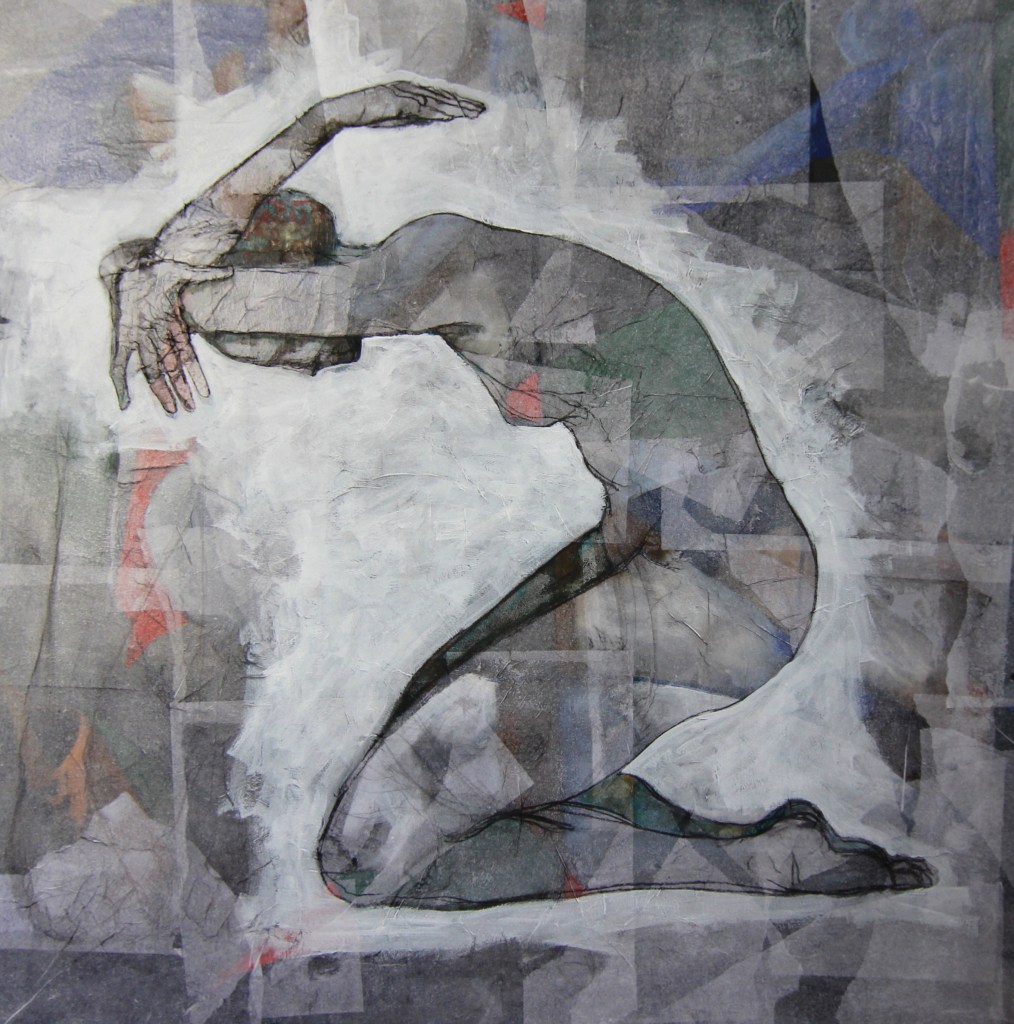
held in grace: surrender now ©️ 2016 david robinson

Share The Sketchbook [on Two Artists Tuesday]

Bruce came through town with his son Ben. Ben is a budding Renaissance man, an artist and philosopher. A quiet deep thinker. We marveled at the drawings in his sketchbook. Faces and hands. Figures in motion. A bold sense of color. I remember the terror of sharing my sketchbook and was moved by how eager and easily Ben shared his. A sketchbook, like a diary, is vulnerable, a place to work out ideas, make mistakes, record pain and joy and confusion. We were touched that he was so generous in opening his diary to us.

Big changes are coming Kirsten’s way. Kerri and I laughed at her news, at the ease and enthusiasm she brings to her step off the edge of the known. “I suppose it’s easier to make big changes,” Kerri said, “when you have the bulk of your life still ahead of of you.” I suppose. Or, perhaps, after so many big changes, you come to realize that the real transformations are not in location moves or new jobs. They happen on the inside and don’t seem to be changes at all. More, it’s layers falling off. Discovery of what was there all along.

Bruce and I have known each other for a very long time and have not seen each other in a very long time. Sitting on the deck, a humid hot day, we sipped cold wine and talked about the people we once were. We talked about some of the layers that have fallen off. We laughed at our foibles. There were too many stories to pack into a single visit. There were too many questions to ask and notes to share. I hope we will have more time to sit and share our life-sketchbooks.

Each morning, opening the house, I enjoy the small fountain in our sunroom. The water runs. As a Buddhist would say, “You can never step into the same river twice.” Our fountain reminds me that time runs. Each day is a new sketch. That is true especially if I think I know what will happen that day. I am always surprised by day’s end. Life takes some surprising turns. Some big. Most less noticeable. And, time runs.

I watched Bruce’s face as Ben showed us his drawings. A proud father. Ben looked to his dad, still anchored to some degree in his dad, just as it should be. I remember looking to my dad in just that way. This trip across the country, father and son, will be a good story for them. It is already. It will be told many years from now. A son rolls his eyes. A dad laughs. An old friend and his new wife delight in being part of the day’s sketch.

There is no higher art.

read Kerri’s blog post about THE FOUNTAIN