Do Like Duchamp [on Two Artists Tuesday]

doorknobs copy

Roger used to say that Picasso’s paintings determine the shape of our cars. He meant that “seeing” is not passive. Just as audiences in a play wiggle in their seats at seven minutes into the play, the usual time for a commercial break on television, our visual sensibility is also patterned and mostly culturally uniform. Beauty is in the eye of the beholder and that eye has been conditioned.

One of the great moments of visual conditioning came in 1917 when Marcel Duchamp entered his “readymade” sculpture, FOUNTAIN, in an art exhibit. FOUNTAIN is a urinal. He signed his readymade scultpture R. Mutt. It is possible to spend many days of your life reading about FOUNTAIN, the symbolic meaning of a toilet, the then-new art term “readymade” and the challenges readymade-as-art posed to the art world, how Duchamp came to enter a urinal in an art exhibit. In that moment of time, a whole new genre was born: conceptual art. The idea behind the work is more important than the finished piece.

You can draw a straight line from Duchamp’s toilet to the recent banana duct taped to the wall by Maurizzio Cattelan. And, you might ask, just what was the idea behind the banana?

You can draw a straight line from Duchamp’s FOUNTAIN to Kerri’s out-door-voice-exclamations in a gallery, “ARE YOU KIDDING ME?” The idea behind the conceptual work generally needs a curator’s explanation. “I WANT TO EXPERIENCE IT, NOT HAVE IT EXPLAINED!” she gestures wildly, sending other patrons fleeing. In that moment, my wife becomes exquisite performance art.

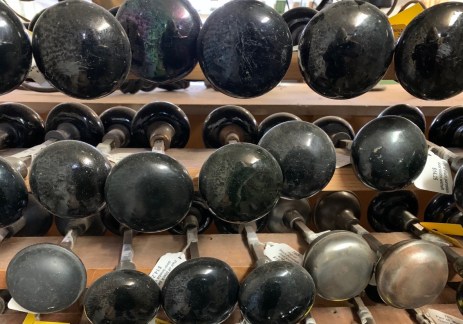
You can draw a straight line from Duchamp’s urinal to my inability to walk through an antique store and not see elegant design worthy of Louise Nevelson. Racks of door knobs. Stacks of suitcases. A wall of bric-a-brac, the wall composition more meaningful and beautiful than any of the individual pieces displayed.

A statement from Captain Obvious: artists live in a time and the art they produce is an expression of that time. Duchamp put his toilet on a pedestal in 1917, the year the world was nearing the end of the first war to end all wars. It was a horror story. The manufacture of stuff was hitting its stride.  The Royal Academy had a lock on determining what was considered art and what was not. The rules of polite society felt dangerous and suppressive. Duchamp, like all change agents, pushed against the norm.

There is composition and design in the everyday. There is human-created beauty all around us. We learn in school that form follows function and form is design. We learn in school that one of the purposes of art is to create beauty. Another purpose is to shock people out of complacency, to see what is in front of them and not what they think is there. Beauty usually lives beyond what we think.

We live in very confusing times. We are asking fundamental questions about truth, about social norms and what is acceptable. We are asking questions about who we are and what we believe. You can draw a straight line from Duchamp’s FOUNTAIN to our current confusion. Is it art? Is it not? If the idea is more important than the final expression then what happens when all that is left to see and touch is absent of the idea? What happens when the curator is gone and only the urinal remains? Sense breaks down.

What happens to  the eye and ear that is shocked open but refuses to see what is right in front of them and, instead, retreat behind the fortress of what they think?  What happens when form no longer follows function but things flip the other way around? What happens when form IS function? Propaganda, mostly. A naked emperor and plenty of people passionately swearing that they see clothes. Readymade thought.

We live in those times. Sense breaks down. We tape bananas to walls and issue a certificate of authenticity.


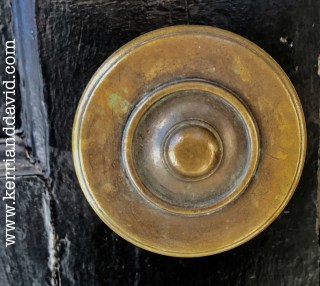
read Kerri’s much-less random blog post about DOOR KNOBS
 

frontdoorknob website box copy


Know They Are Watching [on Two Artists Tuesday]

deer tracks converge copy

We go to Bristol wood to return to center. It is a place of peace. It somehow breathes serenity into our overactive minds.

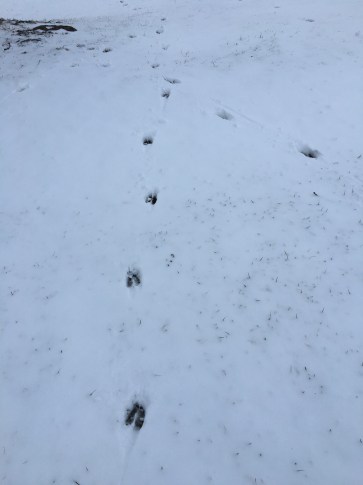
Sign of deer are everywhere in the woods. We rarely see them but we know they are there. I imagine they watch us. I imagine they silently encourage us to walk slower, to catch our breath. To listen to tree song. We delight when we walk a path where they recently tread.

Deer are a symbol of gentleness and intuition. Balance and peace. This summer, on the Island, we saw deer everyday. We would retreat from the contentious community back to the littlehouse, pour some wine, and take a walk. A deer would inevitably appear and we’d stop talking. We’d breathe. We’d watch. It would watch us, too. After a few moments it would leap and disappear and, with it, our day’s concerns would also disappear. The deer would shift our conversation, from a lengthy list of disgruntlement to the beauty immediately surrounding us.

I’ve decided that, in our broken-wrists-time-out, our goal should be to make the whole world Bristol Wood. That we shouldn’t retreat to find peace but should invite peace and balance and serenity into the rest of the day, no matter where we happen to be living it.

Things I used to know. Things I once practiced.

Know that they are there, everywhere. Watching. Silently encouraging us to walk slower, the breathe, to focus on the beauty immediately surrounding us and not on the other stuff. It turns out that balance and serenity are practices, not pursuits. They are choices. Peace-of-heart-and-mind do not exist in the woods exclusively. Peace comes to the place where I decide to allow it. To practice it. To make it a priority.


read Kerri’s blog post on DEER SIGN


deer in woods copy


tpacwebsitebox copy


Stand Out [on Two Artist’s Tuesday]

you be you bus copy

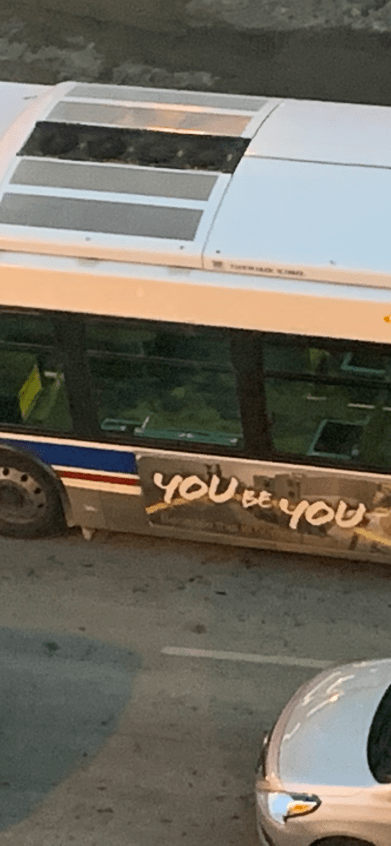
You be you. If you think about it, who else can you possibly be? As trite as it may seem, this appeal on the side of a bus captures in simple marketing language one of the greatest paradoxes of living life in the most individualistic culture on the planet. We are reinforced to be hyper-unique but hammered repeatedly to fit in. It is the ultimate split intention. It is why we have such a ubiquitous self-help industry and so many preachers-of-purpose-seeking. Asking, “Where do I fit in?” is a terribly hard question to answer when the expectation is to stand out.

I suspect our current dedication to division is, to some extent, built upon this paradox. Split souls are generally angry souls and anger is an easy organizing principle to exploit. Tribes of anger need nothing more than enemies to bridge the split. A good enemy, real or imagined, can provide to an angry tribe both a sense of individual purpose and a place to belong.

I heard a term the other day that frightened me: low information voter. Years ago I heard an economist speak at a conference and his message was profound. A healthy democracy requires an educated populace. Without the capacity to sort through the heaps of rhetoric, pull apart the agendas to see beyond the manipulation, without some simple capacity  for analysis, or a bigger picture, then votes will be cast from simple, uninformed and often angry belief. In other words, democracies fall when its members do not care enough to know what they are voting for. Power will always corrupt. The brilliance of a democracy is that the people are meant to be the ultimate check on power. In order to be the check, they have to look beyond the political party line and ask, “What really happened here?”

The leaders of angry tribes need low information voters. It’s the only way they can stay in positions of power. It feels good to fit in. But, in a culture known for its individuality, it feels all the more satisfying to stand up, to stand out and ask, “What’s really going on here?”


read Kerri’s blog post about YOU BE YOU


savannah selfie WEBSITE BOX copy

Check Your Reality [on Two Artists Tuesday]

ice copy

We parked the truck in the Kemper Center lot, far enough from the shore not to be hit by the flying debris, the chunks of seawall and pavement being hurtled from the impact of the waves. Kerri has lived here for over 30 years, “I’ve never seen anything like this,” she repeated as a towering wave engulfed the gazebo, took down a piece of the wall of the art center, a hunk of coastline disappeared.

Later, after the storm, we went back. Trees were down, encased in ice. Huge sections of the walking path were shattered and tossed into the flooded mess of the parking lot behind the center. Walking was treacherous. Like the trees, the ground, the rocks, the destruction was coated in a thick layer of ice. It was beautiful and inconceivable.

Words mask all manner of reality. We have a word, nature, that can’t even begin to touch the magnitude, the power of where it points. Mother Nature. I have been thrown out of bed in an earthquake that brought down freeways like they were so much satin ribbon. Go to Pompeii or Herculeneum, visit Mt. Saint Helens, watch with disbelief any of the news  footage of any one of the tsunamis that have wiped communities off the map. Wrap your mind around it, if you can.

We are cavalier in our conversations about global warming. We impact, we do not command. We reduce it to questions of business, of protecting the beef industry. Which economy will suffer most? We make up these strangely insignificant divisions. We imagine that we are the center, holding all the controls. We imagine that it is all about us. So small, a chihuahua yipping at a forest fire.

Sitting in the truck, feeling the boom of the waves in my chest as they tore off chunks of the shore, I felt tiny. I remembered a snippet of film I saw about a man who wore a superhero suit and stood in the face of an oncoming storm. He flexed and stomped and raged for the camera. And then the storm hit. The best he could do was run for his life.


aftermath copy


read Kerri’s blog post about THE STORM


bonfire website box copy


ice ©️ 2020 kerri sherwood

for prints of “ice” go here


Fill The Box [on Two Artists Tuesday]

toolchest copy

Among my most prized possessions is the small wooden paint box that DeMarcus gave to me. He was a brilliant painter and director of plays. I am one of the keepers of his legacy. The box holds a few sacred (to me) items: the nutcracker my grandfather used, a woven frond from Bali, some stones and notes from nieces and nephews.

Another treasured possession is the small box that John K made for me. He is a master woodworker and is dear to me so the box is also dear. He is impeccable, among the best men I have ever known, and it shows in his creations. His box reminds me to strive to be-more-like-John.

Kerri and I learned early on in our relationship that we both have a thing for boxes. We call them special boxes. We gravitate toward them when we are wandering through antique stores. Sometimes they look like old suitcases. Sometimes they look like old tool boxes. We’ve learned that we need to admire them and put them down. That, or we need to give in and open a Special Box Store.

Stand in the middle of our house and look any direction and you will see one or more special boxes. The box in the sun room holds watercolor paper, paints, colored pencils, India ink and nibs. It was the keeper of the promise for our cartoons and children’s books, Chicken Marsala, Flawed, and Shayne. The stacked suitcases in our dining room hold the artifacts of our relationship. Tickets to concerts, playbills, menus, feathers, train tickets,… The wooden box in the living room is filled with stones that we have collected in our travels.

Okay,  an amendment: we collect boxes and stones.

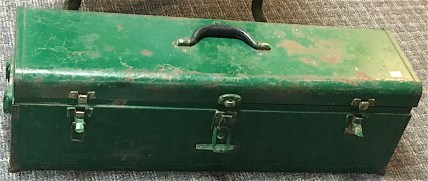
The other day we were strolling down the aisle of an antique mall with Jen and Brad. Mostly we were coming up with ideas for performance art pieces or conceptual art knock offs or listening to the wisdom from Riley-the-Realist. Kerri grabbed my arm, “Look at this one,” she said, showing me an old green tool box. “Don’t you love it?”

“Where would we put it?” I asked. It’s my go-to answer when I actually do love a box but also know that we need to walk away. Kerri squinted her eyes. We took a breath and stepped away.

The real problem with opening a Special Box Store? It’s a very bad business premise. We would be unwilling to sell any of our merchandise. They’d all be filled with special rocks or memories or hopes and dreams in the form of paper, Sumi ink and brushes. You could look but not touch. Though the stories we could tell…


read Kerri’s blog post about BOXES


old suitcases website box copy


Put Down Your Straight Edge [on Two Artists Tuesday]

winding trail copy

I just wrote a “Statement of Philosophy of Teaching.” It’s for an application to teach at a college that emphasizes experiential learning. If I had a dime for every time I championed experiential learning or used that phrase on a crowd of wooden educators, stony-faced business types, or boards-of-directors, I’d have no need to write statements of teaching philosophy. And, truly, think on it for a moment, what is the opposite?

Andy’s phrase: experience equals knowledge, knowledge equals confidence, confidence equals success. In other words, the only way to learn to ride a bike is to get on the bike and ride. There will be falls. We call that learning. And, the really great thing about getting on the bike and riding is that one day, after a few more falls and many more miles, you might compete in the Tour de France. You will be pursuing something other than your balance skills. Learning is like that.

The problem with shorthand phrases like Andy’s, although accurate on one level,  is that they describe a straight line. Life, I’ve learned from experience, has rowdy roller coaster phases that nearly fling you off the planet, awkward backward stepping to get out of wrong choices, chapters wandering lost in the forest, days spent sitting on the rock stripping off the armor before another step can be taken. Life is not lived in a straight line. Experience is a windy road. It only looks straight in the post-mortem. Knowledge gathering en route to confidence is no walk in a meadow. Andy will tell you that, too.

We make meaning out of our experiences after the fact. We have experiences first and story them second. It is why learning is circular. It is why a rich life is circular, why life lessons come around again and again.


read Kerri’s blog post about WINDING TRAILS


arches shadows k&d website box copy


Learn The Single Lesson [on Two Artists Tuesday]

dogga babycat end of day copy

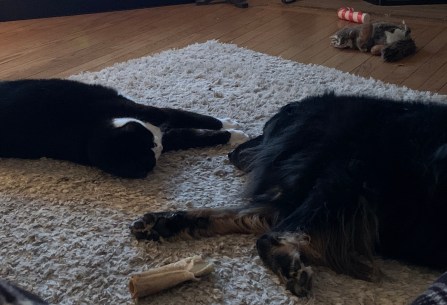
At the end of each day, with great enthusiasm and mission, Dog-Dog herds us into the living room. Because it is hysterical to see how many different strategies Dogga can pull from his Aussie bag of tricks, it has become a game for us to give him several false starts. We step toward the living room and then return to the kitchen. We say, “Let’s go!” and he races away with fervor while we remain firmly planted. He returns moments later with a wildly wagging tail. He never gets frustrated. He only gets more clever, more lively in his intention. He is eternally hopeful and more excited by the chase than the finish.

It is the single lesson I hope to learn from him. He is an excellent teacher and I am a very slow student.

It is the last day of 2019 and it has been, to put it mildly, an exhausting year. We are making special preparations to launch the good ship 2019 into the annals of time-gone-by. We might wave a polite so-long as it departs but most likely we’ll turn our backs on the passage, and, like Dogga, we’ll run into the next year with hopeful-tails a-wagging.

We know it is an imaginary line, a made-up calendar distinction. We don’t really expect a clean break, a new, fresh start. Or, perhaps we do expect it. Or perhaps, we desire it in the same way Dogga desires us to go to the living room. It’s the game of chase!

Perhaps the coming year will be less exhausting and more fulfilling if I learn the single Dog-Dog lesson: drop all expectation of outcome, all fear of circumstance, all investment in things that exist only in my too-active-imagination, and love my people whether or not they meet me in the living room. Love my people when they send me on a wild goose chase, not once, but many times. Love them because they love me and it’s fun to be alive and, after all, the circles I run will bring me back to them. Or to myself. Why not laugh?

Perhaps in this new year I will at last learn to fully live what I preach and enjoy the chase simply because it is ALL a game of chase, even the parts that look momentarily like completions. Even the parts that look overwhelming. They pass, too.

The mantra many years ago was to cultivate surprise. Expect surprise. The truth is, I don’t know what will happen in ten minutes or two seconds or in ten days. Do you? Why do we pretend that we know? I think it is the key to Dog-Dog’s delight, he doesn’t pretend to know. He lives in the truth of surprise as opposed to the preconception of boredom or fear or fulfillment. He leads with his heart and his heart is bursting with hope (another name for the expectation of surprise). It is why, after his people-sheep have ambled to the couch [what?! A surprise!], he can sleep so soundly, so completely unburdened by resistance to the day gone by or trepidation-stories of tomorrow.


read Kerri’s blog post about THE END OF THE YEAR


shadow des plaines river trailwebsite box copy

Laugh And Sing [on Two Artists Tuesday]

jimgle johns copy

In the end of the day, it is our sense of humor that saves us.

Drive across this big big country and you will find all manner of Americana to make you shake your head and giggle. Giant balls of string. Giant statues of Superman, Paul Bunyon and Babe the Blue Ox. The world’s largest six pack, a palace decorated with corn, and then, of course, there is Las Vegas. We create for ourselves VERY LARGE reminders not to take ourselves too seriously.

I generally feel everyday that I am living in a Salvador Dali painting. Reality twists. The bizarre becomes commonplace. Time bends. Portapotties sing. Craig looked with horror at his mother as she laughed, took out her camera, and took photos of the toilets singing Jingle Bells (and other Christmas Favorites). Craig walked away as Kerri and I walked toward the Quartet. While Kerri snapped pictures I pondered what happened to Porta Paul. He went dark. A bathroom break perhaps?

And, if you have given to believe that there is no shame in this dark dark world, take note: no one approached the potties while they sang. Everyone remained polite and clapped at the end of the set. Craig kept his distance and looked for other parents who were less interested in performing honey buckets. People in need of the relief found other, non-musical facilities. There’s less attention to private matters when the door you pull open is not singing.

All-in-all, a good laugh, a great reminder on this Xmas eve to sing with gusto. If the toilets can do it, so can you.


read Kerri’s blog post about JINGLE JOHNS


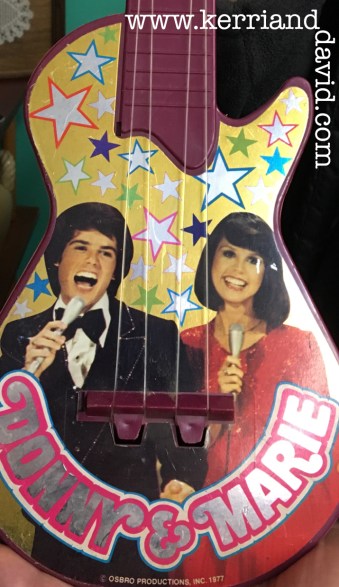
donnieandmarie uke website box copy

Carry The Story [on Two Artists Tuesday]

slippersbw copy

Next to the pool table in the basement of my grandfather’s house was a bowl of nuts and an old metal nutcracker. It was the velveteen rabbit of nutcrackers: falling apart, loose joints, the pattern worn because it was so old and so often used. When we’d visit, we’d inevitably go to the basement to shoot some pool. Shooting pool with grandpa was a ritual of fun.

That nutcracker is one of my sacred objects. When my grandfather passed, I wanted something he touched. Something he used. The nutcracker lives in a special box in my studio.

I am austere. Left to my own devices I would have few possessions (I have famously moved twice in a truck loaded with paintings, my easel, a special box, some clothes, art books and a single rocking chair).

It’s funny what carries the deep value of story. Remembrance.

Kerri is thready. She is connected to the story of objects. Or, better, the objects connect her to stories and to the people in her life. Our home is like an alter of objects that carry meaningful stories.  Rocks. Feathers. Driftwood. We have a stack of sweatshirts in the basement that remain for their story value. Early in our relationship I suggested donating the sweatshirts to the Goodwill and I will never forget the look of horror that swept across Kerri’s face. To lose the sweatshirts was to lose the stories. It makes cleaning out the house a very complicated affair.

Connectivity. The energy threads are almost visible.

Last year she was cleaning out a closet upstairs and found these slippers. They were her parents. I remember the squeal of delight. The staging of the picture. I listened to the stories the slippers invoked. We laughed. And then, the slippers went in the bag to go away.

It might be our age or having a husband dedicated to the austere, but she is loving the objects and letting them go. The threads are becoming transcendent, they reach beyond the object and are securely rooted in the deep past.

It’s beautiful when the heart carries the deep connectivity of story. Truly. The energy threads become visible.


read Kerri’s blog post about SLIPPERS


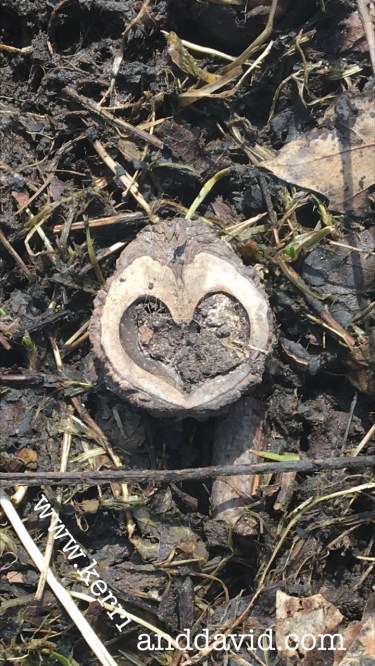
blackwalnut website box copy


Know The Value [on Two Artists Tuesday]

paint by number copy

“What’s it worth?” This seems to be the least answerable question of our times. Its cousin question, “Is it real?” is under assault and so qualities like ‘value’ or ‘worth’ are less and less discernible.

For instance, I laughed heartily recently when I listened to a podcast Horatio sent my way. It was about the billions of dollars spent on our educational system of testing that has produced minimal results. It doesn’t work. Data, brain science, and common sense have known this for years. I can hear Tom now (and see his famous sigh-with-eye-roll), “It has to be real. It’s about relationship. It needs direct application.” Do the tests make for better education? No. Of course not. The opposite. And, we knew that before implementing the system of testing. So, what is real? What was it worth? The system consumes itself.

A few years ago, Kerri and I went to the Chicago Art Expo. We came upon a gallery installation, a single piece. It was priced at $40,000.00. A line of twine stretched across the booth. Clipped to the twine was a single household sponge. It had been dipped in paint. Kerri, using her outside voice, said to all who could hear, “ARE YOU KIDDING ME?” It was purchased. What was it worth? Was it real? It was the precursor to artist Maurizio Cattelan’s recent piece. He duct taped a banana to a wall. He’s now sold three versions for $120,000 apiece.  What is it worth? What is real? Art commenting on art. The system consumes itself.

Politics in America. It’s all about crowd size regardless of what the photograph reveals. [sorry, I couldn’t help myself]. There are so many that we actually keep a running tally of the presidential lies. We are slack-jawed at those who nod their heads and bellow their agreement with the demonstrably untrue. What is real? What’s it worth? The country hungrily consumes itself.

We haunt antiques stores. We rarely buy anything but enjoy the exploration. At School Days Mall, one of our favorite adventure antique grounds, Kerri turned and gasped. A paint-by-number landscape wearing a Minnie Pearl tag. “I recognize this painting!” she said, wide eyed. Her mom, Beaky, liked to paint and had a paint-by-number phase. The painting evoked a good story. It evoked a momentary possibility that this might be THE ONE Beaky painted. Kerri sent a text to her sister. They shared a memory. They reached through time and had a moment with their mother. Priceless.

Watching Kerri, so excited, text with her sister, it occurred to me that one reason we go to antiques stores is to touch stuff that comes from a time when value and worth were better understood. We go to the throwaways to find some substance. What is real is not in question.

Banana taped to the wall or paint-by-number landscape? What’s real? What’s it worth?


read Kerri’s blog post about PAINT-BY-NUMBER


tpacwebsitebox copy