See The Best Of Good Things [on KS Friday]

The world does not stand still for anyone. When Craig led us down into his studio I felt as if I was living a fable by Aesop. The same technology that essentially crashed Kerri’s career is now making Craig’s musical genius possible. Is it a good thing or a bad thing? “Well, that depends,” says the farmer to his fate.

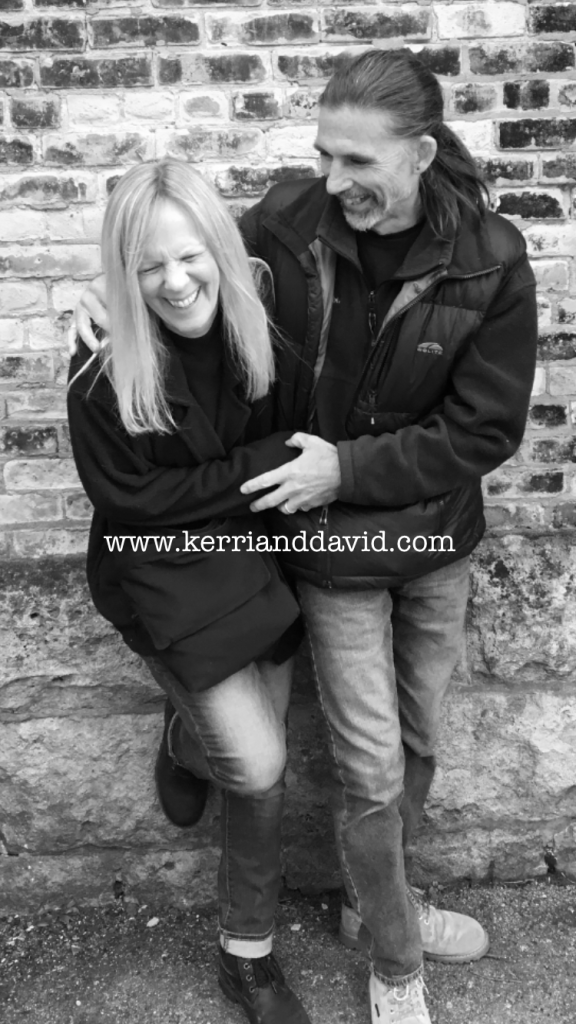
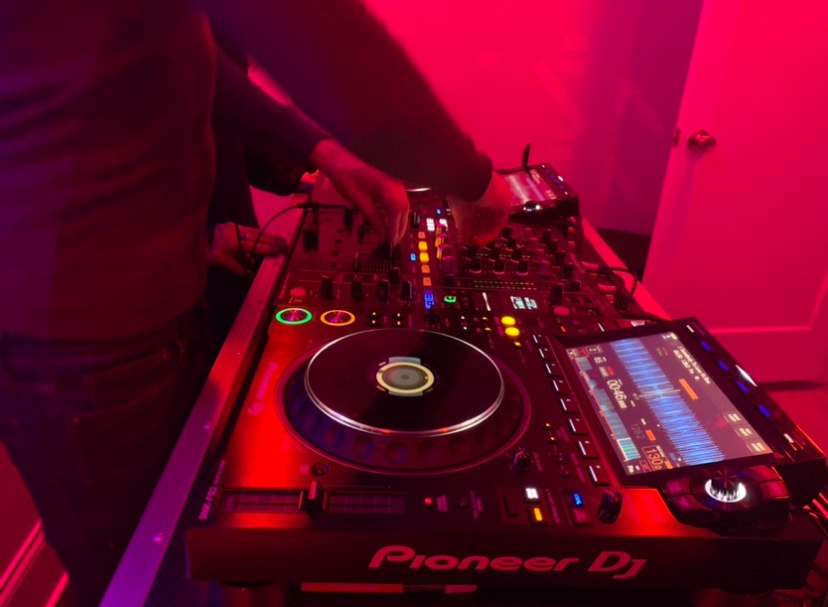
I was witness to best of good things: the son, a consummate musician, sharing his artistry with his mother, a consummate musician. Craig showed Kerri how he creates EDM, electronic dance music. Layers upon layers of sound mixed and altered through digital magic. EDM is his passion. He comes alive when he talks about it.

EDM was not possible 20 years ago. Watching Kerri and Craig play in the studio together I remembered something that Kerri once said: “I feel like I was born 10 years too late.” Mourning the rapid change to the music industry, brought about by the advent of streaming services, she felt as if “her time”, the music that she most understands and resonates with, was the wave just in front of her. Analog. No acrobatics. Soulful. Her star was rising just as her business was washed away in the raging digital stream.

The music remains. It’s everywhere, available to anyone, anywhere. We regularly come across her pieces used in commercials or underscoring everything from tiktok moments to youtube tributes. She’s popular. She’s just not paid.

If she was born 10 years too late, then Craig was born right in his zone. Digital complexity. Fast-moving, multi-layered, the music of emoji attention spans. It’s thrilling, a sensory assault. Strategic and improvisational, both. Trance music for urban dwellers seeking a drumming-dance path to transcendence.

And, in the end, the essential eclipsed the gap of music styles and time: a mother who infused music into her son was elated as he, now a musician in his own right, immersed his mom into his music. It was thrilling to witness. A moment in rushing time. Ancient passage in a contemporary mask.

read Kerri’s blogpost about THE STUDIO

unfolding/as it is © 2004 kerri sherwood

Kerri’s albums are available at iTunes and streaming on Pandora and iHeart Radio

share. like. comment. buyusacoffee. thank you!

Sail Anew [on KS Friday]

It’s hard to know what to believe. For instance, each day I cross paths with an advertisement showing me what to do if I experience tinnitus. The ad is muted so what I see is a smiling woman yanking repeatedly on her earlobes. And, each day, I think the same thing: this has to be some trickster-ish plot to get masses of people to pull on their ears. Invisible theatre worthy of the great Augusto Boal. I’m considering jumping on the city bus, taking a center seat, and without comment, begin tugging my lobes. I’ll either clear the bus, make friends or, in these United States, most likely be shot by an armed citizen whose only answer to the unknown is to shoot it. I suppose that sounds cynical but we citizens of the U.S.A. are living proof of the adage, “If a hammer is the only tool in your toolbox, then everything looks like a nail.” If a gun is your only solution, you’ll kill a teenager who accidentally pulled in your driveway or shoot someone who mistakenly knocked on your door. We read about it everyday. Every single day.

There’s another ad I appreciate appealing to people to check-the-facts before forwarding or liking what they read. “We are awash in misinformation…” it warns. “Amen, advertisement!” I cheer, “What took you so long?” With so much mis-info-noise ringing in our ears, we either need to regularly check what we hear or smile and yank our earlobes. My theory is that yanking our lobes will occupy our fingers so we can’t like or forward info-dreck. By-the-way, the statistics on gun deaths are easy to check. No one is making up the story of neighbors killing neighbors rather than talking to them. Of course, in one horrific case, a neighbor killed his neighbors because they talked to him. Sometimes the factual stuff is so disturbing it’s better to yank on your ears than consider how out of control it’s all become. Our elected officials are certainly yanking on their ears to make our noise go away.

My hope? My fantasy? We are trying to bust out of our cocoon. A caterpillar transformed can’t know it has become a different critter until it breaks out of its hard protective shell. Escape from a cocoon is not an easy process. It looks ugly. It’s not meant to be easy. The difficult cocoon-exit is essential for the next stage of butterfly survival and thriving. An arduous rebirth is necessary for the caterpillar to fulfill its transformation. Flight, an utter impossibility prior to the protective cocoon, the next part of the story. The fulfillment of possibility beyond imagining. Maturity. Wings dry while the butterfly catches its breath following the struggle. And then, the newly-minted butterfly takes its first step off the branch, releasing the old story, and sails anew into the world. Or, sails into a new world.

A new world. People protecting each other as civilized people are meant to do. All grown up. Listening. A bag full of tools for every situation. No guns needed. No longer a necessity to yank on its ears.

taking stock/right now © 2010 kerri sherwood

Kerri’s albums can be found at iTunes or streaming on Pandora or iHeart Radio

read kerri’s blogpost about BUTTERFLIES

like.share.comment. or buyusacoffee. all are appreciated

Imagine The Possibilities! [on Two Artists Tuesday]

Mastering others is strength. Mastering yourself is true power.” ~ Lao Tzu

I’ve had this quote sitting on my desktop for months. I’ve been on a Lao Tzu kick, a Kurt Vonnegut kick, a Rainier Maria Rilke kick…all at the same time. They are, not surprisingly, in alignment on many topics, among them self-mastery. “The secret?” they whisper. “Stop trying to control what other people think or see or feel and, instead, take care of what you think and see and feel.” Their metaphoric trains may approach the self-mastery station from different directions but the arrival platform is the same.

It’s a universal recognition: take the log out of your own eye.

Sometimes a penny drops more than once and so it is with Saul’s advice to me. “Look beyond the opponent to the field of possibilities.” “And, just what does that mean?” you may shout at your screen. It sounds like new-age hoo-haw.

Ghandi said, “Nonviolence is the weapon of the strong.” It is the height of self-mastery to bring ideas to the table rather than a gun. It is the height of self-mastery to bring to the commons good intention and an honest desire to work with others to make life better for all. Power is never self-generated but is something created between people. Power is distinctly different than control. Power endures since it does not reside within a single individual. Power lives, as Saul reminded me again and again, not in throwing an opponent but in helping the opponent throw themself. “Focus on the possibilities,” he said again and again. Throw yourself to the ground often enough and, one day, it occurs that there may be another way.

Work with and not against. It seems so simple. The bulb hovering over my cartoon head lights-up. Work with yourself, too, and not against. Place your eyes in the field of all possibilities. Obstacles are great makers of resistance, energy eddies and division. Possibilities are expansive, dissolvers of divisiveness.

I am writing this on the Sunday that Christians celebrate their resurrection. The day that “every man/woman for him/herself” might possibly and-at-last-transform into “I am my brothers/sisters keeper.” All that is required for this rebirth is a simple change of focus; a decision to master one’s self instead of the never ending violent attempt to exercise control over others.

It’s the single message, the popcorn trail left for us by all the great teachers. Instead of fighting with others, master yourself. Imagine the possibilities!

read Kerri’s blogpost about THE CEILING LIGHT

Reach Purely [on Two Artists Tuesday]

“Art, as best practiced and understood over the centuries, is a spiritual as much as technical pursuit.” ~ Kent Nerburn, Dancing With The Gods

It was disconcerting. It still is. The illusion was so distinct that I had to show the book to Kerri and ask if she saw it, too. Each morning I read a few pages from Kent Nerburn’s book. This morning, in a chapter entitled The Divine Thread, I turned the page and a single paragraph, just a few sentences, was printed in a font twice the size as anything else on the page. I read it a few times since the author had given the section such obvious emphasis. After the I finished the chapter, I looked back to reread the oversized section – and it was printed in the same size font as everything else. It wasn’t emphasized at all. The shock of it made me dizzy.

“Art, however, does create this touch. It speaks in different voices, different rhythms, different languages. There is no place in the human heart it cannot reach.”

Paul taught his student-actors that they had an obligation to something greater. “When you choose to get on the stage, you have the power to impact other people’s lives. Do not take that responsibility lightly.” Your art, your creation, if purely intended, will reach the heart of another – purely. Even the loneliest painter knows the transcendence of the expansive energy that comes through in the moment of creation. Transcendence is all inclusive.

I have been humbled by the great artists I’ve known. Teachers, mentors, and others. I’ve been humbled by their humility. Tom, a brilliant director of plays and believer of possibility, influenced more artists than any person I know. He was tortured by the size and scope of his gift. At the end of his life, sitting before a fire in his cabin, he was, for a moment lost in thought. I watched his revelation come to the surface. He looked into his wine and said, “I think I did my best work when I was a just starting, when I was second grade teacher. It was pure imagination. I had no idea what I was doing. I just knew that we could have fun telling stories and going on adventures where our imaginations led us. It was pure.”

I met a few teachers who’d been second grade students in that classroom of long ago. They told me that year changed their lives. They touched his heart and he touched theirs. Shrunken heads and planning expeditions to the Amazon. Maps and budgets and “What do we need to bring to survive?” They spent weeks preparing for “blind day,” an exploration of the world through the full scope of senses. “What could we learn if we didn’t rely on our sight? What would we need to prepare to help each other?” he asked. Pure.

For our wedding, Julia made for us a small box with a Klimt’sThe Kiss” decoupaged on the lid. Inside, she placed a few Euros. A metaphor. Great love as a container for great adventure. We placed the box in our sitting room in a spot where we see it everyday.

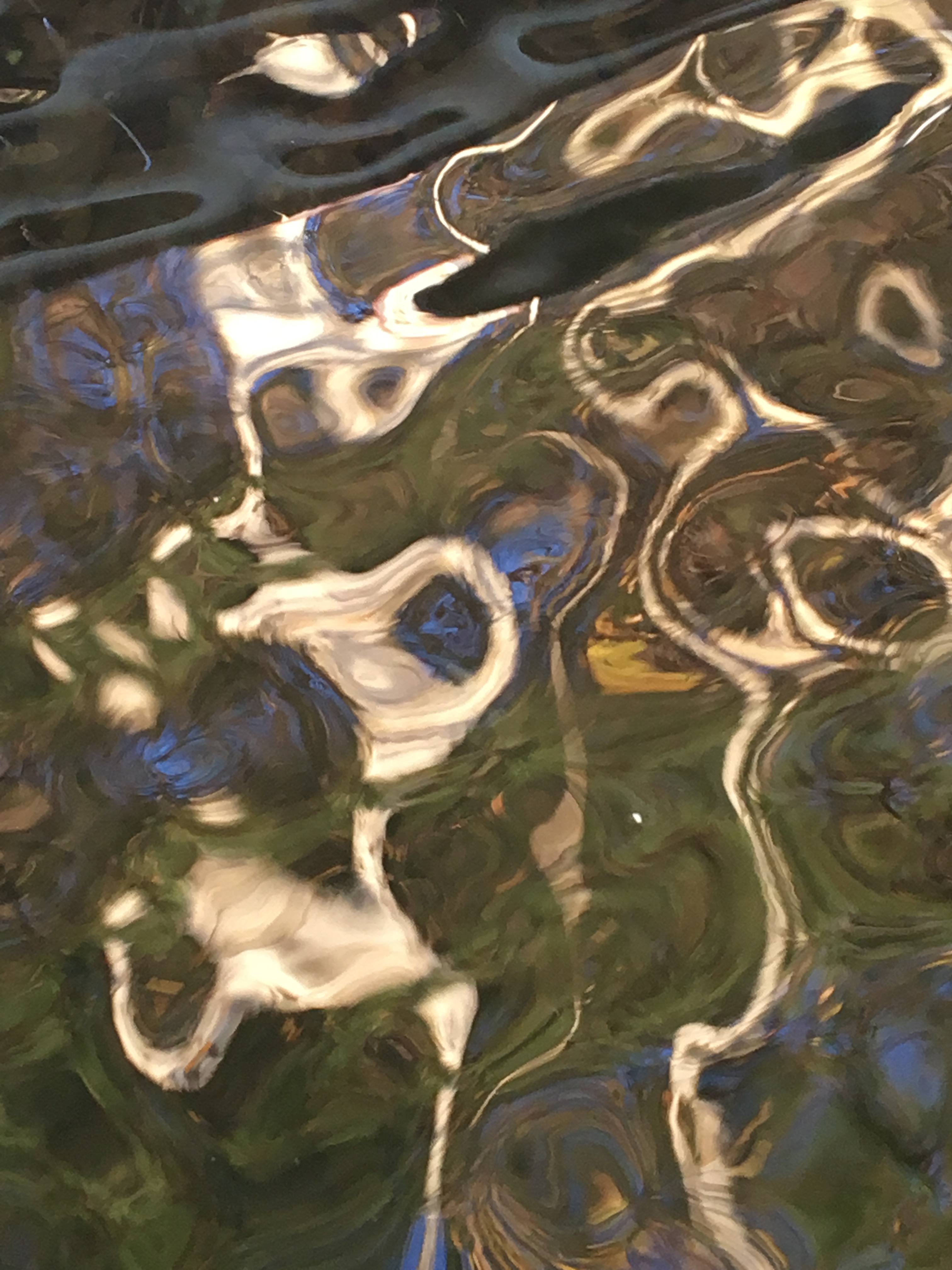
Kerri knelt on the dock to get this photograph of the water. “The color!” she gasped. Pull up an image of “The Kiss” – or any of Klimt’s paintings for a closer inspection and you’ll see this water pattern. Klimt might have painted it. He studied swirls in water, swimming color on the reflection of the surface. I’m certain of it.

Great love. Great adventure. Tom. Julia. Paul. Art that is pure. My head spins. There is no place in the human heart that art cannot reach.

read Kerri’s blog post about WATER

images of water © kerri sherwood 2021

Smile With Pete [on Two Artists Tuesday]

It is a hot and humid morning as we sit to write. The sky is dark and rumbling. A storm is moving in. Dogga doesn’t like the thunder. He stays close. He studies our responses. Kerri jumped up to close the windows against the rain.

News of Pete’s passing came yesterday. And, although I have not seen him in a few years, it sucked the air from my lungs. His path through life was not easy. He was the first truly free spirit I met in my youth. I’d met lots of pretenders, cape-wearing artists that fancied themselves to be free. Angry activists. Pete was different. His protest against the Vietnam war meant that he simply refused to fight. Peace made him a criminal so he went where he could live as he believed, a hippie, living off the land and off the grid. He understood that his actions mattered. He understood that his choices impacted everyone so he was dedicated to making sustainable, non-violent life-choices. Pete was way ahead of his time.

He was a beekeeper and, occasionally, when he needed help, I rode in his old truck and helped him lift the heavy hives, moving them to the next field. He collected the honey for sale and made beeswax candles. If a puritan work ethic smashed into a Buddhist mindset, Pete was the result. He worked hard. He relaxed hard.

He believed in the illumination of human consciousness. He meditated and practiced presence. We talked endlessly about the nature of…nature and what it was to be of the earth and not on the earth.

One night, after a long drive and a long day of moving hives to a farmer’s field, too late to drive home over the passes, the farmer gave him permission to camp overnight. Pete rolled out his sleeping bag and fell asleep under the stars. Two county ditch riders, seeing a hippie in a farmer’s field, decided it would be great fun to run their truck over the hippie. Pete’s hair got caught in the bumper. He was drug behind the truck for a long, long way before his hair finally released from his head.

No one can explain how he survived. His body was broken, his brain was damaged, but his spirit was unharmed. I’ve never seen another human being go through so much, lose so much, and come out smiling. In my middle age, years after the “accident,” sitting with Pete at family picnics, I’d ask him how he was doing. “Greeeeaaaaat!” he’d say, smiling his famous smile, closing his eyes again, turning his face to feel the sun.

No one I’ve ever known had more reason to be bitter yet had less capacity for self-pity. A peace-lover who became a survivor of horrific violence, an independent spirit who became impossibly dependent, a man of nature who was rendered incapable of doing any more than looking at the mountains and the fields, and his response was to smile.

Pete was rendered present. He embraced a simple gratitude for every day of life. He was capable of being no where else and inhabited his limitation with appreciation.

Even in his wreckage he managed to live fully his convictions. Isn’t that the mark of a great person?

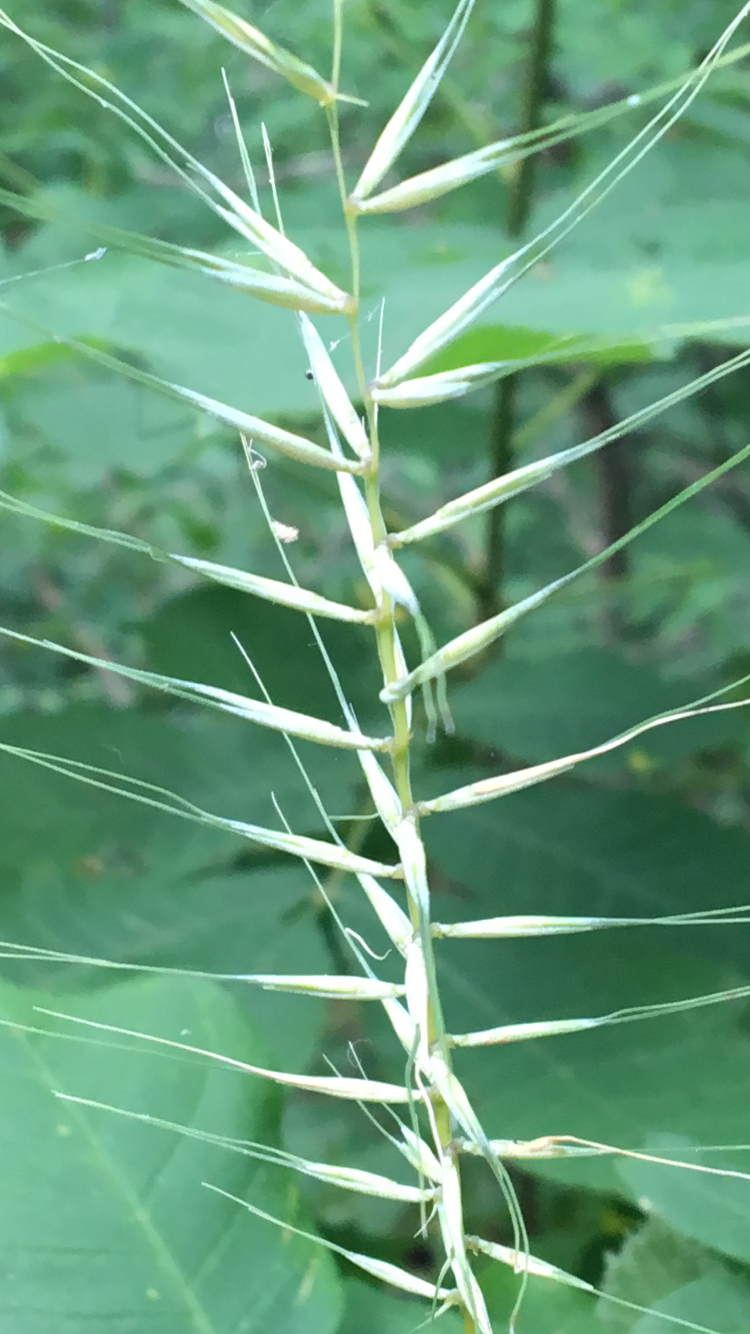
read Kerri’s blog post about GRASSES

Sing It Into Existence [on Two Artists Tuesday]

Lately I am awake for the sunrise. I know it is coming because, very slowly, the birds begin to sing. At first there is one voice, then a few more and then more. By the time the light through the window glows soft purple and gray, the full bird chorus is in session. They sing the sun into rising.

Although I didn’t recognize it at the time, these lawn-art-birds would come to represent to me threshold guardians. Harbingers of the test that my move to Wisconsin would bring. In story terms, threshold guardians are not friendly; they serve as the test of readiness: are you willing and able to greet the challenges that come with change. Or will you run away? Sometimes they are monsters. Sometimes they require the answer to a riddle or solving a puzzle. The new world will open after the obstacle is met. In facing and overcoming the challenge, the guardians often become allies. In truth, they are allies all along. They help you find your self by testing every idea that you have of your self.

Driving the Budget truck on my move from Seattle, filled with the artifacts of my life, Kerri and I stopped in a little village, Stockholm, just as we crossed the Mississippi River into Wisconsin. We wandered down the street and into a gallery. We were drawn to these simple bird-sculptures. They are the first thing we bought together. They represented our step into relationship. Us. They would stand together in our yard.

My first few years in Kenosha were akin to being lost in the woods. My livelihood disappeared. My networks disappeared. Art opportunities vanished. Many of my friendships faded. Every project I tried to pitch or create stalled, every path I attempted to plow broke the plow. I felt stripped. Of little or no value. Even in arenas where I was once appreciated, I was invisible. I’ve done extraordinary consulting work in organizations but learned in my new life that my experience and observations were not welcome. So, silent as well as invisible.

More than once I went out back and sat with the sculptures. They remained silent when I asked of them my questions. Who am I now that I have no useful purpose? What do I do now? In the absence of an answer, the sculptures and I listened to the birdsong.

Often the test brought by the threshold guardians is one of letting go. You cannot become a butterfly if you insist on remaining a caterpillar. The armor must fall. The known shape must go to mush. The what-the-hell-is-happening-to-me necessarily falls unanswered into the void. What’s happening is not complex: you are changing. The old stuff isn’t working because it is too small for the new shape. Let go.

It is not complex but it is uncomfortable. Dark night is cold when you’ve shed your skin. The sun will rise. The birds will sing it into existence. Warmth will return in the moments beyond the soft purples and greys.

We recently moved the bird sculptures from their spot by the pond to a new home by the fence. I hadn’t realized how invisible they were when standing over the pond. By they fence, they are glorious! They are also a metaphor, standing tall, made more vibrant and dynamic by their incorporated shadows. They are transformed. They are present, standing together in the yard. They are signaling the path to the new world, singing into existence the new day.

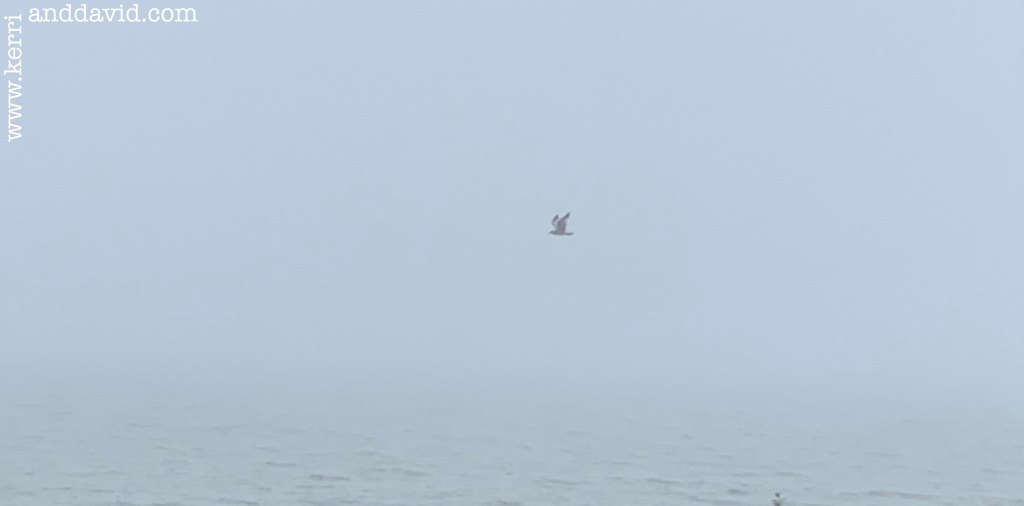
read Kerri’s blog post about THE BIRDS

Conceal To Reveal [on Two Artists Tuesday]

When I was tilting at windmills, one of my favorite things to facilitate was mask work. I brought masks to lawyers, to CEOs, to teacher’s, government workers, elementary school students, corporate trainers, business coaches and sometimes to actors. There’s nothing better than a mask to pop open possibilities and challenge petrified thinking.

Masks conceal and reveal. They serve the paradox and, therefore, are tapped into the root of truth.

It’s impossible to work with masks for long before realizing that the faces we wear everyday are also masks. We “put on” a smile. We attempt to hide what we feel by the mask we manufacture. Some faces freeze in masks of indifference or masks of disdain. We perform ourselves, and craft our masks accordingly.

Many cultures around this world believe the mask opens a communication with the gods. Don a mask and something bigger-than-you speaks through you. When I paint I often have that feeling. Artistry sometimes means getting out of the way so the creation can flow.

It’s why I brought masks to lawyers and CEOs and corporate folks and teachers. To introduce them to the fields that bloom beyond their need to control. So much of their lives, so many of their problems and challenges were wrestling matches of control. They were actively creating the obstacles that they desired to remove.

What do we actually control when we harden our faces over what we feel? What do we gain by attempting to control what others see or think or feel? We are makers of our own prisons. We are deluded by our fantasy that we have the capacity to determine what others see. The only control we exert is upon ourselves.

The mask work makes abundantly clear that control is not power. Power – creativity – flows. It is the dance of the artist to master technique, to learn control, and then transcend it. To get out of the way.

My favorite moment, with every group, in every circumstance, came when the masks released the people and they slowly, respectfully said goodbye and removed them. Their faces was also mask-less. It was like seeing infant’s faces. Bright. Open. They would, for a few brief moments, look at each other, unmasked and unprotected. Simply astonished at being alive, together, in the world.

read Kerri’s blog post about MASK

Welcome The New Day [on KS Friday]

Strip the religiosity out of the word ‘Alleluia’ and you’re left with its essence: a sunrise. Pure and simple.

Last year – a decade ago – Kerri needed a song for her cantata. She noodled for a few minutes. There was a phrase. A line of music. The next day she said, “What about this?” She played and sang. Magic. I took out my phone and recorded it. “Someday,” I tell her, “someday we’ll record it in a studio.”

She sings of our broken lives, our shattered hearts. Strip the religiosity from it and her song is about tension seeking resolution. Natural order. Basic physics. Broken lives and shattered hearts seek wholeness. Sunrise. A new day. Pure and simple.

Joy does not have to complicated. No symphonic soundtrack necessary. No fireworks required. Yesterday, after spending a few moments with her son in Chicago, we drove the back roads home. It was dark. Gently snowing. She was heart-warm after having received the single item on her wish list. A few moments. No more. No less. Joy, like the first quiet rays breaking over the horizon, announcing a new day.

Years ago, decades ago, standing in the self-made-wreckage of my life, I sent a change of address card to friends so they’d know where I was. An arrow pointing to the earth. “I’m here,” it read.

We’re here. A new day. Pure and simple. Alleluia.

Kerri’s albums are available on iTunes

read Kerri’s blog post about YOU’RE HERE

you’re here ©️ 2019 kerri sherwood

rest now ©️ 2016 david robinson

Survey And Sit Still [on KS Friday]

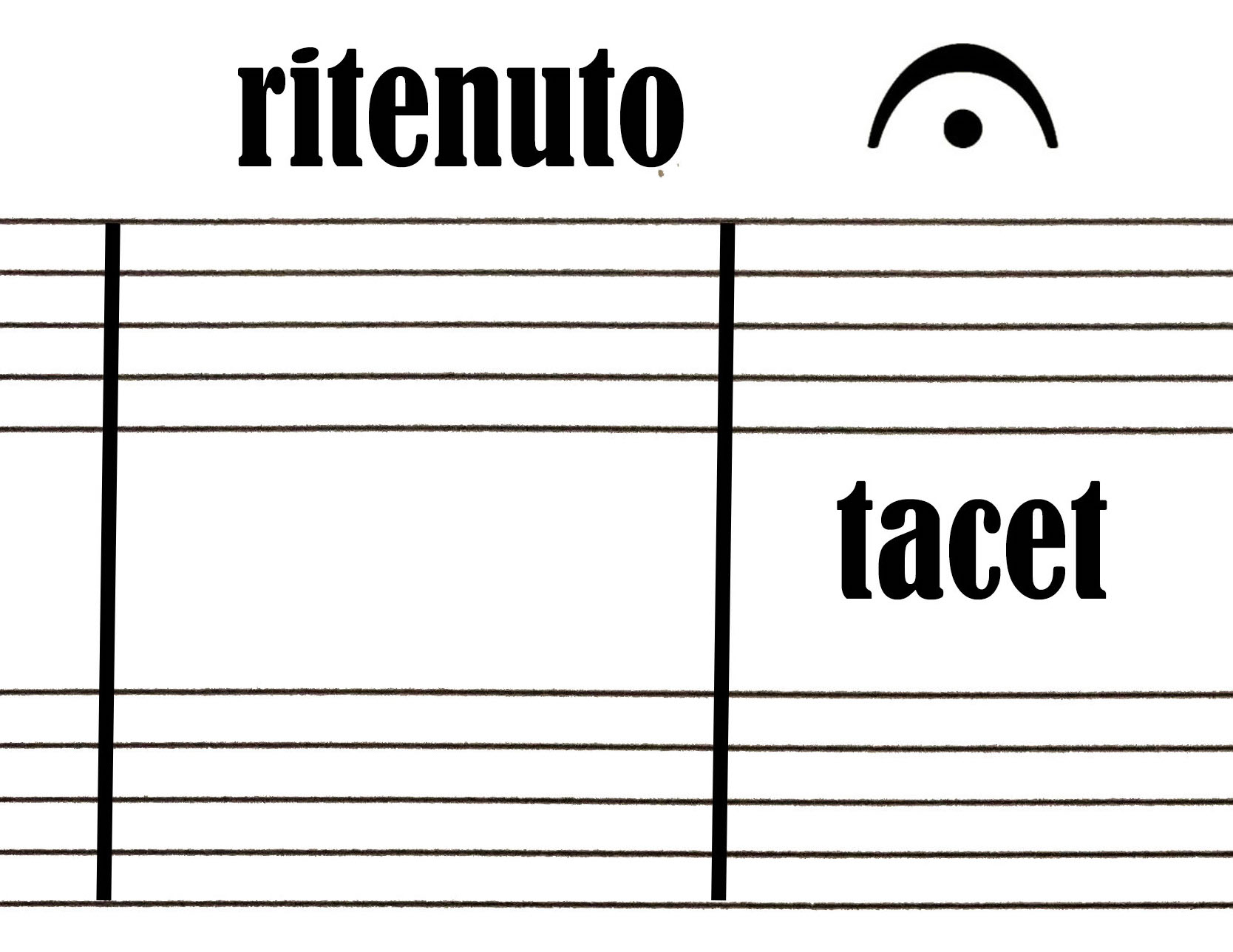
“What does it mean?” I asked.

“An abrupt slowing down,” she said, “Like screeching to a stop.” She paused and added, “Like our lives, right now.”

Ritenuto Tacet Fermata. Airbags deployed. No new bone breaks. Oh, wait. Not true. There was that recent slip-n-fall on the wet floor at work. There’s nothing like a pianist falling on an-already-broken wrist to punctuate the force of the full stop. And then, the job disappeared shortly thereafter. “The last job standing,” as she called it. “Don’t let the door hit you on the way out!’

Surveying the wreckage, smarting, she asked, “So what do we do now?”

“Nothing,” I replied. She is still in shock. I am at a loss. “Why don’t we do nothing for a few days.”

It feels as if we stopped – our bodies abruptly stopped – but our souls kept going. They do not have the same constraints as their fleshy cases. It feels like we need to wait for our souls to realize that there was an sudden stop. “We need our souls to come back to our bodies.” She looked at me through sideways eyes.

Silence.

“This year…” she said, before lapsing back into the silence. A few minutes later she began lightly tapping her foot. “Maybe I will write a cantata for a single voice,” her far-away stare already standing in front of the keys.

I looked the other way and smiled. “I think our souls are back.”

Out of wreckage, creativity. “I think that’s a great idea,” I said, trying not to be too enthusiastic. Her idea a tender shoot poking through the crust of her imagining. Exuberance might make it retreat.

Tacet. Silence. There is no rush from the wreckage. Silence and still-sitting is a first step, a necessary step. Take account of what remains. Let go of what flew away. And, emerging from the wreckage, out of the silence, as we know, new music arises.

read Kerri’s blog post about RITENUTO TACET FERMATA

Kerri’s albums are available on iTunes

Fly The Middle Way [on DR Thursday]

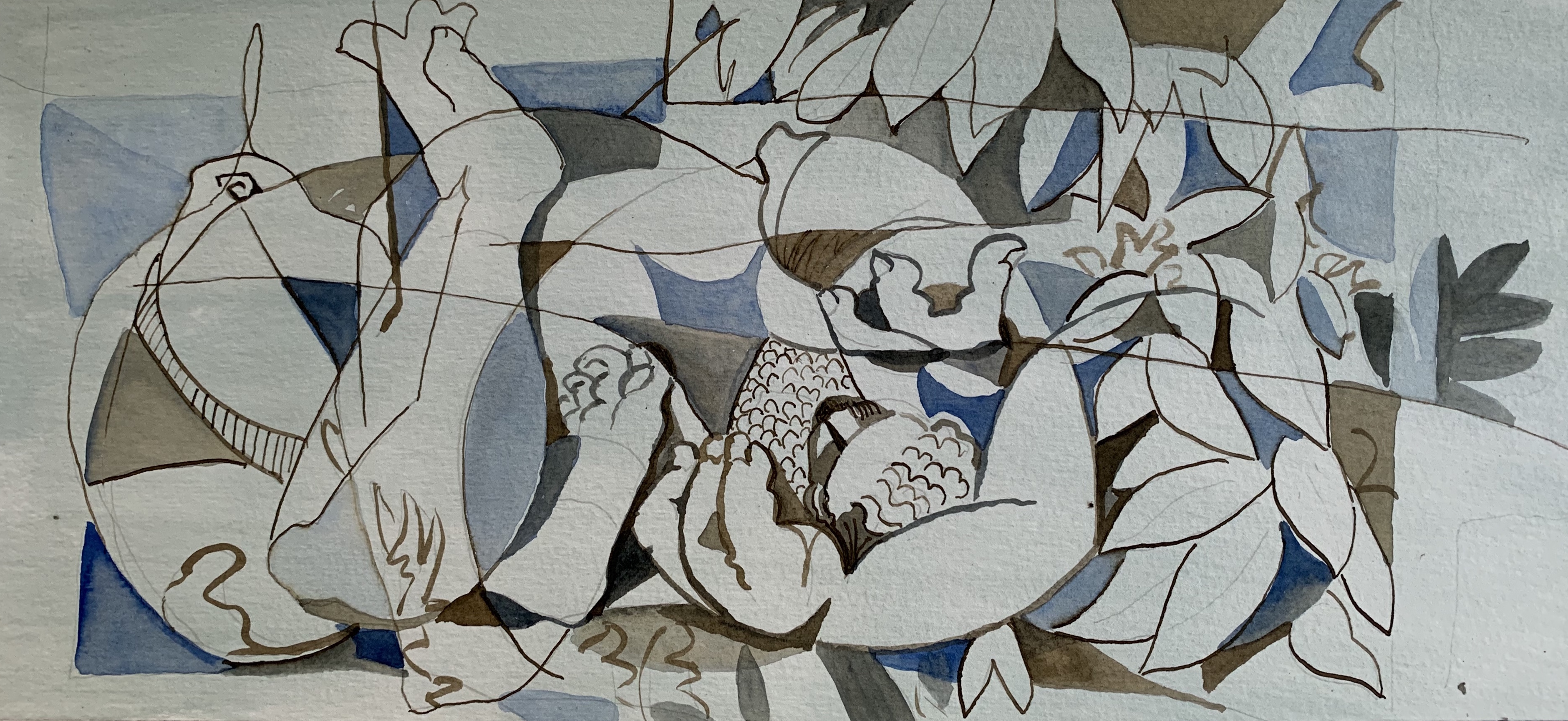
a watercolor sketch for Icarus

My call with Norm could not have been better timed. For some reason I’d recently dipped my toes into an old thought-pool and our conversation was like a ripple across the water. He is working with a team dedicated to self-empowerment, articulating purpose, making better relationships and a better world. I laughed as he reminded me of a younger version of myself.

A few days ago I wrote a phrase twice on a piece of paper. My Whole Life. My Whole Life. The phrase could mean “my entire life.” It could also mean “my flawless life.” I’m hard-pressed to conjure up a single example of someone who considers their life-story whole.

The words “purpose,” “power,” “voice” and “strength” populate the contemporary quest through the wasteland. We seek our power. We search for our unique voice. We hire coaches. We consume curriculum. We attempt to tune ourselves to wholeness like we tune our cars for the road.

There is a profound lesson in all of the great stories [stories are terrific guides…] and it is simply this: you can’t find “it” out there. You already have “it” and will, if you are lucky, realize “it” when you give up the search. Stand still. Feel the sun on your face.

The penny dropped for me while working with a group in the Netherlands. Everyone – every group I’ve ever worked with – wants to know “how?” There must be a prescription! What are the guaranteed six techniques to personal power? John O’Donohue wrote,“The gateway to our deepest identity is not through mechanical analysis.” In other words, there is no prescription. There isn’t a list. There are no tools to fix what is broken.

Parcival had his illusion shattered. The more he fought the dragons the worse the wasteland became. The grail castle came back to him only after he took off his armor, only after he completely relinquished and forgot about the fight.

None of this is to suggest that the search is ridiculous. It is not. It is a necessary process step in the cult of the individual. It is a necessity for people who believe themselves to be powerless to climb on a warhorse and ride into a personal hero tale. The knight will also need to flee from or fight with the inner-dark-anti-hero, the one who cries “fraud” or “loser” or “worthless” that serves as the shadow, the balance point of every power quest. The more he fight the dragons the worse the wasteland becomes.

“Let go of the hero,” Harald taught me, “and the anti-hero will also disappear.” Then, and only then, do we find the the middle way and the selflessness that comes with it. Some traditions call “it” presence. Some call “it” illumination. Some call “it” self-actualization. Some call “it” getting neutral or detachment. Some call “it” wholeness. Most locate “it” in the middle way.

Icarus did not listen to his father who warned him not to fly too close to the sun as it would melt the wax holding together his wings – and to not fly too close to the sea as the water vapor would make the feathers of his wings too heavy for flight. “Fly in the middle,” Daedalus cautioned. “Fly the middle way.”

Icarus, so the story tells us, became enamored of his ability to fly, so lost in his new power, that he soared toward the sun. Only when he was plummeting from the sky did he remember his father’s caution, “Fly the middle way. Fly the middle way and live.”

read Kerri’s blog post about ICARUS

Icarus, acrylic, 30.5 x 59.5

icarus ©️ 2004 david robinson