Step Into The Field

photo-5[continued from “Jump!]

I wrote this phrase: “The one facilitates the journey for the many.” And, today, I would add: the one facilitates the journey for the many so that the many can experience the one. This little phrase is the point and the purpose of the theatre.

I’ve come to believe, at this stage in my artist life, that all processes of art-making are actually exercises in presence. And, presence, for me, has come to mean transcending any experience of separation. For instance, when I am fully engaged with painting a painting, “I” am nowhere to be found. Time disappears. There is only rolling creation. To use a cliché: something comes through me. Language is incapable of grasping what really happens and all we are left with is “something comes through” – a statement of separation.

A week ago today we were preparing to perform the closing of The Lost Boy. This play is unique in my experience for many reasons (it would require a book or two to explain the many layers of this cake), one of which was that we only had two performances: an opening and a closing. We hit our stride on the closing – and by that I mean we let go of thinking, preparing, adjusting…, and entered presence. We stepped onto the stage with no thought of “what’s first” and “what’s next.” The play happened with no effort. The Chili Boys played like never before. We were, to use another cliché, in the flow. I have never felt more alive, more connected, more present. It was fun!
50 minutes before stepping onto the stage

50 minutes before stepping onto the stage

Years ago, I had the opportunity to assist Jim Edmondson in a series of plays and I riddled him with questions. He introduced me to the notion that the art of acting was the art of presence (though he used a different language). He taught me that words like “focus” and “intention” are merely tools for cultivating the capacity to be present. Presence is the portal and the actors’ (artists’) job is to step into presence so the audience can join them. Literally, join with them in the field of the present, the place of common story. To be. Together, in a single story. And, although he did not say it this way, he taught me that “to be” is infinitely more powerful than “to become.” “To be” is not an arrival platform; it is an experience of the many recognizing itself as the one [could you ask for a better definition of art!].

Mike, our stage manager extraordinaire, came down from the booth and told us that our performances were different than the first night. We were more potent; we found nuance and greater depth. He was right. We were finally able to surrender to the work, get out of our own way, and step into the field of shared story.

See Again and Again

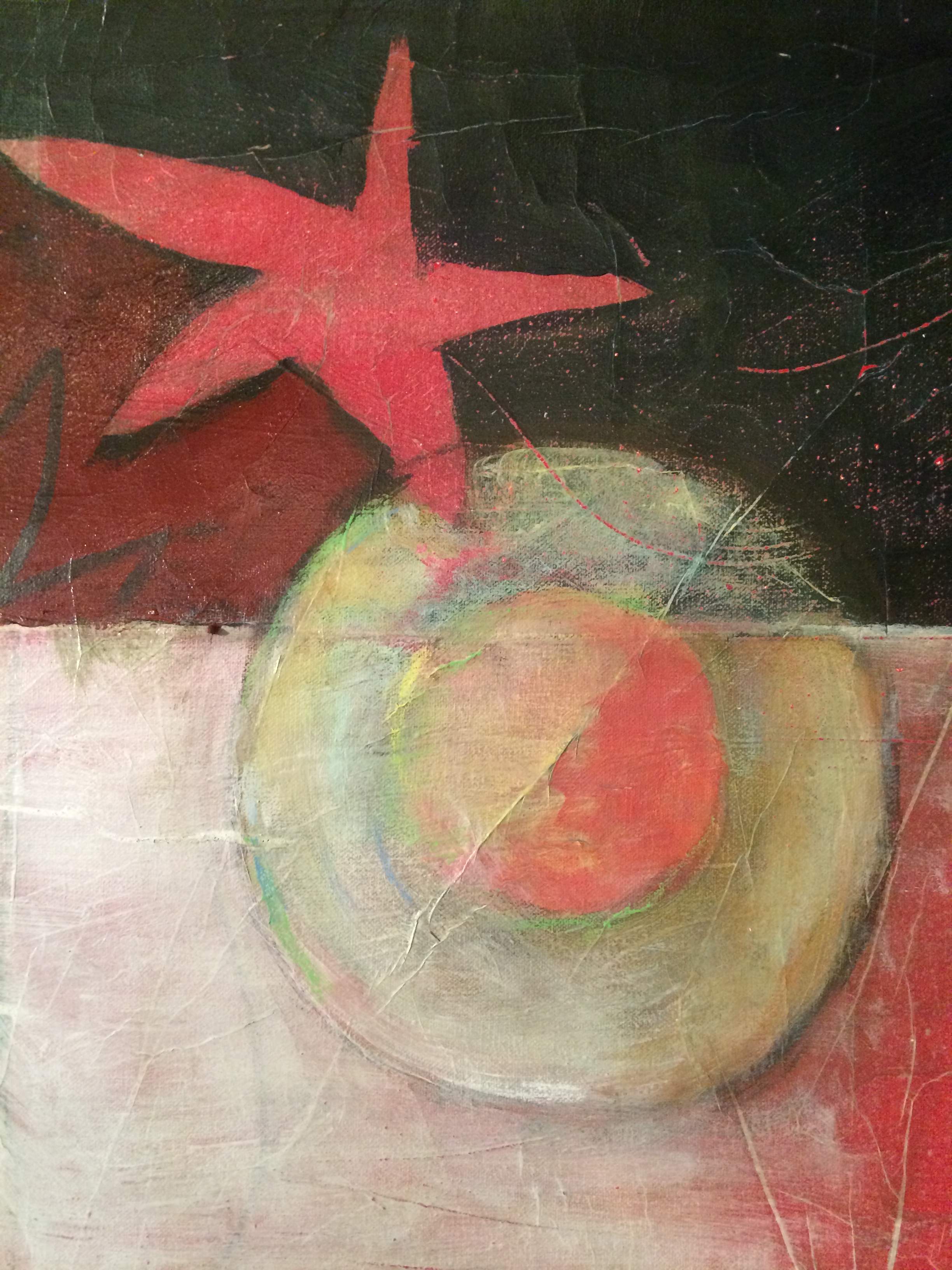
A detail from my painting, An Instrument of Peace

A detail from my painting, An Instrument of Peace

It has become my habit, when I finish a painting, to take photographs of sections of the piece. It helps me see it again. Often, I like these detail photographs as well or better than the painting. There are always discoveries in the details.

My paintings always surprise me. Years ago, I was showing my paintings to Jim Edmondson and he asked why all of my pieces had three spheres in the composition. I didn’t know what he was talking about. He laughed, our roles reversed, and he began showing me my paintings; each piece included three distinct spheres. I literally did not see them. They were apparent only after he made me look at sections of the paintings. I was both shocked and delighted. Perception is not universal.

Another detail from An Instrument of Peace

Another detail from An Instrument of Peace

The mastery of art (the mastery of life – same thing) is to transcend the notion that you “know” and that what you know is “right.” Krishnamurti wrote that, the moment you judge something, you cease to experience it. The fullness of life is in the experience and not the translation of the experience. All of us assume that we see the whole picture. We assume that we see is reality (truth) – and that reality (truth) for me must be reality for you. It is not. To have an “open mind” and “clear vision” is to release the notion that there is one truth, one way of seeing.

Once, I directed a production of God’s County by Steven Dietz and I knew it was a good production because half of the audience left angry and the other half left inspired. One play, many interpretations and the interpretations were, like all things we name as reality, rooted in each individual’s personal experience. What matters is not that our interpretations need to be the same, but a recognition that what you see is just as valid as what I see. As my friend Joe once said, “We come to know ourselves through other people’s eyes.”


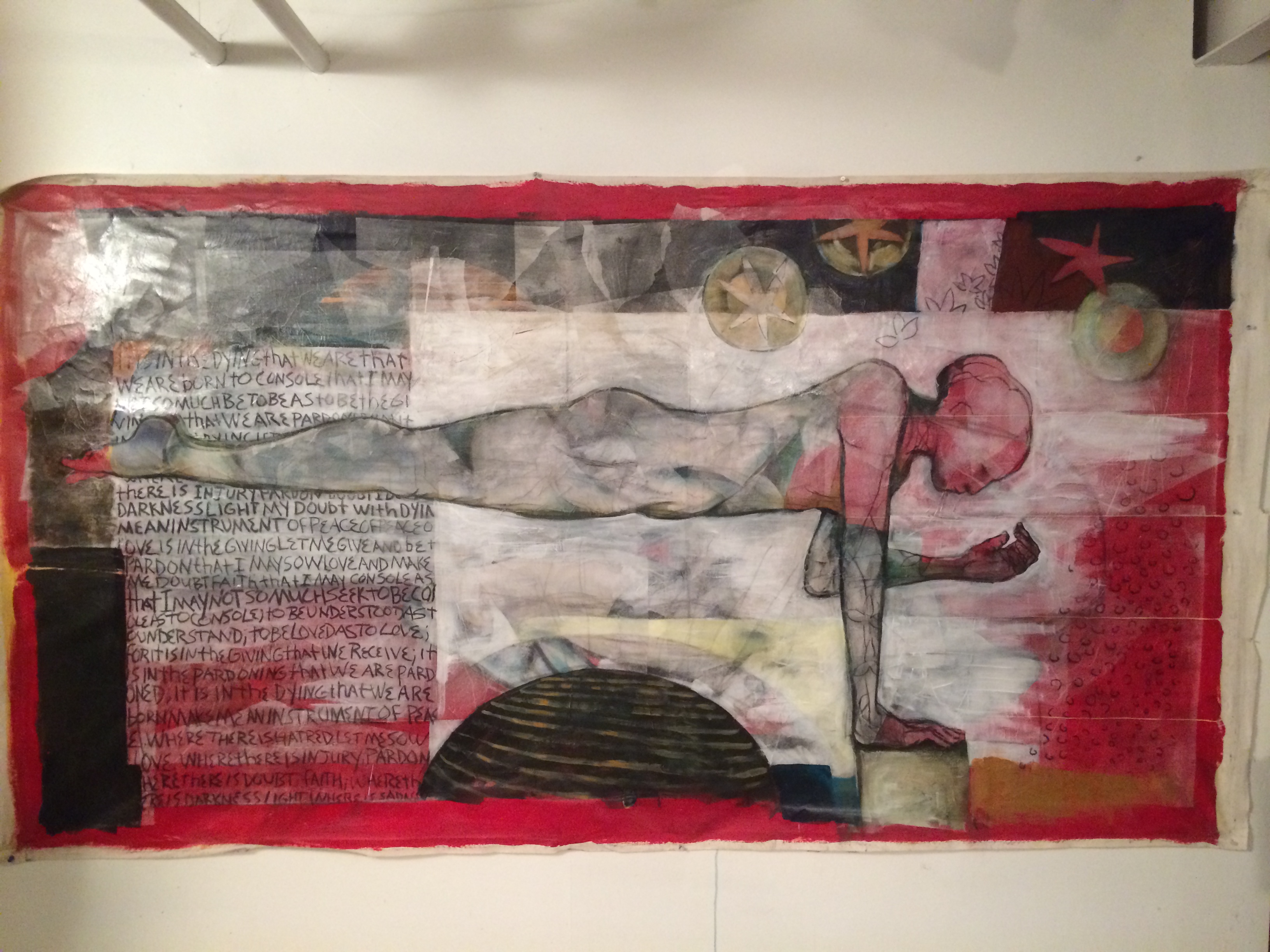
An Instrument of Peace

A rough shot on the studio wall of An Instrument of Peace

title_pageGo here to buy hard copies (and Kindle) of my latest book: The Seer: The Mind of the Entrepreneur, Artist, Visionary, Innovator, Seeker, Learner, Leader, Creator,…You.

For all digital forms, go here (Leanpub)

Look To Each Other

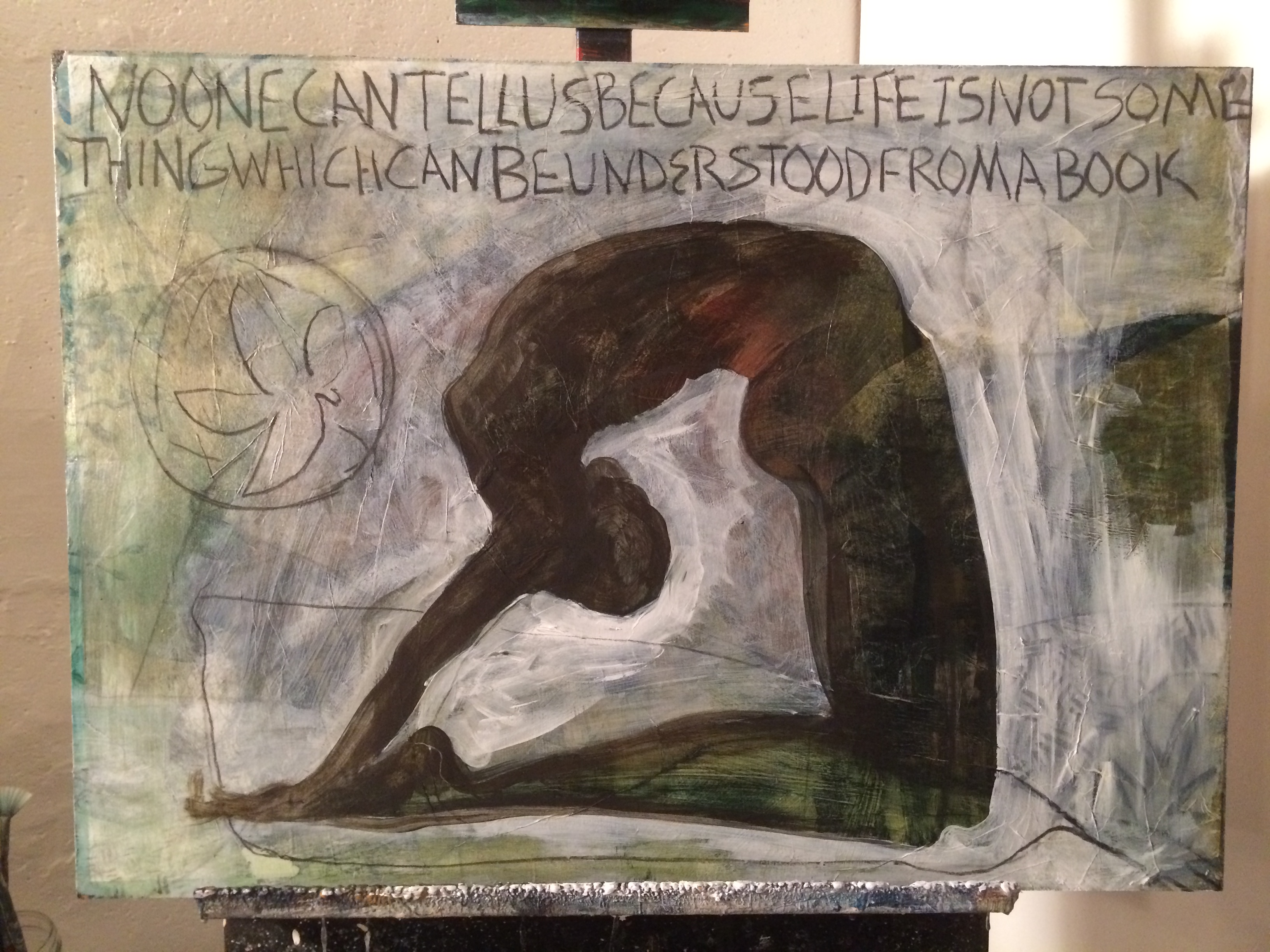
my latest work-in-progress

my latest work-in-progress

Josh laughed from the back seat of the car. He read aloud the text that made him laugh: I’m in MoMA (the museum of modern art) and someone dropped a glove. Now, people are walking around it because they don’t know whether it is art or not!

I’ve spent a goodly amount of my time on the planet in museums of contemporary art and know that most folks passing through the museum have the same confusion about the pieces on the walls. What makes something art and something else not-art?

Almost a century ago Marcel Duchamp entered a urinal in an exhibition and gave it the title, “Fountain.” At the time it was scandalous and now represents a major milestone in art history. Today, a urinal in a museum exhibition would get the same treatment as the glove on the floor: confused consideration. Is it or is it not art? The beauty of the glove moment, the thing that binds it to the urinal moment, is that, in both cases, the gallery goers looked to others, perfect strangers, to ascertain a proper response: it is art if they say it is. Art, in this case, is an agreement.

This agreement, looking for approval about how to behave when confronted with the art-or-not-art question may seem superficial until you consider that recently people in Paris lost their lives over a disagreement of what was art and what was not. In recent history (2001), the Taliban destroyed centuries old giant statues of the Buddha in the Bamiyan Valley. They considered the statues idols (not art) and dynamited them off of the face of the earth (I will leave you to discover and ponder the irony between my Paris and Bamiyan Valley examples).

the words written into my work-in-progress

a close-up: the words written into my work-in-progress

Art is meant to open our perspective, to make us question, to help us see. A society that is capable of seeing is also a society that is capable of questioning; they go hand-in-hand. Questioning is always present when people are growing – so is art. Questioning also begets tolerance – it requires us to doubt our perspective and consider the view from someone else’s shoes. In these times when I hear someone bemoan the end of civility and the horrors in the world, I wonder if they’ve argued to cut art from the schools or  recently attended a concert to hear music to move their soul. Art is dangerous to leaders who like their people blind. Art is offensive to people who want their community thought-less. I delighted that somewhere in the world, in a museum of modern art, a group of people walked around a lost glove and looked to each other for guidance.

title_pageGo here to buy hard copies (and Kindle) of my latest book: The Seer: The Mind of the Entrepreneur, Artist, Visionary, Innovator, Seeker, Learner, Leader, Creator,…You.

For all manner of digital SEER copies, go here

Yoga.ForwardFoldFor posters and prints of my paintings, go here.

Do What Is Most Natural

IMG_0817The snows have come. The temperatures are grindingly low. Sitting at my desk, staring out the window at the world’s hibernation, I had a few thoughts about transformation. Actually, just before coming to the desk I flipped open the Bibles of Mankind for my random-thought-of-the-day. Today I landed on the Tao and specifically, this line: “By a transformation they live. By another transformation they die.”

In our births and our deaths we are all experts at transformation. In fact, in our progression through the many bodies we will in habit, the many phases we will navigate during the span of our singular life, we need not think about transformation or try to achieve it. Transformation is what we do. It happens. Track the progression of any life from infant to old age and you will witness a remarkable transformation.

I’ve just completed the first full cycle of seasons in my new home. Because it is all new to me, I’ve had the eyes to see the nuances, the profound changes in the trees, the lake, the rhythms of life including the migrations of geese. Nothing is normal (yet) so everything is special and alive. The cycle of the seasons, like the continual movement through the long body of life, is an ever-present transformation. The seasons do not try to transform; they are transformation.

People think they need to intend transformation. We seem to think we need to work at it to achieve it and somehow do not transform if we don’t marshal the process. Consciousness, like the body and the cycles of the seasons, transforms whether we intend it our not. That is the nature of consciousness. That is the natural movement of awareness.

title_pageGo here to buy hard copies (and Kindle) of my latest book: The Seer: The Mind of the Entrepreneur, Artist, Visionary, Innovator, Seeker, Learner, Leader, Creator,…You.

'Dancing In The Front Yard' by David Robinson

‘Dancing In The Front Yard’ by David Robinson

Go here to get posters and prints of my paintings.

Look Up

Eve, by David Robinson

Eve, by David Robinson

The nights have been bitter cold and clear. The cold always seems to make the stars sharp like crystals. Standing on the back deck, looking at the stars, I remembered a conversation I had years ago. I was working with students and we strayed into a discussion of human beings connection to the stars. It was cosmology in a nutshell.

Here was the gist of the conversation: something happened to human consciousness when they (we) understood that our patterns of life on earth were (are) oriented to happenings in the sky. For instance, our impulse to worship is intimately connected to the solstice and equinox: the disappearance and return of the light. Our migration habits, planting habits, daily rising-and-shining habits are relative to the movement of the sun. The tides in the ocean and the waters in our body are responsive to the pull of the moon. With the awareness, we crossed a line from chaos to order, from unconsciousness to consciousness. There was a relationship, a pattern, a belonging, a participation. There was something bigger.

During that same period in my life I also worked with a group of inner city students who had never seen the stars. It was a revelation for me. For them, there was no sense of relationship, there was no “something bigger.” There was a load of anger and existential separation.

This holiday season, I was struck by two things: 1) how many times I had conversations with people, glued to their televisions, who are frightened and feeling helpless by the happenings in the world, and 2) how many casual family photos crossed my path featuring a gathering of individuals, alone together, faces to smart phones. Everyone was looking down.

Standing on the back deck on a dark and starry night, wrapped against the cold, I wonder what some distant teacher in the future will tell his or her students about what happened to human consciousness when they (we) ceased looking up.

title_pageGo here to buy hard copies (and Kindle) of my latest book: The Seer: The Mind of the Entrepreneur, Artist, Visionary, Innovator, Seeker, Learner, Leader, Creator,…You.

Yoga Series 7Go here for prints of my paintings

Make No Sense

Untiltled Narrative by David Robinson

Untiltled Narrative by David Robinson

The cliché: life is a cycle. Order begets chaos and chaos begets order. Both are necessary. Just as spring is not possible without winter, order without chaos makes for only half a life. Safety without uncertainty makes for only half a life and a very boring life story.

Ann passed away last night. Her battle with cancer was long and nothing short of heroic. Kerri said, “She was such a bright light! Damn cancer. This makes no sense.” Too true.

Last night, John came back into our lives. We sat for hours talking of the events and changes of the lost years. He told us of the necessity to finally stop trying “to make things work” and how he stepped into the discomfort of uncertainty. Now, standing solidly in his uncertainty, he feels both lost and found. That is a great description of how change feels. We got the news of Ann’s death while John was visiting. We had a glass of wine and made a toast to her life. And then we made a toast to appreciating life in all of its textures. John said, “At the end of the day, all that really matters is a bottle of wine to share with friends.” Too true.

More clichés: rejuvenation necessarily begins in the province of disorder and the unknown. The journey back to self winds through miles and miles of uncharted territory.

Each journey is made beautiful by the monsters and masters we meet along the way. Both are teachers. Both bring gifts and force changes of direction. The Cyclops is as necessary as the sage and both serve new sight and the refocusing of the eye. Both are necessary to strip away our resistance to the cycles, to peel away the protective layers we pile on to life that obscures what truly matters.

title_pageGo here to buy hard copies (and Kindle) of my latest book: The Seer: The Mind of the Entrepreneur, Artist, Visionary, Innovator, Seeker, Learner, Leader, Creator,…You.

Yoga.MeditationGo here for Fine Art Prints of my paintings

Train Your Eyes To See

an illustration from my unpublished children's book, Play 2 Play

an illustration from my unpublished children’s book, Play 2 Play

Laundromats are liminal places. Enter a laundromat and you leave behind the known world. You step into the great  “in-between,” the land of “not here, not there.” I am in the land of “not here, not there” because Tripper Dog-Dog-Dog came in from the yard with muddy paws and blew past our usual clean up stop. As Tripper was coming in, our neighbor let out his dogs and, apparently, the perimeter needed immediate protection, which required a Dog-Dog mad dash through the house, a leap onto the bed, and loud, raucous barking. So, muddy paws met white bedspread and although the paw prints were beautifully applied, smeared, and reprinted (a perfect composition), the bedspread needed washing.

As I wait for the cycle to finish I’ve been watching people. The proprietor is wearing a Santa cap and sits at the counter scoping the patrons; he is looking for anyone who might need assistance. He jumps at every opportunity to help patrons having problems with a machine. This is his kingdom and I have the illusion that he’s created it so that he might help others. He laughs a lot. He likes his kingdom.

A young man, clearly a regular patron, is quick to help the older clients lift heavy loads (the proprietor is at the ready but recognizes this unique circumstance). They are all regulars and lifting laundry is the organizing principle of their relationship. They ask the young man how he is doing. He is humble yet delights in their attention as they delight in his assistance.

This liminal space is filled with generosity and acts of kindness. It reminds me of the game I played not so long ago during my walk about. Each day, as I walked, I counted the obvious acts of kindness. There were always more than I could count. Always. The game was not so much about tallying goodness as it was about training my eyes to see what was right in front of me. It is too easy to see the road rage, the aggression, and the selfishness. It is too easy to believe in the monsters. That stuff is there. But, when you take the time to see it all –really see it – the generosity always far outweighs the miserliness.

title_pageGo here to buy hard copies (and Kindle) of my latest book: The Seer: The Mind of the Entrepreneur, Artist, Visionary, Innovator, Seeker, Learner, Leader, Creator,…You.

Canopy by David Robinson

Canopy by David Robinson

Go here for fine art prints of my paintings.


Visit With Your Guardian

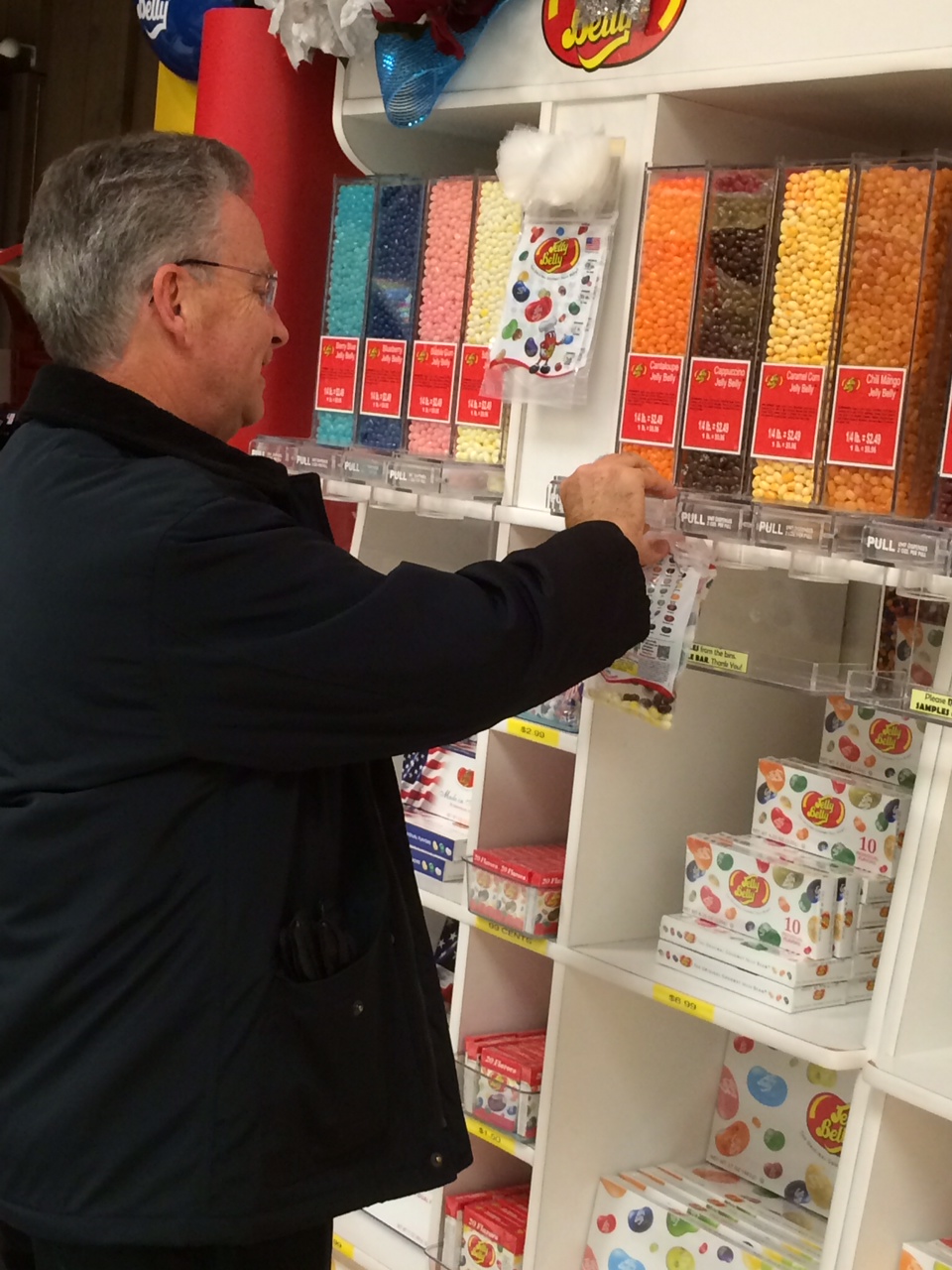
My Threshold Guardian at the Jelly Belly store.

My Threshold Guardian at the Jelly Belly store.

In addition to being a dear friend, Arnie is my personal threshold guardian. His appearances in my life always signal that change is a’comin’. The last time that I saw Arnie I left behind everything that I knew (literally and metaphorically). I began a long pilgrimage to the church of my self. It felt as if I stepped into my big wooden sailing ship and set a course for the edge of the known world and then, with great intention, sailed over the edge.

Two years have passed since our last meeting. In the interim, I have experienced Sirens and Cyclops, I lost my metaphoric ship and crew to the great whirling Charybdis, I was held captive on an island, I paid an extraordinary visit to the underworld and, at last, returned to the light with new knowledge. And, this week, as is his custom when I am ready to pass through the next portal, Arnie came to visit.

Saul’s voice roared in my head as Arnie and I debriefed my two-year journey: address your self to the field of possibility, not to the opponent. Possibility, I learned, becomes visible when we are vulnerable and available to it. It appears when we place our focus on it, when we seek it. Pushing and protecting and fighting and resisting obscures the field of possibility because our focus is on the opponent, not on the possibility.

And, of course, the greatest opponent is our self.

In the language of story, for great personal transformation to occur, we must leave behind everything we know and go on a journey into the unknown. That includes leaving behind who we know ourselves to be. In other words, we are required to let go of all the things we believe that we can control – but in truth cannot; we are required to release our insistence on keeping things “as they are.” In the end, we are required to face and then release the things that we are trying “to make work” but cannot – and let go of all the things we want to force into existence but cannot. That is the moment the opponent in our self disappears and we are at last able to turn our eyes outward and see the field of possibility that has been available for us all along.

title_pageGo here to buy hard copies (and Kindle) of my latest book: The Seer: The Mind of the Entrepreneur, Artist, Visionary, Innovator, Seeker, Learner, Leader, Creator,…You.

Eve, by David Robinson

Eve, by David Robinson

Go here to buy fine art prints of my paintings.


Possess It

An untitled  watercolor I did years ago

An untitled watercolor I did years ago

Last night P-Tom said, “This is the time of year that everyone is telling us what we need and where we can go to buy it.”

Yesterday I worked on website language. After a year-long hiatus I’m re-visioning what was once a coaching practice. All day I was aware that words like “potential” and “purpose” are abstractions; they are marketing terms. Many years ago, when I was first establishing a coaching practice, I read articles and listened to recordings full of advice about “how to start a coaching business;” the recommendation was unanimous: host free calls, help people see their problem, and end the call. Leave them standing in the mud so they will need you. Create lack (isn’t that a great definition for marketing?).

What does it really mean to fulfill your potential? What does it mean to “find your purpose?” Look to the layer beneath. To fulfill, to find…, these are terms from the canon of outcome and result. No one willingly seeks his or her endpoint. If there is a universal problem it is that we see our existence as something with a bottom line and hire coaches and therapists to help us do the accounting.

(Insert mantra: nothing is broken. You do not need to be fixed).

Good coaches, teachers, mentors, and therapists get you out of the spreadsheet and into the moment. Looking for the fullness of life is usually a process that requires the cessation of looking so we might see what is right in front of us. Stop the search and you will be found. As the old saying goes, life is the thing that is happening while you are running around looking for it.

I’m a world-class note taker and always take notes when I work with people. For me it’s like mapping verbal terrain, capturing inner geography. Lately I’ve been reviewing the maps before I destroy them and I find not seekers of potential and purpose, but people overwhelmed by the experience of 1) feeling lost, 2) feeling that something is missing or they are missing something, 3) feeling that they are pushing on a door that won’t open, or 4) a yearning for a different way of being. These are questions of feeling. These are questions of orientation to life (experiences of life). “Potential” and “purpose” are words of doing. These are questions of being.

What if meaning, value, purpose,… in life was not something found or bought but something that is already possessed?

Go here to buy hard copies (and Kindle) of my latest book: The Seer: The Mind of the Entrepreneur, Artist, Visionary, Innovator, Seeker, Learner, Leader, Creator,…You.


Change Your Mind

I used this quote by Friedrich Nietzche in The SEER:

“The snake which cannot cast its skin has to die. As well as the minds which are prevented from changing their opinions; they cease to be a mind.”

A few days ago I asked myself this question: What if I never painted another painting or wrote another word? What would happen? Who would I be?

title_pageThe first question, what would happen, is much less interesting to me than the second question: who would I be if I simply put down my brushes forever? When I was younger, I felt driven, as if I had to paint. I needed it. In asking the question I recognize that now I choose it. I don’t have to paint; I want to and consequently I am a much better artist. It’s a paradox: I am a better artist because I don’t need to be an artist. In other words, I don’t need to be, I am.

I’ve been revisiting The SEER. My initial team of wise-eyes unanimously voted the first draft to be “too much.” The book that I published is comprised of the first three chapters of the original draft. I deconstructed them and broke the steps into smaller bites. There were six more chapters outlined and, in my latest revisit, I recognize that I have a trilogy if I want it. So, book two is in process. I’m going to release the first draft in daily snippets as I write it. Everyone gets to be my wise-eyes this time around.

Here’s the launching pad section for book two from The SEER. It’s from the second cycle (story):

You can change your story. That is the sixth recognition. Doesn’t it sound simple? Say it this way: changing your story is the equivalent of changing who you know yourself to be. Changing your story often requires the loss of your illusion, a lot less armor and nothing left to lose. Who are you when you don’t know who you are or where you are going? This was the heart of Virgil’s question to me. Who are you distinct from your circumstance? Who are you when the mask comes off? More importantly, what are you capable of seeing when you are not looking through a [knight’s] visor? No one is immune to the stuff of life. Everyone lives a unique version of the story cycle. It too is a pattern, a natural process.

Go here to buy hard copies (and Kindle) of my latest book: The Seer: The Mind of the Entrepreneur, Artist, Visionary, Innovator, Seeker, Learner, Leader, Creator,…You.

Go here (to Leanpub) for all digital forms of The SEER

Canopy by David Robinson

Canopy by David Robinson

And, for fine art prints of my paintings, go here.