Look Up

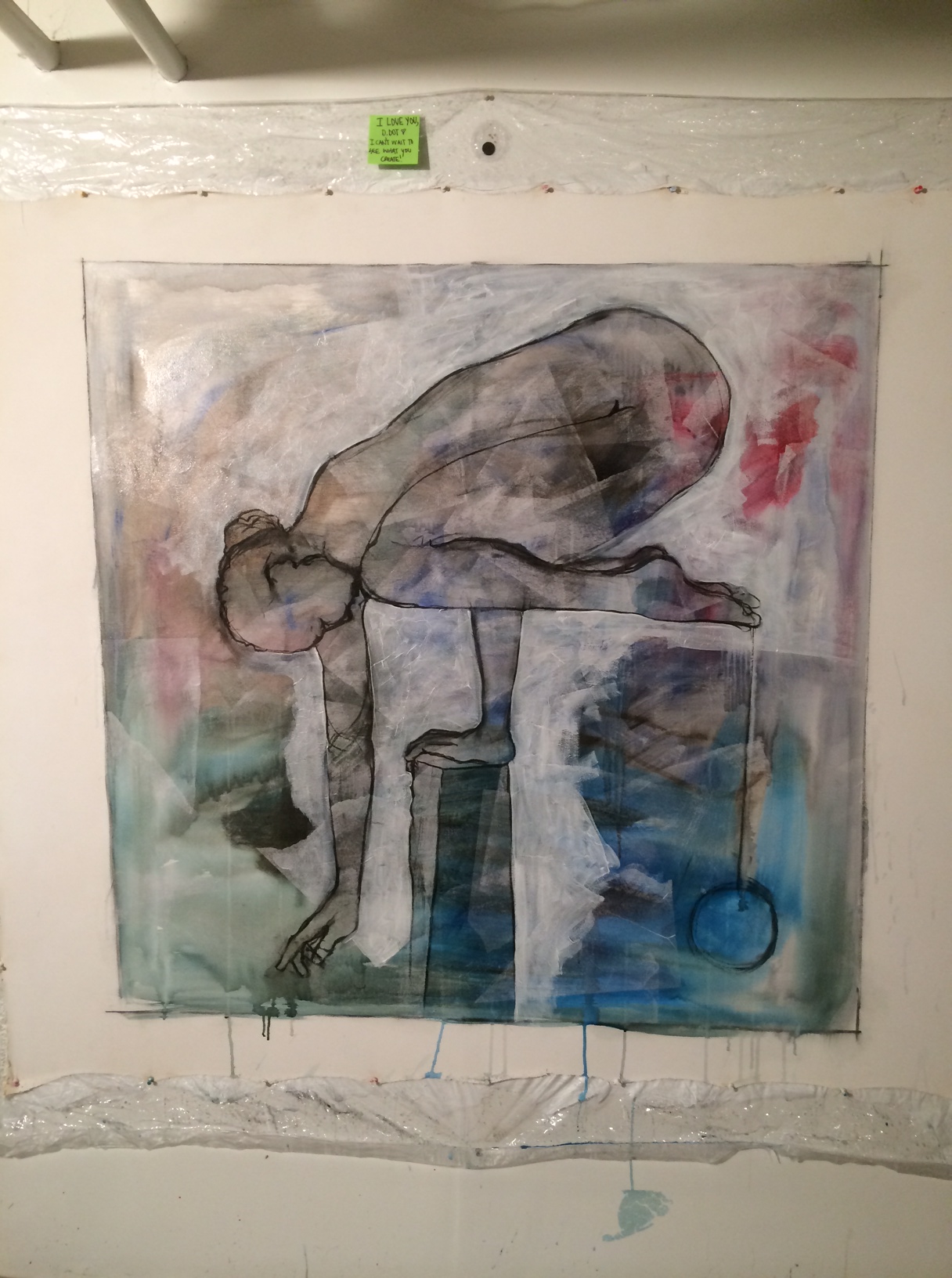
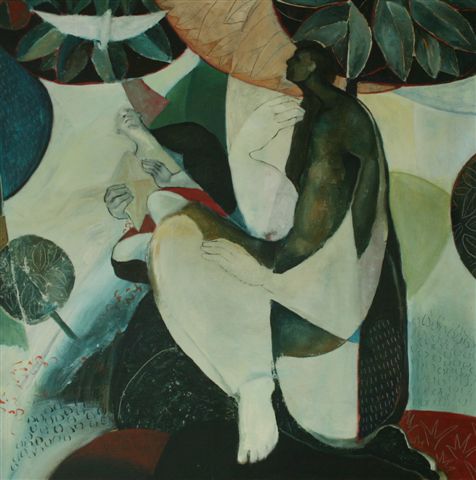
Eve, by David Robinson

Eve, by David Robinson

The nights have been bitter cold and clear. The cold always seems to make the stars sharp like crystals. Standing on the back deck, looking at the stars, I remembered a conversation I had years ago. I was working with students and we strayed into a discussion of human beings connection to the stars. It was cosmology in a nutshell.

Here was the gist of the conversation: something happened to human consciousness when they (we) understood that our patterns of life on earth were (are) oriented to happenings in the sky. For instance, our impulse to worship is intimately connected to the solstice and equinox: the disappearance and return of the light. Our migration habits, planting habits, daily rising-and-shining habits are relative to the movement of the sun. The tides in the ocean and the waters in our body are responsive to the pull of the moon. With the awareness, we crossed a line from chaos to order, from unconsciousness to consciousness. There was a relationship, a pattern, a belonging, a participation. There was something bigger.

During that same period in my life I also worked with a group of inner city students who had never seen the stars. It was a revelation for me. For them, there was no sense of relationship, there was no “something bigger.” There was a load of anger and existential separation.

This holiday season, I was struck by two things: 1) how many times I had conversations with people, glued to their televisions, who are frightened and feeling helpless by the happenings in the world, and 2) how many casual family photos crossed my path featuring a gathering of individuals, alone together, faces to smart phones. Everyone was looking down.

Standing on the back deck on a dark and starry night, wrapped against the cold, I wonder what some distant teacher in the future will tell his or her students about what happened to human consciousness when they (we) ceased looking up.

title_pageGo here to buy hard copies (and Kindle) of my latest book: The Seer: The Mind of the Entrepreneur, Artist, Visionary, Innovator, Seeker, Learner, Leader, Creator,…You.

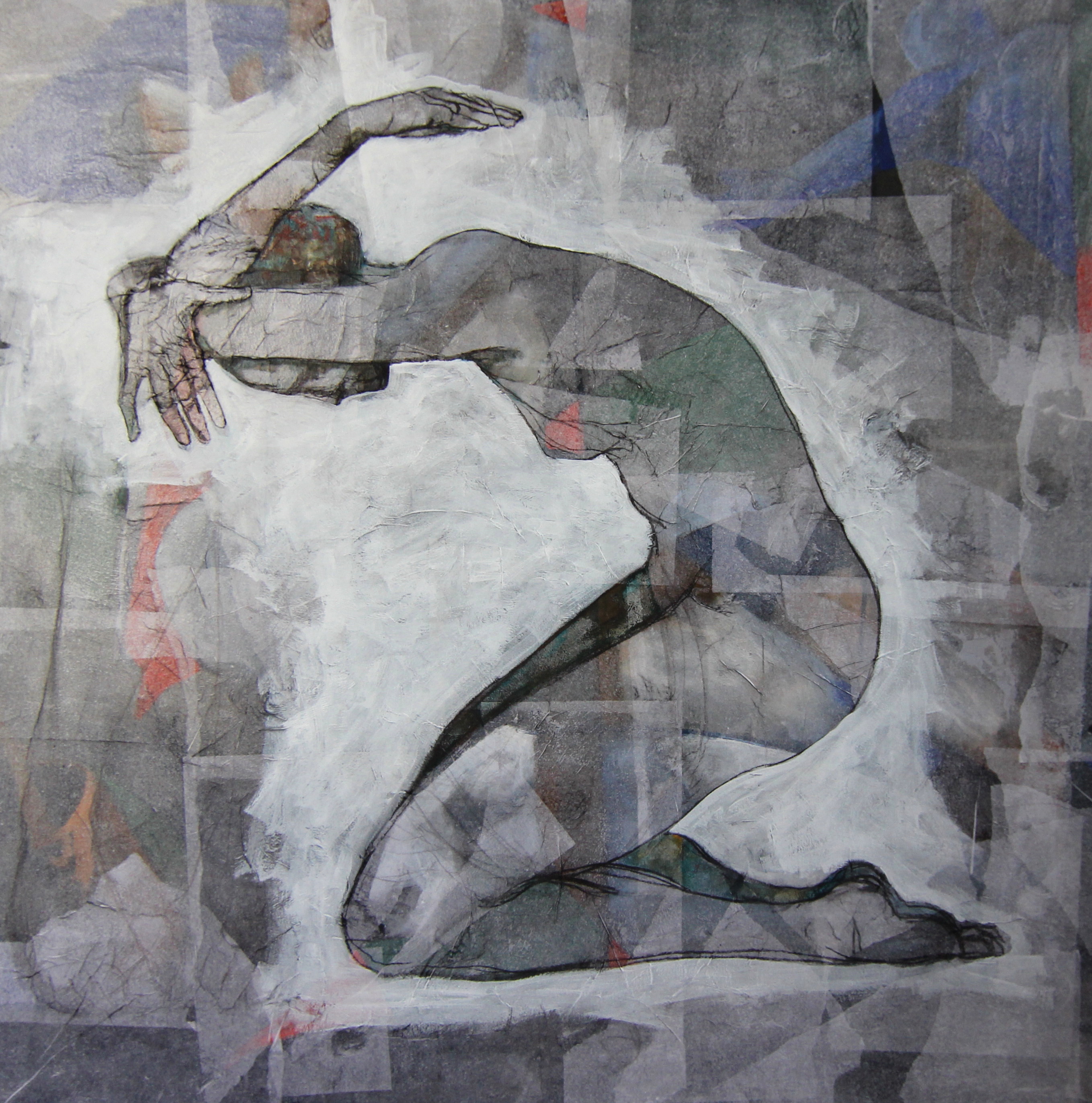
Yoga Series 7Go here for prints of my paintings

Make No Sense

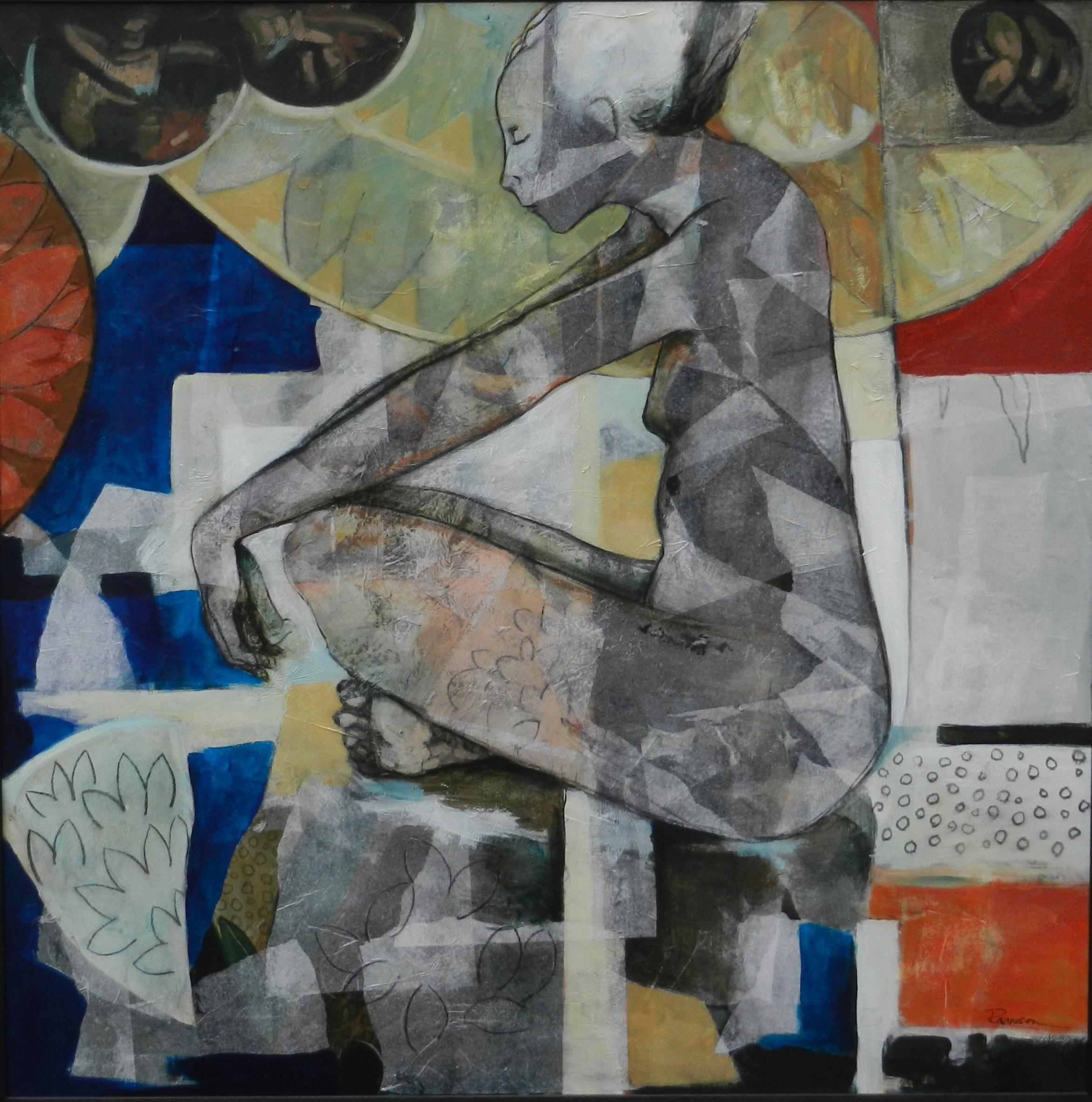
Untiltled Narrative by David Robinson

Untiltled Narrative by David Robinson

The cliché: life is a cycle. Order begets chaos and chaos begets order. Both are necessary. Just as spring is not possible without winter, order without chaos makes for only half a life. Safety without uncertainty makes for only half a life and a very boring life story.

Ann passed away last night. Her battle with cancer was long and nothing short of heroic. Kerri said, “She was such a bright light! Damn cancer. This makes no sense.” Too true.

Last night, John came back into our lives. We sat for hours talking of the events and changes of the lost years. He told us of the necessity to finally stop trying “to make things work” and how he stepped into the discomfort of uncertainty. Now, standing solidly in his uncertainty, he feels both lost and found. That is a great description of how change feels. We got the news of Ann’s death while John was visiting. We had a glass of wine and made a toast to her life. And then we made a toast to appreciating life in all of its textures. John said, “At the end of the day, all that really matters is a bottle of wine to share with friends.” Too true.

More clichés: rejuvenation necessarily begins in the province of disorder and the unknown. The journey back to self winds through miles and miles of uncharted territory.

Each journey is made beautiful by the monsters and masters we meet along the way. Both are teachers. Both bring gifts and force changes of direction. The Cyclops is as necessary as the sage and both serve new sight and the refocusing of the eye. Both are necessary to strip away our resistance to the cycles, to peel away the protective layers we pile on to life that obscures what truly matters.

title_pageGo here to buy hard copies (and Kindle) of my latest book: The Seer: The Mind of the Entrepreneur, Artist, Visionary, Innovator, Seeker, Learner, Leader, Creator,…You.

Yoga.MeditationGo here for Fine Art Prints of my paintings

Train Your Eyes To See

an illustration from my unpublished children's book, Play 2 Play

an illustration from my unpublished children’s book, Play 2 Play

Laundromats are liminal places. Enter a laundromat and you leave behind the known world. You step into the great  “in-between,” the land of “not here, not there.” I am in the land of “not here, not there” because Tripper Dog-Dog-Dog came in from the yard with muddy paws and blew past our usual clean up stop. As Tripper was coming in, our neighbor let out his dogs and, apparently, the perimeter needed immediate protection, which required a Dog-Dog mad dash through the house, a leap onto the bed, and loud, raucous barking. So, muddy paws met white bedspread and although the paw prints were beautifully applied, smeared, and reprinted (a perfect composition), the bedspread needed washing.

As I wait for the cycle to finish I’ve been watching people. The proprietor is wearing a Santa cap and sits at the counter scoping the patrons; he is looking for anyone who might need assistance. He jumps at every opportunity to help patrons having problems with a machine. This is his kingdom and I have the illusion that he’s created it so that he might help others. He laughs a lot. He likes his kingdom.

A young man, clearly a regular patron, is quick to help the older clients lift heavy loads (the proprietor is at the ready but recognizes this unique circumstance). They are all regulars and lifting laundry is the organizing principle of their relationship. They ask the young man how he is doing. He is humble yet delights in their attention as they delight in his assistance.

This liminal space is filled with generosity and acts of kindness. It reminds me of the game I played not so long ago during my walk about. Each day, as I walked, I counted the obvious acts of kindness. There were always more than I could count. Always. The game was not so much about tallying goodness as it was about training my eyes to see what was right in front of me. It is too easy to see the road rage, the aggression, and the selfishness. It is too easy to believe in the monsters. That stuff is there. But, when you take the time to see it all –really see it – the generosity always far outweighs the miserliness.

title_pageGo here to buy hard copies (and Kindle) of my latest book: The Seer: The Mind of the Entrepreneur, Artist, Visionary, Innovator, Seeker, Learner, Leader, Creator,…You.

Canopy by David Robinson

Canopy by David Robinson

Go here for fine art prints of my paintings.


Visit With Your Guardian

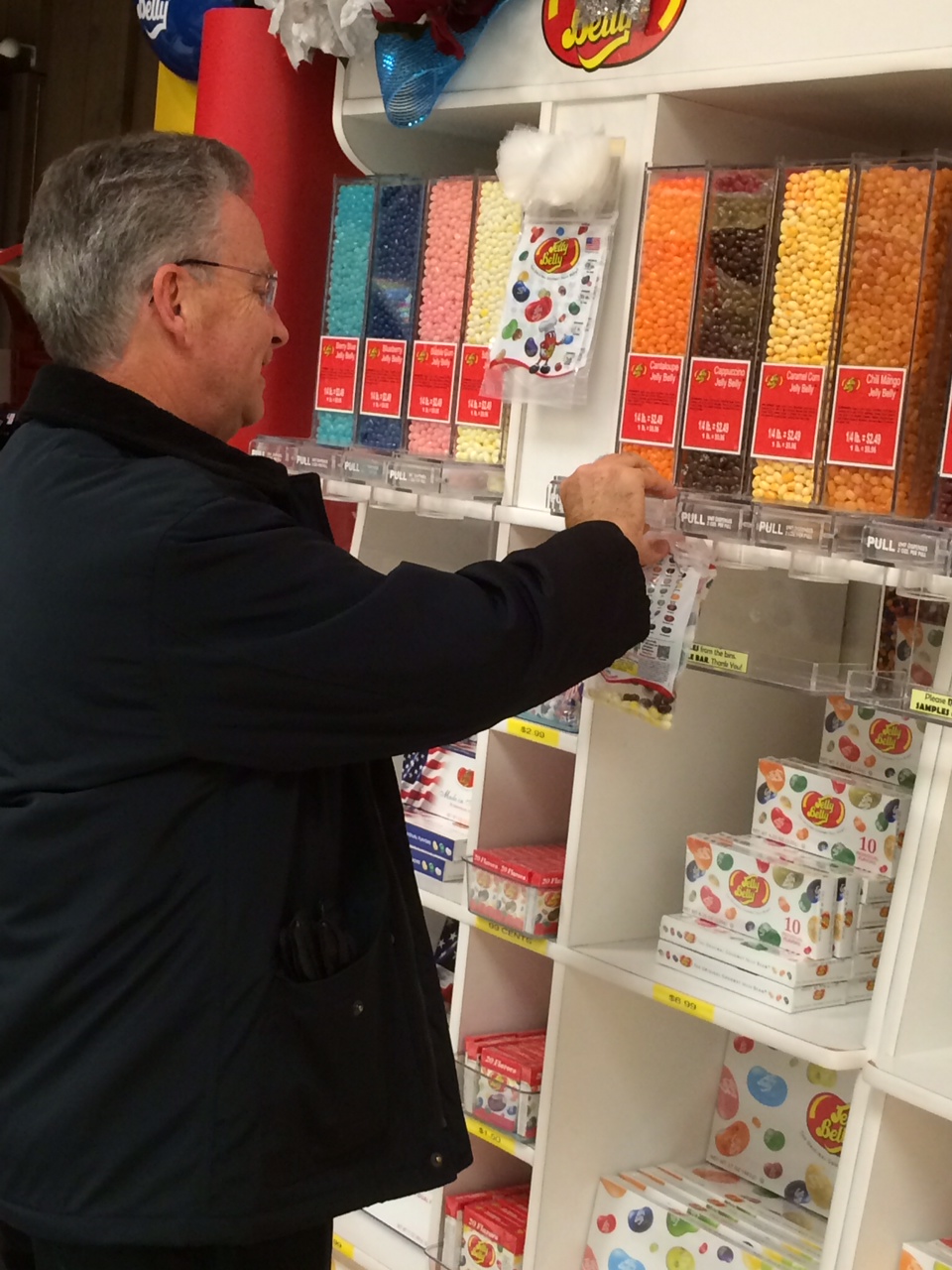
My Threshold Guardian at the Jelly Belly store.

My Threshold Guardian at the Jelly Belly store.

In addition to being a dear friend, Arnie is my personal threshold guardian. His appearances in my life always signal that change is a’comin’. The last time that I saw Arnie I left behind everything that I knew (literally and metaphorically). I began a long pilgrimage to the church of my self. It felt as if I stepped into my big wooden sailing ship and set a course for the edge of the known world and then, with great intention, sailed over the edge.

Two years have passed since our last meeting. In the interim, I have experienced Sirens and Cyclops, I lost my metaphoric ship and crew to the great whirling Charybdis, I was held captive on an island, I paid an extraordinary visit to the underworld and, at last, returned to the light with new knowledge. And, this week, as is his custom when I am ready to pass through the next portal, Arnie came to visit.

Saul’s voice roared in my head as Arnie and I debriefed my two-year journey: address your self to the field of possibility, not to the opponent. Possibility, I learned, becomes visible when we are vulnerable and available to it. It appears when we place our focus on it, when we seek it. Pushing and protecting and fighting and resisting obscures the field of possibility because our focus is on the opponent, not on the possibility.

And, of course, the greatest opponent is our self.

In the language of story, for great personal transformation to occur, we must leave behind everything we know and go on a journey into the unknown. That includes leaving behind who we know ourselves to be. In other words, we are required to let go of all the things we believe that we can control – but in truth cannot; we are required to release our insistence on keeping things “as they are.” In the end, we are required to face and then release the things that we are trying “to make work” but cannot – and let go of all the things we want to force into existence but cannot. That is the moment the opponent in our self disappears and we are at last able to turn our eyes outward and see the field of possibility that has been available for us all along.

title_pageGo here to buy hard copies (and Kindle) of my latest book: The Seer: The Mind of the Entrepreneur, Artist, Visionary, Innovator, Seeker, Learner, Leader, Creator,…You.

Eve, by David Robinson

Eve, by David Robinson

Go here to buy fine art prints of my paintings.


Possess It

An untitled  watercolor I did years ago

An untitled watercolor I did years ago

Last night P-Tom said, “This is the time of year that everyone is telling us what we need and where we can go to buy it.”

Yesterday I worked on website language. After a year-long hiatus I’m re-visioning what was once a coaching practice. All day I was aware that words like “potential” and “purpose” are abstractions; they are marketing terms. Many years ago, when I was first establishing a coaching practice, I read articles and listened to recordings full of advice about “how to start a coaching business;” the recommendation was unanimous: host free calls, help people see their problem, and end the call. Leave them standing in the mud so they will need you. Create lack (isn’t that a great definition for marketing?).

What does it really mean to fulfill your potential? What does it mean to “find your purpose?” Look to the layer beneath. To fulfill, to find…, these are terms from the canon of outcome and result. No one willingly seeks his or her endpoint. If there is a universal problem it is that we see our existence as something with a bottom line and hire coaches and therapists to help us do the accounting.

(Insert mantra: nothing is broken. You do not need to be fixed).

Good coaches, teachers, mentors, and therapists get you out of the spreadsheet and into the moment. Looking for the fullness of life is usually a process that requires the cessation of looking so we might see what is right in front of us. Stop the search and you will be found. As the old saying goes, life is the thing that is happening while you are running around looking for it.

I’m a world-class note taker and always take notes when I work with people. For me it’s like mapping verbal terrain, capturing inner geography. Lately I’ve been reviewing the maps before I destroy them and I find not seekers of potential and purpose, but people overwhelmed by the experience of 1) feeling lost, 2) feeling that something is missing or they are missing something, 3) feeling that they are pushing on a door that won’t open, or 4) a yearning for a different way of being. These are questions of feeling. These are questions of orientation to life (experiences of life). “Potential” and “purpose” are words of doing. These are questions of being.

What if meaning, value, purpose,… in life was not something found or bought but something that is already possessed?

Go here to buy hard copies (and Kindle) of my latest book: The Seer: The Mind of the Entrepreneur, Artist, Visionary, Innovator, Seeker, Learner, Leader, Creator,…You.


Change Your Mind

I used this quote by Friedrich Nietzche in The SEER:

“The snake which cannot cast its skin has to die. As well as the minds which are prevented from changing their opinions; they cease to be a mind.”

A few days ago I asked myself this question: What if I never painted another painting or wrote another word? What would happen? Who would I be?

title_pageThe first question, what would happen, is much less interesting to me than the second question: who would I be if I simply put down my brushes forever? When I was younger, I felt driven, as if I had to paint. I needed it. In asking the question I recognize that now I choose it. I don’t have to paint; I want to and consequently I am a much better artist. It’s a paradox: I am a better artist because I don’t need to be an artist. In other words, I don’t need to be, I am.

I’ve been revisiting The SEER. My initial team of wise-eyes unanimously voted the first draft to be “too much.” The book that I published is comprised of the first three chapters of the original draft. I deconstructed them and broke the steps into smaller bites. There were six more chapters outlined and, in my latest revisit, I recognize that I have a trilogy if I want it. So, book two is in process. I’m going to release the first draft in daily snippets as I write it. Everyone gets to be my wise-eyes this time around.

Here’s the launching pad section for book two from The SEER. It’s from the second cycle (story):

You can change your story. That is the sixth recognition. Doesn’t it sound simple? Say it this way: changing your story is the equivalent of changing who you know yourself to be. Changing your story often requires the loss of your illusion, a lot less armor and nothing left to lose. Who are you when you don’t know who you are or where you are going? This was the heart of Virgil’s question to me. Who are you distinct from your circumstance? Who are you when the mask comes off? More importantly, what are you capable of seeing when you are not looking through a [knight’s] visor? No one is immune to the stuff of life. Everyone lives a unique version of the story cycle. It too is a pattern, a natural process.

Go here to buy hard copies (and Kindle) of my latest book: The Seer: The Mind of the Entrepreneur, Artist, Visionary, Innovator, Seeker, Learner, Leader, Creator,…You.

Go here (to Leanpub) for all digital forms of The SEER

Canopy by David Robinson

Canopy by David Robinson

And, for fine art prints of my paintings, go here.


Enter The Castle

[continued from Tell A Good Story]

Shuttering the business, closing down my coaching practice, ending all corporate work, cleaning out the metaphoric closet – created quite a void. Standing solidly in a void of my own making I found myself once again enrapt with the Parcival tale. I’ve told this story dozens of times to audiences of all sizes, in performance and in facilitation. I wove it through The Seer as the main character’s stalking story (the story that follows you throughout your life and only opens when you are ready for it). It continues to open for me, a flower with many petal layers.

title_page

The Parcival story is woven throughout The Seer

It’s a grail quest story. Because every human being is in search of his or her personal grail (their true selves), once the metaphors are understood, it is a very useful story for navigating life. At one point in the story, after years of trying to prove himself worthy and save the world from becoming a wasteland – something that he is personally responsible for causing – believing himself to be invincible, he is defeated. A “nature warrior” knocks him off his warhorse and his magic sword shatters into a thousand pieces. Parcival strips off his armor (his role) and weeps. He lets go. He shutters his business. Despite his best efforts, despite fighting every dragon and ogre, despite defeating every dark knight, the wasteland still happened.

As is true in life, in the moment of greatest defeat, the second master appears and for Parcival it is a hermit. Parcival follows the hermit back to his cave and retreats from the world. He waits impatiently for the hermit to teach him, becomes frustrated, and finally resigned to the absence of any useful lesson, all the while, each day, chopping wood for the fire, carrying water to the cave. Over time he forgets that he was ever a knight. He forgets that he felt broken. He forgets his quest. He becomes present to the moment and is no longer invested in a role or purpose. He chops wood. He carries water. He feels the sun on his face. He appreciates his moment.

And, as is true in life, that is the moment that the grail castle appears for the second time. To re-enter the grail castle, to become the grail king (or queen), we must see ourselves as we are, beyond the role we use for armor, beyond the mission we use for meaning making, beyond the things we think we need to say, or do, or be. We have to recognize that we are enough, just as we are created, sacred and beautiful and complete. We are not broken. Nothing needs to be fixed or changed or achieved. Parcival, enters the grail castle (life) in this consciousness, speaks his truth, and the wasteland, in a single moment, disappears.

[to be continued]

Go here to buy hard copies (and Kindle) of my latest book: The Seer: The Mind of the Entrepreneur, Artist, Visionary, Innovator, Seeker, Learner, Leader, Creator,…You.

Go here (Leanpub) for all digital versions

Tell A Good Story

The Storyteller emerges from the forest. Lucy & The Waterfox

The Storyteller emerges from the forest. Lucy & The Waterfox

Over the years I’ve tried countless marginally successful ways to define for others what I do. It would seem obvious: I am a painter. I am a writer. Oh, and a theatre artist. And a consultant. And I’ve maintained a coaching practice. I’ve worked in education, the corporate world, with non-profits, and with entrepreneurs. So, in conclusion, I do too many things.

Well, that’s not exactly true. I do one thing. I deal in story.

I speak the language of story and that is confusing in any arena. What does it mean? Such a simple word, story, and yet it can mean so many different things. For instance, a truism in effective, transformational coaching is that the story doesn’t matter. By story, coaches mean the circumstance; in transformation, in the fulfillment of potential, the details of what happened – the story – are not useful. The circumstance story usually equates to blaming or endless attempts at self-fixing. The circumstance story gets in the way of growth. It is an anchor in the sea of dysfunction.

I don’t work with circumstance stories.

By story, I mean inner monologue, the-story-you-tell-yourself-about-yourself. By story, I mean the language that we use within ourselves to articulate belief. I work with the orientation story, the personal and communal mythology. Rather than get in the way, the orientation story defines the way. It defines what we see. It defines our relationship with time, with nature, with god, with community: it is the lens through which we make meaning. I help people change their lenses. Try explaining that to a CEO!

Last year, when Skip and I shuttered our business, I also shuttered my coaching practice. I ended my corporate work. Much of it came to feel like wearing an ill-fitting shirt –or a host of ill-fitting shirts – so I decided to clean out the closet. I wanted to drop all the definitions, the old forms, to make space for the new.

Last week I decided it was time to peek into the empty closet. And, as serendipity would dictate, I happened to be reading Frank Delaney’s engaging book, The Last Storyteller. On page 99 of this fictional tale, this is what I read:

“…every legend and all mythologies exist to teach us how to run our days. In kind fashion. A loving way. But there’s no story, no matter how ancient, as important as one’s own. So if we’re to live good lives, we have to tell our own story. In a good way. A way that’s decent to ourselves.”

I threw my head back and laughed. There is no story as important as one’s own. To live a good life we have to tell our own story in a good way. And then, there was this:

“…I don’t give anybody advice. All I do is release the good thinking that’s already inside of you. You’re the one who acts on your own advice, and I have the pleasure of helping you reach those thoughts about yourself. So it’s not me helping you. It’s you helping you.”

Ask me today what I do and I will say, I write. I paint. Ask me for more detail and I’ll open the book to page 99.

[to be continued]

title_pageGo here to buy hard copies (and Kindle) of my latest book: The Seer: The Mind of the Entrepreneur, Artist, Visionary, Innovator, Seeker, Learner, Leader, Creator,…You.

All digital forms of The Seer can be found here

Be The Detail

I took photo and used this image in The Seer.

I took photo and used this image in The Seer.

When I shared the early chapters of The Seer with friends, their feedback was universal: I was trying to say too much. They asked me to break it down into smaller bites. At first I resisted because I couldn’t see the path to smaller bites! In time I was able to step back and see what they were telling me. All of the necessary connective tissue was in my mind; I was filling in the thought-gaps. My wise-eyed readers had no access to my mental filler and saw a story riddled with gaps.

It was a valuable lesson for me. What I see is never what others see. Even when we share an experience, it is false to suppose that we had the same experience. We share. That is a much different thing than assuming sameness. When I think I am being clear, when I think that my point of view is right, I remember the gaps. I am projecting content and context filler onto every experience and so are all the other people in the room.

Perception is at best a moving target. This simple principle is what makes art so necessary and science so exciting. Newton thought he was dealing in absolutes. He was describing a universe based on uncontestable fixed principles. And then came Einstein. We see from and through a context that we like to call “truth” but, it is at best relative. Is it a particle or a wave? Well, it depends…

I used to facilitate an exercise called Mask Mingle. It is a powerful way to open eyes and hearts to the grace that we grant ourselves but rarely grant to others: specificity of story. We cannot walk through our days without carrying the specificity of our experiences and the rolling, roiling interpretations and re-interpretations of those experiences that we call ‘memory.’ No one can see what we’ve done and where we’ve been. No one sees the joy, the hurt, the dreams, the losses, the fears, the perseverance. They cannot see the detail. The best they can do is interpret us through their lens. We will always be a generality in the eyes of others.

I find that central to much of what I write about and coach about is the surrender of what other people might think. It is a fallacy to think that you can determine what others think of you. You will never see through their eyes. You will never know their lens. It is a powerful moment when an artist (or anyone) realizes that they have no control over the perception of others. The best they can do is offer their gift from their unique, unknowable, rich, point of view. That moment is called artistic freedom.

title_pageGo here to buy hard copies (and Kindle) of my latest book: The Seer: The Mind of the Entrepreneur, Artist, Visionary, Innovator, Seeker, Learner, Leader, Creator,…You.


Order Chaos

One panel of a triptych I did for a performance with The Portland Chamber Orchestra. This is, "Prometheus: Resurrection"

One panel of a triptych I did for a performance with The Portland Chamber Orchestra. This is, “Prometheus: Resurrection”

There is order. There is chaos. They are as intimately related as magnetic poles, the pull and push of action. Chaos is pulled into order and order is pulled into chaos, forms are thrown up and pulled down again. Life spins on this axis.

Today during my walk I made certain to step on the leaves. With the assistance of the wind, the trees are releasing leaves in great flurries of color. Orange and yellow and red swirl to the ground and then swirl on the ground, too. The movement is an invitation to step boldly on the carpet of color. I love the sound that it makes, the swirling and the crunching. What was out of reach a few short moments ago is now underfoot. Life is like that.

The wind off the lake was bitter so we turned down a side street and sought protection amidst the houses. It is rare that we don’t, as a Buddhist might say, “Eat the cold,” but today we desired presence to be warm. We scurried home, shuffling our feet through the leaves, and sipped hot apple cider, fingers wrapped around the mug to absorb the heat.

I read recently that the path to realizing our divinity is to accept our human-ness. Trying to be better than we are blinds us to how beautiful we really are. It’s a paradox. Apparently, divinity is not found in perfection but in the messiness of everyday. It is not a fixed state, but moves between the poles, sometimes wearing the mask of order, sometimes arriving in the face of chaos.

title_pageGo here to buy hard copies (and Kindle) of my latest book: The Seer: The Mind of the Entrepreneur, Artist, Visionary, Innovator, Seeker, Learner, Leader, Creator,…You.