Place No Blame

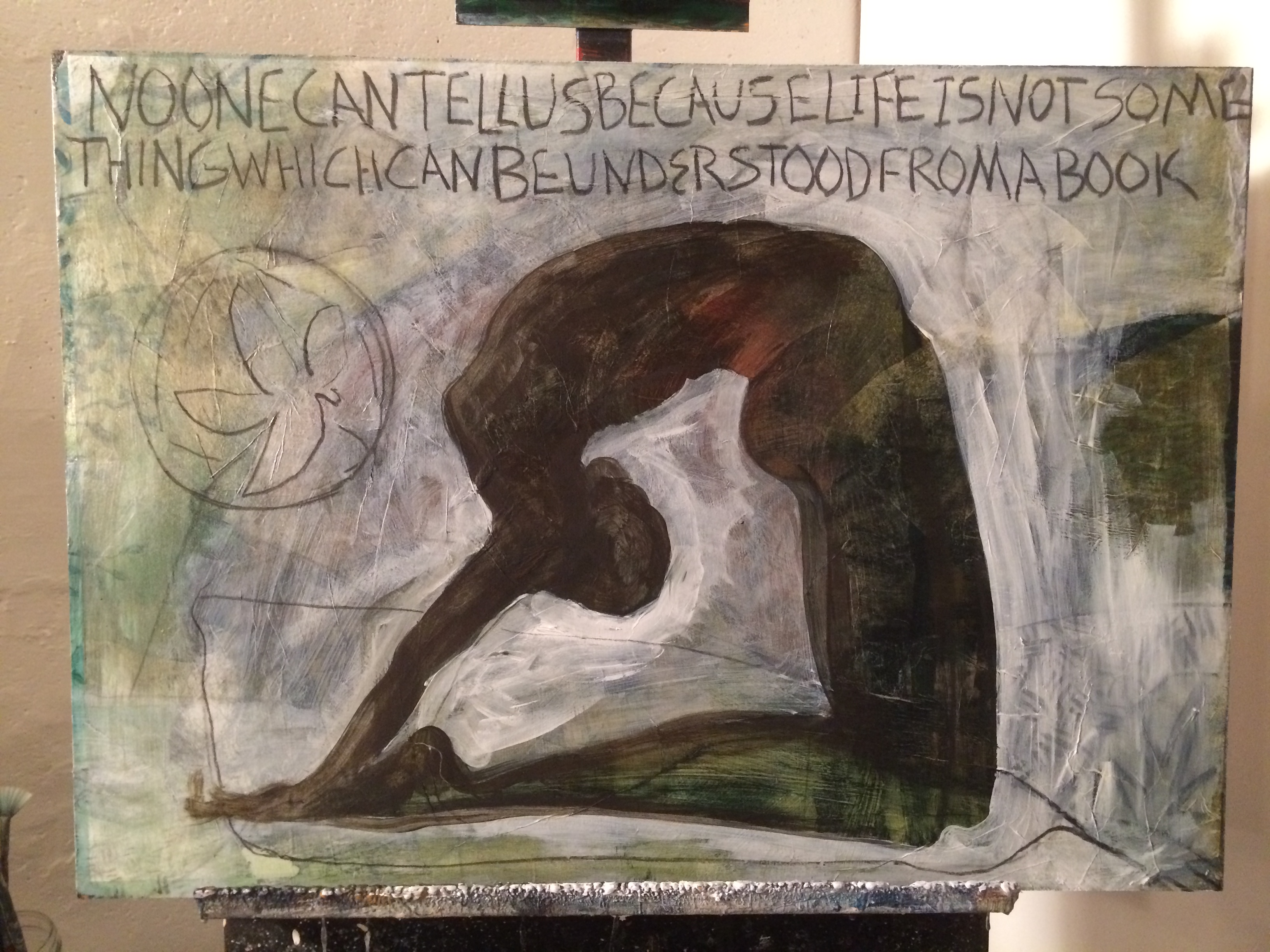
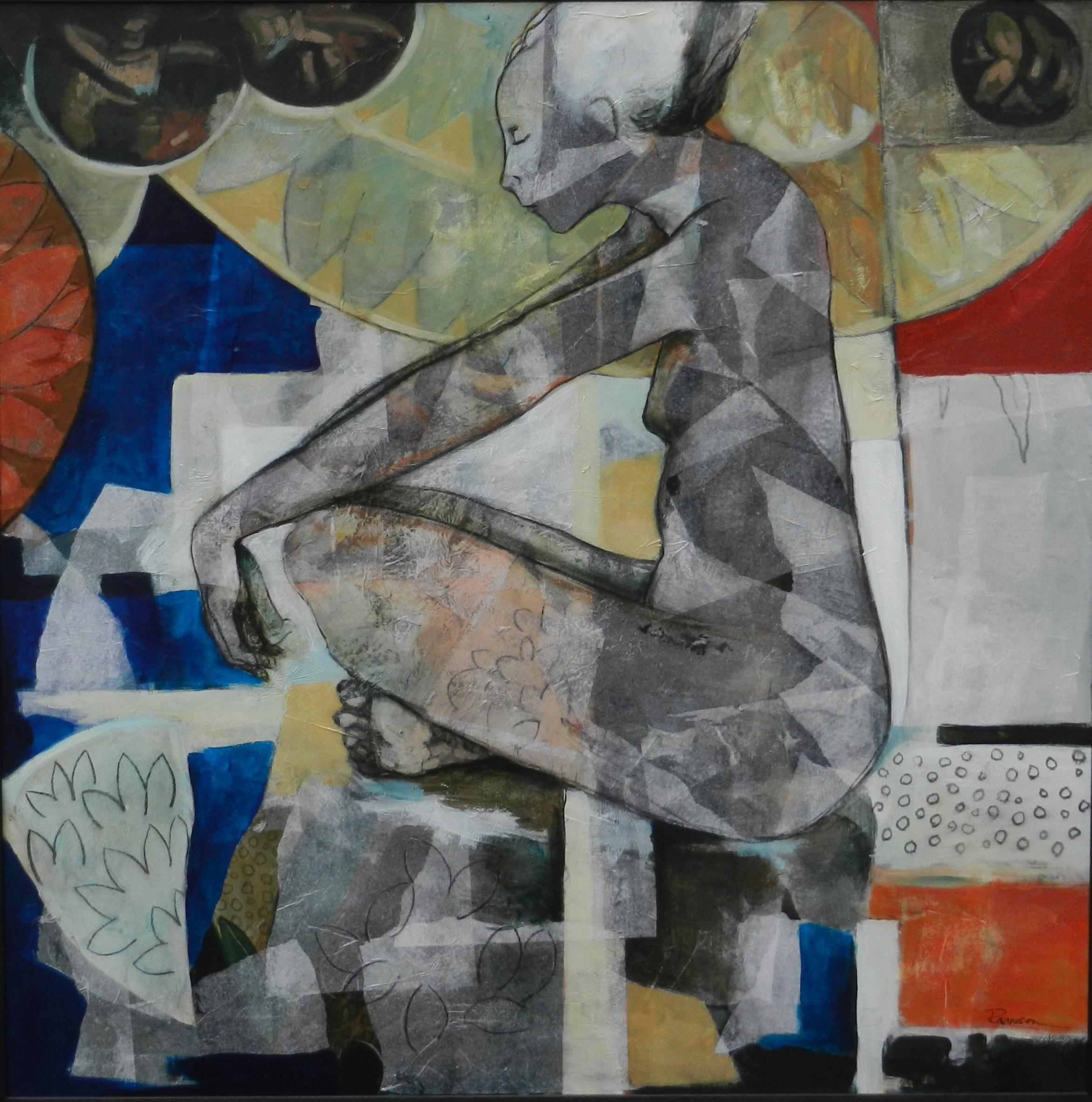
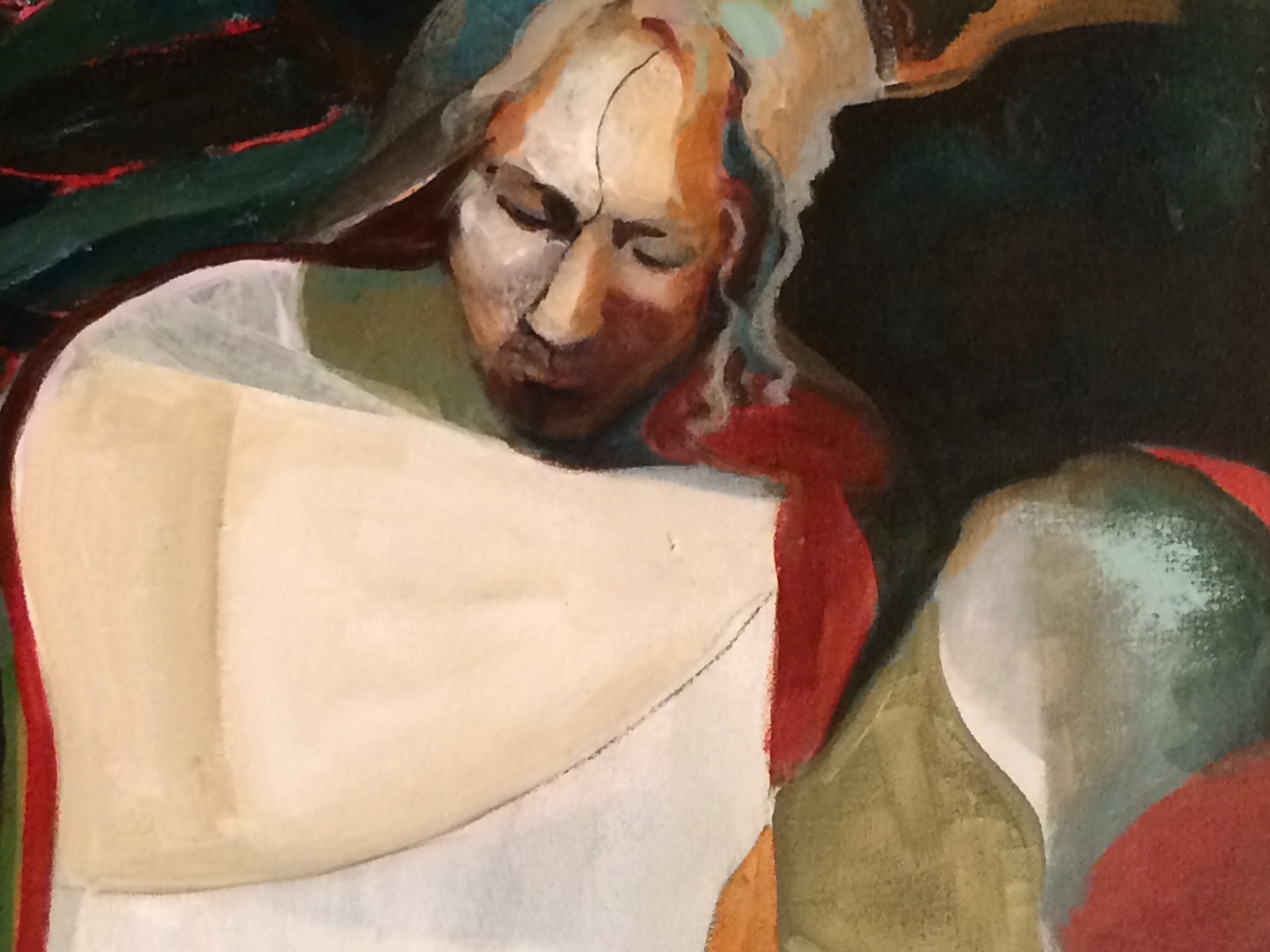
a detail of my painting, "John's Secret."

a detail of my painting, “John’s Secret.”

I’ve been thinking a lot about forgiveness. Earlier today, Kerri read an article to me and the author, someone with terminal cancer, wrote that blame is a waste of energy. Life is too precious to waste on blaming. Forgive and move on.

My meditation on forgiveness has inadvertently become a meditation on blame. As it turns out, forgiveness and blame are often dance partners.

My favorite phrase of this week: Blame, no matter where you place it, does no good. To me, the crucial concept within the phrase is this: blame requires placement. Although it might feel otherwise, blame is not a passive act. We place it. We aim it. It is a way of making meaning of things that don’t feel good. I’ve written that blame is like sugar; it is addictive. It is choice wearing the mask of it-happened-to-me. Oddly, as an active choice, blame actually inhibits action and as an inhibitor it does no good either for the placer-of-the–blame or the recipient. It stops motion. It is an energy eddy. It is destructive both ways.

Forgiveness is also not a passive act. Forgiveness takes more effort because forgiveness is an unmasked choice. It, too, requires placement and aim. It is also a way of making meaning of something that doesn’t feel good. But, unlike blame, forgiveness does great good for both the giver-of-forgiveness and the recipient. It creates motion. It is generative both ways.

Walk Through The Firewall

from my narrative series: Sleepers

from my narrative series: Sleepers

The text read something like this: There are some things in life you cannot circumnavigate. You can only move through them.

Carol told me that each year there is a growing change in her students. There is a gap between their generation and ours – and it is alarming. She teaches young actors at a college for the arts.

“What’s the difference? “ I asked, “what’s the change?”

“They are increasingly more and more medicated,” she said. “Through their whole lives, since they were small children, they’ve been reinforced through medication that their emotions, what they feel and how they express it, are bad. To teach them to be actors, to be authentic on the stage, to allow that what they feel is necessary and good, is nearly impossible when they are drugged to prevent them from feeling anything.”

She paused for a moment and added, “I can’t ask them to get off their drugs. I can only help them consider that their feelings, their emotions, are not the enemy but the route to truth.”

I offered that the drugs serve as a firewall that keeps them from themselves. It dulls them from the full range of life experiences. Years ago, when I was working in the schools, I experienced the first wave of kids drugged into compliance. It seemed that the solution for almost everything was medication. Their attention was either in deficit or their behavior obsessive and, either way, meds were the answer.

We talked of the other firewalls, the drugs that numb us or distract us from a full range of life experiences. Television in excess is the most obvious. And then there is the downside of social media; disconnection in the guise of connection.

I shared that, on my move to Wisconsin, I decided to unplug from the daily news. For me, it was serving as a firewall against the essentials of life. Too much adrenaline and fear numbs us. It makes us close, shut down. I felt that the noise was doing the opposite of what it pretended. I suspected that I was less informed by listening to the onslaught of opinion-masked-as-news. I realized that I was agitated all the time by the battling correspondents and felt infected by the us-and-them picture they were painting of the world. When minor events are elevated to disaster status the real disasters pass unnoticed. Everything evens out. All colors of life reduce to bland gray.

Now that I’m through the firewall the events of real importance are evident beyond the chatter. If I really need to know it, I hear about it. In unplugging, I am actually more informed. And then there is this: without the incessant chatter, my artistry is coming through with clarity and potency. In seeing more clearly I can see my self more clearly. When not dulled or distracted by the noise, the full range of sound and color has re-emerged. The lesson: this world does not need fixing or changing or improvement. Neither do I.  It is gorgeous and profound when we are able to live unafraid of what we feel.


Step Toward Faith

My latest. An unusually small canvas.

My latest. An unusually small canvas: Will Is Belief.

I began writing this post a few weeks ago, just before the run to Florida and the launch of Beaky’s book. It was a very busy week and I’d forgotten that I started but did not finish the thought. This morning, wanting to get back into the rhythm of writing, I opened my iPad and found these words already written and awaiting my return:

I’m sitting in the choir loft watching the evening sun illuminate the stained glass window. I’m tired tonight and listening to Kerri, preparing for the Maundy evening service, rehearsing Nancy’s solo. Nancy’s voice is like a warm cello, deep and rich, and is working like a sound-massage on my tired bones. I’m giving over to it.

This cycle of services on Easter week is relatively new to me so I’m paying attention to all of the symbols and rituals of this story of rebirth. As is true of every great story cycle, the night is darkest before the dawn (thus, the cliché). This night, called Maundy Thursday in the cycle – I’m told that Maundy means mandate – is the night of the last supper and all the betrayals that followed. It is the segment of the story that is chocked full of crises of faith. If, like me, you are a lover of story you will recognize that some form of betrayal usually precedes a crisis of faith and, in turn, a crisis of faith always leads to growth and new direction; it always leads to sunrise.

Others betray us. We betray ourselves. Betrayal happens on the edges of the dark forest and forces a step into the unknown. Betrayal happens when we fall asleep (that is most often how we betray ourselves – sitting in front of the television to numb us to the richness of our lives). Things crumble: the relationship that we believed was secure, the truth into which we rooted our belief, the career that we thought would carry us to retirement. Security dissolves, identity dissipates, and then what? All the fears bob to the surface. All the dragons come out of the closet.

This was the unfinished thought I found this morning. I have no recollection of where I was going with it. Now, two weeks and a lot of life later, I read it as if someone else wrote it. However, there was one other sentence, detached from the others. It now reads like a mystery to me. When writing, I routinely float a sentence at the bottom of the page because it is the point of what I’m trying to reach. My floating sentence read:

A crisis of faith often has very little to do with faith.

And, as I try to resurrect my thought of a few weeks ago, I can only smile and write the first thing that occurred to me when I scrolled down and found the floater: Faith, like love or truth or time or anything else, is not something fixed. It moves and grows as we move and grow. A crisis of faith is really a step toward faith renewed. It enlivens. It helps us retire old dragons or let go of empty promises. It gets us out of our easy chair and helps us fully feel the day.


See It Blaze

text from Krishnamurti as it appears in my painting

text from Krishnamurti as it appears in my painting

Every once in a while the things I read, the experiences of my life, seem to coordinate. Like a thought-confluence, the books, the poems, the errands, the conversations, run into a single thought-stream. It’s as if they called each other last week and asked, “So what are you going to wear?” Often, this is how the universe places its hammer on my head.

A few stanzas from a Mary Oliver poem, Morning Poem (read the whole poem sometime. It’s breathtaking):

each pond with its blazing lilies
is a prayer heard and answered
lavishly,
each morning

 whether or not
you have ever dared to be happy,
whether or not
you have ever dared to pray

Did you catch the word, ‘lavishly?’

Here’s a bit from Carlos Castaneda, A Separate Reality:

What makes us unhappy is to want. Yet if we would learn to cut our wants to nothing, the smallest thing would be a true gift…. A warrior knows that he is waiting and what he is waiting for; and while he waits he wants nothing and thus whatever little thing he gets is more than he can take.

Prayers answered lavishly. Whatever little thing he gets is more than he can take.

For me, there are a few important words that have, from over-use, fallen into the bin of meaninglessness:

presence, transformation

Actually, they are in the bin because we’ve managed to make them (like the word, ‘art’) commodities, marketing terms, something owned or purchased with coin or wile or reason. Something possessed or not possessed. Something available to a few but not all.

Sometimes the words open again, the experience opens again, when said another way. For instance, the phrase, “cutting our wants to nothing,” is another way of saying ‘presence.’ Don Juan would have made a good Buddhist! When present, the ordinary pond blazes, it teems with life and isn’t the experience of teeming life at the heart of any good prayer? The last time you caught your breath, a sunset or watching your child sleep, you were present, you wanted for nothing,  your prayers were lavishly answered.

my latest work-in-progress

not yet finished – maybe never will be – an, perhaps, that is the point.

The message of the hammer on my head: The pond is always blazing. The transformation is not in the pond but in our ability to see it.


Make It So

Pasta. Meat sauce. Warm Bread. Wine.

Pasta. Arugula salad. Wine.

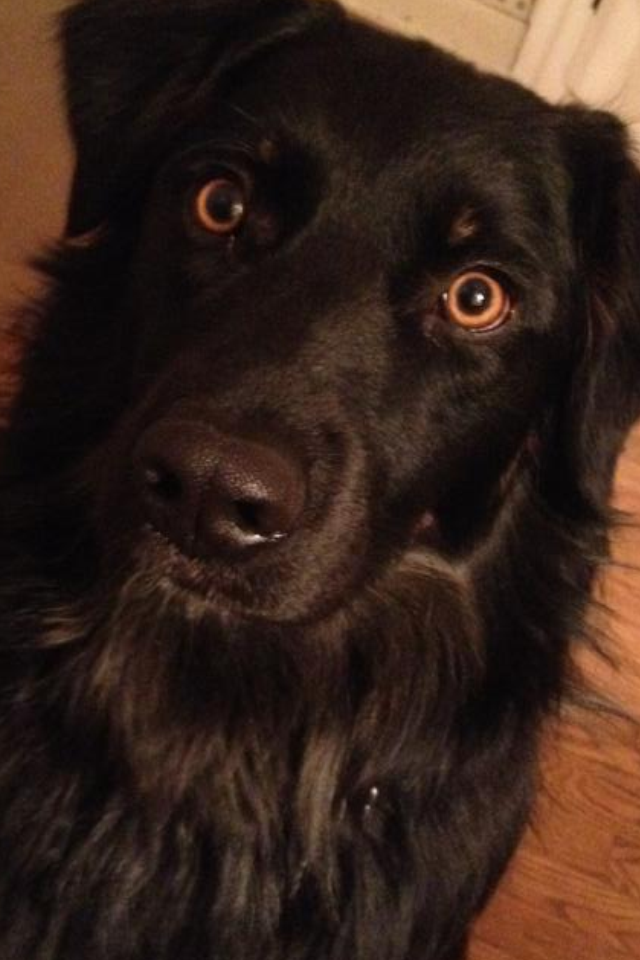
Tripper Dog-Dog-Dog knows the world through his nose. He sniffs everything. It is not uncommon after we finish a meal to come face-to-muzzle with a scent-curious Dog-Dog. Lately, as the objects of his sniffer, we’re given to staring into his amber eyes and offering the menu, saying something like, “Pasta. Arugula salad. Red wine,” or “English muffin. Peanut butter with black cherry jam. Banana. Coffee.” Satisfied with our description, he moves on to the next smell-enticing investigation.

I delight in our Dog-Dog food reports. They’ve become commonplace and matter of fact; “Chocolate chip cookie. Espresso.” Our reports never contain qualifiers, so, for instance, we never say, “A great chocolate chip cookie. Delicious espresso.” We provide the minimum, the noun.

Our Dog-Dog reports have rekindled an age-old fascination of mine: the power of words, specifically, the enormous power of the labels we attach to our experiences.

Language is a sword that cuts both ways. It can liberate and it can imprison. The difference is in how it is used. Language is the primary tool we use to make meaning. Big magic happens the day a person realizes that meaning is not something that is found, rather, it is something that is given and it is given the moment we apply a word-label to an experience. Nothing is good/bad, hard/easy until our label makes it so.

Applying a label to an experience is an act of creation. It is not passive. Take note of the word-judgments you apply to yourself or to others. For a week make a game of flipping them over and applying the label “beautiful” to where you usually apply a judgment. So, for instance, instead of, “I am fat,” why not say to your self, “I am beautiful.” Both are labels. One imprisons while the other liberates. The difference is a single word.

The label determines the possibilities we see (or don’t see). In a past life I used to facilitate organizational change and I came understand that my role was to help my clients ask better questions (use different language). They always came to the table with a “how” question: how do we change without feeling any discomfort? Response: what might you see if you stopped pre-labeling what you might feel as “discomfort?”

The mantra: have the experience first, make meaning second. And then, recognize the great capacity and opportunity you have to make meaning. Why not make a better meaning? Why not take a step and let it be a step merely?

Try this: do the Dog-Dog and, for one week, eliminate the qualifiers so that nothing is good or bad or right or wrong. It just is because you choose to make it so.

Make Quiet

A sanctuary

A sanctuary

It is Thursday night. Kerri is attending a meeting at the church and I have tagged along so I might sit alone in the sanctuary. I’ve always loved entering the quiet spaces. Once, a lifetime ago in Sedona, John called me “guru dude” because I sat for hours nestled in the quiet of a vortex. It felt like minutes to me. I think it unsettled him that I was so completely settled. I know it unsettled him that I would rather seek quiet than make noise.

Sanctuaries, I’ve learned, are everywhere.

My task, my mantra, and my delight of a few years ago was to realize that all the world is my studio. I had some amazing help and more than one universal dope slap before that realization sank in. I used to believe that in order to create I had to escape the world to find the refuge and quiet of my studio. I felt like I had to go to my studio to find my creative place just like I felt like I needed to go to a vortex to experience deep quiet. I had it upside-down. A studio, like a meditation practice, is meant to bring us into communion-with, not reinforce our isolation-from. It is not a place of escape. It is a place of joining. Quiet is not something we find as much as something we allow.

To me, the word “studio” and the word “sanctuary” are now equivalents. They are the places that creating happens and creation is a quiet process: the inner chatter stops, channels open, and something comes through. A few weeks ago, in the second performance of The Lost Boy, we stepped onto the stage and everything was quiet inside. There was no past and no future; there was only the moment – and it joined us, audience and performers, in a single, shared story. Something came through us; together we created. There was no effort, there was no striving; there was, as Jim Edmondson used to say, “a dance of giving and receiving.”

This “joining” is the dirty little secret and great power of the arts. It is something that school boards will never understand but something that dictators across the ages have feared. Artists are the vortex of joining, of shared identity, of explosive quiet, of laughter that crosses lifetimes. The arts do not separate; when at their most potent they unite. They clarify. They delineate substance from chatter en route to a powerful common center that is as holy, as quiet, as it is creative.

Reach

photo-6In these few weeks post Lost Boy I’ve been writing thank you letters and sending Kickstarter rewards to the many people who donated to the campaign. I am humbled by the number of people who stepped forward to lend a hand, offer resources (financial and otherwise), and/or heap us with the moral support necessary to produce the play.

The Reminder: no one does anything alone. All creative acts, all things that are useful in this world, all triumphs that seem on the surface to be an individual achievement, are, in truth, a group effort. Life is a team sport. Quarterbacks are nothing without a front line, a coaching staff, a back office, a marketing machine spinning the tale. They also had mothers that for years drove them to practice, families that stood in the cold to watch them play little league, and a host of friends who told them that they could do it if the only kept going. Artists are no different. Even the loneliest painter has a rolling lifetime team whether they recognize it or not. Consider this simple basic: a painting is never complete until someone other than the artist engages with it. A play is never complete until an audience arrives. The whole point is to make or accept an offer to/from an other.

We, the people of these United States, place the accent of our existence on the achievement of the individual and that sometimes makes us blind to the obvious truth of our existence. We do nothing of worth on this earth without the support and participation of others; relationship is at the core of anything worth doing.

from the 2015 Racine snow carving contest. I'm sorry I did not capture the artists names!

from the 2015 Racine snow carving contest. I’m sorry I did not capture the artists names!

Once, many years ago, I lived in Los Angeles. I did not know my neighbors. I had no idea or desire to know who was living in the houses next to me. One night the earthquake came and our illusion of independence was stripped bare. With no power, no water, no heat, and compromised housing, the first thing we did was to reach to each other. When the illusions of comfort and security are stripped, our real need (each other) becomes glaringly apparent.

I wrote this play, The Lost Boy, because someone dear to me, over a decade ago, asked me for help. I was grateful that he asked – it meant I got to spend time with him and return some of the attention and love that he had invested in me. When the metaphoric earthquake hit – when Tom died – I had no recourse but to reach out to others; I produced this play when I realized that I was not alone and all I need do was ask for help. Legacy, like story or life, is an infinite loop of relationships.

Do What Is Most Natural

IMG_0817The snows have come. The temperatures are grindingly low. Sitting at my desk, staring out the window at the world’s hibernation, I had a few thoughts about transformation. Actually, just before coming to the desk I flipped open the Bibles of Mankind for my random-thought-of-the-day. Today I landed on the Tao and specifically, this line: “By a transformation they live. By another transformation they die.”

In our births and our deaths we are all experts at transformation. In fact, in our progression through the many bodies we will in habit, the many phases we will navigate during the span of our singular life, we need not think about transformation or try to achieve it. Transformation is what we do. It happens. Track the progression of any life from infant to old age and you will witness a remarkable transformation.

I’ve just completed the first full cycle of seasons in my new home. Because it is all new to me, I’ve had the eyes to see the nuances, the profound changes in the trees, the lake, the rhythms of life including the migrations of geese. Nothing is normal (yet) so everything is special and alive. The cycle of the seasons, like the continual movement through the long body of life, is an ever-present transformation. The seasons do not try to transform; they are transformation.

People think they need to intend transformation. We seem to think we need to work at it to achieve it and somehow do not transform if we don’t marshal the process. Consciousness, like the body and the cycles of the seasons, transforms whether we intend it our not. That is the nature of consciousness. That is the natural movement of awareness.

title_pageGo here to buy hard copies (and Kindle) of my latest book: The Seer: The Mind of the Entrepreneur, Artist, Visionary, Innovator, Seeker, Learner, Leader, Creator,…You.

'Dancing In The Front Yard' by David Robinson

‘Dancing In The Front Yard’ by David Robinson

Go here to get posters and prints of my paintings.

Look Up

Eve, by David Robinson

Eve, by David Robinson

The nights have been bitter cold and clear. The cold always seems to make the stars sharp like crystals. Standing on the back deck, looking at the stars, I remembered a conversation I had years ago. I was working with students and we strayed into a discussion of human beings connection to the stars. It was cosmology in a nutshell.

Here was the gist of the conversation: something happened to human consciousness when they (we) understood that our patterns of life on earth were (are) oriented to happenings in the sky. For instance, our impulse to worship is intimately connected to the solstice and equinox: the disappearance and return of the light. Our migration habits, planting habits, daily rising-and-shining habits are relative to the movement of the sun. The tides in the ocean and the waters in our body are responsive to the pull of the moon. With the awareness, we crossed a line from chaos to order, from unconsciousness to consciousness. There was a relationship, a pattern, a belonging, a participation. There was something bigger.

During that same period in my life I also worked with a group of inner city students who had never seen the stars. It was a revelation for me. For them, there was no sense of relationship, there was no “something bigger.” There was a load of anger and existential separation.

This holiday season, I was struck by two things: 1) how many times I had conversations with people, glued to their televisions, who are frightened and feeling helpless by the happenings in the world, and 2) how many casual family photos crossed my path featuring a gathering of individuals, alone together, faces to smart phones. Everyone was looking down.

Standing on the back deck on a dark and starry night, wrapped against the cold, I wonder what some distant teacher in the future will tell his or her students about what happened to human consciousness when they (we) ceased looking up.

title_pageGo here to buy hard copies (and Kindle) of my latest book: The Seer: The Mind of the Entrepreneur, Artist, Visionary, Innovator, Seeker, Learner, Leader, Creator,…You.

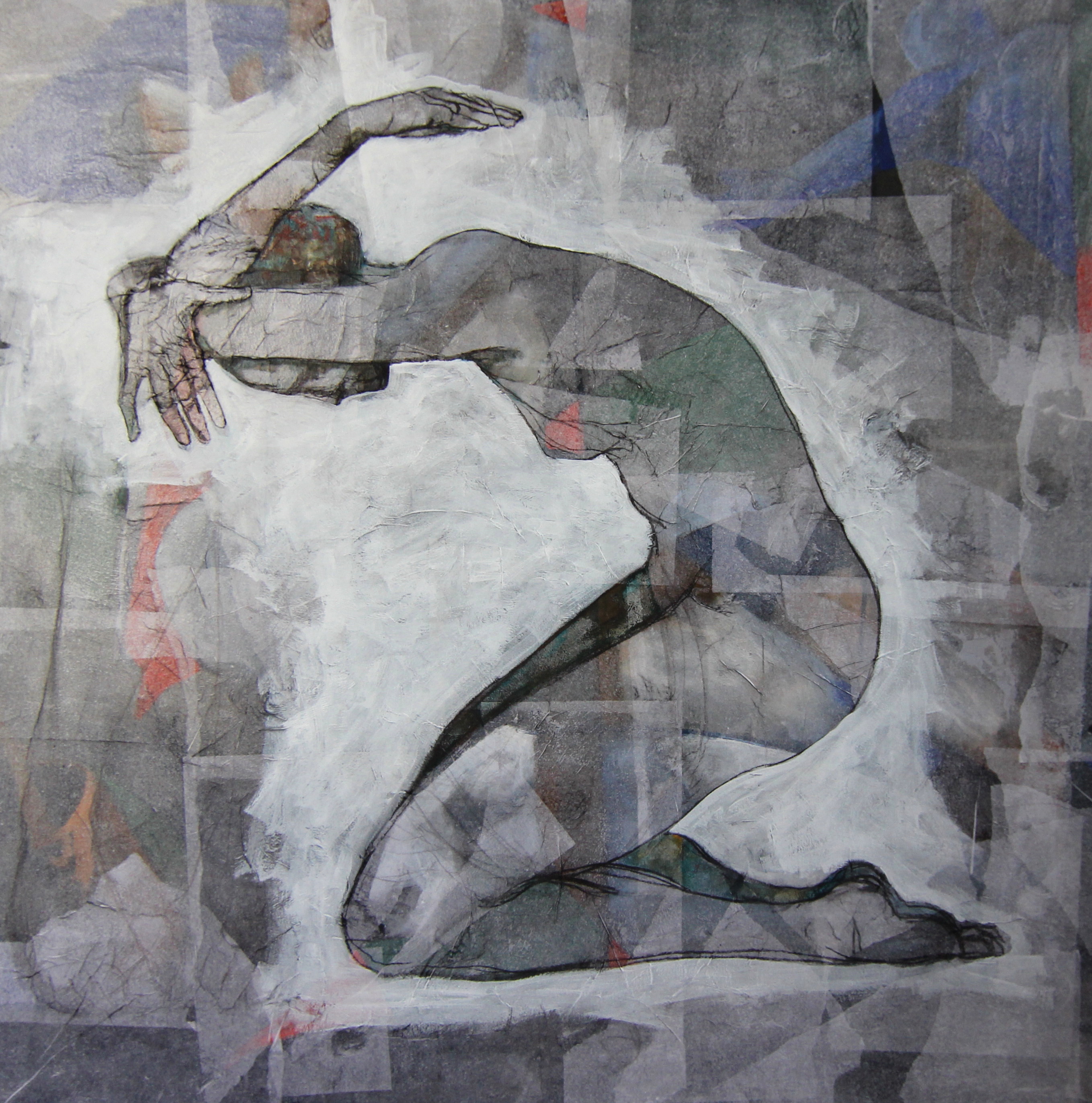
Yoga Series 7Go here for prints of my paintings

Make No Sense

Untiltled Narrative by David Robinson

Untiltled Narrative by David Robinson

The cliché: life is a cycle. Order begets chaos and chaos begets order. Both are necessary. Just as spring is not possible without winter, order without chaos makes for only half a life. Safety without uncertainty makes for only half a life and a very boring life story.

Ann passed away last night. Her battle with cancer was long and nothing short of heroic. Kerri said, “She was such a bright light! Damn cancer. This makes no sense.” Too true.

Last night, John came back into our lives. We sat for hours talking of the events and changes of the lost years. He told us of the necessity to finally stop trying “to make things work” and how he stepped into the discomfort of uncertainty. Now, standing solidly in his uncertainty, he feels both lost and found. That is a great description of how change feels. We got the news of Ann’s death while John was visiting. We had a glass of wine and made a toast to her life. And then we made a toast to appreciating life in all of its textures. John said, “At the end of the day, all that really matters is a bottle of wine to share with friends.” Too true.

More clichés: rejuvenation necessarily begins in the province of disorder and the unknown. The journey back to self winds through miles and miles of uncharted territory.

Each journey is made beautiful by the monsters and masters we meet along the way. Both are teachers. Both bring gifts and force changes of direction. The Cyclops is as necessary as the sage and both serve new sight and the refocusing of the eye. Both are necessary to strip away our resistance to the cycles, to peel away the protective layers we pile on to life that obscures what truly matters.

title_pageGo here to buy hard copies (and Kindle) of my latest book: The Seer: The Mind of the Entrepreneur, Artist, Visionary, Innovator, Seeker, Learner, Leader, Creator,…You.

Yoga.MeditationGo here for Fine Art Prints of my paintings