Name It Or Not [on DR Thursday]

David Robinson 4by4 copy 2

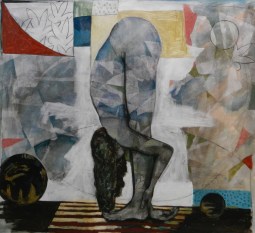
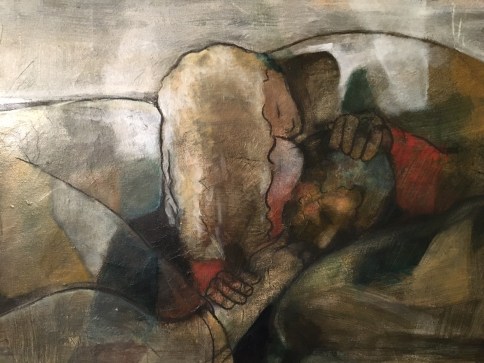
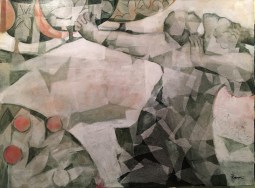
I sold this painting a long time ago. It’s a big piece, four feet by four feet. George Broderick sold it through his gallery in Portland, Oregon. The day we hung it in his space, he asked me what it was called. He was making a label for the painting with the title and price. I didn’t have an answer and said the first thing that came to me. “It’s called Four by Four,” I said. George wrinkled his brow.

True confessions: I’ve never been good at naming paintings. In fact, I used to resist it. I think a viewer should name the painting. I think a viewer does name the painting in the first moment they see it but then they dump their response when they read the label. But, reality has a way of setting in. As you might imagine, it nearly impossible to keep track of multiple paintings when they are all called Untitled.

For a while – a short while – I tried giving each untitled piece a number. Untitled 624. Untitled 29. “Cop out!” was the cry from friends and gallery staff. “What’s it called?” There was no mercy.

I was much more snarky then than I am now, I so I responded to the requirement of proper names by keeping a notebook of words and phrases that I liked. When a painting was being readied for a show I’d randomly pull a notation from the notebook and tack it to a painting. “There! A name!” That, too, was a ridiculous strategy. It confused everyone, including me. When it comes to tracking things, random associations are not very memorable and I’d inevitably lose the notation. I was constantly opening my notebook and renaming paintings. Plus, at openings, artists are always asked about the names they give to paintings and people were forever asking about a name/painting and I couldn’t remember which painting carried which random tag. More than once I stared blankly and stuttered until the uncomfortable patron moved on.

It has come as a great relief to me that Kerri actually likes to put names on my paintings. Nowadays, my foolproof naming strategy goes like this: “K.Dot, what would you call this painting?” And, without fail, she  always has a response.

“Why did you call this 4 x 4?” she just asked, hoping that the name would spark something to write about on her blog.

“I can’t remember,” I replied, lying outrageously. “What would you call it?” I asked.

She squinched up her face and studied it for a moment. “Slumber,” she said.


read Kerri’s blog post on 4 x 4


drc website header copy


snapchat website box copy


4 x 4/Slumber ©️ some date in the past and really who knows and who really cares?

Pace And Shed [on DR Thursday]

underpainting copy

underpainting

Like all artists I pass through periods of discontent with my paintings. They become like ill-fitting clothes. I want to shed them. I’m embarrassed to claim them. I start poking around for something new. Something that fits.

It took me more than a few cycles of discomfort to realize that discontent was actually a gift. It is the leading edge of curiosity, the fire storm that makes way for rejuvenation. Artists are not immune to holding on tightly to the safety and comfort of what they know and need a good dose of discontent to loosen their grip. At least I do.

Discontent makes me range around. Try stuff. Tear things up. Scribble furiously. Wonder if my muse has abandoned me (feel sorry for myself). Make really bad art (not on purpose). Make really bad art (on purpose). Take walks.

Discontent allows my empty well to refill. It pops any illusion I might carry of perfection. It turns my ship and hoists full-sail toward the edge of the world. And, it is always when I sail into uncharted waters that I find my muse waiting. She drums her fingers and says, “I thought you’d never get here.”

Ten years ago, when becalmed in the middle of my artistic ocean, I saw a pile of tissue paper in the corner of my studio. In a fit of why-not-nothing-else-is-working, I tore pieces of tissue and slapped them onto the painting-of-my-discontent. There sat my long missing muse, fingers drumming. “Texture,” she yawned. “You might want to see where this takes you.”

It’s taken me a long way. And, to my surprise, just a few weeks ago, I woke up and my paintings, like ill-fitting clothes, no longer fit me. I look at them as if someone else painted them. “Yikes,” I thought, “I hope no one saw these…” My muse packed her bags. She is nowhere in sight. I paced a little. Discontent like fog descended.


read Kerri’s blog post about UNDERPAINTING


buffalo adirondack chair website box copy

mother&childprocessshot copy

sometimes the underpainting becomes the painting…this is a slice of Newborn


newborn ©️ 2019 david robinson


Listen To The Whisper [on Not So Flawed Wednesday]

blessed are the curious copy

this image comes from my niece Hannah, a great adventurer and inspiration.

One of the mantras – I called them caveats at the time – that I hammered into clients when I was young and foolish, was this: have the experience first, make meaning of the experience second. It is the natural order of things. It is, after all, how the brain works. Stimulus first. Then comes the meaning-making.

Curiosity is at the epicenter of every hobby. It is what makes us look at hills and walk toward them. It is the driver of scientists and artists alike. What if…? It need not be grand or earth shattering. In fact, curiosity most often leans in and gently whispers.

Adult-people routinely do themselves a great disservice  by making meaning of an experience before they actually have it. It’s going to be hard, bad, no good, dirty rotten, obstacle-laden, shame-ridden, horror inspiring,…or the worst pre-determination of them all: same-old-same-old. Just another day like any other.

So much armor against experience.

Human beings are hard wired for curiosity. What happens to put a crimp in so much good wiring? Why is it so difficult to open to possibilities? To allow that each day of life is not prescribed but is actually filled with unknowns.

The unknowns are the things we sometimes call ‘play.’  I have great faith in people’s desire to play. Inside all of that heavy armor lives the original impulse, curiosity, and it only takes a small reach beyond the protection to touch play. From play, it is a short hop to full-fledged adventure.

Blessed are the curious. Yes. A secret to “how?” The armor comes off – always – with these powerful magic words: “I don’t know. Let’s find out.”


read Kerri’s blog post about BLESSED ARE THE CURIOUS


archeswebsitead copy


Tend One Way [on KS Friday]

be thou my vision songbox copy

This is what I’ve learned. Boil away the rules and regulations penned into the great spiritual traditions and you will find they all pretty much say the same stuff:

~presence is not something you can seek because you are already present. What else? It is not a matter of finding it as much as realizing it. Fear is a story in your head and will always split you into yesterday and tomorrow. I’ve learned: get out of your head.

~in this dual-reality world you can make sense of your life in one of two ways. You can either put the accent on separation (us/them, right/wrong, rules and regulations) or you can put the accent on unity (love, the middle path, relationship). You will most likely dance between these two in a miracle of creative tension. Sometimes you will feel alone, self-righteous and under assault (separate). Sometimes you will feel connected and a part of something bigger than your little self (united). Eventually, you will tend one way or the other. I’ve learned: either way, you will make meaning of your limited days on earth according to where you place the accent. “God” has nothing to do with the choice you make. That is all on you.

Mostly I’ve learned: it is the lucky few who are able to see that fear is the story in their head that always splits them (separation). The love-path opens when we get out of our heads and into our hearts (unity).

The title of Kerri’s hymn album is Always With Us. This beautiful hymn, played beautifully, is called Be Thou My Vision. Listen. Kerri just might help you, for a moment, stand in your presence (love), which is, of course, the only real way of getting out of your head. Thus, the real power of the arts and the extraordinary gift of this great artist.


BE THOU MY VISION on the album ALWAYS WITH US is available on iTunes & CDBaby


read Kerri’s blog post about BE THOU MY VISION


PrayerOfOpposites10.17 copy 3

prayer of opposites. a perfect image for my lessons learned.


hands website box copy

be thou my vision/always with us ©️ 2004 kerri sherwood

 prayer of opposites ©️ 2004/2019 david robinson

Drink It In [on DR Thursday]

I wrote to Master Miller. He is one of my favorite artist confidantes. I told him that I was in a dry spell and so I was taking advantage of my artistic empty well by playing with sketches and revisiting old themes. Drawing memories.

He was (as always) enthusiastic. He regularly bubbles with love of art and artists. He often sends me photos of his young son painting. They have become a source of great joy and inspiration for me. Curiosity and freedom. A father and son, both artists, at play.

I remember a spring day in Colorado. A mountain trail. It was hot and then the afternoon rains came. A short burst, a downpour. There was nothing to be done but turn and face it, open and drink it in.

facetherain morsel

a close up


read Kerri’s blog post about FACE THE RAIN


vailKdotDdot website box copy


face the rain ©️ 2019 david robinson


Care To See [on Two Artists Tuesday]

ferry copy

Georgia O’Keeffe was a master of the close-up. I imagine she would have loved this digital age, this era of easy photography. Walking the arroyos of New Mexico with her cell phone, snapping hundreds of photographs of the minutiae. Capturing the tiny beauty that we fast movers are too busy to see. I love that, before cameras were ubiquitous, Georgia was in the habit of walking slow. Looking closely. Seeing.

One evening in London my pal Robert took me to meet Jonathan Miller. We wiled away a long evening talking about art and theatre. Jonathan invited me upstairs to see his studio. He was preparing a series of his photographs for an exhibit and book.  They were an amazing collection of close-ups, textures of peeling paint, gritty brick, rotting fabric draped on walls. None of it was staged. Away on a directing assignment, he would walk the streets with his camera, looking for beauty in the overlooked everyday things. “It’s all around us,” he said, “we just don’t see it.”

It’s true. It takes a wee-bit of intention to be in this life and not run through it. Looking for beauty. It’s all around if we care to see it. Jonathan Miller’s advice: stand still. It is not necessary to seek it; it’s right here if you care to see it.


read Kerri’s blog post about the FERRY IMAGE


PAX morsel copy

a close up of ‘pax.’ looking closely. make an offer. pax needs a home


spring shadow website box copy


pax ©️ 2015 david robinson

Reach Back [on DR Thursday]

prometheus resurrection morsel copy

Artists are constantly reaching backward and forward through time. They daily pay visits to the work of the masters. They periodically revisit their own past creations. Their work sends ripples of inspiration and opportunity far into the future.

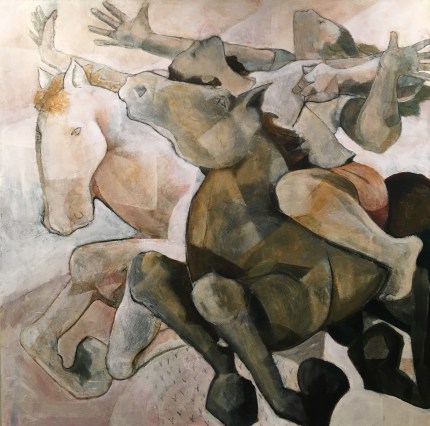
When Beethoven was young he wrote a ballet called The Creatures of Prometheus. It calls for a legion of dancers and is way too big for most contemporary ballet companies to attempt. Contemporary symphonies, on the other hand, desire to play the music because Beethoven, for the rest of his life, reached back into his ballet, mining for musical phrases, developing some of the phrases into his most famous work.

How to play the music from a ballet written in 1801 as a symphonic piece in 2009?

Yaacov Bergman, the visionary and laughter-filled director of the Portland Chamber Orchestra had an idea. Why not tell the story of the ballet. A storytelling would provide the connective tissue, weaving the music together into a cohesive symphonic performance. Because Beethoven wrote a ballet, 207 years later, I had the great good fortune to write and perform the story of The Creatures of Prometheus with the PCO.

And, since we were crossing time boundaries, why not cross a few artistic genres, too.  Yaki hired artist Liz Gil-Neilson to paint and produce a visual storytelling that was projected during the performance. Music, storytelling, contemporary visual art. Ripples, ripples, everywhere.

But, that was not enough. Since I am also a visual artist, Yaki asked that I translate my story into a visual statement. So, I painted three large canvases (Creation, Garden, Resurrection), one for each movement of the symphony, that hung with Liz’s original images during run of the symphony at the George Broderick Gallery in Portland.

Reaching forward. Reaching back. Today, more than a decade after our collaboration, I mine my experiences and paintings for inspiration. As new collaborations arise, as I stand at the base of a new series of seemingly impossible tasks, I’m fortunate to have my Creatures of Prometheus to remind me of the possibilities. They nudge me forward.  Like Beethoven, I reach back into my past work to find a path forward.

It makes me smile to know that in 1801 Beethoven, with a quill pen and ink, scribbled notes at his desk and those scribbles turned into dances and symphonies that inspired stories and paintings and a wacky multi-media collaboration (a phrase that did not exist during his lifetime). And more: a morsel image digitally altered for a blog post written on a computer keyboard. Pen and ink are hard to come by. Reaching backward. Reaching forward.


read Kerri’s blog post about Prometheus morsel


arches shadows k&d website box copy


prometheus resurrection ©️ 2008 david robinson

Bend It [on DR Thursday]

county sketch copy

The terminology in art reads like so much poetry. Zero point perspective. Chiaroscuro. Foreshortening. Rococo. Image plane. Vanishing point. Oblique projection. Intaglio. It goes on and on, these tasty and magical words.

They should be poetry. They describe fields of possibility. They attempt to codify the making of illusion or the impulse of an explorer. Bending space. Deconstructing and reconstituting. Perceptual distinctions. The visual language of cultural norms.

There has been for centuries a mathematics of art. Optics and relativity, movements in science that have their conjoined artistic twins. Rebellions. The maintenance of form. Rules and rule breakers.

I sat in on a class taught by a master artist. He was a lover of landscape (another yummy word) and taught his students an earth-shattering lesson: reality, like time, cannot be caught. It’s a fools errand to try. Painting is a conversation. It is an infinite game. Bend space. Move the tree. Color is fluid, moving, never fixed.  Be like color. Play. Discover. Transform.

I do not consider myself a landscape painter. And then I remember the master teacher and I remove the word ‘landscape’ from my vernacular. And then, suddenly, there is a universe of movement, color, light, and shapes to bend.


read Kerri’s blog post about a LANDSCAPE SKETCH


Newborn copy

newborn. deconstruction. reconstitution.


coffee cups in scion website box copy


newborn /landscape sketch ©️ 2019 david robinson


Admire Them [on Not So Flawed Wednesday]

barnacle tree 1 copy


Andy Goldsworthy might have created this tree. The limbs pressing through burls, a tree grown sturdy and beautiful, made unique by its wounds.  It is a monument to resilience.

Tom, an educator the entirety of his life, told me that he was again and again astounded by the resilience he saw in children. They inspired him. Their hurt swirling into a burl,  giving them fuel to rise. Their struggles and fortitude driving their teacher to be better.

In the art gallery, the woodworker told us about his work. He lifted the bowls to show the unique grains, the live edges and imperfections. In every piece, the beauty was once a blemish.

There are many, many trees in our beloved Bristol Wood. Inevitably it is the burl trees, the oddities, that call us to stop for a visit and admire them.


read Kerri’s blog post about the BURL TREE


MayYou copy

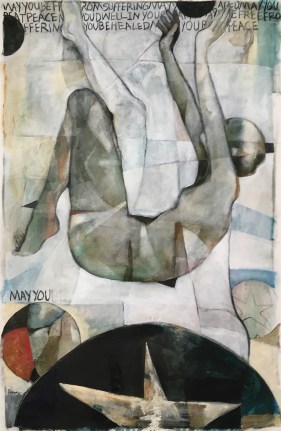
may you: a painting/prayer spoken to life’s burls


alice's restaurant, california websitebox copy

may you ©️ 2014 david robinson

Study It [on DR Thursday]

Although this news will come as a blow to my ego, I am not a genius. My work is not opening new and exciting doors in the trajectory of western art. My boyhood fantasy of becoming the next Picasso has evolved into the happy reality of becoming the only…me. I love to paint. That is more than enough. Becoming, with no end in sight.

I rarely do studies or rough drafts. Only when a painting is giving me fits do I stop and study it. And, if I actually stop to do a study, the next step is to wipe the painting off the canvas. You might say that the act of doing a study is a warning to the elusive painting. “Last chance, dude.”

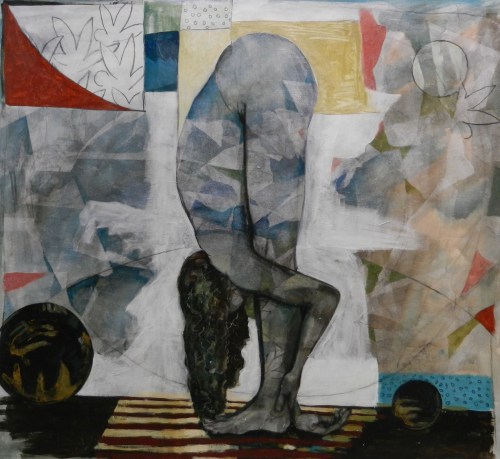
FACE THE SUN began as a study, a warning to CHASING BUBBLES. I was ready to wipe it away. In fact, I was cackling at the satisfaction a fresh start would bring. Kerri intervened. She has an uncanny sense for knowing when I am about to wipe away a painting. More than once, at the very moment my hand is reaching to annihilate the trouble-maker-painting, she rushes in to plead its case. I knit my brow. “You’re kidding, right?”

CHASING BUBBLES lived to see another day. Cleaning the studio, I saw the study that saved the painting. I liked it so I finished it and called it FACE THE SUN. Kerri came into the studio and said, “That painting makes my neck hurt.”

“What?! You’re kidding, right?”

She smiled her “gotcha” smile. Not only am I not the next Picasso but the painter that is becoming me is gullible. I am not a genius but I am an easy mark.


read Kerri’s blog post about FACE THE SUN


snapchat website box copy


face the sun/chasing bubbles ©️ 2019 david robinson