Appreciate It [on saturday morning smack-dab.]

Hays, Kansas. The ‘Welcome Center’ on the border of Minnesota and South Dakota. The curb in front of the BMO Harris Bank. And, of course, our driveway. What do these locations have in common? They are the thunk sites, the places where our driving machines expressed sudden discord and then ceased all forms of forward motion.

We’ve been fortunate. Our machines go “Thunk” in convenient places. Coasting into the ‘Welcome Center,’ dashboard lights ablaze, has to be my favorite. Had the “Thunk” arrived 5 minutes later we’d have been roadside in the middle of nowhere. Instead, the nice people at the Welcome Center chatted with us while we awaited our tow truck. DogDog had a designated place to walk. There was coffee had we desired to have a cup.

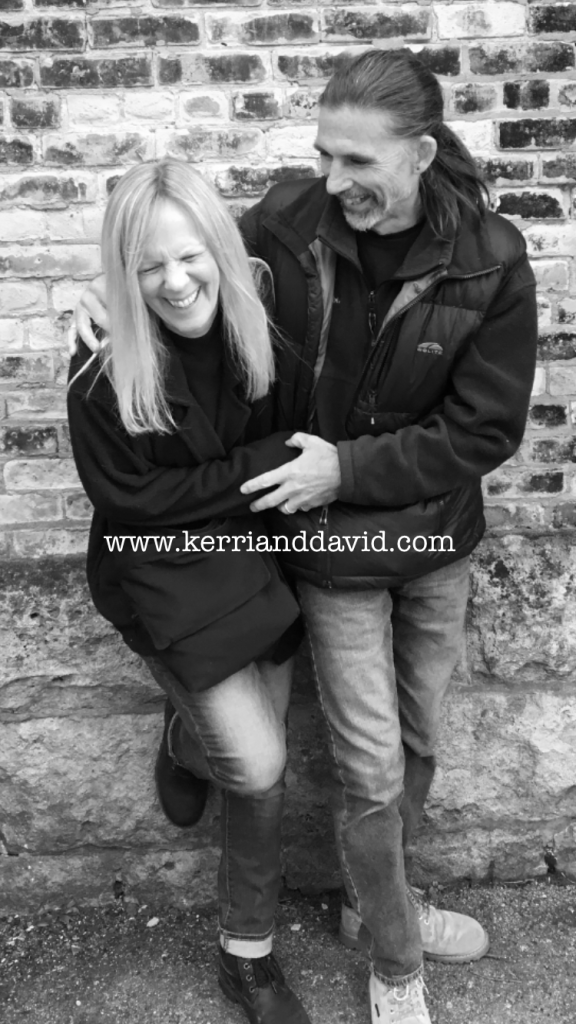
Our vehicles are old but they are considerate. They’ve taken good care of us and we, in turn, take good care of them. Kerri has musicians ears and she is constantly tuned into the sounds they make, the creaks and groans, the usual rattling. Sometimes she asks, “Did you hear that?” I never hear the subtle noises, much to Kerri’s chagrin. “Nooooo,” I reply and she sighs. Our cars must know about my limited-hearing-band-width because, when it’s time for a hiatus, they choose a nice spot and make it obvious enough for me to hear.

They’re good that way. Considerate. And, I mostly appreciate it.

read Kerri’s blog post about THUNK

smack-dab. © 2021 kerrianddavid.com

Find Your Motley [on KS Friday]

“Mix a little foolishness with your serious plans. It is lovely to be silly at the right moment.” ~ Horace

There is a famous photo of a gathering of the world’s religious leaders. Readying for the photographer, poised with their serious, “I’m-a-religious-leader” faces, the Dalai Lama turned trickster, and the group burst into laughter. Instead of a wall of stony import, the photographer caught the humanity, the real people hiding behind the official masks. The silly revealed the real.

We are not well represented by our walls of respect, our certificates and degrees and resumes. The letters after our names are often layers of obfuscation.

Although I am not a religious person, I went to a Catholic college. Some of my fondest memories are the moments sitting on the barracks steps with Father Lauren talking about life and personal belief. I knew the road to a rowdy conversation was to bring up the topic of reincarnation. Father Lauren, a Franciscan, always took my bait. He could only maintain his official-priest-role for a few moments and then the real guy, the man full of laughter and curiosity, came out to play. Inevitably, we’d talk into the evening of choices and dreams and plans and roads-not-taken.

Sometimes I think of fall color as a jester’s motley. The world explodes into vivid fuchsia and gold set against the green. Nature’s play, a silly dance meant to make us gape and coo and laugh. I’ve read that the only person in the court that dared speak truth to the king was the court jester. Truth is available if it arrives in foolish clothes. Thus, Stephen Colbert.

Quinn was full to the brim with laughter. He was a master of tossing the silly into the serious so the truth might be heard. Skip initially hired me to draw cartoons. A serious product that speaks to a serious problem. It’s very possible that the only way it will be heard is though a silly message, a quirky stick poking the bear. The overriding lesson I am learning at this stage of my life is to not-take-it (I am “it”) so seriously. And, so, each week, I lob silly bombs into serious camps – my own camp and others.

I’ve taken special delight this fall. Kerri’s photographic eye is on high alert. We walk and every third step she says, “I’m sorry,” and stops to take a picture. I’ve stopped asking, “What are you apologizing for?” Now, I simply watch and wait for the moment she looks at the screen, scrutinizing what she’s just captured, turns to me with silly glee, saying, “Lookit!”

Kerri’s albums are available on iTunes and streaming on Pandora

read Kerri’s blog post about FUCHSIA

every breath/as it is © 2004 kerri sherwood

Get Lost [on DR Thursday]

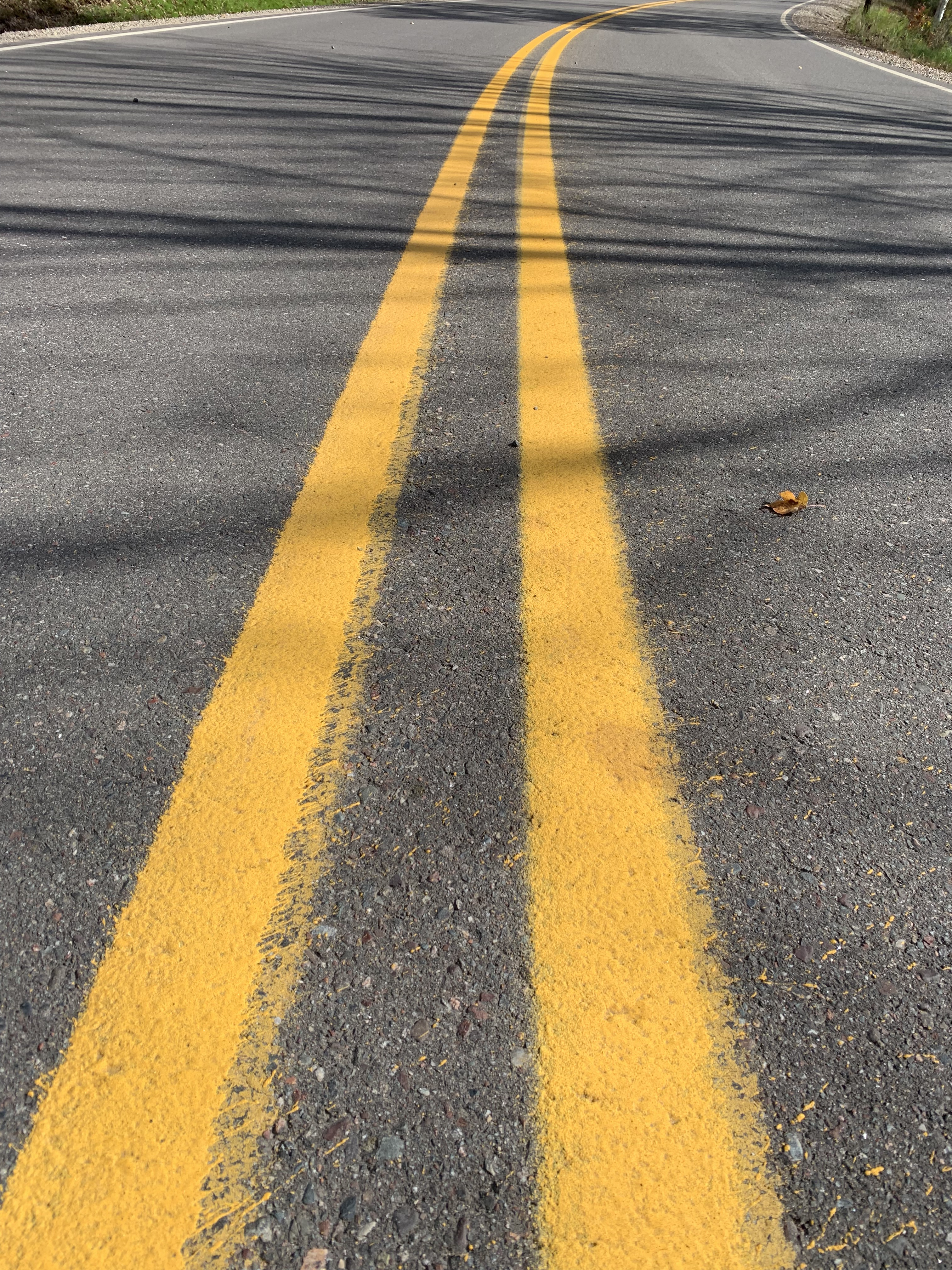
We delight in taking Sunday drives. Sometimes we have a destination but most of the time we have no idea where we are going. We head “out into the county,” the farm land, and with great intention, we get lost. “Left or right?” Kerri asks when we come to a crossroads. “Left.”

The goal is to “not know.” Drive down roads we’ve never experienced. There is a direct correlation between “not knowing” and “clear seeing.” When lost, we open our eyes. It’s something that every artist understands, “always-knowing-where-you’re-going” is a killer of the magic. It is the dividing line between art and craft.

I’m currently working with a team of analytical minds. “Lostness” is often interpreted as failure. It’s not welcome. But, to my great delight, even in the most analytic of creative processes, the engineers and entrepreneurs, shaking their fists at the sky when adrift, find their greatest magic arrives only after time spent wandering the wilderness.

After many twists and turns, rolling country roads and, “Which direction are we headed?”, we pop out of lostness and know exactly where we are. “Hey!” we laugh, “How did we get here?”

The art of getting lost. The art of exploration. The art of having an experience without a predetermined outcome. The art of having an outcome and letting it go, making space for something better. It is the art of cultivating surprise, allowing for the bigger idea to come through. “Left or right?”

It’s a practice. Learning-to-see and letting-go-of-needing “to know.” It’s the same thing. And, a great way to practice, is taking a nice Sunday drive.

read Kerri’s blog post about THE ROAD

pax © 2015 david robinson

Turn The Shield [on Not So Flawed Wednesday]

The rains have come. The light retreats. This is the time of year when we say, “I’m tired. Are you tired?” It’s the lack of light. The coming change of time. “It feels later than it is,” we rub our eyes and sigh.

I’ve always thought of this time as an in-between. Not-this-and-not-that. The leaves have dropped but the snow has not yet arrived. The sun and the wet clouds jockey for position and neither gains the advantage. Were we bears, nature’s indecision would signal that the time had come to look for a proper cave, a comfy spot to sleep through the winter. We are people and the signal is similar: it’s time to pull in, reflect, attend to the inner places, nestle into our bear-dreams.

Many years ago I took a class from an elder who taught us how to paint medicine shields. The exercise was not about the painting or the technique of stretching the skin over the willow, the exercise was about identifying the symbols. One side of the shield was the outer life, the sun. This face of the shield was seen by all. The other side, the inner face, was personal. The symbols were private. The moon. This is the season when the attention to the outer face shifts to the inner. The bear considerations turn to the owl, the lizard.

Just as each season is both a leaving and a return, both sides of the shield are beginnings and ends. Barney taught me that, in the winter, the energy of the plant retreats from the branch and, instead, goes to the root. Rejuvenation happens beneath the soil. I feel that shift in this time of increasing cold and rain, the shield flips. My eyes turn inward.

We huddle in the early dark and tell stories of the year past. We attend to our rest, move more slowly in our expeditions. We decide more often to stay in. We open the bin with gloves and scarves, prepare for a different rhythm of walking. We recount the past seasons, not yet ready to dream of the time to come.

read Kerri’s blog post about RAIN

Reach Purely [on Two Artists Tuesday]

“Art, as best practiced and understood over the centuries, is a spiritual as much as technical pursuit.” ~ Kent Nerburn, Dancing With The Gods

It was disconcerting. It still is. The illusion was so distinct that I had to show the book to Kerri and ask if she saw it, too. Each morning I read a few pages from Kent Nerburn’s book. This morning, in a chapter entitled The Divine Thread, I turned the page and a single paragraph, just a few sentences, was printed in a font twice the size as anything else on the page. I read it a few times since the author had given the section such obvious emphasis. After the I finished the chapter, I looked back to reread the oversized section – and it was printed in the same size font as everything else. It wasn’t emphasized at all. The shock of it made me dizzy.

“Art, however, does create this touch. It speaks in different voices, different rhythms, different languages. There is no place in the human heart it cannot reach.”

Paul taught his student-actors that they had an obligation to something greater. “When you choose to get on the stage, you have the power to impact other people’s lives. Do not take that responsibility lightly.” Your art, your creation, if purely intended, will reach the heart of another – purely. Even the loneliest painter knows the transcendence of the expansive energy that comes through in the moment of creation. Transcendence is all inclusive.

I have been humbled by the great artists I’ve known. Teachers, mentors, and others. I’ve been humbled by their humility. Tom, a brilliant director of plays and believer of possibility, influenced more artists than any person I know. He was tortured by the size and scope of his gift. At the end of his life, sitting before a fire in his cabin, he was, for a moment lost in thought. I watched his revelation come to the surface. He looked into his wine and said, “I think I did my best work when I was a just starting, when I was second grade teacher. It was pure imagination. I had no idea what I was doing. I just knew that we could have fun telling stories and going on adventures where our imaginations led us. It was pure.”

I met a few teachers who’d been second grade students in that classroom of long ago. They told me that year changed their lives. They touched his heart and he touched theirs. Shrunken heads and planning expeditions to the Amazon. Maps and budgets and “What do we need to bring to survive?” They spent weeks preparing for “blind day,” an exploration of the world through the full scope of senses. “What could we learn if we didn’t rely on our sight? What would we need to prepare to help each other?” he asked. Pure.

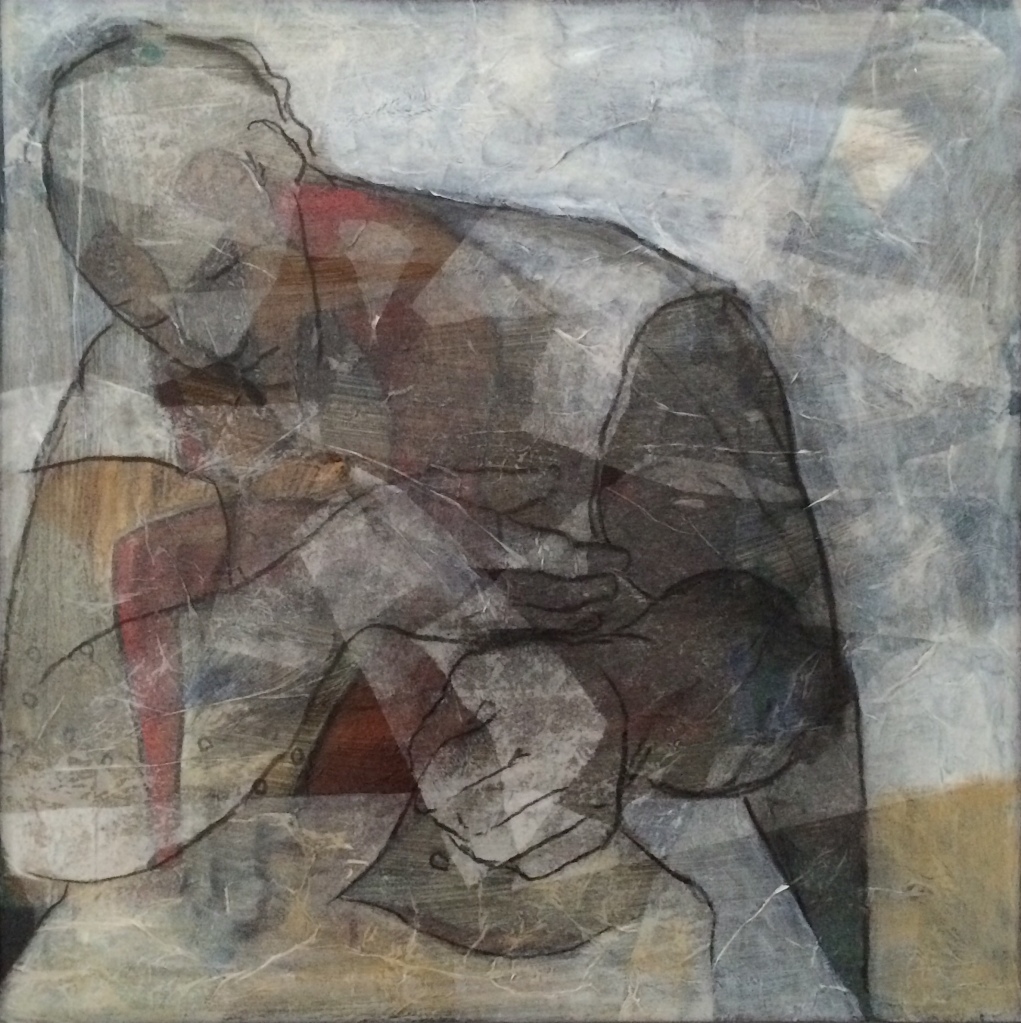
For our wedding, Julia made for us a small box with a Klimt’sThe Kiss” decoupaged on the lid. Inside, she placed a few Euros. A metaphor. Great love as a container for great adventure. We placed the box in our sitting room in a spot where we see it everyday.

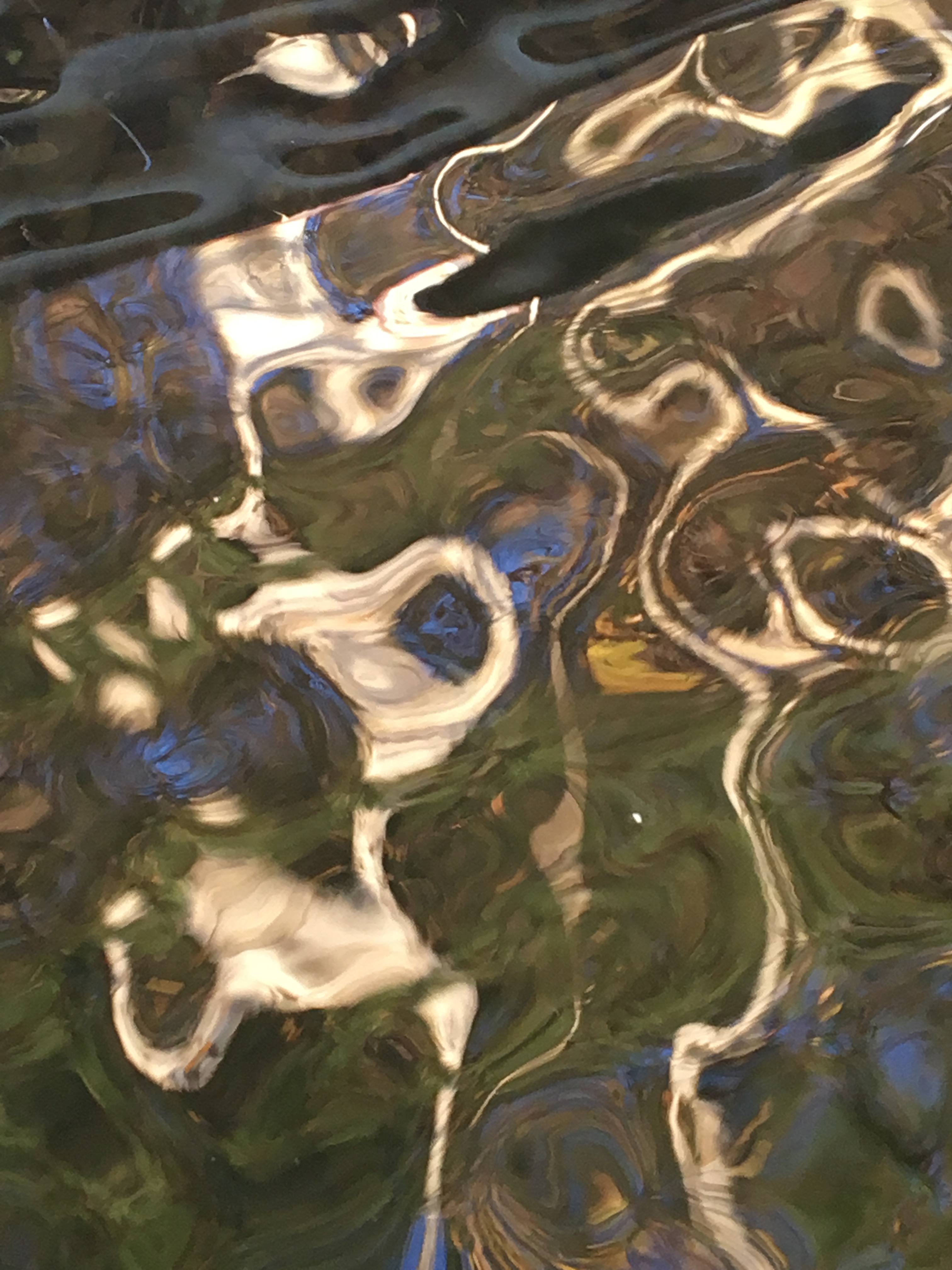
Kerri knelt on the dock to get this photograph of the water. “The color!” she gasped. Pull up an image of “The Kiss” – or any of Klimt’s paintings for a closer inspection and you’ll see this water pattern. Klimt might have painted it. He studied swirls in water, swimming color on the reflection of the surface. I’m certain of it.

Great love. Great adventure. Tom. Julia. Paul. Art that is pure. My head spins. There is no place in the human heart that art cannot reach.

read Kerri’s blog post about WATER

images of water © kerri sherwood 2021

Hold A Greater Space [on Merely A Thought Monday]

The sun was setting as we drove away from the memorial service. A celebration of life. We were quiet, lost in our thoughts. “I don’t know if I’ve ever before been to a celebration of life where I LEARNED something about life,” Kerri said. I was thinking the exact same thing. I’d just received a master class on how to live a good life. I just learned about the untenable nature of love.

It was Nancy’s service. Her husband of many years spoke. Her daughters spoke. Her stepchildren sang and read poetry. She was a longtime member of the church so the pastor told stories about her. The service was alive with laughter and with tears. Both. People applauded at the end of the slideshow, a photographic journey of a life that began in 1933.

We are inundated with notions that ‘the good life” should have no pain. It should be above hardship. Nancy’s life did not support that half-narrative. She experienced canyons of loss. As her daughter said, “She could have become hardened and bitter.” But, she didn’t. She didn’t ignore her pain or deny it, she allowed it. It was part of the color of her life. She did as the Buddhists recommend: joyfully participated in the sorrows of the world. She participated. She chose. She decided. She created.

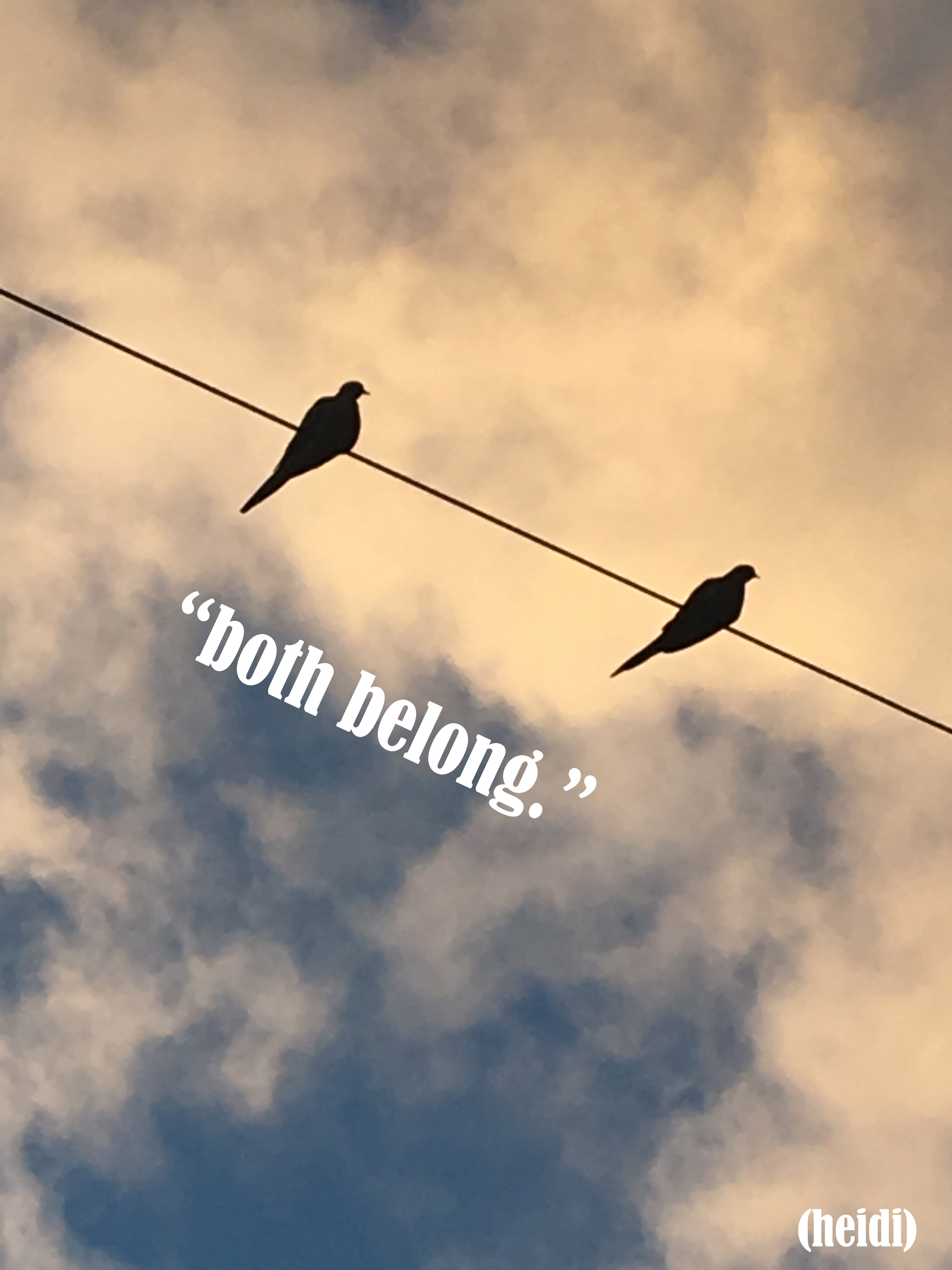
She surrounded herself with flowers and loved her garden. She made her table a magnet for family and friends. She did not sit and complain, she had no time for woe-is-me. She found opportunities to give and engage. Story after story of a woman, even in the heat of cancer, while awaiting the results of the latest scans that would determine the number of days she would have on earth, turned trips to the doctor into opportunities to shop with her daughters. Lunches. Expeditions to a beloved bakery. Create the extraordinary in the simple moment, regardless of the circumstance. We heard again and again these companion phrases, “She chose love.” The pain and the love, “Both belong,” Heidi said.

In an intentional life, one does not negate the other. Tragedy and triumph. Devastation and joy. It’s a decision. Where we focus will determine our experience of life. Nancy stood in her pain and uncertainty; she had every opportunity to become bitter. Instead, she focused on love. She created it. Nurtured it. Grew it. Offered it. She didn’t deny her pain. She held space for it in a greater container.

It was apparent in the laughter evoked in the stories told, it was apparent in the generosity of the service we experienced. This was not a Hallmark movie. It was a celebration of a life of texture, of impossible mountains to climb and of enormous blessings. It was the lesson Nancy lived because it was woven through every story told about her. “It’s what she taught me,” Heidi said, “Both belong.”

read Kerri’s blog post about BOTH BELONG