Ride The Lion [on KS Friday]

watershed the songbox copy

Let’s just say that 2020 is off to a rough start. If I was to get out my old-school label maker and slap a sticky tape descriptor on last year, on 2019, it would be the year of contention. 2020 is shaping up to be the watershed. Ka-chunk, ka-chunk, ka-chunk.

Broken contracts [literal and metaphoric]. Broken wrists. Broken dreams. All of our presses have stopped. We are moving very, very slowly through our days. We are having long conversations about where we’ve been, our successes and failures, dreams realized and those that went to ashes in our mouths, and where we want to go from here.

Unless you are being chased by a real lion, fear is mostly a function of imagination. In the real-lion scenario, fear is a life-saver that makes world-class sprinters of us all. In every other case, sans lion, it is a made-up monster that chases.  Running does no good. This chasing monster requires the opposite of the real lion: stopping, turning, and looking squarely into the eyes of your own dark imagination. The only relevant question is, “What’s wearing the mask of this monster?” Shame? Failure? What should have been? What will never be?

It is a turning point. Stopping. Breathing. Turning and staring back at your wild-eyed scare-fantasy and realizing that it’s merely a mechanism to prevent you from being where you are.  Standing in this exact moment is the only place from which you can enact change. It is the single location in which you can fully, unequivocally appreciate your life. Self-made monsters always dissipate when scrutinized.

Running away casts you as both runner and lion, chaser and chased. Fear the imagined-lion, be the runner. It splits you in half. The sky is falling! The sky is falling! And what if it is not falling? What if the lion-monster chases precisely to prevent you from standing still?

It’s a vicious circle, an energy eddy, this hyper-active dark imagination. It is true, if you think about it, that an imagination that is capable of so much doom is equally capable of fixating on the light side. Ride the lion. Better yet, give it wings so the ride is uncanny and wondrous. The ultimate human choice is where we decide to place our focus.

The story we decide to tell follows the focus-choice. Standing still, the only place from which we can see the array of choices and available stories, we are once again learning, seems to be the gift of the Watershed.


WATERSHED on the album AS IT IS is available on iTunes& CDBaby


read Kerri’s blog post about WATERSHED


skylake website box copy


watershed/as it is ©️ 2004 kerri sherwood

Value It [on DR Thursday]

DawsonDetail copy 2

“Creativity is a dance where the flow of the eternal gleams through the brittleness of time and the distance of space.” ~ John O’Donohue, Beauty

The arts are so often seen as unnecessary. They don’t pencil out. Hard to make money, yada yada. The budget just submitted by the current administration once again is attempting to cut the funding for and kill the National Endowment for the Arts. “A waste of money,” they say.

No way to measure it. Can’t be reduced to a spreadsheet.

Kerri was recently asked by her employer to calculate how many hours per week she spent working on her music. “What constitutes working on it?” she asked, “I think about it all the time. I’m constantly listening for and searching out good music. Does it qualify as working on it when I sit to play, to compose, to noodle on an idea?” She sighed the sigh that all artists sigh when asked to reduce their artistry to a number. “Maybe 125 hours a week? Does a lifetime playing, composing, conceptualizing, conducting, rehearsing and leading choirs count in my working on it” she quipped. They didn’t smile. The committee got together and determined her value based on their spreadsheet.

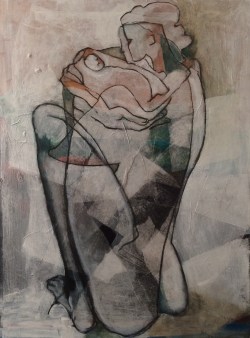
We know that when a society disappears from earth it leaves behind art and artifact. We discover what was important to the society by the arts they produced.  The architecture, the pottery, the scribbles on a cave wall. Their values expressed. Their arts – like ours – are the eternal gleam pressed into specific forms.

The arts are nothing less than the glue that keeps a society together. The common story is, after all, a story, and it is told through literature and theatre and dance and music and painting.

One of the necessary first acts of every dictator, after identifying a scapegoat, is to eliminate the artists, the thinkers, and the educators. It is a control strategy: rend the common story. Split the people. Then, make questioning and expressing a crime. Diminish reason. Eliminate the voice of imagination and reflection. Vilify the voice of dissension. Appeal to the reptile brain [that part of your brain that deals with the basic functions but has no reach into higher order thought].

Asking the question “why” and challenging the group-think is the artist’s and academic’s job. To discern between truth and lie. To open eyes. To open hearts. To open minds. Value beyond measure in a free society if the society values its freedom.

Yada yada.


read Kerri’s blog post about NEW MOTHER


bonfire website box copy


new mother ©️ 2017 david robinson


Climb The Rough [on Not So Flawed Wednesday]

dontworry with frame copy

It’s an odd quirk but Kerri likes to watch mountain climbing documentaries before she goes to sleep each night. We’ve seen most of the world’s catalogue of climbing videos, Everest and K-2. I feel as if I’ve been to base camp. I sometimes shout at the screen, “NO! Don’t you know that the weather can turn on a dime!”

We’ve watched the story of the team that discovered George Mallory’s body. He fell and broke an ankle. Fatal on Everest. We’ve watched footage of Sir Edmund Hillary and Tenzing Norgay on their summit bid.  We’ve watched documentaries about the Sherpa people, the dangers of the ice fall, and the emergency doctors at base camp.

I tease Kerri and tell our friends that she needs to watch someone fall off a mountain before she can get to sleep. She protests, “I don’t need to see them fall!” The life and death struggle is soothing enough, a gentle entry into slumber.

The message from the climbers is as beautiful as it is simple: if you fear failure you shouldn’t climb mountains. You will fail far more than you succeed. You will attempt. You learn. You choose to be wise and live rather than push to the summit and then lose your life. It is the ultimate reminder that a healthy process is much preferable to the achievement of the goal. They remind us that most climbers die after the summit. They die coming down because they forget that the goal is not to summit, the goal is to summit safely and come back alive. The goal is life. The summit need not happen today. Live and take your chance tomorrow. The only failure on the mountain is to die when you didn’t need to.

It’s a great metaphor. Life is like that. No one does this life without more than a few rough patches, more than a few falls. When you recognize that everyone has a mountain to climb and, regardless of the mountain, it is all about learning, all about the experiences that may someday bring you either to the summit or to the recognition that the summit was actually never the goal. It’s about the appreciation of the experiences.

There will always be another goal. Another summit. However, the experiences you remember and appreciate will be the struggles. The easy stuff is easily forgotten. The hard stuff, facing the doubt, finding a new edge, makes for a great life story and helps us understand that we are far more capable than we at first realize. Everyone is far more capable than they imagine and would never go beyond the limits of their imagination without the rough patches on the way up the mountain.


read Kerri’s blog post about ROUGH TIMES


vailKdotDdot website box copy


Do Like Duchamp [on Two Artists Tuesday]

doorknobs copy

Roger used to say that Picasso’s paintings determine the shape of our cars. He meant that “seeing” is not passive. Just as audiences in a play wiggle in their seats at seven minutes into the play, the usual time for a commercial break on television, our visual sensibility is also patterned and mostly culturally uniform. Beauty is in the eye of the beholder and that eye has been conditioned.

One of the great moments of visual conditioning came in 1917 when Marcel Duchamp entered his “readymade” sculpture, FOUNTAIN, in an art exhibit. FOUNTAIN is a urinal. He signed his readymade scultpture R. Mutt. It is possible to spend many days of your life reading about FOUNTAIN, the symbolic meaning of a toilet, the then-new art term “readymade” and the challenges readymade-as-art posed to the art world, how Duchamp came to enter a urinal in an art exhibit. In that moment of time, a whole new genre was born: conceptual art. The idea behind the work is more important than the finished piece.

You can draw a straight line from Duchamp’s toilet to the recent banana duct taped to the wall by Maurizzio Cattelan. And, you might ask, just what was the idea behind the banana?

You can draw a straight line from Duchamp’s FOUNTAIN to Kerri’s out-door-voice-exclamations in a gallery, “ARE YOU KIDDING ME?” The idea behind the conceptual work generally needs a curator’s explanation. “I WANT TO EXPERIENCE IT, NOT HAVE IT EXPLAINED!” she gestures wildly, sending other patrons fleeing. In that moment, my wife becomes exquisite performance art.

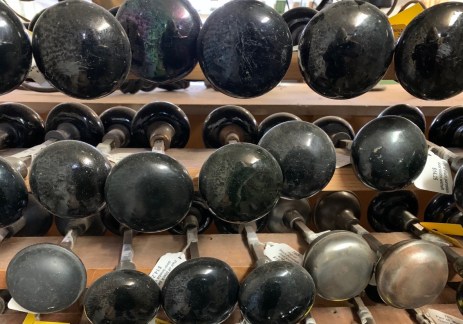
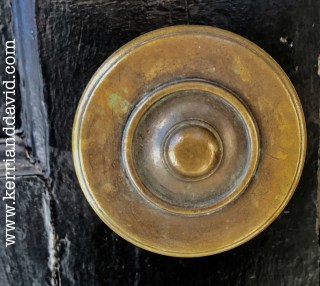
You can draw a straight line from Duchamp’s urinal to my inability to walk through an antique store and not see elegant design worthy of Louise Nevelson. Racks of door knobs. Stacks of suitcases. A wall of bric-a-brac, the wall composition more meaningful and beautiful than any of the individual pieces displayed.

A statement from Captain Obvious: artists live in a time and the art they produce is an expression of that time. Duchamp put his toilet on a pedestal in 1917, the year the world was nearing the end of the first war to end all wars. It was a horror story. The manufacture of stuff was hitting its stride.  The Royal Academy had a lock on determining what was considered art and what was not. The rules of polite society felt dangerous and suppressive. Duchamp, like all change agents, pushed against the norm.

There is composition and design in the everyday. There is human-created beauty all around us. We learn in school that form follows function and form is design. We learn in school that one of the purposes of art is to create beauty. Another purpose is to shock people out of complacency, to see what is in front of them and not what they think is there. Beauty usually lives beyond what we think.

We live in very confusing times. We are asking fundamental questions about truth, about social norms and what is acceptable. We are asking questions about who we are and what we believe. You can draw a straight line from Duchamp’s FOUNTAIN to our current confusion. Is it art? Is it not? If the idea is more important than the final expression then what happens when all that is left to see and touch is absent of the idea? What happens when the curator is gone and only the urinal remains? Sense breaks down.

What happens to  the eye and ear that is shocked open but refuses to see what is right in front of them and, instead, retreat behind the fortress of what they think?  What happens when form no longer follows function but things flip the other way around? What happens when form IS function? Propaganda, mostly. A naked emperor and plenty of people passionately swearing that they see clothes. Readymade thought.

We live in those times. Sense breaks down. We tape bananas to walls and issue a certificate of authenticity.


read Kerri’s much-less random blog post about DOOR KNOBS


frontdoorknob website box copy


Get Off The List [on Merely A Thought Monday]

indecency copy

“Are we even aware of our biases anymore?  ~Shawn Langlois, 2018 Marketwatch. Check out the chart.

“What we all feared has happened. Trump has been normalized.” ~ Bill Maher

“I think they’ve been unleashed.” ~ J after listening to the poolside conversations at the YMCA

It was an accident of timing that I was directing a production of the docu-drama, GOD’S COUNTRY, with college students in Santa Fe, NM when George W. Bush was up for re-election. The play chronicles the rise of a white supremacist group and the man they murdered, Allan Berg, a Denver-based talk show radio host. Much of the dialogue is drawn from court documents from the trials of the white supremacists and the transcripts of Allan Berg’s shows. It’s chilling.

The students and I studied hate groups. We studied division. We read studies about how easily a person or community can be slowly drawn into a mindset of hate. It’s a prescription, like slowly boiling a frog. Angry people are an easy mark to be led down the hate path.

One of the studies that stayed with me was Lawrence Britt’s The 14 Characteristics of Fascism (at that time, the USA exhibited many of the characteristics on the list). The list was chilling in 2004 during the production. It is horrifying now that we’ve waded into the swampy waters of #14: Fraudulent Elections. Last week in the USA  an entire political party (with one exception), despite overwhelming evidence, lined up and gave explicit permission to their leader to allow a foreign power to manipulate our elections.

David Neiwert wrote a book, called In God’s Country: The Patriot Movement and The Pacific Northwest. In it are eye-opening tales recounting how a community becomes complicit with its haters. “Boys will be boys.” “Oh, that’s just who they are.” “They didn’t mean any harm by it.” “Turn a blind eye.” Hate crimes rapidly multiply when a community is willing to let it slide. Explain it away. Normalize it. “That’s just who he is.”

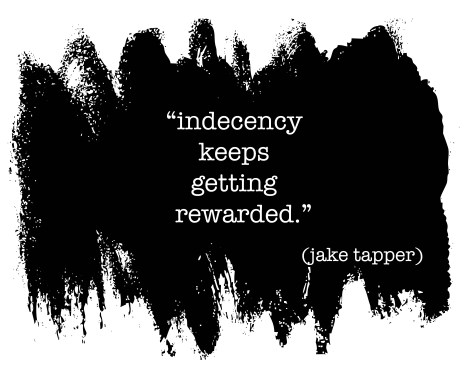
And what happens when the enemy, the latest scapegoat that unifies the party-in-lock-step (#3 on the list), is the other half of us, the other party? What happens when indecency is rewarded and ignorance applauded? What happens when fear is the reason the lock-steppers cover their ears and claim that they see no evil? Low-information comes with a very high price.

As they say, history repeats itself. And, somehow, we find ourselves – at least half of our nation – embracing the list.


read Kerri’s blog post about INDECENCY


seagull in fog website box copy


Thank The Muse [on KS Friday]

two wrists copy

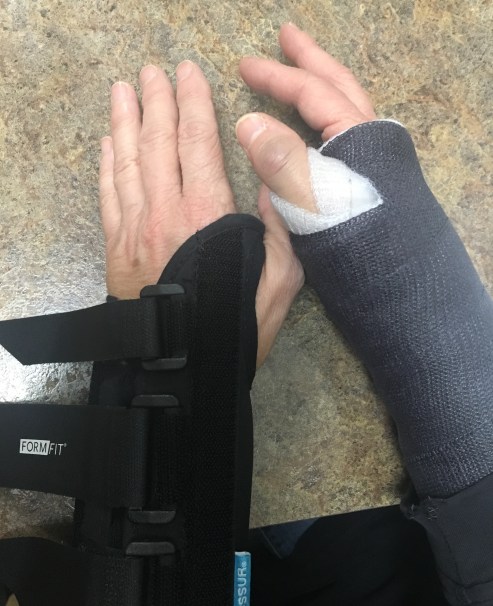
She said in jest, “I should take the next two weeks and record an album. I’ll call it Two Broken Wrist!” I would have laughed except she was playing the piano when she said it. Four days after the fall. The day after the cast. Were I blindfolded I would not be able to tell that she has no use of her right thumb and limited use of her right fingers. The fingers on her left will spread as far as the sprain will allow. I muttered in my new role as mother hen, “Don’t hurt yourself.” And then I closed my eyes.

Her playing left me slack-jawed. She has her doctor’s permission to play (“It’ll be good to move your fingers but don’t expect too much and don’t push it.”). I wish her doctor was standing beside me. She’d have laughed at the absurdity of the image. The disjoint of sound and image. I’d ask the doctor if this was what “pushing it” looked like?

It is, of course, what most people do not grok. Artists need to do-the-thing-they-do. If they don’t, they implode. It makes no sense but very few life-callings make sense. There is a deeper imperative at play. A muse must have satisfaction. Monet painted when blind. Was he pushing it?

Kerri played the piano. She had to. Her greatest fear, the largest monster in her closet, is the loss of her hands. She had to approach the keys, to visit the abyss, to see if the monster had her by the wrists or if she could push it back into the dark. Her words, ” “I should take the next two weeks and record an album…” was a celebration. It was a moment of soul-sighing-relief. The monster whined and vanished. I closed my eyes, not to spare myself the image of her possible pain, but to whisper a thank you to the muse. In my estimation, there has never been a more beautiful piece of music played.

There is a long road ahead.

I hope she records that album. The clucking you hear in the background will be me, reminding her to go slow, to take it easy. You won’t be able to hear her eye-rolling reply, but it’s there, too. Trust me.


read Kerri’s blog post about TWO BROKEN WRISTS


ks website header copy


their palettes website box copy

Sit Together [on DR Thursday]

AtTheDoor1 jpg copy 2

Our cartoon, At The Door, lives in the category of ideas-that-we-knew-would-never-fly-but-wanted-to-do-anyway. In other words, we knew we’d make the submission and the syndicate would reward our good efforts with silence. And, they did just as we predicted!

If conflict is the epicenter/driver of story, then At The Door has a premise filled with great story potential. The dog wants to go out exploring the unknown. The cat wants to stay in his comfort zone. His bowl is the center of his cat-world and he is rarely found far from the bowl. The dog is an idealist, a dreamer. The cat is a realist. A conservative. He enjoys raining on the dog’s parade.

You’d be surprised how much material you can write with such a simple premise. We laughed heartily in the writing of it, especially because we drew our inspiration directly from our crazy Aussie and enormous cat. They share space. Together, they stare out of the door or window, their desires are wildly apparent. Each following their star. Each honest in their pursuit.

In versus Out. Cats-and-dogs-living-together. Oh, my!

Truth? I’d forgotten about At The Door. And, then, watching the news of the day combined with the wave of contention swirling around us, I remembered. I sought the cartoon file more for solace than anything.  I wanted to revisit my belief [my experience] that division need not be ugly. Division need not be disingenuous. Division provides the ripe necessity for collaboration. Two points are a mathematical requirement for the third point to become possible; it’s called ‘perspective.’ Creative tension can be a positive force for forward movement and new ideas if the division serves an honest intention.

If the division is the intention, sitting at the door together becomes, as we’ve seen, altogether impossible.


read Kerri’s blog post about AT THE DOOR


drc website header copy


dogdog babycat paws touchingwebsite box copy

Hold On And Smile [on Not So Flawed Wednesday]

ernie straw copy

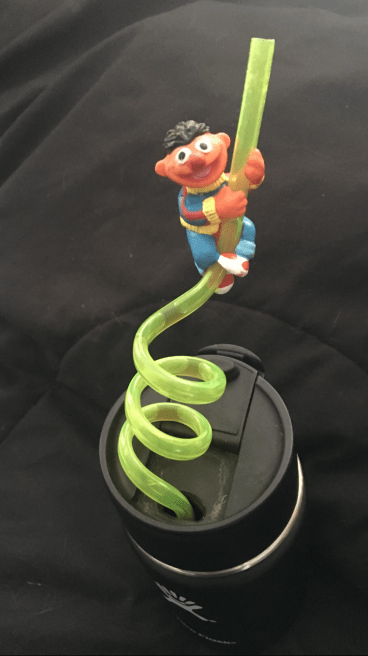
I do not know the full history of the Ernie straw. I only know that he holds a place of reverence in our odds-n-ends drawer. And, when Ernie makes an appearance, there is general celebration, photos taken and texted, and laughter-rooted-in-deep-memory swirls like the straw through our kitchen. I watch and appreciate their glee.

I do not share the lived history that Kerri and our children share. They are, as Michael Perry taught me to say, rather than my step-children, they are my given-children. At Kerri and my wedding, my newly given-children shook my hand and said mechanically, “Welcome to the family.” And then they laughed and hugged me tight. Our memories together are new and have tender, shallow roots. We are early in the creation of our history together.

This summer, I was on Island and Kerri made a trip home to see Kirsten. During our late in the evening phone call, Kerri was thrilled that Kirsten had found the Ernie straw and was using it everyday! She sent me pictures. Kirsten posing with Ernie joyfully spiraling out of her cup. I heard Kirsten laughing in the background. Kerri joined her laughter and they giggled me through their history with Ernie.

Ernie is out of the drawer every day since Kerri broke her wrists. He fits nicely into the lid of her Hydro Flask, the only safe coffee-delivery-system. Ernie has been seen rocketing out of her wine glass, too. These days he does duty on both ends of the day.

Mostly, I’m delighted to be making memories with Ernie. The next time he comes out of the drawer I will be more than an passive watcher, a mere listener to the stories of the Ernie straw. I now have real experiences with Ernie. I am slowly entering the weave of story, the fabric of participation. And, like Ernie clutching tight to his corkscrew straw, I couldn’t be more pleased to be winding my way into this part of the tapestry.


read Kerri’s blog post about the ERNIE STRAW


kdkc feet website box copy

Know They Are Watching [on Two Artists Tuesday]

deer tracks converge copy

We go to Bristol wood to return to center. It is a place of peace. It somehow breathes serenity into our overactive minds.

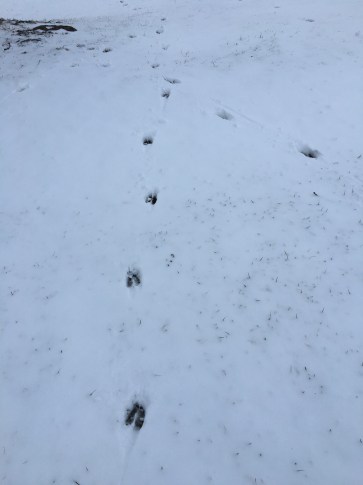
Sign of deer are everywhere in the woods. We rarely see them but we know they are there. I imagine they watch us. I imagine they silently encourage us to walk slower, to catch our breath. To listen to tree song. We delight when we walk a path where they recently tread.

Deer are a symbol of gentleness and intuition. Balance and peace. This summer, on the Island, we saw deer everyday. We would retreat from the contentious community back to the littlehouse, pour some wine, and take a walk. A deer would inevitably appear and we’d stop talking. We’d breathe. We’d watch. It would watch us, too. After a few moments it would leap and disappear and, with it, our day’s concerns would also disappear. The deer would shift our conversation, from a lengthy list of disgruntlement to the beauty immediately surrounding us.

I’ve decided that, in our broken-wrists-time-out, our goal should be to make the whole world Bristol Wood. That we shouldn’t retreat to find peace but should invite peace and balance and serenity into the rest of the day, no matter where we happen to be living it.

Things I used to know. Things I once practiced.

Know that they are there, everywhere. Watching. Silently encouraging us to walk slower, the breathe, to focus on the beauty immediately surrounding us and not on the other stuff. It turns out that balance and serenity are practices, not pursuits. They are choices. Peace-of-heart-and-mind do not exist in the woods exclusively. Peace comes to the place where I decide to allow it. To practice it. To make it a priority.


read Kerri’s blog post on DEER SIGN


deer in woods copy


tpacwebsitebox copy


Get Serious [on Merely A Thought Monday]

er or uc copy

Looking back on the experience, I see a map of choices.

Kerri fell. Both wrists were painful. We knew it was bad. In the ski patrol hut, the medic’s advice was to go get x-rays. Choice #1: To get x-rays or to not get x-rays? We had a conversation in all seriousness with the medics, that, given the nature of healthcare in America, it might be a valid option to skip it. To go home. To ignore it and let it heal as it will. The problem with ignoring it: the loss of motion that comes with ignoring what might be broken or torn in her wrists.

So the choice was not actually to get x-rays or to not get x-rays. The choice, the real choice, was financial ruin or loss of motion. Kerri is a pianist. It is her livelihood and her life. So, choice made: financial ruin.

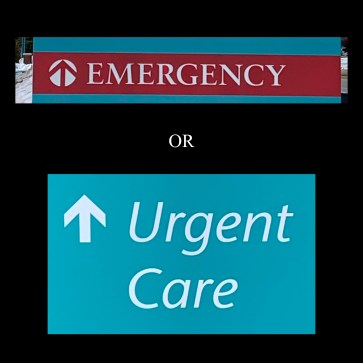
We pulled into the medical center and saw a sign. To the right was the emergency room. To the left was the urgent care center. We sat in the truck and debated the option. While Kerri writhed in pain, in all seriousness, we sat in an idling truck and discussed the merits [or lack thereof] of our insurance policy. If we chose the right hand path, we would meet the vast, gaping deductible. Like Evel Knieval attempting to jump his motorcycle over the Grand Canyon, we’d have to gun our engine and run at the edge. No parachute. So, we chose the left hand path. We went to the desk of the urgent care and asked if they did x-rays.

Choice #2 was not, in truth, the emergency room versus the urgent care. The choice was which canyon did we have the best chance of surviving?

A few days later. An appointment with a great orthopedic doctor. She, in all seriousness, told us that she ignores the part of the patient file that speaks to their health insurance. She explained that there is dilemma that doctors face: do I advise my patient to do what is best for their health or do I advise them to do the thing that might keep them out of bankruptcy? She ignores the file because she wants her patients to hear what is best for them. She told us that she needs to keep herself blind to the financial reality that her best advice might necessitate. “Yet another untenable choice,” I thought.

Our choices reminded me of an experience we had a few years ago. We were shopping for a new washing machine. The salesman, an older man, was embarrassed by the products he was selling. He, in all seriousness, took us down the aisle of appliances and told us what was wrong with each machine. He was convincing us NOT to buy his appliances. Mostly, he told us, they were designed to fail. He said, “We used to know how to make things in this country. Now we make crap on purpose.”

The healthcare in the richest country on earth is just like the appliances sold in the richest country on earth: Designed to fail. Making crap on purpose. The way I am certain that I see clearly? Sit with your wife, a world-class pianist, who has just broken both wrists, and listen to the choices you are considering. Clarity, in all seriousness, comes when the crisis hits.

As we shake our increasingly obese and unhealthy bellies, wave our angry signs and shout about making America great again, it seems we are falling further and further behind. We saw it this week in our senate, did we not? At least our capacity for denial of the truth [in our post-fact, low-information frenzy] is running in front of the rest of the world. I can only hope, as a nation, we break our collective wrists sooner rather than later. In our pain, perhaps we will look at the sign and have a real conversation, in all seriousness, about our choices, about what we can and cannot survive.


Read Kerri’s blog post [written with a cast and a splint!] on CHOICES


snowsteps website box copy