Put Down The Hammer

photo-3[continued from BE WE]

The woman behind the counter at Starbucks, someone I’d never seen before, leaned forward, and chirped, “David! I loved your wedding!” She laughed at the look of confusion that must have crossed my face and added, “No, you don’t know me.” One of our invited guests brought her as a date. “Best wedding ever!” she exclaimed as Kerri joined us. Because the day is a blur, Kerri and I enjoy hearing people’s accounts of our wedding day and she enthusiastically told us of her experiences. It was nice. It was personal.

We took our coffee to a table and joined some friends. After a few moments, the woman behind the counter came to our table. She brought some samples, some health supplements and cosmetic products, “I only do this Starbucks job for the health insurance,” she said, “This is really my business,” she said, sliding the tiny packages in front of Kerri. “You never know who might be interested,” she chirped and blushed before making an exit. It was awkward. It felt awful. We went from personal to prospect in one inelegant step.

There is an old saying that came to mind: When the only tool you have in your box is a hammer, everything looks like a nail.

Many years ago, in a time of great financial desperation, I worked with some financial folks who recruited me to sell their stuff. I learned their processes, got my licenses in record time, and for a few horrid months, tried to sell their wares. I hated it. The work was highly profitable but the cost was highly destructive. Everyone looked like a prospect. To every social encounter, every friendship, every casual meeting, I brought an agenda. For a few months I looked through a lens that made every person, every circumstance, a commodity-opportunity. It reduced life (my life) to an ugly basic. It was toxic. Anna taught me the very appropriate word for what I felt: vampiring. It was a great lesson. It made me pay attention to the intention I bring to my life.

It’s what the woman at Starbucks felt, too. She was desperate. She, like a former version of me, sold the greater need to satisfy the lesser. Vampires are insatiable and stuck in an untenable lifeless-lens: everyone looks like a food source. Desperation is like that. It is easy when desperate to sacrifice friendships for prospecting. No one likes to be a food source.

As I perused this years bountiful crop of ugly images of Americans fighting and crushing each other for cheap toys and electronics, the annual product-stampede/people-crush-and-fist-fight on Black Friday (formerly known as Thanksgiving), I couldn’t help but think about the Starbucks lady. Desperation wears many masks but always makes others look less-than-human. Communities thrive when they feed each other and die when they feed on each other. This is not a mystery.

Commodity is supposed to service community, not the other way around. Vampiring is the only visible path when community loses itself to commodity; it inadvertently tosses away its many tools and leaves itself with only a hammer. It’s a question of order as much as a question of values. There is nothing wrong with commodity when the order of value is respected. Without a WE there can only be a very confused, desperate, and lonely I. It should not come as a surprise that desperate and lonely people do desperate and lonely things.

This is the season of the return of the light. We need do nothing more to create the miracle than put down the hammer and look at others as if they are more than nails.

[to be continued]

Be We.

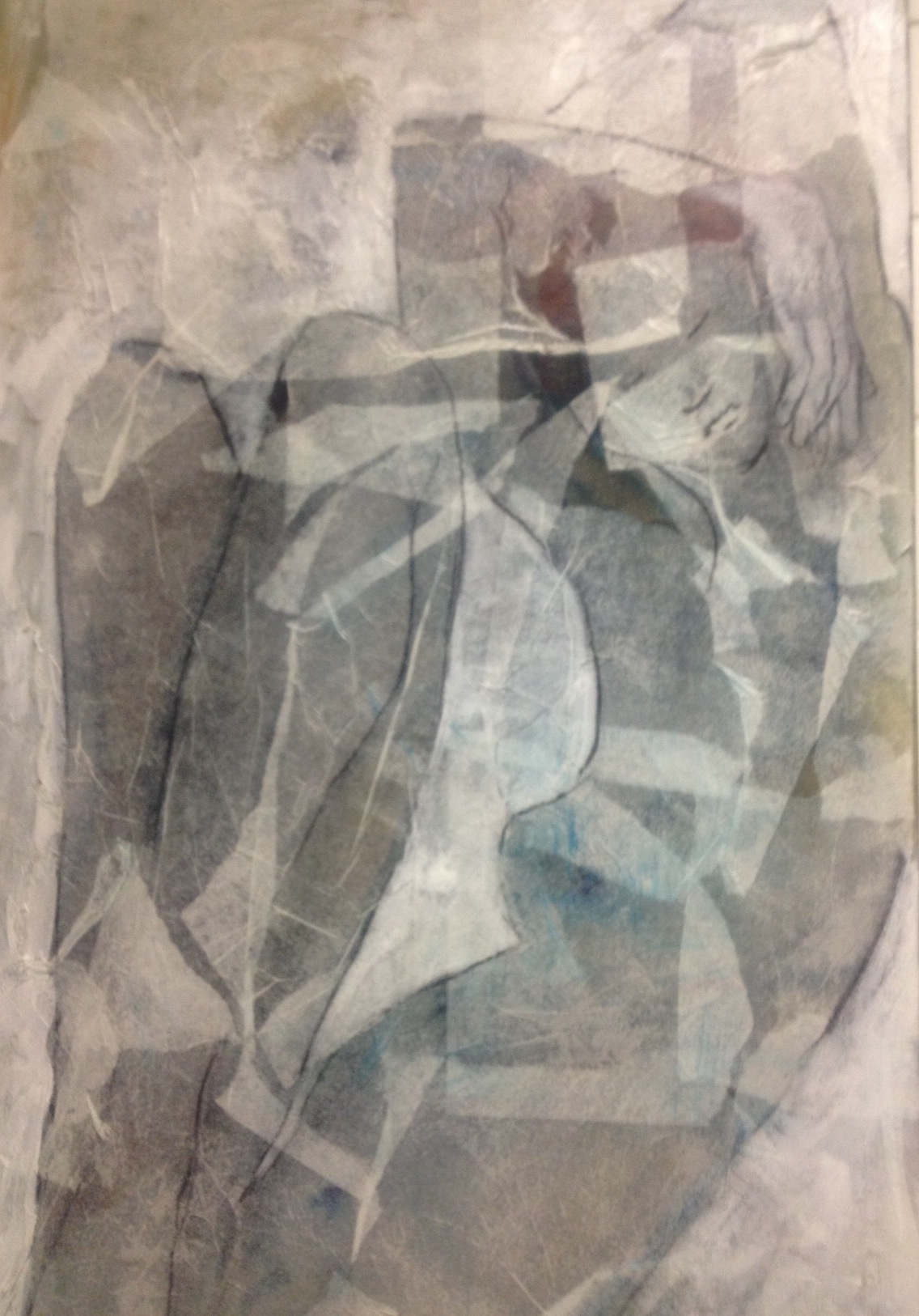
a detail of And Now.

a detail of And Now.

“We need to create this together,” I said. We were discussing a project, a collaboration. 20 whipped out his phone and began searching frantically for something.

“What are you doing?” I laughed.

“Ah,” he said, “Here it is.” He smiled and read to me a definition of the word, ‘we.’ “You and I,” he read, “I and another.” He chuckled, adding, “Oh, I’m not sure I like that word.”

We. It’s a little big word.

At dinner the other night, Brad asked, “Now that you are married does your relationship feel any different?” Kerri and I both smiled. Yes. There is something bigger than ‘you and me.’ It’s hard to explain the change except to say that there is now a ‘we,’ a relationship that takes precedence over any single individual concern.

I was married many years ago and now know why things didn’t work out. We’d established our relationship on the sandy foundation of a bargain: I’ll help you if you help me. Bargains like that do not sound so bad until trouble comes. Bargains are predicated on what you get from the relationship. Marriages, I’ve learned, are built upon what you bring to the relationship. In a bargain there is no ‘we.’

Yesterday Skip and I talked about art (among many other things). It’s been my experience that art happens in the ‘WE’ space. Actors have to bring their gifts in service to the play. In fact, they cannot fulfill their gifts unless they are in service to something bigger than themselves. A self-serving actor essentially locks the audience out of the play; WE is not possible when an actor is oriented to what he or she can get from the experience. Magic happens when an actor is oriented according to what they bring to the experience. It’s the tragic misconception of art in these United States: art is not about self-expression; art, when properly understood, is the creation of WE.

another detail of And Now

another detail of And Now

A few weeks ago we watched a movie, Always, and this line (not a direct quote) jumped out and smacked me on the head: to gain your freedom you first must give it away. Gifts are not fulfilled unless they are given. People are not fulfilled until they give themselves to WE.

[to be continued]

Love To Laugh

photo-1

my bride on our wedding day.

Today marks our one month anniversary. Kerri and I were married one month ago at 11:11am. There are two things that probably best define our wedding: 1) the very first thing we bought for use in our reception was a wiffle ball set and a kickball. It’s taken me a long time to learn that ‘sacred’ and ‘fun’ are essential to each other. Love without laughter is empty, indeed, and I cannot now imagine anything more sacred than love. We wanted to laugh and we wanted our guests to laugh with us.

There is, I’ve learned, a very good reason that the Hopi include tricksters in their important rites. They know that laughter lets the god in. It is a paradox. If you take the god too seriously you will inhibit your relationship with it. You will abstract yourself from it. You will abstract yourself from what is most essential. Laughter is a great facilitator of relationship. Friends laugh together. Kerri often talks about the Amish quiltmakers building a flaw into their quilts. The flaw allows the grace to come in. The laughter, the fun, plunks relationship squarely in the center of the sacred. It makes it real. It makes it relevant. It makes it personal (the three most oft used words to describe our wedding: personal, real, relevant).

To that end, 2) of the wedding week, Jim said it best, “You do know how to throw a great litter of parties.” Truer words were never spoken. We threw 5 consecutive parties in 5 consecutive days, each growing in size and scope. We wanted the people we love to have ample opportunity to meet, talk, and grow to love each other. It took a litter of parties, multiple touches, multiple opportunities, to sow our new garden. More than once Kerri and I watched as the circles of our lives crossed and recrossed, a new tapestry of friendships and stories emerging. Linda taught folks Irish dances on our back patio. Jim and Jim met and played a spontaneous mini-concert. It was gorgeous and spontaneous and rich, rich, rich in laughter (see #1).

This morning Kerri sat with coffee in bed and talked about our wedding (“Can you believe it’s been a month?”). We told stories and compared notes. We laughed. “My one regret,” Kerri said, “was that we never played kickball! I wanted to play kickball!” It’s true. The wiffle ball set and kickball never made it to the beach. There was dancing, so much dancing. The hula hoops even found their way to the dance floor (the bride had four going at one point). So, the kickball remains unrequited. However, the plan for our first anniversary is now set: October 10, 2016, a game of kickball on the beach. An after party of wiffle ball will follow with any and all comers. It will be casual, like the wedding. No need to bring anything. Simply come prepared to laugh.

Wait For The Flow

The Weeping Man

The Weeping Man

The Weeping Man is finished.

Sometimes the process of painting feels like wrestling with an angel: It will not release me. I will not let it go. We wrangle and discover the truth in each other. It is, as Quinn used to say of all relationships: “corrections as refinements”.

Sometimes a painting follows you for years and chooses its day. It chooses its time and simply steps into the light. It announces itself: “I am here now.” The Weeping Man was like that.

In my life I have painted hundreds of paintings and I can count a handful that are like The Weeping Man. Pure. In laying it out, I corrected one line. I added another. There are relatively few unnecessary brush strokes.

Flow is like that.

Answer The Question With A Question

carrying on the tradition (and my heroes): mike and sabrina bartram

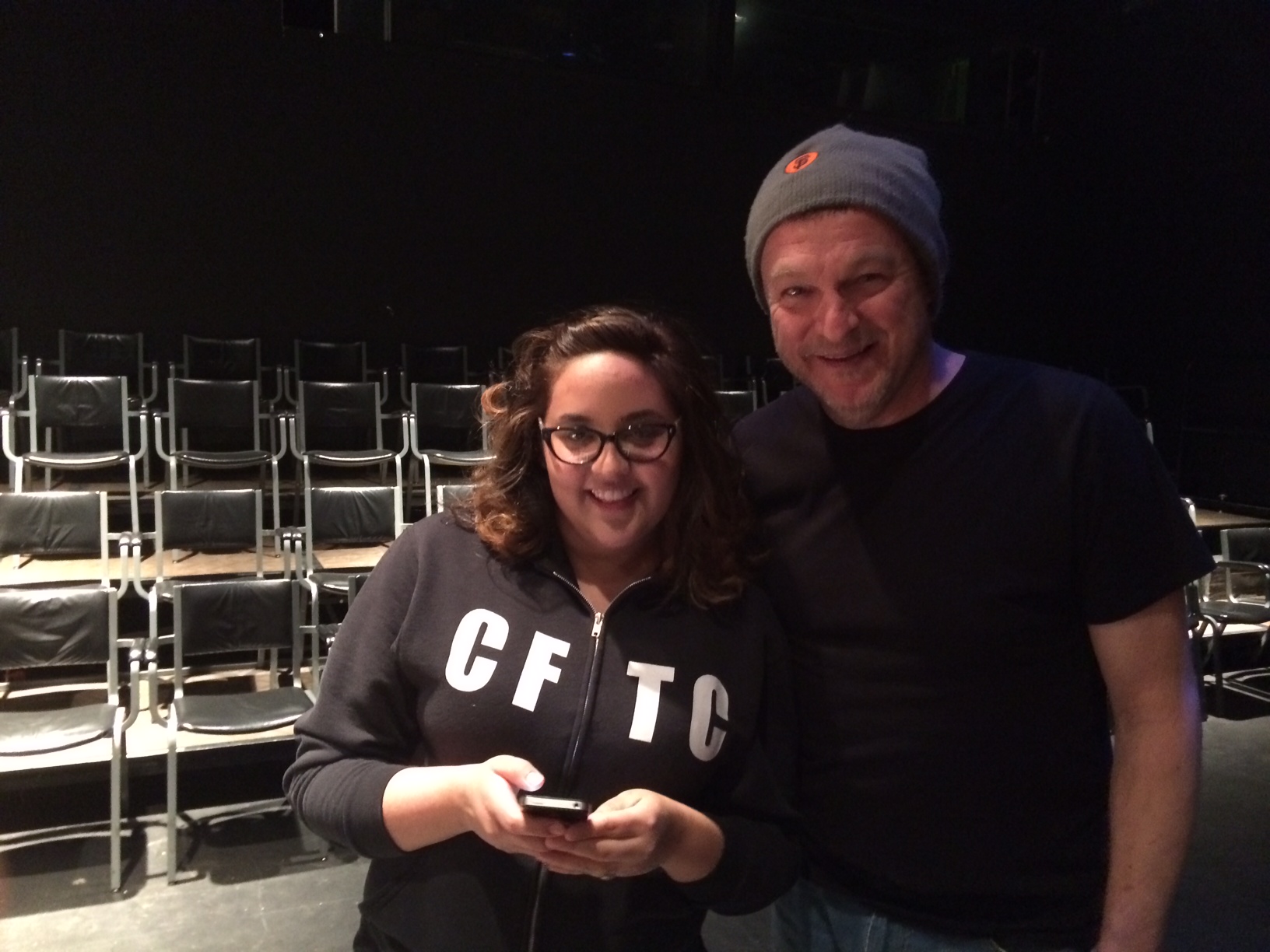
carrying on the tradition (and my heroes): mike and sabrina bartram at Changing Faces Theatre Company

Many years ago at the start of my career I bumbled into running a summer theatre company. It would become one of the great gifts of my life. At the time I decided that it would be my laboratory. I’d be able to experiment with directing processes and actor training techniques. What I didn’t realize until much later was that I would also be running an experiment in business and, more importantly, how to create a community mindset of support and empowerment (and, therefore, achievement). I was free to succeed because I gave myself permission to focus on the quality of the process instead of worrying about hard and abstract words like ‘achievement.’ My bottom line was the inner growth of everyone in the company, the inner growth of the community that we served.

When the company was up and running, when it was mature, company members swept the parking lot because they knew it would make the play better (improving the audience experience always impacts the performance). The people running the box office prided themselves on their kind service and efficiency because they knew that it would make the play better. The actors understood that they were in service to the play and not themselves. In fact, everyone in the company was in service to something bigger than themselves. That was the culture of the company. When pushed to articulate the success of what we created together, I’d say, “We’re focusing on the important stuff.”

Yesterday with great intention I sent that phrase (focus on the important stuff) out into the e-stratosphere. I lobbed it in association with the company that Kerri and I are in the process of creating to see what would come back at me. Like the summer theatre company, this new venture is our laboratory. What came back was the question, “What’s the important stuff?”

Sometimes the only way to answer a question is with another question. Take a look around your world. Take a moment to look at the difference between what you say and what you do. What do you see? What do you want to see? Big power comes to people when, like my company members (students) of so long ago, they realize that their “seeing” isn’t passive. The greatest single power any human being has is to choose where they place their focus. The greatest single revelation any human being has is to recognize that what they see impacts everyone around them. No one does this walk alone.

the very first painting in the Yoga series. It was an experiment, a walk of discovery. It's also about being alone

the very first painting in the Yoga series. It was an experiment, a walk of discovery. It’s also about being alone.

It’s easy to place a focus on an obstacle. It’s very easy to fix a gaze on the problems. It’s easy because, left alone, believing we are alone, that’s where most people default. Place yourself in a community that knows there is something bigger, something more important to see and serve, and the field of possibilities becomes easy. My company members of so long ago didn’t know what they couldn’t do so they did everything they imagined. That was only possible because they imagined it together. So, answering a question with a question, to you, what’s the important stuff?


There Is Wisdom In Dancing

TODAY’S FEATURED THOUGHT FOR HUMANS

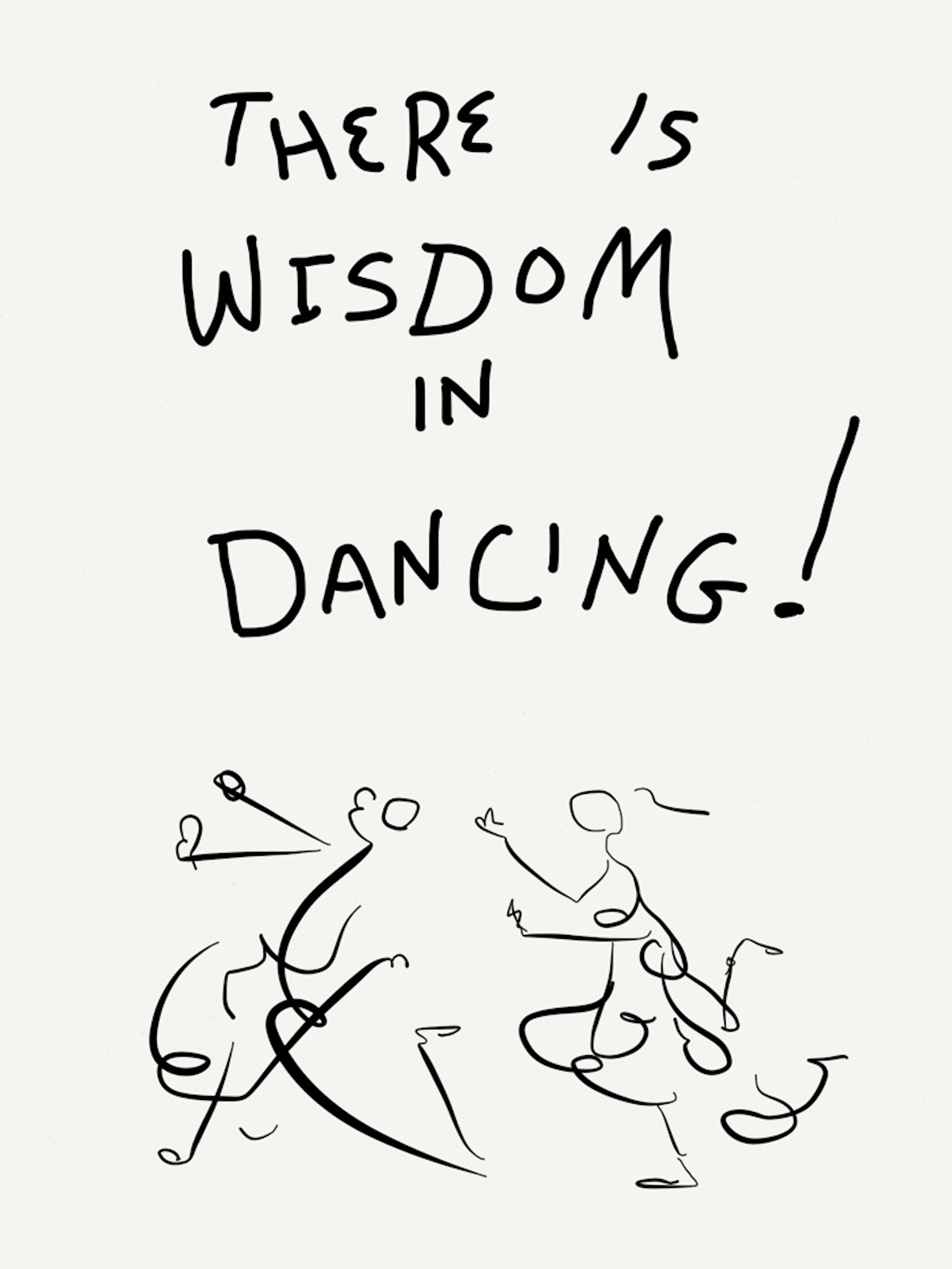
There is wisdom in dancing

To restate an old notion: knowledge is not wisdom. And, often times, our reliance on knowledge blinds us to wisdom (for instance, passing a test has little or nothing to do with learning). My mentors taught me that the toughest thing in life to master is relationship. The reason: relationship is at the heart of everything we do whether we acknowledge it or not. Life IS a relationship. Education, business, art, spirituality, leadership, management, self love, economics, agriculture, kindness, gratitude… are all relationship skills. Wisdom is found in the fields beyond your thinking. Get onto the floor of life and dance.

TO GET TODAY’S FEATURED THOUGHT FOR HUMANS, GO HERE.

Sometimes It Takes More Than A Text

TODAY’S FEATURED IDEA FOR HUMANS

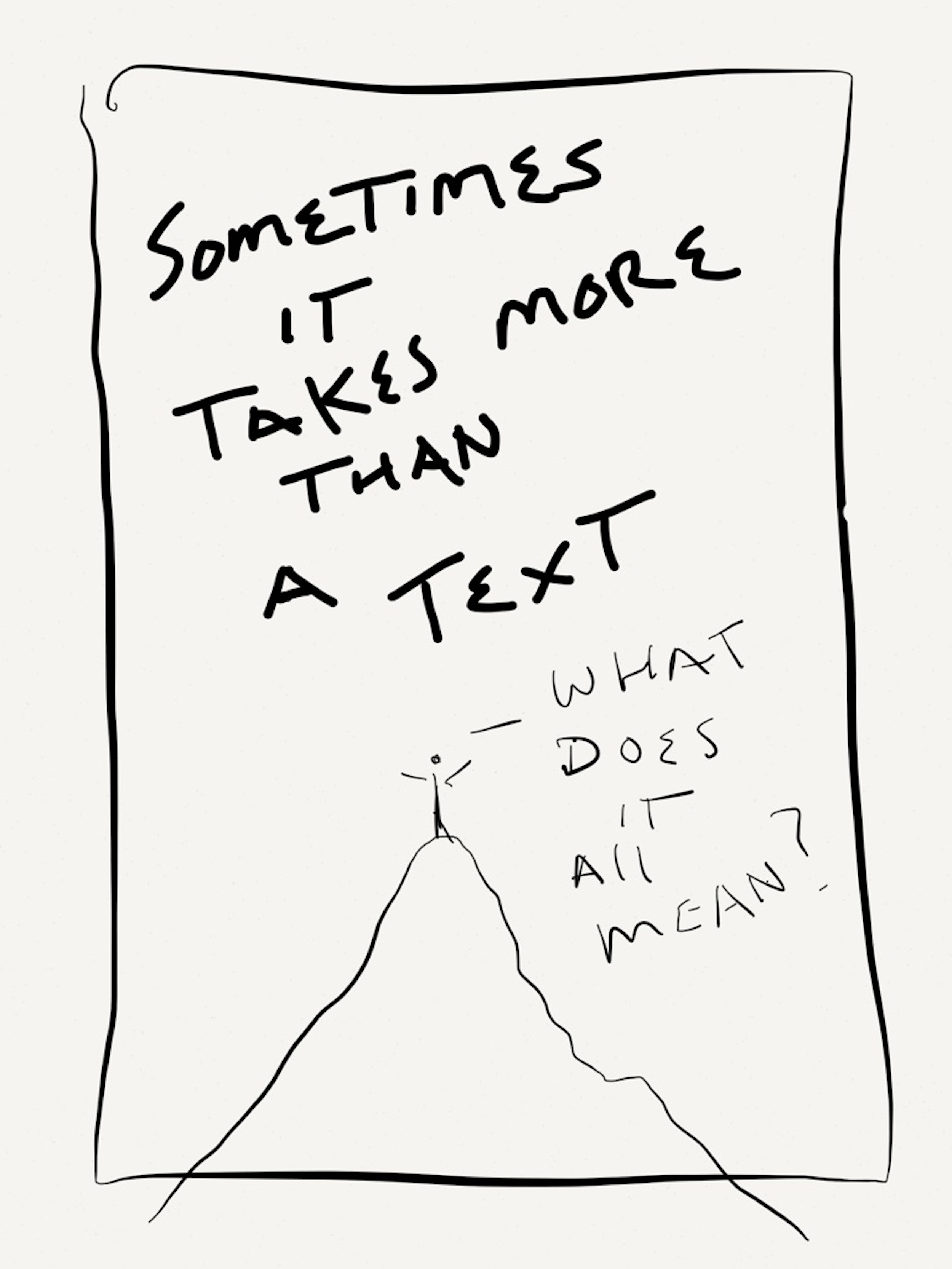
Sometimes It takes more than a text

In a recent post I wrote that we are often slaves to brevity. We want quick and easy answers to life’s big questions. Peter Block wrote that, in 30 years of consulting with businesses, he was routinely asked “How” but never asked “Why.” Relationship is at the heart of almost every big question (like leadership, management, marriage, self-love, the sacred,…) and, in relationship, there is no shorthand.

FOR TODAY’S FEATURED PRINT FOR HUMANS, GO HERE.

Fall Into It

lingering

lingering

Scott said, “In today’s world, if you can’t say it succinctly, you might as well not say it.”

Guitar Jim teases me each Sunday, saying, “Hey, I read the first 80 words of your blog!” I always laugh and he adds, “No, seriously. I didn’t have time to read the rest of it.”

I am like everyone else. I give only 3-to-5 seconds to any website that I visit. If it doesn’t capture me in that vast span of time, I move on to the next and the next and the next….

Click. Click. Click.

We are slaves to brevity.

In The Art of Living, Wilferd Peterson wrote: Travel with curiosity. It is not how far you go, but how deeply you go that mines the gold of experience. Thoreau wrote a big book about a tiny Walden Pond.

Going deeply takes time. My grandfather lived his entire life within a 10-mile patch of earth. He could smell a storm on the wind when all I – a visitor – could see was blue sky.

When I go to a museum, when I need to recharge my artist battery, I find the paintings that demand my attention, the pieces that want a relationship with me. Relationship takes time, too. Like Thoreau, I need to stare into the pond deeply, to spend time with it, to know it beyond mere thinking. Then I can breathe it in, feel the impact that only comes available with an engagement beyond the cursory. When I fall into it, it falls into me.

This is the challenge of our time, the artistic challenge of our time, the expectation that depth can be found by skipping a stone across the surface.

A good poem will not fully open without lingering in it.


Reach

photo-6In these few weeks post Lost Boy I’ve been writing thank you letters and sending Kickstarter rewards to the many people who donated to the campaign. I am humbled by the number of people who stepped forward to lend a hand, offer resources (financial and otherwise), and/or heap us with the moral support necessary to produce the play.

The Reminder: no one does anything alone. All creative acts, all things that are useful in this world, all triumphs that seem on the surface to be an individual achievement, are, in truth, a group effort. Life is a team sport. Quarterbacks are nothing without a front line, a coaching staff, a back office, a marketing machine spinning the tale. They also had mothers that for years drove them to practice, families that stood in the cold to watch them play little league, and a host of friends who told them that they could do it if the only kept going. Artists are no different. Even the loneliest painter has a rolling lifetime team whether they recognize it or not. Consider this simple basic: a painting is never complete until someone other than the artist engages with it. A play is never complete until an audience arrives. The whole point is to make or accept an offer to/from an other.

We, the people of these United States, place the accent of our existence on the achievement of the individual and that sometimes makes us blind to the obvious truth of our existence. We do nothing of worth on this earth without the support and participation of others; relationship is at the core of anything worth doing.

from the 2015 Racine snow carving contest. I'm sorry I did not capture the artists names!

from the 2015 Racine snow carving contest. I’m sorry I did not capture the artists names!

Once, many years ago, I lived in Los Angeles. I did not know my neighbors. I had no idea or desire to know who was living in the houses next to me. One night the earthquake came and our illusion of independence was stripped bare. With no power, no water, no heat, and compromised housing, the first thing we did was to reach to each other. When the illusions of comfort and security are stripped, our real need (each other) becomes glaringly apparent.

I wrote this play, The Lost Boy, because someone dear to me, over a decade ago, asked me for help. I was grateful that he asked – it meant I got to spend time with him and return some of the attention and love that he had invested in me. When the metaphoric earthquake hit – when Tom died – I had no recourse but to reach out to others; I produced this play when I realized that I was not alone and all I need do was ask for help. Legacy, like story or life, is an infinite loop of relationships.

Hear The Voices

photo-2This is the most unusual rehearsal process I’ve ever navigated.

First, I wrote the play and in preparing to perform it, I’m discovering it anew as if someone else wrote it. There have been brilliant and funny moments when I ask myself, I wonder why he wrote that? The good news is that I remember whom to ask.

Second, the play was originally meant for Tom to perform and since the story is Tom’s family narrative, I wanted the language and syntax to be Tom’s. In development, I recorded hours of conversation with him. Much of the first draft was a transcription so that I might capture word-for-word his language choices and speech patterns. Those structures survived the several rewrites that happened after Tom’s death. In preparing to perform the play I’m wrestling with the language. I’m wrestling with his language. It is almost as if I am discovering my own speech patterns and syntax – in telling Tom’s story I’m finding it necessary to tell it my way, not his. Essentially, as is true in all good storytelling, I am finding myself, my voice, through his story.

Tom and me a long time ago.

Tom and me a long time ago.

Finally, the music is a character in the play and the musicians, Mom’s Chili Boys, are madly rehearsing in California while the actors (Kerri and I) are rehearsing in Wisconsin. The internet is a beautiful thing as, each day, we pass notes, record voices, email questions; we will only be together in the same room 3 days before the first performance. We’re essentially workshopping the play from two locations. It is akin to rehearsing a symphony in parts and the parts only come together in the final day. They get to experience the whole symphony, the fullness of their music as played through all of the voices, only in the final hour. And that will be true of this play.

Each day I rehearse and I hear Tom’s voice in my head, telling me the stories that comprise the play. I am reminded that, whether artist or audience, art is a living thing. It is a relationship and ultimately that relationship is with your self.

title_pageGo here to buy hard copies (and Kindle) of my latest book: The Seer: The Mind of the Entrepreneur, Artist, Visionary, Innovator, Seeker, Learner, Leader, Creator,…You.

For all digital versions, go here (Leanpub)

Untitled by David Robinson

Untitled by David Robinson

Go here for fine art prints of my paintings.