Vis-À-Vis The ♡ [David’s blog on Merely A Thought Monday]

In relation to the heart. In regard to the heart. Be careful! This heart of mine is made of soft tissue.

“Be patient toward all that is unsolved in your heart and try to love the questions themselves…” Advice from Rainer Maria Rilke. I find that it is much wiser to take the advice of poets rather than the counsel of politicians. Poets seek truth beyond words. Politicians often use words to obscure truth.

With so much unsolved in my heart I have spent my lifetime developing a love of questions. The same is probably true for you. I admit that there are days that I tire of loving the question and shake my fist at the sky, crying, “For once just give me a goddamn answer!”

Those fist-shaking moments always result in silence-from-the-sky, which inevitably leads to a question, “Is it so hard to give me an answer or guidance or direction?” You gotta love that question!

I’ve noticed that the sky never answers immediately. It takes its sweet time. However, in time, sometimes after years of holding a question, the symphony resolves. A path opens. Or closes. An answer arrives, usually following a surrender.

“Our heart always transcends us.” There he goes again. Rilke. And just what does it mean that our heart always transcends us? It’s a good question. I imagine it will remain unanswered so it’s best not to ponder it too much. Pick it up, give it some love and carry on.

read Kerri’s blog post about VISÀVIS

likesharecommentornotsupportthankyou

Time To Linger [David’s blog on DR Thursday]

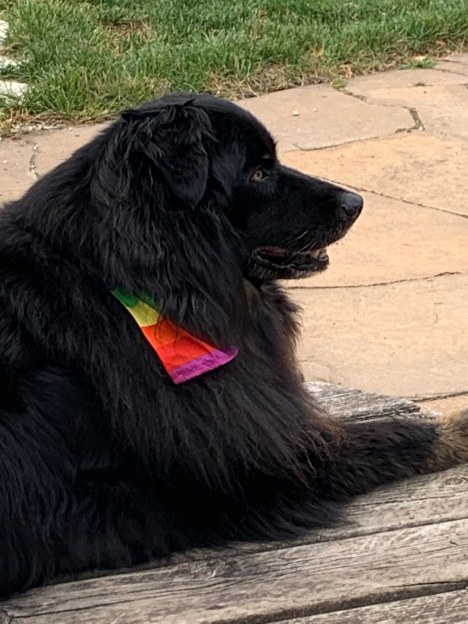
These days Dogga rarely bursts out of the house to clear the yard of marauding squirrels and trespassing birds. Now he lopes out the backdoor, stands at the end of the deck, finds a good cool spot, lays down and surveys his vast territory. We tease that he is doing what my dad, Columbus, did in his final chapter. He sat in the shade and thought his thoughts.

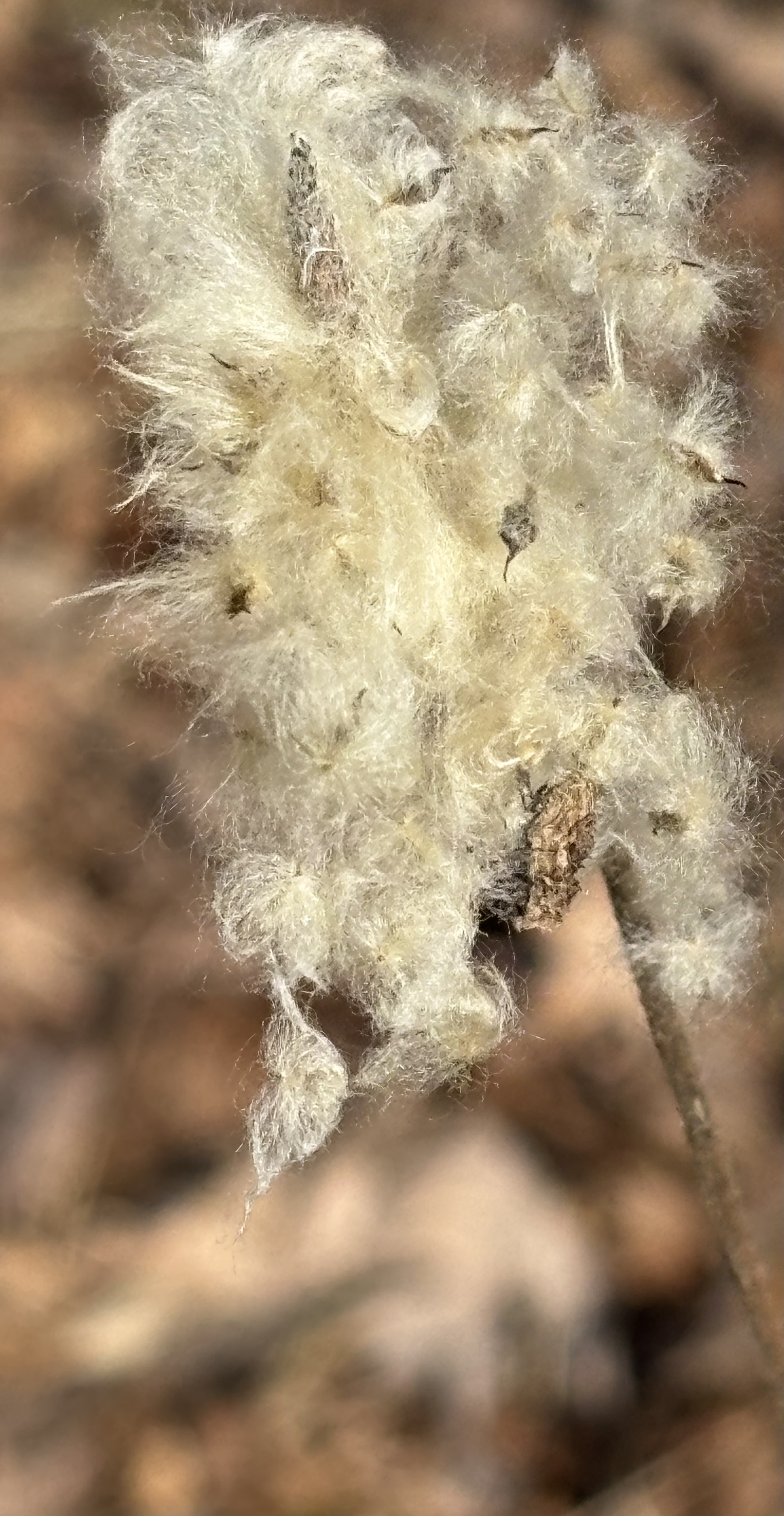
The thimbleweed along the trail reminds me of cotton. The pods usually release their seeds in the fall but sometimes they hang on through the winter. I wonder if these seeds have missed their moment. They hung on too long. Is this puffy white cluster a failure to launch or are these the seeds of an older plant that no longer needs to toss wild dreams into the future? Perhaps it is time to linger.

Yesterday was a particularly nasty day outside. We binge-watched an entire season of Virgin River. One of the characters, in a moment of crisis, realized that she was trying very hard to hang onto an identity – a version of herself – that was no longer relevant. Life had stripped away a layer of her mask. She needed to let go. I completely understood her revelation. Old dreams need not fly from the pod in search of fertile ground. Sometimes old dreams are just that: old. Letting go makes space for new dreams and new questions. It clears space for Now. There is certainly no end to life’s questions.

We had a rare day of sun. We bagged all of our plans, pulled out our chairs and basked. In truth, our decision to sit in the sun was about Dogga. Rather than leave and explore the world, we chose to sit in the sun with him. His favorite thing to do is hang out with us. There is no end to our questions but there is absolute clarity in our priorities. How long will we have him with us? We don’t really know. What we do know is that there is nothing more important than surveying vast territory with him. We would regret forever if we lost ourselves in the pursuit of old dreams and missed this moment, this time to linger with him.

read Kerri’s blogpost about THIMBLEWEED

likesharecommentsupportthankyou

Low Information Nightmare [David’s blog on Two Artists Tuesday]

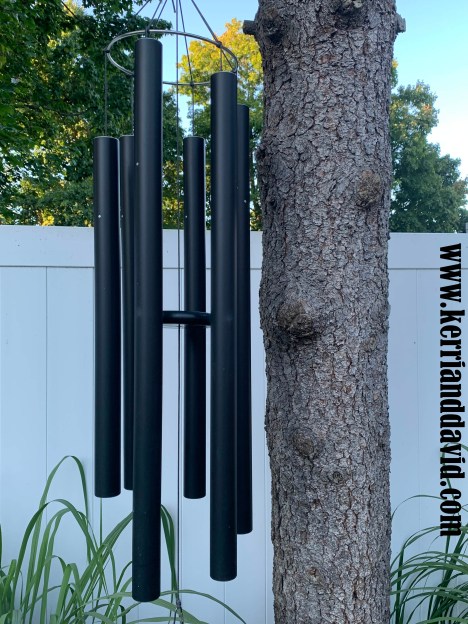
We took down the chimes because we knew the blizzard was coming. We watched the monster winds , sleet and snow, approach on radar. I am forever grateful to have immediate access to weather radar so I know what’s coming. It saved us once-upon-a-time when we were caught in a tornado. Just after the winds lifted our car from the ground, we huddled behind a restaurant and watched the radar for a small break in the storm so we could make a run for safety.

Last night as the blizzard buffeted the house, as we ate bananas at 3am, we talked about all the things in the world about which we know nothing. Does ice on the tracks impact how the trains run? How do they move Anselm Kiefer’s monumental paintings from his studio to a gallery? In the age of Goggle it is possible to find out how to lay bricks but would I really know how to do it until I’d studied with a master bricklayer? At what point is abstract knowledge actually useful? At what point do we know what we are talking about?

Yesterday I heard a phrase roll through the news cycle that I’m coming to detest: low information voter. It’s sanitized language and brings up a number of questions for me. The first is obvious: are we mislabeling an intentionally misinformed voter as a low information voter? I’ve watched dozens of interviews with “low information voters” who are quite capable of regurgitating pat-phrases seeded into their brains from their source of misinformation. Are they then a low information voter?

The ghost of Neil Postman whispered in my ear:

“The question is not, Does or doesn’t public schooling create a public? The question is, What kind of public does it create? A conglomerate of self-indulgent consumers? Angry, soulless, directionless masses? Indifferent, confused citizens? Or a public imbued with confidence, a sense of purpose, a respect for learning, and tolerance? The answer to this question has nothing whatever to do with computers, with testing, with teacher accountability, with class size, and with the other details of managing schools. The right answer depends on two things and two things alone: the existence of shared narratives and the capacity of such narratives to provide an inspired reason for schooling.” ~ Neil Postman, The End of Education

Shared narratives. An inspired reason to ask questions and to seek greater understanding. These two things actually form a feedback loop. They are fluid and not fixed: greater understanding informs and evolves shared narrative which opens new questions. You might think that shared narrative and pursuit of greater understanding would be essential concerns for our democracy but we are learning – I am learning, much to my surprise – that is not true. Our narrative is intentionally divided. The current republican party openly and intentionally demonizes learning. Low information voters are easily manipulated and a political party empty of ideas and ideals relies exclusively on a voting public that readily swallows their rubbish.

If our democracy took itself seriously, would we tolerate highly profitable sources of misinformation? Would we so easily polish “ignorance” into a shiny phrase: low information voter? If we took our democracy seriously and intended to protect it, wouldn’t “low information voting” be unacceptable since the responsibility of casting a ballot is predicated upon knowing what you are voting for?

I live in the age of Google. I can see storms coming and that informs my choices: I take down the chimes. I secure anything that the wind will destroy.

I live in the age of Google. I can -and do – in a moment fact check any assertion that comes my way. For instance, I know that the Save America Act is not what it appears to be. It is a storm coming. It does the opposite of what it purports to do. It has nothing to do with voter ID and everything to do with preventing voters from voting. It is a straw man; incidence of voter fraud in the United States is statistically zero. Do low information voters know that? This wind will destroy our democracy.

The woke folk on my side of the divide read Project 2025 and learned from the chaos and grift of the first four years of the authoritarian wannabe. We screamed, “There’s a storm coming!” The necessary information – like weather radar – was readily available. It was easy to see. Low information is, in actuality, the unwillingness to look.

What’s happening now in our nation is not a surprise. The campaign to create low information voters was -and is – successful. Eliminate education. Demonize truth as a hoax. Create “alternative” facts (legitimize lies) while labeling actual news “fake”. Split the people.

If we survive the attempted take down of our democracy, an item high on my list of things to address is the elimination of the possibility of the low information voter. One need not have a mass of information in their brain to be educated, they only need the desire to question, the dedication to discern what is true from what is dross. One need only understand the need to check the radar and act accordingly.

“Because we are imperfect souls, our knowledge is imperfect. The history of learning is an adventure in overcoming our errors. There is no sin in being wrong. The sin is in our unwillingness to examine our own beliefs, and in believing that our authorities cannot be wrong.” Neil Postman, The End of Education

read Kerri’s blogpost about THE CHIMES

likesharecommentsupportthankyou

Bill Moyers’ Question [David’s blog on Two Artists Tuesday]

I wish someone could explain to me how diminishing our position from global superpower to a regional hemispheric bully makes us great again.

I wish someone would explain to me how isolation in the world is preferable and more powerful than global alliances. Especially given that our prosperity is a function of a global economy.

I wish someone could help me understand how learning and education has become anathema to our national identity. How is it that ignorance is preferable to inquisitiveness?

I’d like to understand how so many of my fellow citizens doubt what is obvious, apparent, what is right before their eyes, and fervently grasp onto lies (also obvious) as their chosen reality. For that matter, where-oh-where has our free press gone?

I want to know why science, data and fact are eschewed in favor of quackery, falsehoods and spin? When did we sign up to be the poster-nation for penny-wise-pound-foolish? As Kerri says everyday after surveying the latest wreckage, “Well, at least our Froot Loops are gonna be safe.”

Although I am curious how we managed to elect and assemble a kakistocracy (government by the least suitable or competent citizens of a state), I really wish someone could explain to me why they have not yet been tarred-and-feathered and run out of town. Protecting pedophiles, murdering citizens, threatening war both north and south, making a mockery of justice, profiteering, dismantling our constitution, weaponizing our data…why are they still being protected?

Lately, we walk our trails to unplug. To clear our minds from the latest horror of the nation-run-amok. To sort. To reclaim our attention span from the sharp fragments flying across our screens. To reaffirm what is real and what is not. To ground again in what is important.

On our latest loop I recalled, years ago, Joseph Campbell said that our mythology was dead. “You just have to read the newspapers,” he said as proof. Crime. Business-as-exploitation. A government increasingly protecting big business at the expense of the people.

A mythology is more than a cute story. Living mythologies reaffirm and reinvigorate the values of the people. They are the glue of society. Mythologies are “living” when the community lives the values reinforced in the stories. The Boston Tea Party is part of our national mythos. Paul Revere. Washington crossing the Delaware River. Rebels fighting for their freedom against an authoritarian king. Think about the value sets implicit in our founding story. We do not assemble on the 4th of July simply to coo at the nice fireworks. Or do we?

I wish someone could explain to me where our values have gone. We did not fight a world war against fascists only to become fascists. When did e pluribus unum, unity through diversity, become exclusive, ugly white nationalism? When did the shining city on the hill, a beacon for all, a land of promise and an aspiring moral exemplar, become the neighborhood thug?

Bill Moyers asked Joseph Campbell if a dead mythology could be revivified? Campbell paused and answered, “I don’t know.”

I guess it’s up to us to answer Bill Moyers’ question.

read Kerri’s blogpost about THE WINTER TRAIL

likesharecommentsupportthankyou

A Fragile Thing [David’s blog on Two Artists Tuesday]

“A new idea is delicate. It can be killed by a sneer or a yawn; it can be stabbed to death by a quip and worried to death by a frown on the right man’s brow.” ~ Ovid

I continue to replay in my mind the moment that the young man, the expectant father, told us that he intended to home school his child. He said that he didn’t want his child’s mind filled with the wild ideas peddled in public schools. He wanted his child to know-only-the-facts. Just the facts. I’ve previously written about this so it clearly continues to bother me.

I wanted to tell him that democracy is not a fact. It is an idea. It bothers me that I didn’t say what I was thinking. I wanted to tell him that he was being fooled by leaders who want to keep his child – and all people – ignorant. Learning – education – is about the pursuit of questions and active engagement with ideas. It is not about the-facts-in-isolation.

I wanted to tell him that the quickest way to numb a mind is to steep it in isolated facts. Solving difficult problems, facing complex challenges, is predicated upon the capacity to entertain ideas. It’s not so easy to gaslight a populace that regularly exercises their power to question. Gaslighting is a snap with people who’ve been schooled to rely on just-the-facts, especially when the “facts” are crafted by the wily fox. Facts-in-isolation permit folks to wield words like “socialism” like a weapon with no real understanding of the sword that they swing. It’s been a useful Republican scare-word since the 1950’s because very few who brandish the word understand what it actually represents. Understanding requires the ability to ask questions, to compare, to contrast, to consider. To doubt.

Ideas are dynamic. Facts are static. Minds are dynamic but can too easily be made static.

“Democracy’s a very fragile thing. You have to take care of democracy. As soon as you stop being responsible to it and allow it to turn into scare tactics, it’s no longer democracy, is it? It’s something else. It may be an inch away from totalitarianism.” ~ Sam Shepard

Relative to the history of the world, democracy is a new idea. Like a new-born, it is delicate and requires nurturing and constant attention. It requires the constant feeding and stimulus of a curious mind. Today, we find ourselves, the stewards of democracy, an inch away from totalitarianism. We are witness to the realization of a Republican dream: the dismantling of the Department of Education, a war against our colleges and universities waged to eliminate the pursuit of ideas in favor of the state-approved facts.

Democracy is a fragile thing. It’s a new idea and the new idea is delicate. Its genius is to question, to compare and debate. It renews itself through collaboration and compromise. It pursues a more perfect union knowing that it can never arrive there since it is an idea, not a place or achievement. Democracy, like all vital ideas, is a relationship that requires tending.

It haunts me, what I wanted to say to the new father but did not: it is no small choice to stifle a questioning mind in favor of a pre-approved fact. This might be a good time to question what you think.

read Kerri’s blog post about A FRAGILE THING

likesharesupportthankyou

A New, Unique Personality [David’s blog on Two Artists Tuesday]

It really does not take much to transform a room. New furniture, accent walls or refreshed paint, area rugs…are all viable options. However, none of these work as well or as effortlessly as two googly eyes stuck on the wall. Try it. Your space will immediately have a new, unique personality. It will have an undeniable focal point. It will immediately fill guests with questions. It will, just like your conscience, look back at you. You will wonder what your new room reveals about your personality. You will catch yourself pondering what your room is thinking. Someday, inevitably, you will find yourself talking to your wall.

All of this transformation with the simple addition of two dime store googly eyes.

Keep in mind that three eyes are not better than two. One eye will confuse or irritate rather than illuminate. Eyes on every wall will cancel the magic. If personification is the goal, then two eyes are requisite. No more. No less.

It takes very little to personify, to project human qualities and traits onto – into – something as abstract as a wall. It’s why we find deep comfort in teddy bears or reach for the wisdom of the man in the moon. They look back at us. We endow them with compassion or quietly listen to the messages brought to us by the wind.

Conversely, it takes very little to dehumanize a human being. As easily as we assign humanity to objects we just as easily deny humanity to people. We make them objects. It’s easier to scoop them off the streets and put them into camps if we objectify them, if we downgrade their humanity. If we blame them for what ails us.

It’s simple. All we need do is project onto them our cruelty. Keep in mind, to be successful dehumanizers, it’s especially necessary to avoid opening your eyes. Opening your eyes will immediately fill you with questions about yourself. It will ignite your conscience; you will see “their” eyes looking back at you. You will wonder what your projection onto “them” reveals about you.

It really doesn’t take much to transform a culture. All you need do is close your eyes. It is just as effective to look the other way. It will serve to stifle questions especially the self-reflective variety. Averting or closing the eyes is especially useful when it is necessary to deny the obvious or to endow fiction with substance or abdicate personal responsibility. Choosing blindness you will become an easy mark, effortlessly misled.

All of this transformation with the simple condition of closing the eyes.

Rest assured, in the absence of sight, your community will have a new, unique personality.

read Kerri’s blogpost about EYES

likesharesupportcommentsubscribethankyou

Step Into The Mystery Fandango [David’s blog on KS Friday]

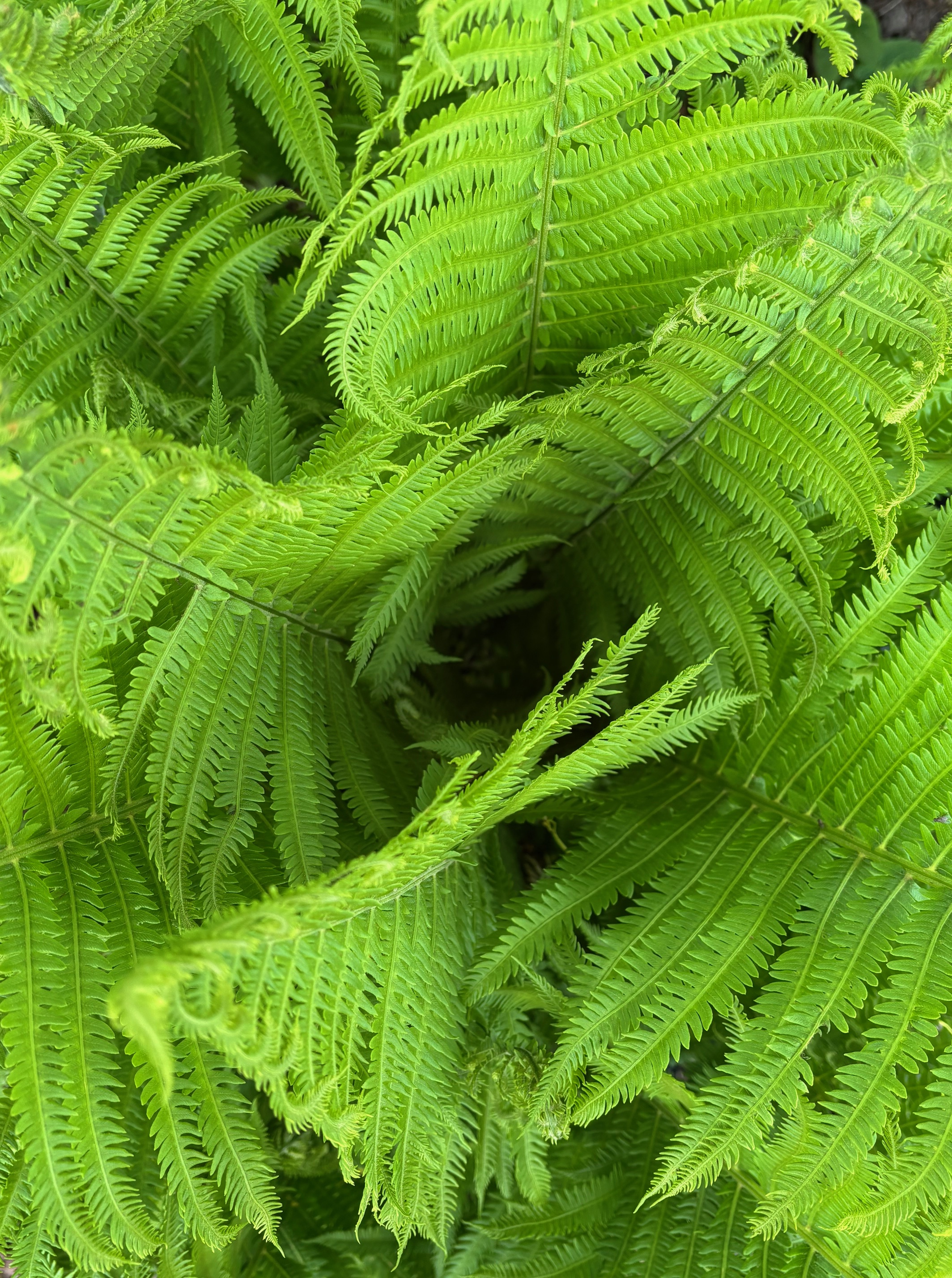
Our ferns came on like gangbusters. One day they were little seahorses poking their heads from the ground. The next day (it seemed) they were standing tall, mature, a thick rich green forest of fern-fandango.

Fandango is a Spanish dance. It is also a slang term for extravagant behavior. Gangbusters is an idiom that originated from a 1930’s radio crime show and means “with enthusiasm” or “with great energy”.

I loved that she thought to take a photo from the top, a birds-eye view looking down into the dark secret center. It made we want to reach in, to discover the mystery of the fern fandango.

An enigma is always a Siren’s call to the human mind. It’s why we sail to the edge of the world or send rockets to the moon. It’s why we crack the genome or climb to the top of the mountain. It’s why we travel to foreign lands or seek the center of our paradoxical belief.

What is over there, in there, beyond? It is human nature to ask, to ponder, to relentlessly pursue questions. Questioning is the epicenter of science and the arts.

Our curiosity is greater than our fear. Ultimately, it is the reason that I have some small hope for this nation, currently in a frenzy of curiosity-killing, book-banning, history-scrubbing, white-washing, bible-thumping, mind-numbing, heart-clubbing, immigrant-ousting, truth-drowning…A whipped-up, full-on fear fandango meant to blunt all questioners.

People die when fear and panic rule their actions; they become incapable of thinking. People wilt when narrow pat-answers are forced down their throats. Authoritarians are gifted enemy-creators – enemies provide easy answers as long as no questions are permitted. Critical thinking is an authoritarians greatest foe. But, sooner or later, as is always true, the panic-stricken public tires of eating dross and have no recourse but to question the need for so much fearmongering and panic creation. Questions are the antidote to fear, the cure for toxic dictatorship because questions build the road to truth.

Questions are what drive the little seahorse ferns to pop their heads through the crusty soil. Questioners seek the light, they reach for the sun.

People blossom when curiosity calls and they answer. They join forces and mobilize. When disaster strikes, when corruption poisons the body public, people come on like gangbusters, rallying around hot questions like, “Now what?” They join hands and step together into the mystery fandango that holds the promise of leading to a better world – for all.

WATERSHED on the album AS IT IS © 2010 Kerri Sherwood

Kerri’s albums are available on iTunes and streaming on Pandora

read Kerri’s blogpost about THE FERNS

likesharesupportcommentsubscribe…thankyou.

Sit In The Circle [David’s blog on DR Thursday]

Somewhere in my past a teacher suggested that it is helpful for a writer to know to whom they are writing. Who is your audience? And more specifically, is there one person that your words are meant to reach?

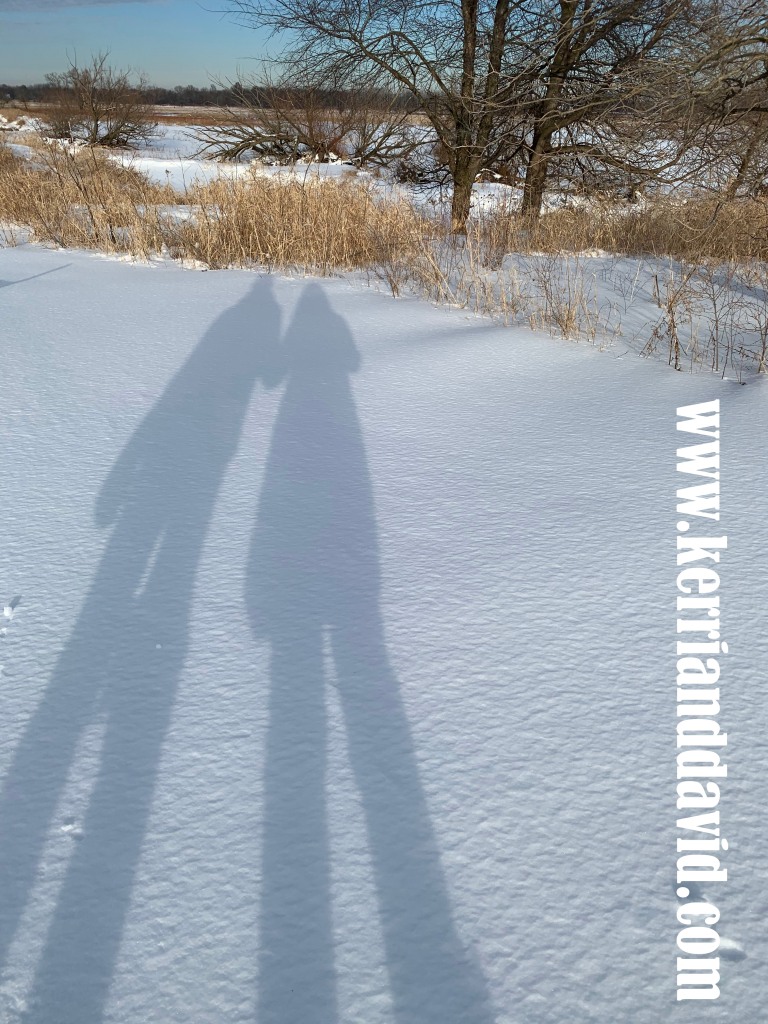
The question came up for me on our trail. The snow dampens sound. Some people find a winter landscape bleak but I find it beautiful. Distinct. Thought provoking. Ideally suited for an introvert like me. Quiet life. Stands of warm sienna reeds sharp against the ice blue snow. The creaking-moan of tree limbs rubbing in the cold breeze. Perfect for inspiration and reflection.

Much is changing in the world broadly and in our world close-in. I am not writing as I once did. I am not painting like I used to. When I first began writing my audience was a community of international coaches, interculturalists, and diversity, equity and inclusion facilitators. I wrote broadly. I had points to make. A brain to flex.

Now I am bereft of answers and have only questions. Some days I write specifically – for Alex or Buffalo Bob. Some days I write for Horatio or Judy or Dwight or 20. Sometimes I write to members of my family though I know they don’t often read what I write. Sometimes I write for Kerri. Many days, probably most days, I write to myself. I reach in. I am asking myself questions about what I believe.

The people who populate my audience – my community – now and in the past – are bonded in their empathy. They care about others. They strive to make the world a better place for others. They are modest. Humble. The opposite of elitist. They are kind. They ask questions. They are thinkers who seek truth in all things; they are open hearts, open minds, with finely-tuned crap detectors. They care enough to fact-check what they hear. They are learners, curious about difference, unafraid of stepping beyond what they know. They are the people I want to hang out with.

On my walk in the snowy woods I realized that I need them now more than ever. A community that inspires hope, that fuels the creative fires burning inside of me and others. A bevy of goodhearted people I admire and believe in. A community of sanity – my community of sanity – in a country deliberately trying to lose its mind and sell its soul.

I write each day so I might sit for a few moments in the circle with these good people, whether they know it or not.

Instrument of Peace, 48″x91″ mixed media

read Kerri’s blogpost about REEDS AND SNOW

likesharesupportcommentcareaboutotherssubscribe…thankyou.

A Pendulum With What? [David’s blog on Merely A Thought Monday]

“Along the way, we have unlearned how to live wide-eyed with wonder at what Hermann Hesse called “the little joys” — those unpurchasable, unstorable emblems of aliveness that abound the moment we look up from our ledger of lack.” ~ Maria Popova, The Marginalian, January 28, 2025

I am aware that reading my recent posts, my letters to the world, are like riding a wild pendulum.

Side note: instead of using the word “pendulum” I was going to use “Newton’s Cradle” only I couldn’t remember what the device was called. I was having trouble Googling it because I couldn’t figure out how to ask the question necessary to produce the result. Kerri pulled up “Newton’s Cradle” in a nanosecond. “How did you do that?” I asked, “What words did you use to get it so quickly?”

“A pendulum with balls,” she said. I burst out laughing. “What?!” she protested, “That’s what it is!” I’m still laughing.

And so, a pendulum with balls. Newton’s Cradle. Lately, reading what I write is like riding that – whatever that is. One day my post rages at the coming storm. The next day my inner Buddha grabs the keyboard and espouses the virtues of presence. Kerri is also writing like a ride on Newton’s Cradle but she’s a better writer than I am, more conversational and heart-full, so her posts are less whiplashy than my raging.

Riding the pendulum is a hot topic of conversation here at the international headquarters of kerrianddavid.com. It’s relatively new to our experience, this bouncing between awe at the little wonders of the day and utter disgust at the titanic horror of our historical moment. Do we honestly give voice to what we are thinking/seeing all the time or only half the time? How much is too much? Who do we want to be in this Brave New World? What is the purpose of writing anything?

When does an artist become trite?

I am reminded of the many, many, many times in my life that I’ve stood in front of school boards, boards of directors, faculty boards, boards, boards, boards, and reminded them that the arts actually serve a purpose in a society beyond entertainment. In fact, neutering the artists is among the first acts of every dictator. No autocrat wants a mirror of truth held up so society might see their reflection.

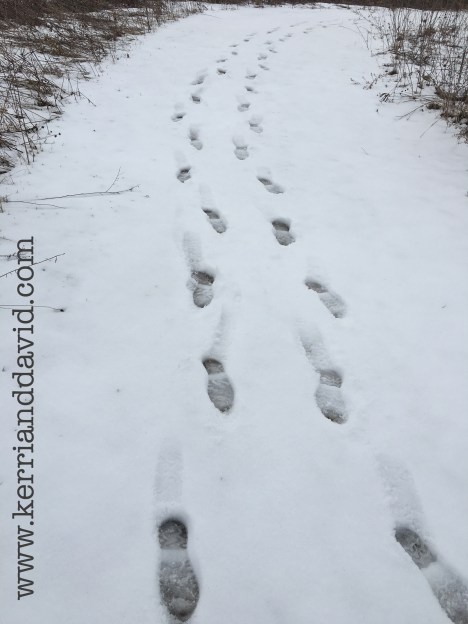
And so, as we ride the pendulum with balls, we walk through our days with no answers to our questions. We know our job is to see and reflect the full spectrum of our experience, the little joys and the worst nightmares. The sweet cardinal that came to our window, the message scratched in the snow on the side of the trail, all the while ringing the alarm that an arsonist has the keys to the national house. Both/And. Holding on for dear life riding Newton’s Cradle.

read Kerri’s blogpost on Merely A Thought Monday

likesharesupportsubscribecomment…thankyou.

Ponder Pure Action [David’s blog on KS Friday]

“Raise your words, not voice. It is rain that grows flowers, not thunder.” ~ Rumi

Although now it’s ubiquitous in the social media sphere, to be an “influencer” is a relatively new term of in the canon of aspirations. To affect, to sway, to direct, to shape, to guide… Someone recently suggested that Kerri and I should attempt to become influencers and we both cringed. For us, there’s something shallow about that word that makes us recoil. We write everyday because we enjoy writing and are very aware that our love of writing does not necessarily mean that we have anything new or of value to say. We like to write together. We like to share what we write.

I recently read a Taoist tenet: cease trying to influence others or to be influenced by others. It’s a notion meant to speak to the pursuit of happiness. Essentially it recommends stopping the pursuit. Happiness is not a thing to be caught. It is not something to be attained. The tenet is a suggestion to stand still, to act purely according to what presents itself in the moment. To act without thought or desire of any imagined gain. Happiness is bubbling in the present moment, expressed through pure action. Taoists – as I understand it – call this non-action (as opposed to inaction). Wu Wei.

Pure action. Effortless.

When Kamala Harris became the Democrat nominee, we wondered what we could do to help. Previous to her entrance into the race, the ugly-red-tide seemed impossible to stop. She brought light and new energy. We read – somewhere – that in order to help her, people should do what they already do, do what they do best. And so, in this present moment, we write. I cannot claim to be pure in my action since I hold the hope of influencing a few hearts and minds out there, somewhere in the nation, to fully understand the power of their vote and the need to know what they are voting for.

Yesterday on our walk we crossed paths and had a chat with a friend and, of course, talked about politics. As a professor, he said each day, regardless of the topic or the lesson, now more than ever, he is trying to teach his students critical thinking skills. “They no longer know what is fact and what is made-up. They have to learn to question,” he said, “They have to learn to think for themselves, beyond what they are hearing in social media.”

Pure action. I told him that the imperative to teach critical thinking places him on the frontlines. A thinking person could not – would not – vote for the maga-candidate. There is plenty of desire in the red-tide to remove critical thinking from higher education – from all forms of education. To narrow rather than expand minds.

After we went on our way I realized that Kerri and I are doing in our writing exactly what our professor friend is doing in his classroom: attempting to inspire critical thinking. Pointing the direction to questions and to discernment, challenging those swallowing whole-cloth the dangerous-maga-fox-misinformation to open their eyes, to pop the info-bubble.

“I tell my students that it’s easy to find the truth,” the professor said. “You just have to want to see it.”

Nurture Me on the album Released from the Heart © 1995 Kerri Sherwood

Kerri’s albums are available on iTunes and streaming on Pandora

read Kerri’s blogpost about THE RAIN

like. share. support. subscribe. comment…thank you.