Take A Turn [David’s blog on DR Thursday]

W.B. Yeats, the poet, wrote a book called A Vision. I’m re-reading it. One synopsis read, “The work presents an intricate system that connects the human soul, history, and the cosmos through symbolic cycles and archetypes.” The system was transmitted through his wife during three years, 1917 – 20, of automatic writing sessions. I’m not sure why A Vision fell off the shelf and demanded another read. Perhaps, I am, like the rest of the thinking world, trying to find or make sense of the current national senselessness.

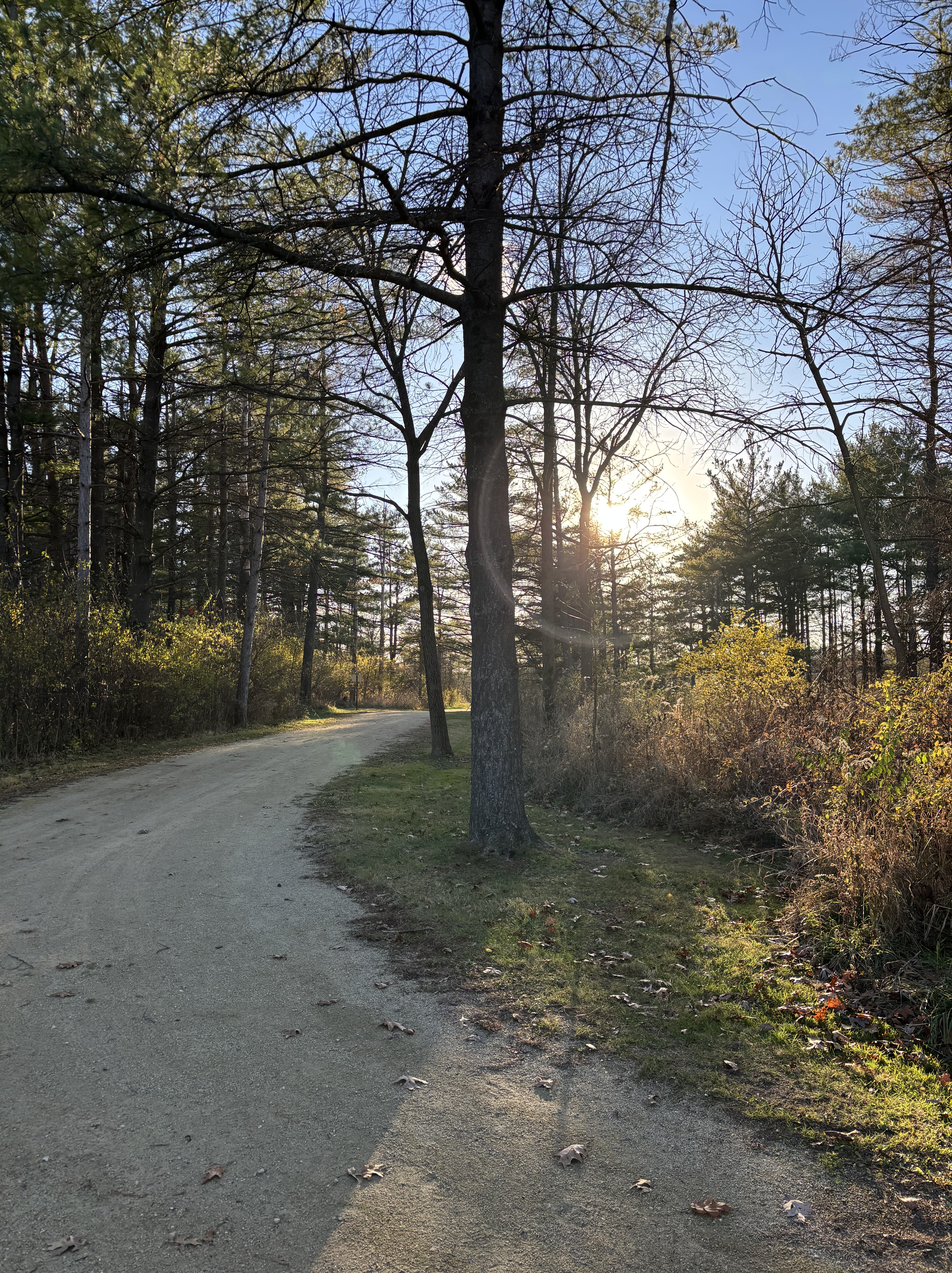
Every so often we walk our loop-trail in reverse. It never fails to amaze us how walking in the opposite direction transforms our well-known path into a completely different experience; it feels like an unknown trail. “Weird!” we exclaim each time we choose to travel in the opposite direction. It’s the mirror image of what I feel when I walk backwards through my life. Going forward each day feels like chaos while looking backward through memories seems like prescribed destiny. Weird.

When I was 20 I had a vision for my life. It wasn’t intricate and was absent of any consideration for the many forces – accidental and otherwise – that shape a life. I knew what I wanted to be. My vision at 20 mostly scared me while at this later juncture of the vision it mostly astounds me and fills me with wonder. I know who I am. I have, along the way, imagined my own symbolic cycles and entertained notions of guidance while also believing at times that I am without any form of support or trusty compass. Both/And. I can fill myself with doubt as readily as I fill myself with knowing. As it turns out, neither my doubt or my knowing is of much use.

Perception is a wondrous thing. In the end, staying open to new ideas and experiences, walking in the opposite direction or standing in another’s shoes is infinitely more useful than the comfort of walking through this life in a single-known-groove. If I’ve learned anything, it is to turn around or take a turn the moment I think I know what to expect.

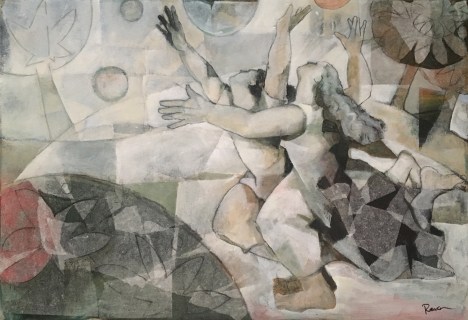
Bubble Chasers, 33.25 x 48IN, mixed media

read Kerri’s blogpost about THE CURVE

likesharesupportthankyou

Clepe Incredible [David’s blog on KS Friday]

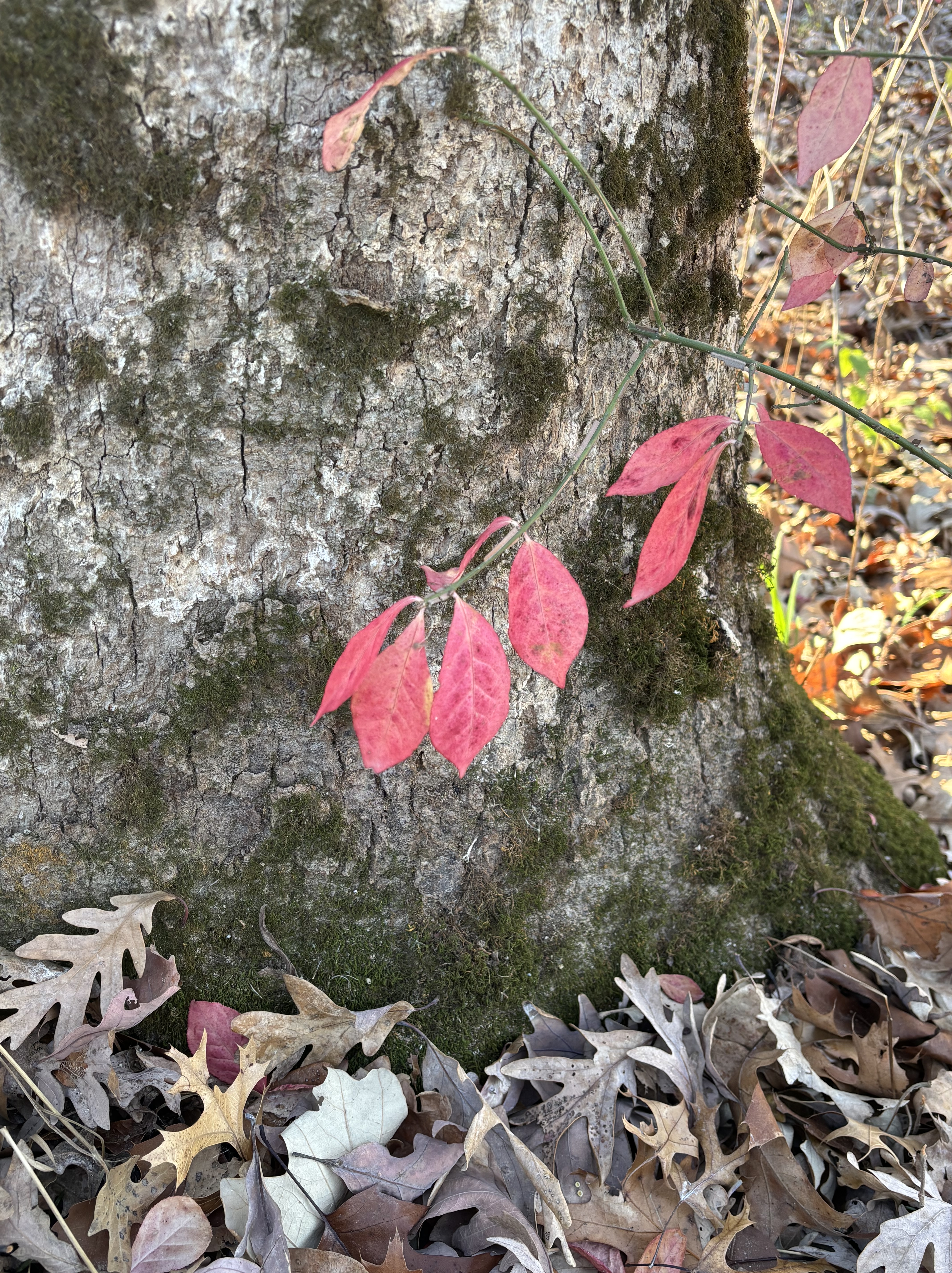
This is the time of year that color in nature becomes shocking. It is the consequence of nature’s contrast principle: the greys and browns of oncoming winter meet the vibrant yellow, orange and red of the leaves-last-stand. Last week, while walking Dogga, I stood for several minutes beneath a tree made electric by the morning light. I felt as if I had entered another reality.

Contrast principle is really about how comparison shapes perception. I only know that I’m having a bad day because I believe that I’ve had good days. Last night I watched Anderson Cooper interview Tig Nataro for his series exploring grief. Tig Nataro recently lost her friend, poet Andrea Gibson. The love of life comes clear in the moment of the loss of life. The appreciation of life sharpens when the end rolls into view. Contrast principle.

I bumbled into an archaic word that is new to me: clepe. It means to give someone or something a specified name. To name. I was cleped David. As my end rolls into view I am more and more resisting the impulse to clepe my days. Why should my days be labeled either good or bad? On my last day, what will I be willing to give to have one more moment of this life? Why not clepe incredible each and every moment that I am fortunate enough to experience?

LAST I SAW YOU on the album THIS PART OF THE JOURNEY © 1997 Kerri Sherwood

Kerri’s heart is available for sharing on iTunes and streaming on Pandora

read Kerri’s blogpost about THE VIBRANT LEAVES

sharelikesupportthankyou

A Cautionary Tale [David’s blog on DR Thursday]

“When our eyes are graced with wonder, the world reveals its wonders to us.” ~ John O’Donohue, Beauty: The Invisible Embrace

Looking for a headboard for a bed, we combed antique stores seeking hidden – and cheap – treasures. It’s rare for us to pass through the collected quirk of other people’s discards and not find something that we appreciate. We always find but rarely buy the unique sumpin-sumpin that appears. For us, combing the antique shops is like catch-and-release-fishing; the fun is found in the hunt. But, on this day-of-the-headboard, as we left our favorite haunts, Kerri said, “I didn’t see a single thing that called out to me, forget a headboard, I didn’t see anything else, not one thing.”

We launched our headboard hunt because we’re in the process of transitioning one of our kid’s bedrooms into a guestroom. After we moved the old spray painted desk out we needed something to take its place. Although it had only been a few days since we’d made the rounds of the antique shops, went out again, this time mostly to get ideas, to stir our imaginations, to open our eyes to possibilities.

Nothing had changed in the shops, yet we were overwhelmed by the number of cool pieces that we found. Everything had changed in our seeing. Gaping at a gorgeous relic with peeling paint (we are shabby chic with emphasis on the shabby) Kerri asked, “Was this here the other day?” The clerk told us it had been there for months. “How did we not see this?” she turned to me and asked.

It’s one of my lifelong fascinations: seeing and not seeing. We saw the treasure because we stepped into the world with open minds seeking possibilities. We did not see the treasure on the previous day because we stepped into the world with a narrow focus seeking a headboard. We didn’t see the treasure that was right in front of our faces because, well, it wasn’t a headboard.

We see what we expect to see – which is another way of saying that we often miss the beauty of the world because we seek headboards instead of awe. We narrow our vision to the point of exclusion. It’s not a mystery that on the day that we set out to find possibilities that we found too many.

It’s a cautionary tale in a nation that has made an industry out of division and exclusion. We see what we expect to see. The power of the latest election might be that it has opened our eyes and minds to possibility.

read Kerri’s blogpost about AUTUMN LEAVES

likesharesupportthankyou

The Way It Works [David’s blog on KS Friday]

She looks for hearts so, of course, she sees them everywhere. That is the way perception works. We have it backwards: we do not “believe it when we see it,” rather, “we see it because we believe it.” We see what we expect to find.

In these un-United States we are witness to the power of propaganda to shape belief. The Fox has millions believing that they are victims of a scary monster named Woke. They are steeped in the illusion of an imagined immigrant invasion. They are choking on the belief that our society is rotting from progress, under assault by the learned. None of these threats exist but that has no bearing on what the fox-mesmerized-audience perceives-and-believes. They look for boogeymen everywhere and, therefore, that is what they see. They see it because they believe it. No facts necessary. Reason cannot punch through the blindness of their hard faith. Heart is nowhere visible in their dark, mean-spirited perception.

Last night we made a pact with our pals. We vowed to slap each other awake if we grow rigid as we age. “I want to stay curious. I want to keep learning. There’s so much to learn.” Yes. And, again, yes.

I left our evening together so grateful for the people populating my life who are, like me – like us – dedicated to seeing miracles in the everyday. They look for possibility and, so, they find it. They are not afraid to challenge what they believe. They question. They step into the unknown. Their belief has not calcified, rather, it remains fluid and expansive. They grow. They check the veracity of what they are told. They do not seek to blame others for their obstacles. They seek the best in others and – you’ll not be surprised – they find it. That is the way perception works. That is the way a healthy society works.

LEGACY from the album RELEASED FROM THE HEART © 1995 Kerri Sherwood

Kerri’s albums are available on iTunes and streaming on Pandora

read Kerri’s blogpost about HEART

likesharesupportthankyou

But If I Had [David’s blog on Not So Flawed Wednesday]

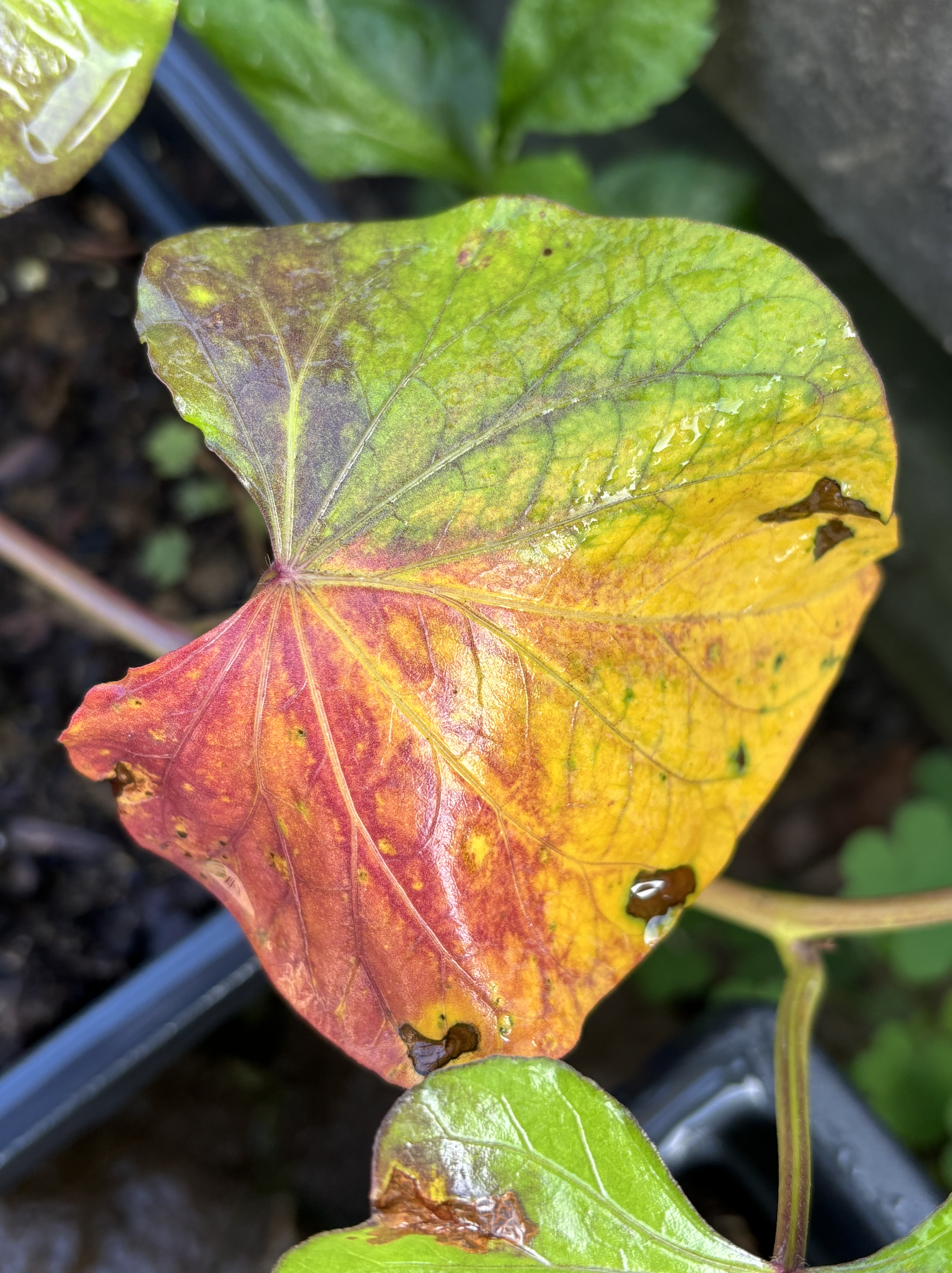
I’ve never taught visual art but if I had, I’d have sent my students outside to look at color in nature. I wouldn’t spend a moment having them study an abstract color wheel or match paint swatches indoors. Together we’d look at light, the angle of the sun. We’d play with shadows and discover the changing hue of shadows; they are more full of color than we want to admit.

We’d bring-to-light, uncover, unearth…we’d learn to see, a skill much more valuable to the artist than merely looking. We’d walk through the world as if for the first time. We’d share our color notes. We’d tease and be teased by a full range of morphing value as the sun played with our perception.

We’d remind ourselves that our window on this life is only open for a short while. We’d saturate ourselves in the infinity of shapes and textures, the marvel of pattern and interconnection; the riches of diversity. We’d immerse-in-the-immensity and not pretend that we were in any way separate or better-than.

We’d stave off a world insistent that we live within the narrow strictures of black and white, bland cubicles of dulled minds. I’d have sent my students outside to wander into their thicket of questions and step boldly into a world without answers but alive in rich, vibrant color.

read Kerri’s blogpost about THE LEAF

likesharesupportthankyou

Especially Now [David’s blog on Two Artists Tuesday]

Dear You,

we are trying to regroup, rethink and refocus our melange blogpost writing a bit. we – like you – know what is really happening in our world and do not need one more person – including ourselves – telling us the details of this saddest of descents destroying democracy and humanity. though we know our effort will not be 100% – for there is sooo much to bemoan in these everydays – we have decided to try and lean into another way – to instead write about WHAT ELSE IS REAL. this will not negate negativity, but we hope that it will help prescribe presence as antidote and balm for our collective weariness. ~ xoxo kerri & david

***

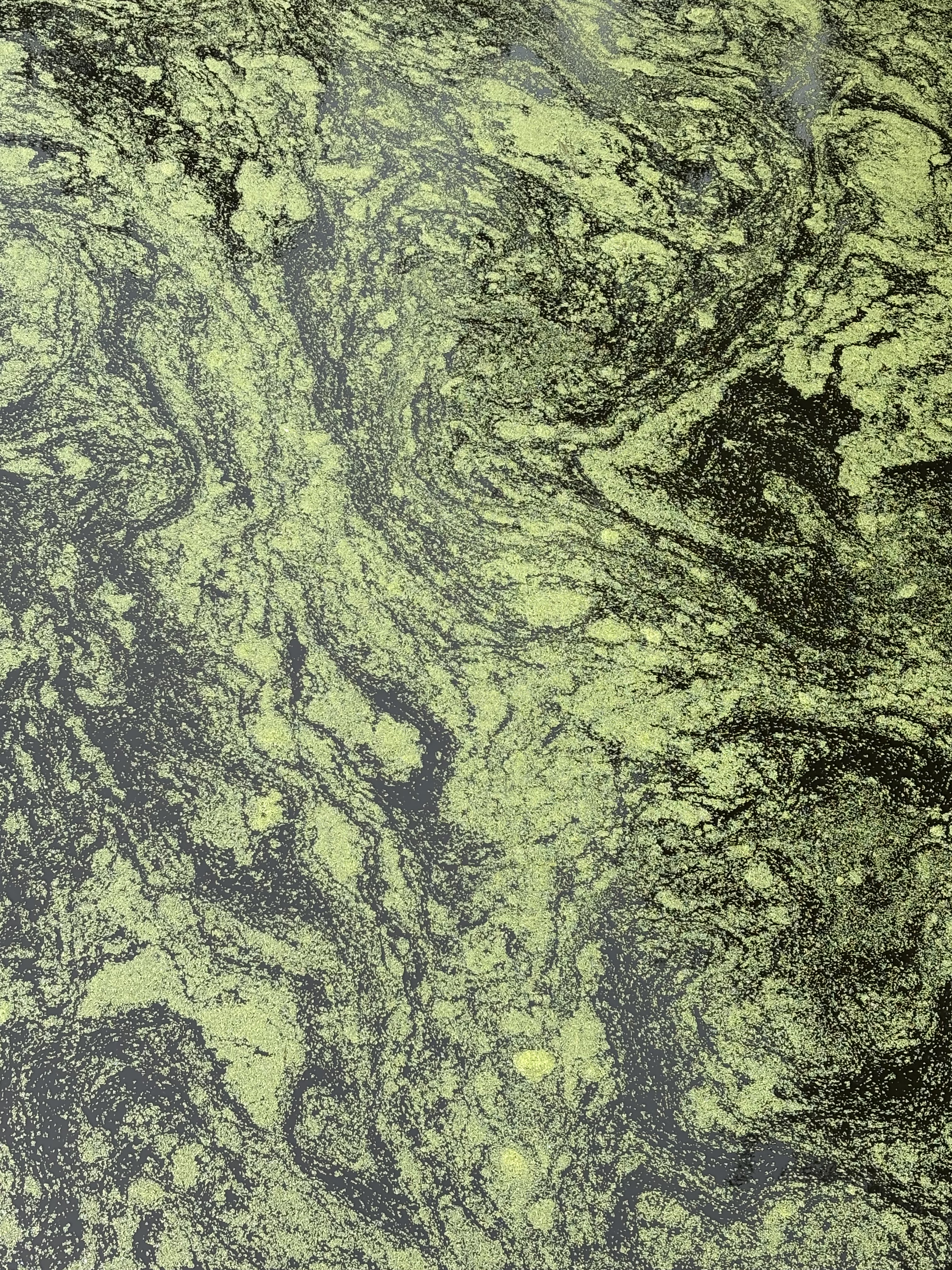
Sometimes what we see is obvious. Sometimes it is not. We showed this photo to 20. Kerri told him it was a painting. I told him it was a granite counter top. He narrowed his eyes. He knows us too well. It could be a photograph taken by the Webb telescope: the surface of an unknown planet or a particular slice of the galaxy analyzed through a monochromatic lens. What else could it be? A satellite image of earth’s weather pattern? A microscope image of lymph moving in the body?

Without context it is difficult – well, it is nearly impossible – to arrive at an agreement of what we see. And isn’t that the epicenter of the interesting times in which we live? Deceptive contexts. Most often dueling contexts. We do not wrangle over what we see; our fight is about context; the loss of shared context. We cannot agree on what we see.

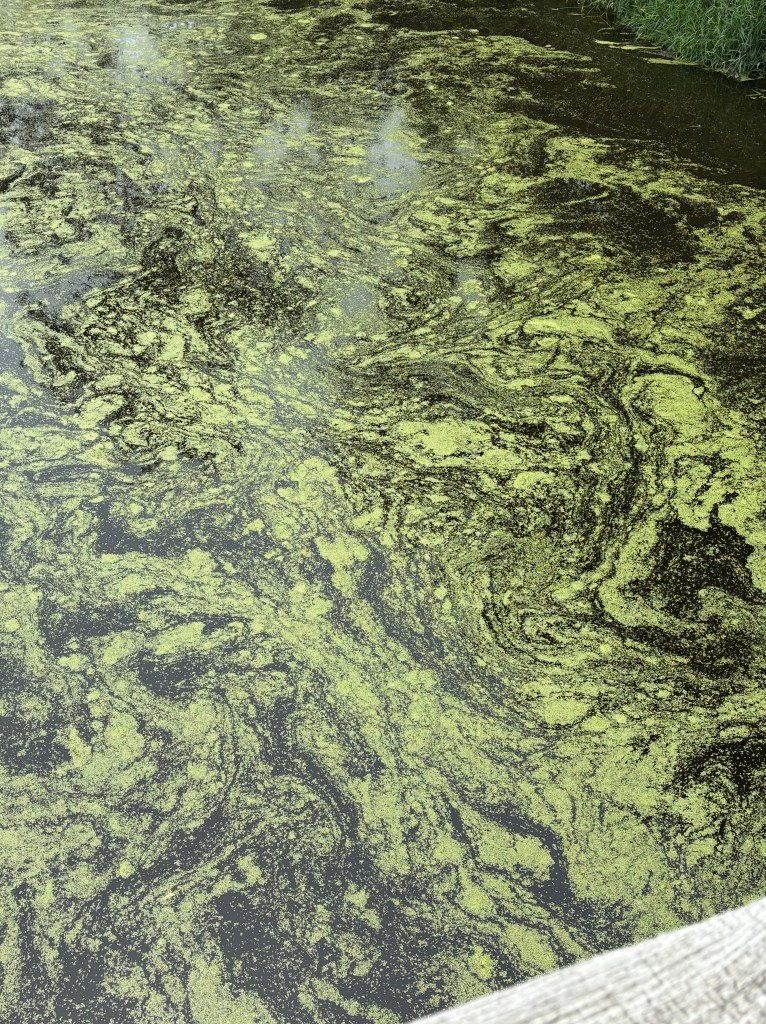
His parents used the railing of the bridge to stretch after their walk. The young boy peered down into the water and said, “Yuck.” The family moved on. We stopped at the yuck spot and looked down. Pollen swirling in the slow moving river.

Kerri whipped out her camera whispering, “Gorgeous!”

Whose interpretation is correct? Kerri’s? The young boy’s?

Both. They share context so neither need be right or wrong. They agree on what they see just not on the aesthetics.

What else is real? It is a good question to ask. Especially now.

read Kerri’s blogpost about WHAT ELSE IS REAL

likesharesupportcommentthankyou

What Makes Us Beautiful [David’s blog on Merely A Thought Monday]

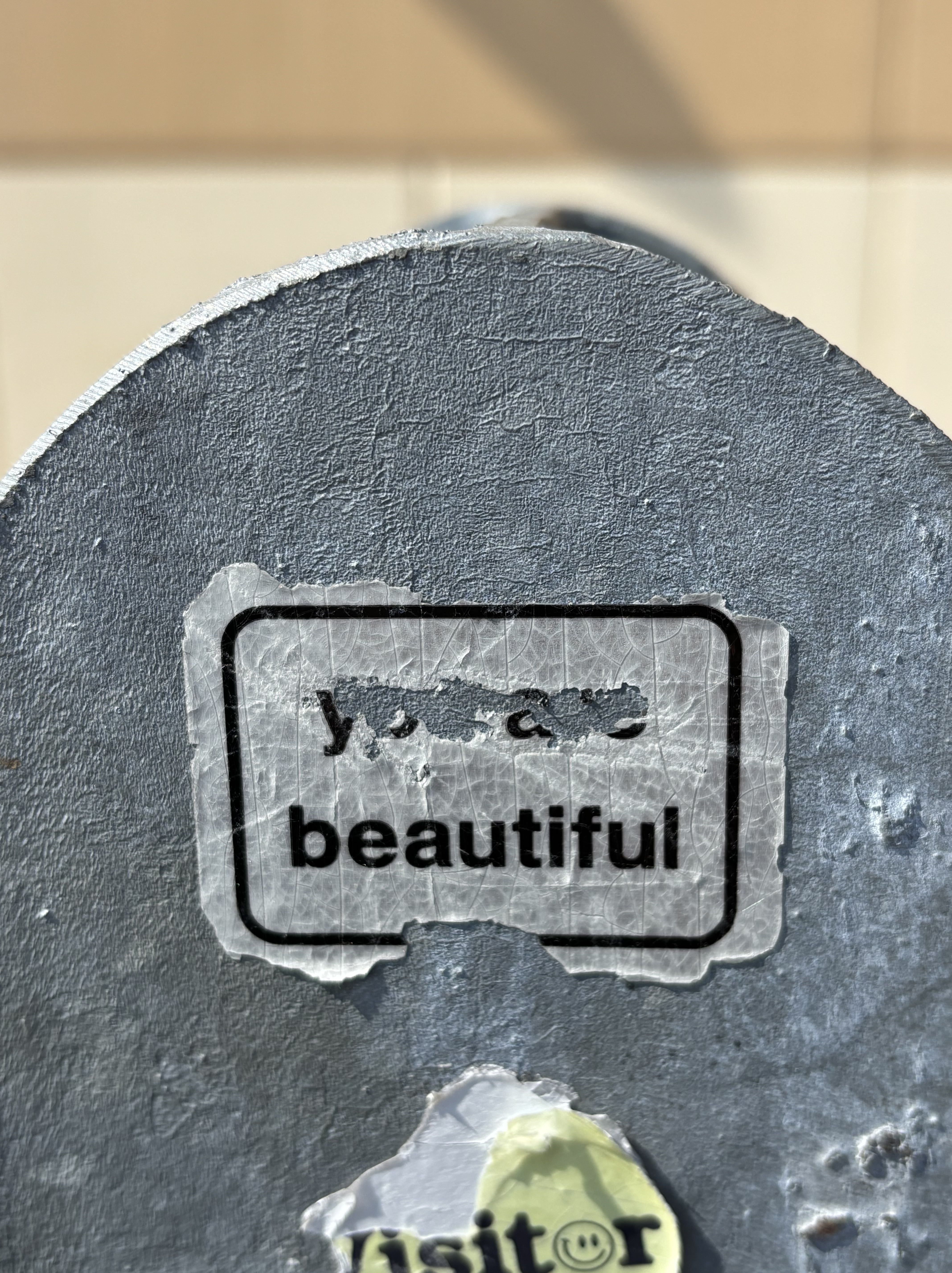
When I tell Kerri that she is beautiful she deflects or minimizes my words. She tells me that I am biased or acts as if she didn’t hear me. She is not unique in her response. How many of us have long ago shielded ourselves against the idea that we are beautiful?

Peel back the layers.

Many years ago a student came to my office. He was sobbing. He had recently revealed to his family and peers that he was gay and their overwhelming message back to him was that he was broken and needed to be fixed. He was vulnerable in revealing his truth – his beauty – and was slapped. The message: you are ugly. In his despair he could not see that the ugliness was in how he was being treated. At some point he cried, “I just want to break something!” I thought that was a very good idea so we went outside and hurled ceramic plates at a brick wall. We laughed and laughed until he could hear the words, “You are not broken”.

What I didn’t say to him was this: They want to hammer you into compliance because they fear your difference. Fearful people are threatened by difference. They label it as ugly. Your difference is what makes you unique, beautiful and special.

Isn’t it interesting to you that we-the-people, inhabiting the most individualistic nation on the planet, buy our clothes from the same retailers, worship hallowed brands, with the express purpose of fitting in? We express our individuality, judge our beauty, by conforming to a fashion image.

It is one of the reasons why Kerri cannot possibly allow my admiration of her beauty. She doesn’t fit the magazine-model-ideal. She is a blue-jeans-and-boots wearing, black thermal shirt girl (thank god!). It creates a split. On the one hand, she is an artist, a woman wrapped in difference who easily lives on the margins so she can more clearly see and reflect the society in her music, writing, and photographs. On the other hand, she cannot allow the notion that her difference is the very thing that reveals her beauty. She doesn’t fit the norm. She doesn’t match the magazine ideal or wear the right brands. She compares herself to those who do so she can’t possibly allow that she is uniquely beautiful.

It’s a lot of pressure, this need to fit in. In fact, it is a basic survival instinct to a herd animal like a human being. That is the real beauty, the magic of these United States. It is a society that, at it’s best, when it is in its right mind, strives to create the inclusion of difference, intends to celebrate the unique, make a safe home for diversity, a safe place for all to worship as they choose, love who they choose. In the ideal, difference – sometimes called “freedom” – is protected equally for all under the law.

We wrestle with the split. We need to remember that we are unique in the history of the world. We are a democracy comprised of people from all over this gloriously diverse planet, a nation of immigrants. This latest attempt by the morbidly fearful to scrub ourselves bland, straight and white, to bludgeon us back-in-time to some fantasy uniform past, is ugly and destructive. They would bully us into conformity, a one-size-fits-all mentality. We need only remember that our difference, our diversity, is precisely what makes these United States of America unique, beautiful and special.

This is not the time to deflect. What makes us truly beautiful is worth owning and vigorously protecting.

read Kerri’s blogpost about BEAUTIFUL

likesharecommentsupportthankyou

My Fleeting Moment [David’s blog on Merely A Thought Monday]

Alone on the trail we heard a loud pop and then a crack – and then the tree fell. We felt the thud through the soles of our feet.

There was no wind. There was no apparent cause for it to fall. We were, somehow, witness to its final moment as “tree”.

If a tree falls in the woods and someone is around to hear it, it definitely makes a sound. If not? For some reason, in that majestic moment, the quotidian philosophical question popped into my mind and it bothered me. Is human observation really the only validation for existence? Philosopher George Berkeley wrote, “To be is to be perceived.” George didn’t mean perceived by squirrels or hawks or any other critter in the woods at that moment who also heard the sound and felt the fall of the old tree. For humans, philosophers, preachers and politicians alike, human perception is the requirement granting something so grand, something so profound, as existence. How many birds nested in this grand old tree during the course of its life span? How many plants will feed on its fibers now that it has joined the earth?

Hubris is our Achilles Heel.

On our drive to the trail we were rerouted. The road was shutdown in both directions. There was a terrible crash. A car was cleaved, barely recognizable. Certainly there were witnesses to this loud final moment of a human-being pass into non-being. I’m grateful I was not one of them. I do not need to have seen or heard the crash to know that it happened.

Perhaps that is why the question bothered me: “If a tree falls in the woods and no one is around to hear it, does it make a sound?” In a single day, in the space of an hour, I was witness to a tree falling in the woods and aware of a human life ending. I heard the tree so I have no need to imagine what happened. I saw the car, the evidence of the end of human life. I can only imagine.

Horatio wrote a beautiful poem about the death of a salmon after its struggle to return to its place of origin. It’s a poem about the impossibility of life and the cycle of constant renewal. The poem offers we-the-perceivers some rare perspective on the end of life.

I wondered how I could read the days news about starvation in Gaza, brutal raids and deportations without due process…and simply turn the page. That, too, must be uniquely human. To perceive and then tune out. To look the other way, to pretend not to perceive when human beings enact horror upon other human beings. It requires a dedicated lack of imagination.

We are not above it all.

“To be is to be perceived.” Perhaps. It begs an all important follow-up question: In my fleeting moment of human perception, who – or how – do I choose to be?

read Kerri’s blogpost about TINY NAILS

likesharecommentsubscribesupport…thankyou.

The Pizza Thing [David’s blog on DR Thursday]

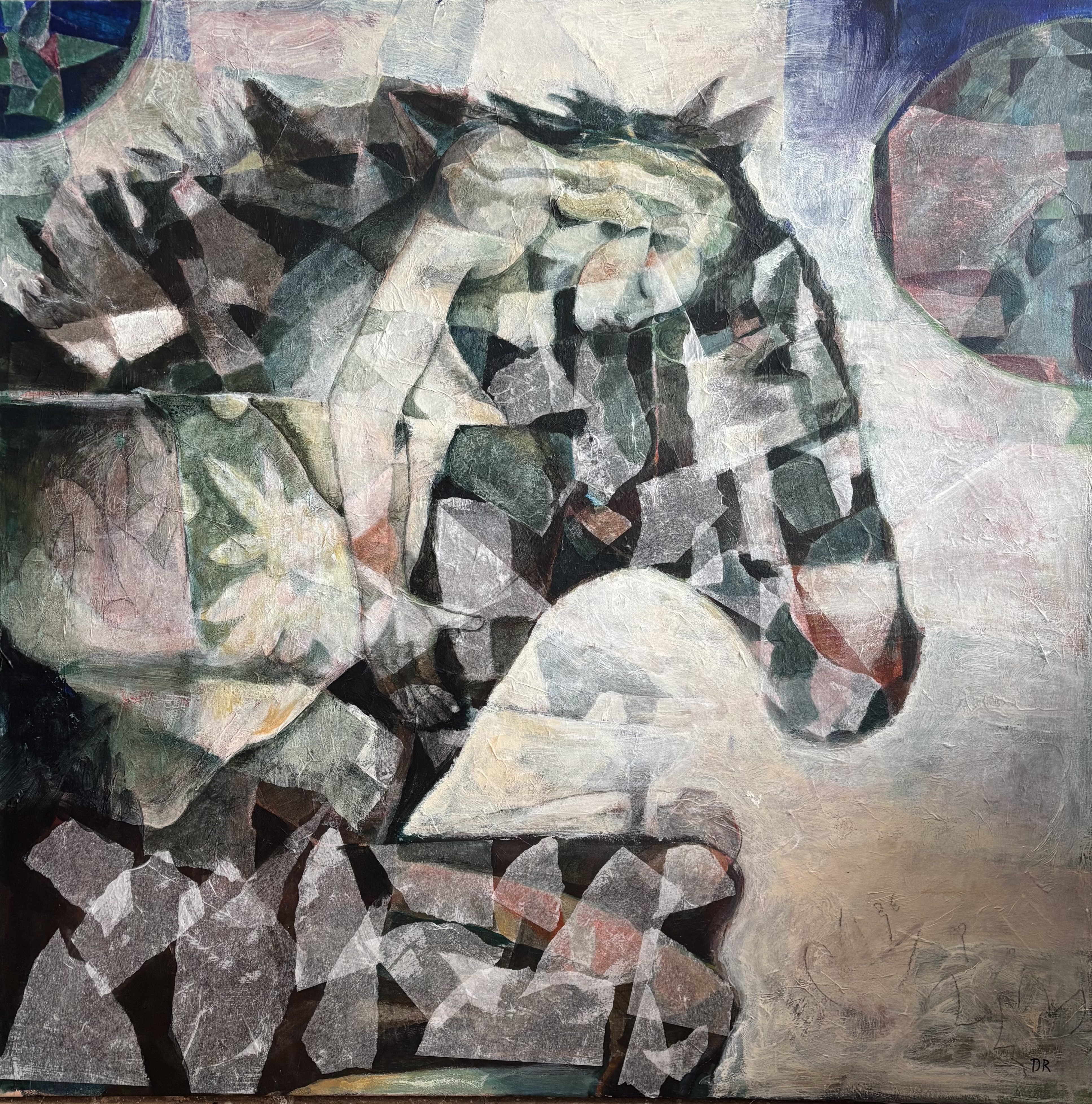
My latest painting I did for Kerri. It is a painting of invocation. I did not paint it from knowledge or plan. I felt my way through it.

On the day I thought I’d completed the painting I asked her if she wanted me to make any changes. After staring at the image for a few minutes she said, “I love it,” and then asked, “But what’s up with the pizza thing?”

In the many art openings I’ve had in my life I’ve learned that what I paint is rarely the whole of what a viewer sees. I used to be surprised by what others saw in my paintings but now I expect it.

“Pizza thing?” I asked.

“You know, the thing they use to put pizzas in the oven. A paddle.”

“Where is it?”

She pointed to a series of connected shapes on the canvas.

Once someone sees something in an abstract image – like a dragon in a cloud – they can never again not see it. I knew the painting was not-yet-done. She would always see a pizza paddle in the painting if I didn’t alter the shapes. “Do you want me to change it?” I asked. She nodded, afraid I was offended.

It is the great challenge of perception: people rarely look in the same direction and see the same thing. We do not share experiences until we…share them, talk about them, compare notes, come to a common perceptual ground.

A younger me would have defended the painting as I saw it. This older version of me feels no need to defend what I see since I don’t expect others to see what I see. I want to learn what they see. I want to step into a common ground, a space of collaboration. That doesn’t mean that I necessarily must change the painting. It does, however, afford me the opportunity to make it better if I so choose, if my question, “What do you see?” actually opens my perspective.

It’s why I feel the need to shout into the winds of our current political and national circus. It is unimportant whether or not we see eye to eye. It is most important that we share notes, ask questions, discuss discrepancies…discern what is fact from what is fiction. We have to want to step into common ground.

When we walk she often stops and aims her camera at the ground. “What do you see?” I ask.

She snaps the photo and shows me the screen. “A heart,” she smiles. “Do you see it?”

“Now, I do.” I say. I would have stepped over the stone and never seen the heart. And aren’t I fortunate to walk through life with someone who is surrounded by hearts and takes the time to show me what I do not see?

In Dreams She Rides Wild Horses (finished, without the pizza thing)

read Kerri’s blogpost about HEARTS

likesharecommentsupportsubscribe…thankyou.

Shake The Sickness [David’s blog on Flawed Wednesday]

We thought it was motion sickness or perhaps a brush with heat stroke. In retrospect, it was her first symptoms of COVID. Fever and nausea. Perception is a funny thing. We were on a pontoon boat on Lake Powell, a miracle of water in the middle of the desert. We ascribed her sickness to the circumstance of the moment, blinding ourselves to the presence of the virus.

20 days later, now at home, I called an ambulance. Searing pain in her back, intense nausea. She couldn’t move. She lost consciousness and when she came back into her body, she was utterly incoherent. She couldn’t keep her eyes open. I dialed 911. I thought she had a stroke or heart attack. It never occurred to me that it was COVID inflaming her spine. Sometimes we miss the obvious sickness in the pressure of the moment.

It is through these two experiences that we witness and interpret this moment in our nation’s history. The sickness is right in front of our faces. Is it the pressure of the moment, the circumstances, that make so many of our citizens willingly blind to the hate-filled virus? To what do we attribute the appeal of this maga-fascist movement within a multi-cultural democracy? I am writing ahead so am freshly disgusted by what we witnessed last night at the maga-rally at Madison Square Garden.

This morning I heard this question: Why do we hold Kamala Harris to a high standard for her position on issues, her capacity to articulate ideas, for the emotions she does or does not exhibit – and yet, there is no equal standard or expectation for her opponent? For him, there is no bar too low, no lie too repugnant, no assertion too vile…We’ve normalized his hate-speak; we’ve come to expect his racist, misogynistic rhetoric.

Why the disparity? His fascist rants drive ratings. In a decent society it should disqualify him.

Are we truly this sadly transactional? Is our moral center nothing more than quid-pro-quo?

Kamala holds herself to a high standard. She actually has ideas to articulate. She has and follows a moral compass. She holds fast to a firm belief in public service and champions the tenets of our constitution. She believes the occupant of the office of the presidency should lead by example, should elevate rather than diminish others, should support rather than threaten, should solve problems rather than make accusations, should embody and lead from a high standard, should take responsibility rather than blame. I’m almost embarrassed to write this as it should be a given for any candidate for our nation’s highest office: she also has a firm grasp of reality.

Her opponent and his party have no such expectation of themselves.

We’ve just witnessed a major newspaper withhold an endorsement for fear of retribution if maga-man wins the election. Jeff Bezos does not wish his future business deals to suffer in the event of a maga-win. We are witness to politicians – like Mitt Romney – who fear retribution and banishment from their party if they speak honestly about authoritarian big daddy. That our business leaders, that our politicians fear retribution – retribution from a candidate for president – this is the sickness. This is the fascist disease currently infecting the tongues and minds of those who have platforms to speak.

Think about it: In the United States of America, many of our senior republican politicians are so fearful of defending our democracy that they ask us not to hear what we hear. They gaslight without shame. In 2024, in the United States of America, some of our most successful business people, some who control much of our media, are choosing silence at the very moment we most need their voices. Or, worse, they are actively spreading the lies of the autocrat-wanna-be. Apparently, magnifying the bile could be good for business.

Quid pro quo. No virtue necessary. No moral fiber required. This is the virus attacking the courage- the spinal system – of our nation.

We hold Kamala Harris to a high standard because she holds us to a high standard. She believes that we will vote for a healthy future and not a diseased-fantasy-past. She believes that, after the maga-fever-dream passes, we will as a nation reunite, regain our health. We will hold ourselves and our elected officials to a higher standard. We will re-embody our famous optimism – and those who lost themselves in cowardice and hatred will reawaken, shake the sickness from their hearts and brains, and ask, as Kerri asked in the ER, “What just happened?”

read Kerri’s blogpost about THE VIRUS

like. share. comment. support. subscribe…vote.