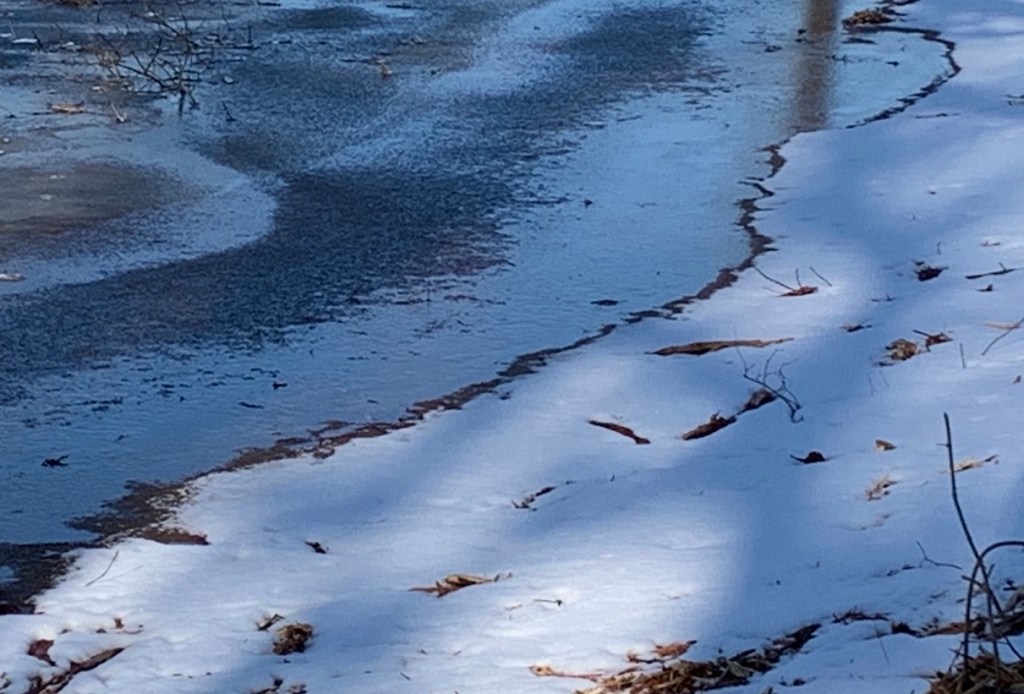
Look In [on Not So Flawed Wednesday]

“I want to stand as close to the edge as I can without going over. Out on the edge you can see all kinds of things you can’t see from the center.” ~Kurt Vonnegut

Yesterday I applied for a job that is all about narratives told from the edges of society. I’m not sure why it surprised me to find such a cool-to-me job; our community seems addicted to shattering so there are plenty of small edges to be found. Small edges are fallacious and serve a myriad of false centers. Our survival will depend upon whether or not we can awaken from the shatter-narrative and make the decision to direct our broken focus toward a common center. No small feat.

It is the role of the shaman, the explorer, the artist, the researcher to stand on the edge and report back to the community what is seen and unseen. The voice from the edge is rarely welcome since the report is capable of popping delusions or pulling the sheep’s clothing from the wolf. Page one of the autocrats’ handbook instructs the elimination of artists and educators. Making an enemy of the eyes-that-see, demonizing educators and thinkers – the people who recognize pattern and metaphor. The game of Us-and-Them necessitates silencing the voices capable of calling out the wolf. Autocrats require blind sheep that follow without question.

Some famous edge sitters: Galileo. Cesar Chavez. Rosa Parks. Nelson Mandela. Susan B. Anthony. Albert Einstein. Frederick Douglass, a former slave and leader of the abolitionist movement, wrote extensively about what we call Critical Race Theory; it was clear in his view from the edge. It’s not a new theory. It’s an old pattern with a new name. I think he might denounce his Republican party affiliation were he alive today; they would certainly silence his voice. He would be fired were he a professor in Florida today. As would Martin Luther King, another famous voice from the edge.

Voices of reason are often voices from the edges. Voices of the future are always voices from the edges. Galileo was silenced for suggesting that the earth circled the sun and not the other way around. Over time, the voices from the edge, when authentic, always make the center better, the community stronger. Susan B. Anthony spent her life on the edge, lobbying the center, to secure for women the right to vote.

Progress. Growth. They are rarely inspired from the tight grip at the center. Silence the edges and the community atrophies. Stop the movement and the body dies. That page was left out of the autocrats’ handbook for obvious reasons.

read Kerri’s blogpost about EDGES
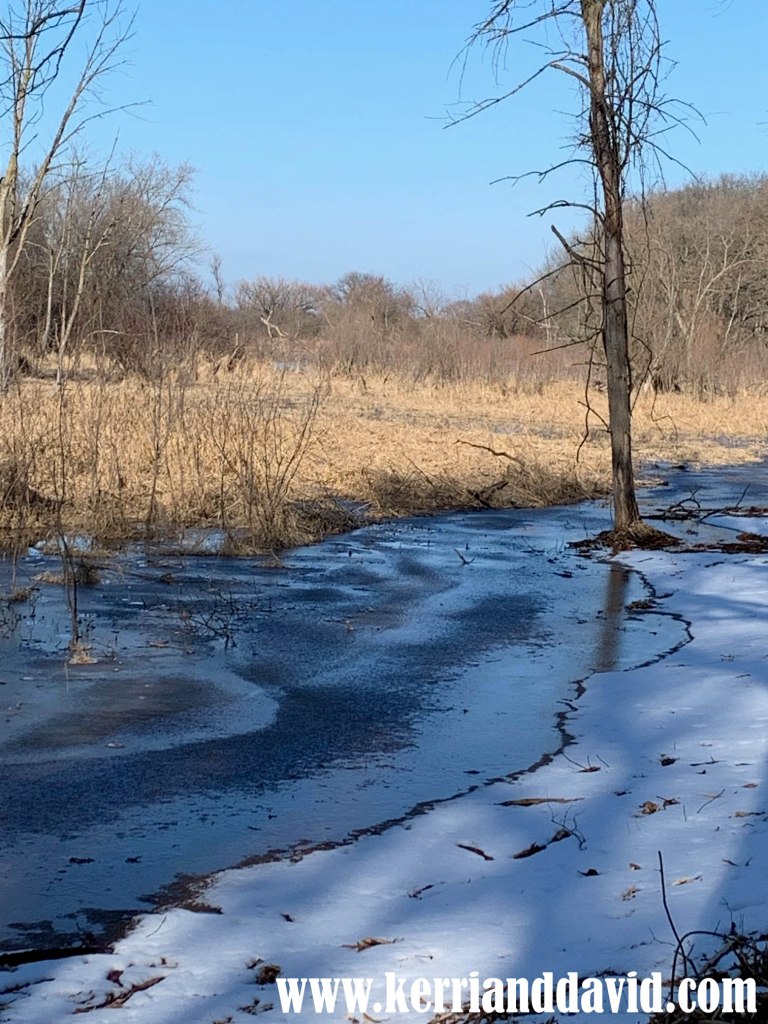
Hold Space [on Not So Flawed Wednesday]

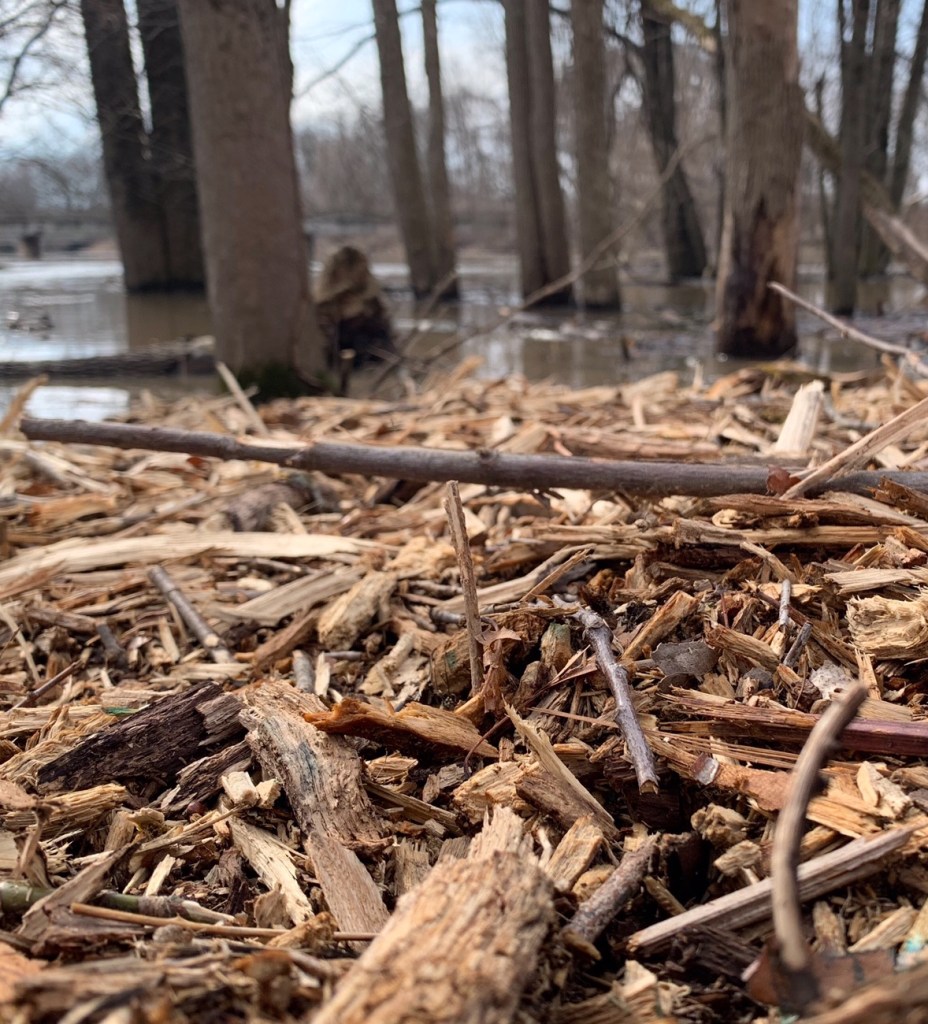
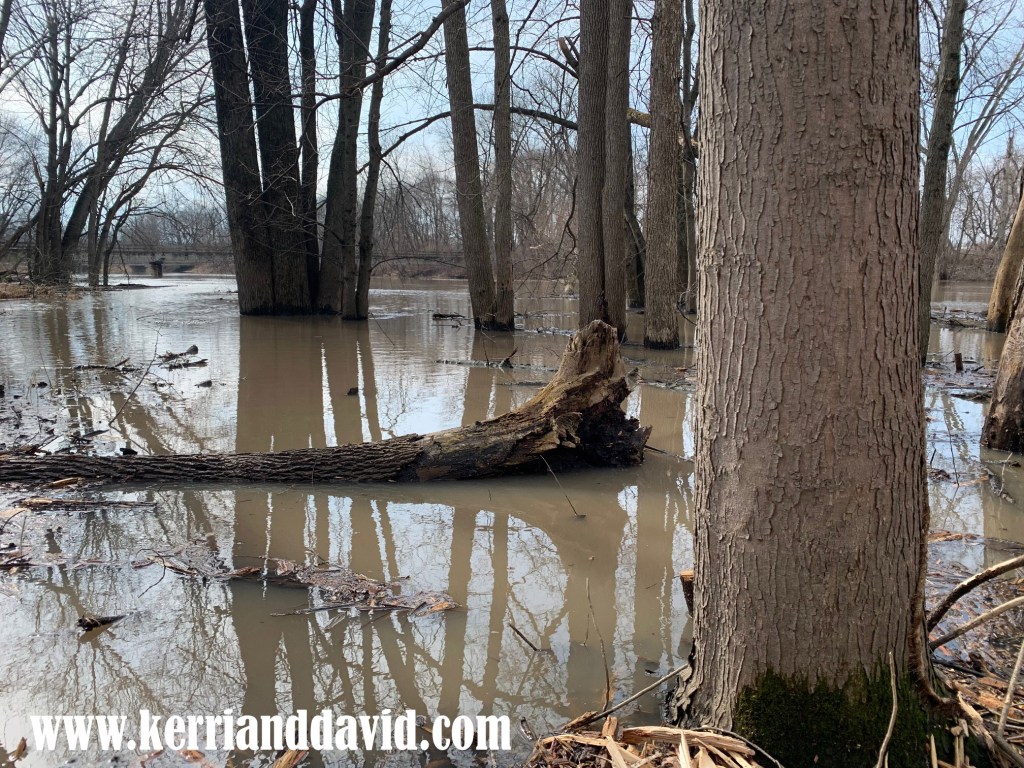
I just realized why the stripped forest is having such an impact on me. While opening the back door to let Dogga out, my dials spun and it slapped me in the face. I am like the forest.

For several minutes, staring at the photograph, writing then rejecting, then writing and again rejecting what I’d written, I decided to get up and let Dogga out. This picture was making me anxious. Moving around has always been good for me when I’m thought-wrestling.

I am like this forest. Exposed. Chips and debris are everywhere. Water is overtaking the trees.

I was writing about a question Justin asked one night at dinner. “What’s your stance about secular Calvinism?” he asked.

“I don’t think I have one,” I replied. Justin’s eyebrows hit the ceiling and I made a snap decision not to follow my reply with an explanation. He was sorting his belief and searching his heart. Empty space was more useful than cramming my erudite-and-empty justification into the moment.

Insight requires space. Lots of space.

I wish I could express how rare it is for me to keep my mouth closed when I have a thought on a topic. Kerri will laugh aloud when I read this to her. “No joke!” she’ll say. I wanted to say to Justin, “I don’t have a stance because I think it’s a given.” His question was akin to asking about my stance on the existence of the moon. No culture sees itself clearly.

No person (me) sees himself clearly.

Chips and debris. The river has overrun its banks. One half of the photo is the result of natural forces. The other half is man-made. Choices. Circumstance and intention. This landscape, once so familiar, will never be the same.

I’ve spent my life cultivating my capacity to see pattern and metaphor. It’s an artist’s prerogative to make the strange familiar and the familiar strange. I am the forest. Familiar, yet completely unknown. Stripped for rejuvenation.

Insight requires space. Perspective requires distance. Perhaps the reason I left open space in my conversation with Justin is something I need do for myself, too. Searching my heart, I am the forest. Stripped of invasive plants I can see all the way to the river. So much space.

What is my stance? Right now, thankfully, I don’t think I have one. I’m holding the space for insight to come.

read Kerri’s blogpost THE FOREST

Take The Time [on Two Artists Tuesday]

20 plays a game with us. When we are on the road he takes care of our house and Dogga. He amuses himself by taking photos of obscure details in the house and then sends them to us. “What is it?” he asks. Kerri inevitably guesses correctly while I might get one in ten. He has a great artist’s eye and is masterful at finding curious patterns or unique views.

Kerri and 20 share an artistic similarity. They are both drawn to detail. The sublime found in the small. I walk through life mostly missing the minutiae so I appreciate being surrounded by two dedicated particularists. Because they torture me with the tiny I now – occasionally – find myself caught on a finer point. However, I will never be able to participate in their passionate conversations about kerning. I love their ardor for fonts but in serifs I have my limits.

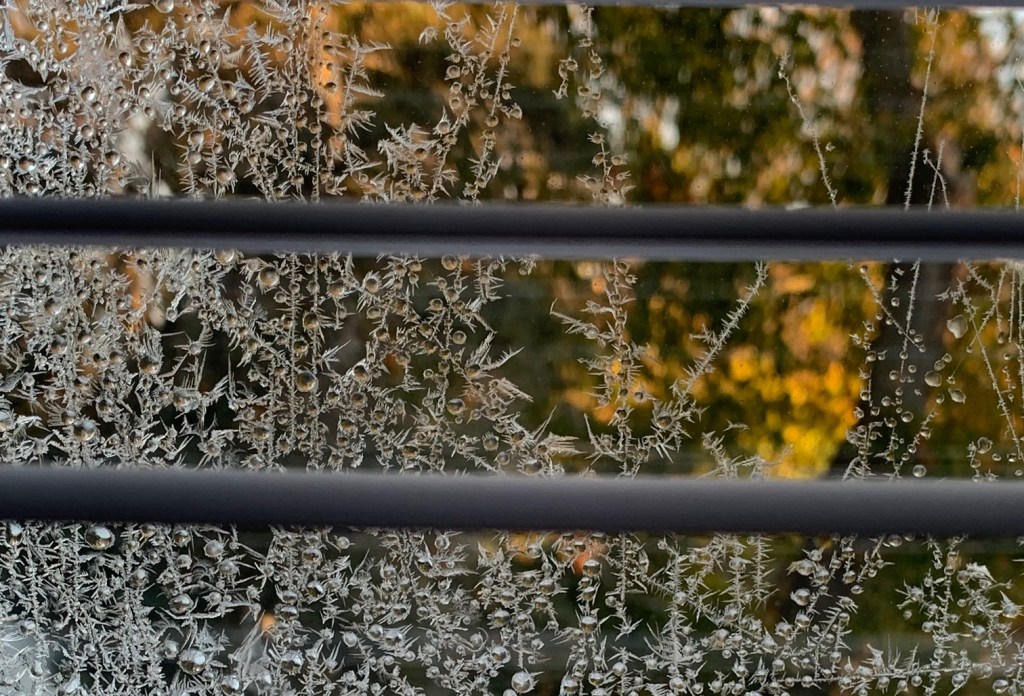
The deep freeze over the holidays brought amazing ice formations on the pond. John O’Donohue wrote, “Take time to see the quiet miracles that seek no attention.” Bundled up with hands freezing outside of her glove to get the photo, Kerri snapped this marvel.

I’ve learned from 20 and Kerri that the quiet miracles are all around us. All we need do is take the time to see them.

read Kerri’s blogpost about THE POND

Choose Awe [on KS Friday]

Of course, it’s not enough to appreciate the cloud-stripes that stopped our motion on the trail. I might have painted them in one of my pieces – for no other reason other than they are a cool pattern. Of course, I would have believed I was making it up. Imagination at its finest. But, in mid-trail, to peer up and see them painted on the sky-canvas sent us into a Google frenzy. You’ll be relieved to know that striped patterns in cloud formations are due to an oscillation called the Kelvin-Hemholtz instability. Phew! Not aliens or Van Gogh run amok, just ordinary old Kelvin-Hemholtz, unstable and oscillating. Again.

Nature continues to astound me. Nature continues to blow my imagination to new heights. As an artist, I am relieved knowing that I will never create anything as perfect or profound as what nature tosses up every minute of every day. There’s nothing left to do but play in these fields and appreciate the conversation. Since I am also a unique-form-thrown-up-by-nature, respecting the conversation, having deep gratitude for the moment, wouldn’t hurt.

Standing on the trail, watching the miraculous lines scratched into the blue-blue sky, I re-realized something important: Google might be able to explain it – which is no small feat – but explaining it, labeling it, putting it into a context-box also diminishes it. It gives us the illusion that we are separate from it; that we can control-it-by-rationalization. Visitors at the zoo.

Sometimes I think awe is a better path than explanation. I imagine that we might approach global warming, weather weirding differently, if we weren’t under the illusion that we could Google nature into submission. Awe is participatory, boundaries dissolve. I-am-that. Life beyond definition, beyond category and sub-category, glimmers.

Next time, I will opt for a few more moments of astonishment before reaching for my phone. Explanations and easy answers can wait their turn in line.

Lost. In the Questions ~ Kerri Sherwood

Kerri’s albums are available on iTunes and streaming on Pandora

read Kerri’s blogpost about STRIPES

lost. in the questions © kerri sherwood

Call Attention [on Two Artists Tuesday]

I spent the past two years working with engineers. I was constantly amazed at what they could not see and what I could not see. They were blind to what was apparent to me and I was equally blind to what was obvious to them. It’s what made us a good team. Once, Scott sent a spreadsheet and I stared at it like it was an alien. And it was. Numbers in columns and rows become visual statements for me. I lose the data in the pattern. The information melts into a design on the page. It was beautiful and incomprehensible to me. I had to ask, “What does this mean?”

Yesterday, Kerri and I took a long hike on a trail that we hadn’t walked for a few years. It was a beautiful day. I was overcome with appreciation. I recognized that we do not walk like other people. We stop often to look. Kerri takes photographs of detail. She sees the smallest of miracles and, rather than walk-on-by, she stops. She engages. She calls my attention to it. While she snaps pictures, I close my eyes. I feel the air. I hear the cranes and geese flying overhead. I call her attention to it.

The crystals on the window stopped me in my tracks. Standing in the door of my office, I looked across the hall through a room and to the window. The ice-branches sparkled in the morning light. They were like a magic kelp forest frozen in time. I called to Kerri and she came running, camera in hand.

I cherished the moment, not because it was unusual, but because it is our ordinary. What happens on the trail also happens in our home. We are not in a rush to get “there.” We stop often to look. We call attention to what we see.

read Kerri’s blogpost about CRYSTALS

Speak Back To It [on Two Artists Tuesday]

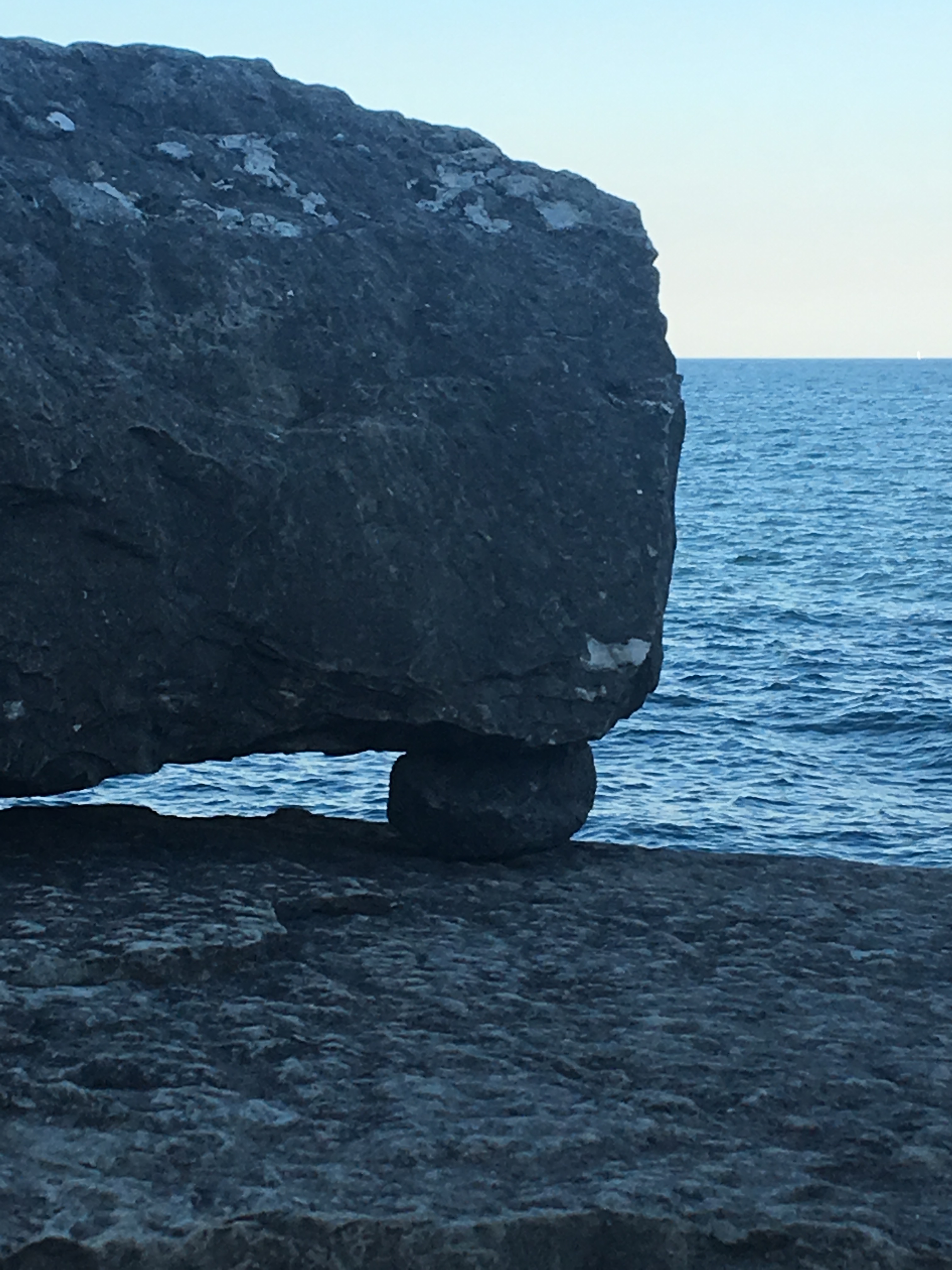
Noguchi might have designed this unintentional sculpture. A massive stone made delicate, the smaller carrying the weight of the greater. The shapes are not precise; they tend. As a final touch, the piece is set at water’s edge. Elemental commentary, a sculpture exposing the meeting of forces.

My favorite part: no one intended it. Yet, had Noguchi or Andy Goldsworthy walked by, they would have made flowing sketches, taken photographs, and rushed away to make it their own. Nature inspires. A happy accident. I suspect all great art comes into being this way.

Kerri often talks about placing her piano on a seashore or atop a mountain. Composing by responding to what nature presents. The sound of wind through trees, the pull of water rushing away from the beach. Once, she sat at her piano with a stack of image-phrases. She pulled one from the stack, closed her eyes, and played. I was a most happy witness to the wonders of creation.

Yesterday, for the first time in months, I pulled out my sketchbook and drew. The previous day, we visited the Botanic Gardens and I took dozens of photographs. The patterns and shapes of leaves. Startling color. I drew the shapes. I sketched the patterns. No expectation save the movement of hand and pencil. I felt as if I was blowing the dust out of my system. The patterns moved me.

The best news for any artist? We will never match the power and majesty that we find in nature as we reach to discover and express our own nature. The best we can do is draw from it, play in it, speak back to it, simply saying, “Thank you for the inspiration.”

read Kerri’s blogpost about ROCKS

See Beyond [on Two Artists Tuesday]

Breck, the small aspen tree in our backyard, is beginning to change its colors for the season. Although we have yet in our neighborhood to smell autumn in the air, Breck is giving us a heads-up.

A decade ago I wrote that, in order to see beyond preconception (thought), artists and entrepreneurs need to master two skills: pattern recognition and metaphor. Look for patterns and you will eventually see beyond them. See beyond the pattern and, as Ash Bhoopathy said, “The familiar will become strange and the strange will become familiar.” What an amazing definition of metaphor.

In this pattern cycle, the green becomes brilliant golden yellow as Breck turns her summer attention from the sun and sends her focus into the root for winter nourishment.

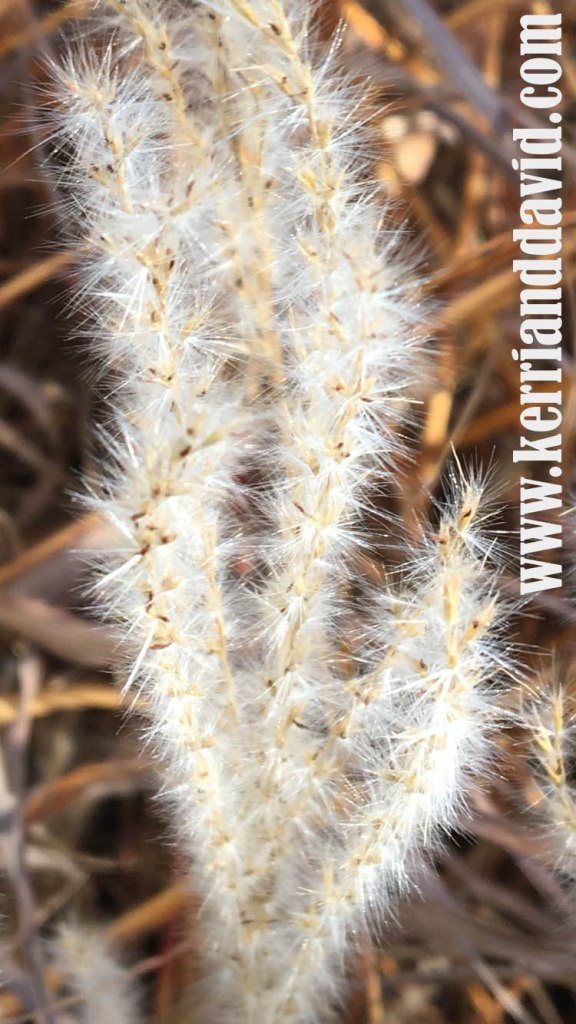
Kerri’s photographs are often extreme close-ups. She has a bit of Georgie O’Keeffe in her artist’s eye. Often, when showing me the latest photo, she pulls the-already-close-up-image into a detail. I am always amazed at the pattern beneath the pattern beneath the pattern. The plumes of the grasses are a festival of pattern. The many feet of the caterpillar, perfect suction cups.

Despite our dedication to our perceived differences, we, too are a festival of pattern. The operative word is “perceived.” Pull the lens close-in and our divisions disappear as rapidly as our skin color. Pull the focus farther out and we move together in a sweet-and-sour ballet. Koyannisqatsi. History repeats, a pattern, like the cycle of the seasons. Order moves to chaos to order to chaos…mainly in our minds. Order is what we crave, so purblind are we to seeing the ubiquity of pattern.

The plumes explode pink and red on the grasses The chipmunks have picked up their foraging pace. The geese have reappeared. The miracles are in the familiar, strange and surprising when seen again for the first time. The feel of the hand of the one you love. The moon on a clear cold night. The yellow rim reaching through the green quaking leaves.

read Kerri’s blogpost about BRECK’S LEAVES

See The Pattern [on Two Artists Tuesday]

“To live on a day-to-day basis is insufficient for human beings; we need to transcend, transport, escape; we need meaning, understanding, and explanation; we need to see over-all patterns in our lives.” ~ Oliver Sacks

Entrepreneur Ash Bhoopathy said, “The more you see, the more you see patterns.” It’s true. Take some time and sit on a busy street corner and watch. If your eyes are open, you’ll notice that you are surrounded by patterns. Not only the bricks in the buildings but the patterns of travel. The space between a red light and green light. The beeping of the crosswalk. The suits and ties. The paths walked by busy commuters.

“Comfort” and “home” are defined by patterns. What do you do to get comfortable? How do you signal the end your busy workday? Is it the same as you did yesterday?

Expectations are patterns, too.

Study “story” long enough and you’ll discover, as Kurt Vonnegut did, that there are patterns beneath every plot. We tell ourselves the same storyline over and over. Hallmark has its story pattern defined to the minute. It’s the secret to their appeal: the comfort of knowing the pattern. The comfort of asking, not “What” will happen, but “How” will it happen.

It’s a great paradox. The more you see, the more you see pattern. Yes. Yet, in order to see, often it’s necessary to disturb your patterns. That’s the beauty of patterns. When you are inside them, living a day of your life, you rarely see your patterns. It’s the reason Julia Cameron built artists dates into her Artist’s Way. Do something different. Break your routine. Challenge your expectation. Get out of your pattern rut. Only then will you be capable of seeing the pattern.

If you desire to change anything about your world, about this world, the change you seek will ultimately be a change in pattern. It’s a good practice to begin seeing them.

read Kerri’s blogpost about PATTERN

[the pattern image is the mat at our backdoor]

Learn A Thing Or Two [on KS Friday]

A decade ago I wrote and self-published a book. I called it The Seer. The see-er. A few days ago I pulled it off the shelf and began a slow-read-through. It’s a good book! I’m actually learning a few things from my younger self.

Yesterday I made a spreadsheet (I’ll never again confess to making a spreadsheet so appreciate this moment). The purpose of my spreadsheet was to build a database for Kerri of the cartoons that I’ve drawn for work. She takes my pencil drafts and digitizes them, colorizes them, and adds some quirky dynamics. They begin as mine and complete as ours. To finish my database it was necessary to open every file and look at each cartoon. They made me laugh. I’m proud of those cartoons, our work. I’m excited to share them beyond the small circle of eyes that currently see them. I know I’ve learned a few things because they are so simple.

We have a few sparse analytics on our blogs so can see when someone reads a post from the deep past. Lately, when someone reads a post from several years ago, we read it, too. “Where did that thought come from,” Kerri asked herself after rereading her long-ago-post. Often, after I dive into the archive, I want to rewrite what I read. I’m a much better writer now that I have a great editor reviewing my posts every day. The grammar police should have sent me to the gulag years ago. I am fortunate now to have a daily read through and revision with the-daughter-of-beaky-who-won’t-tolerate-improper-grammar. It’s too soon to know but I might be learning a thing or two.

We had occasion to revisit 2015. We didn’t mean to but were looking for a picture of a lanai and a pizza. It was the year we produced and performed The Lost Boy, illustrated and produced the first of Beaky’s books, we lost her a few weeks after the book release party, we were married in the fall of that year, we inadvertently created our first cartoon character, Chicken Marsala. “We’re content-creating monsters,” I said during our reminiscence. “We’ve learned a few things,” Kerri replied.

We walked to the channel. The last time we took this walk was before Covid. It seemed like a stroll into the past. A walk into a former life. So much has changed. We stopped at the waterpark to take some photographs. Children danced in the fountains. Parents smiled. Innocence at play. Elders occupied benches.

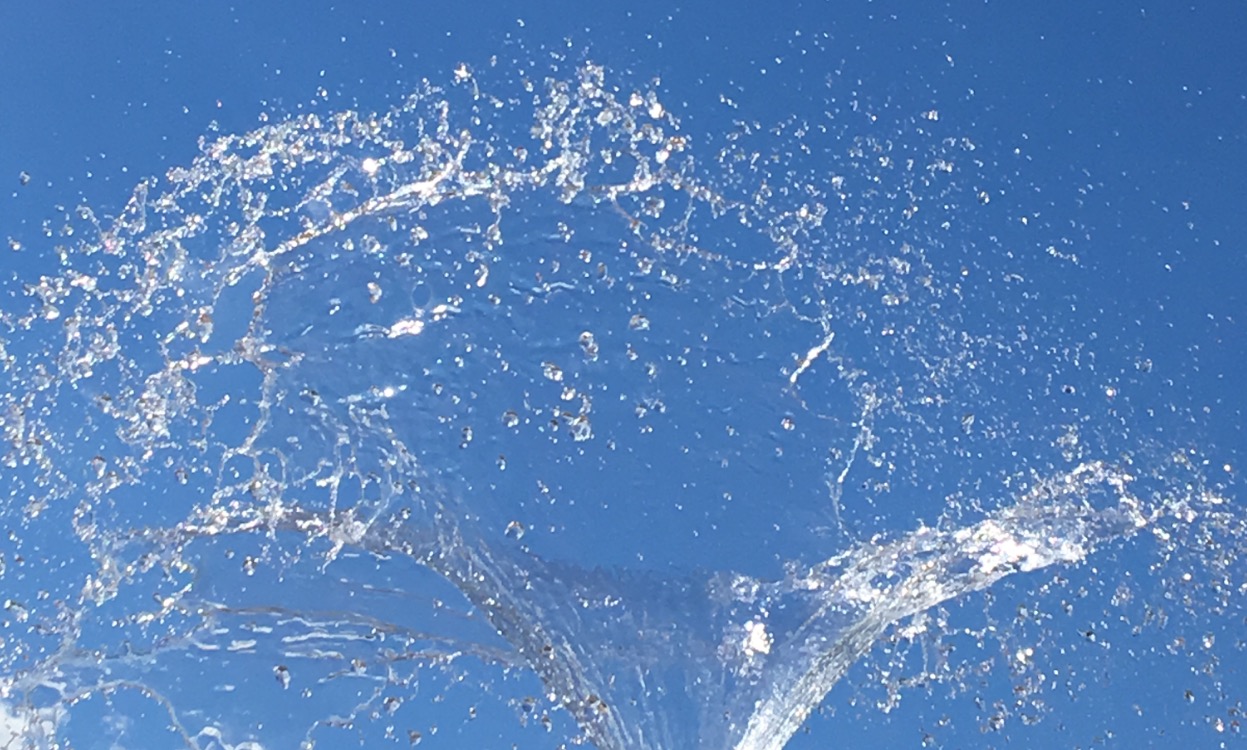
“Look at this,” she said, showing me the picture of the fountain. “I think maybe I’ve learned a thing or two.”

read Kerri’s blogpost about THE FOUNTAIN

kerri’s albums are available on iTunes & streaming on Pandora

good moments/this part of the journey © 1997/2000 kerri sherwood

Know Their Name [on Merely A Thought Monday]

As I let Dogga out each morning, I stand for a few moments and listen to the birdsong. Our particular spot on the earth is alive with birds: starlings, finches, sparrows, robins, hawks, crows, owls… The Mourning Doves always stop my motion. Their song is hypnotic.

The pandemic changed – and continues to change – many things. Our world became significantly smaller. The table in the sunroom. The backyard. Our trails. As someone with his head in the clouds I am a dedicated generalist. I have always appreciated bird song yet never, not once, thought of identifying the specific birds and their song. “Sparrow? Finch? Who cares! They are beautiful and that’s enough for me! I spend too much time in my left brain as it is! The last thing I want to do is categorize the birds!”

COVID changed that. Sitting on the back deck or at the COVID table staring out the window for hours on end, our relationship with the birds grew. From general appreciation to specific experience. From passive appreciation to personal connection. We began to see nuance. Pattern. We wanted – and want to know more about these beings that sing us awake each morning, that alert us to changes in the weather, that signal alarm in the neighborhood.

While visiting the Botanical Gardens, Kerri found a small book, coded by color, that identifies the birds in our region. In a flash we can open the book and identify the bird. “Hey! Look! That’s Paul!” I say.

“Stop!” Kerri scowls. “It’s Martha. Paul’s on the fence.”

Just kidding. House Sparrow. Carolina Wren. My favorite to pronounce is Grackle. Great-tailed Grackle to be exact. I’ve decided that, were I to somehow achieve tough-guy status and ride a Harley to breakfast, my motorcycle-dude name will be Grackle. “Hey, Grackle,” the waiter will say, as I come through the door en route to my usual stool. “Hey,” I respond. Motorcycle-dudes named Grackle are birds of few words.

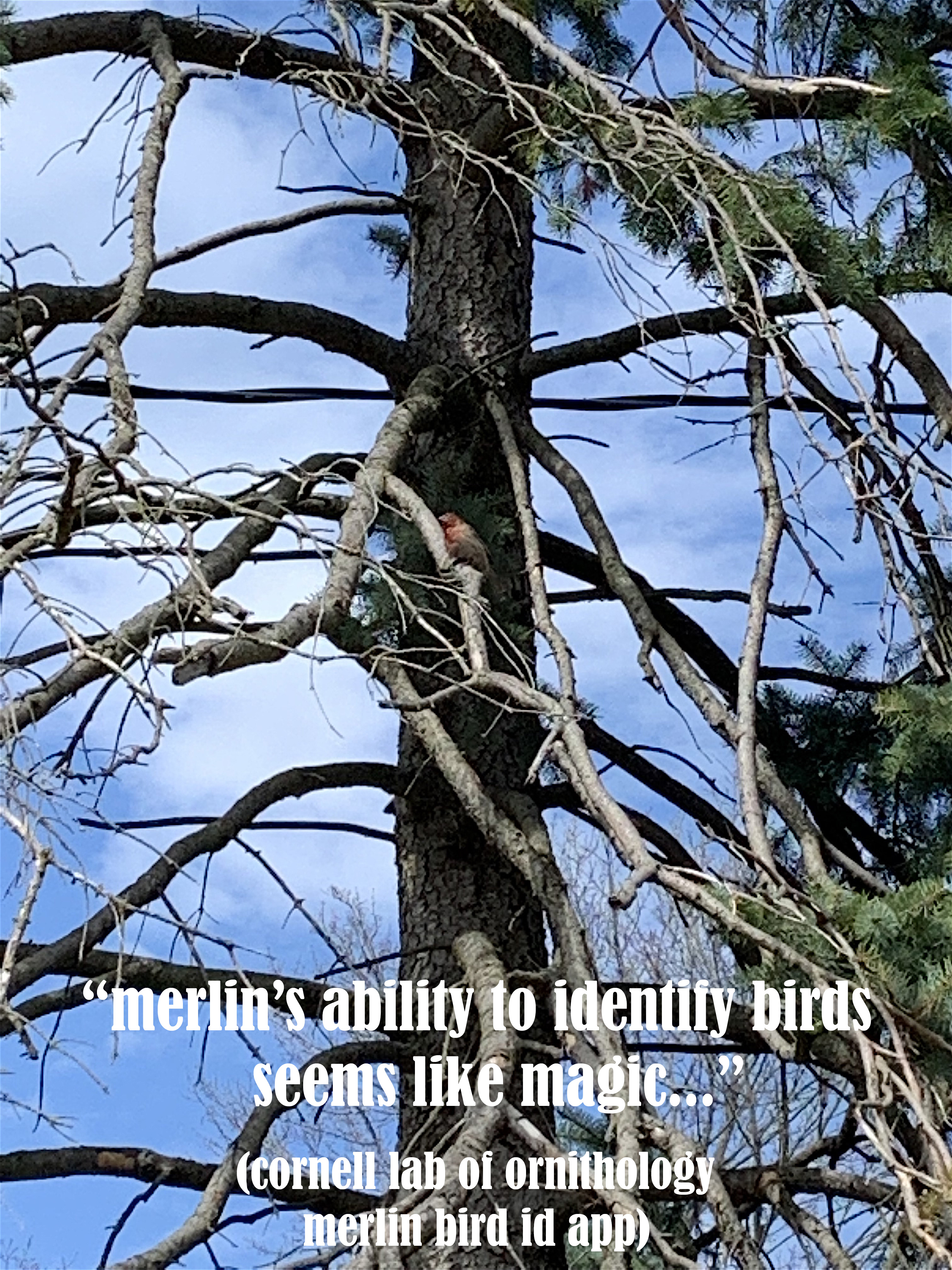
Deb showed us an app. Merlin. It identifies birds by their song. Now, armed with our book from the Botanical Garden and our Merlin app, when I ask, “What’s that?” Kerri – who is always alarmingly way ahead of me – has the answer. “Eastern Towhee,” she says.

“You’re making that up!” I cry, knowing she can’t stand to be challenged so will immediately jump to prove to me that she is right (it’s my secret fast-track to knowledge).

“Look it up!” she insists, showing me both the book and the Merlin return.

“Wow,” I say. “Towhee. Who knew. Maybe my pen name should be Grackle Towhee!”

She yanks the book from my hands. “Oh, Look!” she exclaims. “Merlin has identified you: Midwest DoDo.”

read Kerri’s blog post about BIRDS!