See The Glue [on Not So Flawed Wednesday]

It’s a new phrase to me but I liked it immediately. I liked it because I have known some amazing people, those rare birds who keep the runaway-egos focused on the project, who naturally and seemingly without effort coalesce disparate talents into a cohesive creative team. The ‘glue people’ is a perfect description.

Glue people intuitively understand power as something that is created between people, not something wielded over people. I suspect that is the epicenter of their glue-gift: they see beyond the parts to the sweeping possibility of the whole. They know that “every man/woman for themself” is a recipe for disaster.

Despite our dedicated cowboy mythos, innovation is never the province of a single person. There may be a single visionary but the vision is never accomplished in a vacuum. Inventions, like organizations or nations, come to fruition through the efforts and skills of the many-working-as-one. Glue people generate “the-working-as-one.”

Stage managers, production managers, executive assistants, contractors…those highly overlooked people at the center of the information, who quietly make sure the work of creation happens without collision while also making certain all the parts and pieces know how much they are valued.

Meaning makers. Making value explicit. Glue people. Just try to get an idea off the runway without them.

read Kerri’s blogpost about GLUE PEOPLE

Add More Pulp [on Two Artists Tuesday]

Last night Jupiter and Mars converged without us. We had the best of intentions to rise at 3:30am and walk east to the water’s edge where we might see the event. Somehow, we slept through it. “Do you think they converged anyway?” I asked in a moment of grand ego inflation. I’m not the first human to delude myself into thinking the heavens spin around me. Kerri sipped her coffee and pretended she was alone.

Do you remember Shel Silverstein’s, The Giving Tree? A story of the sacrifices made in relationship. The little boy in the story takes everything the tree has to offer. And the tree, in return, is happy. I was not aware – though I’m not surprised – that such a simple book for children could be so controversial. Banned and excoriated for sexist messages. Loved and embraced for altruism. Both/And. Symbols and metaphors are open to interpretation, planets of meaning circling the life-experience of the interpreter.

Jonathan once told us that “A tree must split its bark to grow.” Though he did not know it at the time, I was gaining weight and en route to splitting my bark. Now that the splitting is done and I am at least one size bigger, I’m wondering if my new expanse provided space for wisdom or if I’ve simply added another ring of wood. More pulp.

Don’t ask Kerri. She’s sipping her coffee, quietly pondering the inordinate sacrifices made in relationship. While she’s suffering her obvious conclusion, I’m think I’ll phone Jupiter and Mars and apologize for not showing up. Who knows, maybe when I didn’t show, they decided to reschedule! It wouldn’t be a proper convergence without me, right?

read Kerri’s blogpost about BARK

Attend [on Not So Flawed Wednesday]

“Love is our true destiny. We do not find the meaning of life by ourselves alone – we find it with another.” ~Thomas Merton, Love and Living

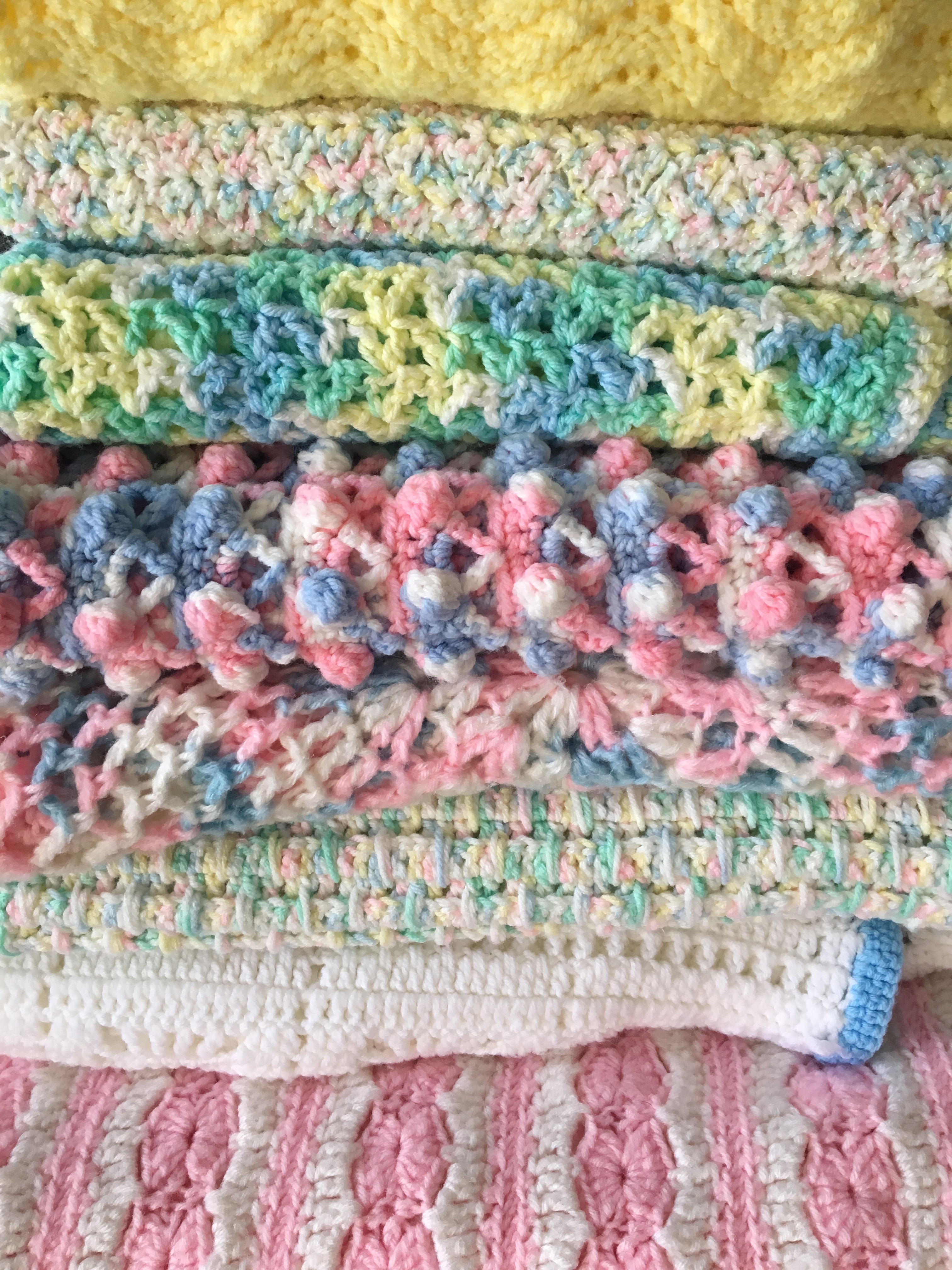
I had an odd-thought-revelation as we drove into the parking lot of the Hospice Alliance. We were there to make a donation. In cleaning out the house, Kerri found several throw-blankets. She washed and freshened them, preparing them for donation. In a past life she was a volunteer at the Alliance and wanted the blankets to go where they would be the most useful, provide the most comfort.

My mom tells me that my dad’s last days were lovingly tended by amazing hospice caregivers. His passage was eased by their guidance and attention. In some small way, the blanket donation felt like a thank-you-note. I was not present in his final weeks and it brought me comfort knowing he was in the care of such extraordinary people.

And that was the seed of my odd-thought-revelation. As we pulled into the parking lot, on the first bright sunny day in weeks, I stepped out of the car and turned my face to the sun.

In the warmth I understood that we are all in hospice care. Our time is limited. Every single moment is precious. Every single moment is shared. We’d do better if we realized it. We’d do better if we attended to each other, to relieve pain and suffering, to pay attention to the quality of each and every life in our passing moment. In our tender and oh-so-temporary lives.

read Kerri’s blogpost about BLANKETS

Turn Toward It [on KS Friday]

This is what he wrote. “The irony I feel is that the world is lost on the artistic temperament of these students.  They don’t seem awake to all that’s going on.” He’s directing teenage students in a play. He was my student thirty five years ago and reached out to me. We compared notes of the production I directed when he was a teenager, and the production he’s directing now. The world has changed mightily. His production will be viewed through a wholly different lens.

I flipped his phrase over in my mind. Artistry is to be awake to all that’s going on. And, awake is not a steady state. It’s not an arrival platform. It’s a relationship between the inner and the outer. What I know about that relationship is that sometimes you need to look away. His students have drilled for active shooters in the hall since they were in kindergarten. Mine couldn’t have imagined it. His students are navigating a pandemic, they’ve never known a world pre 9/11, they live in a country that is eating itself alive. My actors had easier access to what was going on. What was going on was closer in, more immediate and less abstract. They were not looking at a world-wide horror story or lost in the morass of social media. Cell phones were science fiction to my cast. My actors looked at each other and not at their screens.

Stories are about something. We just watched Erin Burnett’s interview with a Ukrainian husband who lost his wife and children to a Russian mortar attack. A month ago, violent death was nowhere on their radar. They were making dinner, going to school, doing homework, late for work. Erin Burnett began to cry and thank goodness. Humanity breaks through and we awake to what’s going on – really going on. We should all be weeping with Erin Burnett and this man.

Sometimes I feel as if I am looking for the small beautiful moments. I am trying to root my day in the explosion of color, the pastel sky, Dogga in the sun. Holding hands. Cooking dinner together. I am trying to be awake to what is going on, the anger and division and warmongering and carelessness as we soil our nest – without it frying my insides. Holding hands is just as real. Reaching toward our neighbors is also what’s going on.

Stories have to be about something and most often stories are about transcendence. Waking up to what is going on is less about waking up – we already know – and more about fully acknowledging it, facing the full picture and turning toward it rather than running away. But, before that final act, that moment of deciding enough-is-enough, before we are willing to blink open our eyes, we pretend the problem is non-existent or small. We ignore the obvious. 500 year storms every year. A family killed by a mortar shell. We bury our faces in our phones, we ban critical race theory, and toss our attention in a Twitter reality or a Tik-Tok diversion.

I wanted to write back and suggest that the world is not lost on the artistic temperament of his students, it’s simply too hard to look at the world so they are choosing to look away. That’s what their play will ultimately be about.

read Kerri’s blogpost about COLOR!!

Kerri’s albums are available on iTunes & streaming on Pandora

the way home/this part of the journey © 1998 kerri sherwood

Constellate [on KS Friday]

Our 3am banana conversation was about cleaning out. The past few years have, as Skip is fond of saying, tipped the apple cart. Our life-apples are akimbo. So, as we pick them up, we are also sorting. It’s not just the stuff in our closets or the post-water-line-mess-explosion in the basement, it’s also the psychological/mental/spiritual/emotional debris. What bag of trash can we finally toss in the bin? What small treasure was unearthed that surprised us? What will we carry forward into the next chapter that informs who we’re now becoming?

I sat in the basement for a few minutes yesterday, staring at the canvas on my easel. Each day I see a little more of the painting that I will someday paint. I do not now have the time or energy to make it visible. This canvas is becoming a marker in time. It calls. My creative energy is dedicated to other projects and I am careful not to over-tap it. That is new. Knowing my limits. Honoring the creative well is part of who I am becoming. I am in no rush. That’s new, too.

“I’m certain these were my momma’s,” Kerri said, showing me the tic-tacs. She was cleaning out the pantry and found them in the way-back. Beaky was a fan of tic-tacs. Treasure. And, how did they get lost in the recesses of our pantry? No matter, they inspired some good stories, reminiscing. “It makes no sense, but I’m keeping these,” she said. Treasures do not need to make sense.

I learned a big lesson during the decade that it took me to complete and produce The Lost Boy: I started it as a project for Tom to perform and it became a project I had to perform for Tom. His passing was the final piece necessary to complete the story he wanted to tell. His passing made the play possible to perform. The lesson: we cannot see it all. We think we understand “why” but mostly our reasoning is constellation. Dots connected in the vast open sky.

The tipping of the apple cart. 3am bananas. Next chapter imagined and arriving. A tic-tac kiss from the past. Making space for constellation. We are in awe and not in a hurry.

Kerri’s albums are available on iTunes and streaming on Pandora

read Kerri’s blogpost about TICTACS

connected/released from the heart © 1995 kerri sherwood

Place It In The Hollow [on DR Thursday]

For some reason, people need to leave a trace of their passage. We paint on the walls of caves. We erect monuments to ourselves and our heroes. We build cairns to mark the way for those who come behind; we build cairns so others will add stones to the marker. We put plaques on benches and engraved bricks in walkways. We graffiti bridges and walls. Banksy has made a fortune tracing his masked passage.

Growing tired as we hiked up the trail, we sat on an old log. We looked over the valley, turned our faces to the sun. And, as we stood to continue up the trail, Kerri pulled a sharpie from her bag. We left two small dots on the log. “We were here.”

Our work in the world not only can be a marker, it is a marker. Every little action is a stone on the cairn: we contribute to the whole whether we like it or not. The person who delivers packages to my door makes my life better. Easier. The score of people who created this computer, invented this software, manufactured the chip that makes it all work, have made my life better. Someone coming behind us will see the cairn we’ve constructed and add to it. Improve upon it. The first computer I touched was a toy compared to this miracle sitting on my lap.

I’m an artist and sometimes wonder if my paintings will live beyond me or will they end up in the Goodwill as so much used canvas. I hear the advice, so often offered to me: “Yours is to paint them, not decide what happens to them.” Too true. Mine is to make the offer. I have no control over the acceptance.

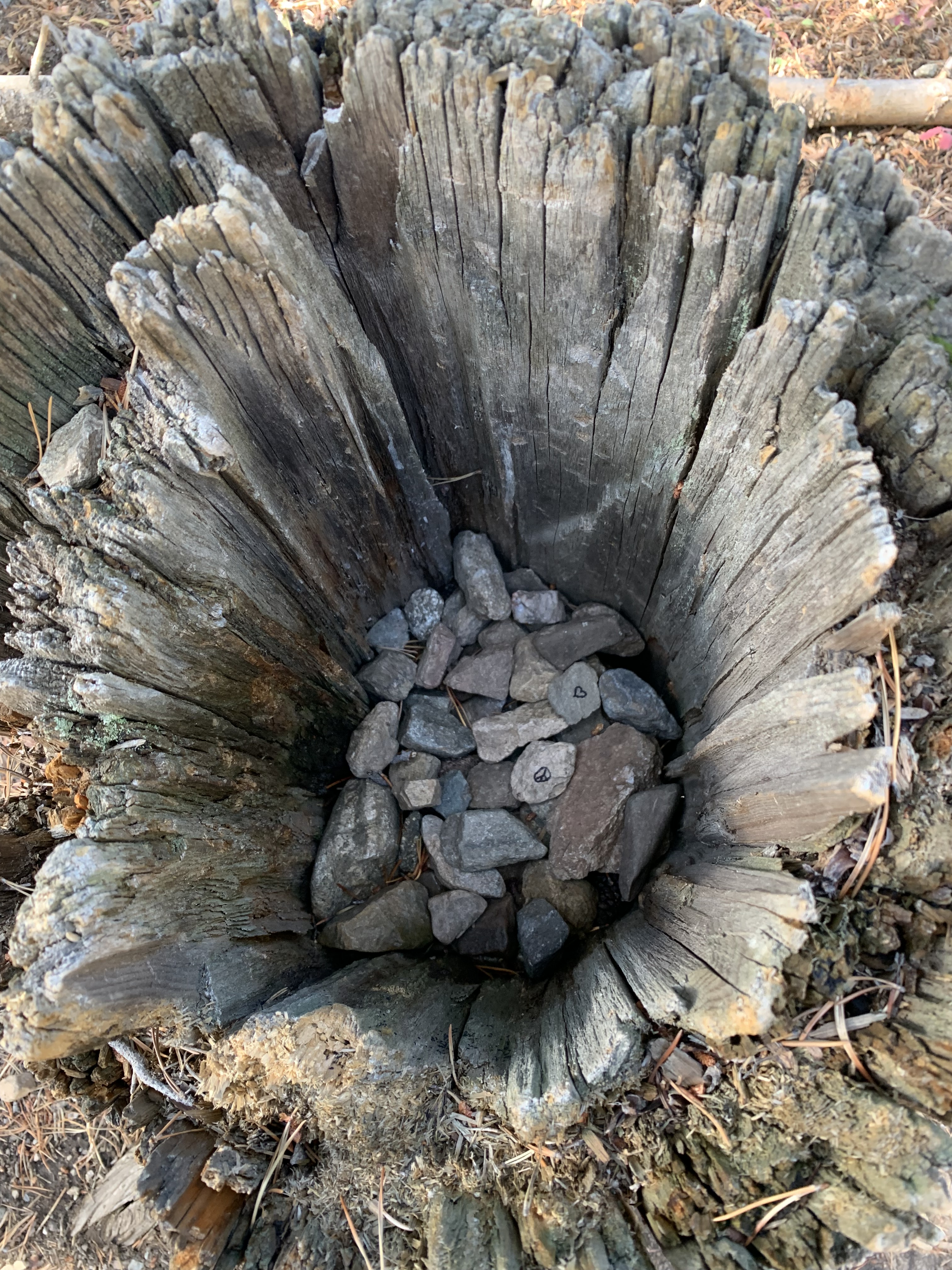
Returning down the trail, Kerri peered into the hollow of a stump. It was filled with stones! Hikers, just like us, had left a note that also served as an ancient invitation: I was here. We picked up stones, the sharpie came out of the bag, scribbled a heart and a peace sign on our rocks before placing them in the hollow. “Do you think anyone will see our stones?” Kerri asked.

An ancient question. Deeply human. Heart and Peace.

read Kerri’s blog post about THE HOLLOW

three graces © 2012 david robinson

Choose [on Two Artists Tuesday]

“It’s a serious thing just to be alive on this fresh morning in this broken world.” ~ Mary Oliver

Were I to have been born in an earlier century I would not be alive today. Twice on my life-path doctors have declared that, “You are now a miracle of modern medicine.” Leeches and blood-letting would not have cured what ailed me.

This thing called ‘science’ is what gave me more days of life. It is the same science that developed vaccines for a pandemic but also made possible the technology that makes mass-media-misinformation possible. Here is the medicine. Here is the disease. It is exactly as Sophocles wrote: Nothing vast enters the life of mortals without a curse.

One morning, deeply tired, I arose to go do a job that I did not like. It was a means to an end and I dreaded the day ahead of me. Stepping out the door, the cold morning air stopped me in my tracks. It slapped me awake. The air was crisp and clean, the neighborhood was quiet. The light in the sky was brilliant. I drank it in. I vowed never again to dread a day of my life. In truth, I had no idea what the day held for me. Why then, would I story my day with a frame of dread? Why tell myself a tale of just-getting-through-it? Why not open to the possibilities of surprise and miracle? Why not embrace the already-stated-obvious-thing: I had no idea what the day held. That simple fact would be true every single day of my life. Dread was a choice, not an inevitability.

To be alive on this fresh morning. It is a serious thing. In this world, broken by the little story of us-and-them, the tiny tale of power-over. Choices. The miracle of the new day is present whether it is seen or not. We can cloak it in dread or gratitude, in support or division. It doesn’t care either way. The miracle of the new day, the gift of being alive on this fresh morning in a world that is broken or healed, whole or fragmented – it all depends upon the story-frame we wrap around it. The story we tell is a choice, not an inevitability.

read Kerri’s blog post about JUST TO BE ALIVE

In-Tolerate [on Not So Flawed Wednesday]

In theatre school, I was taught that the action of the play was driven by conflict. I’ve never been comfortable with that word. Something did not ring true with the concept of conflict. A dividing line. Battle. Fight. Kerri just suggested that conflict is not simply a line, it is bandwidth. A full spectrum of color in our human struggle.

I recently read that, through resistance, all things become visible. We see color because some light rays are absorbed and others are reflected. The light ray is filtered, separated into color bands. We see the color that was resisted. Rejected by the surface. Split off. Separated. Is it any wonder that the epicenter of most faith traditions, the driver of most origin stories, is the journey through separation back to unity?

We become visible in our birth. Separate. We become invisible in our death and are given to imagining a comforting story of reunion. Re-union. In between those two points, separation and unity, there is life made visible and wildly colorful by the separation. The filters. What is absorbed and rejected. Reflected. Learned. Ignored. Appreciated. Vilified. Visible. Invisible.

This time of pandemic has been, for us, an exercise in separation. In the distancing, we’ve nurtured, intentionally and unintentionally, an appreciation of quiet. Over these many months we’ve grown a garden of simplicity. We read together. We walk our paths slowly. We’ve found that we do not need to be entertained or distracted. We have a low tolerance for crowds and run the opposite direction when there’s too much noise ahead.

We’ve fostered an appreciation for those who walk through life considerate of the needs of others. Our circle of friends has come into focus. We’ve dropped off the plate of many and many have dropped off of our plate. The connective tissue is felt, established and hearty. In some cases, even though our actual conversations are rare, the focus is sharp. Deeply rooted. Arnie. Judy. Jim. Mike. David. In other cases, we communicate almost every day. 20. Brad and Jen. Heart-y.

Our play has become visible through resistance. What we absorb and what we reject has come into stark contrast, clear focus, through the separation. Layers of shallow tolerance have been peeled away revealing a much deeper understanding of what we desire to create in this life, how we desire to live. It is necessary to understand the boundaries set and the colors illuminated by intolerance. Said another way, it is important to be able to thoroughly sort substance from noise. Both inner and outer. I have learned that I have limited tolerance for thoughtless acceptance, for unthinking noise. My resistance. I surround myself with questioners, those curious enough to dig, dedicated to building their thought-castles on bedrock instead of shifting sands. Those few who are capable of releasing their grips on the comfortable known and step willingly into the uncomfortable question. I absorb them. Take them in.

We – all of us – walk the same path, visible in our birth. Separate. Invisible in our death. Re-union. In this we are equal. What we do, how we choose to support each other, or choose not to, in the passage between those two universal points, is all. These choices define the story we live.

The pandemic, the separation, has helped me to a deeper understanding and appreciation of this word: Intolerant. A word that used to inspire egg-shell walking for what it implied. A word held with shallow roots. Now, it is a word rich in complexity, useful in paradox, a resistance that has made so much come visible. Tolerance, ironically, is at the same time intolerance. What, in your play, is acceptable? What, in your play, will you tolerate? What, in your play, will you not tolerate? Your play is not separate from mine.

read Kerri’s blog post about TOLERANCE LEVELS

Answer The Call [on Merely A Thought Monday]

I have an old iPhone. Sometimes it doesn’t ring when people try to call. The sound of the message coming into my inbox is the first clue that someone is trying to reach me. Yesterday, when I heard the alert, I was unloading stone from the car so I didn’t check it right away. I wish I had. It was my dad.

His message was 12 seconds long and most of it was confusion and labored breathing. He is famous for removing his oxygen when no one is around and, in his advancing dementia, he will sometimes accidentally dial my number when he is lost in the story-in-his-mind. I treasure these brief touches, these calls, when I hear the phone and answer. We talk. He’ll stay on the phone and, even when he is panicked, he shares his story. My goal always is to convince him to go to the door and tell someone that he needs help with his oxygen. No one can help him with his story.

I tried twice to return his call but he did not pick up.

The theme of this season is life-cycle. We’ve enjoyed the peonies bud-to-blossom-to-fade. Each step of the process has been gorgeous. In the lingering season of pandemic we are, like many people in the nation, paying attention to our backyard. We’re making it our sanctuary and have already spent many an evening sitting on the deck, the mourning dove singing to us from the trees.

We had the opportunity to visit a local college. It is a new campus. It’s the old newspaper building, transformed. This quote is stenciled on the wall: Your life has purpose. Your story is important. Your dreams count. Your voice matters. You were born to make an impact. It’s a good message for anyone but particularly students trying to find their way into the world. People at the beginning of their story.

It’s also a good message for people at the end of their story, making their way out of the world, though it is not the same as a statement of reflection as one of aspiration. It has more punch.

Were I a teacher at this college, I would tell my students, new buds on the peony, not to worry so much about mattering. Assume it to be true.

I would teach them that they might spend their whole lives trying to make a mark and none of it will matter so much as answering the phone. Your voice will matter. You will have an impact.

No story that you tell will be more important than the story you concoct to get Columbus out of his chair, to shuffle to the door of his room, so he can say to someone, anyone, “Will you help me to breathe.”

read Kerri’s blog post about LIFE PURPOSE

See The Good [on KS Friday]

“…the measure on ones mental health is the ability to see the good in everything. Perception is the key.” ~ Kristine Klussman, Connection

If I kept a gratitude journal, my entry yesterday would be that Bruce was happy. I could hear it in his voice. Although it had been seven years since we last spoke, we talked like we were picking up a conversation from yesterday. Life has changed dramatically for both of us.

It seems we have both reached the revelation of simple appreciation. No longer focused on the big stuff, we talked of the sweet moments, the moments that feed our souls. He asked me to describe my days and I was happily taken aback to tell the tale of walks on trails, beginning each day writing posts with Kerri, ending each day with a glass of wine. Drawing cartoons. A dog that runs enthusiastic circles. Good friends.

I am reminded again and again that goodness is not found in the world. It is brought to the world. We don’t perceive what is already “there,” we wrap what is “there” in a story-blanket. We give it meaning. And then we feel the impact of the meaning we give it. Viktor Frankel famously wrote that “Happiness ensues.” It follows. Despair ensues, too. Anger, too, if that is what is brought.

Earlier this year a friend asked how Kerri and I were doing amidst the job losses and broken wrists. I responded that our circumstance was dire. It was. It just didn’t feel that way, so full was our sense of appreciation. In the midst of a dire circumstance, we started our days writing. Good friends called. DogDog ran enthusiastic circles and made us laugh. We sipped a glass of wine at the end of each day and enjoyed our simple meals. Today, things are less dire and, although we are still standing on shaky ground, we start each day writing together. We hold hands and take walks. We breathe deeply the smell of coffee in the morning. Our gratitude for our days has not changed a bit. Good moments are everywhere.

And today, Bruce is back in touch. He is happy and his happiness, like all happiness, comes from a hard decision that took tremendous courage: he decided to see the good. To bring light. To be light. He is doing the work of savoring the good moments that he now sees all around himself.

good moments/this part of the journey is available on iTunes and streaming on Pandora

read Kerri’s blog post about GOOD MOMENTS

good moments/this part of the journey ©️ 1998 kerri sherwood