Taste The Dream [on KS Friday]

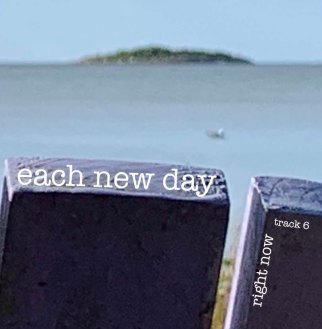
each new day songbox copy

I just finished reading The Hundred Year House by Rebecca Makkai. There is an image in the book that I adore. A fish dreaming of a root beer float. In fact, the root beer float is the fish’s greatest dream, a seemingly impossible one to achieve. A little girl offers a solution. The fish should be in the root beer float, eating the dream from the inside.

Living inside the dream rather than chasing it. Language matters. Dreams are notoriously ethereal, very difficult to grasp. Impossible to chase. Wrap your fingers around a dream and it changes shape.

But, to stand within the dream, to live inside it, savoring each moment lived as a bite from life. A taste of the dream. No chase necessary. A fish in a root beer float. Each new day a bite to be relished. Each new day a taste of the dream.


EACH NEW DAY on the album RIGHT NOW is available on iTunes & CDBaby


read Kerri’s blog post about EACH NEW DAY


vailKdotDdot website box copy


each new day/right now ©️ 2010 kerri sherwood

Use Your Magic Wisely [on DR Thursday]

Illustration 08 copy 2

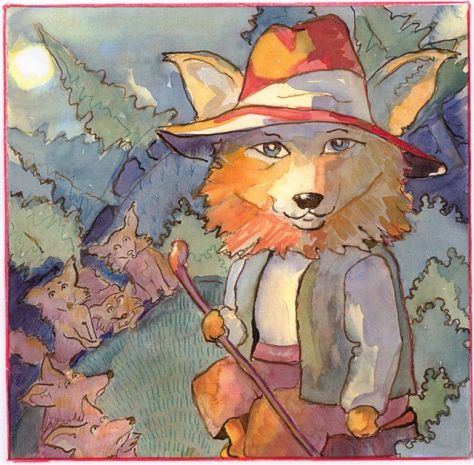
…and the wily old story fox told the pack, “Words are like magic, misused they are tragic…”

“Words are like magic, misused they are tragic, but handled with care they bring insight and good cheer. So listen, dear friends, listen with care.” ~ The Story Fox

I wrote and illustrated Lucy & The Waterfox in 2004, long before this common era of weaponized language use.

Declan Donnellan wrote that, “There will always be a gap between what we feel and our ability to express what we feel. The more we wish the gap to be smaller, the more we want to tell ‘the truth’, then the wider the perverse gap yawns.”

The more we need words, the less capable they are at expressing what we mean. That is the blessing and curse of language: it can never achieve the goal. It can only point us in a direction. The closer we step toward ‘the truth’, the less language can actually reach it. Which, if you think about it, requires us to keep reaching for it. Conversely, we can stand directly on a lie and say exactly what we mean. Dead air.

‘The truth’ is a verb. It is a moving, alive, relational thing.

Language is imprecise and, so, easily manipulated. Endlessly interpreted to fit an agenda. That is precisely why language requires respect and care in the handling. Words are more powerful than most people understand. They are capable of starting wars. They are capable of creating peace. They are capable of inciting division. They are capable of inviting unity.

When the ‘perverse gap yawns’, when words become the weapon of the small minded, it is incumbent upon us – all of us – to listen beyond the words, to recognize and acknowledge the agenda. It is incumbent upon us all to handle our powerful magic with care and use it wisely.

Waterfox coverLUCY & THE WATERFOX is a story for children and adults about believing, following your own path, the power of word


read Kerri’s blog post about LUCY


drc website header copy

chicken and perseverance website box copy


lucy & the waterfox ©️ 2004 david robinson

Turn The Phrase [on Merely A Thought Monday]

them apples 1 copy

I just read this phrase and laughed aloud: Conversation in English is often full of phrases not to be taken literally.

It’s the word ‘often’ that got me chuckling. I’d have been more sober if ‘always’ had been the adverb. Conversation in English is always full of phrases not to be taken literally.

My head exploded! She turned the tables on me! You don’t say! I’ll be dogged. It’s nothing to sneeze at! It’s more than you can shake a stick at! I’d rather stick needles in my eyes!

Isn’t it the best of paradoxes? Language, at it’s best, is inexact. It is referential. It can only point toward experience.  It’s why we have legal opinions, religious debates and news pundits that scream at each other.  It’s why we have differing points of view.

“I didn’t say that!”

“That’s not what I meant.”

“Just what are you implying?”

Nothing. No thing. The absence of a thing. The absence of a thought (in English, a thought, however fleeting, is a noun, a thing).

Of course, in it’s inexactness, there is also an infinity of space. There is as much reason to reach, to ask, to discover as there is to push, negate, or differ. To put down your end of the rope. To shake hands not make fists. A common ground.

Word for word. Line for line. To the letter. It’s never black and white. In a toxic time, a poisoned well. Find the middle way. Heart felt. We need not stab each other in the back. Kill two birds with one stone. Pull your head out of the sand. It’s a piece of cake. It literally blew me away. They put down their swords. They reached across the aisle.

Well I’ll be! How ’bout them apples?


read Kerri’s blog post BOUT THEM APPLES


laughing website box copy


Consider Context [on Merely A Thought Monday]

civility 2 copy

It’s an idiom. A turn of phrase. When push comes to shove. The moment when a decision must be made. Look it up and you’ll read that the expression carries a connotation of escalation. Shoving is more aggressive than pushing.

A moment of decision. On the threshold of escalation.

Like all idioms (or all words, for that matter) context is everything. We saw this phrase on a billboard. It is a campaign promoting civility at a time when civility seems in short supply. We liked it and thought it would be a good quote for Merely-A-Thought-Monday. Context: Civility.

Google the phrase and you’ll discover the disease that plagues us. Namely, the lack of capacity to consider context. Or, perhaps, no capacity to recognize context. Or, perhaps, no capacity to consider a context that differs from one’s own. The top of your Google search will reveal a rage of opposition to the billboard promoting civility.  Shove harder. “…so basically they’re telling you let the son of a b$&@? push you around…”

Wow. It’s an idiom. Context: Civility.

To be fair, a scroll down the Google chain includes motivational stories, a dance piece by Twyla Tharp, more links to PassItOn.com images and tv spots, a song by The Grateful Dead, a lyric by Rascal Flatts. A festival of differing contexts and usages of this phrase when push comes to shove.

Here are a few other idioms: where the rubber meets the road. When the going gets tough, the tough get going. When the chips are down…, When the dust settles…, When in Rome…

A moment of decision. On the threshold of escalation. Context matters.


read Kerri’s blog post about CIVILITY


shadow des plaines river trailwebsite box copy

Expand Your Bubble [on Merely A Thought Monday]

alex honnold quote box copy

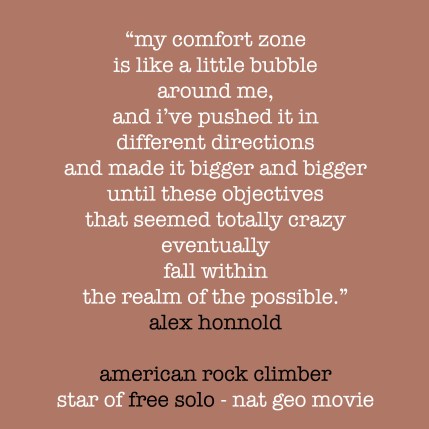
Everyone has their insurmountable mountain to climb. Everyone has their fear to face. Everyone bumps against the edges of their comfort zone. Everyone.

And, the beauty of this life is that the insurmountable mountain is different for everyone. What seems easy to you might be impossibly scary to me. You show me it is possible. I show you it can be done. We inspire another look at what’s possible.

In the film, FREE SOLO, Alex Honnold says that, for him, fear is not something to be conquered. Comfort is something to be expanded. And, comfort is expanded through exploration and practice. Through experiences and reaching. Testing and discovery. Trying again and again until what once looked like a monster becomes known. It’s remarkably practical. It is what education is supposed to be.

How we ask the question determines the paths we see or don’t see. It’s all in the language we use. “Facing a fear” is oh, so, warrior-esque. We are inundated with “going to battle” metaphors. Defeating a part of myself in a battle against myself seems…contrary to the bigger picture. Win by losing. Division as the only available route? Armor, armor everywhere.

There is wisdom in putting down the swordplay. There is hope in choosing cooperation instead of conflict. Instead of picking a fight, instead of perpetuating the power of the fear, how much better might it be to turn and look. Really look. Study. To reach and test. To take a step. To try and fall down so that you might try again with a little bit more experience. Study. Open to possibilities.

It’s a pattern. Focusing on the obstacle, fighting the fear, is learned. It’s a great strategy for keeping yourself afraid and encased in armor. Other patterns are available and far more productive. It’s possible to climb like Alex: study your mountain, learn the terrain, practice the difficult moves over and over, internalize safety, and one day, when you are ready, when you have a relationship with something other than fear, climb your once insurmountable mountain.


read Kerri’s blog post on COMFORT ZONES


million dollar highway, colorado websitebox copy

Bring A Little Hope [on Merely A Thought Monday]

emerging with frame copy


“Multiculturalism asserts that people with different roots can co-exist, that they can learn to read the image-banks of others, that they can and should look across frontiers of race, language, gender and age without prejudice or illusion, and learn to think against this background of a hybridized society. It proposed – modestly enough – that some of the most interesting things in history and culture happen at the interface between cultures. It wants to study border situations, not only because they are fascinating in themselves, but because understanding them may bring with it a little hope for the world.” ~ Robert Hughes

I read in my newspaper that tribalism is the new normal [insert eye roll here]. There’s nothing new in tribalism. Fear-full people lost in a very small Us-N-Them tale is as old as the old gods. It’s pulled out and paraded about when power structures are shifting.

I marveled at the utter absurdity of it. No one can deny that our airwaves and e-waves are choked with noisy proclamations of division and fear.  However, it only takes a quick scan through the rest of my newspaper to grasp the undeniable reality of our situation: global markets, global economies, populations on the move, United Nations, NATO, WTO, multinational corporations, Bitcoin, international space stations, satellites, not to mention some of our greatest challenges like global warming, and invasive plant and insect species (made possible through global shipping and the necessity of sharing/exploiting resources). Take a stroll down the aisle of your local supermarket and educate yourself on the scope, depth and breadth of your food sources. Count the countries represented on the shelves.

Tribalism is not new. It was normal a few centuries ago. Nowadays it is a construct, an old dry log to toss on a fire to stoke divisions and create distractions.  It’s a headline to sell newspapers. Division sells. Good theatre requires hot conflict. People are easier to control when divided. There’s nothing new there, either.

There is a truism in change processes: people hold on tightest to what they know just before releasing their fear and walking into the unknown future. They take a step back, temporarily entrench, before answering the call of growth and change. Call that tribalism if you must, or denial, or the conservative impulse. It’s a process step. “Age and stage,” as 20 likes to say.

What’s actually new? All the world is now a crossroads. People with different roots ARE coexisting – that, after all, IS the great experiment and central promise of these United States. Looking across the frontiers of race, language, gender and age – without prejudice or illusion – is the hope in our emergence. It is the cathedral we are building.

The other direction can only bring our decrease. And, as history has taught us again and again, that’s an ugly path. There’s nothing new in that, either.


read Kerri’s blog post on EMERGING HUMANS EMERGING


Make It Up [on Flawed Cartoon Wednesday]

space invader jpegBIG copy 2

Language is beautiful. It is referential and, therefore, easily manipulated. Not all strings of letters arranged in sequences of words point to what you might expect. Thus, my fun with space invaders! Of course, it is too enticing to wade into the current pool of nonsense surrounding the phrase ‘space force.’ If you want to entertain me you’ll send me fun images of ‘space force’ misdirection. I have a few roiling in my brain that I just might draw and share with you.

Oh, and my favorite language question of the week: how is it that a sequence of marks and noises is meaningful? Well, humans have to be good at something, right?

if you'd like to see FLAWED CARTOON copy


read Kerri’s blog post about SPACE INVADERS


www.kerrianddavid.com

facebook logo copy 2like us on facebook


space invaders ©️ 2016/18 david robinson & kerri sherwood

Be A Dandy [on Two Artists Tuesday]

dandy copy

I’ve noticed that my son, Craig, uses old fashioned words in his texts like, “indeed” and “certainly.” I delight in his collision of proper usage in a medium that regularly slays grammar and reduces communication to pre-written-language symbol (now known as an emoji).

Recently, Craig surprised me with a new pair of walking shoes. When they arrived on our doorstep I was painting so was wearing my paint-splattered-worn-to-death-grubby clothes when I tried on my cool new shoes. They immediately elevated my status and felt really good, too! I told Kerri that I was a dandy from the ankles down. “Don’t get carried away,” she said. She has grown accustomed to my usual unmade-bed style of dress.

this dandy product box copyI wrote Craig telling him that I loved my shoes. “Truly!” I added as a nod to his parlance.

“Ha!” he replied, “Happy random Monday.”

Ha, indeed! Now, it’s time for a proper walk!


read Kerri’s blog post about DANDY

www.kerrianddavid.com

dandy ©️ 2018 kerri sherwood & david robinson

Look To The Living Thing

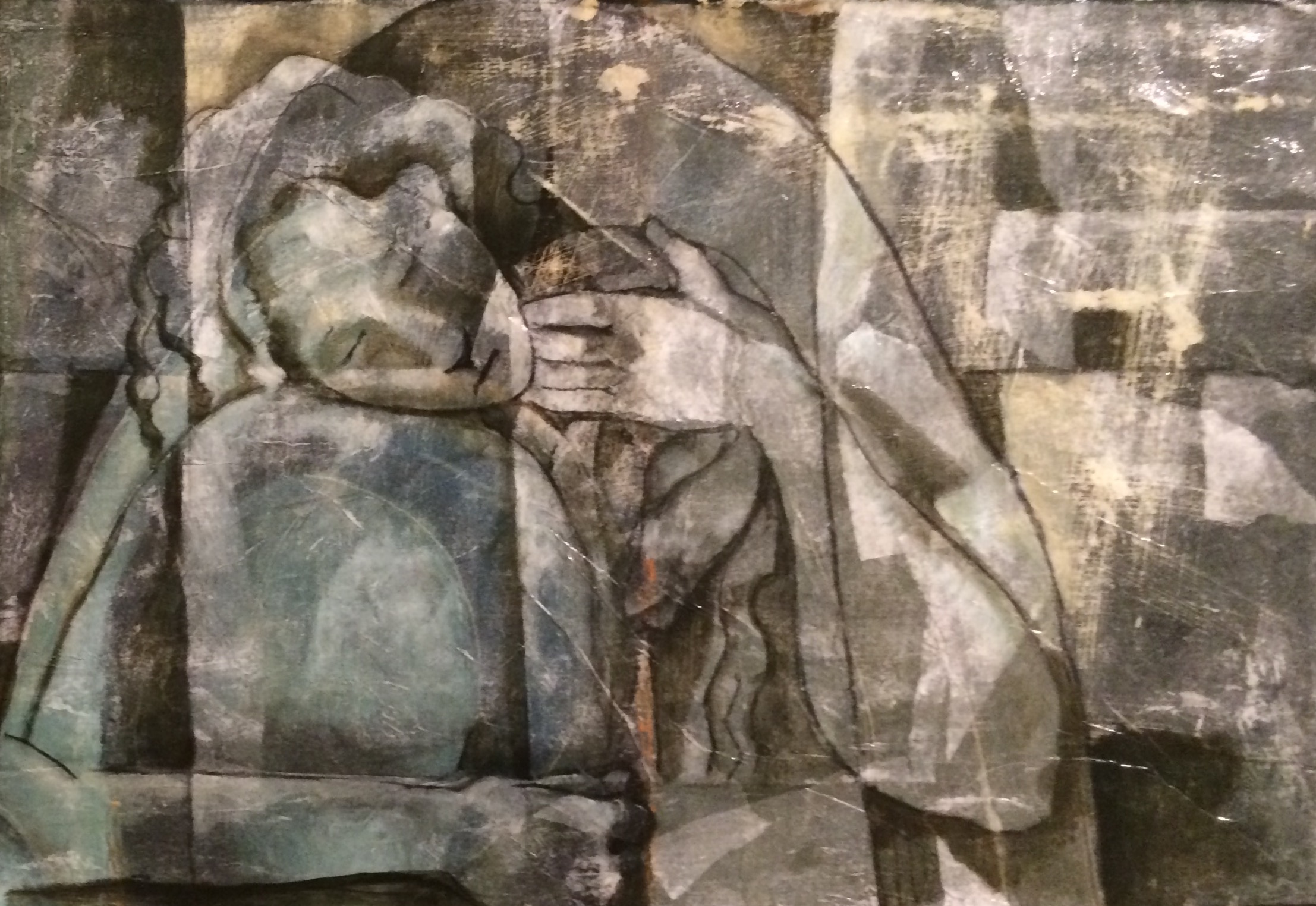
my latest, as yet un-named, painting

Kerri looked at this painting and told me it captures how she feels when our daughter is hurting and calls home. “Describe that feeling to me?” I asked. She pointed to the painting, and said, “Just like that.”

Some things are universal and understood regardless of political affiliation or religious belief. What does a mother need to know to support her child? The political investments and religious doctrines are abstractions, separations. Motherhood is direct; it lives beyond the capacity of language to capture and articulate. It is the impulse to unity. It transcends all divisions. It knows nothing of conceptions like the rational and irrational.

Jim and I just had one of our famous phone calls. Our discussion romped through many fields but we returned again and again to the notion that the important things in life cannot be rushed. For instance, relationship takes time. Relationship takes attention and tending. It is fluid and dynamic so it is nearly impossible to slap a single word-label on it. It changes. It grows. In a single day it can pass through many descriptors. Dog-Dog can drive me crazy in one moment and melt my heart the next. The important stuff, like relationship, is not static or containable. It is not a concept. It is a living thing.

So What?

The best language can do is point to the living. Language can describe experience but can never be experience. Language, of necessity, reduces while the important stuff – like relationship – like love – expands. Language, as a tool of abstraction, can never be true. It can only point toward truth. Language separates. Truth is like relationship. Truth is a living thing, dynamic and changing. To be known, it must, like motherhood, be experienced directly.

Again, so what?

Direct experience is always (obviously) personal. Truth is not so easily captured. Is it exclusively liberal or conservative? Is it Christian? Buddhist? Is it unique to Islam, Judaism, or the Tao? Leave the city lights some night, take a good long look at the stars, and realize what you are staring into.

Last week we rushed 20 to the hospital. He couldn’t breathe. He walked to the edge of the abyss and looked into it. We watched him teeter on the edge. As we watched, all other concerns, pursuits, bills, frustrations, news,…, dropped away. The stuff of separations and abstractions went to dust in the face of the actual. Ask me what I experienced watching 20 grasp for life? There are no words. Ask him what he experienced in those long hours and he will shrug his shoulders. There are no words – but it is clear in his eyes.

The important stuff, the stuff beyond words, leaps the boundaries of separation and abstraction; all else falls away. The important stuff always leads to a universal place, a common ground. It is a beautiful paradox.  As a test, try this: if language can reach it, ask this very important and often absent question: Is it really true or merely another entrenched point of view?

a detail

Escape The Freak Show

Very is the most useless word in the English language and can always come out. More than useless, it is treacherous because it invariably weakens what it is intended to strengthen. – Florence King

Tom used to say that watching television reminded him of going to the circus as a kid to see the freak show. He’d pay his nickel and step into a dark tent filled with oddities meant to repel and repulse. The attraction was the revulsion. I feel that way every day reading the news of the latest antics of the current occupant of the White House. We now open our news apps several times a day and routinely exclaim, “You aren’t going to believe this one!” It’s either a freak show or the latest installment of Game of Thrones. Though, the real horror of our current national predicament is that we can’t exit the tent.

I do not need the news to interpret for me what is actually taking place in our nation. I only need listen to what is said. Language matters. How we ask questions matters. How we frame our arguments matters. The labels we use to define our experiences matters. In today’s Washington Post op-ed piece, E.J. Dionne Jr. wrote: As George Orwell taught us, how people talk offers a clue about how they think and what they value. Our language, he wrote, “becomes ugly and inaccurate because our thoughts are foolish, but the slovenliness of our language makes it easier for us to have foolish thoughts.” He added, “If thought corrupts language, language can also corrupt thought.”

A president whose language band width is limited to doubling his adverbs (for emphasis, I assume), i.e. very, very, or can find no other adjectives beyond the simple polarities of bad or great is not only troubling, it, as Orwell taught, reveals a lazy mind. Very, very lazy. We should not be surprised that his preferred mode of communication is Twitter and that he’s confused governance with signing executive orders. A bully knows no other way.

Today Michael Gerson, the conservative voice in Washington Post, wrote in his op-ed piece: “Stepping back, cooling off a bit, displaying some strategic patience, taking the long view: The first two weeks of the Trump administration have been the most abso-friggin-lutely frightening of the modern presidency.”

Abso-friggin-lutely! Now, there’s an adverb! And, frightening is an apt adjective.

Building a wall that is already a boondoggle, spending millions to investigate corruption where none exists, picking fights with allies, obsessing over crowd size, vote counts, and television ratings, issuing an ill-conceived travel ban directed at Muslims, abusing a judge for doing his job,…. Frightening. And, like any good freak show, it is drama for the sake of drama. It is governance by threat.

But above all, this: language matters. It is how together we define our reality. Debate (a complex use of language to clarify points of view, make law, challenge laws, express values,…) is the crux and crucible of our system. Our lazy-mind-in-chief routinely defines his own reality and then expects others to conform to his delusion. Bad. Refuse to conform or challenge the sentiment and risk a nasty tweet. Right now, all the other children on the playground are afraid of the sting of the tweet-stick but soon, as happens to all bullies, the kids, red coats and blue alike, will start talking and realize that together, they are more powerful than the angry boy with the simple solution.

It would be comical if only we could escape the freak show tent.

Substitute damn every time youre inclined to write very; your editor will delete it and the writing will be just as it should be. – Mark Twain