Choices?[David’s blog on Two Artists Tuesday]

Today we walked our trail and the frog symphony was in full swing. It stopped me in my tracks. They are about 3 months earlier than last year. Enough said, I suppose. Except for this: it’s not a surprise, is it?

Tom used to ask, “When does a story begin? When does it end?” He was struggling to find a logical place to begin his Lost Boy narrative. Did it begin when he found the box hidden in the wall? Did it begin when the boy died and his mother plastered his life possessions into the wall of the farmhouse? She told no one. Did the story begin with the mother, when she was a little girl crossing the prairie in a covered wagon, the day they buried her little brother on the trail, never to be found? All are good choices. None are right or wrong. They are choices.

The sunset illuminated the brick. Blonde cast with orange and pink. A shadow is cast in the low light. It’s February and feels like May. Tomorrow it will feel like February again…for a day. I told my friend in California that, this year, I’ve not yet touched my snow shovel.

When did this story begin? I can’t point to the moment since the story has been with us for so long. My college sociology teacher was the first person I heard utter the words, “Global warming.” Decades ago. He gave a lecture on choices. “At this point, we have choices.” Not an exact quote but close enough. It was lost on us, the future seemed so far away. Someone else will make the right choices.

It is certainly more present. The tulips are popping up. We are, as I write this, under a tornado watch. In Wisconsin. In February. “Weird!” we say.

A pertinent question: When does this story end?

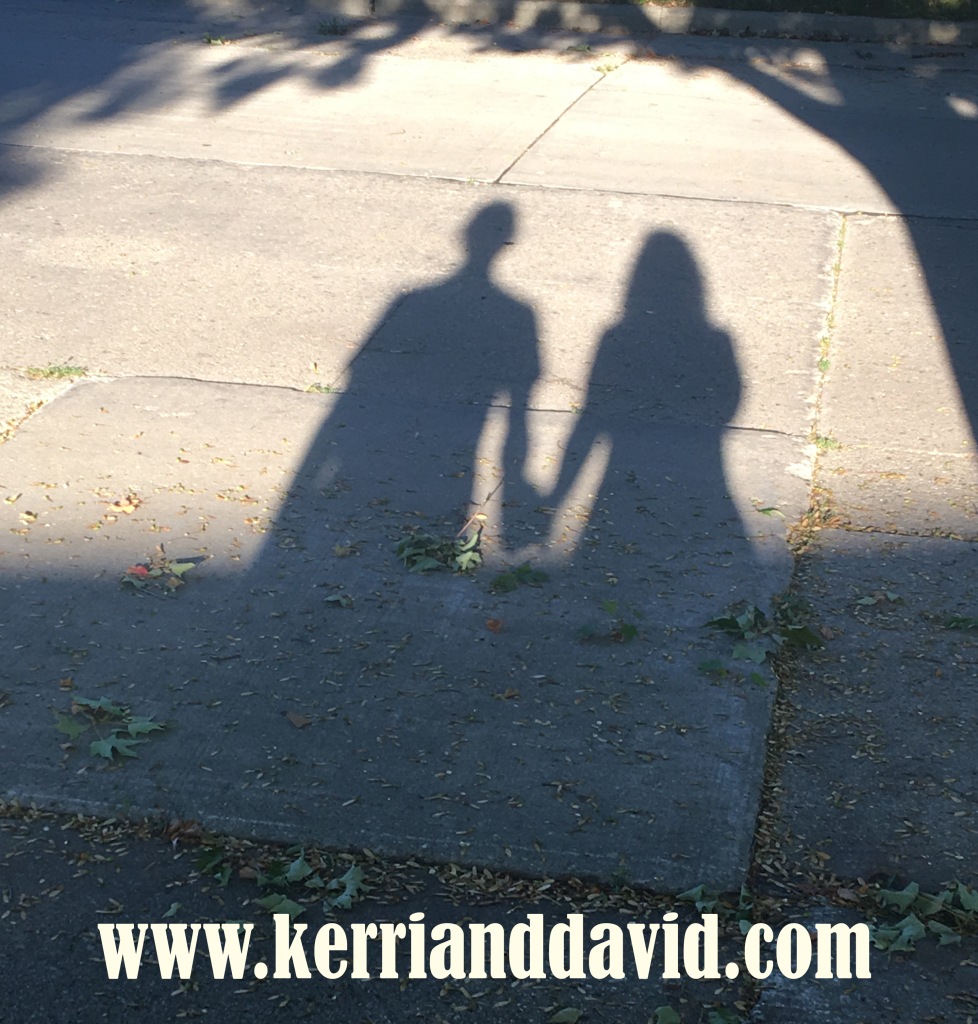
read Kerri’s blogpost about SHADOWS

like. support. share. comment.

buymeacoffee is a leap of faith, a choice to make, a cake to bake. A gratitude we shake.

Find Hope [David’s blog on Two Artists Tuesday]

To say our weather has been weird is an understatement. It is February in Wisconsin and I’ve not yet used my snow shovel. I know that a mile or so inland there has been some substantial snow – some – but here, by the lake, not so much. We’re having rain and fog. Seattle in Wisconsin. The world just recorded the warmest January on record.

We just finished watching a three-part National Geographic series, Arctic Ascent with Alex Honnold. A scientific expedition across remote Greenland with two objectives: to gather data on climate change from arctic glaciers, and for Alex and his climbing team to make a first ascent of Ingmikortilaq, a wall 1000ft taller than El Capitan in Yosemite. Beautiful, extreme, unimaginable. Breathtaking. The lead scientist on the team, Heidi Sevestre, much to her surprise, finds hope in her research. Although the glaciers all around are melting at an rapid rate, the Daurgaard-Jensen glacier remains stable. “This glacier is holding on,” she said.

Holding on. Across time, human being have been brilliant at spoiling their nests. Societies disappear when they either pollute or exhaust their resources. Historically, we’ve rarely demonstrated the wisdom to change our behavior before losing it all. We are on track for a repeat performance, this time on a global scale, so it was curious that this single glacier, to date, was somehow impervious. Hopeful. “All is not lost,” Heidi Sevestre suggested.

Resilience. Tom used to tell me that he was often stunned by the resilience of some children. They were capable of transcending unimaginable odds, emerging from their fire with humor and balance and wisdom. “They give me hope for all of us,” he said.

Alex Honnold and Hazel Findlay, against all odds, climb an impossible wall. Heidi Sevestre finds impossible hope in the movement of a single glacier. “These are the people I want to emulate,” I tell Kerri. They are upbeat. Positive. Generous with each other. Generous because of each other. “These are the people who give me hope.”

read Kerri’s blogpost on FOG

comment. share. like. support. thank you.

buymeacoffee is a bit of hope in a steep upward climb.

Clear Your Mind [David’s blog on Merely A Thought Monday]

There’s nothing like a walk in a garden to clear your mind. It was the end of the week – or was it the beginning? In any case, our brains were overloaded. We sought a garden.

So the story goes, Adam and Eve lost their spot in the garden. They ate from the tree of knowledge and started to think about things. They became self-aware, a by-product of apple-eating, they had to tell stories of where they’d come from. They had to tell aspirational stories of where they wanted to go. They made rules. Look back. Imagine forward. Neither direction is true in the absolute sense of the word. Memory and imagination are not fixed. They are fluid, changing, like a stream.

Listening to our stories it’s easy to conclude that this good earth couldn’t possibly manage without us. As global weirding progresses, it’s likely that we’ll learn the opposite of our control-story is the case: we can’t possibly manage without the good earth. We may have to adapt our narrative! We may have to consider that the garden and its many inhabitants didn’t really need names; we invented knowledge-management to suit our purposes. We might need to recognize that we invented all forms of management to suit our narrative.

We like to tell stories of being in control, of being at the top of the pyramid. We especially like narratives placing us at the center of the universe – and the micro level variety: being the chosen ones. Believing that it all spins around us is, well, comforting. Or hubris. Or both.

Of course, our story is pocked with kill-joys like Galileo. Though, to be fair, even though his telescope proved beyond a shadow of a doubt that humanity is NOT at the center, it’s had very little impact on our dedication to being all important. Above it all. We are a tenacious bunch when our story of primacy is threatened.

I was especially moved by the sign in the garden and wondered what it would take for us to turn the tables and imagine ourselves as part of the spinning universe rather than above-it-all. There are plenty of examples to draw from, humans in symbiotic relationship with their garden. Listening rather than instructing. Spinning with.

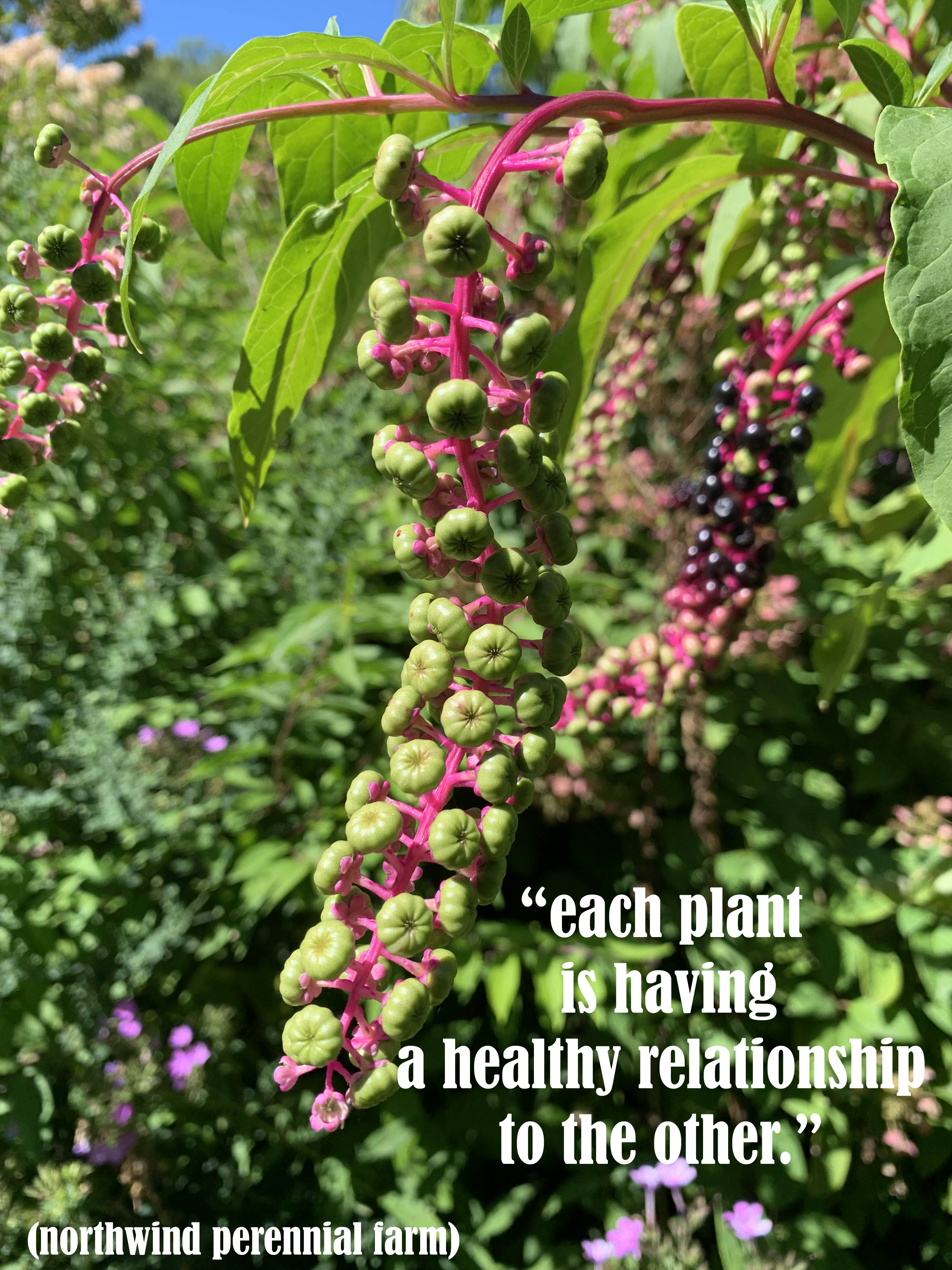
I think that is why, when our brains are overloaded, we head to the garden. A return to our senses. We breathe. We listen. We feel. We clear our minds and, even for a moment, re-enter a naturally healthy relationship.

read Kerri’s blogpost about HEALTHY RELATIONSHIPS

like. share. support. comment. thank you.

Act For The Benefit [on KS Friday]

We are hunkering down today. The smoke from the Canadian fires has arrived and the air-quality-index reads “Poor” to “Dangerous.” My head hurts. I feel as if I can’t catch my breath. A glaring example of interconnectivity. Airspace knows no nation. Not really. All for one and one for all.

I Googled the phrase “All for one and one for all” wondering if it was yet another clever Shakespearean quote. It is but the good poet didn’t originate it. He borrowed it from the Latin or from Aesop. I read that now-a-days it is the unofficial motto of Switzerland. “Each individual should act for the benefit of the group, and the group should act for the benefit of the individual.”

Aesop was born circa 620 BCE so the idea that we should – and could – act for the benefit of all is not a new idea. It may be the most basic of human survival necessities. Aesop popped it into a fable since storytelling is the original-and-best form of adult learning theory. On a side note, someone who composes and/or tells fables is called a “fabulist.” Had I known sooner I’d have spattered that on every business card, used it at every social gathering: “What do you do for a living, Mr. Robinson?”

(humble chuckle) “Oh, you know, I’m a fabulist. Here’s my card…”

Kerri snapped this photo of Meadow Hawkweed. It’s important to our story of Canadian smoke in American airspace because its healing properties include the treatment of asthma and other respiratory ailments. All for one and one for all includes the world of flora and fauna, too. The whole knows no parts just as the airspace knows no nation.

In my dystopian fantasy, when we warm the globe sufficiently enough that systems collapse and smoky air is the new norm, I’ll corner the market on Hawkweed. Just-kidding. I’ll share what I know with whomever needs help breathing. And, while waiting for the healing to kick-in, I’ll tell some stories of people helping people. Like Aesop, I’ll try and plant the seed for a better world. Once a fabulist, always a fabulist.

in a split second/as sure as the sun © 2002 kerri sherwood

Kerri’s albums are available on iTunes and streaming on Pandora and iHeart Radio

read Kerri’s blogpost on HAWKWEED

Like it? Like it. Or share it. Or comment. Or buyusacoffee. All are greatly appreciated.

Make A Documentary [on Flawed Wednesday]

Skip suggested that I make a documentary film about our neighborhood. With the recent car explosion across the street, the Jacob Blake protests (martial law, riots, et.al), the mockery-of-a-trial of Kyle Rittenhouse, the retrial of the anti-freeze murder, and the most recent excitement: a water line repair crew accidentally cut the gas line to the house next door to the car-explosion-house. All of this and a pandemic, too!

I quipped that my documentary would be titled “Calamity Vortex.” Petticoat Junction. Green Acres. Black gold, Texas tea…

Perhaps it’s not a documentary but a sitcom that I should create! Including us, there are plenty of good characters in the neighborhood to exaggerate. I’d go with a reality t.v. program but I fear sitting around waiting for the next disaster might not make scintillating television. Although, doesn’t it seem that is what we are doing in the age of climate change. Kentucky is underwater. The west is on fire, setting new records established just last year. Britain and parts of India are baking. And what about those hurricanes and tornadoes? How many once-in-1000-year-events does it take before we acknowledge the new norm?

Where does one draw the defining line of “my neighborhood”?

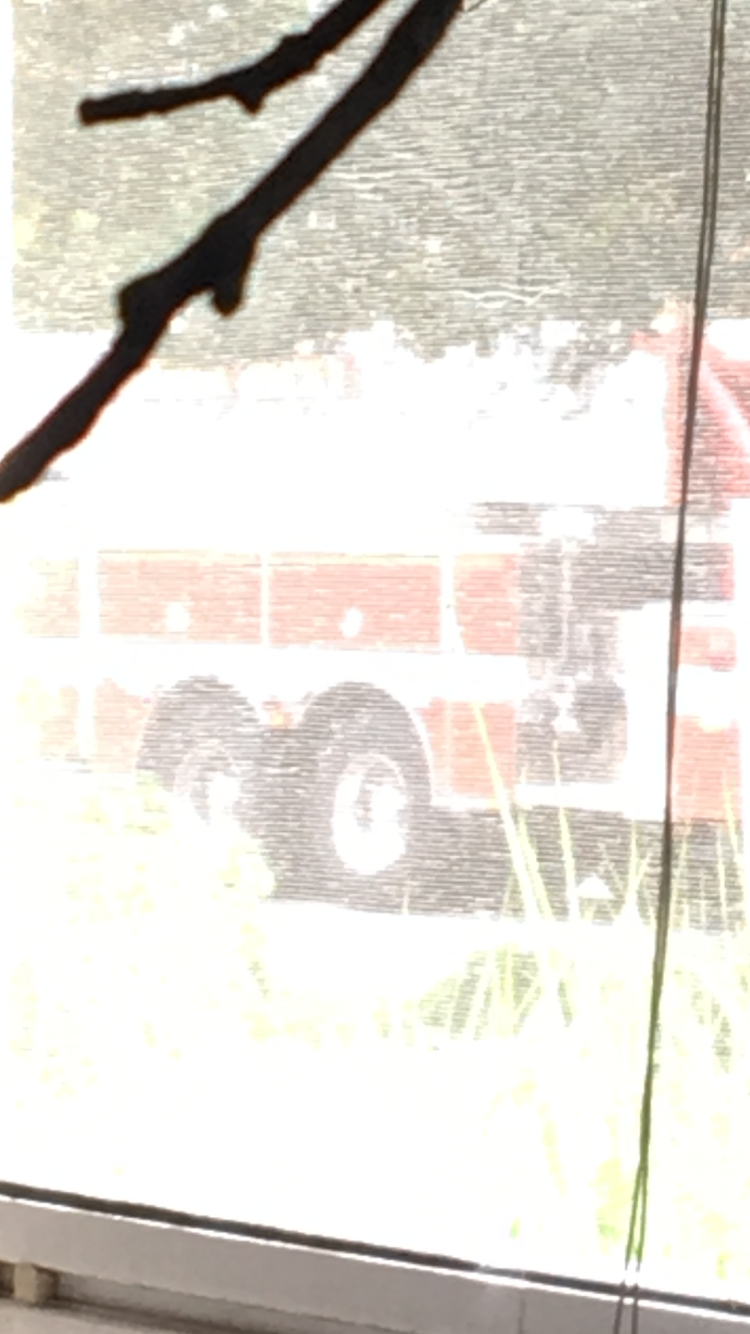
When the gas line was cut and explosion seemed imminent, I was delighted that several firetrucks pulled up in a matter of minutes. They kept us safe. While sitting far enough away to clear the gas-headache, I marveled that we are very good at responding to disaster but not so great at preventing it. Some things are accidental, of course, but global warming is not. It is – or was – preventable.

Perhaps my documentary film – or tv series – or reality tv program – would attract more viewers if the conceit was a neighborhood of people causing their own problems and then, while racing to clean up the mess, they ask “How could this happen?”

It would be a comedy, of course.

read Kerri’s blogpost about FIRETRUCKS

Pull In [on DR Thursday]

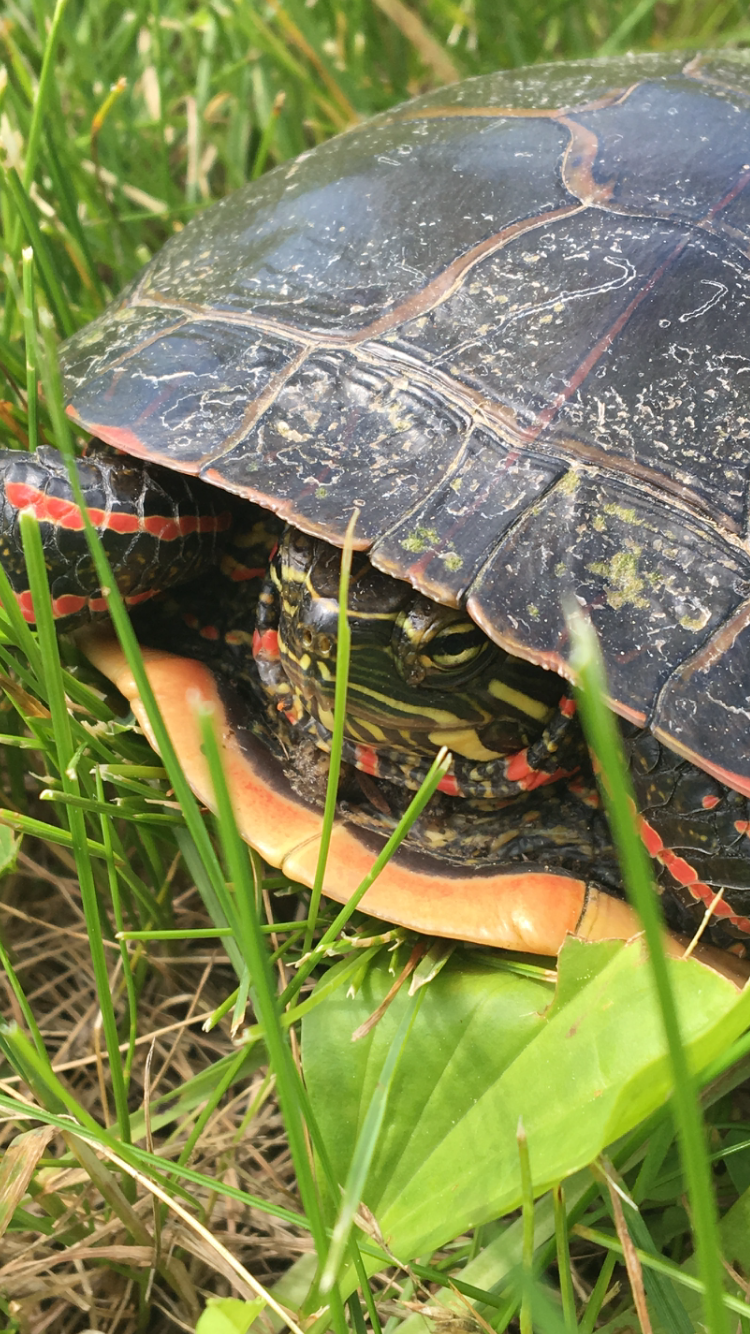
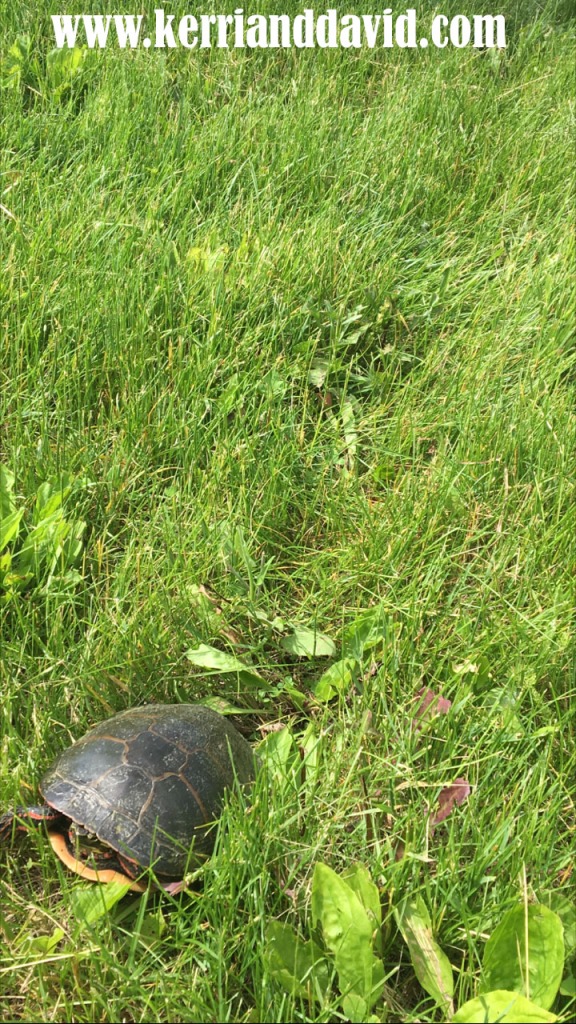
I suspect the turtle understood the giant blonde woman with the camera aimed at this face as a threat. He did what turtles do when stressed: retreated into his shell. “I’m not going to hurt you little guy!” Kerri said, on her knees, snapping pictures. The turtle was, at best, dubious of her reassurances.

We were considering going to an outdoor concert until we saw photos of large crowds of people packed together. Covid has made us crowd averse. “I’m not sure I’m ready for that,” we chirped together and laughed at our stereo response. “I wonder if I will ever be ready for that,” Kerri mused.

At this moment I know more people with Covid than I have personally known throughout the entire span of the pandemic. I suppose this virus that rolls on and on, shapeshifting as it goes, would exhaust our guard sooner or later. I am guilty of thinking, “What’s the point?” as I don my mask to enter a store. Yet, every day this week, a new name or group of names has joined my roster of friends-with-Covid. So, I put on my mask. I pull my head into my protective shell.

There are real threats and there are nice ladies with cameras that only seem dangerous. “May you live in interesting times.” We do. A pandemic. Global warming has arrived. Nationalist madness on the rise. We cannot send our children safely to school – or shop at the grocery store – or attend a concert – without the thought of gun violence. We are awash in real threats and, like countless societies before us, we seem dedicated to our own demise. Madmen and women are at the wheel and we are in the backseat whispering, “Slow down,” looking at each other with, “Do Something!” in our eyes.

When Kerri showed me the photo of the turtle I was struck by the calm on its face. I recognize that turtles probably don’t have the facial muscles to fully express their fear but nevertheless I was delighted by the notion that the turtle-in-retreat was calm. Nothing to be done but pull into the shell and wait it out. No reason to panic.

We’ve discussed being more turtle-like in our lives. We live in Interesting times and there’s not a thing to do about it, other than perhaps write. Make art. Change a few behaviors. We need not wrinkle our brows or cry out in fear while pulling our heads into our shells. The sunrise is still as beautiful, we hold hands when we walk, make dinner together, love on Dogga at night. There’s lots of love inside our shell, no matter the surrounding madness, a quiet center in the storm.

read Kerri’s blogpost about THE TURTLE

shared fatherhood © 2018 david robinson

Appreciate The Break [on KS Friday]

Before we went to sleep last night we took Dogga to the car and sat in the air conditioning for half an hour. He needed a break from the heat and humidity. We needed it, too.

I’ve been working in the basement. It’s been so humid that my fingers stick to the track pad on my computer. On a Zoom call I was sharing a screen and Skip said-more-than-asked, “What are you doing!” I can be clumsy and inept without sticky fingers and sweat running into my eyes so it must have been a riot trying to follow my staccato presentation. And, let’s not talk about diminished brain function in heavy air and intense heat. My synapses fire in slow motion, if at all.

Sometime in the night the air cooled. We knew it was coming. Our conversations have been about holding on until Thursday night. “It’s going to break,” we promised each other. “It’s going to break,” we’d tell the dog.

On Monday, in the midst of yet-another-down pour, with water gushing up from the floor drains in the basement, ankle deep in water with shop vacs humming, running buckets of water up the stairs and out into the rain, Kerri stopped and said, “I think we’re handling this pretty well.”

It’s going to break. We are handling it pretty well. “Arranging the furniture in our mind,” as we read this morning, “to create a space of happiness.” Yes. Expect it. Create it. The water is up to our ankles so we might as well splash and have some fun.

Our wet humid world has exploded in tones of green. The grasses grow by the minute. The weeds, too.

That morning someday, full of hope in our expectation. Today, full of hope, because it is our expectation.

Sitting in the car last night, on “errands” to nowhere, the car idling, we were finally cool. DogDog walked slow circles in the back and then poked his head between the seats for a pet. “I’m not sure it gets any better than this,” I thought but did not say.

Sometime in the night, the air cooled. We knew it was coming.

That Morning Someday on Kerri’s album Blueprint For My Soul

All of Kerri’s albums are available on iTunes and streaming on Pandora

read Kerri’s blog post on TALL GRASSES

that morning someday/blueprint for my soul ©️ 1997 kerri sherwood

Let The Outside In [on Merely A Thought Monday]

Civilization excels at manufacturing anesthetics.” ~Declan Donnellan

“What are you waiting for? Snow?” 20 was sweating. It was July, hot and humid, and he wondered why we had yet to put the air conditioner units in the windows. Our house was built in 1928 and central air is something we can only imagine. In truth, we’d been asking ourselves the same question all summer. Why are we suffering the heat and, yet, so resistant to putting the ac units in the windows?

Finally, the penny dropped. We realized why we had no desire to plug up the windows, shut the door, and manufacture cold air. Last summer, as the pandemic numbers soared, as our city burned with civil unrest, we shut the world out. We isolated. We turned on the cold air and made certain we felt as little of the heat as possible. This summer, even though we are still keeping our circle small, we want to feel the summer. We want to breathe the real air, not the manufactured stuff.

The real air is hot. Humid. Uncomfortable.

I made breakfast after reading the news. Poor Kerri had to listen to my epiphany-rant: While cracking eggs I realized that the horror story of the GOP wouldn’t be able to perpetuate their pandemic-denial-march if the people listening to them wanted to hear truth. “If I was born in 1700,” I said, “I’d have an excuse for being ignorant. I’d be illiterate and have very limited access to information. I’d be easily led because I wouldn’t have the capacity to check the story that I was being fed. That’s not true today.” We have, unlike any time in human history, immediate access to information. I rarely participate in a conversation that doesn’t involve someone pulling up information on their phone, checking a fact or the veracity of a story being shared. How then, in the middle of the national pandemic hot spot, can the governor of Florida block every science-based mitigation measure and whip up a fruit smoothie of fear – how can he manufacture so much empty air – without his constituents crying foul? The answer is easy: they would rather not feel or know what’s really going on outside their comfort-bubble. They are choosing fluff over fact, anger over curiosity.

In our day and age, ignorance is a choice. Denial is a choice. Plugging the windows is a choice. Insular is a choice. The device carried in every pocket could, in a heartbeat, puncture the gasbag-foolishness.

Reading this post, MM will be compelled to once again send me this quote, so I will preemptively include it: “(Humankind) would rather believe than know.” E.O. Wilson, Sociobiology.

I know. I know.

Belief, like sugar, is easy to consume. Knowledge takes some effort and self-reflection. Anger and fear and division are easy, too, especially when the target audience of the fearmongers has no desire to challenge the narrative. It is the great paradox of our times that those waving their flags and screaming the loudest about their freedoms are so ready and willing to abdicate their freedom of thought. They parrot the fox. They inhale the anesthetic, the manufactured air.

Last night we watched a great short documentary, Lessons From The Water: Diving With A Purpose. Black divers searching for the shipwrecks of slave ships. One of the founders of the projected said,“Here in the US, our (African American) history has been ignored,” he adds. “They don’t really teach anything about slavery in schools. And I think if you don’t teach your history, you’re bound to repeat it.”

They dive to find the artifacts, to tell a fuller story. They dive. They look for artifacts. Facts. A complete narrative.

It made me think about the enormous resistance to critical race theory, the intense counter-narrative to climate change, the ferocious dedication to perpetuating The Big Lie, the ubiquitous conspiracy theories and global rise of authoritarian voices…all of it an appeal to an insular story. Close your eyes. Trust without question what you are told.

The real story is uncomfortable. It is hot. It needs telling. Fingers out of ears, eyes wide open. Forward movement, growth, health, is never the result of suppression, distraction or numbness. Health, equilibrium, always follows the revelation and acceptance of the full story. It’s open windows. It’s letting the outside in.

read Kerri’s blog post about LET THE OUTSIDE IN

Unify The Story [on Merely A Thought Monday]

It is a continued irony. The fuel driving the angry wearers of red hats, those who fervently seek a bygone world with concrete truths, a simpler time awash in black-and-white thinking, have wrapped themselves in a fox-cloak that shields them from fact or data – the very thing that might deliver them to their holy land. Science, the lodestone of reason, the giver of hard truth, is the first thing they deny. Their wizard, magnified through a foxy megaphone, has magically transformed facts into threats, assaults on ham-headed belief.

And, so, we continue the dance of two competing narratives.

Science tells us the climate is changing and human activity is driving the change. Carbon emissions sits atop the list of greenhouse gases. It is a fact. Think of it this way: narrative number one: the west coast burns with record-breaking forest fires, the gulf coast is pounded by record-breaking storms because, as science tells us, the globe is warming. Narrative number two: the west coast is on fire because, as the denier expounds, the good people of California haven’t adequately raked their forests.

Repeat a lie long enough and often enough and it will become a mantra.

Hoax. Hoax. Hoax. Fake. Fake. Fake.

It is the national equivalent of an anorexic looking into a mirror and seeing someone who needs to stop eating. No amount of evidence will penetrate the disorder. It is deadly to be so deluded.

And so, we arrive at the election. A continued tale of two narratives. In the complete absence of evidence, forest-rakers, climate-change-deniers, scream across a canyon of missing evidence, “FRAUD!”

Narrative number one: all legitimate votes were counted with every possible safeguard in place making sure it was a fair election and Biden accrued the most votes (sidebar: seriously, in these times with a raging pathological liar in the president’s seat, can you imagine any state not doubling and tripling their vote checking? That is, in fact, what happened. There has never been an election with so many safeguards).

Narrative number two: “HOAX! FRAUD. FAKE. CHEAT.” The red hat team screamed their mantra even before the votes had been cast and carry on their chant even though less votes were cast for their candidate (sidebar #2: their guy also screamed “hoax, fraud, cheat” throughout the 2016 campaign until he won the electoral college and then, magically, everything was legitimate. Keep in mind that he also empaneled a commission to prove that there was FRAUD when he lost the popular vote. His panel found no evidence of voter fraud. None. Zero.)

The evidence of voter fraud in these-never-sometimes-united-un-united-states is statistically zero. That has always been true. It is true – especially true – today.

It’s a pattern and it’s more than exhausting. No amount of forest-raking will change the reality of climate change. No amount of bullying or cries that the sky is falling will change the vote count.

Ignorance is not always about a lack of education. Sometimes it is an absolute dedication to a story that has no merit. It is to build a house-of-belief on shifting sand and claim-in-the-face-of-hard-proof that it is built on solid stone.

Kerri’s been humming this song all week. Time for a cool change. Yes. It is way past time. Her humming is like a rain dance, an invocation of life-giving relief from a truth-drought.

The rain has come; the election is over. Perhaps, the earth will cool, the narratives will unify. A boy can dream.

read Kerri’s blog post about COOL CHANGE

Check Your Reality [on Two Artists Tuesday]

ice copy

We parked the truck in the Kemper Center lot, far enough from the shore not to be hit by the flying debris, the chunks of seawall and pavement being hurtled from the impact of the waves. Kerri has lived here for over 30 years, “I’ve never seen anything like this,” she repeated as a towering wave engulfed the gazebo, took down a piece of the wall of the art center, a hunk of coastline disappeared.

Later, after the storm, we went back. Trees were down, encased in ice. Huge sections of the walking path were shattered and tossed into the flooded mess of the parking lot behind the center. Walking was treacherous. Like the trees, the ground, the rocks, the destruction was coated in a thick layer of ice. It was beautiful and inconceivable.

Words mask all manner of reality. We have a word, nature, that can’t even begin to touch the magnitude, the power of where it points. Mother Nature. I have been thrown out of bed in an earthquake that brought down freeways like they were so much satin ribbon. Go to Pompeii or Herculeneum, visit Mt. Saint Helens, watch with disbelief any of the news  footage of any one of the tsunamis that have wiped communities off the map. Wrap your mind around it, if you can.

We are cavalier in our conversations about global warming. We impact, we do not command. We reduce it to questions of business, of protecting the beef industry. Which economy will suffer most? We make up these strangely insignificant divisions. We imagine that we are the center, holding all the controls. We imagine that it is all about us. So small, a chihuahua yipping at a forest fire.

Sitting in the truck, feeling the boom of the waves in my chest as they tore off chunks of the shore, I felt tiny. I remembered a snippet of film I saw about a man who wore a superhero suit and stood in the face of an oncoming storm. He flexed and stomped and raged for the camera. And then the storm hit. The best he could do was run for his life.


aftermath copy


read Kerri’s blog post about THE STORM


bonfire website box copy


ice ©️ 2020 kerri sherwood

for prints of “ice” go here