Turn Around [on Two Artists Tuesday]

stump copy

Jen suggested green. So, throughout the day, to keep us sane in our home-stay-life, we shared pictures of green things, surprising and ordinary, that we found around the house or in our walks. The next day was lines. Then circles. We use our seclusion to open our eyes and see what is beautiful and striking – and mostly unnoticed until now.

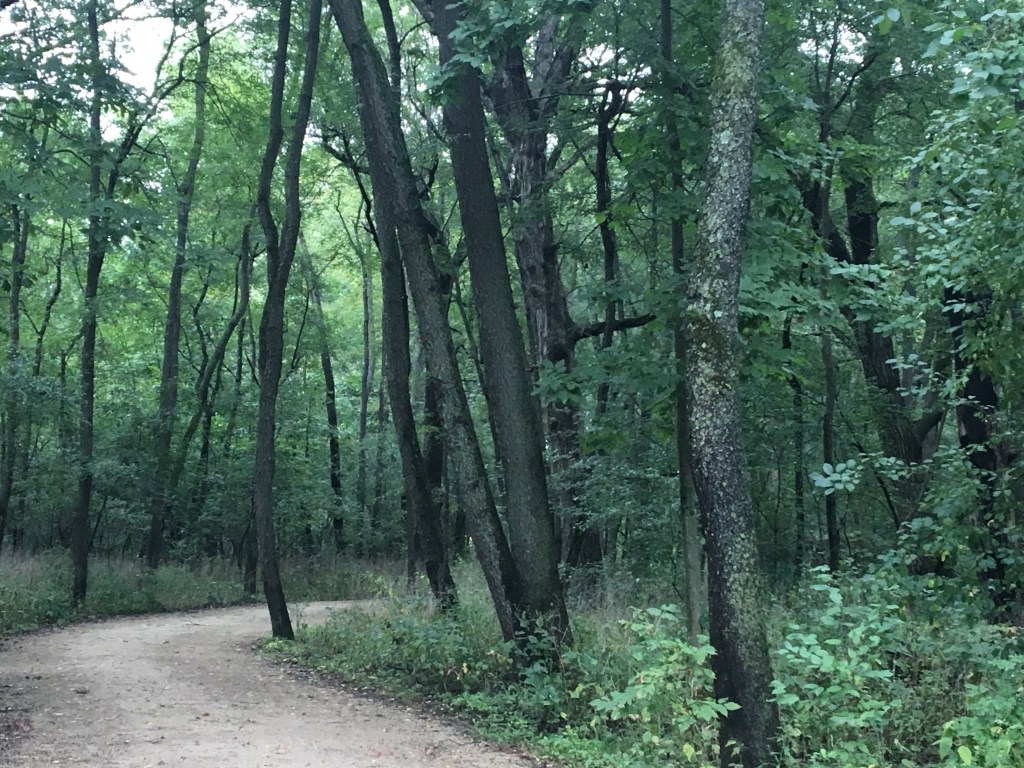
Late the other night, 20 and Kerri spent an hour on the phone. 20 is among the those at highest risk and has self-quarantined. There is a park close to his house and, once a day, when it is likely that few other people will be out, he walks the paths in the park. He takes amazing photographs and each day sends us his latest pictures. On the phone, he introduced Kerri to the app he uses to tweak his gorgeous photos. “This opens a whole world of possibilities!” she exclaimed.

Have you noticed the hysterical songs, art, games, mock-challenges (the is-it-a chihuahua-or-a-blueberry-muffin? challenge is my current favorite). Creativity flourishes within constraints. It is a form of paradox-magic that I’ve always appreciated. A good constraint has the power to yank people out of their daily problem solving morass and turn them around into the creative.

Robert Fritz has the best definition for this magic: problem solving is trying to eliminate what you don’t want. Creating is trying to bring into being what you do want. It is a matter of direction (wink, wink: the direction of intention). At first glance these challenges and games might seem frivolous but a deeper look always reveals something more profound. We are opening our eyes to what is right in front of us. We are sharing, trying to help each other through a difficult time. Our natural capacity for play and whimsy rises to the top. Possibilities rise to the top. Instead of asking “why?” we begin asking “why not?” We create.

Idealistic blather or pattern? Problem solving has a way of creating more problems – it is a myopic. Turn around and consider the world you want to create. Walk at that. You’ll find that your eyes open, your thoughts expand. Playing-to-play will be valued and necessary. You’ll note, with gratitude, that you are not in this creative ride alone.


read Kerri’s blog post about CIRCLES


megaphones website box copy

Step Toward The Center [on Merely A Thought Monday]

chaos copy

We had this quote in the melange line up long before there was a pandemic. Now, it is impossible to look at this phrase without pressing it through the lens of COVID19. What might we have written in a less chaotic context?

One of the best lessons I was taught, is that we cannot control our circumstance but we can control who we are within our circumstance. The hurricane will come. The pandemic. It is possible in the midst of the storm to panic. To hoard. To blame. To resent. It is also possible to stand in a center, to share, to support, to reach. You are not your circumstance.

Sitting in his study that smelled of instant coffee, book dust and cigarettes, Quinn and I used to talk endlessly about chaos theory. Within the seeming chaos of a dynamic complex system there exists pattern, repetition, self-organization. Pattern, repetition, organization – these are words of order, not of disorder. Chaos. Order. We only know order relative to chaos. We only know chaos relative to order.

Within the Hermetic laws (and Newtonian physics, equal and opposite forces) there is the law of polarity. Everything contains its opposite. Or, said another way, what might appear to be opposite, is, in fact, two ends (poles) of the same thing. Order. Chaos. We cannot know light without the contrast of darkness. We live on a continuum. What we experience is simply a matter of degree on the continuum. There is always a bit of chaos in my otherwise orderly day. In times of chaos, we become very clear about what matters and what does not.

Out of chaos we self-organize. In the throes of social distance we are finding ways to reach and connect. We are prioritizing connection. I’ve spoken with or texted more people in the last seven days than I have in the last seven months.

We see it every year. The hurricane blows away a city and the greater community always shows up to dig in and help out. And rebuild. In chaos we organize to make sure everyone makes it to the other side of the storm. Initially, the coming chaos reveals the ugliest aspects of our nature. We hoard. We price gouge. We run to the far end of the continuum and hang onto the poles, mine/yours, us/them. But, sit in it long enough, and chaos always reveals the deeper truths. Interconnectedness is another way of understanding a continuum. We turn our focus on relationship. The space between. Your need is my need. We are not separate.

Order arises when we step toward the shared center and away from the chaotic extremes. We are not our circumstance so the question remains: who are we within our circumstance?


read Kerri’s blog post about CHAOS & BOUNDARIES


squarecat website box copy


*this photo of BabyCat is not doctored. I have no explanation for the ordered shape that our very large cat takes in the moments prior to creating chaos.


Be Us [on KS Friday]

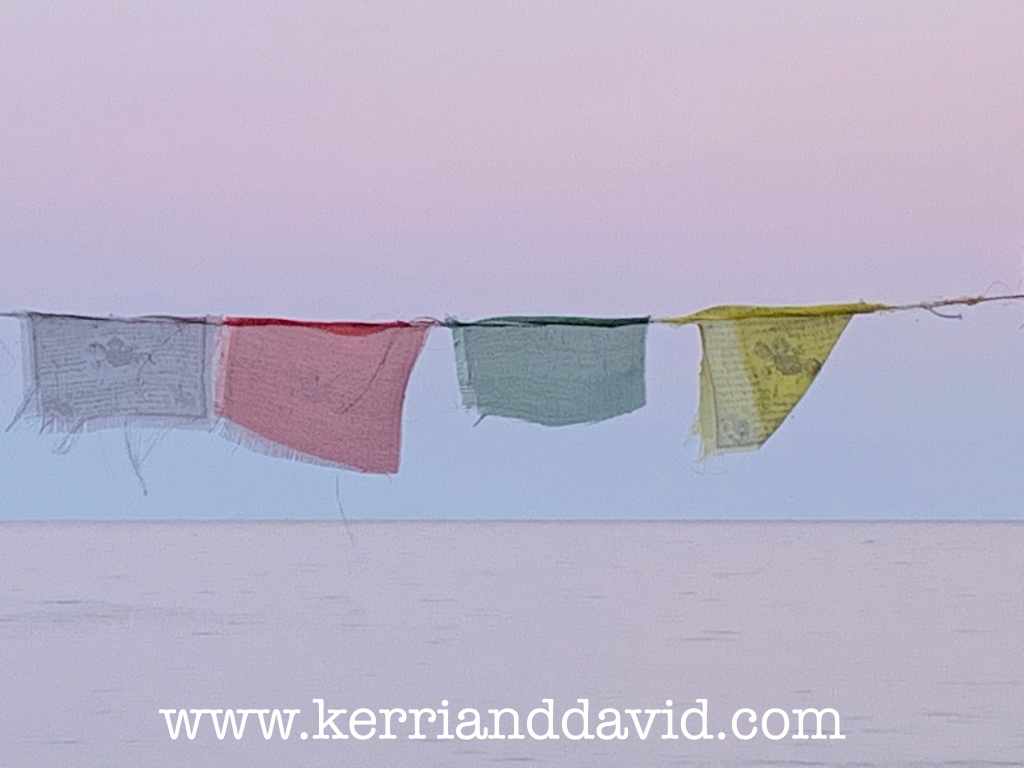
always with us prayerflags copy

It is times like these that the grand illusion of every man/woman for themselves drops away. It doesn’t take long in a crisis to reveal how interconnected and interdependent we really are. As New York Governor, Andrew Cuomo, said this morning, what I do impacts you and what you do impacts me. There is, in essence, no such thing as you and me.

This is true in good times, too. It is true in all times. It is simply true. What I do affects you. What you do affects me. What I do is often a ripple of what you’ve done and vice versa. We are not nearly as separate nor independent as we like to pretend.

The delusion plays itself out. The run on TP. We’ve all seen the lines at the gun store. Sooner or later it will occur – as it always does – that the best form of self-protection is participation in community. Participation is protection.

Ironically, it is the sturdy fabric of the interconnection – in good times – that allows us to delude ourselves into thinking that – in bad times –  we can do it all by ourselves. Stop for a moment, look at the food on your plate and ask yourself how many people were necessary for you to enjoy your meal. The rings of interdependence will run farther than your capacity to imagine. That is always the case.

An article shot crossed my email this morning. It was from an artist sharing her realization in the midst of this pandemic that she does not create art for audiences, she creates with audiences. Like her, my paintings are not complete until people engage with them. People are not complete in the absence of art. Listening to Kerri play is more life-giving than any of the news broadcasts we’ve been glued to. There are levels to meaning making and the heart level rarely requires data but always requires other people and their gifts.

This morning we are hearing of the real difficulty of social distancing: mental health is stressed in isolation. We do not do well in quarantine. We, do, however, get creative. Jen prompted us to text images of all things green so we are looking around the house for green things. Emails and phone calls are on the rise. Mike reminded me last night that Shakespeare wrote King Lear while in quarantine for the plague. He meant it as a challenge, “Any takers?” he winked.

Rob wrote, “In times like these we NEED art.” Yes. We need art because we need to create with people. To experience with people. To story our experiences with people. To grieve with other people. To laugh with other people. With. Always. Us.


ALWAYS WITH US from the album AS IT IS available in iTunes & CDBaby


read Kerri’s blog post about ALWAYS WITH US


hands website box copy


always with us/as it is ©️ 2004 kerri sherwood

Draw [on DR Thursday]

Peri Winkle Square copy

Sue’s request was clear: write a story that is hopeful but does not pretend that everything will be easy or rosy in the end.

In 2005, while Sue Eskridge was teaching a course on children’s literature at The University of the Pacific, Hurricane Katrina devastated the Gulf Coast of America. Sue had an idea. She refocused her class to help children who were displaced or had lost their parents in the storm. Her class approached several artists and children’s book authors and asked them to write and illustrate a story, to make single-copy-books. The books would be bundled with other supplies and through service organizations would go to children that needed them. “We want to give them hope but not false hope,” she said when she asked if I would “quick do a book.”

What do you do when the forest fire comes? The hurricane? The pandemic? Run. Hide. But then what? People pull together. People pull apart. The disaster invokes the best in us. The disaster invokes the worst in us. Ultimately, we realize that we are in it together and our togetherness can be defined through selflessness or through selfishness.

What defines us? I lived in Los Angeles during the riots and martial law. People turned on each other. I also saw the same community, just two years later during the Northridge earthquake, pull together. 9/11. AIDS. Our rhetoric does not define us. Our actions do.

I did as Sue asked. I quick did a book, Peri Winkle Rabbit Was Lost. I only had a few days and managed to write the story and smack out 16 illustrations. A story of personal gifts brought to communal need in the aftermath of a fire. When I bundled the original and sent it off to Sue I promised myself that I would someday go back into the story and draw all the pictures, fill in the 10 or so illustrations that I did not have time to realize.

This week, we retreated into our home, this pandemic hot and frightening and eerily invisible, except for the growing and incomprehensible numbers on the screen. The unreal reality. The hurricane that cannot yet be grasped.  I asked myself what might be a worthwhile project to do while isolating?  And then I remembered my promise to Peri Winkle Rabbit.

Draw. And perhaps a new story? One that deals with the hot fire now raging through our divided world? Two narratives. One pandemic. What are the odds that this crisis will burn off our national division and clear our eyes so that we are capable of stepping into a single story. I will ask Peri Winkle Rabbit.


read Kerri’s blog post on PERI WINKLE RABBIT


their palettes website box copy


See The Pattern [on Not So Flawed Wednesday]

napkin copy

Virgil: From what you wrote, I see that you think you have a problem. The first recognition is simple: you do not have a problem. You have a pattern. ~ David Robinson, The Seer

I’ve stared at this napkin for a long time wondering what to write. It’s not that I have nothing to say, it’s that I have too much to say. I’ve killed more than one dinner party going on and on and on about patterns.

In 2014 I published a book, The Seer. The first three chapters are about patterns of seeing, patterns of thinking. Patterns of self-story. So, rather than rewrite something that I have already written, here’s a small slice, an email conversation, from the first chapter of The Seer:

 ***

Me: I realized that I think in patterns. I think the same stuff over and over. This is a puzzle: the act of looking for patterns opened my eyes. So, patterns reveal. And yet, later, when I became aware of the patterns of my thinking, I recognized that those patterns were like ruts or grooves. It’s as if I am playing the same song over and over again so no other music can come in. My thinking pattern, my rut, prevents me from seeing. So patterns also obscure. Make sense?

Virgil: Yes. It must seem like a paradox to you. Think of the song or rut as a story that you tell yourself. Your thoughts, literally, are a story that you tell yourself about yourself and the world; the more you tell this story the deeper the rut you create. So, a good question to ask is: what is the story that you want to tell? Are you creating the pattern that you desire to create? We will return to this many times. This is important: the story is not happening to you; you are telling it. The story can only control you if you are not aware that you are telling it.

 Me: Can you say more?

 Virgil: We literally ‘story’ ourselves. We are hard-wired for story. What we think is a narrative; this pattern (song) that rolls through your mind everyday is a story that you tell. You tell it. It defines what you see and what you do not see. What you think is literally what you see.

 There was a pause. That was a lot for me to take in. When I didn’t respond, he continued:

Virgil: So, what you think is nothing more than a story; it’s an interpretation. You move through your day seeing what you think – instead of what is there. You are not seeing the world, you are seeing your interpretation of the world. You are seeing from your rut and your rut is a pattern. So, your patterns of thinking, your rut, can obscure what you see. Make sense?

 Me: Yes. I guess 😉 So, when I started looking for patterns outside of me, I…stopped seeing from within my rut? I stopped assuming that I knew what I was seeing. So, I was capable of discovering new patterns and connections?

 Virgil: Yes, something like that. You said that when you looked for patterns you slowed down and felt that you could see. I would say it this way: you stopped moving through your world and for a brief period you were actually in your world. For a brief period you were no longer lost in thought but present with what was right in front of you. You suspended what you think you know so you started to see again. You were curious. To be curious is synonymous with “not knowing.”

 Me: Okay….

 Virgil: Humor me and entertain this notion: your thought, your story, is not passive. It is a creative act. What you think IS what you see. Most of the time people create what they see based on their rut. They see what they expect to see. To practice curiosity is to suspend the assumption of knowing. To practice curiosity requires us to step out of the rut. Stop assuming that you know and you gain the capacity to see beyond what you think.

 A glimmer of light pierced the dark recesses of my mind. Suddenly I was back in front of the Sphinx and I could see the answer to the riddle. It was so clear! I typed:

Me: Wait! Is this why I need to distinguish between problems and patterns? If I tell myself that I have a problem to solve, I am telling a certain kind of story. If I tell myself that I have a pattern to change, I am telling an entirely different kind of story. Is that true?

Virgil: Yes. It sounds too simple, doesn’t it? A problem is a story. It is a lens that filters your sight. A problem does not exist unless you insist that it is there. You say that you are an entrepreneur. How many great products and services were the results of an accident in the lab? How many innovations were missed because the ‘solution’ did not fit the ‘problem’ as identified? A problem is a rut that separates you from possibilities. On the other hand, a pattern connects you to possibilities. See the pattern not the problem.


[go here for a fun Escher-activity about pattern to use during this time of social distancing]


read Kerri’s blog post about THE NAPKIN


tpacwebsitebox copy


the seer ©️ 2014 david robinson

Visit [on Two Artists Tuesday]

birch in winter copy

All this week I’ve been lost in memories of childhood. Nothing indoors, my remembering is outside. Running through fields. Aspen trees. The sound of snow. The smells of coming spring in Colorado. The intense blue sky. Standing against a brick wall, face to the sun to drink in the warmth on cold day. These memories are more sensual than story. It’s as if, this week, I need to remember the feeling of being a child.

I’ve always loved to draw and paint. I’d spend hours drawing eyes and faces. I drew portraits of Colonel Sanders from the empty chicken bucket. I spent hours inside of National Geographic magazine drawing the figures I found there. I drew again and again and again a cabin in the woods that lived only in my imagination. I knew the place the first time I scribbled it on paper. There was a period of time in my mid-life that I thought I might someday happen across the cabin-of-my-imagination.  I forgot the feeling of being happily lost inside the world of my imagination. This week, I remember.

Up north, walking on a frozen lake to see the eagle’s nest, we passed this stand of birch trees. Andy Goldsworthy could not have placed them better. White and fragile against the forest, they glowed in the afternoon sun. They shocked me into presence. I was surrounded with people I love, the sun was warm on my face, the creaking of the ice, the smell of pine, Kerri’s delight. “Remember this feeling,” I told myself. Remember this moment. Someday, after you’ve long forgotten this day, you will reach back and be thankful to have this place in memory, this feeling, to visit again.


read Kerri’s blog post about BIRCH TREES


footprints in sunlit snow website box copy

Touch The Chair [on Merely A Thought Monday]

healing copy

I am reading books slowly these days. Meditating on words. Sometimes it takes me months to read what I used to blow through in a few days. I am often pleasantly surprised and taken aback by how the words I read on this morning – words written months or years ago – line up exactly with the events of my day. All the time I catch myself thinking, “How did they know I needed to hear that today?”

“There was an altar upon which we could place a photo of someone who had died. Kim chose to put a picture of his “old” self; I found one of him rowing his peapod looking so happy, so strong. Beautiful. We both grieve the loss of that Kim while getting to know and love this new one.” ~ Judy Friesem, Summoned By A Stroke.

Grieve the loss. This is the fourth time in my life that world circumstance/events have drawn a hard line between ‘what was’ and ‘who-knows-what-will-become.’ What was normal and true last week will never again be the same. Social distancing. Pandemic. Disruption is scary and confusing.

I’ve many times heard the story of immigrants, preparing to leave their homes forever for some distant and unknown shore, just before leaving, circle the rooms, touching walls, running their fingers along the arm of a well-loved chair. One last look. This is who I was. Who will I become? It is necessary to mourn what is known before making space for the unknown.

In the midst of spinning change, hanging on too long to the way things-ought-to-be or used-to-be is destructive. More than once I’ve stood with a group in full denial of their new circumstance insisting that “This is the way we’ve always done it!”  Perhaps. What is comfortable today was at one time new and uncomfortable. Someday, what is now new and uncomfortable will be a well worn path. The first step: one last look. This is who we were.

“No person is a finished thing, regardless of how frozen or paralysed their self image might be. Each one of us is in a state of perennial formation. Carried within the flow of time, you are coming to be who you are in every new emergent moment.” ~John O’Donohue, Beauty

Imagination lives in the midst of “It happened to me.” One of our greatest super-powers is the capacity to imagine ourselves different, more expansive. It is what we call dreaming. We “see” ourselves” writing the book or scaling the mountain or being a better parent or working at the soup kitchen or losing the weight or…becoming the more perfect union.

Imagination requires leaving. Leaving requires imagination.

“Fate has a way of handing us what we need in order to become whole…” ~ Judy Friesem, Summoned By A Stroke


read Kerri’s blog post about HEALING


moon website box copy


Pull The Curtain [on KS Friday]

and the saga continues copy

I once heard an author speak of the impossibility of writing a farce about The United States of America. He said that before the last chapter was written, the farce will have actually occurred. The bar of absurdity drops quickly from sea to shining sea.

Today we are watching the collapse of the American mythology “The best health care in the world.” In the face of a public health emergency we are seeing with greater clarity how fractured and incapable our system is of delivering even the most basic of services. That statement, sadly, is a daily fact in the USA for many of its citizens (more on that in a moment) but the pandemic has pulled the curtain on the wizard. Oz is not what it seems.

In the past 24 hours I’ve heard it reported multiple times: the difference between our inept response – beyond the absence of coherent leadership – and other nations, is the system itself. In a single payer system no one is confused about what to do or where to go and no one is reticent to seek medical care because of the costs. The necessary tests are available because profit is not the primary motive; public health is.

Our system is a shattered mess of profiteering and, I believe, intentional obfuscation.  Even the people within the system can’t get a straight answer so they can’t provide a lucid response to even the most basic of questions. Yesterday, our question was, “How much does it cost?”  A mere 24 hours ago, Kerri had her first occupational therapy session for her broken wrists. We called our insurance provider to check to see if we were covered. The OT facility also called and we both received two opposing stories. A third call was placed and a third answer was given. So, a fourth call to the insurance provider was made and, yes, a fourth story, a competing answer was proffered.

Four calls. Four stories. The policy itself is ambiguous. We asked the intake receptionist how much the therapy would cost if we decided to pay out of pocket. Her answer, “It depends.” Can we pay the bill we will most certainly receive or should we forgo the therapy altogether? [note: my wife makes her living playing the piano so this is no small or insignificant question]. Kerri started to cry. Standing within the pages of this farce, I started to laugh. No one (outside of the USA) would believe it if I wrote it.

Within 24 hours, our personal farce went nationwide. Anthony Fauci, the director of the NIAID, said it best of our national travesty-of-a-system “It’s failing. Let’s admit it.”

The lucrative business of health care has blinded us for decades to the real needs of public health. We are, by any measure, an increasingly unhealthy society (check obesity rates, infant mortality, teen suicides, etc. if you doubt me). It seems to me that the point of health care should be the health of the public and not profit margins. The conversations coming from the White House are about whether or not our tests and treatments for a pandemic will be covered or not. It’s penny wise and pound foolish. It’s also obscene.

Kerri and I pay nearly half of our combined incomes for “healthcare” that is null and void if we cross the state line. And, now that we are attempting to use the policy that is pushing us into poverty, we are flush with competing stories about the costs but remain empty of even the most basic answer to the simplest of questions.

In the meantime, Senegal is doing a better job testing and protecting its citizens. The farce: our stubborn insistence that this sham of a system, the most expensive yet least effective, is the best in the world.


read Kerri’s blog post about THE SAGA


ks website header copy


windyHHwebsite box copy


Step Into The Ripple [on DR Thursday]

sometimesfaith WITH EYES jpeg copy 2

I’ve never understood faith as a religious term. Look up the word in the dictionary and you’ll come across trust, belief, and conviction. Rather than a lofty word reserved for worship day, it has always struck me as an everyday something – that becomes extraordinary when you realize how ever-present-and-ordinary it actually is. Stepping blindly. Blindly stepping. Each and everyday.

We surround ourselves with calendars and lists and routines and rituals and patterns – all necessary mechanisms to plan our days but they also serve to protect us from the truth of our walk on this earth: there is not a moment, an hour, or day that is actually known before it is lived. Every moment of every day is a step into the unknown.

The real practice of faith is not about an abstraction.  It is a recognition that walking in faith is an essential part of the human condition. The real practice is in realizing it. Being right where you are, open to the reality and empty of the illusion of certainty that you know what is coming. You do not. The true spiritual practice is to empty yourself of the need for the illusion of control.

Fully inhabiting the moment. Standing at the crossroad of past and future without the map of ‘I-know-what’s-going-to-happen’ dulling the experience.

Spiritual practices are not meant to be other worldly. They are, at their best, concrete relationships found at the intersection of past and future, in that tiny slice of infinity called “the moment.” It is a miracle of unknowns and surprises.

The practice of faith is the practice of putting down what you think you know – dropping the notion that you know what will happen- and stepping fully and with intention into the rippling unknown.


read Kerri’s blog post about FAITH


frozen lake website box copy

chasing bubbles ©️ 2019 david robinson

chicken marsala ©️ 2016 david robinson & kerri sherwood

Give And Receive [on Not So Flawed Wednesday]

sleeping dogga copy

DogDog has two distinctly different personalities. In the sunny hours he is high strung, high energy, high joy. He rarely stops moving, circling the yard, circling the rooms of the house, moving his toys from here to there and back again. When it is time to take out the garbage, he delights in clearing the yard of marauding squirrels. I am always well protected when I deliver the trash to the can.

At night, our energizer-bunny-of-a-dog collapses. He gently herds us into the living room and, if we sit, even for a moment, he believes that his people are securely in the pen and he is off duty for the day. He punches out,  settles on the cool floor and is asleep in a nanosecond. In that moment he is transformed into ‘sweet dog.’

Rather than serving as the protector, sweet dog is a sponge for affection. If we move, stand, cross the room, cough,… he rolls onto his back, availing himself for a belly-belly. Sweet dog does not bark. Sweet dog knows our nighttime travel patterns and is somehow always positioned in our path. Sweet dog is a no-apology opportunist.

High joy. Sweet. Giver. Receiver. Both are qualities to be admired.

At night, before he retires to his crate, he waits for us on the foot of our bed. We spend several minutes loving on him. He gives himself over completely to our affection. It is among my favorite rituals of the day to heap love on DogDog before putting him in his crate.

I read once that the phrase “unconditional love” was redundant. The quality that makes love love is the absence of condition. If what we call “love” comes with qualifiers or expectations then it is not love at all. It is something else.

High joy. Sweet. Love (unconditional). I am always, everyday, in awe of this furry teacher and mostly grateful that he is endlessly patient with the glacial pace of his student.


read Kerri’s blog post about DOGDOG SLEEPING


dogga front yard website box copy