Celebrate Renewal [on KS Friday]

“When bankers get together for dinner, they discuss Art. When artists get together for dinner, they discuss money.” ~ Oscar Wilde

Rebecca reminded me of David Bayles and Ted Orland’s remarkable book, Art & Fear. I flipped it open to this quote and laughed heartily. We discuss what we desire but do not yet possess.

On the opposite page I read this tasty bit: “Once you have found the work that you are meant to do, the particulars of any single piece don’t matter all that much.”

Years ago, watching me draw in an Italian Street Painting festival in San Luis Obispo, Roger commented that making art was what I was meant to do.

The other day, Kerri asked me if I wanted to hear a carol. She stood at her piano and played. There was no doubt – it was visible and electric – the carol she played was one of her compositions. I watched a brilliant artist do what she is meant to do.

Art is born of a service motive. Banking is born of a profit motive. It’s hard to explain a life of artistry in a world that exclusively values the profit motive. It seems foolish until you consider this: bankers, in retirement, play golf. Artists, in retirement, make art. There is no greater gift in this very short life than having an inner imperative. It tips contemporary valuation on its head.

Rebecca sent this quote from Art & Fear. She’d just asked me if I was still painting and I stuttered. “What separates artists from ex-artists is that those who challenge their fears, continue; those who don’t, quit. Each step in the art-making process puts that issue to the test.” I am currently challenging my fear.

Last night the Up-North Gang gathered for dinner at Jay and Charlie’s house. Jay is a remarkable artist. Everywhere I looked in their house I saw her artistry. The meal she made was a bold step into the unknown and it was delicious. She is doing what she is meant to do and it spills out in every room.

At dinner, we talked about our children coming home for the holiday. I was the only person at the table who will never know the full depth of the desire of parenthood. I am a step, not a birth father. The joy of their children glowed in the faces seated at the table. All else seemed irrelevant.

There is a place beyond service and profit motives, a lovely dinner conversation where artists and bankers come together at one table. Family. And isn’t that – in the end – what we are all meant to do. To sit side-by-side and celebrate our renewal?
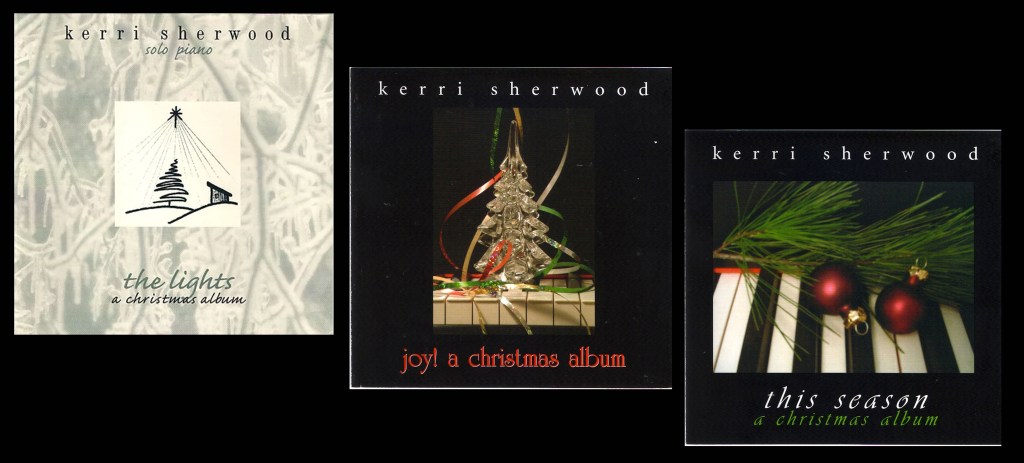
Kerri’s albums are available on iTunes and streaming on Pandora

read Kerri’s blogpost about THE HOLIDAY

i wonder as i wander/the lights © 1996 kerri sherwood

Gather And Share [on DR Thursday]

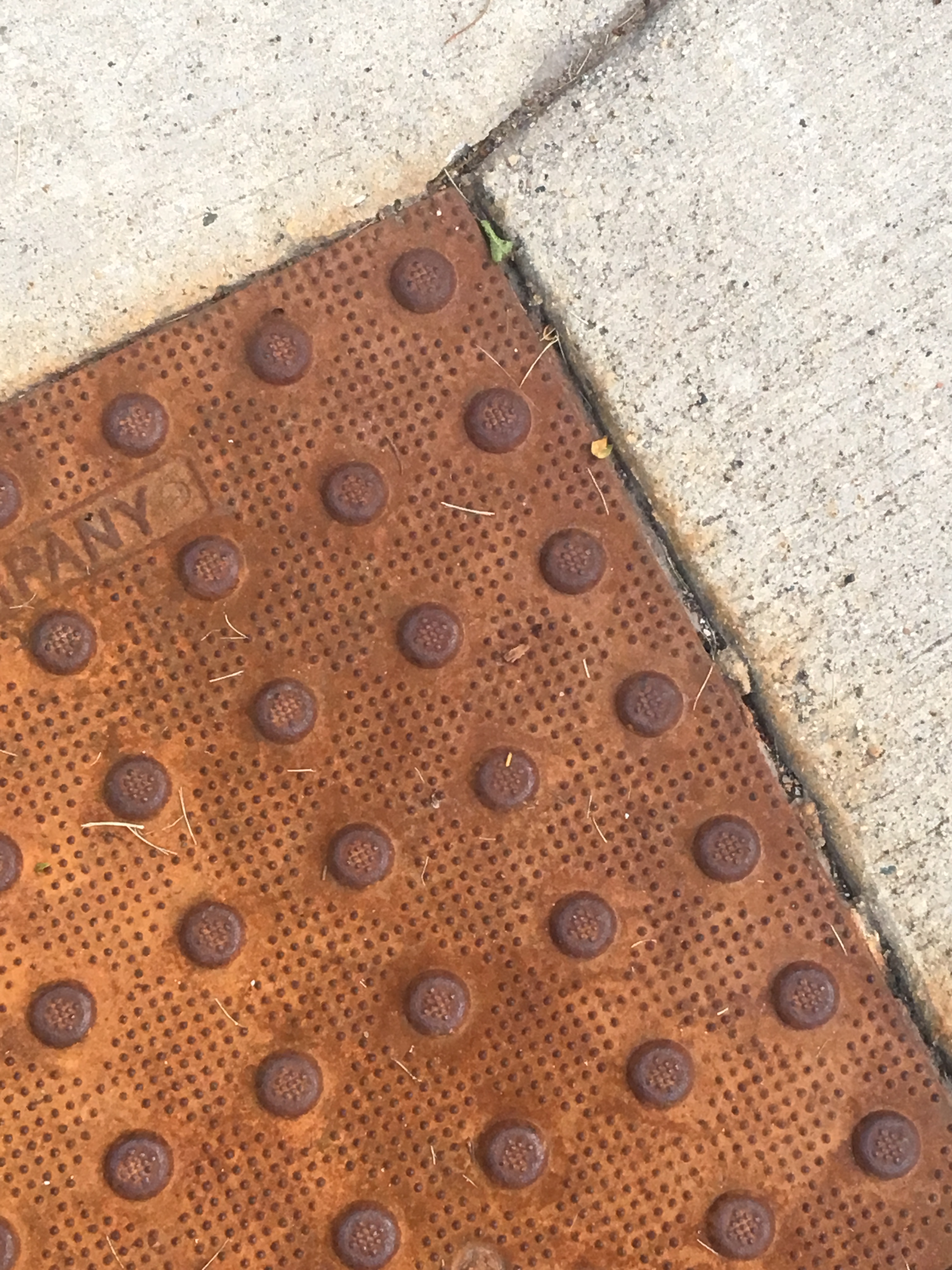
Back in my Don Quixote days, with the onset of a camera in every phone, one of my favorite exercises to give to groups was to send them out in search of textures. Gather texture. Gather pattern. It was quite literally eye-opening. It was also, quite literally, presence-enabling and life-invigorating.

There is enormous power in the simple phrase, “Stop and look.” See.

In “gather” there is no judgment. Consequently, the photos that came back, rich in texture and collision of texture, patterns revealing themselves everywhere, were gorgeous. Dynamic. But, mostly, they were revealing. Otherwise serious adults, who believed that there was nothing new, that life was less-than-exceptional, came back from their texture-gather with open eyes. Some giggled. These people, claiming that they did not possess an ounce of artistry, would show their photos to the group and say, “I pulled that in so we could see it better.” Or, “Don’t you just love how those two things come together?” Or, my favorite, “You didn’t give us enough time! I couldn’t gather it all!”

Ah. Not enough time to see it all. Not enough time to take it in. Now, isn’t that a statement of the-love-of-life? Isn’t that the epicenter of an artist’s life. Isn’t that a more interesting path than, “Same-old-same-old”?

Dots. Diamonds of dots. Lines. Pattern. Texture. Too much to see. Too much to experience. And the best, most simple way to step into vibrancy is to stop and look.

But, there is one more step, the part that made the exercise powerful. The essential part was and is almost always overlooked. Stopping and looking and gathering is great but only has meaning – only becomes artistry – when it is shared. Without fear or judgment. Stop. Look. Gather. Come back to the center and share what you see.

read Kerri’s blog post about TEXTURE

yoga series: meditation ©️ 2012 david robinson

Touch The Invisible [on DR Thursday]

KDOT sketch copy

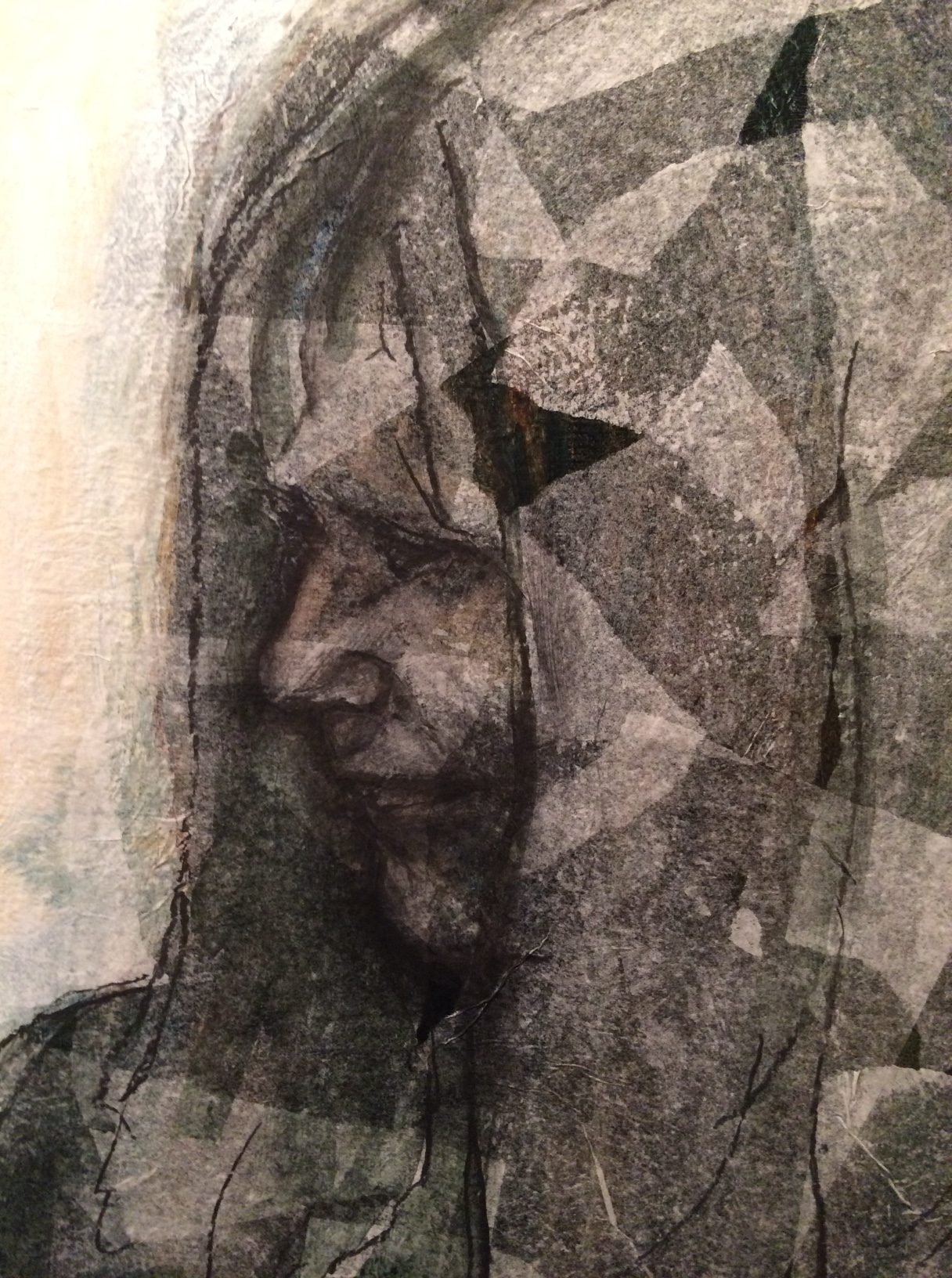
a close up of One Chord Ahead (a work in progress)

I started my artist life by drawing people. I was never really interested in landscapes or still life drawing. I was interested in the eyes. As a boy I copied photographs from National Geographic magazine and repeatedly sketched The Colonel from the side of the bucket of chicken.

I understood early on that the surface image was not what I was after, I was on the hunt for what was “beneath.” My dedication to the invisible made me a not-very-good portrait painter though I managed to do more than my share. They were technical exercises and for a while served a purpose.

It’s been over a century since the development of the photograph relieved artists from the necessity of capturing the visible. Optics to Impressionism to Expressionism to all the Neo-phases to pulling it into Cubes and Surrealism and Abstract Expressionism to just plain abstraction and conceptual-what-the-heck-does-it-mean-ism?

It’s an odd admission for a visual artist to declare a dedication to the invisible. Ellsworth Kelly caught the invisible in his Austin. John Singer Sargent captured it in his Lady Agnew. You know when an artist reaches the invisible when the painting/architecture stops you in your tracks. They make you catch your breath. More than once in my life I’ve stood in front of paintings and cried. The artist reached through the veil and touched the “beneath.” Picasso regularly kills me. I’ve spent hours staring at Richard Diebenkorn’s Ocean Park series.

At this late date I know that I will not shake the halls of history with my paintings, I am innovating nothing and now working for no other reason than I have to. I need to. There is no other reason. There is no better reason.

A few weeks ago Kerri was leading a rehearsal through Zoom. I caught my breath watching her and thought it might be time to attempt another portrait. Fun. Nothing formal.

Sometimes the circle comes around to shake a complacency or reconnect to the root. I feel as if I’m waking up some long-still muscle memory. I had to do a few drafts to remember how not-to-control. I’m learning in this latest iteration of One Chord Ahead that I’m more and more interested in reducing all things to a simplicity, to use the fewest lines to say the most. It’s the imperative of the pursuit of what’s beneath. A lesson, I recognize, that I learn again and again and again…


read Kerri’s blog post about ONE CHORD AHEAD

Kerri remains in Facebook lock up. When you click over to read her post please consider subscribing to her blog.


their palettes website box copy


columbus

columbus (my dad), circa 1995 or 1996

www.davidrobinsoncreative.com

one chord ahead (work in progress) ©️ 2020 david robinson

Do Like Duchamp [on Two Artists Tuesday]

doorknobs copy

Roger used to say that Picasso’s paintings determine the shape of our cars. He meant that “seeing” is not passive. Just as audiences in a play wiggle in their seats at seven minutes into the play, the usual time for a commercial break on television, our visual sensibility is also patterned and mostly culturally uniform. Beauty is in the eye of the beholder and that eye has been conditioned.

One of the great moments of visual conditioning came in 1917 when Marcel Duchamp entered his “readymade” sculpture, FOUNTAIN, in an art exhibit. FOUNTAIN is a urinal. He signed his readymade scultpture R. Mutt. It is possible to spend many days of your life reading about FOUNTAIN, the symbolic meaning of a toilet, the then-new art term “readymade” and the challenges readymade-as-art posed to the art world, how Duchamp came to enter a urinal in an art exhibit. In that moment of time, a whole new genre was born: conceptual art. The idea behind the work is more important than the finished piece.

You can draw a straight line from Duchamp’s toilet to the recent banana duct taped to the wall by Maurizzio Cattelan. And, you might ask, just what was the idea behind the banana?

You can draw a straight line from Duchamp’s FOUNTAIN to Kerri’s out-door-voice-exclamations in a gallery, “ARE YOU KIDDING ME?” The idea behind the conceptual work generally needs a curator’s explanation. “I WANT TO EXPERIENCE IT, NOT HAVE IT EXPLAINED!” she gestures wildly, sending other patrons fleeing. In that moment, my wife becomes exquisite performance art.

You can draw a straight line from Duchamp’s urinal to my inability to walk through an antique store and not see elegant design worthy of Louise Nevelson. Racks of door knobs. Stacks of suitcases. A wall of bric-a-brac, the wall composition more meaningful and beautiful than any of the individual pieces displayed.

A statement from Captain Obvious: artists live in a time and the art they produce is an expression of that time. Duchamp put his toilet on a pedestal in 1917, the year the world was nearing the end of the first war to end all wars. It was a horror story. The manufacture of stuff was hitting its stride.  The Royal Academy had a lock on determining what was considered art and what was not. The rules of polite society felt dangerous and suppressive. Duchamp, like all change agents, pushed against the norm.

There is composition and design in the everyday. There is human-created beauty all around us. We learn in school that form follows function and form is design. We learn in school that one of the purposes of art is to create beauty. Another purpose is to shock people out of complacency, to see what is in front of them and not what they think is there. Beauty usually lives beyond what we think.

We live in very confusing times. We are asking fundamental questions about truth, about social norms and what is acceptable. We are asking questions about who we are and what we believe. You can draw a straight line from Duchamp’s FOUNTAIN to our current confusion. Is it art? Is it not? If the idea is more important than the final expression then what happens when all that is left to see and touch is absent of the idea? What happens when the curator is gone and only the urinal remains? Sense breaks down.

What happens to  the eye and ear that is shocked open but refuses to see what is right in front of them and, instead, retreat behind the fortress of what they think?  What happens when form no longer follows function but things flip the other way around? What happens when form IS function? Propaganda, mostly. A naked emperor and plenty of people passionately swearing that they see clothes. Readymade thought.

We live in those times. Sense breaks down. We tape bananas to walls and issue a certificate of authenticity.


read Kerri’s much-less random blog post about DOOR KNOBS


frontdoorknob website box copy


Two Artists Tuesday

A thought for your Tuesday from studio melange

MASTER vintage type copy 2

The dividing line was approximately around the age of 40. It was a figure drawing session and those of us over the age of 40 came to the studio carrying pads of newsprint, drawing boards, pencils, pastels and vine charcoal. The artists under 40 came with a computer and stylus. It was a beautiful collision of the first order, both sides of the divide saying to the other, “I could never do that.” The younger artists referred to us seasoned (covered with charcoal dust) artists as ‘vintage.’

I am vintage. For me, making art is a physical activity, a full body dance. I need paint that splashes, brushes that drag across a surface, the smell and feel of the process. My canvases have always been large simply because I need to move. Art making, for me, is necessarily kinesthetic. It’s like splashing in puddles and playing in mud. The virtual equivalent is not visceral enough.

As vintage I will never be efficient or fast. I’ll never have the variance or range that digital process allows. That’s okay with me. I was born and oriented into the artist’s way looooong before digital wizardry. My parents provided me with a large wall and buckets of paint. That wall was a magic place, the portal to another dimension. Unlike the younger artists in the figure drawing class, I find a stylus and tablet physically limiting. The action is too small. What sets them free feels like a shackle to me. I love the dance, the mess, and the danger of not being able to insta-correct or click back to an earlier version.

To my digital descendants, my dust free successors, I AM the earlier version. We enter our magic place through different doors. And, that’s okay with me.

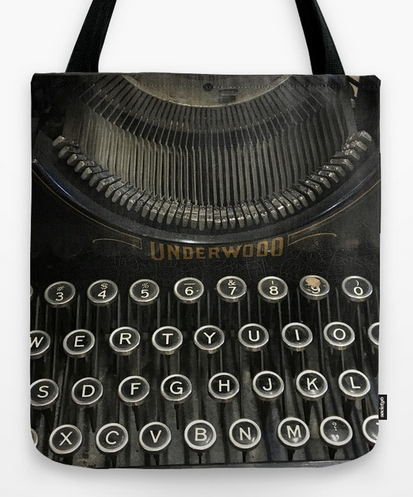
I AM A VINTAGE TYPE merchandise [leggings, totes, pillows, mugs, gift cards…]

society 6 info jpeg copy

vintage type FRAMED ART PRINT copy

Vintage tyoe LEGGINGS copy

vintage type FLOOR PILLOW copy

vintage type TOTE BAG copy

read Kerri’s thoughts on I AM A VINTAGE TYPE

melange button jpeg copy

kerrianddavid.com

i am a vintage type ©️ 2018 kerri sherwood & david robinson