See It. Feel It.

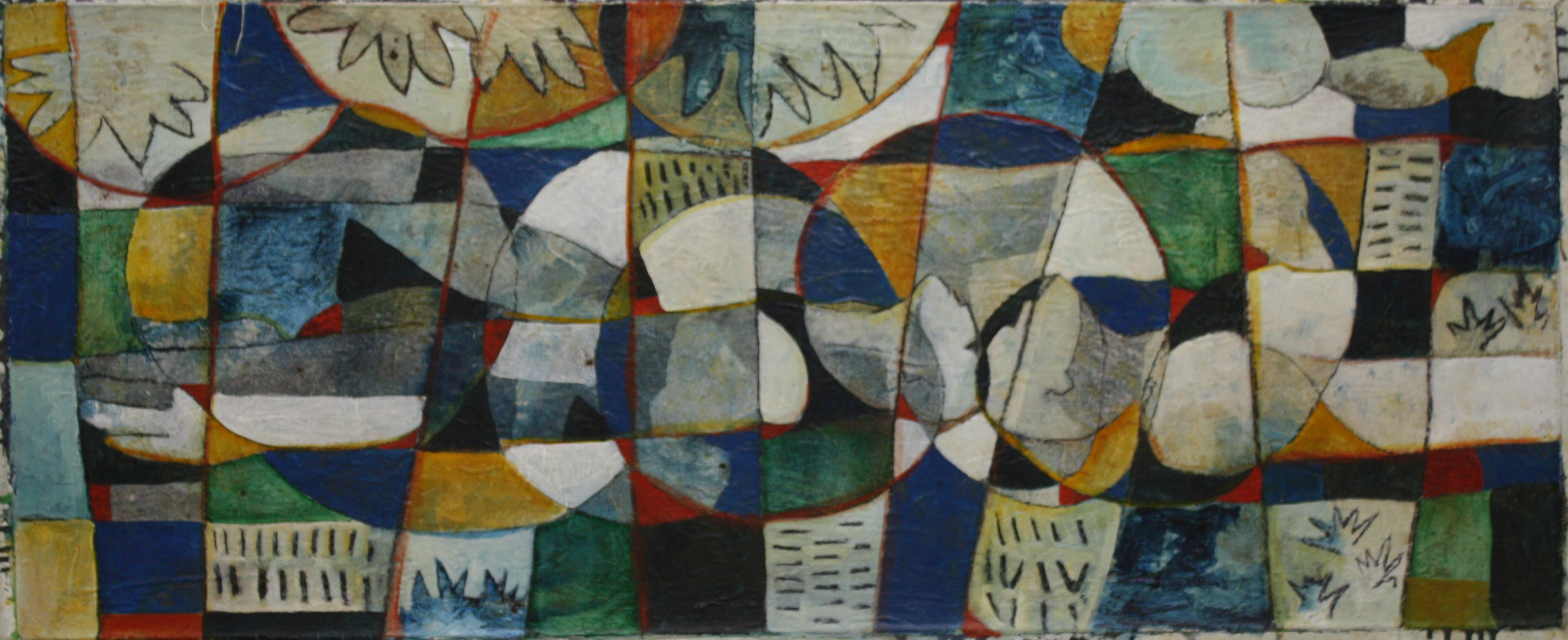
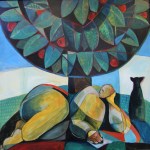
I call this painting "Sleepers"

I call this painting “Sleepers”

Tom spoke of small actions, the gift of peanut butter to a food kitchen for the poor. He asked, “Will it change the world?” and answered his own question, “I don’t know. In some small way, bringing a bit of hope to anther person, or providing food for a day, maybe it will.” Tom has been meditating on the many ways we enact love but perhaps do not see. He has been wondering if small acts of generosity serve as small acts love. Are not these small acts of generosity capable of changing the world.

For the past year, since moving from Seattle and leaving my work with entrepreneurs, I’ve been pondering this impulse toward change and the ubiquitous desire to change the world. I learned last year that, in business start-ups, the intention to change people is the great sign of folly. Changing people is impossible. If the central intention of the new business is to change people, don’t invest. It’s good rule of thumb.

People pray for a world without violence, a world free of disease and poverty. People read the paper and wonder what has become of the world. Someone recently said to me, “It’s overwhelming. What can I do?”

Tom’s meditation has brought him to this: it is not the doing that ultimately matters. It is quality of the being that matters. If your doing changes your being, you have changed the world. If some small act of generosity or compassion opens you, it changes the world. In the year prior to my move, I walked across the city of Seattle twice each day. I made it a game to count the small acts of kindness I saw each day during my crossing. There were always too many to count. People opening doors for others, making space in line, helping someone who dropped their packages, blocking traffic for an elderly person to cross the street. My walks were steeped in otherwise small invisible generosities.

The mistake we make when desiring change in the world is to think of change as a bottom line, change as an outcome or end result. Change as a forced march or dose of castor oil. Changing the world is not an arrival platform. It is within every act of kindness. It is every generous thought. It is fluid, on going, never ending.

One thing I learned from my walk with entrepreneurs is that every single start-up came about because someone saw a way to make life easier for others. What makes an idea good is how effectively it helps others. And so, in pursuing their idea, in every small action, they change themselves. They play in the field of possibilities. In changing themselves, they cannot help but change the world.

Will a donation of a jar of peanut butter to a food bank change the world? Perhaps. If it feels good. If it changes you. Small acts do not exist in isolation. To change the world you need only change yourself. People do not exist in isolation. The river flows. Each act impacts others in small ways and large.

title_pageGo here for my latest book, The Seer

Go here for fine art prints of my paintingsYoga.ForwardFold

Reach Out. Peer In.

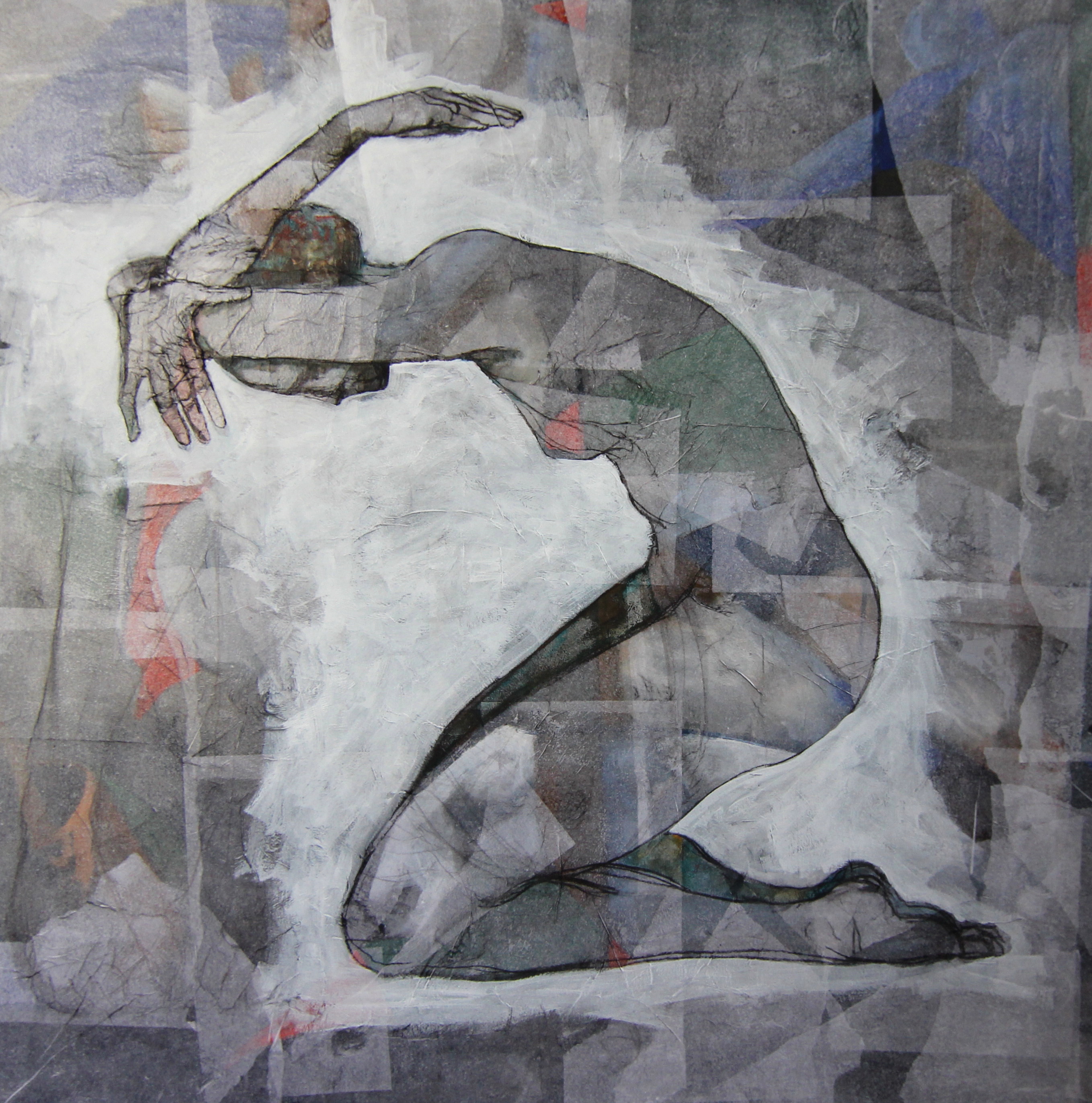
I've yet to title this painting but it seemed right for this post.

I’ve yet to title this painting but it seemed right for this post.

It’s a mid August morning with a hint of fall in the air. The breeze carries that “something” that is indescribable, more of a feeling than a chill or the changing of leaves. Never-the-less it is present. It is the signal and my body knows even as my mind debates. It is too soon for this – but even as I think the thought, I wonder what that means. Too soon based on what? Compared to what? This is my first summer in my new home. Last year I was an occasional visitor. I had glimpses into the cycle of the season so I have little with which to compare.

It has been a surprising summer all the way around. We’ve been traveling almost constantly since early June. The first few weeks of travel was planned, the rest was not. I’m not sure what the summer was like here because I was not present for it. The neighbors tell me it was a wet and cool summer. “Summer never came,” is a phrase I’ve heard more than once. After this summer of travel I will move into autumn with mere glimpses of the season.

I just had a call with Skip. He inspires me and makes me think things I would not ordinarily think. We’ve not talked for many months and our call was about catching up. Since I am writing about glimpses I was aware during our call that the best we can do is offer small windows into our lives. I said, “These past few years have been extraordinary in the changes and transformation I’ve experienced.” I was fundamentally incapable of articulating how profound my experiences have been. “It’s been like peeling off layers,” I said. A simile is the best I can do. Like or as. Glimpses. Events. Metaphor. No one can ever know the full scope of my walk just as I can never know the fullness of another person’s life.

During our call Skip told a story of walking through the woods with his wife when his cell phone rang. It was his daughter and infant granddaughter calling on Facetime. Skip’s granddaughter was taking her first steps. He and his wife peered into their phone and watched the miracle of first steps as their granddaughter, taking her first steps, looked into her mother’s phone at the excited faces of her grandma and grandpa. Glimpses into spaces.

We peer for a moment into a space. We stand in a space for just a moment. We try to share what we see. We try to share the fullness of our experience but can only approximate. Reaching out and peering in. Standing on the deck feeling that indescribable something that my body knows. My mind debates. This is life. Reaching out and peering in. What else?

title_pageGo here for my latest book, The Seer

Go here for fine art prints of my paintings.Yoga.ForwardFold


Revisit And Revise

Pidgeon Pier (Alan and David on the Sound) by David Robinson

I used this painting as the cover image for The Ground Truth. I call this painting Pigeon Pier.

With the success of my book, The Seer, I’ve been revisiting some previous manuscripts and ebooks. I have a lot of them, mostly unpublished and unseen. One of my favorites, and one that I am considering revising and releasing, is called the Ground Truth. The ground truth is a military term and denotes the difference between the truth as seen by the generals in the war room (an abstraction) and those actually doing the fighting on the ground (actuality). I gave the book the subtitle: Six Dynamic Relationships That Will Change Your Life. Marketing claims are usually brazen. The book is really about how to orient to personal truth.

As I’ve been revisiting the book, I’ve also been revisiting several of the concepts in it. One concept that has been much on my mind lately is the Hero and the Anti Hero. Here’s an excerpt from The Ground Truth defining the concept:

In a small notebook with a red cover I found a drawing. The image is horizontal on the page. On the far left I wrote the word “Hero” and scribbled a circle around it. On the far right I wrote, “Anti-Hero” and also scribbled a circle around it. The circle with the Hero and the other with the Anti-Hero are connected with a line. The drawing looks like a cartoon barbell. I must have been explaining this to someone; I can tell by how emphatically I scribbled the circles.

The Hero and The Anti Hero was a revelation that Harald shared with me a few years ago. Harald’s first language is German so he used the term Anti-Hero instead of villain or devil or “big dog yapping in my brain.” I like Anti-Hero because it is actually more appropriate than any term I might have used.

He told me that he’d spent much of his life trying to rid himself of his inner Anti-Hero. It had consumed much of his life, this powerful inner voice of self-criticism and judgment. It plagued him and the more he resisted the Anti-Hero the stronger it became. One day, exhausted by his inner turmoil he had an epiphany. He realized that the way to rid himself of this Anti-Hero was to stop expecting to be a Hero. In fact, his expectation of being a savior, being perfect, being everything to everybody was the very thing that fueled the Anti-Hero. Letting go of the Hero dissipated the power of the Anti-Hero and what was left was…human. Beautiful, flawed, funny and messy, Harald was a human no longer at war with himself.

Internal warfare causes split intentions, split intentions create internal warfare. It’s a feedback loop. As Harald discovered, trying to be the Hero in the eyes of everyone else split him into two pieces: the unreal expectation (Hero) and an ever-vigilant judge (Anti-Hero). Harald was attempting to control what he could not control: the expectations and responses of other people. His happiness was contingent upon the responses of others so he was constantly measuring his worth against others responses: The actor (Hero) and the measurer (Anti-Hero). The internal warfare was inevitable.

In the next few days I’ll write more on The Hero and the Anti Hero, and what a few years and new eyes have brought.

title_pageGo here for my latest book

Yoga Series 7Go here for fine art prints of my paintings

Welcome The Bump

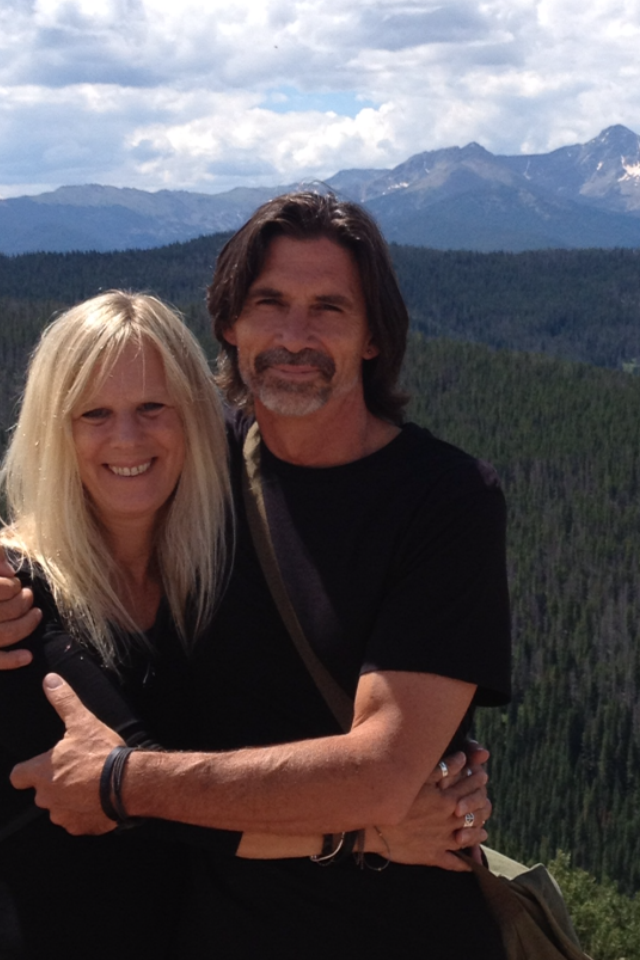
With Kerri on the top of a mountain

With Kerri on the top of a mountain in Colorado.

Just beyond Vail, Colorado there is a tiny two street town called Minturn. It began as a mining town when people were rushing for gold but these days it survives as a place for tourists. It is radically different than its founding fathers intended. We stayed there for a few days of rest and recuperation after our two-week double loop through Middle America.

The double loop through America was nowhere in the plan a month ago. Things just seemed to pop up. A death. Kerri’s daughter stumbled into a new job that necessitated an immediate move. Plans changed. Our intentions for the month went out the window. All of the artistry went on hold. We quickly packed the car and hit the road.

Just as plans change it is also true that change is rarely planned. I’ve yet to meet a person who doesn’t resist change (despite their rhetoric). Change requires a step into the unknown and that’s precisely the point: real change comes when we simply don’t know. Most of us like to know where we are going before we step. Change finds its way through the cracks that happen when patterns are disrupted, when things just seem to pop up, when we have no idea what the next step is. Change happens when we are making it up as we go. Change is a creative act, a tap dance on the event horizon.

Last week we drove to Colorado from Wisconsin through Iowa and Nebraska to attend my grandfather’s funeral. After the service we drove to Columbia, Missouri, crossing the full expanse of Kansas, to deliver some treasures from Beaky (Kerri’s mom) to Wendy (Kerri’s niece). Since we were driving to Denver, why not go home via Missouri? We returned home long enough to wash our clothes, pet the dog, and repack the car and head to Minneapolis. We packed up Kerri’s daughter and moved her to Vail via South Dakota with a sharp turn through Nebraska before arriving again in Colorado. After a rest in Minturn, a few hikes, some time with wine sitting on a porch, and a few precious nights with my parents, yesterday we returned to Wisconsin through Wyoming, South Dakota, and Minnesota.

It was a tap dance. Change found its way in as our patterns disappeared in the spontaneity of the double loop. We arrived home exhausted and exhilarated, with renewed eyes, a riches of profound and varied experiences, and much clearer intentions. What seemed initially like an interruption in our path was, in fact, a crack in the pattern, a necessary bump into the unknown.

title_pageGo here for my latest book

Chase Your Lion

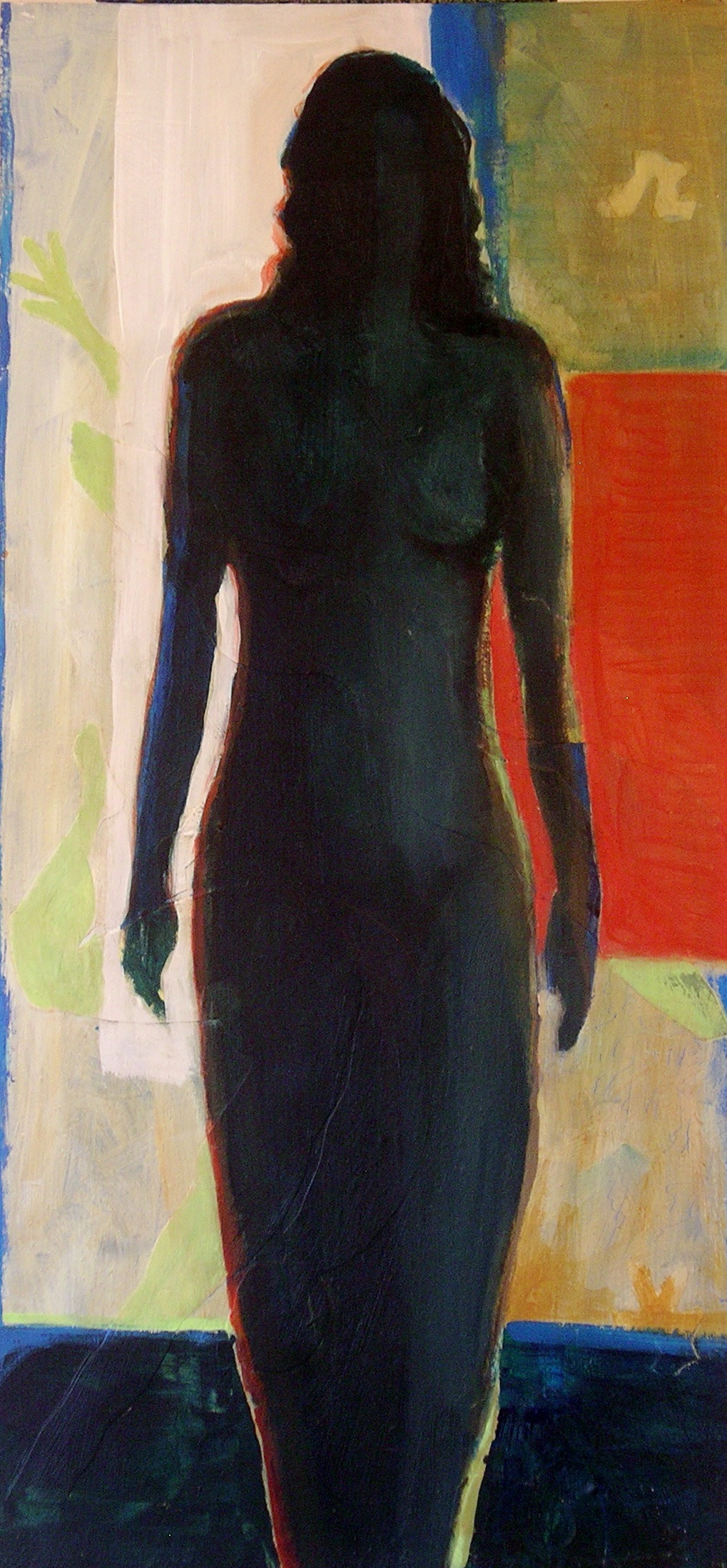
This is from the long ago archives. A sketch I call Persephone

This is from the long ago archives. A sketch I call Persephone

We were talking about fear. I’d suggested that some fears were actual and some imagined. For instance, if a lion were chasing me, fear would be my ally. It would be actual and useful. My fear would possibly save my life. It would make me run faster. On the other hand, if I feared pursuing my dream, of doing what I wanted to do in the world because of what others might think, my fear would be imagined. It would not be useful.

He said, “You don’t understand how afraid I am.”

“How afraid are you?” I asked.

He wrinkled his brow, “How can I answer that? No one can answer that.”

“Well, tell me how big is your fear?” I said. “Give it a size.”

“I can’t do that!”

“Sure you can,” I said.

“How do you quantify fear? How does anyone quantify fear?”

“Oh, quantifying fear is easy.” I said. “You simply count all the things you don’t do because of your fear. Those things are quantifiable. Count all the life experiences that you are willing to lose by holding onto your fear.”

He was silent for a moment. Then asked, “Like what?”

“Most people lose access to their lives. They let go of their dreams. They tell themselves that they don’t know how or that they were not meant to do what they want to do. How much life are you willing to miss by telling yourself the story that you are afraid? Count the days, the moments, that you stop yourself. Those moments are actual. Those days are quantifiable.”

He was angry, so I added, “Dreams are not lions.”


title_pageGo here for my latest book


Or, go here for fine art prints of my paintingsThe Poet

Flow With Your Constraints

a rough draft from my soon to be released children's book, Play to Play

a rough draft from my soon to be released children’s book, Play to Play

Margie said, “You two need to learn how to be cool and calm.” We repeated her words as if in a trance, “Cool and calm,” I muttered. “Cool and calm,” Kerri said and then looked at me and asked, “Can we do that?” I shook my head. We smiled. The previous day we jumped out of bed at 1:30am and drove 4 hours to Indianapolis to help Craig move out of his apartment. We made it back home by 10pm.Tomorrow we drive to Colorado and then on to Columbia, Missouri. Next week we drive to Minneapolis and on to Colorado again. “You have to learn to sit still!” Margie chirped.

Many years ago Makaela told me that I was like a feral cat. “There’s a part of you that flees from any form of containment,” she said. I was at first surprised by her comment. From the inside, my life seems ordinary. I go to the grocery store. I pay bills. Makaela has a Cheshire Cat grin and it flashed across her face. In truth, I can’t wear lace-up shoes. Neckties are deadly to me. I am brilliant at starting things: programs, theatres, companies,.., just don’t ask me to maintain them once started. Neckties, cubicles, and commutes suffocate me. “See? Feral,” she said.

Cool and calm? Feral?

Neckties and lace up shoes restrict movement. To me, they are improper constraints. Improper constraints are akin to knots in a muscle: they impede flow. Toxins collect around the knots. Disease in a body is the result of an improper constraint. An improper constraint can be literal, a knot in a muscle, or a thought pattern, like the expectation of being perfect. “Perfect” is a mental knot. It stops flow. It stresses unnecessarily. It blocks the movement of free self-expression and engenders judgment. It becomes toxic to the system. Gossip is an improper constraint.

The flip side an improper constraint is a proper constraint. Proper constraints facilitate movement in a direction. They focus energy. Proper constraints define clear and open channels of movement. In a healthy body, air and blood and lymph move unimpeded through channels of proper constraint. Proper constraint is necessary to feed the body. Proper constraint is necessary for vital artistic expression. Healthy communication works just like a healthy body. A choice is a proper constraint. Proper constraint frees the movement of self-expression and engenders connectivity. It clears toxins from a system.

“Wait a minute,” Kerri said as Margie retreated down the stairs, “I think we’re always cool and calm.” I agreed. Our proper constraints look a bit different than most peoples. More than once Craig has looked as us and said, “You two are not normal.” Too true. What is normal, after all? A proper constraint for me is improper for others and vice versa. Kerri and I know for ourselves what engenders flow and what interrupts it. Jay Griffiths wrote that a society has to be tame to need the concept of wild. If there is no break in the natural world, if there isn’t a need for dams and fences, there is no need to distinguish between wild and tame. I am not feral after all. Kerri and I work at having no internal dams or unnatural fences. Our business is to create our own version of flow. Isn’t that what everyone wants?

title_pageGo here for my latest book

The PoetGo here for fine art prints of my paintings

Count Your (Minor) Miracles

This is a silly watercolor I did a few years ago. I call it 'Dreams and Dogs.' It's not show worthy but makes me laugh so I keep it around.

This is a silly watercolor I did a few years ago. I call it ‘Dreams and Dogs.’ It’s not show worthy but makes me laugh so I keep it around.

Today I heard the phrase, “minor miracle.” It struck me as odd because I’m not sure that miracles come in major, minor, or standard forms. But, that being said, I decided to make a list of the minor miracles I experienced today:

I awoke. I was alive! And, being alive, I was excited to live another day of life.

I had the best cup of coffee I’ve ever had. Although this happens every morning, the first cup of coffee never fails to be the best ever. It was the first. It was the best.

Mid-morning we took a walk. The day was gorgeous. The breezes from the lake were cool but the sun was warm. The collision of temperature was sensual, startling and enlivening. It was so gorgeous that we took an extra long walk so we might linger in the day.

During our walk, we were surrounded by a cloud of dragonflies. They ringed us and stayed with us for several hundred yards.

I had an epiphany.

We made a customer service call and talked with someone dedicated to serving customers. The challenge remains but the company is no longer an obstacle but is now an ally.

Later, taking Tripper Dog-Dog-Dog for a walk, instead of the usual sled dog technique, he actually walked like a real dog that was trained to heel. The change was so impressive that Kerri said, “This makes me believe anything is possible.”

I have a new painting tapping my shoulder. It wants to be painted. It won’t leave me alone until I pay attention. I admire its persistence.

At sunset, we sat in the hammock with cold beer and Skinny Pop popcorn watching the clouds seep brilliant orange and migrate slowly across the sky.

We sang a song on the voicemail of a friend in deep distress. It made her laugh. It changed her day.

The night air is cool. The windows are open and the breeze is almost but not quite cold. It is quiet and begs for a walk. It will be the third walk of the day and will most likely be filled with a few more minor miracles.

The day also held major miracles, too. But, being major, they are subject to a report on another day.

title_pageGo here for my latest book

State The Obvious

Sometimes it is necessary to state the obvious (to myself). Sometimes, for me, the potency of life is found in stating the obvious: children are born and children grow up. They leave home. They become parents. Parents become grandparents. Grandparents grow old and pass away. At no point do things stand still.

Or, the obvious can be stated another way: children have dreams. They pursue their dreams or run away from them. Either way, they pass through the stages of becoming – and, at some point, believe that they have actually grown into something (doctor, clerk, lawyer, teacher, vagabond, parent, athlete, etc.). They learn that their dreams are infinitely more complex than they realized. All dreams come with challenges, regrets, and discomfort. Regardless of the path, at no point do things stand still.

We want to “get there.” We desire to arrive. Usually, the misperception of arrival leads to crisis when things change. And things always change. This river of life never stands still. It is never static. It is never fixed. The moment of birth begins the progression to dying. And, depending upon what you believe, a new form always arises when old forms fall away. The new form, the new leaf, turns brilliant colors, withers, falls to the earth, becomes soil and mineral, feeds the root, and reemerges as the grape that ripens, is picked, and becomes wine.

Where is the arrival?

Even inner stillness is fluid. Try to hang on to it; grasping always disturbs the pond. Stillness is more akin to surfing than to stasis. Chaos and order are not opposite sides of a polarity; they are essential phases in a single cycle. Ripples are necessary to experience stillness. Fulfillment and emptiness are necessary to each other. One does not gain without losing. One does not live without dying.

There is no arrival. There are fluid moments of recognition, moments of presence (a word that is often mistaken for an arrival). Presence, otherwise known as consciousness, might be defined as the awareness and appreciation of each moment amidst the realization that things always change. To try and stop the river, to hold on to the moment, to try and stop time will always bring frustration. Presence describes your relationship with change.

This is the obvious thing: nothing is certain. Nothing is still. We always step into uncertainty. We always step. We are never still. Our steps are always into the unknown because no one has ever lived their moments prior to the living of them- despite what the to-do list and cubicle illusion might lead us to believe. Realize it and life is rich and mysterious. Resist it and life is rigid and rich with hardship.

Go here to get my latest book, The Seer: The Mind of the Entrepreneur, Artist, Visionary, title_pageSeeker, Learner, Leader, Creator…You.

Or, go here for a hard copy.


Give As Love

The stack of paintings sitting in my basement waiting for me to show them.

The stack of paintings sitting in my basement waiting for me to show them.

Sitting in the choir loft this morning I was at first disappointed that the stained glass window was silent. I was so full of questions – and have lately been so full of questions – and have come to look forward to hanging out in the loft, conversing with the window, while Kerri plays a service.

When I bring my questions the window always has something to say. The window offers a better set of questions or a startling reflection or a slap of insight. The window’s responses always come in the form of a message of return (return to heart, return to forgiveness, etc.). If I get quiet and ask my question, out of the peace, a conversation always ensues. Today, from my quiet, I asked my question about artistry, about my artistry, and I was met with an unusual silence. I wrinkled my brow. I wondered if my conversation with the window had come to an end or if perhaps my question was out of the scope of topics for a stained glass window.

There was a visiting pastor, an elder who’d been preaching for over 50 years. I sat up and paid attention when he began his sermon this way:

“Artists have a special gift. They help others see in a new way….”

His message was about love. Love, he told us, takes many forms and the form that love takes depends upon the unique gifts of the lover: a symphony is a gift of love, a painting is a gift of love. A plumber fixing a broken water main late into the evening is a gift of love. “What is your gift? he asked. Do you recognize it as love?

A few years ago, on New Year’s Eve, I visited a tarot woman at a bookstore in Denver. During our session she asked me a question that felt like a cold slap in the face. “You know god’s voice,” she said. “Why do you not use it?” I mumbled a lame excuse that dribbled into silence. “Why do you not use it?” she asked again.

Sitting across the table from the tarot woman, I knew without doubt that I have, my whole life, been a great servant to other people’s artistry but a lousy servant to my own. In my life I’ve been the midwife to many people’s gifts while mine have remained mostly unrealized.

The window whispered, “A painting is a gift of love. So is a play. So is a book. These are your forms of love. Your gift is a gift of love. Love is god’s voice and you know god’s voice.”

“I do know it,” I said, timid to admit it. “Don’t we all?” I asked the window.

“Access is open to all. Few actually listen,” the window replied. “Few know how to listen. Most fear their gift and plug their ears.”

To offer my gift without inhibition is how I best express love to the world? That was old and new for me at the same time. I asked the window, “How many artists need to hear that message? How many people need to hear that message?”

“You are deflecting. You deflect your gift by serving other people’s purposes before your own. These questions you ask are the wrong questions,” said the window. “Yes, of course, all people need to hear the message. But, is it your purpose to deliver the message or is it your purpose to fulfill your gift? Helping others hear their message is not yours to do. Yours is to fulfill your gift and, in that way, help others to see their gift in a new way. You need do nothing but give your gift. They will see or not without your intervention. Love by giving your gift. It is simple. Give your gift, give your love, without reservation or doubt.”

“Love can be how you listen to a friend in need,” the pastor said. Love is not about the rules or the restrictions. Even when you try to alienate love, it will always find its way back to you. It will find its way back through you.

“You know god’s voice,” the window continued. “And you know it. Return to the truth; return to your truth. The question, ‘Why do you not use it,’ no longer matters. It, too, is a deflection. Asking ‘why’ merely delays the giving. Use it. Give it. Give as love.”

Go here to get my latest book, The Seer: The Mind of the Entrepreneur, Artist, Visionary, title_pageSeeker, Learner, Leader, Creator…You.

Or, go here for hard copies.

Pick Up Your Ordinary

From Kerri and my travels: a photo essay about what our feet have seen

From Kerri and my travels: a photo essay about what our feet have seen

I continue to process all of the amazing events and experiences from the past few weeks working abroad. They have jiggled loose an old thought-bubble and I’ve been pondering it since it bobbed to the surface.

The old thought-bubble is a tenet that comes from improvisational theatre: put down your clever and pick up your ordinary. I’ve used this tenet in any number of facilitations and coaching relationships. The basic idea is this: any attempt at being clever actually diminishes personal power and inhibits the capacity to be present. Trying to be clever focuses the eye inside and robs a performer or presenter of the only thing that really matters: relationship in the moment.

Dig a bit deeper and the real wealth of the tenet shows itself. We rarely recognize our true gift because we think everyone possesses it. We miss our unique gift because we think it’s ordinary. We mistake our gift for something common and therefore not of great value. In truth, what we brand as ordinary (how we see the world) is our most unique, most potent and powerful gift. So, to put down your clever and pick up your ordinary is to value your unique point of view. It is to honor yourself and how you see the world and also affords you the capacity to be seen as you are, not as you think you need to be seen. To pick up your ordinary is to become accessible.

Trying to be clever is actually an attempt at trying to be something we are not – or someone we are not. It is to hide, put on a mask, or pretend.

Ordinary reveals; clever obscures. Ordinary facilitates flow. Clever needs to control. Attempts at being clever are manufactured moments. Experts need to be clever, they need to whip up a straw man and call it substance. Clever is always an ego need – in fact, clever is nothing more than a plea for approval. It is a thirst for adulation. Clever needs center stage. Ordinary shares the stage. Clever needs to claim territory. Ordinary expands horizons. Ordinary is accessible. Clever is protected, aloof, and closed.

All of this is old news. It was in the old thought-bubble. Just behind it came a few new little trailer bubbles. Clever is oriented on what it gets (adoration, attention, acclamation). Ordinary is oriented according to what it brings: a unique point of view in service to a relationship. Ordinary is a form of potlatch: give what you have; give away your wealth as the road to increase. Clever comes from a universe of lack. Ordinary comes from an abundant life. It is a paradox. Unique is found in the ordinary. New vision comes when we cease trying to say something new and simply offer our unique, one-of-a-kind perspective. The beauty is in what we see.

title_pageGo here to get my latest book, The Seer: The Mind of the Entrepreneur, Artist, Visionary, Seeker, Learner, Leader, Creator…You.

Or, go here for hard copies and Kindle.