Chase Your Lion

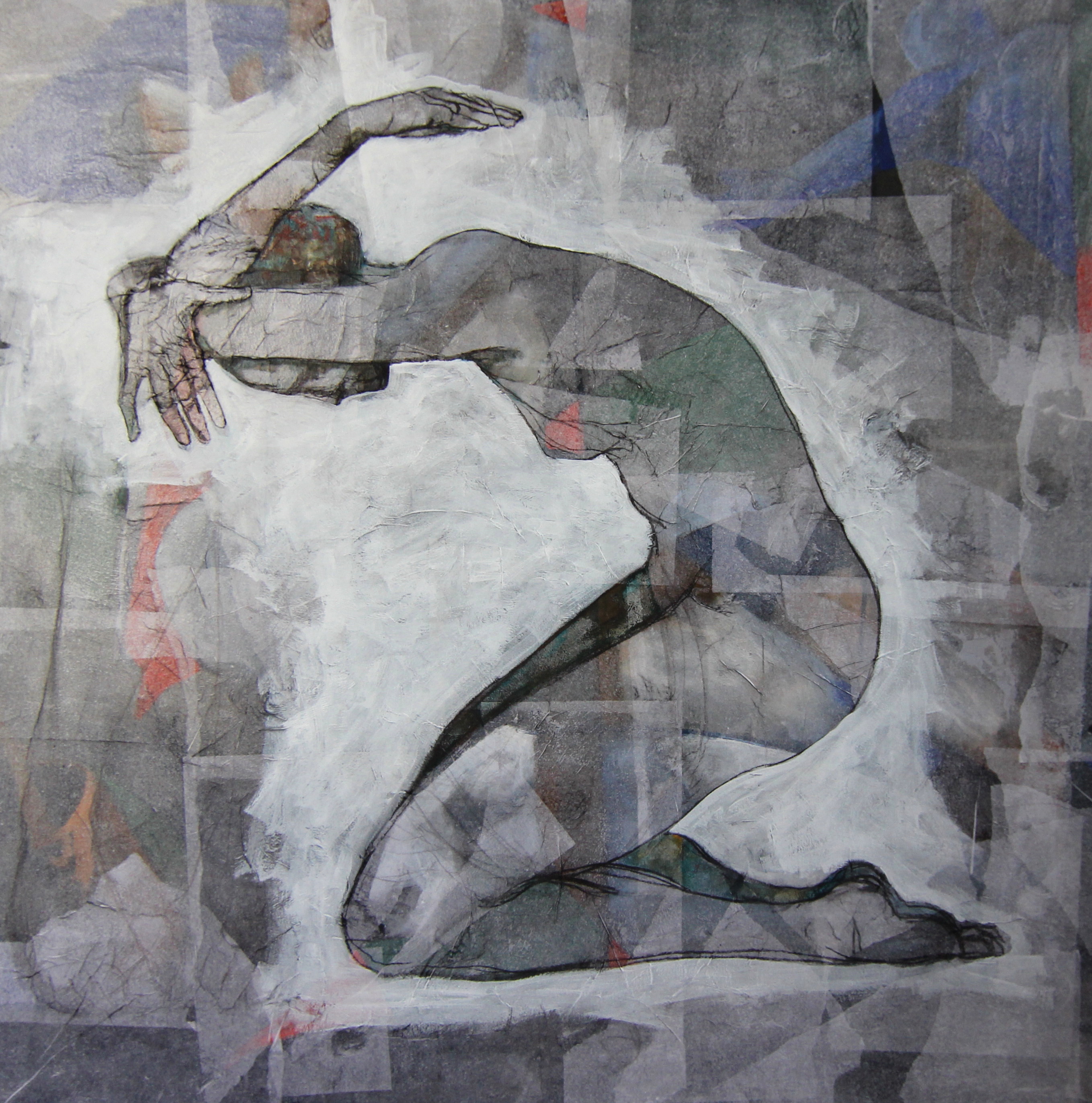
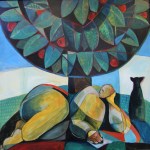
This is from the long ago archives. A sketch I call Persephone

This is from the long ago archives. A sketch I call Persephone

We were talking about fear. I’d suggested that some fears were actual and some imagined. For instance, if a lion were chasing me, fear would be my ally. It would be actual and useful. My fear would possibly save my life. It would make me run faster. On the other hand, if I feared pursuing my dream, of doing what I wanted to do in the world because of what others might think, my fear would be imagined. It would not be useful.

He said, “You don’t understand how afraid I am.”

“How afraid are you?” I asked.

He wrinkled his brow, “How can I answer that? No one can answer that.”

“Well, tell me how big is your fear?” I said. “Give it a size.”

“I can’t do that!”

“Sure you can,” I said.

“How do you quantify fear? How does anyone quantify fear?”

“Oh, quantifying fear is easy.” I said. “You simply count all the things you don’t do because of your fear. Those things are quantifiable. Count all the life experiences that you are willing to lose by holding onto your fear.”

He was silent for a moment. Then asked, “Like what?”

“Most people lose access to their lives. They let go of their dreams. They tell themselves that they don’t know how or that they were not meant to do what they want to do. How much life are you willing to miss by telling yourself the story that you are afraid? Count the days, the moments, that you stop yourself. Those moments are actual. Those days are quantifiable.”

He was angry, so I added, “Dreams are not lions.”


title_pageGo here for my latest book


Or, go here for fine art prints of my paintingsThe Poet

Flow With Your Constraints

a rough draft from my soon to be released children's book, Play to Play

a rough draft from my soon to be released children’s book, Play to Play

Margie said, “You two need to learn how to be cool and calm.” We repeated her words as if in a trance, “Cool and calm,” I muttered. “Cool and calm,” Kerri said and then looked at me and asked, “Can we do that?” I shook my head. We smiled. The previous day we jumped out of bed at 1:30am and drove 4 hours to Indianapolis to help Craig move out of his apartment. We made it back home by 10pm.Tomorrow we drive to Colorado and then on to Columbia, Missouri. Next week we drive to Minneapolis and on to Colorado again. “You have to learn to sit still!” Margie chirped.

Many years ago Makaela told me that I was like a feral cat. “There’s a part of you that flees from any form of containment,” she said. I was at first surprised by her comment. From the inside, my life seems ordinary. I go to the grocery store. I pay bills. Makaela has a Cheshire Cat grin and it flashed across her face. In truth, I can’t wear lace-up shoes. Neckties are deadly to me. I am brilliant at starting things: programs, theatres, companies,.., just don’t ask me to maintain them once started. Neckties, cubicles, and commutes suffocate me. “See? Feral,” she said.

Cool and calm? Feral?

Neckties and lace up shoes restrict movement. To me, they are improper constraints. Improper constraints are akin to knots in a muscle: they impede flow. Toxins collect around the knots. Disease in a body is the result of an improper constraint. An improper constraint can be literal, a knot in a muscle, or a thought pattern, like the expectation of being perfect. “Perfect” is a mental knot. It stops flow. It stresses unnecessarily. It blocks the movement of free self-expression and engenders judgment. It becomes toxic to the system. Gossip is an improper constraint.

The flip side an improper constraint is a proper constraint. Proper constraints facilitate movement in a direction. They focus energy. Proper constraints define clear and open channels of movement. In a healthy body, air and blood and lymph move unimpeded through channels of proper constraint. Proper constraint is necessary to feed the body. Proper constraint is necessary for vital artistic expression. Healthy communication works just like a healthy body. A choice is a proper constraint. Proper constraint frees the movement of self-expression and engenders connectivity. It clears toxins from a system.

“Wait a minute,” Kerri said as Margie retreated down the stairs, “I think we’re always cool and calm.” I agreed. Our proper constraints look a bit different than most peoples. More than once Craig has looked as us and said, “You two are not normal.” Too true. What is normal, after all? A proper constraint for me is improper for others and vice versa. Kerri and I know for ourselves what engenders flow and what interrupts it. Jay Griffiths wrote that a society has to be tame to need the concept of wild. If there is no break in the natural world, if there isn’t a need for dams and fences, there is no need to distinguish between wild and tame. I am not feral after all. Kerri and I work at having no internal dams or unnatural fences. Our business is to create our own version of flow. Isn’t that what everyone wants?

title_pageGo here for my latest book

The PoetGo here for fine art prints of my paintings

Count Your (Minor) Miracles

This is a silly watercolor I did a few years ago. I call it 'Dreams and Dogs.' It's not show worthy but makes me laugh so I keep it around.

This is a silly watercolor I did a few years ago. I call it ‘Dreams and Dogs.’ It’s not show worthy but makes me laugh so I keep it around.

Today I heard the phrase, “minor miracle.” It struck me as odd because I’m not sure that miracles come in major, minor, or standard forms. But, that being said, I decided to make a list of the minor miracles I experienced today:

I awoke. I was alive! And, being alive, I was excited to live another day of life.

I had the best cup of coffee I’ve ever had. Although this happens every morning, the first cup of coffee never fails to be the best ever. It was the first. It was the best.

Mid-morning we took a walk. The day was gorgeous. The breezes from the lake were cool but the sun was warm. The collision of temperature was sensual, startling and enlivening. It was so gorgeous that we took an extra long walk so we might linger in the day.

During our walk, we were surrounded by a cloud of dragonflies. They ringed us and stayed with us for several hundred yards.

I had an epiphany.

We made a customer service call and talked with someone dedicated to serving customers. The challenge remains but the company is no longer an obstacle but is now an ally.

Later, taking Tripper Dog-Dog-Dog for a walk, instead of the usual sled dog technique, he actually walked like a real dog that was trained to heel. The change was so impressive that Kerri said, “This makes me believe anything is possible.”

I have a new painting tapping my shoulder. It wants to be painted. It won’t leave me alone until I pay attention. I admire its persistence.

At sunset, we sat in the hammock with cold beer and Skinny Pop popcorn watching the clouds seep brilliant orange and migrate slowly across the sky.

We sang a song on the voicemail of a friend in deep distress. It made her laugh. It changed her day.

The night air is cool. The windows are open and the breeze is almost but not quite cold. It is quiet and begs for a walk. It will be the third walk of the day and will most likely be filled with a few more minor miracles.

The day also held major miracles, too. But, being major, they are subject to a report on another day.

title_pageGo here for my latest book

State The Obvious

Sometimes it is necessary to state the obvious (to myself). Sometimes, for me, the potency of life is found in stating the obvious: children are born and children grow up. They leave home. They become parents. Parents become grandparents. Grandparents grow old and pass away. At no point do things stand still.

Or, the obvious can be stated another way: children have dreams. They pursue their dreams or run away from them. Either way, they pass through the stages of becoming – and, at some point, believe that they have actually grown into something (doctor, clerk, lawyer, teacher, vagabond, parent, athlete, etc.). They learn that their dreams are infinitely more complex than they realized. All dreams come with challenges, regrets, and discomfort. Regardless of the path, at no point do things stand still.

We want to “get there.” We desire to arrive. Usually, the misperception of arrival leads to crisis when things change. And things always change. This river of life never stands still. It is never static. It is never fixed. The moment of birth begins the progression to dying. And, depending upon what you believe, a new form always arises when old forms fall away. The new form, the new leaf, turns brilliant colors, withers, falls to the earth, becomes soil and mineral, feeds the root, and reemerges as the grape that ripens, is picked, and becomes wine.

Where is the arrival?

Even inner stillness is fluid. Try to hang on to it; grasping always disturbs the pond. Stillness is more akin to surfing than to stasis. Chaos and order are not opposite sides of a polarity; they are essential phases in a single cycle. Ripples are necessary to experience stillness. Fulfillment and emptiness are necessary to each other. One does not gain without losing. One does not live without dying.

There is no arrival. There are fluid moments of recognition, moments of presence (a word that is often mistaken for an arrival). Presence, otherwise known as consciousness, might be defined as the awareness and appreciation of each moment amidst the realization that things always change. To try and stop the river, to hold on to the moment, to try and stop time will always bring frustration. Presence describes your relationship with change.

This is the obvious thing: nothing is certain. Nothing is still. We always step into uncertainty. We always step. We are never still. Our steps are always into the unknown because no one has ever lived their moments prior to the living of them- despite what the to-do list and cubicle illusion might lead us to believe. Realize it and life is rich and mysterious. Resist it and life is rigid and rich with hardship.

Go here to get my latest book, The Seer: The Mind of the Entrepreneur, Artist, Visionary, title_pageSeeker, Learner, Leader, Creator…You.

Or, go here for a hard copy.


Give As Love

The stack of paintings sitting in my basement waiting for me to show them.

The stack of paintings sitting in my basement waiting for me to show them.

Sitting in the choir loft this morning I was at first disappointed that the stained glass window was silent. I was so full of questions – and have lately been so full of questions – and have come to look forward to hanging out in the loft, conversing with the window, while Kerri plays a service.

When I bring my questions the window always has something to say. The window offers a better set of questions or a startling reflection or a slap of insight. The window’s responses always come in the form of a message of return (return to heart, return to forgiveness, etc.). If I get quiet and ask my question, out of the peace, a conversation always ensues. Today, from my quiet, I asked my question about artistry, about my artistry, and I was met with an unusual silence. I wrinkled my brow. I wondered if my conversation with the window had come to an end or if perhaps my question was out of the scope of topics for a stained glass window.

There was a visiting pastor, an elder who’d been preaching for over 50 years. I sat up and paid attention when he began his sermon this way:

“Artists have a special gift. They help others see in a new way….”

His message was about love. Love, he told us, takes many forms and the form that love takes depends upon the unique gifts of the lover: a symphony is a gift of love, a painting is a gift of love. A plumber fixing a broken water main late into the evening is a gift of love. “What is your gift? he asked. Do you recognize it as love?

A few years ago, on New Year’s Eve, I visited a tarot woman at a bookstore in Denver. During our session she asked me a question that felt like a cold slap in the face. “You know god’s voice,” she said. “Why do you not use it?” I mumbled a lame excuse that dribbled into silence. “Why do you not use it?” she asked again.

Sitting across the table from the tarot woman, I knew without doubt that I have, my whole life, been a great servant to other people’s artistry but a lousy servant to my own. In my life I’ve been the midwife to many people’s gifts while mine have remained mostly unrealized.

The window whispered, “A painting is a gift of love. So is a play. So is a book. These are your forms of love. Your gift is a gift of love. Love is god’s voice and you know god’s voice.”

“I do know it,” I said, timid to admit it. “Don’t we all?” I asked the window.

“Access is open to all. Few actually listen,” the window replied. “Few know how to listen. Most fear their gift and plug their ears.”

To offer my gift without inhibition is how I best express love to the world? That was old and new for me at the same time. I asked the window, “How many artists need to hear that message? How many people need to hear that message?”

“You are deflecting. You deflect your gift by serving other people’s purposes before your own. These questions you ask are the wrong questions,” said the window. “Yes, of course, all people need to hear the message. But, is it your purpose to deliver the message or is it your purpose to fulfill your gift? Helping others hear their message is not yours to do. Yours is to fulfill your gift and, in that way, help others to see their gift in a new way. You need do nothing but give your gift. They will see or not without your intervention. Love by giving your gift. It is simple. Give your gift, give your love, without reservation or doubt.”

“Love can be how you listen to a friend in need,” the pastor said. Love is not about the rules or the restrictions. Even when you try to alienate love, it will always find its way back to you. It will find its way back through you.

“You know god’s voice,” the window continued. “And you know it. Return to the truth; return to your truth. The question, ‘Why do you not use it,’ no longer matters. It, too, is a deflection. Asking ‘why’ merely delays the giving. Use it. Give it. Give as love.”

Go here to get my latest book, The Seer: The Mind of the Entrepreneur, Artist, Visionary, title_pageSeeker, Learner, Leader, Creator…You.

Or, go here for hard copies.

Pick Up Your Ordinary

From Kerri and my travels: a photo essay about what our feet have seen

From Kerri and my travels: a photo essay about what our feet have seen

I continue to process all of the amazing events and experiences from the past few weeks working abroad. They have jiggled loose an old thought-bubble and I’ve been pondering it since it bobbed to the surface.

The old thought-bubble is a tenet that comes from improvisational theatre: put down your clever and pick up your ordinary. I’ve used this tenet in any number of facilitations and coaching relationships. The basic idea is this: any attempt at being clever actually diminishes personal power and inhibits the capacity to be present. Trying to be clever focuses the eye inside and robs a performer or presenter of the only thing that really matters: relationship in the moment.

Dig a bit deeper and the real wealth of the tenet shows itself. We rarely recognize our true gift because we think everyone possesses it. We miss our unique gift because we think it’s ordinary. We mistake our gift for something common and therefore not of great value. In truth, what we brand as ordinary (how we see the world) is our most unique, most potent and powerful gift. So, to put down your clever and pick up your ordinary is to value your unique point of view. It is to honor yourself and how you see the world and also affords you the capacity to be seen as you are, not as you think you need to be seen. To pick up your ordinary is to become accessible.

Trying to be clever is actually an attempt at trying to be something we are not – or someone we are not. It is to hide, put on a mask, or pretend.

Ordinary reveals; clever obscures. Ordinary facilitates flow. Clever needs to control. Attempts at being clever are manufactured moments. Experts need to be clever, they need to whip up a straw man and call it substance. Clever is always an ego need – in fact, clever is nothing more than a plea for approval. It is a thirst for adulation. Clever needs center stage. Ordinary shares the stage. Clever needs to claim territory. Ordinary expands horizons. Ordinary is accessible. Clever is protected, aloof, and closed.

All of this is old news. It was in the old thought-bubble. Just behind it came a few new little trailer bubbles. Clever is oriented on what it gets (adoration, attention, acclamation). Ordinary is oriented according to what it brings: a unique point of view in service to a relationship. Ordinary is a form of potlatch: give what you have; give away your wealth as the road to increase. Clever comes from a universe of lack. Ordinary comes from an abundant life. It is a paradox. Unique is found in the ordinary. New vision comes when we cease trying to say something new and simply offer our unique, one-of-a-kind perspective. The beauty is in what we see.

title_pageGo here to get my latest book, The Seer: The Mind of the Entrepreneur, Artist, Visionary, Seeker, Learner, Leader, Creator…You.

Or, go here for hard copies and Kindle.

Embrace The Bubble

A bit of the Eiffel Tower

A bit of the Eiffel Tower

I am nearly through the throes of jet lag and my inner anthropologist has an observation or two about the altered state that occurs when one wakes up in Paris and goes to sleep in Kenosha.

When 36 hours pass in a 24-hour daylight cycle, the human body (my human body) experiences shock and awe. A soul cannot travel nearly as fast as a body in a modern airplane; that’s why they call it jet lag. The jet does not lag. The soul doddles as a good soul should while the body flings through space in a pressurized aluminum tube. The soul lags (note: my inner anthropologist is a scientist and is dubious about using the word “soul.” He wants you to know that “soul” is my translation of his term, “consciousness”).

Jet lag is like being inside a bubble. There are great benefits to being inside the bubble. For instance, the world is wonderfully distorted. Nothing is normal when sifted through a soapy haze. The bubble is the overlap of dream space and the everyday. From inside the bubble, people move too fast. Or, they move too slowly. The words people speak are garbled and generally bounce off the bubble. Checking out of a grocery store is like a scene in a sci-fi movie. Sense-making is impossible but the surrender to no-sense is sweet and oddly comforting. To release the necessity to understand, the need to recognize, rationalize, explain, or connect even the simplest of thought-dots is liberating. In the bubble, a sigh is the only appropriate response.

From the bubble, there is nothing to be done but to watch the time river roll. Jet lag bubble consciousness makes things somehow more simplistic; complexity is not possible from a jet lag haze. Inside the bubble, life routines that were unconscious prior to traveling are startling and new; they are like gestures from a previous incarnation. For example, this morning, doing the dishes, my hands knew what to do yet I was fascinated with the odd process. I was both doer and witness. Doing the dishes was known and new all in the same instant. The bubble, so my inner anthropologist claims, is a paradox: it dulls the thinking but sharpens the simple moments. It opens the senses. Prior to doing the dishes, watching the sunrise through the fog, I listened with fascination to the wind shake the dew through the high leaves in the trees. It was gorgeous; nature’s rainstick.

Within the bubble, sleep is a constant tug like an undertow. It pulls time into slow motion. It creates a liminal space, a not-here-and-not-there space. It creates a “now” space with a single simple imperative: stay awake for a few more hours.

Stay awake. I like the metaphor: to stay awake amidst the pull to dullness; ultimately it is the gift of the bubble. It is a reminder not to sleepwalk through life, to stay alert to the simple moments. Stay awake or your life becomes like a television running an endless cycle of sitcoms. Dullness is a choice. My inner anthropologist just rolled his eyes. It’s more extravagance on my part; apparently “choice,” like “soul” is not an appropriate scientific term.

Go here to get my latest book, The Seer: The Mind of the Entrepreneur, Artist, Visionary, title_pageSeeker, Learner, Leader, Creator…You.

Or, go here for hard copies.

Story Your Life

title_pageI’ve received a few questions this week about life stories and rather than blather…here’s another snippet from my book, The Seer:

Stories often deal with the collision that arises when learned patterns blind us to our natural impulses. Living according to what we “should do” or “should think” inevitably collides with what we desire to do and this provides a hot crucible for growth. When Virgil asked me to practice “not knowing” he was poking a hole in my story of “should do” so that I might once again hear what I intuitively knew to be true. Stories show us how to get out of our own way. As Virgil recently wrote:

Virgil: You are at one time the source of your yearning and your greatest obstacle. What you think that you should do IS the obstacle to your desire.

In my latest chat with Virgil I told him of my revelations about ‘not knowing what I DO know,’ about my memory of my client, and how I convinced her that she didn’t need me and could do the work by herself. I wrote:

Me: At the time I really needed the money. I needed the business! And I spent that morning convincing a potential client that she didn’t need me. It’s the story of my life!

He responded:

Virgil: Oh, you are dangerously close to the third recognition.

I decided I needed to stop being careful with how I said things to Virgil. I’d just learned that my language mattered so I might as well write what I was thinking:

Me: Well, maybe you should tell me before I trip over something and hurt myself. You must have an answer or two in there somewhere…

Virgil: I’m woefully low on answers but I do have a question for you: What did you mean when you wrote: It’s the story of my life?

Me: I don’t know. It was just a phrase, an attempt at humor.

Virgil: What if it’s not just a phrase?

Me: You mean that convincing people that they don’t need my services is the story of my life? That is why my business crashed?

Virgil: No. I’m not inferring, interpreting or implying anything. You used this phrase: It is the story of my life. I’m asking you to consider that this is more than a flippant phrase. Are you aware of the story of your life?

I was getting angry again. And I was beginning to recognize that my anger was a pattern that flared when I felt lost. I get angry when I am driving and miss my turn or can’t find where I’m going. I wanted a map. I wanted Virgil to be my personal GPS and tell me where to go. Where were we going with this? Sometimes I can’t help my sarcasm:

Me: You mean I only get one story?

Virgil: Your story is not something you get. Remember, your language matters. Choose your words more carefully and you might see the third recognition before you trip over it. Connect the dots. Tripping over it will not hurt you. It’s the choice to be blind that causes your pain.

Go here to get my latest book, The Seer: The Mind of the Entrepreneur, Artist, Visionary, Seeker, Learner, Leader, Creator…You.

Go here for hard copies.


Locate Your Self

title_pageHere’s a short excerpt from my book, The Seer, dealing with the dance between investments, limitations, and the roles we play in life. This conversation is a kind of coaching session and is happening via online chat:

Me:…All week I’ve asked myself, “why?” Why the dramatic shift in experience from role to role? I’m a bit shocked to realize that I play many, many roles each day. In each role I want something and what I want is different depending upon the people I am with. I realized that my roles are not about me in isolation – and what do I mean by that? I mean that I define my role by how I define the relationship I am in at the moment. For instance, in my workshop, I assumed the role of “guide” and I wanted to lead the young people to some new insights that might help them create their businesses. In my conversation with my parents, in the role of “son,” I wanted them to be pleased with my work. I wanted to share and I wanted their approval. So, my role is defined by relationship and in each different relationship I tell a specific story based on what I want or need. I’ve “cast” myself in these little mini-stories. Or to use your term, “role” is the way I “locate” myself in the story.

Virgil: And how does this knowledge help you with your questions about business?

Me: The first thing that occurs to me is that I have the capacity to locate myself in a different way if I don’t like the role I’m playing. I can change how I locate myself. Also, there is a dance with the words “limitation” and “investment.” I took notes all week and realized that I was using the verb “to invest” over and over again to describe my experience of different roles. So, for instance, during my dinner with my friend Bruce I invested in helping him. I wanted Bruce to know that I cared about his challenges. Then, I watched Bruce invest in being the wine expert. It was his way of caring for me and demonstrating his expertise. I began to see my investments as keys to discerning my limitations. In some roles I’ve invested in the idea that I can’t do something or that I’m not good at something. In some roles I diminish myself; my limitations are investments in being small.

Virgil: Just a caution: as you explore further the dance between investment and limitation, remember to practice suspending your judgment. Remember: you are having experiences first so you can see how you make meaning and begin to choose how you make meaning.

Me: Thank you. It’s a good reminder. I was beating myself up every time I     realized I was investing in being small.

Virgil: We tell ourselves stories. We locate ourselves within the stories. In fact, that is the next recognition: you locate yourself within your story. We do it physically (like your description of choosing the table in the restaurant); we do it through the roles we assume – specifically our assumptions of how we need to play our roles, what is ours to do, etc. Locating is simply a way of establishing comfort. We sort to the known. If you judge how you locate yourself, you miss the opportunity to change how you locate yourself.

Me: Right. Judgment blinds me to the choices I am making.

Virgil: Judgment is always a version of the “things are happening to me” story. In fact, judgment is a way of locating: it is the warning signal when we step too close to discomfort. When I judge myself and say, “I’m an idiot,” I’m actually locating myself, pulling myself back into my comfort zone. When I judge others, “They are idiots,” I’m locating myself in a higher status position. The action of diminishing “them” elevates me back into a comfortable status position. Thus, suspending your judgments removes the easy step back to comfort and allows you to stand in “not knowing” and see what is there beyond what you think is there.

Go here to get my latest book, The Seer: The Mind of the Entrepreneur, Artist, Visionary, Seeker, Learner, Leader, Creator…You.

Or, go here for hard copies.

Remember The Fire

this is the first painting in a triptych I did for The Creatures Of Prometheus, a performance I did with The Portland Chamber Orchestra. special kudos to Jen and Brad for housing these enormous paintings for me.

This is the first painting in a triptych I did for The Creatures Of Prometheus, a performance I did with The Portland Chamber Orchestra. Special kudos to Jen and Brad for housing these enormous paintings for me.

With the spring the storms have come. Brilliant blinding flashes of lightning followed by thunder that rolls and rolls for minutes without ceasing. Joseph Campbell once posited that the voice of the thunder was humankind’s first experience of the godhead; as I listen now to the sky roil and rumble, watching Tripper-Dog-Dog-Dog look for a safe place to hide, I am grateful to be inside protected from the god’s displeasure.

Last week I learned that the phrase, “blinding flash of lightning” was more than poetry. Kerri and I were taking our usual late night stroll. There were distant rumbles of thunder, but nothing close or threatening. The crack and flash seemed to come from nowhere. I ducked. Kerri screamed. It felt like we were inside the lightning rather than beneath it. The ground rumbled in concert with the sky. For blocks around us, car alarms whooped and beeped like Chicken Little. I imagined the cars were as taken by surprise as Kerri and I. For several moments after the flash, I was literally blind.

We were already running when sight returned, we laughed and squealed and kept our heads down as if that would make a difference. It seemed as if the storm was far distant one moment and on top of us the next. The sky spit hail. It rained for a moment. And, as suddenly as it was on us, it was gone. We stood still in the wake of the storms departure. I wondered if I’d imagined it except the parked cars were still sounding their alarms.

Once, when I was in high school, I hiked with a friend to the top of a peak. We were above the timber line and although I knew enough to be off the mountain top before the afternoon storms rolled over the divide, the thunder clouds came fast and we were caught in a powerful storm in a meadow just beneath the peak. It seemed as if we were literally inside the cloud as the lightning made the hair on my head stand on end. We wedged ourselves in a sitting fetal position between some boulders, and reflexively closed our eyes and covered our heads. Each flash sent a jolt of fear through me. I’ve rarely been as frightened or exhilarated as I was that day. The storm roared over the mountain top and descended into the valley. It was gone as fast as it came. It was awesome.

In one of the versions of the Prometheus story, Zeus charges Prometheus with the task of creating creatures for the sole purpose of worshipping the gods. Zeus wants the new creatures to be crude and stupid. Prometheus, instead, creates something beautiful and smart: humans. From clay, he sculpts a female and male form. Knowing that Zeus will never give life to his beautiful creatures, Prometheus steals the immortal fire, the lightning, and sparks the human hearts to life. To punish Prometheus, to keep his beautiful creatures from knowing their own beauty, Zeus introduces them to warfare, both the internal and external variety; he makes them doubt. He infuses them with fear. He makes it easy for them to focus on their ugliness so that they might misdirect their awesome power and forget the creative fire burning in their hearts.

Go here to get my latest book, The Seer: The Mind of the Entrepreneur, Artist, Visionary, title_pageSeeker, Learner, Leader, Creator…You.

Go here for hard copies.